

Wi Fi Eavesdropping As A Type Of Man In The Middle Attack Training Ppt




Try Before you Buy Download Free Sample Product
 Impress Your
Audience
 100%
Editable
 Save Hours
of Time


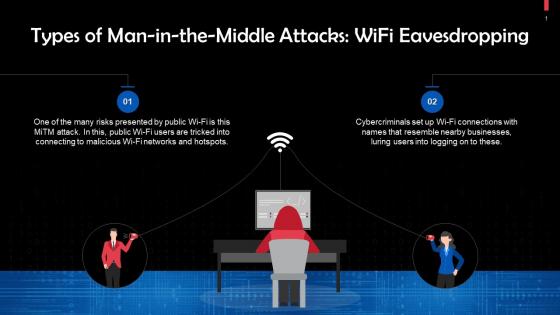
This slide discusses Wi-Fi Eavesdropping. During this attack, public Wi-Fi users are tricked into connecting to malicious Wi-Fi networks and hotspots.
People who downloaded this PowerPoint presentation also viewed the following :
Wi Fi Eavesdropping As A Type Of Man In The Middle Attack Training Ppt with all 20 slides:
Use our Wi Fi Eavesdropping As A Type Of Man In The Middle Attack Training Ppt to effectively help you save your valuable time. They are readymade to fit into any presentation structure.










FAQs for Wi Fi Eavesdropping As A Type Of Man In The Middle
Wi-Fi eavesdropping is the unauthorized interception of wireless network communications where attackers capture data packets transmitted between devices and routers. Cybercriminals exploit unsecured networks by positioning themselves within range, using packet-sniffing tools to monitor traffic, and extracting sensitive information like passwords, emails, and financial data, ultimately compromising organizational security and customer privacy.
Common Wi-Fi eavesdropping techniques include packet sniffing, man-in-the-middle attacks, evil twin access points, session hijacking, and WEP/WPA cracking tools. These methods exploit network vulnerabilities by intercepting data transmissions, creating fake hotspots, and breaking encryption protocols, with cybersecurity teams increasingly implementing advanced monitoring solutions to detect and prevent such intrusions across enterprise networks.
Attackers exploit unencrypted Wi-Fi networks by intercepting data packets, deploying packet sniffers to capture transmitted information, creating rogue access points that mimic legitimate networks, and positioning themselves strategically within signal range. Through these methods, cybercriminals access sensitive communications, login credentials, and financial data in environments like coffee shops, airports, and public venues, ultimately compromising personal privacy and organizational security.
Unencrypted login credentials, personal emails, financial transactions, browsing history, and social media communications are most vulnerable to Wi-Fi eavesdropping attacks. These data types, when transmitted over unsecured networks, enable cybercriminals to access banking information, steal identities, and compromise business accounts, with many organizations finding that implementing robust encryption protocols significantly reduces these security risks.
Wi-Fi devices communicate by transmitting radio signals through the air, broadcasting data packets that contain network credentials, personal information, and browsing activity in potentially unencrypted formats. These wireless transmissions create vulnerability windows that malicious actors can exploit using packet-sniffing tools and network analyzers, with many organizations finding that implementing WPA3 encryption, VPNs, and network segmentation significantly reduces interception risks while maintaining operational efficiency.
Encryption serves as the primary defense against Wi-Fi eavesdropping by converting data into unreadable code during transmission, making intercepted information useless to attackers. Through protocols like WPA3 and end-to-end encryption, organizations can significantly reduce security vulnerabilities, with many financial institutions and healthcare providers finding that robust encryption ultimately delivers enhanced data protection and regulatory compliance.
Public Wi-Fi networks can be significantly secured against eavesdropping through WPA3 encryption, network segmentation, enterprise-grade firewalls, VPN integration, and certificate-based authentication systems. These security measures work by isolating user sessions, encrypting data transmissions, and monitoring network traffic, with many hotels, airports, and corporate facilities finding that strategic implementation ultimately delivers enhanced user confidence and competitive advantage.
Attackers commonly use tools like Wireshark, Aircrack-ng, Kismet, tcpdump, and Ettercap for Wi-Fi eavesdropping activities. These software applications enable unauthorized network monitoring, packet capture, and data interception, which presents significant security challenges for organizations, particularly in retail, healthcare, and financial services where sensitive customer data transmissions require robust wireless security protocols.
Wi-Fi eavesdropping presents significant legal implications including unauthorized access violations, privacy law breaches, data protection regulation non-compliance, and potential criminal charges under computer fraud statutes. Cybersecurity professionals must navigate these complexities through proper authorization protocols, documented penetration testing agreements, and compliance frameworks, with many organizations finding that proactive legal consultation ultimately delivers regulatory protection and operational clarity.
Wi-Fi eavesdropping detection involves monitoring network traffic for unusual activity, using network scanning tools like Wireshark or Kismet, checking for unauthorized devices on the network, and analyzing connection logs for suspicious patterns. Organizations increasingly deploy network monitoring solutions and intrusion detection systems that automatically flag anomalous behavior, while individuals can use Wi-Fi analyzer apps and router security features, ultimately enabling faster threat identification and enhanced network security.
Users can secure Wi-Fi networks through WPA3 encryption, strong unique passwords, regular firmware updates, disabling WPS, and enabling network firewalls. These measures work by creating multiple security layers, encrypting data transmission, and blocking unauthorized access attempts, with many businesses and home users finding that combining these approaches significantly reduces vulnerability while maintaining seamless connectivity and operational efficiency.
Wi-Fi eavesdropping differs from other network attacks by exploiting wireless signal vulnerabilities, allowing attackers to intercept data without physical network access, unlike wired eavesdropping that requires direct connection points. This wireless interception presents unique challenges for organizations, as attackers can monitor communications remotely from parking lots or nearby buildings, ultimately requiring enhanced encryption protocols and strategic wireless security measures.
Notable Wi-Fi eavesdropping incidents include the 2010 Google Street View data collection controversy, various coffee shop and hotel network breaches targeting financial transactions, retail point-of-sale compromises, and corporate espionage cases in competitive industries. These incidents demonstrate how unsecured networks expose sensitive customer data, business communications, and financial information, with many organizations now implementing enterprise-grade encryption and network segmentation to protect against such vulnerabilities.
APTs leverage Wi-Fi eavesdropping to conduct long-term reconnaissance, intercept sensitive communications, and establish persistent network access through packet sniffing, man-in-the-middle attacks, and credential harvesting. These sophisticated threat actors target corporate networks, government institutions, and critical infrastructure organizations, ultimately gaining deep system penetration while remaining undetected for extended periods.
Businesses should implement comprehensive cybersecurity training covering public Wi-Fi risks, secure connection protocols, VPN usage, and recognition of suspicious network activities. Through regular workshops and simulated scenarios, organizations can educate employees about encrypted communications, password management, and safe browsing practices, ultimately reducing security vulnerabilities and protecting sensitive corporate data from potential breaches.
-
“You have the structure in place that are easy to explore new opportunities.I will be recommending your services to other people.”
-
“Excellent information with easy access.”