Workflow And Task Automation Through ERP Deploying Automation Manufacturing
Try Before you Buy Download Free Sample Product
Audience
Editable
of Time
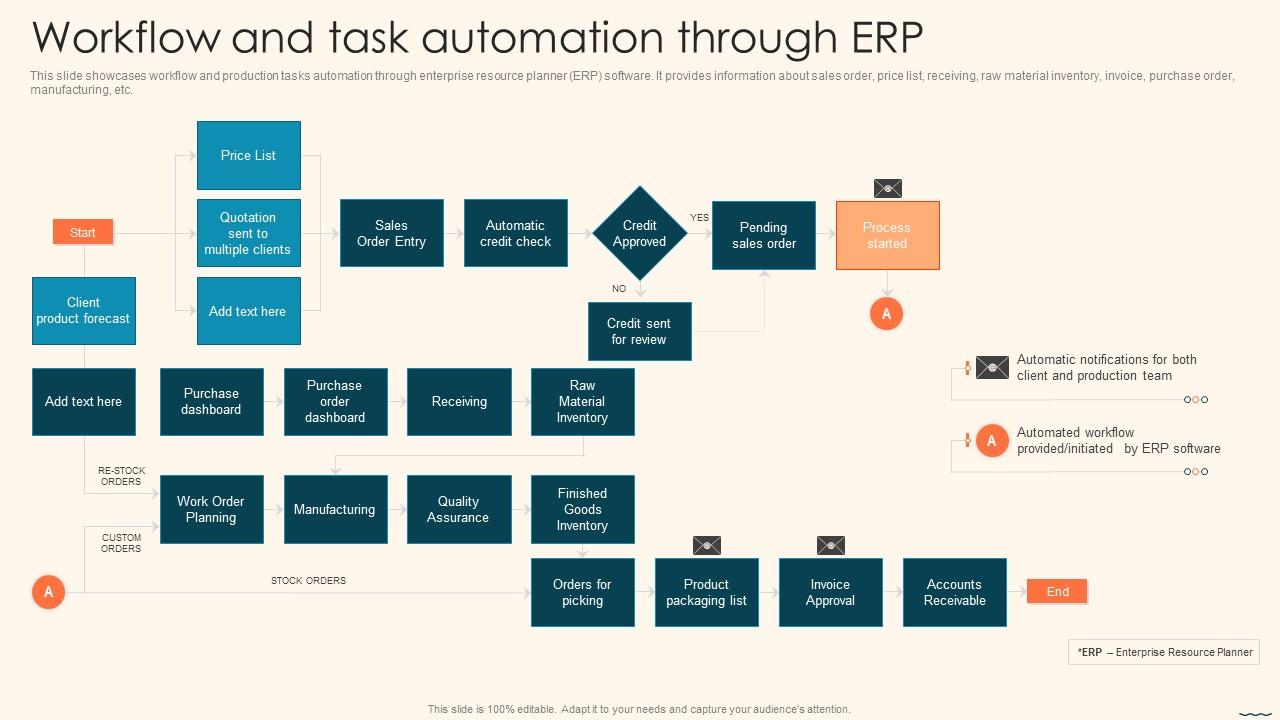
This slide showcases workflow and production tasks automation through enterprise resource planner ERP software. It provides information about sales order, price list, receiving, raw material inventory, invoice, purchase order, manufacturing, etc.
People who downloaded this PowerPoint presentation also viewed the following :
Workflow And Task Automation Through ERP Deploying Automation Manufacturing with all 6 slides:
Use our Workflow And Task Automation Through ERP Deploying Automation Manufacturing to effectively help you save your valuable time. They are readymade to fit into any presentation structure.
FAQs for Workflow And Task Automation Through ERP
Dude, the time savings alone will blow your mind - no more drowning in invoice processing and inventory updates. Your team can actually focus on real work instead of boring data entry stuff. Real-time visibility across departments is honestly game-changing once you get used to it. Compliance happens automatically which saves your butt during audits. Human errors basically disappear too, which is probably my favorite part since I've seen too many spreadsheet disasters. Oh, and pro tip - start with whatever manual process currently makes everyone want to cry. Those are your quick wins right there.
Manual data entry is where most screw-ups happen, so ERP automation basically cuts that out entirely. Your system pulls info straight from invoices and purchase orders without human fingers getting involved. No more typos or copying mistakes. The validation rules catch weird stuff right away - duplicate entries, missing fields, whatever. You get audit trails too so you can see who changed what and when. Honestly? Start with your messiest processes first and automate those. You'll notice the difference pretty fast. Way better than triple-checking spreadsheets all day.
So cloud tech is basically what makes modern ERP automation work so well. Real-time data processing, automatic updates, better integration - all that good stuff you can't really get with old on-premise systems. The cost savings alone are worth it since you're not dealing with servers and IT headaches anymore. Your team can work from anywhere, which is clutch these days. Plus it scales with your business instead of you being stuck with whatever you bought upfront. AI features are getting pretty wild too - they handle a lot of the smart automation stuff. I'd start by checking which providers actually have the automation features you need though.
Honestly, just tackle the stuff that's driving you crazy first - invoicing, inventory, payroll. Those cloud ERP systems are way better than the old clunky ones, and you won't need some massive IT team. Pick maybe 2-3 things that are eating up hours of your day. Get those working smoothly before you even think about adding more. I've watched too many businesses try to automate everything overnight and it's a mess. Track how much time you're actually saving (you'd be surprised how motivating that is), then your team will be way more open to expanding the system later.
Ugh, data compatibility is gonna be your biggest nightmare - old systems use formats that just refuse to work with modern ERPs. Downtime during migration? Yeah, leadership loves hearing about that. Costs pile up quick too, especially if you need custom middleware or major code overhauls. Don't even get me started on security issues with older systems not meeting today's standards. Honestly, I'd run a full system audit first to catch compatibility problems early. Oh, and do it in phases instead of some massive all-at-once switchover that'll probably blow up in your face.
Dude, ERP automation is a game changer for project timelines. Manual data entry? Gone. Those annoying approval bottlenecks that slow everything down? Also gone. Your team gets real-time updates automatically, and you won't be constantly hunting people down for status reports anymore. Budget approvals that used to take forever now happen instantly - which honestly is my favorite part because waiting around for that stuff is the worst. Most teams I know cut their project time by like 20-30% once they get it running smoothly. Start with whatever approval process bugs you most.
Honestly, start with your biggest headaches and work backwards from there. Find something that automates the boring stuff and connects your departments so data actually flows between them. The dashboard needs to make sense for YOUR team - not some generic setup that looks pretty but tells you nothing useful. Mobile access is non-negotiable these days (who wants to run back to their computer every time?). Make sure it talks to whatever software you're already using and that you can control who sees what. Oh, and the interface better be simple enough that you won't spend weeks training everyone on it.
So ERP automation connects all your supply chain stuff in real-time, which is pretty sweet. Stock levels update automatically, it forecasts demand, generates purchase orders - basically handles the boring repetitive stuff. When inventory hits certain thresholds, boom, automatic reorders. It even predicts bottlenecks before they screw you over. Honestly saves you from those panic "we're completely out" situations that make everyone lose their minds. Your team can actually focus on bigger picture strategy instead of endless spreadsheets. Routes get optimized too. I'd start with whatever processes are driving you most crazy right now.
Start with multi-factor authentication - seriously, this one thing stops most attacks cold. Then set up role-based permissions so people can't access stuff they shouldn't. Encrypt everything (data moving around and stored data). You'll need regular security audits, though I know they're a pain. Automated backups are non-negotiable, plus have your disaster recovery plan actually written down somewhere. Real-time monitoring with alerts catches weird activity fast. Honestly, MFA and user permissions first, then tackle the rest based on what keeps you up at night security-wise.
Dude, seriously - if you skimp on training your team, the whole ERP thing will crash and burn. I've watched companies blow millions because people either hated the new system or had no clue how to actually use it. They'd just create these weird workarounds that made everything worse. Start the training way before go-live, not after. Cover the technical stuff, sure, but also explain WHY you're changing things and how it'll make their jobs easier (even if they don't believe you at first). One training session won't cut it either - you'll need ongoing support or people will just give up.
So there's a bunch of ways to track this stuff. First thing - get your baseline numbers before you automate anything (learned this the hard way). Then watch for cost savings from less manual work, faster processing times, fewer errors. The labor savings alone are usually massive - I've seen companies cut routine accounting work by like 40-60%. You'll also see better cash flow from faster collections. Don't forget about freeing up your team for actual strategic work instead of data entry hell. Just track whatever matters most for your situation monthly.
Break it into phases - don't try automating everything at once, you'll go crazy. Pick a platform with good APIs that won't trap you later (saw this mess happen to my last company). Start with the boring, repetitive stuff that eats up everyone's time. Your data setup needs to handle way more than you think - maybe 3x your current volume? Also test everything like your life depends on it before rolling out. The whole "move fast and break things" approach doesn't work here. Scale up piece by piece once you know it's solid.
Oh man, there are SO many ERP options for manufacturing - it's kinda crazy honestly. Discrete stuff like automotive and electronics need tools that can handle complex BOMs and assembly workflows. Process manufacturing is different though - think chemicals, food, pharma - they're all about batch tracking and staying compliant with regulations. Then you've got aerospace, textiles, metal fabrication... each one has its own quirks for inventory, scheduling, quality control. My advice? Figure out exactly what type of manufacturing you're doing first, then what compliance headaches you need to deal with. After that, demo maybe 2-3 vendors who actually specialize in your space.
So basically your ERP sets up automatic compliance checks that catch stuff before it becomes a headache. Transactions get flagged if they don't meet regulations, audit trails happen in real-time, and data retention just works without you tracking every single rule. Honestly saves your butt during audits! Plus you won't have to rely on Karen from finance remembering some random reporting thing - the system handles it. I'd start by figuring out what compliance stuff you actually need, then set up your workflows to handle it automatically. Way better than doing it manually.
Honestly, predictive analytics with AI is huge right now - that's where ERP is really moving. Your routine stuff will get handled by machine learning automatically. Low-code platforms are getting better too, so your team can tweak workflows without bugging IT constantly (thank god). Mobile integration is finally catching up, and cloud solutions actually work across devices now. The big thing though? Hyper-automation where everything connects and optimizes itself. I'd start by figuring out what repetitive tasks are killing your team's productivity, then find ERP modules to automate those first. Way easier than trying to overhaul everything at once.
-
Excellent products for quick understanding.
-
I can say with full confidence that all your business, academic, or professional work requirements will be sufficed with SlideTeam. Their gallery is as rich as 2Million+!!