


Workplace Fitness Culture Playbook Powerpoint Presentation Slides
Organizations focus more on encouraging fitness at the workplace to ensure overall employee health and wellbeing. Healthy employees cost less than unhealthy employees staff is more prone to different illnesses without proper fitness. Here is a professionally designed Workplace Fitness Culture Playbook template that will assist the organizations that wants to ensure effective work-life balance within their employees by running a health and fitness program. The presentation begins with slides about health and fitness at the workplace, about the program; companies can use these slides to address information about the significant benefits of staying healthy at the workplace and the overview of the fitness program covering details about objectives, results, and additional information offerings. With multiple activities covered under this program section, companies can address valuable information on staying fit in simple ways to improve mental, physical, and emotional wellbeing and various team activities and evaluation processes. At last, certificate of completion and best performance award slides will help the organization motivate their employees to complete the program and achieve excellence successfully. Book a free demo with our research team now.










-

- Google Slides is a new FREE Presentation software from Google.
- All our content is 100% compatible with Google Slides.
- Just download our designs, and upload them to Google Slides and they will work automatically.
- Amaze your audience with SlideTeam and Google Slides.
-

Want Changes to This PPT Slide? Check out our Presentation Design Services
-

- WideScreen Aspect ratio is becoming a very popular format. When you download this product, the downloaded ZIP will contain this product in both standard and widescreen format.
-

- Some older products that we have may only be in standard format, but they can easily be converted to widescreen.
- To do this, please open the SlideTeam product in Powerpoint, and go to
- Design ( On the top bar) -> Page Setup -> and select "On-screen Show (16:9)” in the drop down for "Slides Sized for".
- The slide or theme will change to widescreen, and all graphics will adjust automatically. You can similarly convert our content to any other desired screen aspect ratio.
Compatible With Google Slides

Get This In WideScreen
You must be logged in to download this presentation.


Do you want to remove this product from your favourites?
PowerPoint presentation slides
Deliver this complete deck to your team members and other collaborators. Encompassed with stylized slides presenting various concepts, this Workplace Fitness Culture Playbook Powerpoint Presentation Slides is the best tool you can utilize. Personalize its content and graphics to make it unique and thought-provoking. All the fourty one slides are editable and modifiable, so feel free to adjust them to your business setting. The font, color, and other components also come in an editable format making this PPT design the best choice for your next presentation. So, download now.

People who downloaded this PowerPoint presentation also viewed the following :
Content of this Powerpoint Presentation
Slide 1: This slide introduces Workplace Fitness Culture Playbook. State Your Company Name and begin.
Slide 2: This slide states Agenda of the presentation.
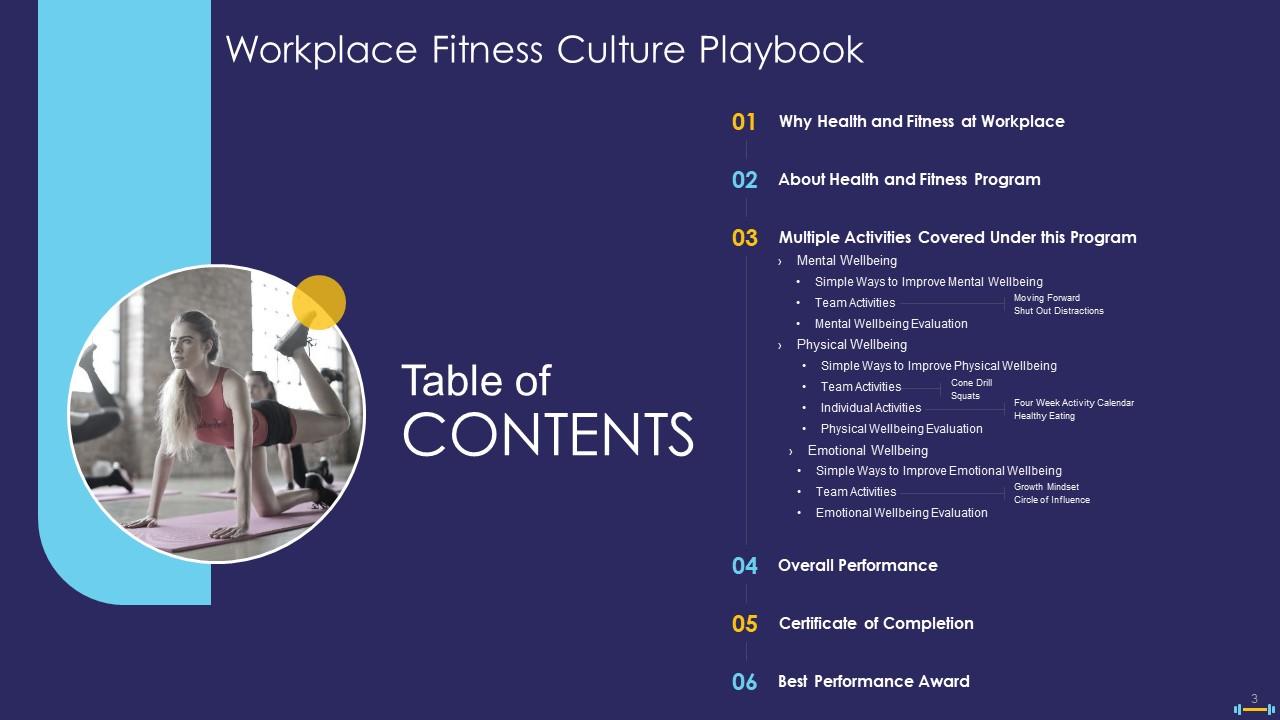
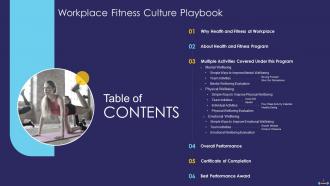
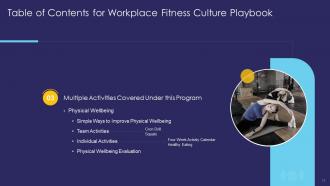
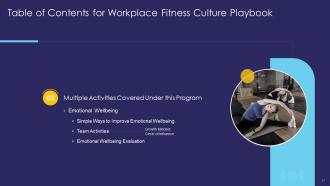
Slide 3: This slide presents Table of Content for the presentation.
Slide 4: This slide depicts title for two topics that are to be covered next in the template.
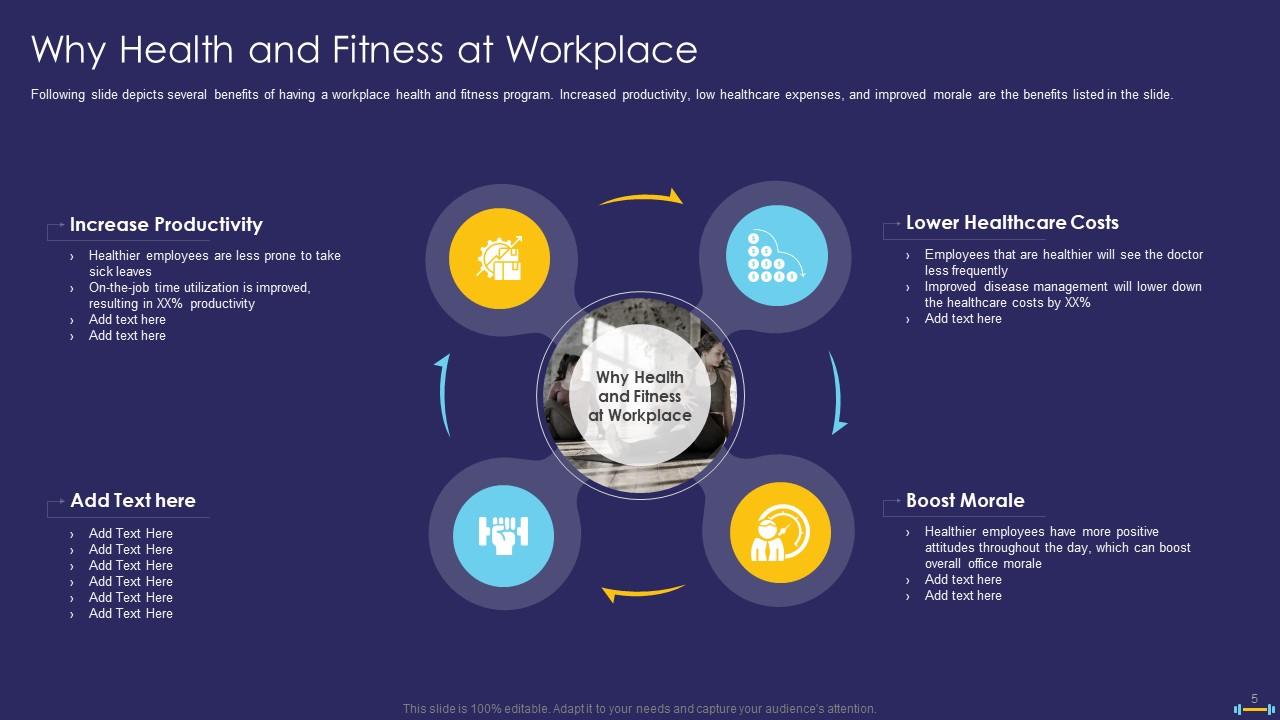
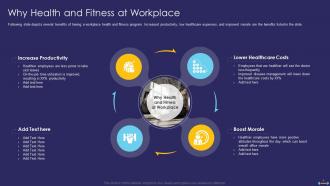
Slide 5: This slide depicts several benefits of having a workplace health and fitness program.
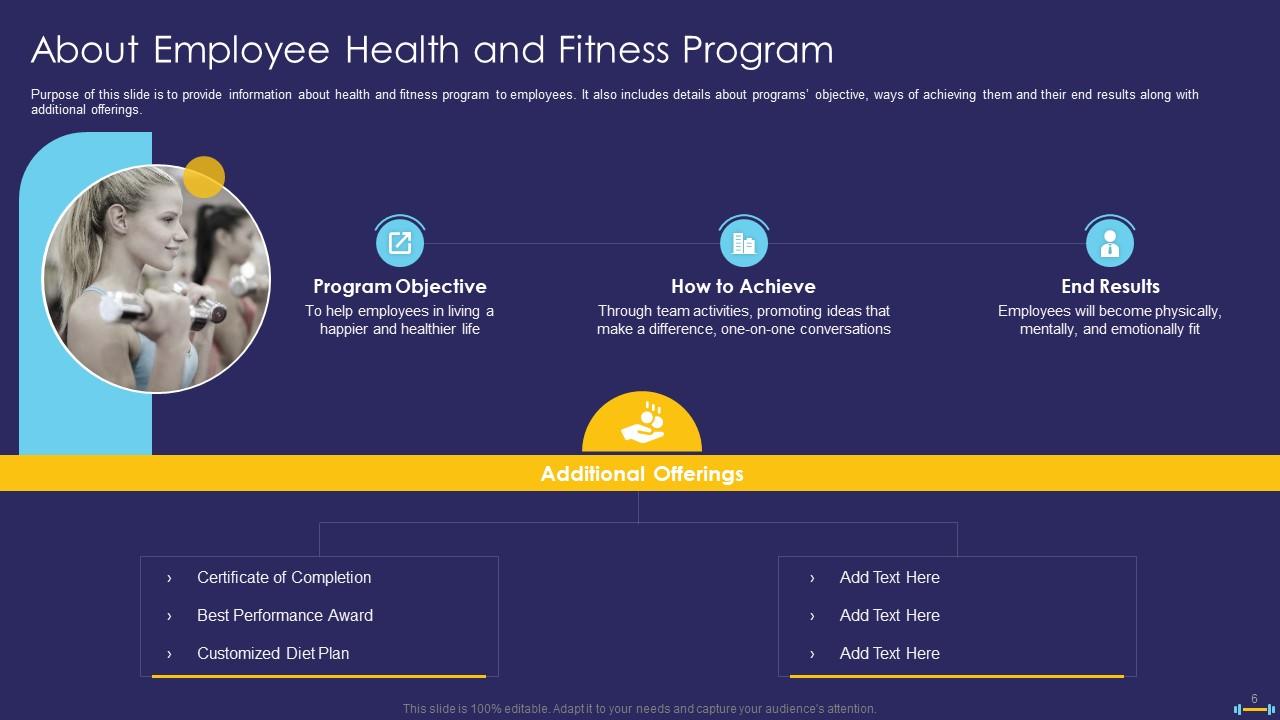
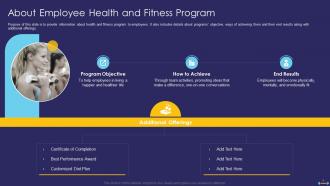
Slide 6: This slide provide information about health and fitness program to employees.
Slide 7: This slide depicts title for five topics that are to be covered next in the template.
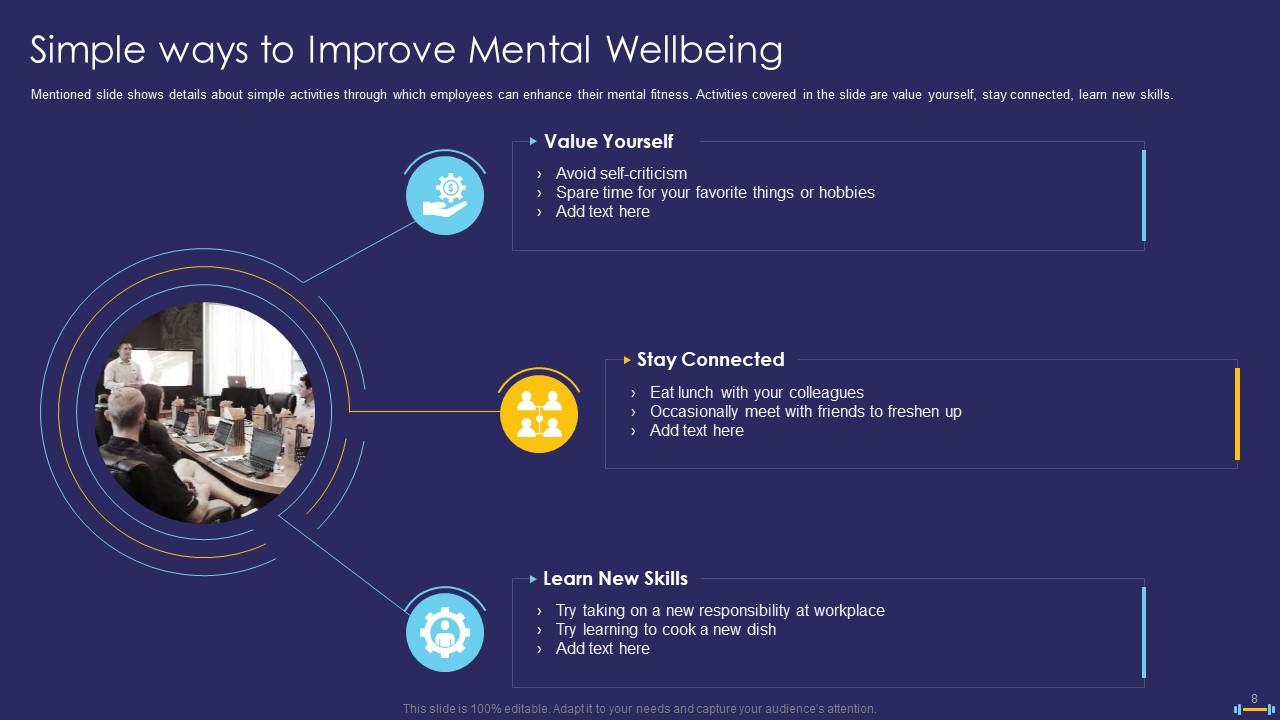
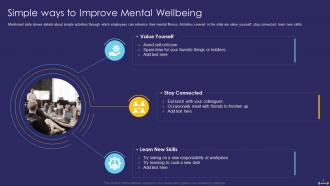
Slide 8: This slide shows details about simple activities through which employees can enhance their mental fitness.
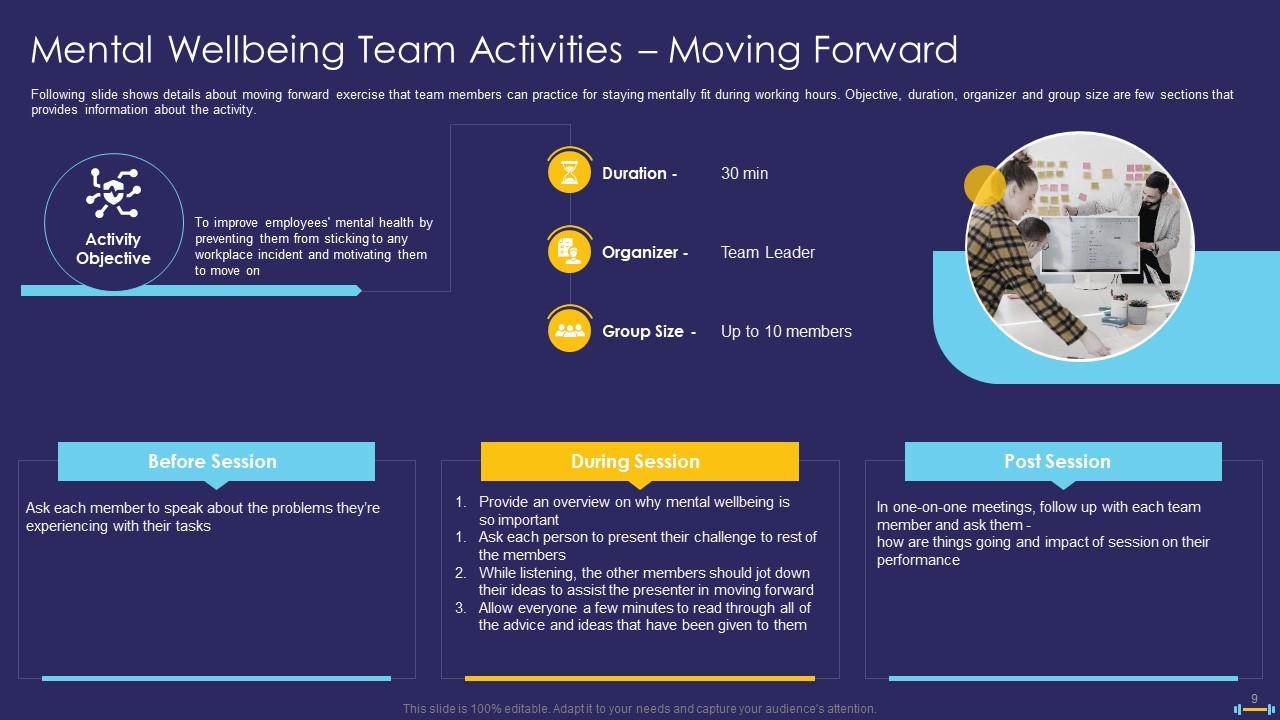
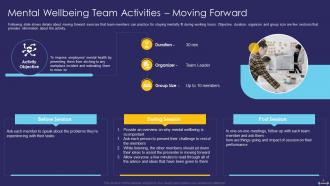
Slide 9: This slide shows details about moving forward exercise that team members can practice for staying mentally fit during working hours.
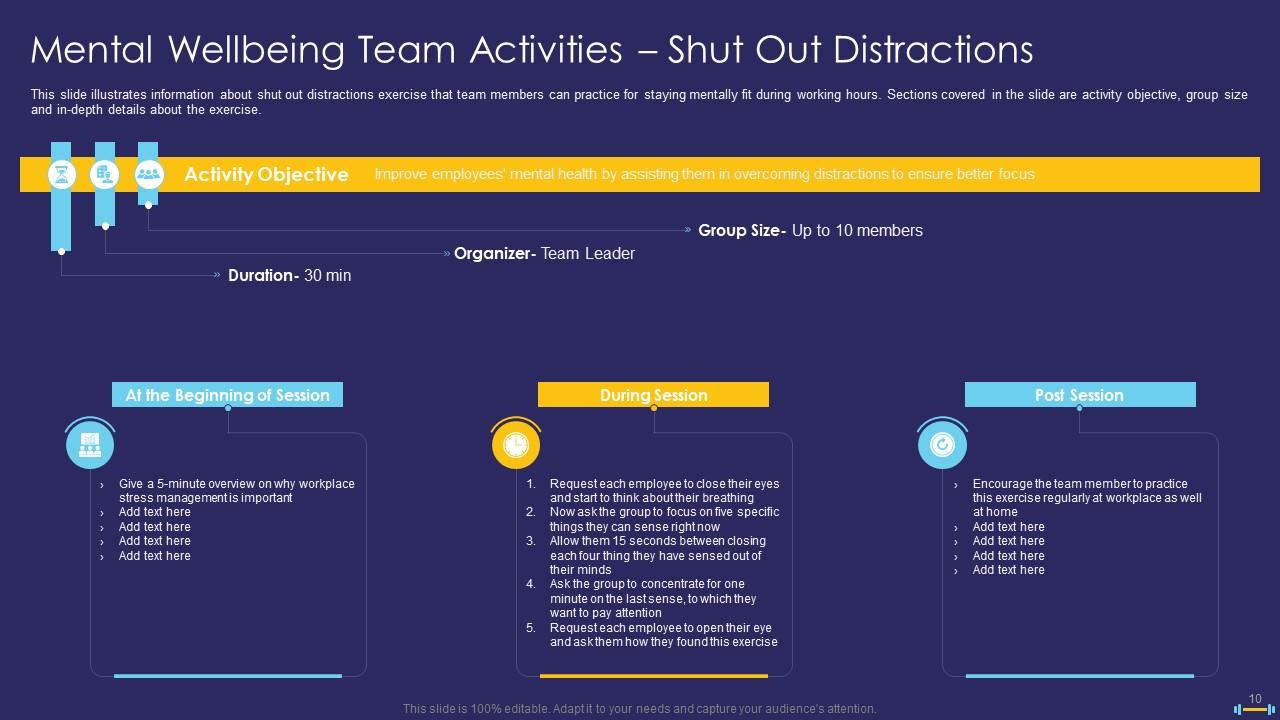
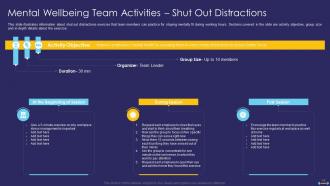
Slide 10: This slide illustrates information about shut out distractions exercise that team members can practice for staying mentally fit during working hours.
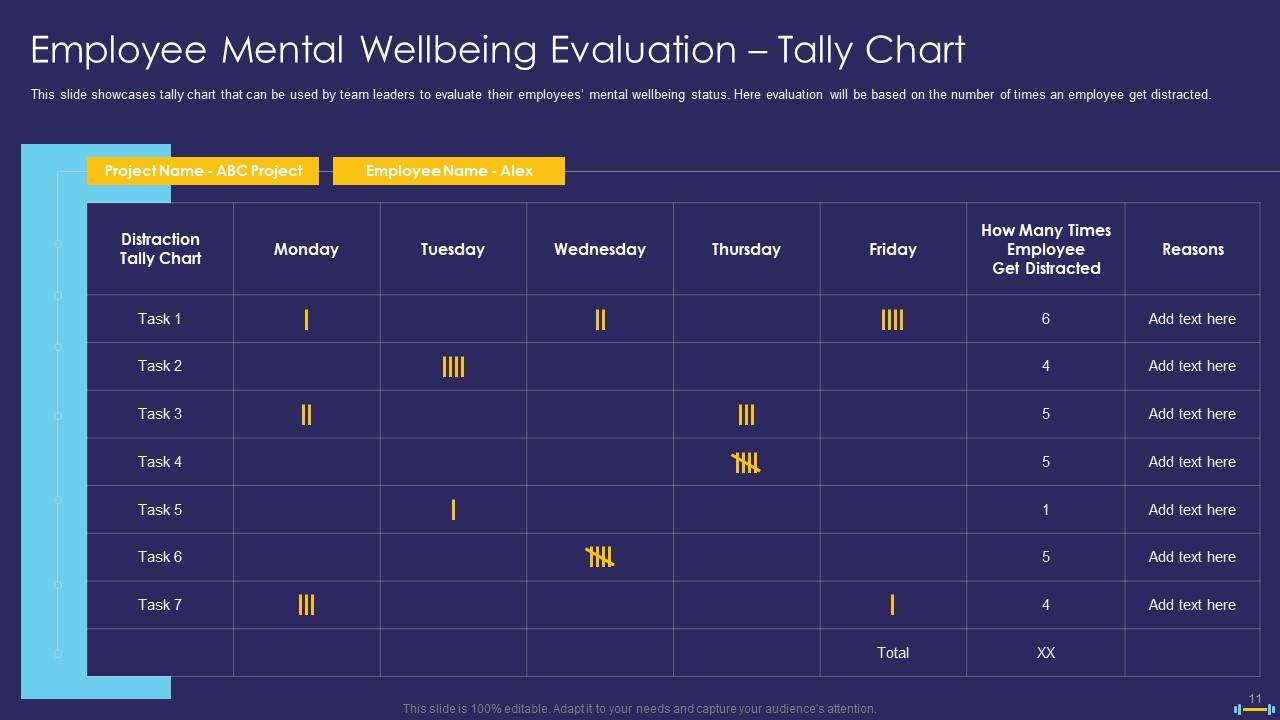
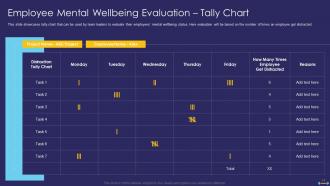
Slide 11: This slide showcases tally chart that can be used by team leaders to evaluate their employees’ mental wellbeing status.
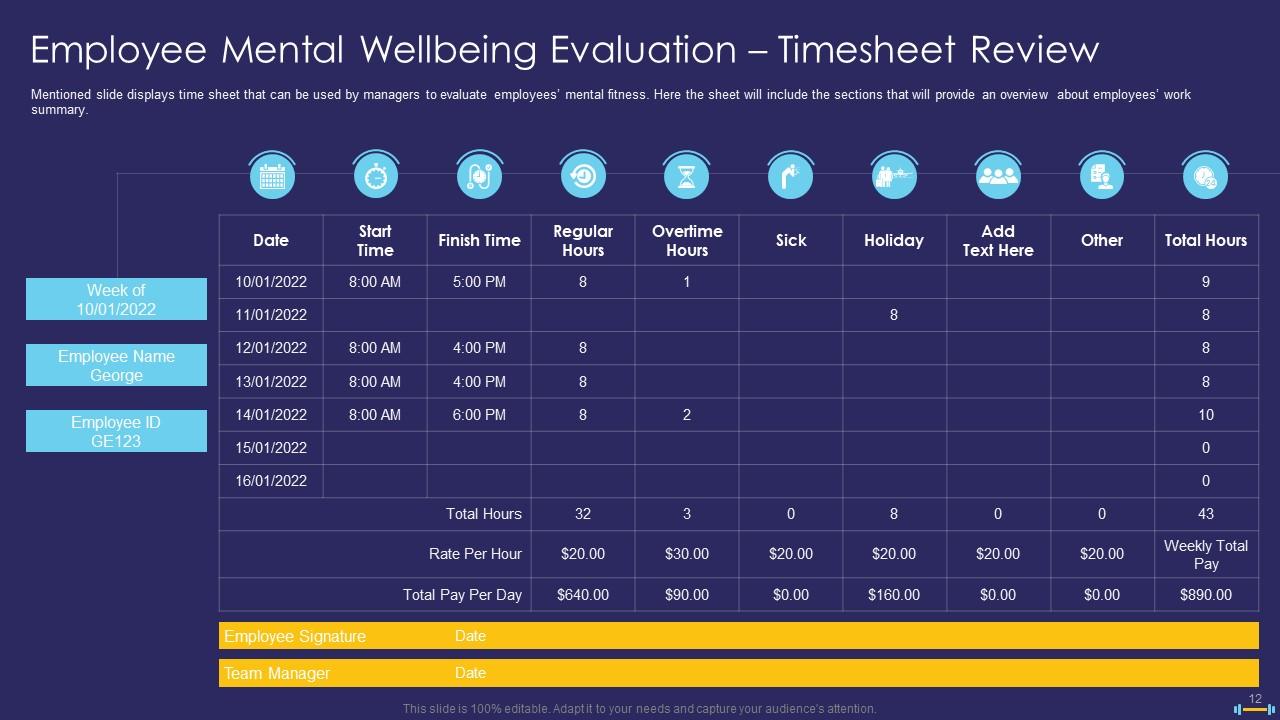
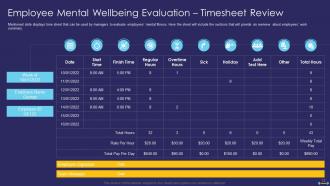
Slide 12: This slide displays time sheet that can be used by managers to evaluate employees’ metal fitness.
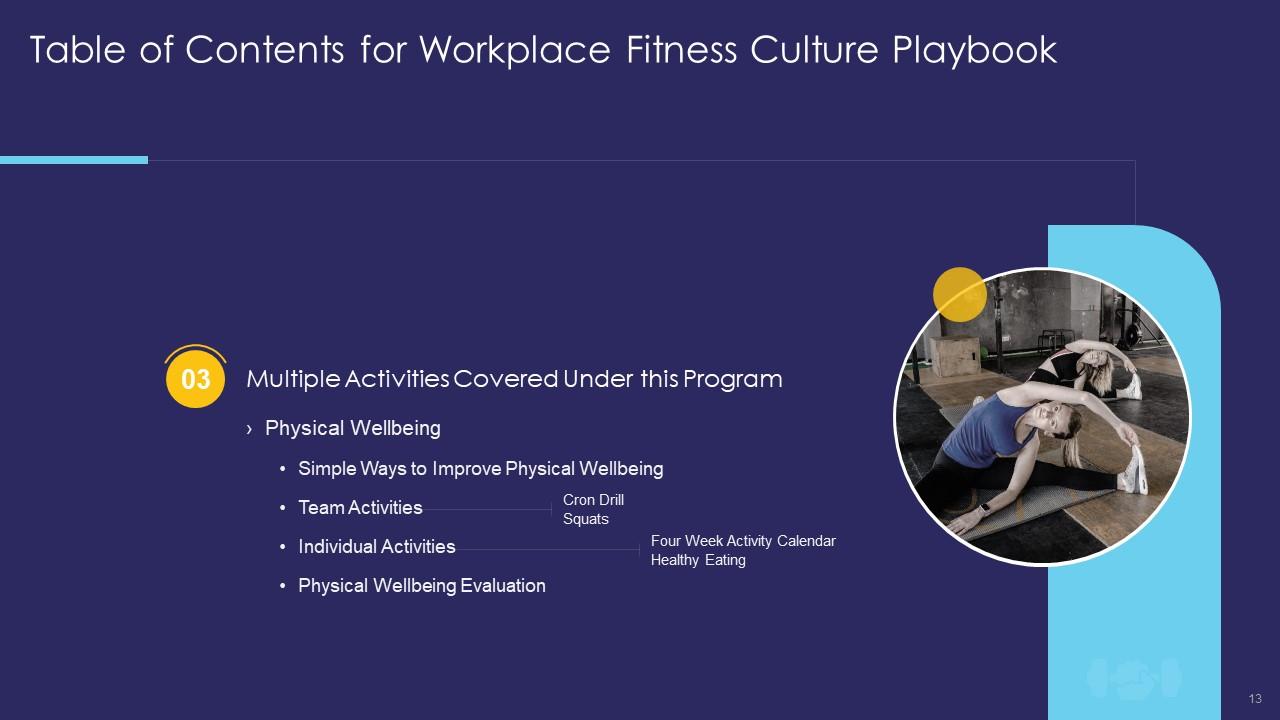
Slide 13: This slide depicts title for seven topics that are to be covered next in the template.
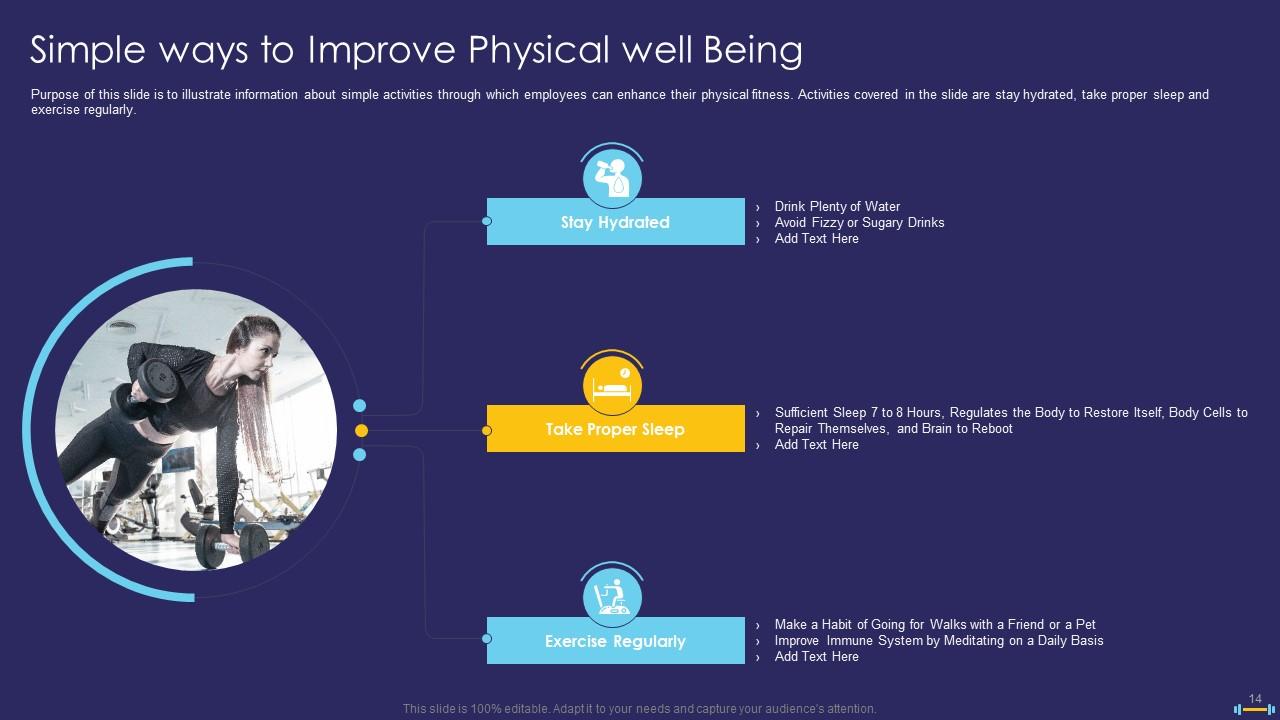
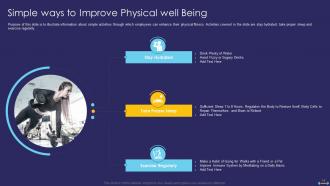
Slide 14: This slide illustrate information about simple activities through which employees can enhance their physical fitness.
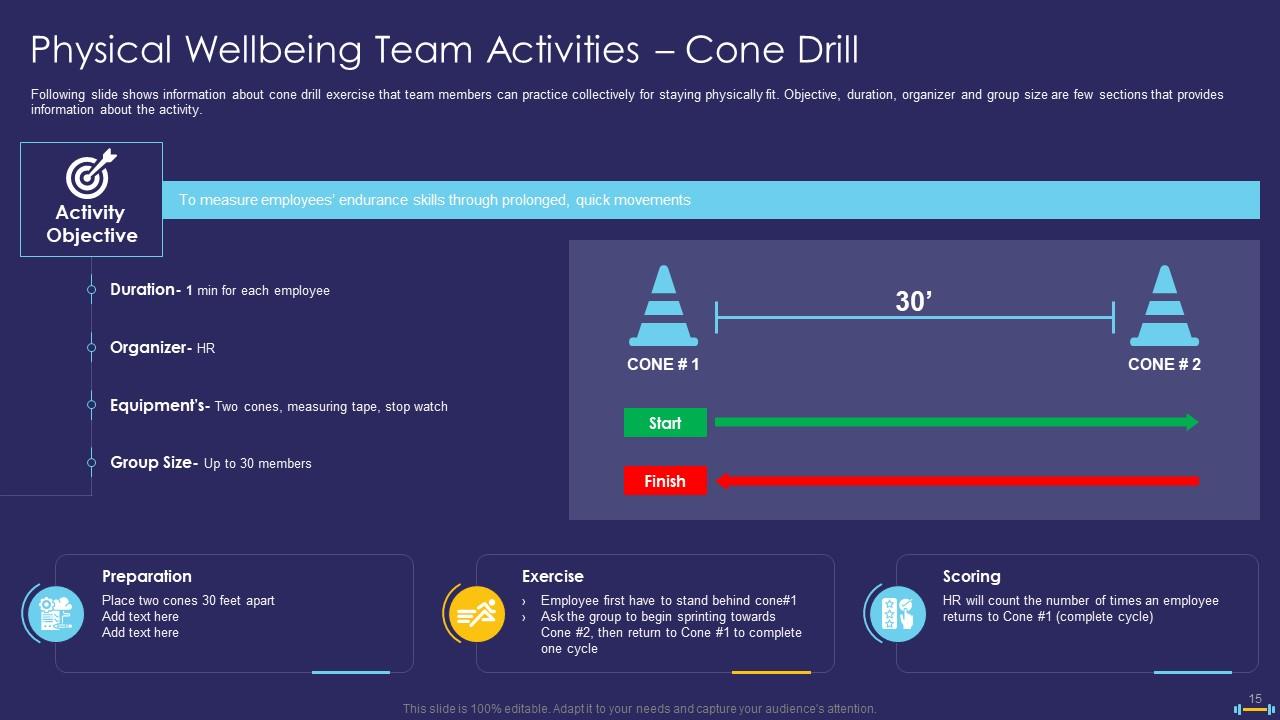
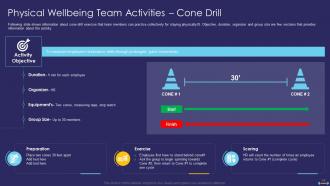
Slide 15: This slide shows information about cone drill exercise that team members can practice collectively for staying physically fit.
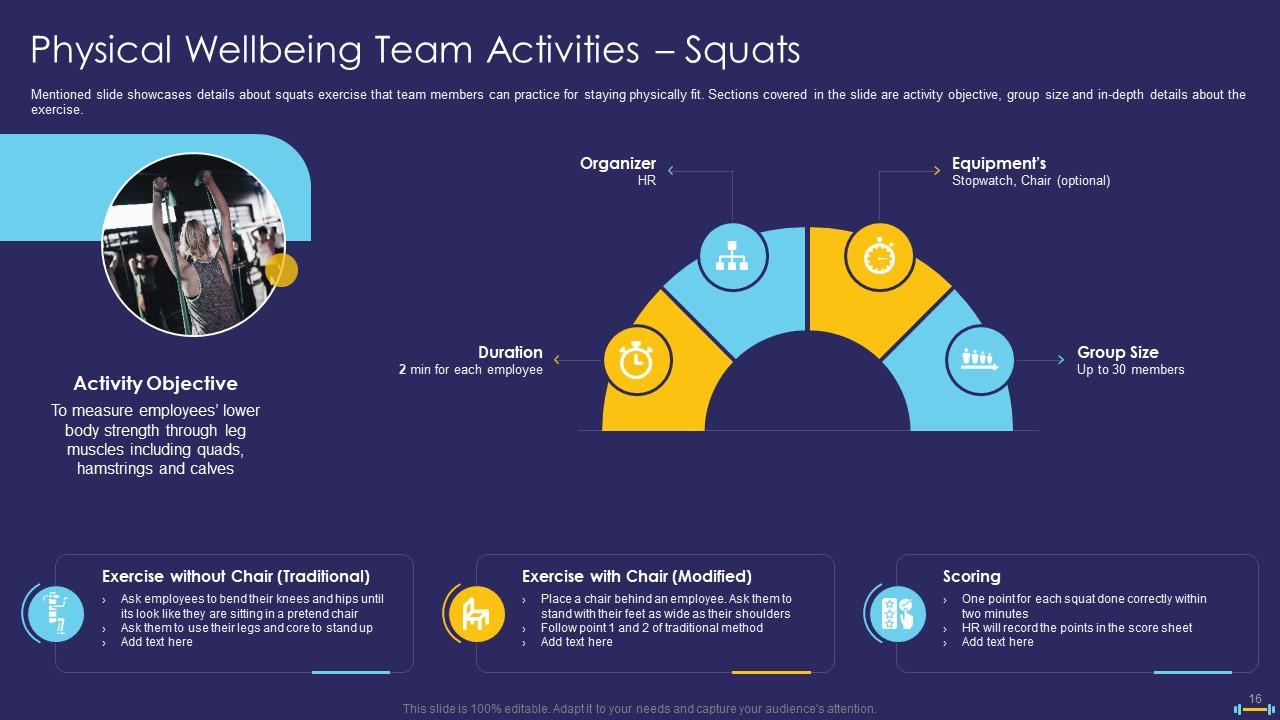
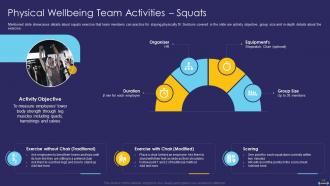
Slide 16: This slide showcases details about squats exercise that team members can practice for staying physically fit.
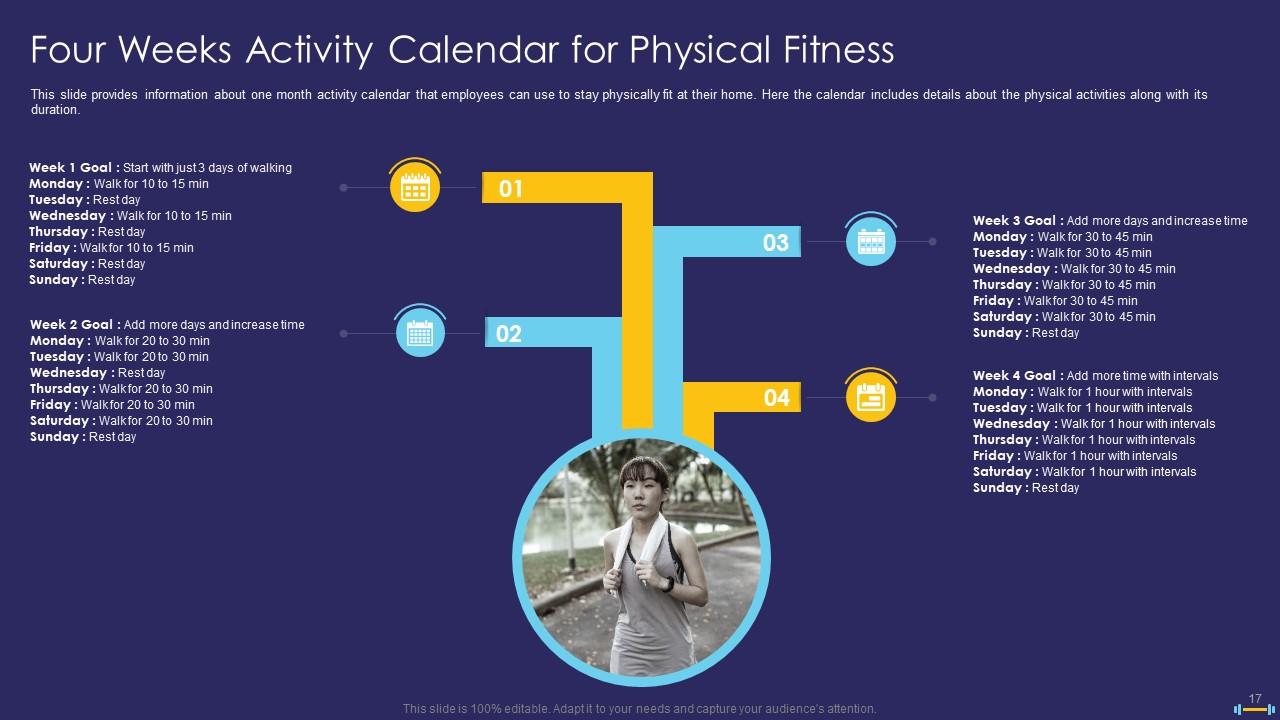
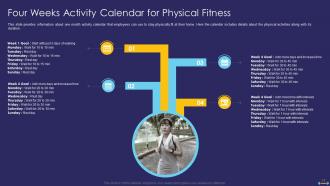
Slide 17: This slide provides information about one month activity calendar that employees can use to stay physically fit at their home.
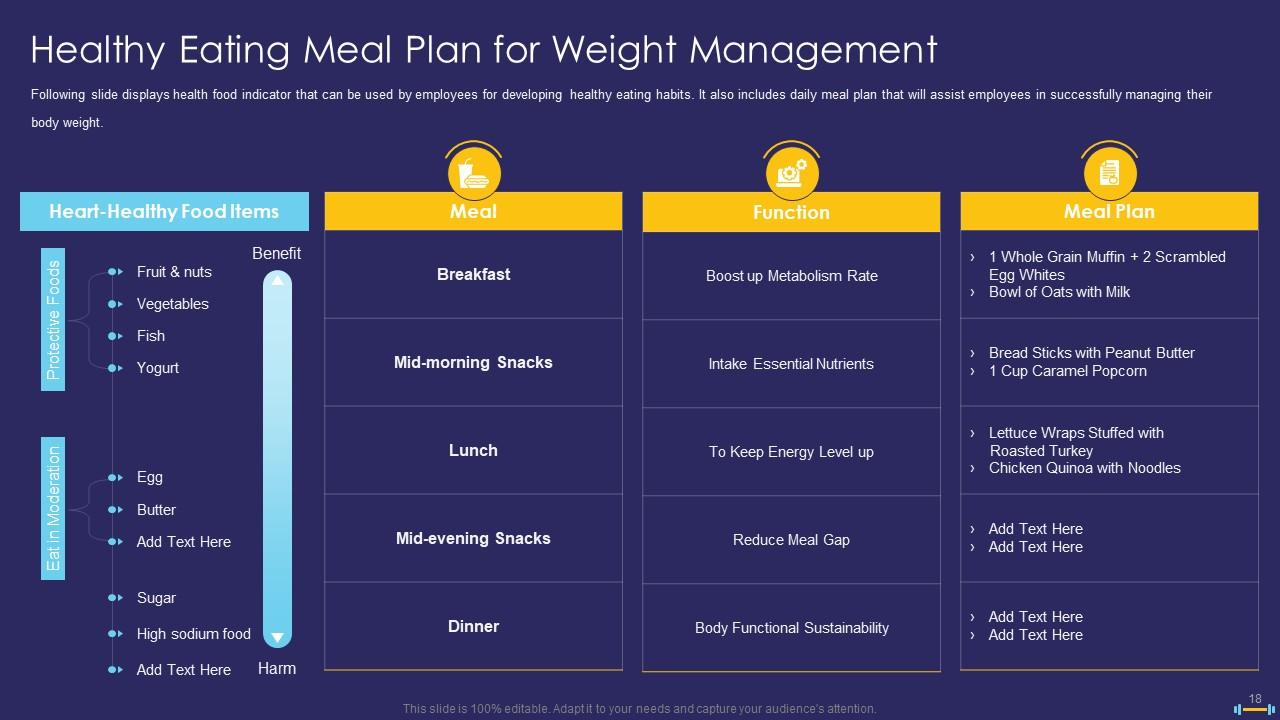
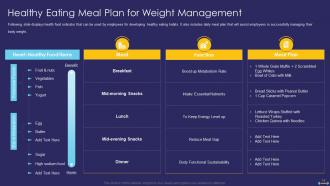
Slide 18: This slide displays health food indicator that can be used by employees for developing healthy eating habits.
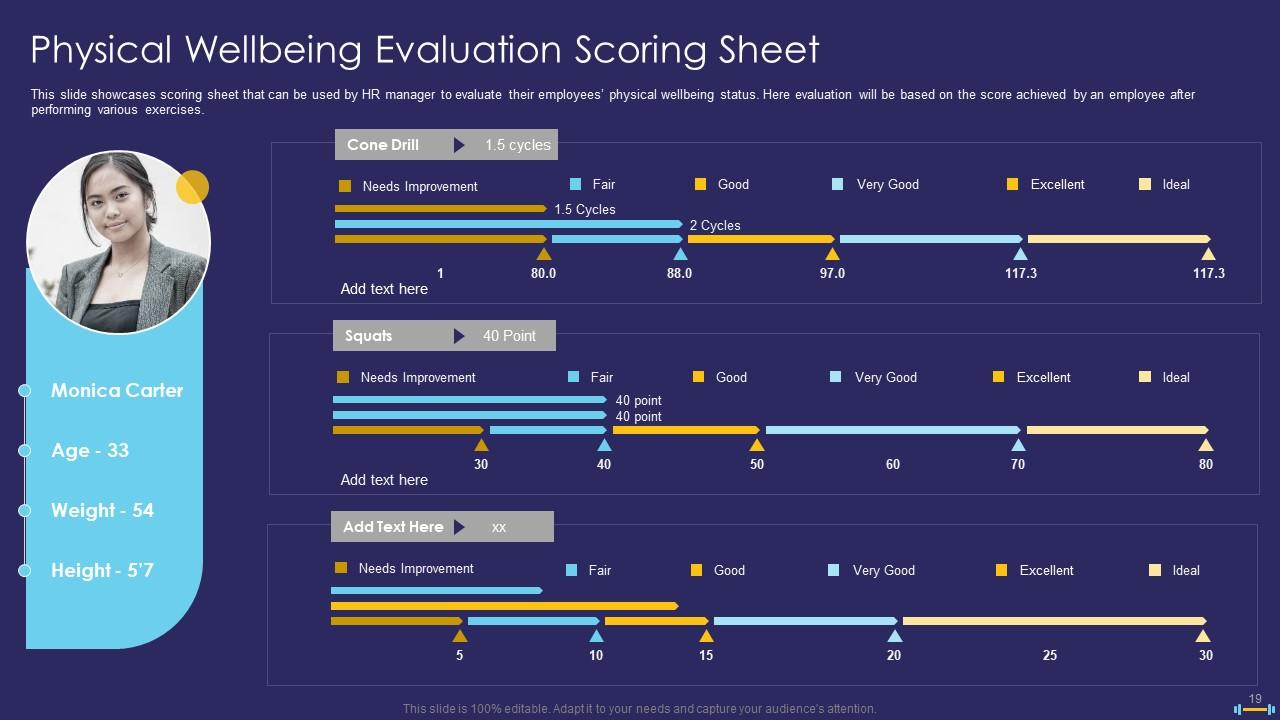
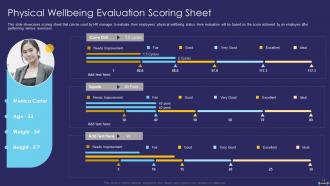
Slide 19: This slide showcases scoring sheet that can be used by HR manager to evaluate their employees’ physical wellbeing status.
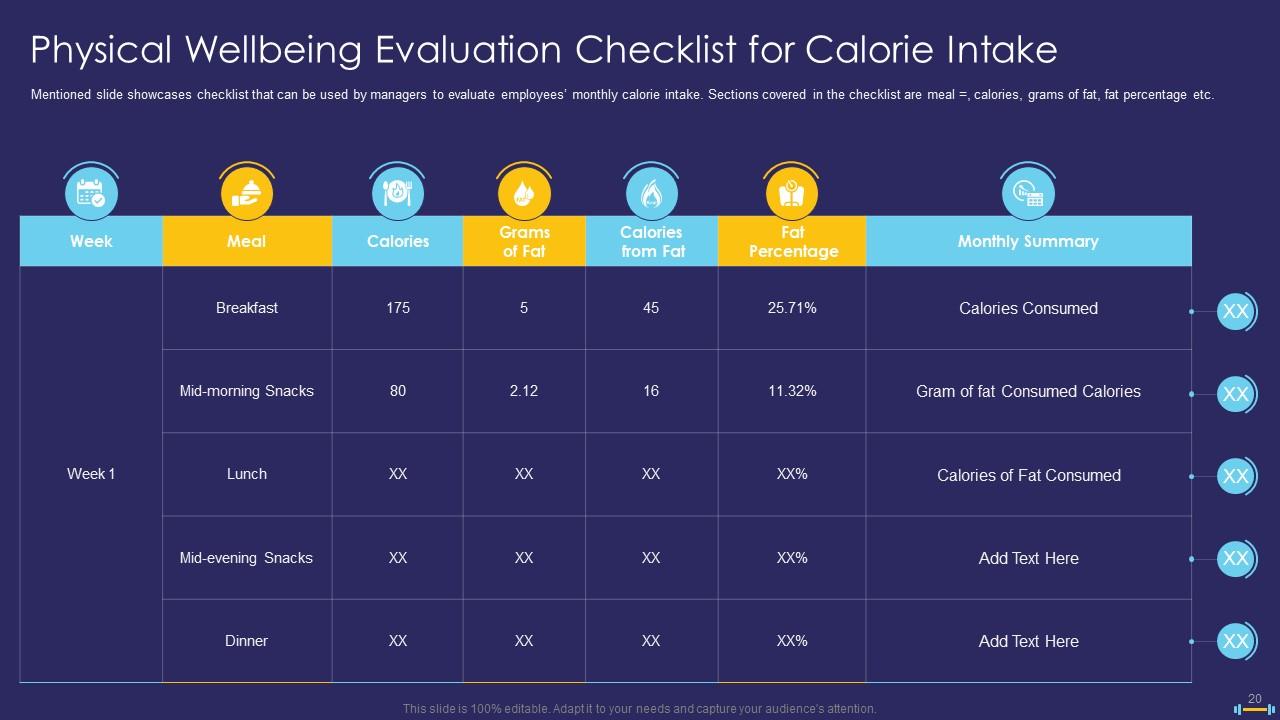
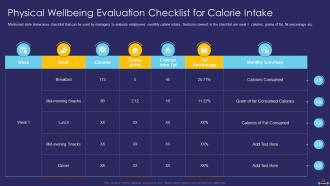
Slide 20: This slide showcases checklist that can be used by managers to evaluate employees’ monthly calorie intake.
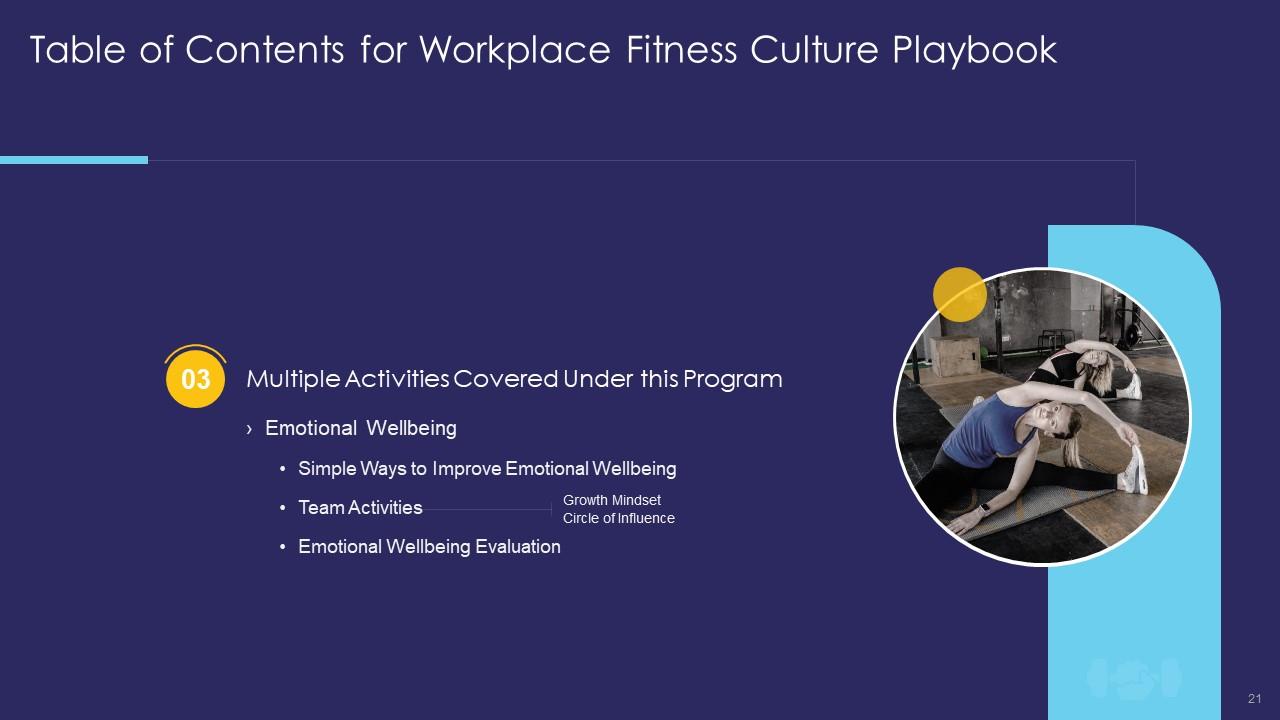
Slide 21: This slide depicts title for four topics that are to be covered next in the template.
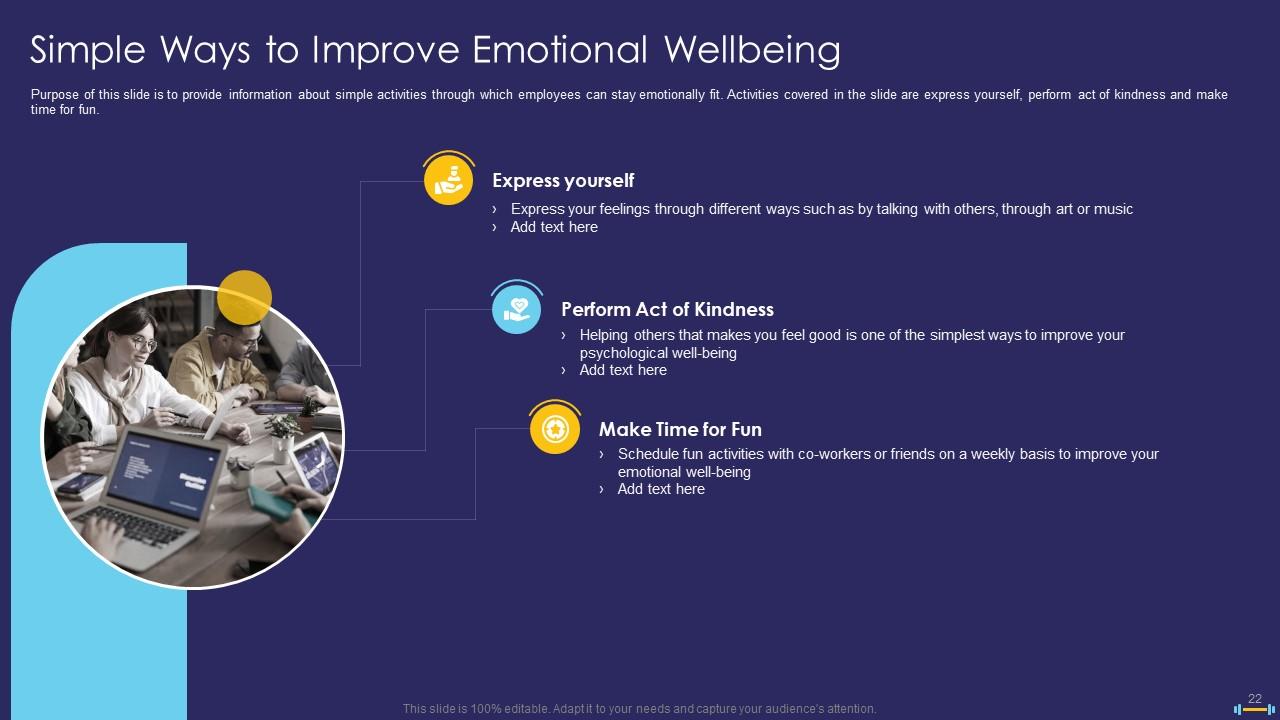
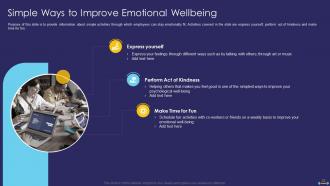
Slide 22: This slide provide information about simple activities through which employees can stay emotionally fit.
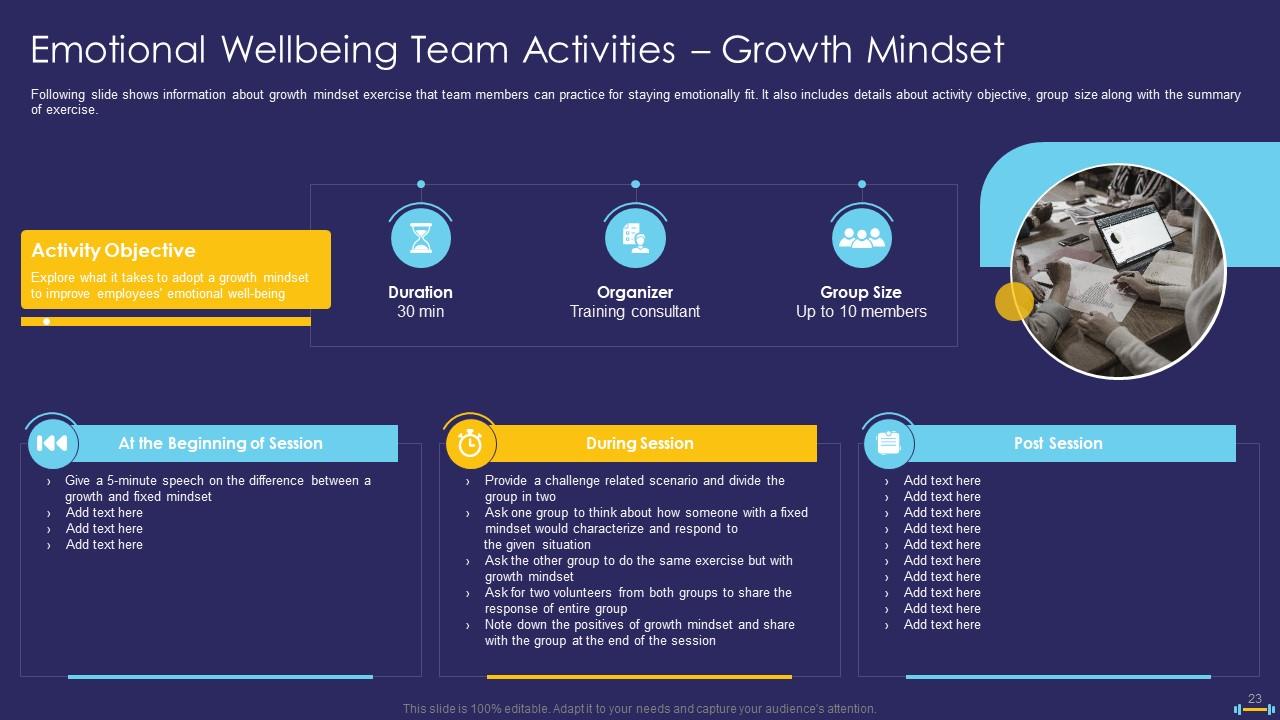
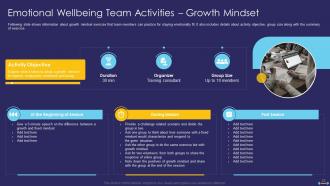
Slide 23: This slide shows information about growth mindset exercise that team members can practice for staying emotionally fit.
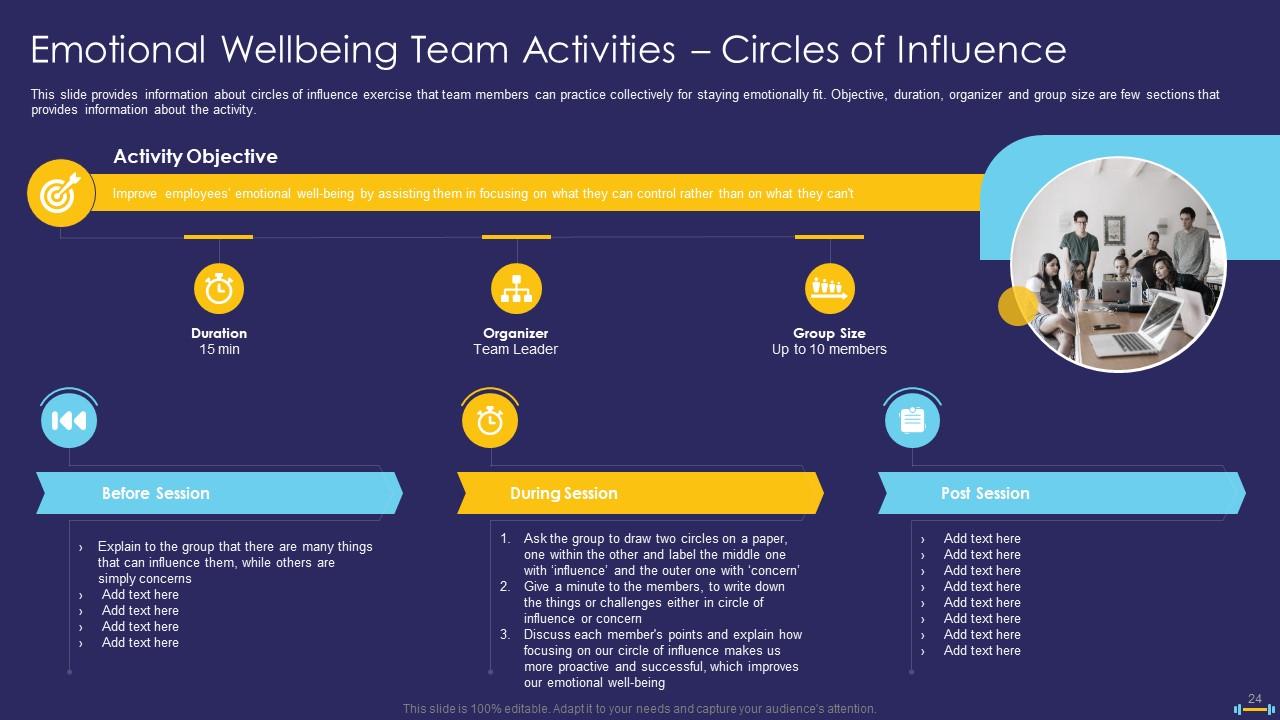
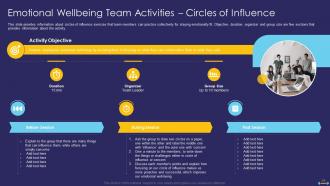
Slide 24: This slide provides information about circles of influence exercise that team members can practice collectively for staying emotionally fit.
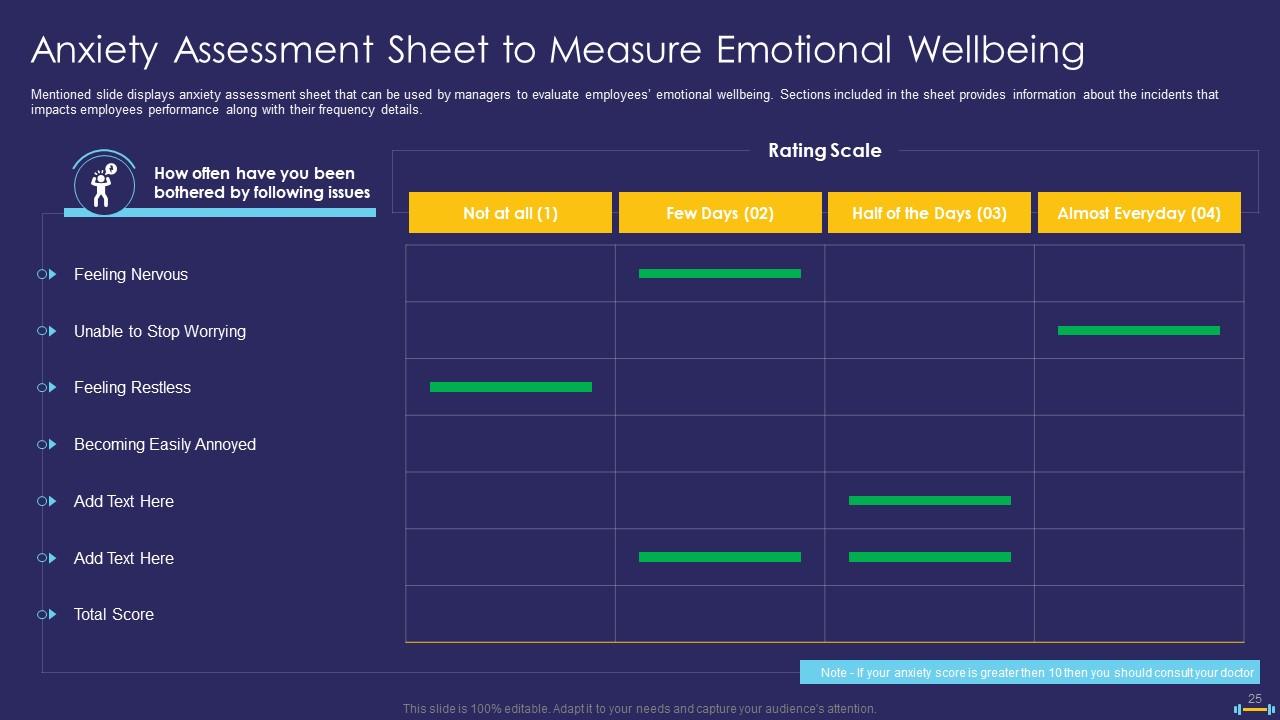
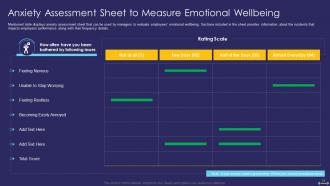
Slide 25: This slide displays anxiety assessment sheet that can be used by managers to evaluate employees’ emotional wellbeing.
Slide 26: This slide depicts title for three topics that are to be covered next in the template.
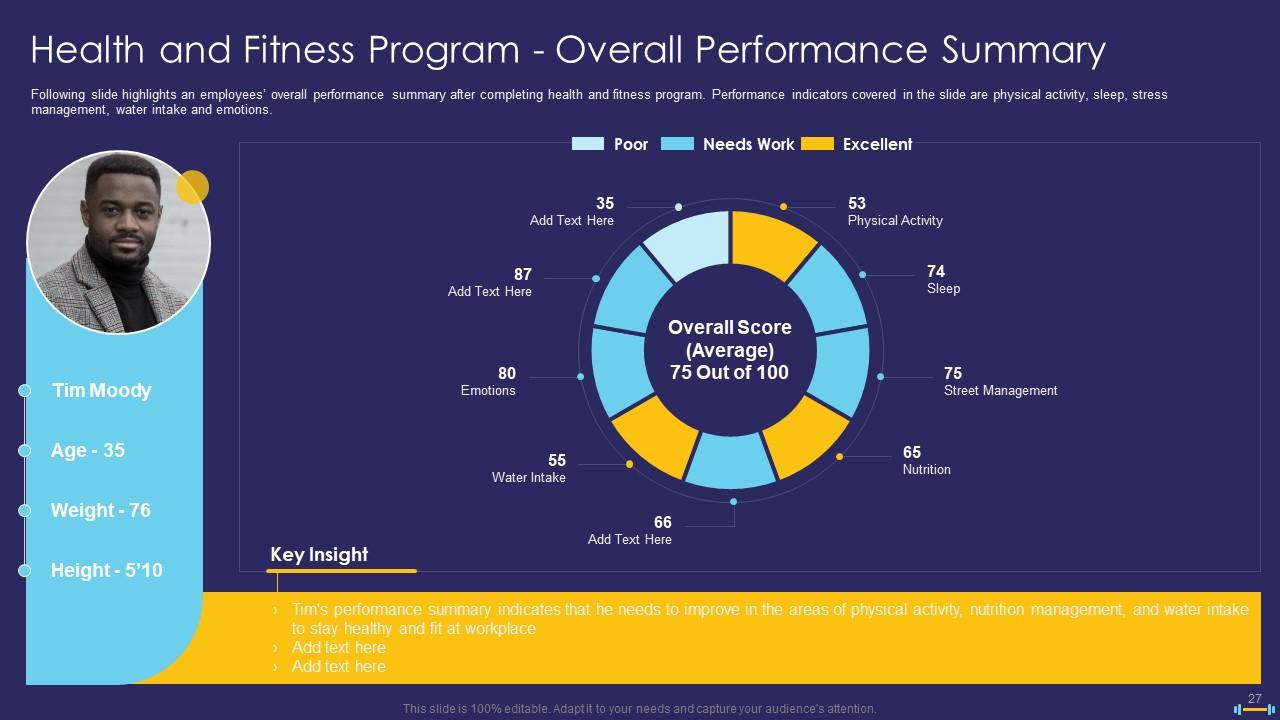
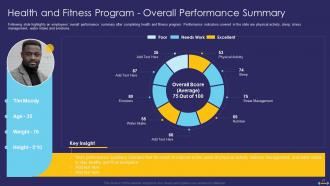
Slide 27: This slide highlights an employees’ overall performance summary after completing health and fitness program.
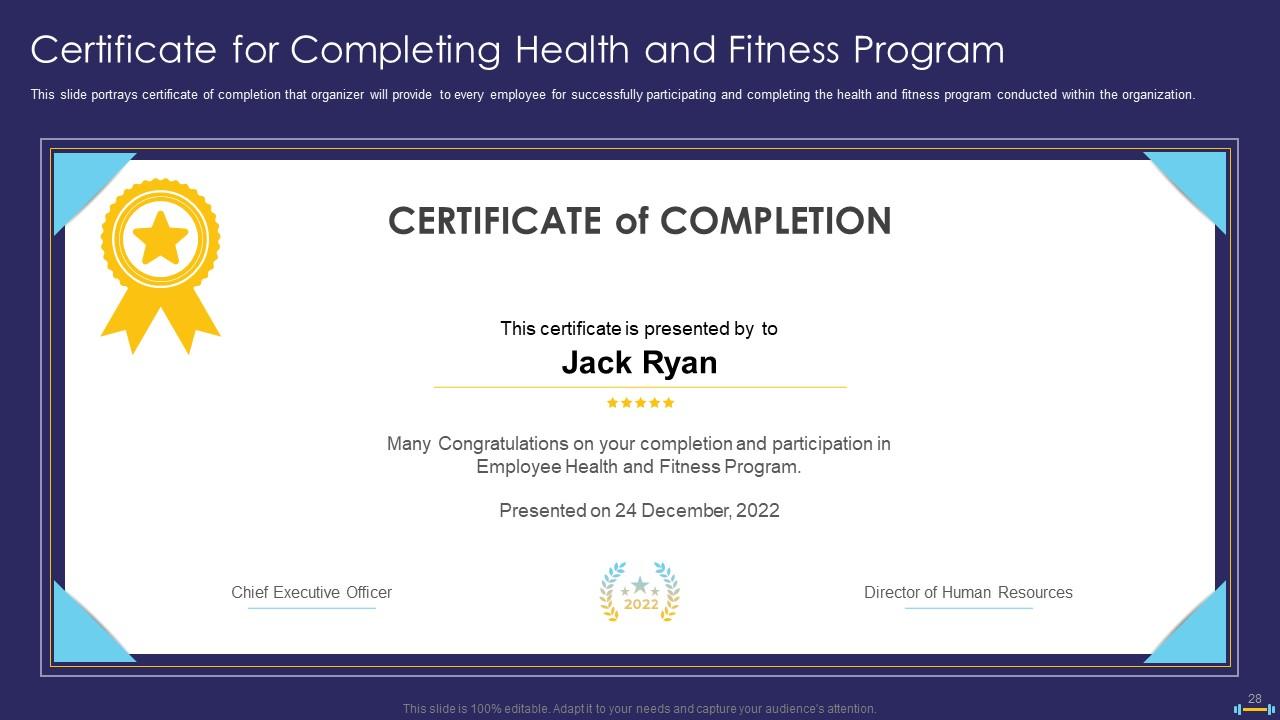
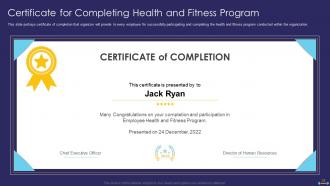
Slide 28: This slide portrays certificate of completion that organizer will provide to every employee.
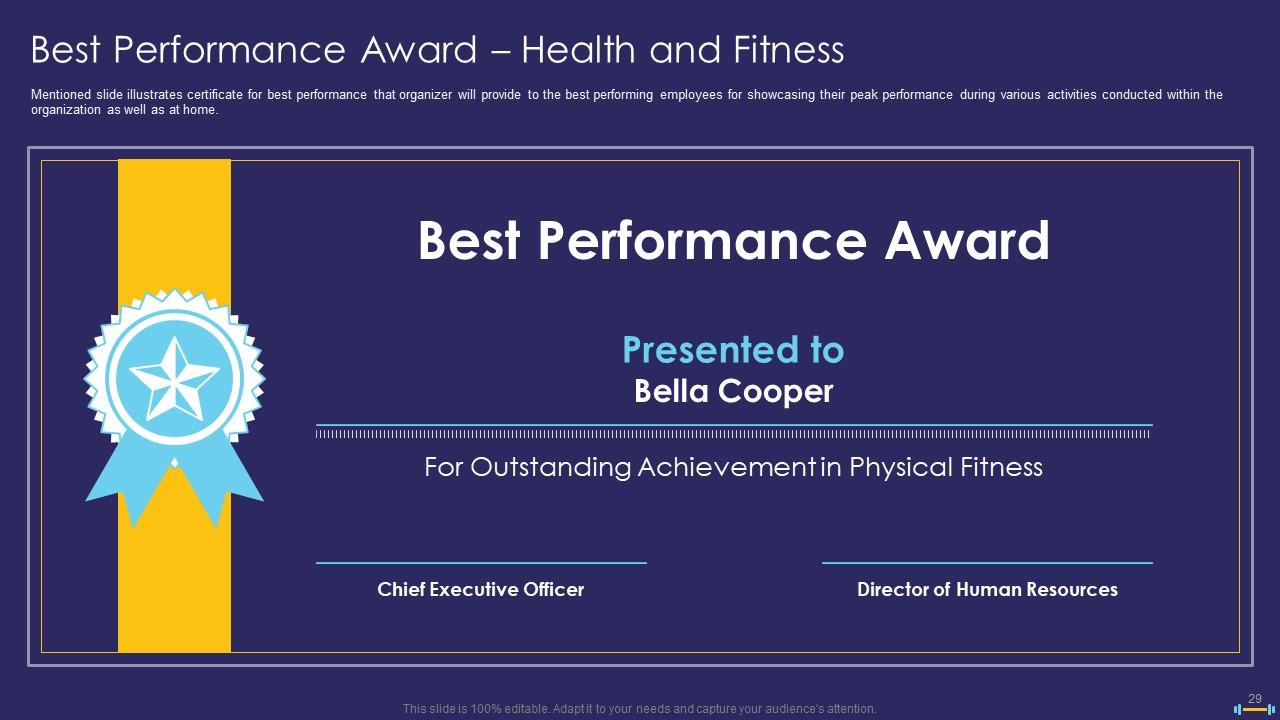
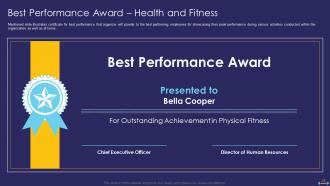
Slide 29: This slide illustrates certificate for best performance that organizer will provide to the best performing employees.
Slide 30: This slide depicts title for two topics that are to be covered next in the template.
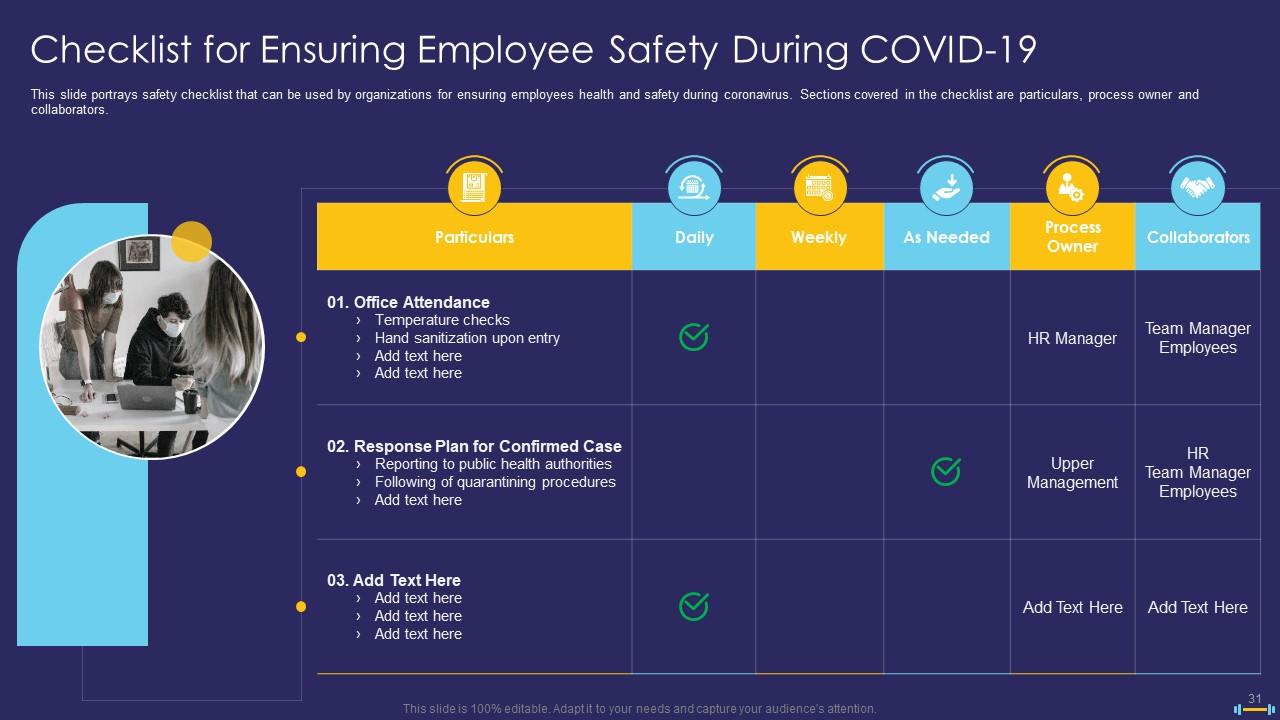
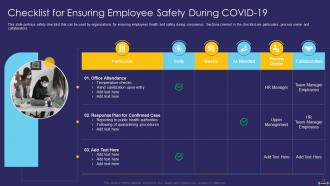
Slide 31: This slide portrays safety checklist that can be used by organizations for ensuring employees health and safety during coronavirus.
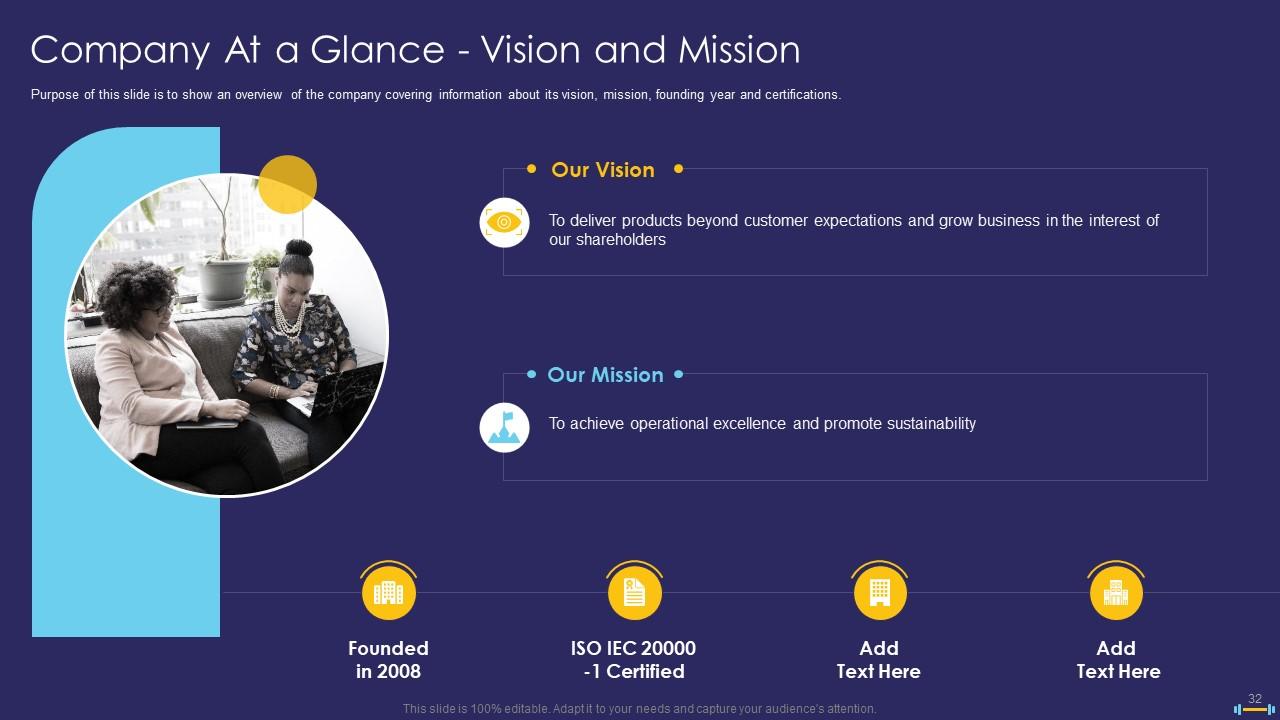
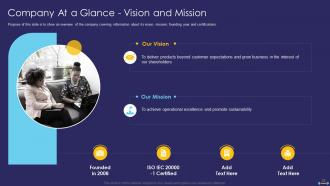
Slide 32: This slide show an overview of the company covering information about its vision, mission, founding year and certifications.
Slide 33: This slide displays Icons for Workplace Fitness Culture Playbook.
Slide 34: This slide provides 30 60 90 Days Plan with text boxes.
Slide 35: This slide shows Post It Notes. Post your important notes here.
Slide 36: This slide presents Roadmap with additional textboxes.
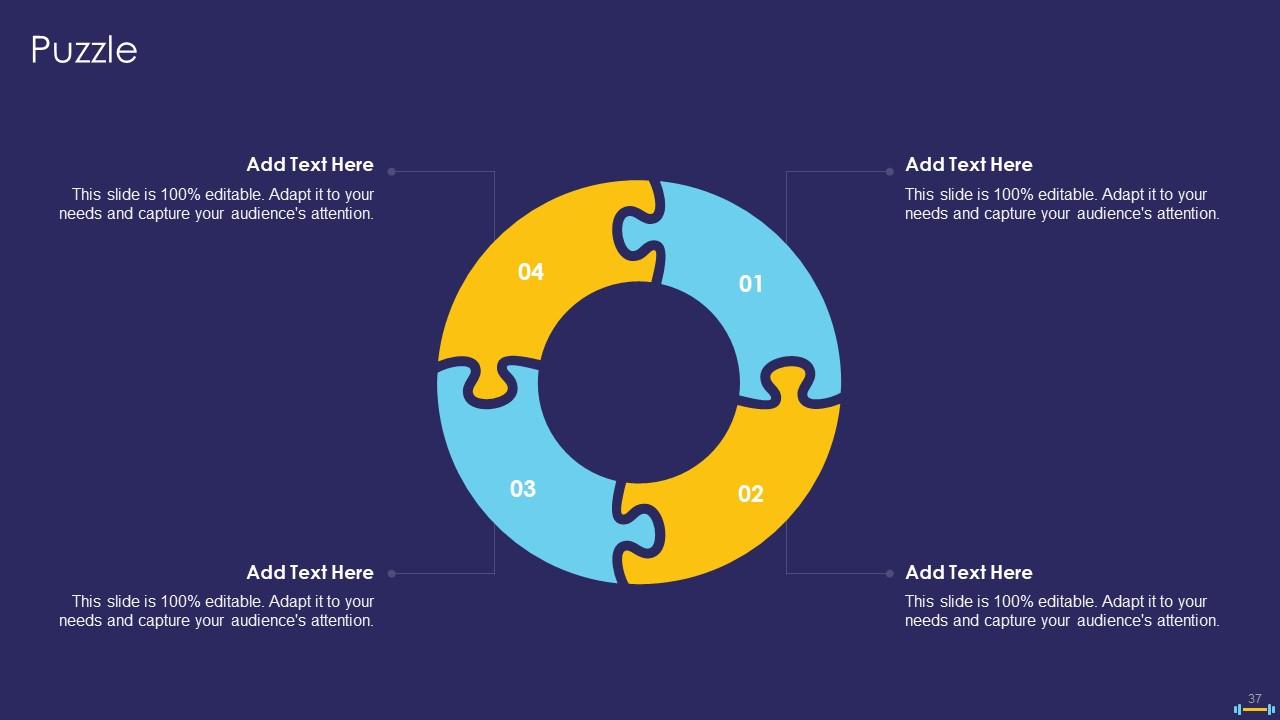
Slide 37: This slide contains Puzzle with related icons and text.
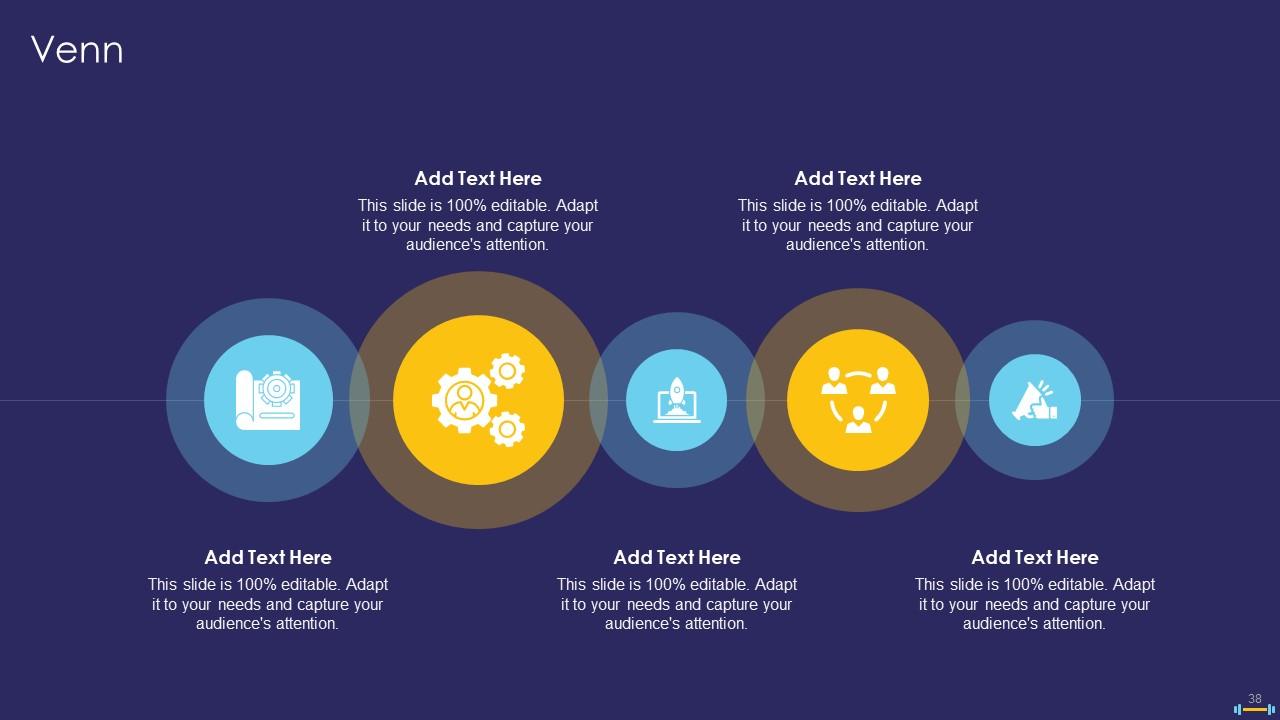
Slide 38: This slide depicts Venn diagram with text boxes.
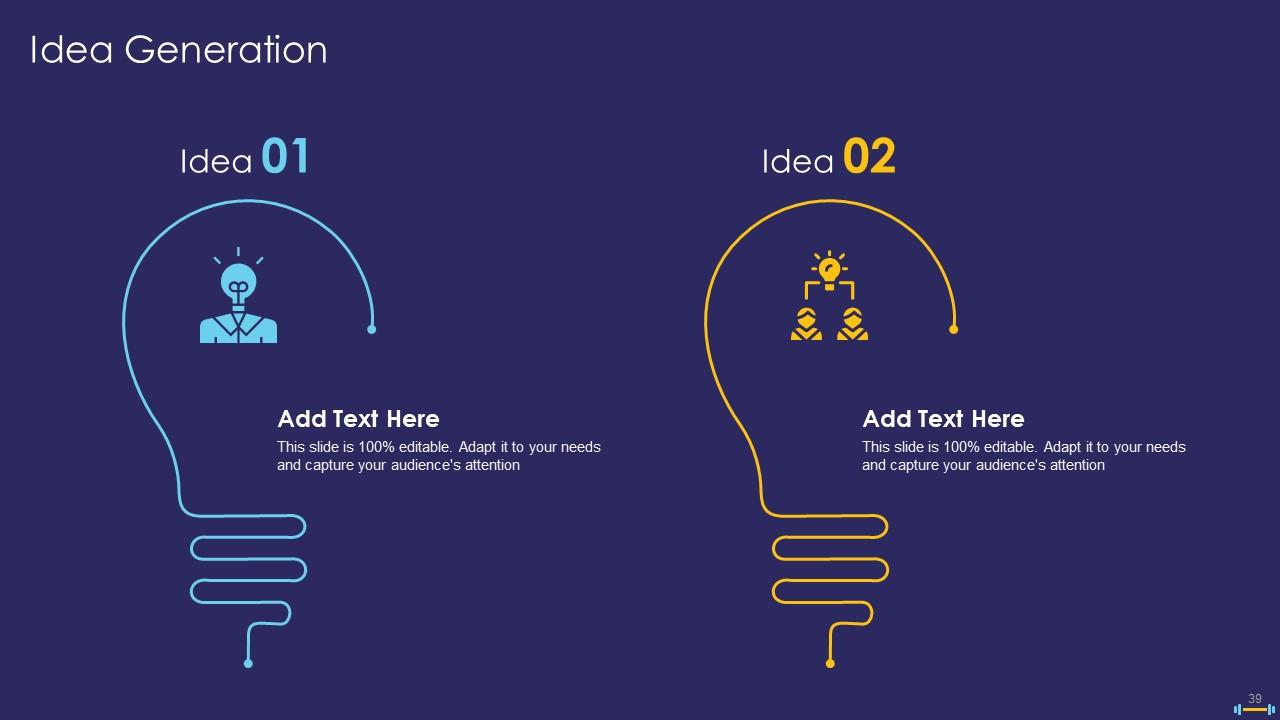
Slide 39: This is an Idea Generation slide to state a new idea or highlight information, specifications etc.
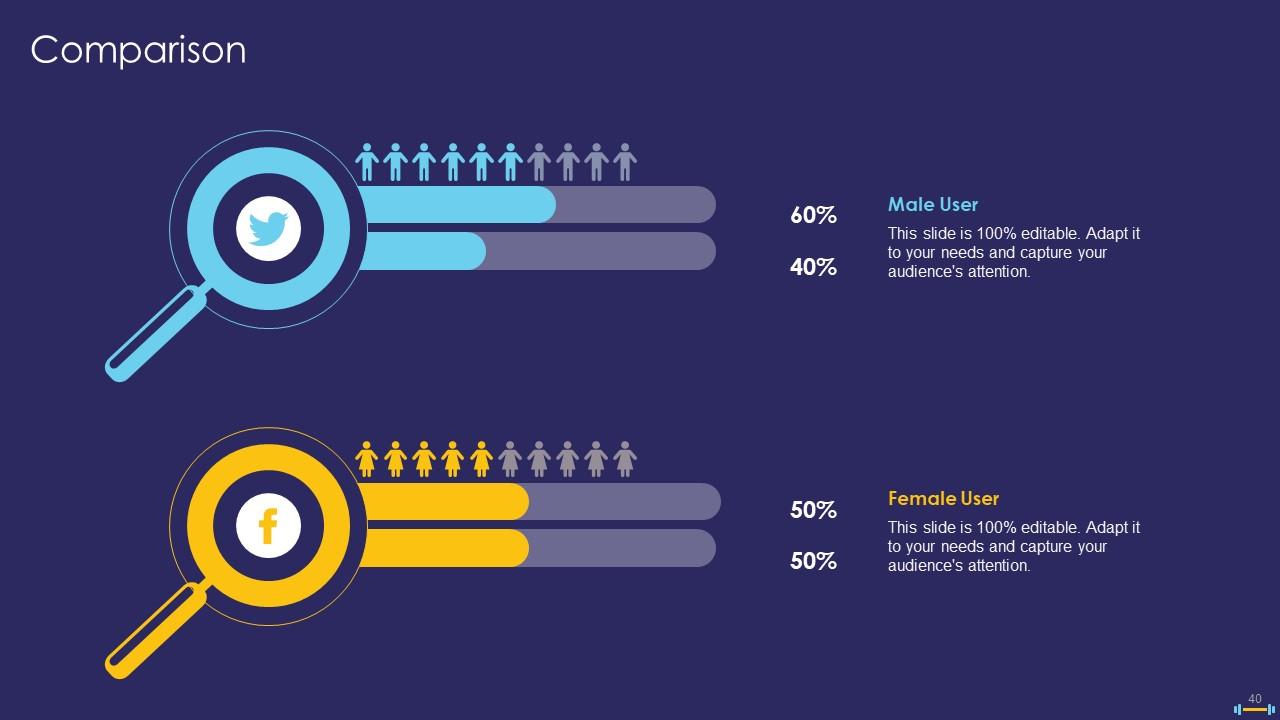
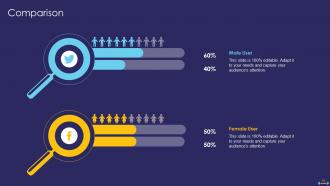
Slide 40: This is a Comparison slide to state comparison between commodities, entities etc.
Slide 41: This is a Thank You slide with address, contact numbers and email address.
Workplace Fitness Culture Playbook Powerpoint Presentation Slides with all 46 slides:
Use our Workplace Fitness Culture Playbook Powerpoint Presentation Slides to effectively help you save your valuable time. They are readymade to fit into any presentation structure.
-
Great experience, I would definitely use your services further.
-
If you are looking for satisfactory PowerPoint services, SlideTeam is your go-to place. I am fully contented with their research and development team.
