


Workplace fitness culture powerpoint presentation slides




Try Before you Buy Download Free Sample Product
 Impress Your
 Audience
 100%
100% Editable
 Save Hours
 of Time


Presenting our Workplace Fitness Culture PowerPoint Presentation Slides that will allow you to enlighten your audience about the importance of being fit and how your services can help them. Employ our fitness goals PPT slides to present the business overview of your company and educate your clients about your expert team and the training program services. Highlight the growing global awareness for fitness and the need for fitness culture in every company through these corporation wellness PowerPoint templates. Map out the fitness challenges, diet plans, and health check-ups that you organize for your clients by taking the aid of our worksite health promotion PPT slideshow. Provide the financial structure for this fitness consulting in a simplified and explicit way with the help of our fitness goals PPT presentation. Download our high-quality, editable, and adaptable healthcare PowerPoint presentation and showcase the impact of introducing fitness measures on your business by taking advantage of our customizable graphs and charts available and expertly crafted according to your requirements.
People who downloaded this PowerPoint presentation also viewed the following :
Content of this Powerpoint Presentation
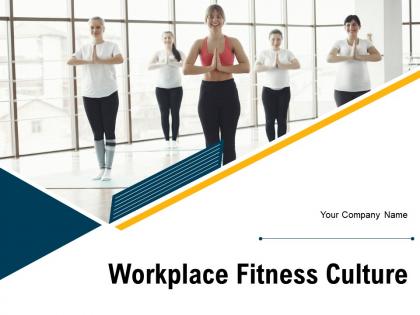
Slide 1: This title slide introduces the Workplace Fitness Culture. Add the name of your company here.
Slide 2: This slide presents the Objective of Fitness Consulting. It includes - Focus is to educate, motivate and help our clients to achieve their fitness goals, Assess client fitness levels, offer nutrition advice, develop personalized fitness programs, and create meal plans, etc.
Slide 3: This slide contains the Table of Contents. It includes - Company Overview, Fitness Industry Overview, Challenges, and Solutions, etc.
Slide 4: This is a table of content slide showing the Company Overview. It includes - About Us, Fitness Consulting in News, Our Leadership Team, etc.
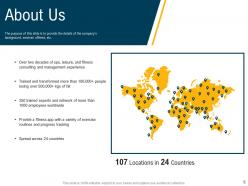
Slide 5: This slide presents About Us. It provides the details of the company’s background, services offered, etc.
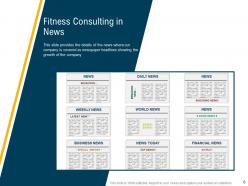
Slide 6: This slide presents the Fitness Consulting in News. It provides the details of the news where our company is covered as newspaper headlines showing the growth of the company
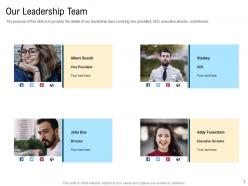
Slide 7: This slide presents Our Leadership Team. It provides the details of our leadership team covering the vice president, CEO, executive director, and director.
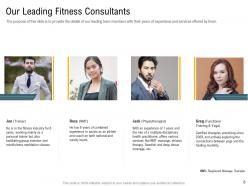
Slide 8: This slide presents Our Leading Fitness Consultants. It provides the details of our leading team members with their years of experience and services offered by them.
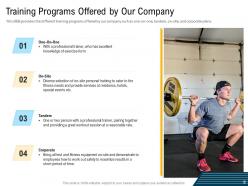
Slide 9: This slide presents the Training Programs Offered by Our Company. It provides the different training programs offered by our company such as one-on-one, tandem, on-site, and corporate plans.
Slide 10: This is a table of content slide showing the Fitness Industry Overview. It includes - Fitness Industry Overview FY 2020, Global Demand of mHealth Apps in Market, and Fitness Industry Trends for 2020.
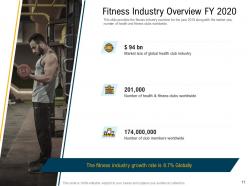
Slide 11: This slide presents the Fitness Industry Overview FY 2020. It provides the fitness industry overview for the year 2018 along with the market size, number of health and fitness clubs worldwide.
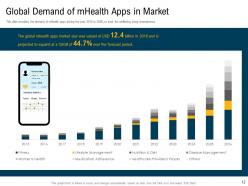
Slide 12: This slide presents the Global Demand for mHealth Apps in the Market. It provides the demand for mHealth apps during the year 2015 to 2026, to track the wellbeing using smartphones.
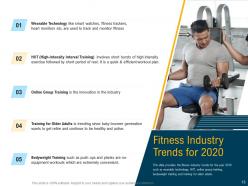
Slide 13: This slide presents the Fitness Industry Trends for 2020. It provides the fitness industry trends for the year 2019.
Slide 14: This is a table of content slide showing the Challenges and Solutions. It includes - Need of Fitness Culture in Your Company, Breaking Down Barriers to Fitness, and Ways We Can Help.
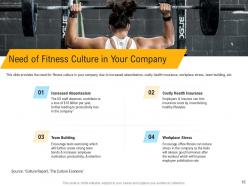
Slide 15: This slide presents the Need for Fitness Culture in Your Company. It provides the need for a fitness culture in your company due to increased absenteeism, costly health insurance, workplace stress, team building, etc.
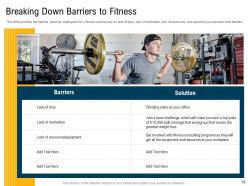
Slide 16: This slide presents Breaking Down Barriers to Fitness. It provides the barriers faced by employees for a fitness routine such as lack of time, lack of motivation, lack of resources, and solutions to overcome such barriers.
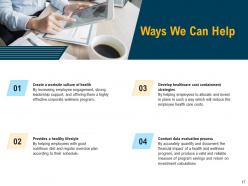
Slide 17: This slide presents the Ways We Can Help.
Slide 18: This is a table of content slide showing the Fitness Consulting Services Offered by Us. It includes - Organizing Fitness Challenges, Daily Employee Wellness Activities, Physical Activities Offered, etc.
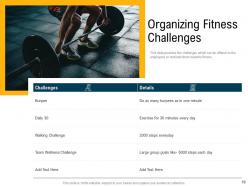
Slide 19: This slide presents the Organizing Fitness Challenges. It provides the challenges which can be offered to the employees to motivate them towards fitness.
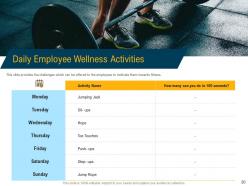
Slide 20: This slide presents the Daily Employee Wellness Activities. It provides the challenges which can be offered to the employees to motivate them towards fitness.
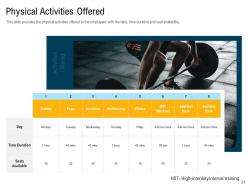
Slide 21: This slide presents the Physical Activities Offered. It provides the physical activities offered to the employees with the date, time duration, and seat availability.
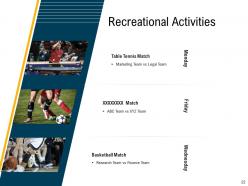
Slide 22: This slide presents the Recreational Activities.
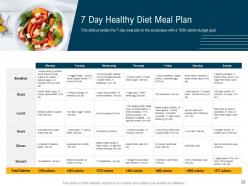
Slide 23: This slide presents the 7 Day Healthy Diet Meal Plan. It provides the 7-day meal plan to the employees with a 1500 calorie budget goal.
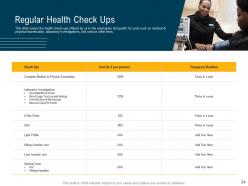
Slide 24: This slide presents the Regular Health Check-Ups. It covers the health check-ups offered by us to the employees along with its costs such as medical & physical examination, laboratory investigations, and various other tests.
Slide 25: This is a table of content slide showing the Cost Analysis for Fitness Consulting.
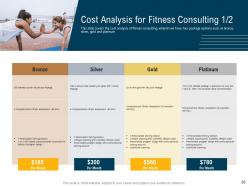
Slide 26: This slide presents the Cost Analysis for Fitness Consulting (1/2). It covers the cost analysis of fitness consulting, wherein we have four package options such as bronze, silver, gold, and platinum.
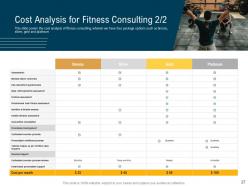
Slide 27: This slide presents the Cost Analysis for Fitness Consulting (2/2).
Slide 28: This is a table of content slide showing the Fitness Consulting Monthly Planning and includes the Steps Required to Start a Fitness Program in Your Company.
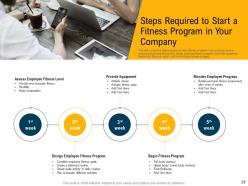
Slide 29: This slide presents the Steps Required to Start a Fitness Program in Your Company. It covers the steps required to start a fitness program in the company.
Slide 30: This is a table of content slide showing the Fitness Consulting Impact. It includes - Impact of Fitness Consulting on Insurance Costs, Impact of Introducing Fitness Consulting on Your Business, and Employee Health Fitness Dashboard.
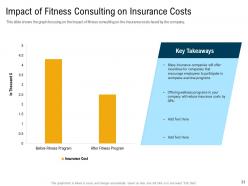
Slide 31: This slide presents the Impact of Fitness Consulting on Insurance Costs. It shows the graph focusing on the impact of fitness consulting on the insurance costs faced by the company.
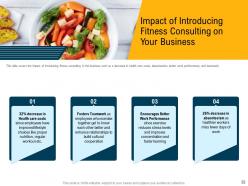
Slide 32: This slide presents the Impact of Introducing Fitness Consulting on Your Business. It covers the impact of introducing fitness consulting in the business such as a decrease in health care costs, absenteeism, better work performance, and teamwork.
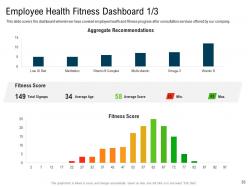
Slide 33: This slide presents the Employee Health Fitness Dashboard (1/3). It covers the dashboard wherein we have covered employee health and fitness progress after consultation services offered by our company.
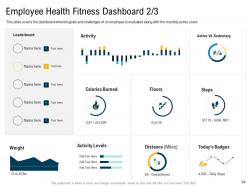
Slide 34: This slide presents the Employee Health Fitness Dashboard (2/3). It covers the dashboard wherein the goals and challenges of an employee are evaluated along with the monthly active users.
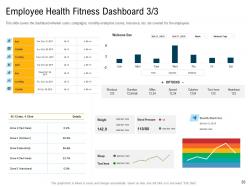
Slide 35: This slide presents the Employee Health Fitness Dashboard (3/3). It covers the dashboard wherein users, campaigns, monthly enterprise scores, insurance, etc. are covered for the employees.
Slide 36: This is a table of content slide showing Why to Choose Our Company? It includes - What Sets Us Apart? and Client Transformation Stories.
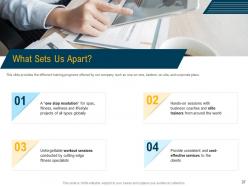
Slide 37: This slide presents What Sets Us Apart? It provides the different training programs offered by our company such as one-on-one, tandem, on-site, and corporate plans.
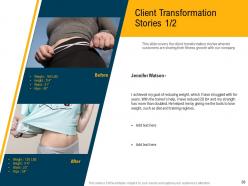
Slide 38: This slide presents the Client Transformation Stories (1/2). It covers the client transformation stories wherein customers are sharing their fitness growth with our company.
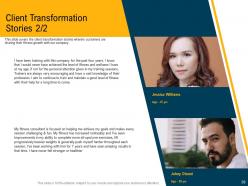
Slide 39: This slide presents the Client Transformation Stories (2/2).
Slide 40: This is the Workplace Fitness Culture Icons Slide.
Slide 41: This slide introduces the Additional Slides. It includes - Daily Physical Activity Log, Our Mission, Clustered Bar, etc.
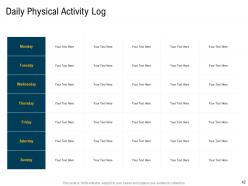
Slide 42: This slide presents the Daily Physical Activity Log.
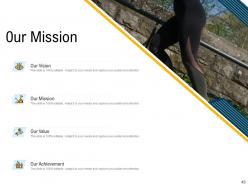
Slide 43: This slide provides the Mission for the entire company. This includes the vision, the mission, and the goal.
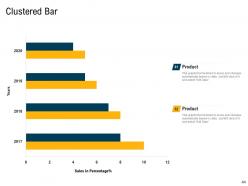
Slide 44: This slide shows a Clustered Bar that compares 2 products’ sales over a timeline of years.
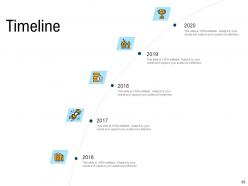
Slide 45: This slide is a Timeline template to showcase the progress of the steps of a project with time.
Slide 46: This slide contains Post It Notes that can be used to express any brief thoughts or ideas.
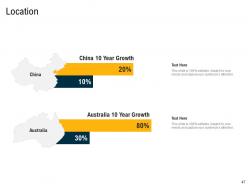
Slide 47: This is the Location slide.
Slide 48: This slide is the Idea Generation slide. It is used to brainstorm ideas for a project.
Slide 49: This is a Thank You slide where details such as the address, contact number, email address are added.
Workplace fitness culture powerpoint presentation slides with all 49 slides:
Use our Workplace Fitness Culture Powerpoint Presentation Slides to effectively help you save your valuable time. They are readymade to fit into any presentation structure.
FAQs for Workplace fitness culture
Key components of a successful workplace fitness culture include leadership support, flexible fitness programs, accessible facilities or partnerships, wellness incentives, and employee engagement initiatives. These elements work together by promoting participation across diverse fitness levels, creating accountability through team challenges, and integrating wellness into daily routines, with many organizations finding that comprehensive programs enhance productivity, reduce healthcare costs, and improve employee retention.
Organizations can effectively promote physical activity by offering on-site fitness facilities, flexible workout schedules, wellness incentives, fitness challenges, and subsidized gym memberships. Companies across industries, from tech firms to financial services, find that these initiatives reduce healthcare costs, decrease absenteeism, and boost productivity, while creating a more engaged workforce and competitive advantage in talent retention.
Leadership plays a pivotal role in establishing fitness culture through visible participation, resource allocation, policy development, and creating supportive environments that prioritize employee wellness. When executives actively engage in fitness initiatives, allocate budgets for gym facilities or wellness programs, and integrate health metrics into performance reviews, organizations see significantly higher participation rates, reduced healthcare costs, and enhanced employee satisfaction, ultimately delivering competitive advantage through healthier, more productive teams.
Integrating fitness programs into company culture delivers reduced healthcare costs, improved employee productivity, enhanced team building, lower absenteeism rates, and increased job satisfaction. These initiatives streamline operational efficiency by boosting energy levels, reducing stress-related burnout, and strengthening workplace relationships, with many organizations finding that wellness-focused cultures ultimately attract top talent while delivering significant cost savings.
Employers can measure workplace fitness initiatives through participation rates, healthcare cost reductions, absenteeism decreases, productivity metrics, and employee satisfaction surveys. Many organizations find that tracking biometric improvements, insurance claim data, and retention rates provides comprehensive insights, with companies like Google and Johnson & Johnson reporting significant ROI through reduced medical expenses and enhanced employee engagement.
Popular workplace fitness activities include walking groups, yoga sessions, strength training, dance classes, and flexible gym memberships that accommodate varying fitness levels, cultural preferences, and physical abilities. These diverse options enable organizations to create inclusive wellness programs by offering low-impact activities for older employees, culturally relevant fitness styles, and accessible options for different mobility levels, ultimately enhancing employee engagement and workplace satisfaction.
Companies can address participation barriers by offering flexible scheduling, diverse program options, beginner-friendly activities, and inclusive environments that accommodate all fitness levels. Strategic approaches include providing on-site facilities, virtual alternatives, financial incentives, and wellness challenges, with many organizations finding that addressing accessibility concerns and creating supportive cultures ultimately enhances participation rates and employee engagement.
Organizations can create inclusive fitness environments by offering diverse activity options, accommodating different ability levels, providing flexible scheduling, ensuring accessible facilities, and fostering supportive peer networks. These approaches streamline employee engagement by removing barriers, enhancing participation across demographics, and ultimately delivering improved wellness outcomes, with many companies finding that inclusive programs significantly boost overall participation rates and workplace satisfaction.
Remote work arrangements significantly challenge traditional workplace fitness culture by eliminating shared gym facilities, group activities, and peer motivation that foster collective wellness habits. However, this shift enables organizations to reimagine fitness programs through virtual challenges, wellness stipends, and flexible scheduling, with many companies finding that remote employees appreciate personalized fitness solutions and work-life integration opportunities.
Innovative technologies supporting employee wellness include wearable fitness trackers, AI-powered wellness apps, virtual reality fitness programs, biometric health screening systems, and gamified wellness platforms. These technologies enhance engagement by providing personalized health insights, real-time feedback, and competitive challenges, with many organizations finding that strategic wellness integration ultimately delivers improved productivity, reduced healthcare costs, and stronger employee retention.
Collaboration between HR and wellness coordinators enhances fitness efforts by aligning employee health initiatives with company policies, integrating wellness programs into performance management systems, and streamlining resource allocation for fitness facilities and activities. This strategic partnership enables organizations to deliver comprehensive wellness tracking, targeted health interventions, and measurable productivity improvements, ultimately creating a more engaged workforce and reducing healthcare costs.
Organizations can sustain fitness program participation through flexible scheduling, diverse activity options, leadership participation, regular challenges, and recognition systems. By partnering with local gyms, offering on-site classes, implementing step competitions, and celebrating milestones, companies create engaging wellness cultures that reduce healthcare costs, boost employee morale, and enhance retention across departments.
Workplace fitness significantly enhances employee productivity and morale by reducing stress levels, improving cognitive function, boosting energy, and strengthening team cohesion through shared wellness activities. Companies implementing comprehensive fitness programs find that employees demonstrate increased focus, fewer sick days, and higher job satisfaction, while organizations benefit from reduced healthcare costs and improved retention rates.
Mental health serves as a foundational pillar in workplace fitness culture, encompassing stress management programs, mindfulness training, mental health days, employee assistance programs, and wellness coaching. Through integrated approaches combining physical activity with mental wellness initiatives, organizations like tech companies and healthcare institutions enhance employee resilience, reduce burnout rates, and improve overall productivity, ultimately delivering stronger team cohesion and competitive advantage.
Companies can ensure fitness program accessibility by offering diverse options like on-site gyms, virtual classes, walking groups, and flexible scheduling that accommodates different shifts and abilities. Through partnerships with local facilities, subsidized memberships, and tiered participation levels, organizations streamline cost barriers while enhancing employee wellness, ultimately delivering improved productivity and reduced healthcare costs across all income levels.
-
Very unique, user-friendly presentation interface.
-
Informative design.
-
Great designs, really helpful.
-
Excellent template with unique design.
-
Great product with highly impressive and engaging designs.