

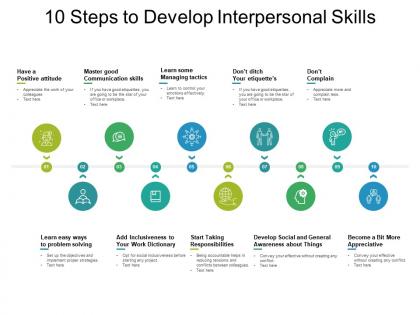
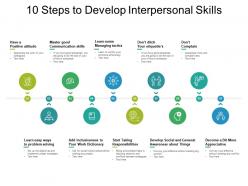
10 steps to develop interpersonal skills




Try Before you Buy Download Free Sample Product
 Impress Your
 Audience
 100%
100% Editable
 Save Hours
 of Time


Increase your chances of hooking the big fish with our 10 Steps To Develop Interpersonal Skills. It helps you cast the bait.
People who downloaded this PowerPoint presentation also viewed the following :
10 steps to develop interpersonal skills with all 5 slides:
Improve your fortunes with our 10 Steps To Develop Interpersonal Skills. Increase the chances of acquiring gains.

FAQs for 10 steps to
Honestly, start with just listening better - like actually hearing what people say instead of planning your response. Communication and emotional intelligence are the big ones. You've gotta read the room and adjust how you talk based on who you're with. Conflict stuff is inevitable (learned that one the hard way lol), so getting decent at resolving disagreements will save you headaches. Building rapport quickly helps too. Oh and showing genuine empathy - people can smell fake from a mile away. Don't try mastering everything at once though, pick one thing and work on it.
Honestly, just put your damn phone away first - that's like half the battle right there. Make actual eye contact and stop planning what you're gonna say next while they're talking (I'm SO guilty of this). Ask stuff like "what did that feel like?" or "tell me more about that part." Oh, and here's something that works - repeat back what they said but in your own words. Like "so you're pissed because..." It shows you actually get it, not just waiting for your turn. I used to suck at this until someone called me out on it. Try it with literally one conversation today and you'll notice the difference.
Dude, body language is everything! Like, people will believe what they see way more than what you actually say. I'm totally guilty of this - saying "I'm fine" while obviously rolling my eyes or crossing my arms. Your posture and facial expressions either back up your words or completely betray you. It's wild how we pick up on those signals without even thinking about it. Honestly, just being aware of how you're standing or sitting makes such a difference. When everything matches up, you come across way more genuine instead of sending mixed messages.
Honestly, focus on behaviors instead of personality stuff - like "try more eye contact during presentations" vs "you're not confident." Start with something positive, get specific about what to change, then give actual solutions. Timing is huge though! Nobody talks about that enough. When you're getting feedback, don't get all defensive (I know, easier said than done). Ask questions instead and really listen. Thank them even if it kinda hurts. Oh, and try doing regular check-ins so feedback feels normal, not like some terrifying performance review.
Honestly, the biggest thing is actually shutting up and listening instead of thinking about what you'll say next. Super hard to do though! Ask questions that show you actually care about their take on things. Watch their body language too - sometimes that tells you more than words do. Before you react (especially when things get heated), try putting yourself in their position for a sec. One trick that works well is reflecting back what they said: "So you're pissed because..." It makes people feel like you actually get where they're coming from.
Honestly, cultural awareness is like having a cheat code for getting along with people. You know how some folks are super direct while others hint around things? Understanding those differences means you won't accidentally come off as rude or miss what someone's really trying to say. I've learned the hard way that my "just being honest" can sound pretty harsh to colleagues from different backgrounds. The non-verbal stuff matters too - like when someone nods but seems uncomfortable disagreeing. Best move? Just ask people how they prefer to communicate instead of guessing.
Honestly, the biggest thing is just staying calm - easier said than done, I know. Listen to what they're actually saying instead of planning your comeback. Say "I feel frustrated when deadlines slip" rather than "you always miss deadlines." Sounds nitpicky but it makes a huge difference. Find something you both agree on first. Ask questions to get their side of things. And deal with stuff early! That weird tension you're ignoring? It'll blow up eventually. Better to have one uncomfortable chat now than a total meltdown later.
Honestly, emotional intelligence is like having a sixth sense for people. You start picking up on what's really going on beneath the surface - your own feelings and everyone else's too. Makes conversations so much smoother because you're not just hearing words, you're understanding the actual emotions behind them. I used to be terrible at this, but once you get it down, conflicts become way less messy. You'll catch yourself before saying something stupid, and you actually know how to respond when someone's upset instead of just standing there awkwardly. Try just taking a breath before big conversations and asking yourself how you're feeling first.
Okay so mindfulness basically helps you actually *listen* instead of just waiting for your turn to talk, you know? You'll notice people's tone and body language way more. The best part though is it gives you that split second to think before you say something stupid - and trust me, I've said plenty of dumb things when I just react instantly. Oh, and you start catching your own bad habits too, like interrupting people (guilty). Honestly just try breathing mindfully for like 5 minutes before big conversations. It's weird how much more dialed-in you feel.
Honestly, adaptability is everything in relationships. People change constantly - their moods, stress levels, what they need from you. One day your coworker's totally overwhelmed, the next they're pumped about some new project. You can't just use the same approach every time, you know? I've learned to read the room first before diving into conversations. Are they rushed? Excited? Having a rough day? Then I adjust how I talk to them. It's like... why would you be super energetic with someone who's clearly stressed? Makes no sense. Just start noticing people's energy before you say anything. That alone will make your connections way stronger.
People remember stories way better than random facts - it's just how our brains work. When you tell someone a quick personal example instead of giving advice straight up, they actually *get* it. Like, I could tell you "communication is key" or I could tell you about that time I totally bombed a presentation because I didn't prep my team first. Which one sticks? Stories make you seem real too, not like you're reading from some self-help book. Next time you're trying to explain something tricky or convince someone, throw in a brief story. Works way better than lecturing.
Honestly, tech can be pretty helpful for social stuff - like practicing conversations on video calls or using apps that help you read people better. Plus you get to meet people you'd never encounter otherwise. But I've noticed too much screen time makes real conversations feel weird? Like you miss body language cues or feel awkward without time to craft the perfect response. My friend Sarah totally struggles with this after being glued to her phone all day. Short sentences in real life hit different than texting, you know? I'd say use your phone as backup, not your main thing. Maybe try phone-free dinners or something.
Honestly, networking is like a crash course in reading people - you'll get way better at adapting how you talk to different personalities. Small talk becomes less awkward when you're doing it constantly. I used to hate it but now I actually enjoy finding random connections with strangers (weird, I know). You start remembering little details about people without even trying. Most folks genuinely want to help too, which is something I didn't expect. The whole experience makes you more empathetic since you're exposed to so many different viewpoints. Don't stress about working the entire room though - just focus on one real conversation per event.
Honestly, role-playing is like having a practice round before the real deal. You get to rehearse those awkward conversations - giving feedback, handling conflict, whatever - without actually screwing up your relationships. I know it sounds cheesy, but it really works. You mess up, try different approaches, figure out what works. The repetition thing actually helps your brain remember better responses when similar stuff happens for real. Plus you see things from the other person's perspective when you play their role, which is pretty eye-opening. Start small with easy scenarios first, then work up to the harder ones.
Honestly, start by being real about your own screwups - when you're vulnerable first, it makes everyone feel safer. Then just do what you say you'll do, even the tiny stuff. Like if you promise to send that email by Tuesday, actually send it Tuesday. People definitely notice that consistency. Also - and this might sound obvious but whatever - actually listen when people talk instead of just planning what you're gonna say next. Ask follow-up questions that prove you heard them. Oh, and give credit out loud but take the blame in private. The whole thing is really about being someone your team knows they can rely on, you know?
No Reviews