

5 Steps In Nursing Process Infographic




Try Before you Buy Download Free Sample Product
 Impress Your
 Audience
 100%
100% Editable
 Save Hours
 of Time


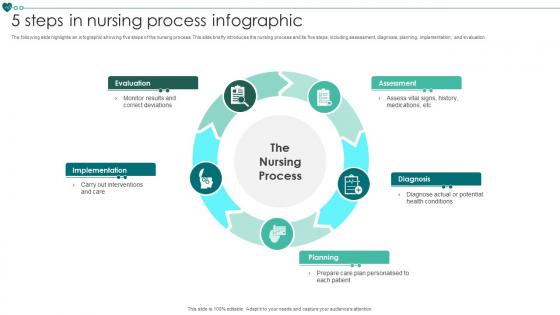
The following slide highlights an infographic showing five steps of the nursing process. This slide briefly introduces the nursing process and its five steps, including assessment, diagnosis, planning, implementation, and evaluation.
People who downloaded this PowerPoint presentation also viewed the following :
5 Steps In Nursing Process Infographic with all 9 slides:
Use our 5 Steps In Nursing Process Infographic to effectively help you save your valuable time. They are readymade to fit into any presentation structure.








FAQs for 5 Steps In
So there's five phases but honestly they're more like a circle than steps. First you assess - gather all the patient data you can. Next comes diagnosis where you figure out what's actually going on. Planning is where you set goals and decide your interventions (this part's kinda fun because you get strategic). Implementation means actually doing those interventions. Finally evaluation - did it work? But here's the catch: you're constantly jumping around between phases. Maybe your eval shows you missed something in assessment, or new symptoms pop up that change everything. Stay flexible because it's messy in real practice.
Assessment is seriously everything - mess this up and your whole care plan falls apart. You're collecting data through observation, interviews, physical exams, all that stuff to figure out what's actually happening with your patient. Most mistakes happen here because people rush through it (guilty as charged sometimes). Do a thorough assessment and you'll catch problems early, nail the right nursing diagnoses, and prioritize interventions that actually work. My advice? Don't rush it. Trust what you're seeing and feeling. A good assessment upfront saves you so much stress later on.
Always start with ABCs and Maslow's hierarchy - those are your best friends for prioritizing. Life-threatening stuff first, duh. Then work down by urgency: pain management beats comfort measures, meds before discharge teaching, you know the drill. Honestly, half of this job is just being realistic about your time and resources. Safety issues and anything preventing complications should jump ahead of routine care. Quick tip that actually works - spend like 2 minutes at shift start ranking your patients mentally. Sounds obvious but it'll save your sanity later when everything hits at once.
So basically critical thinking is what makes you a good nurse instead of just someone going through motions. When you're assessing patients, you'll notice those subtle changes that matter. Then you analyze everything to figure out what problems need fixing first. After interventions, you evaluate if stuff actually worked - kinda like being a detective honestly! It connects what you observe to the actions you take. Without it, you're just checking boxes instead of giving real individualized care. Try practicing it consciously next time you're with patients. Question your gut reactions and dig into why you're seeing what you're seeing.
Honestly, evidence-based practice is a game changer because you're not just winging it anymore. Your interventions actually have research backing them up, which means better patient outcomes. Way better than the whole "we've always done it this way" mentality that some places still have. You can prioritize what to focus on based on how strong the evidence is too. I'd start by looking up recent studies on whatever interventions you use most - seriously, some of the stuff I found surprised me. It's like finally having directions instead of just hoping you're going the right way.
Honestly, the worst part is usually crappy documentation from the start. Makes evaluation impossible when you're missing half the info. Unrealistic timeframes are brutal too - like, of course your patient didn't hit that goal in two weeks when it should've been a month-long plan. Then there's the patients who just... disappear or ignore everything you discussed. I swear some goals look perfect on paper but make zero sense for someone's actual life situation. If your initial assessment sucked or interventions weren't documented properly, you're screwed. Just gotta be real about what's failing and pivot instead of pretending things are working when they're clearly not.
Honestly, the right tech makes nursing so much easier. Electronic health records give you instant patient data during assessments. Clinical decision support catches stuff you might miss during planning - which has saved my butt more than once. Smart pumps and medication scanners basically eliminate those scary med errors during implementation. Mobile charting is a game changer too. For evaluation, real-time monitoring beats checking on patients every few hours. The trick? Don't pick tech that adds extra steps. You want tools that actually fit into how you already work and genuinely make patients safer.
Honestly, just flip the whole script - make them actual partners instead of just doing stuff *to* them. Ask what they're worried about and what really matters to them first. When you're planning care, give them real options to choose from (evidence-based ones obviously). Getting them to track their own symptoms is huge - they get so much more invested. Oh and definitely have them speak up during rounds and handoffs. Their perspective is everything. I tried setting just one collaborative goal with a patient last week and it totally changed how we worked together. Way better than the usual "here's your plan" approach.
You gotta weave cultural stuff into every part of nursing care, not just tack it on at the end. When you're assessing patients, think about how their background affects pain expression and health beliefs. Care plans need to factor in family dynamics and religious practices - I've literally watched plans crash because nobody asked about this upfront. Communication styles matter huge during implementation. Even when you're evaluating outcomes, "getting better" means different things to different cultures. My advice? Just ask patients directly about their cultural needs right away and actually write it down somewhere you'll remember.
Honestly, just keep patient autonomy at the center of everything you do. Respect their choices even when you think they're making mistakes - that's the hard part. Never gossip about cases, seriously. I've watched good people torpedo their careers over casual conversations. Be upfront about what you don't know and get help when needed. Your personal feelings about a patient? Leave them at the door. Write everything down accurately because documentation saves your ass later. Oh, and always check yourself - am I really doing what's best for this person while still honoring their dignity?
So the five steps don't change, but honestly? Your timing and focus are totally different depending where you work. Acute care means you're constantly doing quick assessments - like hourly vitals, tweaking meds all the time because patients can crash fast. Long-term care though, you get to actually build relationships and focus on quality of life stuff. Family drama becomes a huge part of it too lol. Documentation's more intense in hospitals for liability reasons, while nursing homes track long-term trends. Really just match how often you assess to how quickly things typically go sideways with your patients.
Documentation literally saves your butt legally and helps the next nurse know what's going on. I used to think charting was the worst part of nursing until I realized it actually makes me a better critical thinker - weird, right? Be super specific instead of vague. Like write "ambulated 50 feet with steady gait" not just "tolerated activity well." Chart in real-time if you can. Always include why you did what you did. Think of it as storytelling - you're painting a picture of your patient's whole day for whoever picks up after you. Makes such a difference.
Working with other disciplines seriously makes your nursing care so much better. The PT will spot mobility stuff you might miss, and social workers catch discharge issues early. Your care plans get way more solid when you have the dietitian adding nutrition input or pharmacy catching drug interactions. Short sentences work. Everyone stays aligned on what the patient actually needs. Honestly, I've seen too many nurses wait until there's already a problem - don't do that! Loop people in from the start when you're planning care. It's like having backup that actually knows what they're talking about.
Yeah, the nursing process totally works in telehealth! Your assessment game has to be way stronger though - no hands-on stuff means you're basically a detective watching for visual cues and really listening to how they describe symptoms. I swear, asking the right follow-up questions becomes an art form. Documentation is huge since you're trusting what patients tell you more than usual. Planning and evaluation are actually pretty smooth virtually - pulling up care plans on screen works well. Oh, and definitely practice with whatever platform you're using first. Nothing worse than struggling with tech while trying to focus on your patient!
Okay so nursing theories are basically the "why" behind what you do during patient care. Like Orem's self-care model helps you figure out what patients can handle on their own during assessment. Roy's adaptation theory is great for planning - helps patients deal with stress and stuff. I'll be honest, they seem super abstract at first but they actually guide how you prioritize things. Watson's caring theory changes how you talk to patients during implementation. Henderson's basic needs theory is solid for evaluations too. Next time you're making a care plan, just pick one theory and stick with it. Your interventions will feel way more intentional.
-
Nothing beats the well-formatted and professionally designed templates offered. Kudos to SlideTeam for their amazing collection of PPT slides.
-
Excellent products for quick understanding.