


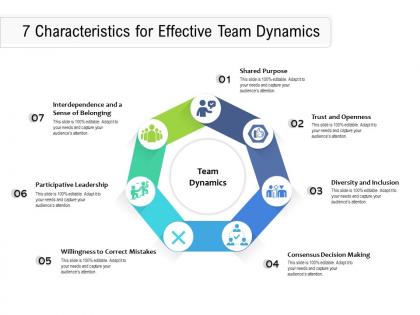
7 characteristics for effective team dynamics




Try Before you Buy Download Free Sample Product
 Impress Your
 Audience
 100%
100% Editable
 Save Hours
 of Time


Our 7 Characteristics For Effective Team Dynamics are topically designed to provide an attractive backdrop to any subject. Use them to look like a presentation pro.
People who downloaded this PowerPoint presentation also viewed the following :
7 characteristics for effective team dynamics with all 2 slides:
Use our 7 Characteristics For Effective Team Dynamics to effectively help you save your valuable time. They are readymade to fit into any presentation structure.
FAQs for 7 characteristics for
You need good communication and trust first - that's non-negotiable. Make sure everyone knows their role because I swear, half the teams I've worked with imploded just from confusion about who's supposed to do what. Psychological safety is huge too... people gotta feel okay disagreeing without it turning into a whole thing. Oh, and definitely have shared goals so you're not all pulling in different directions. Set up some kind of feedback system and maybe a way to handle conflicts when they pop up (and they will). Start with nailing down how you'll communicate and make decisions together.
Dude, clear team roles are seriously everything for performance. Nobody wants that "wait, I thought YOU were doing this" mess - we've all been there and it sucks. When people know their lane, you avoid duplicating work and stepping all over each other. Three people doing the same thing? Total momentum killer. But here's what I've learned - you can't be too rigid about it either. The teams that actually work have clear ownership but stay flexible when things change. Just map out who's doing what, then actually check in regularly to tweak stuff as you go.
Start with regular check-ins - daily standups work well, or maybe weekly meetings if that's more your speed. Create that psychological safety thing where people actually feel okay speaking up. Slack's honestly pretty clutch for quick stuff, though face-to-face still wins for the big conversations. Set up clear channels so everyone knows where to take different questions. The real game-changer though? Actually listen and follow up on what people tell you. I swear half the communication problems I see come from people just... not doing that part. Try one new thing this week and see how it goes.
Trust is honestly everything - without it, teams fall apart fast. People start hoarding info and covering their asses instead of just doing good work. But when trust is solid? Decisions happen quicker because nobody's second-guessing every move. Your teammates actually delegate properly and aren't afraid to say "I screwed up" or "I need help." The whole political drama just... disappears, which is amazing. I've seen it work both ways and the difference is night and day. Start small - be upfront about your own mistakes and actually do what you say you'll do. Sounds simple but most people suck at follow-through.
Honestly, conflict isn't something to run from - it actually shapes how well your team works together. Good conflict gets people questioning assumptions and coming up with better ideas. The problem is everyone avoids it completely, which just makes things worse. Unresolved tension kills communication and splits teams apart. You want the productive disagreements, not the personal attacks (obviously). Set some basic ground rules upfront about how you'll handle disputes. I learned this the hard way - avoiding conflict just lets problems fester until they explode later.
Oh totally, diverse teams are way more creative! You get people approaching problems from completely different angles - like having a bunch of different toolkits instead of everyone using the same hammer. Different backgrounds mean different solutions, and honestly? The weird combo ideas that come up are usually the best ones. People build off each other in ways you'd never expect. The tricky part is making sure everyone actually speaks up. I'd try asking the quiet people directly what they think during brainstorming - sometimes they have the most interesting takes but just need a nudge.
Try getting them to talk one-on-one first - sometimes people just need to vent without everyone watching. If that bombs, grab someone neutral from HR or your team to mediate. I've seen structured problem-solving work too, where you force everyone to focus on the actual issue instead of who's being annoying (though honestly, that's harder than it sounds). Oh, and those active listening things where people have to repeat what they heard before jumping in? Surprisingly effective. Just don't let it fester - once conflicts get toxic, they'll poison the whole team's vibe.
Dude, your leadership style literally shapes everything about how your team works together. Micromanage and you'll stress everyone out - creativity just dies. Too hands-off? People lose direction and nobody feels accountable. I've honestly watched entire teams flip around just because they got a new manager. Collaborative leaders usually crush it because everyone feels heard and communication flows better. Some teams need more structure though, others want freedom to try new stuff. Oh, and here's something most people don't do - just ask your team what actually helps them work best.
Oh man, team size is huge for how smoothly things run. With 3-5 people, decisions happen fast and everyone knows what's up without formal meetings. Downside? Sometimes you get stuck in groupthink. Bigger teams bring way more skills and fresh ideas, but good luck coordinating everyone - you'll need actual processes or it gets messy quick. Honestly, 5-7 people hits the sweet spot for most stuff. Once you're past that, break into smaller groups that can actually talk to each other. I learned this the hard way on a 12-person project that was basically chaos.
Honestly, they work because people get to see each other as actual humans instead of just work robots. You know how Sarah from accounting is always late with reports? Well, turns out she's hilarious during trivia night and crazy good at problem-solving. Shared experiences like that create inside jokes and connections that stick around back at the office. The key is mixing people up - don't let the usual work cliques hang together. Put different departments in groups so they discover each other's random talents and figure out how everyone actually communicates. It's pretty simple but surprisingly effective.
Honestly, start simple with a monthly pulse survey - that's your foundation. Ask about psychological safety (fancy term but just means "can people speak up without getting shut down?"). Track how fast your team responds to messages and who actually shows up to meetings. Cross-functional project success rates are gold too. Oh, and conflict resolution time - nobody talks about this but it's huge. Decision-making speed matters as well. Don't go crazy though. Pick maybe 3-4 things that actually fit your team instead of measuring everything under the sun. Communication patterns and anonymous trust surveys work well for most groups.
Honestly, regular feedback is like magic for teams. It builds trust because people know where they stand instead of guessing. The trick is making it go both ways - not just your boss telling you stuff, but everyone being real with each other. I've watched teams go from awkward and tense to actually liking each other once they started doing weekly check-ins. Nothing fancy, just "what's working, what sucks?" kind of conversations. You've gotta make it safe to be honest though, or people will just say everything's fine when it's not. Those unspoken issues are relationship killers.
Honestly, emotional intelligence is a game changer for teams. You start picking up on when someone's stressed or frustrated, then you can actually adjust how you talk to them instead of just steamrolling ahead. The feedback thing is where it really pays off - people don't get all defensive when you approach them right. I swear half of team drama could be avoided if people just paid attention to tone and body language in meetings. Try it next time you're in one - you'll probably catch stuff you've been totally missing. It's wild how much is happening under the surface.
Honestly, remote connection takes way more effort than people think. Like, it just doesn't happen naturally the way it does when you're all in the same office grabbing coffee. I'd start with one small thing - maybe a weekly 15-minute check-in where you actually ask how people are doing, not just about deadlines. Video calls help tons, even for random stuff like virtual lunch breaks (yeah it's kinda weird at first but whatever). Slack channels for non-work chat work too. The trick is making it feel normal and frequent, not like some forced team-building exercise. Pick one thing and try it for a few weeks.
Ugh, team drama is the worst but it's usually the same stuff - people not talking to each other, everyone thinking their thing is most important, or nobody knowing who's supposed to do what. For communication mess, just do regular check-ins and make it clear where different updates should go. With conflicting priorities, help everyone see how their piece fits the whole puzzle. Role confusion? Write that shit down - literally who does what and when. I swear retrospectives every couple weeks save so much headache. People can bring up issues before they explode everywhere.
No Reviews