AI Machine Learning In Manufacturing Industry

Rating:
90%
AI Machine Learning In Manufacturing Industry
Slide 1 of 6
Favourites Favourites

Try Before you Buy Download Free Sample Product

Audience Impress Your
Audience
Editable 100%
Editable
Time Save Hours
of Time
The Biggest Sale is ending soon in
0
0
:
0
0
:
0
0
Rating:
90%
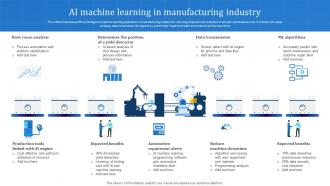
This slide showcases artificial intelligence machine learning application in manufacturing industry for reducing scrap and cost reduction in annual maintenance costs. It include root cause analysis, data transmission, ML algorithm, automotive repairment alert and reduce machine downtime Introducing our premium set of slides with AI Machine Learning In Manufacturing Industry. Elucidate the eight stages and present information using this PPT slide. This is a completely adaptable PowerPoint template design that can be used to interpret topics like Root Cause Analysis, Data Transmission, ML Algorithms, Expected Benefits. So download instantly and tailor it with your information.

FAQs for AI Machine Learning

Predictive maintenance is huge - catches equipment problems before they tank your whole production line. Quality control gets way better too since AI spots defects faster than any human ever could. Production optimization is another big one, automatically tweaking processes to pump out more product. Honestly? Start with predictive maintenance on whatever equipment you can't afford to lose. The ROI comes back stupid fast when you're not dealing with surprise breakdowns anymore. You'll probably see improvements in demand forecasting and supply chain stuff too, but that maintenance piece alone makes it worth doing.

So basically AI looks at all the sensor data from your machines - vibration, temperature, oil stuff - and spots patterns that mean something's about to break. Way better than just waiting for things to fail or doing maintenance on some random schedule. You can literally predict failures weeks out, which is honestly pretty wild when you think about it. Cuts downtime by like 50% and makes equipment last way longer. I'd start with your most important machines first, throw some sensors on those. That's where you'll actually see the money back fastest.

So ML basically flips quality control from playing catch-up to getting ahead of problems. Your algorithms dig through production data to spot trouble before it makes junk products. Picture computer vision catching tiny defects you'd never see, or models that know when equipment's about to go wonky. Gets better as it learns from more data too. Honestly, I'd start small though - just pick one defect type or maybe a single process thing to track first. You can always build from there once you've got some wins under your belt.

Dude, AI is completely changing how companies manage their supply chains. Machine learning can predict demand way better than old methods and catch problems before they blow up. You'll see huge improvements in inventory management and supplier selection. The predictive stuff is wild - it's like seeing the future of your operations. Equipment failures? AI spots those coming too. Honestly, logistics routing gets so much smoother and there's way less waste overall. If you haven't looked into demand forecasting software yet, that's probably the best place to start. The visibility you get is insane.

Honestly, data quality is gonna be your biggest nightmare - your info is probably messier than you think. Implementation costs are brutal too, especially since most existing systems won't play nice with AI tools without major upgrades. Your team will likely freak out about job security, which I totally get. Finding people who actually know this stuff is rough right now. Oh, and don't even get me started on the infrastructure headaches. My advice? Start with small pilot projects first. Prove it works before dumping money into it, and definitely train your current people instead of replacing them.

So basically AI looks at your sales history, seasonal stuff, and what's happening right now to predict what you'll need. Pretty wild how accurate it gets. It'll ping you when you're running low or when something's just sitting there collecting dust. The system learns your suppliers' timing, how customers shop, all that jazz - then figures out the perfect reorder amounts. Honestly gets better the more data you feed it. I'd say start with your bestsellers first since that's where you'll see the biggest impact right away. Way better than guessing!

Honestly, the biggest wins come from automating those mind-numbing repetitive jobs - assembly line work, quality checks, packaging. Nobody really wants to do that stuff anyway, right? Your team can focus on actual problem-solving while robots handle the boring parts. You'll run 24/7 without paying overtime or shift differentials, which adds up fast. Predictive maintenance is huge too - catches issues before your whole line goes down. I'd start by looking at whatever process eats up the most labor hours. That's usually your best bet for seeing real savings.

So basically your IoT sensors grab data from all the machines, then AI crunches those numbers to predict when stuff's about to break. Pretty neat setup, honestly. You'll get way ahead of maintenance issues instead of scrambling after breakdowns happen. Quality control becomes automatic too - catches defects right away. Production schedules adjust themselves based on what's actually needed. Oh, and you can check everything from your phone or laptop, which is clutch. I'd say test it on just one line first though. See how it goes before going crazy with the whole operation.

Dude, AI totally changes the game for product design. You can run thousands of simulations in hours vs weeks, which is insane when you think about it. Materials get optimized automatically, and you'll know how stuff performs before building anything. The coolest part? It catches design flaws early and throws out suggestions you'd never consider. Honestly, I'm still getting used to how fast everything moves now. You can test way more variations quickly, so products end up better and hit the market faster. My advice - just pick one design process to try it on first.

So you know how finding patterns in manufacturing data manually is a total pain? AI analytics actually make this bearable - they'll predict equipment failures before they happen and catch quality issues early. Think of it as a really smart assistant that never gets tired of crunching numbers. The real magic happens when it shows you exactly where your production line gets jammed up and gives you fixes on the spot. Honestly, supply chain optimization alone makes it worth it. My advice? Don't overthink it - just pick one messy process and let the data surprise you.

Honestly, there's three big things that'll bite you if you're not careful. Job displacement is real - people are genuinely scared about getting replaced, and I can't blame them. Privacy stuff gets messy fast when you're tracking workers with sensors and all that monitoring tech. Then there's the bias problem where AI screws up hiring or evaluations because it learned from biased data. Oh, and safety issues too since bad AI decisions can literally cause accidents. My take? Get your workers involved early instead of springing it on them. Set up some ethical rules first - way easier than fixing problems later.

Honestly, just pick one annoying problem and tackle that first - maybe inventory tracking or customer service stuff. Don't go crazy trying to revolutionize everything at once. Cloud-based tools are pretty cheap these days, so you won't break the bank. I'd probably start with something like demand forecasting or basic chatbots. The trick is choosing whatever will actually save you money that you can measure. Run a small test first, see how it goes. Even basic automation frees up your people for better tasks. My buddy did this with his shop and it worked out great.

Dude, AI is absolutely taking over manufacturing right now. Predictive maintenance is where most companies are seeing real money - GE and Siemens throw sensors on everything to catch breakdowns before they happen. BMW's using computer vision for quality control that's way faster than humans spotting defects. Tesla's robots are honestly kind of scary how they adapt without needing new programming. Oh, and supply chains run themselves now with demand prediction and auto inventory management. Start with predictive maintenance though - easiest ROI and you won't need to overhaul everything at once.

Honestly, AI is pretty solid for hitting those sustainability goals. Predictive analytics stops you from making too much stuff, which cuts waste big time. Smart sensors catch energy waste as it happens - we're talking 10-15% savings on energy costs with just better scheduling algorithms. That's real money. Machine learning optimizes your supply chain to slash emissions too. Oh, and automated sorting makes recycling way more efficient than humans picking through trash (which is kinda gross anyway). You can even model environmental impact before you build products. If you want quick results, start with energy monitoring - it's the easiest win.

Edge AI and digital twins are seriously worth watching - they're gonna transform how you make real-time decisions on the factory floor. No-code platforms are making AI way more accessible too, so your team won't need to be programming wizards to use it. Generative AI is getting into design optimization and predictive maintenance, which still feels kinda wild to me. Honestly though? Don't try to boil the ocean. Pick one specific problem where AI could actually help and run a small pilot there first. That's how you'll learn what works without going crazy.

Ratings and Reviews

90% of 100
Review Form
Write a review
Most Relevant Reviews
  1. 100%

    by Curt Bryant

    Colors used are bright and distinctive.
  2. 80%

    by Davis Gutierrez

    Topic best represented with attractive design.

2 Item(s)

per page: