

An introduction to jenkins powerpoint presentation slides





Try Before you Buy Download Free Sample Product
 Impress Your
Audience
 100%
Editable
 Save Hours
of Time


Give a brief overview of Jenkins by utilizing An Introduction To Jenkins Powerpoint Presentation Slides. Take the assistance of our PPT theme to depict the features of the Jenkins automation server. This PowerPoint presentation makes an explanation of Jenkins continuous integration easy through cutting-edge data visualization. Utilize this visually appealing PPT format to elaborate on Jenkins’s advantages as well as architecture. Download this Jenkins application PowerPoint slideshow to gain access to the Jenkins cheat sheet. Educate your audience about various plugins for Jenkins useful in building up a project. Employ this presentation to showcase the difference between continuous integration, continuous delivery, and continuous deployment. This will help your organization to implement Jenkins in an effective manner. Software engineers can also use this virtual tool for educational purposes. So, hit the download icon and begin instant personalization.
People who downloaded this PowerPoint presentation also viewed the following :
Content of this Powerpoint Presentation
Netflix and chill has become the motto of today's generation. But have you ever wondered how this end product gets delivered and the technologies used for its integration? Behind this end product that we use, several lines of code are written, tested, deployed, and integrated with other automated tasks to create programs. One of the key software servers used to test these codes is the Jenkins server.
Jenkins is a software automation and DevOps tool that pulls news codes from the technology repository and tests them for errors. Initially, this task was done manually, but with Jenkins, this process is now quicker, and there is no room for manual errors. Jenkins checks the codes, then builds tests and deploys them to change the code. This automation process has given teams more time to focus on creating new features and building new products and services.
Jenkins Templates
One of the best ways to showcase how your company uses Jenkins is by displaying and presenting the information using readymade templates. These slides are best to include information like what this server does, how it uses plugins to test codes, its features, and how it continuously integrates, delivers, and deploys codes for your software. Use this PPT to explain the importance of Jenkins for automating your software.
You can also pair these Introduction To Jenkins For Software Development Task Automation templates for more information.
Let’s get a better understanding of how these templates work!
Template 1: What is Jenkins?
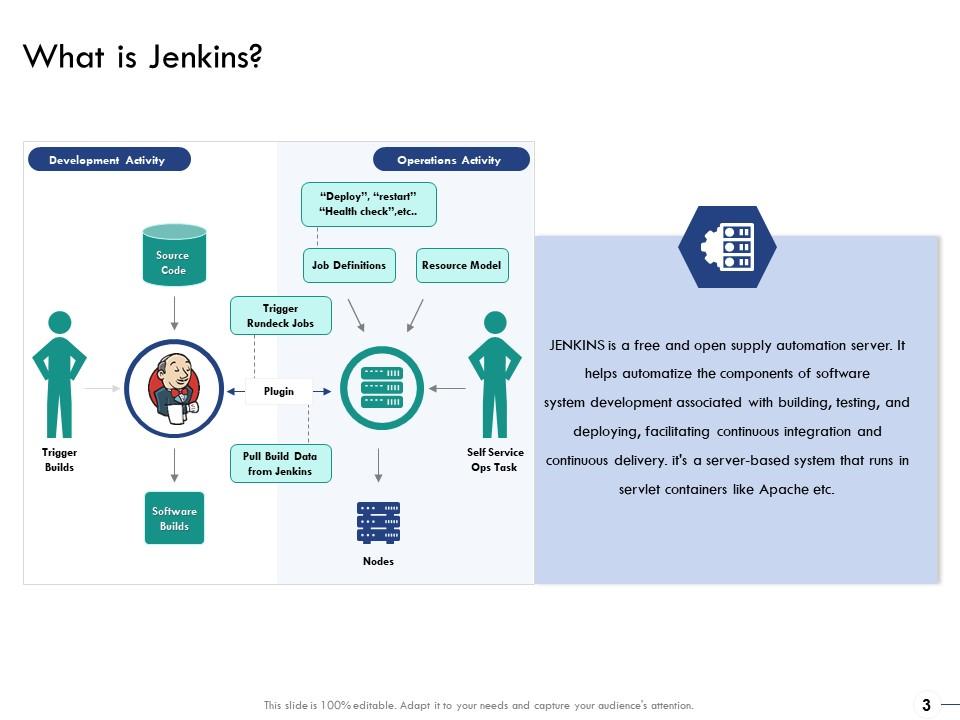
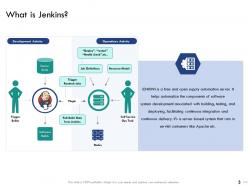
Use this PPT Template to explain better what Jenkins is all about. It helps to highlight what the Jenkins server is and who its target audience is. You can visually display how the Jenkins system works via flowcharts and creative graphics. Right from the operations activity to the development activity, use this flow chart to show how this free and open supply automation tool helps automate and strengthen software projects. Employ this presentation to explain the process of build, testing, and deploying software for continuous integration and delivery.
Template 2: Features of Jenkins
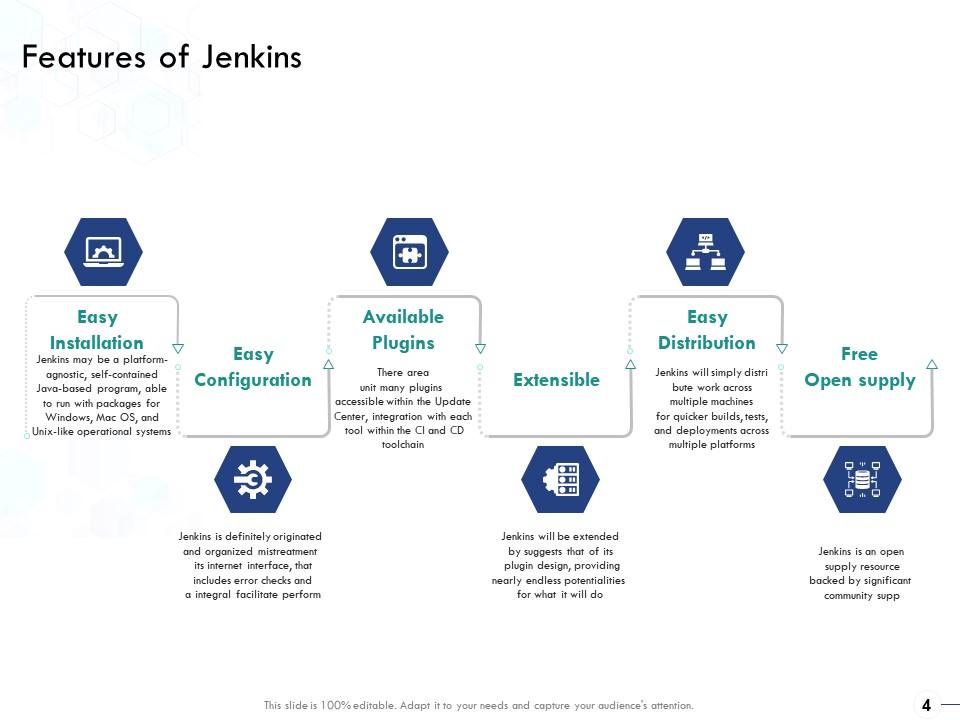
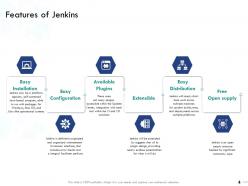
This PPT Slide accurately describes the Jenkins server. Use this template to highlight the key features, including the installation, configuration, plugins, distribution, and open supply. This Java-based program is easy to set up and can run with Windows, Mac OS, and other packages. You can also showcase how it has various plugins that help continuously integrate with every tool in the software development process. Lastly, Jenkins can also distribute across multiple platforms, which helps in quicker builders across various platforms.
Template 3: Continuous Integration in Jenkin

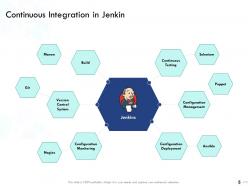
Continuous integration helps integrate code changes to fix and remove bugs from multiple developers in one project. The constant process of committing, building, testing, and deploying a code requires a server-based tool like Jenkins. This Jenkins Continuous Integration Process consists of tools like Maven, Git, Selenium, Nagios, Puppet, and more to host and monitor code changes and build new codes.
Template 4: Jenkin Architecture
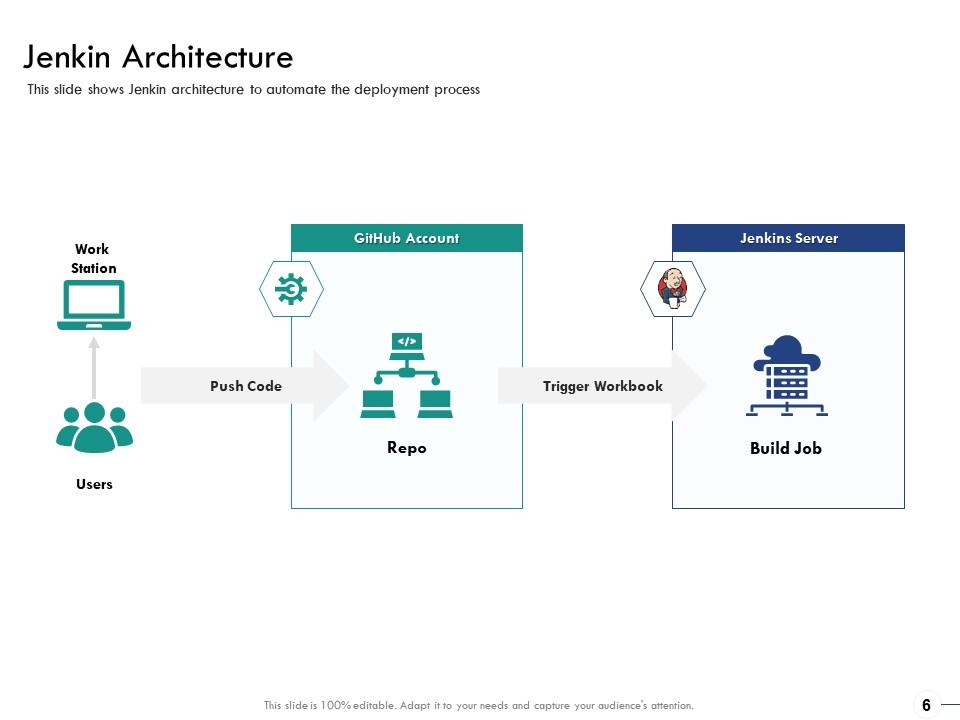
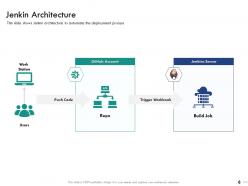
This template can help simplify how the Jenkins architecture works in a company's deployment process. Use it to showcase your workstation and version control server, such as GitHub and Jenkins, that builds your codes. The flow arrows describe how you change the code, which is then pushed to GitHub. This creates a job in Jenkins that builds, tests, and deploys the code for production.
Template 5: Advantages of Jenkins

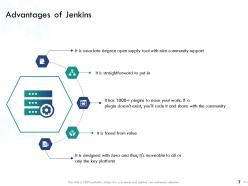
This PPT Layout helps to understand the benefits of Jenkins. It includes its easy installation on any software operating system that supports Java and has over 1000+ plugins that help you build, test, and deploy codes.
Template 6: Jenkin Cheat Sheet
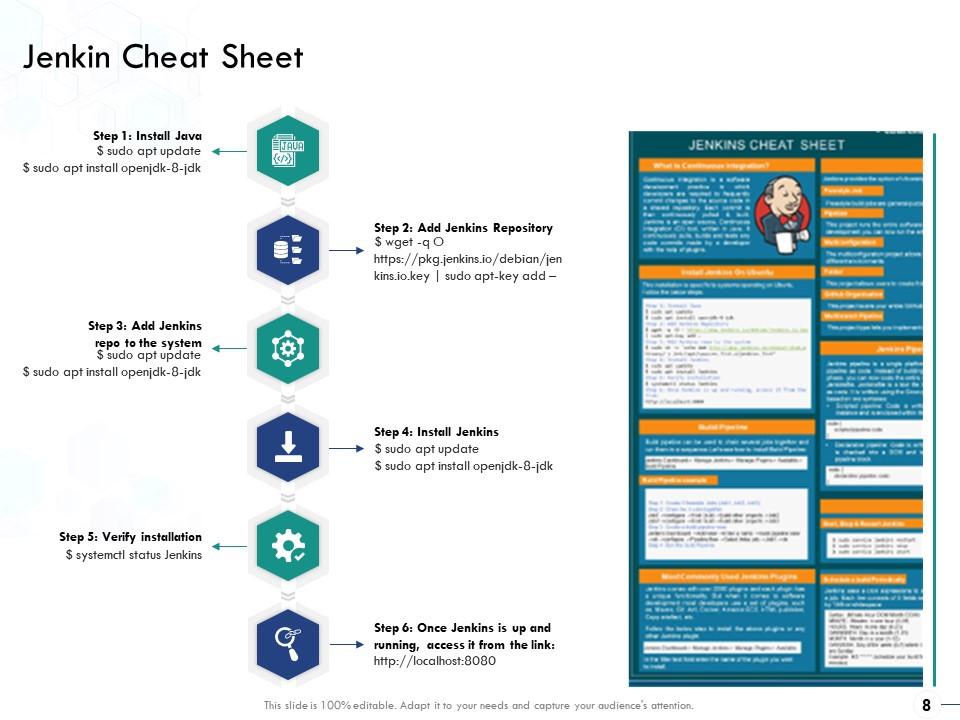
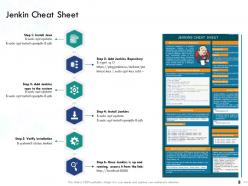
The Jenkin server can be easily installed and deployed for several software applications to test new codes and build packages. You can understand this process better using this Jenkin Cheat sheet that tells you how to install Java by updating your programs. Once you do that, you must add Jenkins and refresh it so your system can access this server. Next, you must install Jenkins and check if it is working. Finally, you can open it with your browser and start using it to build and test codes. This cheat sheet helps you and your team members understand this process in an organized manner.
Template 7: Useful Plugins In Jenkins
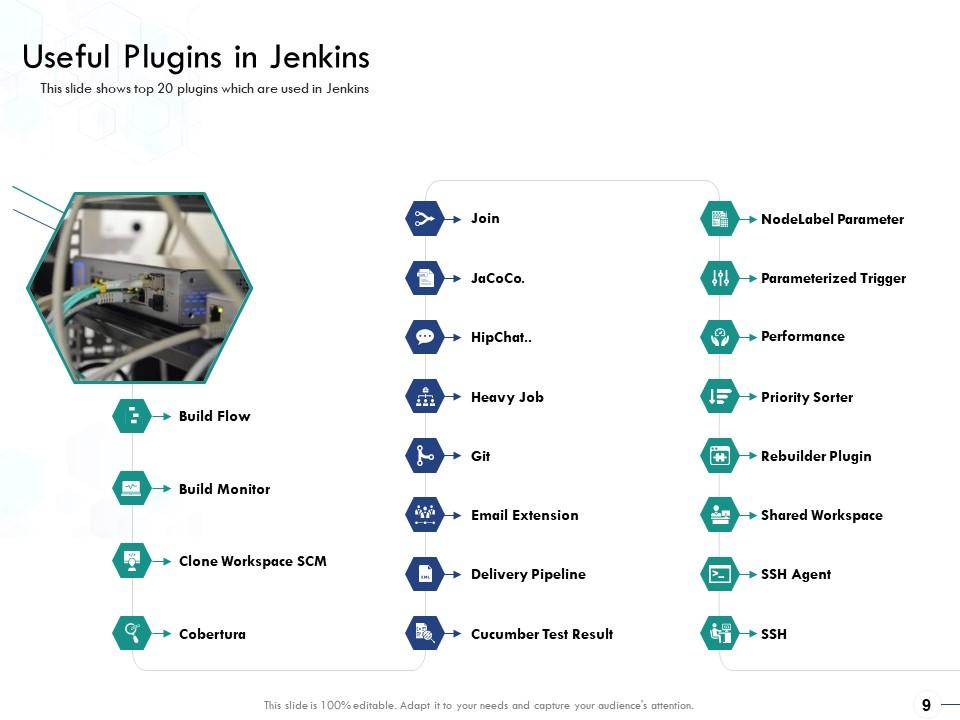
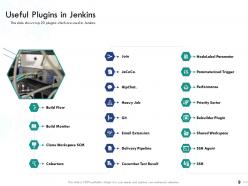
Use our Plugins template to showcase the number of plugins in Jenkins and how to use them. This will help to list all the plugins, such as Build Flow, Git, Heavy Job, Cobertura, and more. These plugins facilitate smoother functionality in building, testing, and deploying various applications and monitoring performances. You can also customize these plugins to meet the needs of your program or software.
Template 8: Difference between Continuous Integration, Continuous Delivery, and Continuous Deployment

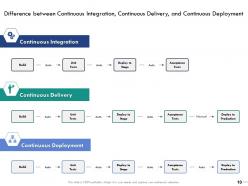
Use our PowerPoint Template to understand and explain the difference between continuous integration, delivery, and deployment. This slide shows the differences between these three regarding how they automate software. This sleek design shows how continuous integration helps fix and monitor code changes for errors. Lastly, continuous deployment automates these new codes when tested and approved.
Automating Software Development
These pre-designed PPT Templates help display how Jenkins automates software codes and creates more efficient systems. From visuals to flowcharts, diagrams, and more, you can present what Jenkins is all about and how it is effective in testing, building, and deploying codes and minimizing human errors. Present this data to your stakeholders and clients so they can understand the importance of Jenkins for your DevOps process.
PS: Check out SlideTeam’s pre-designed PPT Templates on Process to Deploy Jenkins for Effective Software Development templates.
An introduction to jenkins powerpoint presentation slides with all 20 slides:
Use our An Introduction To Jenkins Powerpoint Presentation Slides to effectively help you save your valuable time. They are readymade to fit into any presentation structure.
FAQs for An introduction to jenkins
Honestly, Jenkins is solid because of its crazy plugin ecosystem - we're talking thousands of integrations for whatever random tools your team uses. Being open source means you're not bleeding money on licenses. The UI looks like it's from 2008 (and probably is), but you get used to it. What's nice is you can automate basically any pipeline you dream up. Scales pretty well too, and the community's super helpful when you inevitably break something. I'd start simple - just a basic build job to mess around with the interface first.
So Jenkins basically watches your repo and kicks off builds/tests/deployments every time you push code. No more manual stuff once it's set up right. Honestly took me forever to configure the first time but now I can't imagine working without it. Start with just automating builds - don't try to do everything at once or you'll hate yourself. The plugin library is massive so you can hook it up to whatever you're already using. Docker, AWS, Slack notifications, all that. Then add testing and deployment pieces gradually. Total workflow game-changer.
Jenkins is self-hosted, so you're stuck managing your own servers - which honestly can be a total headache. CircleCI and Travis are cloud services that handle all that server stuff for you. Just push your code and boom, builds run automatically. Jenkins has this crazy plugin ecosystem though, like there's a plugin for everything. Way more customizable if you need weird workflows. The cloud ones are dead simple to set up but you get less control. If you don't want to deal with infrastructure nonsense, go with CircleCI or Travis. Need something super custom? Jenkins is worth the pain.
Parallel builds are probably your biggest win here - start there. Don't run everything on the master node, spread it across build agents instead. Pipeline scripts beat freestyle jobs every time, they're way more efficient. Cache your dependencies if you're not already, it makes a huge difference. Incremental builds help too so you're not rebuilding stuff that didn't change. Oh and workspace cleanup - sounds boring but it matters. Set build timeouts or you'll get stuck with hanging jobs that mess up your whole queue. Been there, it sucks. The parallel execution thing though, that's where you'll see the biggest speed boost right away.
Blue Ocean plugin is a game changer - makes everything way cleaner than Jenkins' default mess. Pipeline plugin you'll need for any real workflows. Git plugin is obvious unless you're somehow still on SVV (yikes). Build Timeout saves you from those annoying jobs that just sit there forever, and Workspace Cleanup keeps your storage from exploding. For notifications, Email Extension and Slack plugins work great. Honestly, start with these basics and see what else you actually need - no point installing everything upfront.
So Jenkins works with Git through plugins - the Git plugin usually comes already installed. Just plug in your repo URL, credentials, and which branch you want in the job settings. Jenkins will grab code changes based on whatever triggers you set. Quick tips: webhooks beat polling every time (way faster), store your credentials properly in Jenkins' manager, and multibranch pipelines are clutch for bigger projects. Oh and put your Jenkinsfile right in your repo root - seriously makes everything so much cleaner since it's all version controlled together. I'd start with a basic freestyle job first, then move to pipelines once you get the hang of it.
First things first - get authentication running and lock down those user roles. Nobody needs admin access unless they're actually managing the thing. Always use HTTPS, keep Jenkins patched (I know, boring but necessary), and throw some firewalls around it. Store your API keys in Jenkins credentials instead of jamming them into scripts like a barbarian. Turn on CSRF protection too. If you're doing distributed builds, agent-to-master security is worth setting up. Matrix-based security looks complicated but it's actually pretty solid once you figure it out. Start with auth and network stuff, then tackle the rest.
Dude, Jenkins pipelines are honestly a lifesaver. They automate your whole CI/CD flow so you're not doing manual deployments at 2am anymore. All your build and test steps get written as code, which means everything's repeatable and tracked in version control. The best part? Your team can see exactly what's happening at each stage instead of playing "did someone actually test this?" Plus bugs get caught way earlier since tests run automatically on every commit. Oh, and you don't have to go all-in right away - just start with something basic and add more complexity once everyone's used to it.
So Jenkins basically runs your whole CI/CD show for containers. It'll build Docker images from your code, push them to registries, then kick off K8s deployments automatically. The workflow is pretty clean: code gets committed, Jenkins builds it into a container, runs tests, then deploys to your clusters. Honestly took me way too long to set up my first pipeline properly, but once you do it's incredible how smooth everything becomes. You can even roll back if deployments break. Start simple - just build a Docker image from your app first. You'll see how much time it saves pretty quickly.
Check your build logs first - they'll show you exactly what broke. Red error messages, failed tests, dependency problems, that kind of stuff. Builds hanging forever? That's usually resource limits or network timeouts being annoying. For deployment issues, double-check your credentials and target environments. Make sure deployment scripts have proper permissions too. Oh, and the Jenkins system log under "Manage Jenkins" might catch plugin conflicts you missed. Turn on verbose logging for failing jobs - gives you way more detail to work with. Trust me, it's worth the extra noise.
Definitely organize your Jenkins jobs into folders - by team, project, whatever makes sense for you guys. Trust me, scrolling through hundreds of randomly named jobs is a nightmare. I'd start with consistent naming conventions too, like adding project prefixes or environment tags. Views are clutch for filtering jobs by whatever criteria actually matter to your workflow. Oh, and clean up old jobs regularly or they'll just pile up. Honestly, the folder structure thing alone will save your sanity. Just pick a system and start moving existing jobs into logical groups today.
So Jenkins basically watches your code and runs tests automatically when you push changes or make pull requests - you can also schedule them to run whenever. Works with pretty much any framework you're using... JUnit, pytest, Mocha, whatever. Honestly the coolest part is setting up those pipelines where unit tests run first, then integration tests, and if everything's green it'll deploy automatically. When tests fail (because they will), it sends you notifications and generates reports so you know what broke. My advice? Start with just one test suite and don't overcomplicate it at first. You'll figure out the fancier stuff as you go.
Oh man, yes - treat those Jenkins configs like actual code! Store everything in version control with Jenkins Configuration as Code or Job DSL plugin. I totally wrecked our build pipeline once by clicking around in the UI like an idiot. Keep your Jenkinsfile right in your repo with your app code. Shared libraries are clutch for repeated pipeline steps. The UI is tempting but manual configs are impossible to track later. Also backup your Jenkins home directory - trust me on this one. JCaS is probably your best starting point if you're building from scratch.
So Jenkins basically sends email alerts and connects to Slack/Teams to keep everyone updated on builds. When stuff breaks or passes, the right people get notified based on who owns what code. Those little status badges are actually super helpful - they show if everything's working right in your repo. GitHub and GitLab integration is clutch too, it'll comment directly on PRs when builds fail. Honestly, I'd start with just email notifications first. Don't overwhelm your team right away. Once they're used to it, then add the Slack stuff.
Yeah Jenkins is totally shifting toward cloud-native stuff now. Pipeline-as-code is becoming the norm - nobody's clicking around in the UI anymore, thank god. You'll see way more Kubernetes integration and containerized builds everywhere. They're pushing hard on declarative pipelines too, plus better monitoring with OpenTelemetry. Security scanning is getting baked right into pipelines now. Jenkins X is their attempt to modernize everything for cloud deployments, though honestly the adoption's been kinda slow. If you're upgrading soon, definitely migrate those old freestyle jobs to pipeline-as-code first - it'll save you headaches later.
-
Excellent work done on template design and graphics.
-
Informative presentations that are easily editable.
-
Thanks for all your great templates they have saved me lots of time and accelerate my presentations. Great product, keep them up!
-
Enough space for editing and adding your own content.
-
Visually stunning presentation, love the content.
-
Top Quality presentations that are easily editable.
-
Excellent template
-
Excellent template with unique design.
-
Innovative and attractive designs.
-
Informative design.
-
Page:
- You're currently reading page 1
- Page 2
-
