Introduction to dockers and containers powerpoint presentation slides

Rating:
80%
Introduction to dockers and containers powerpoint presentation slides
Slide 1 of 26
Favourites Favourites

Try Before you Buy Download Free Sample Product

Audience Impress Your
Audience
Editable 100%
Editable
Time Save Hours
of Time
The Biggest Sale is ending soon in
0
0
:
0
0
:
0
0
Rating:
80%
Presenting Introduction To Dockers And Containers Powerpoint Presentation Slides. This slideshow can be downloaded into formats like PDF, JPG, and PNG with ease. You can edit the slide as per your requirements. It is adaptable with Google Slides which makes it accessible at once. This slide is available in both the standard and widescreen aspect ratios. High-quality graphics ensures that there is no room for deterioration.

Content of this Powerpoint Presentation

The dynamics of modern IT infrastructure have changed since Docker debuted in late 2014. The company hosts 7 million+ applications, with 13 billion+ monthly image downloads and 11 million+ developers involved in the process. Alpine, BusyBox, Ubuntu, and Python have emerged as the most popular Docker containers for deploying programs across environments.

These software platforms have streamlined application development, deployment, and testing. They have also made it easier to manage large-scale systems in companies like Adobe, Netflix, PayPal, and many more.

Explore SlideTeam’s Software Deployment Plans Templates for a step-by-step roadmap to a successful software rollout.

This blog explores these approaches to provide you with a competitive advantage. SlideTeam’s ready-to-download PPT Templates will help you learn more about Docker Containers and why they are employed. Browse and download these presentations to get information about the major use cases and applications of these 

handy software development tools. 

Also, check Kubernetes Templates for Automating Computer Application Deployment and Scaling.

Template 1: Virtualization

It’s time to begin your virtualization journey. Use this PPT Template to understand how to optimize the use of physical computer hardware. This slide describes the concept of virtualization and its processes. This summary describes a hypervisor as a program that creates and runs virtual machines. Employ this presentation to isolate functions from hardware, resulting in improved capabilities and density.

Template 2: Containerization
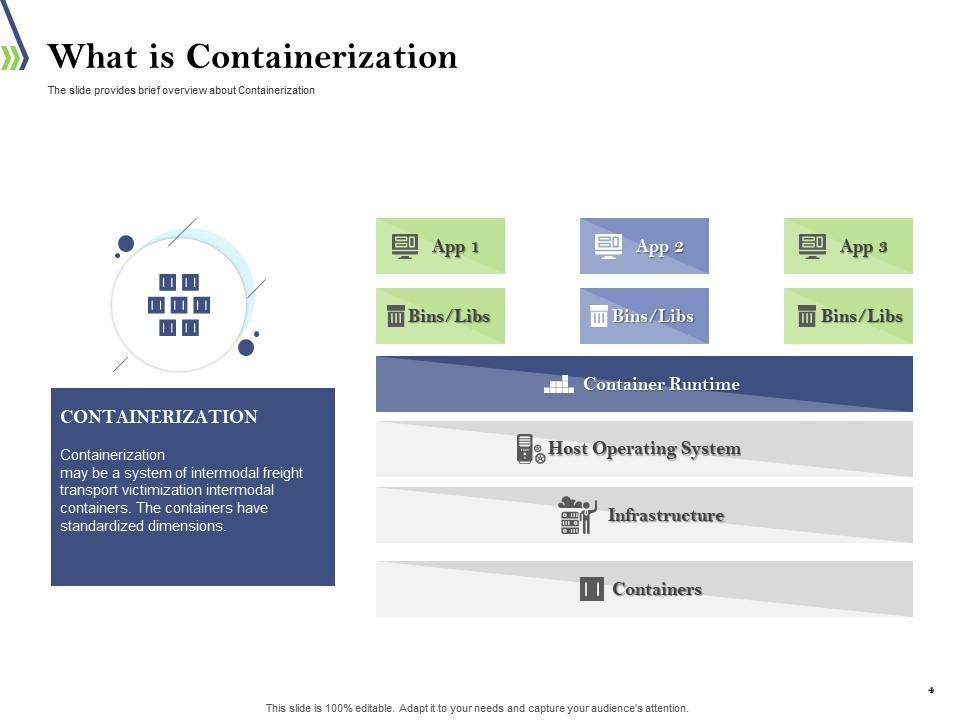
Do you need to build and distribute apps more quickly and safely? This PowerPoint Slide describes containerization, another type of virtualization that allows applications to run without interfering with the operating system, hardware, or other application services. This simplifies the deployment of repeating jobs and functions. Use this PPT Framework to provide high mobility across digital workspaces.

Template 3: Docker
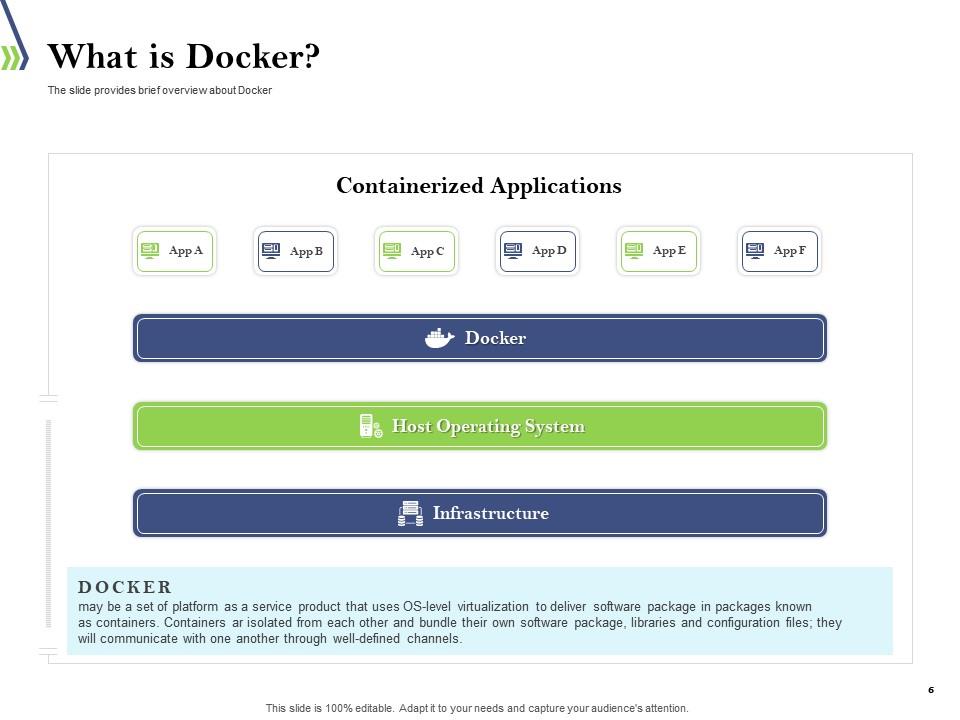
Docker is another software platform for deploying and operating containerized applications. This ready-to-use PowerPoint Slide provides an overview of this software development platform. It highlights the Docker framework, which includes standardized containers containing everything the software requires to execute. This presentation will help you understand dockers and ensure stable application performance. 

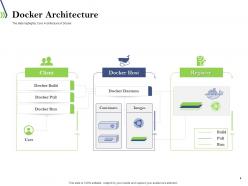
Template 4: Docker Architecture

This PPT Template delves deeper into Docker’s architecture. This slide shows the three primary Docker components: Docker Client, Docker Host, and Docker Registry. Use this framework to grasp the Docker system’s architecture and the relationships between its components.

Template 5: Docker Use Cases

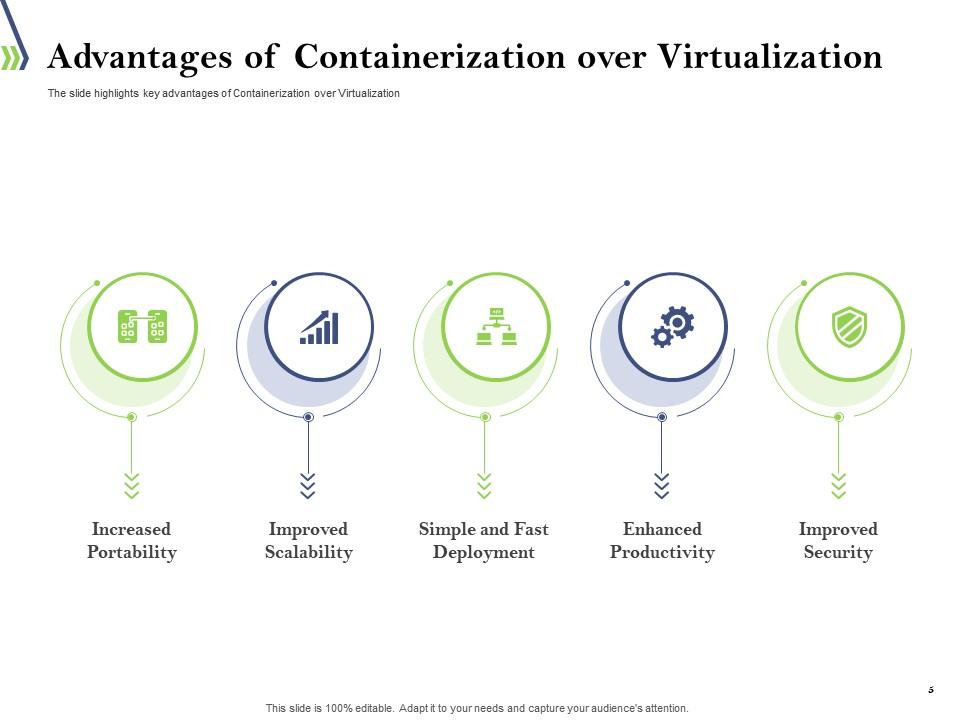
This PowerPoint Template explains the advantages of Dockers. Its applications include simplified configuration, increased developer productivity, server consolidation, multi-tenancy, code pipeline management, app separation, debugging features, and faster deployment. This will help you comprehend the benefits of Dockers in software development and deployment procedures. 

Template 6: Virtualization vs Containerization
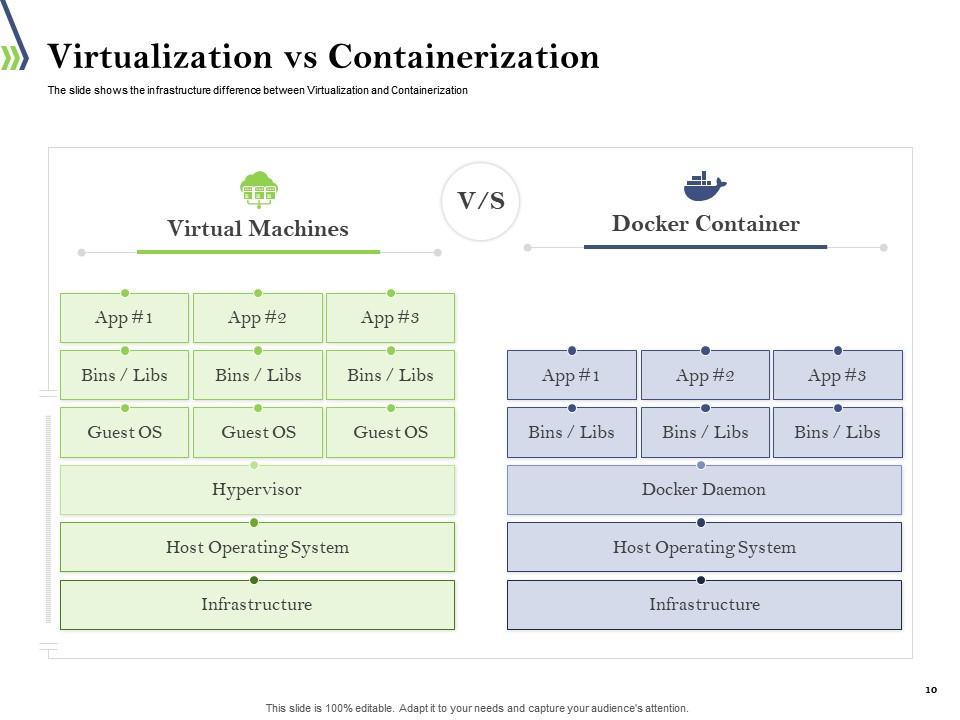
Need the best tool to enhance use of resources in physical machines. This PPT Slide illustrates the infrastructure differences between virtualization and containerization. This comparison will help you understand the properties of both technologies and their importance in developing a seamless application lifecycle.

Template 7: What is Docker File?
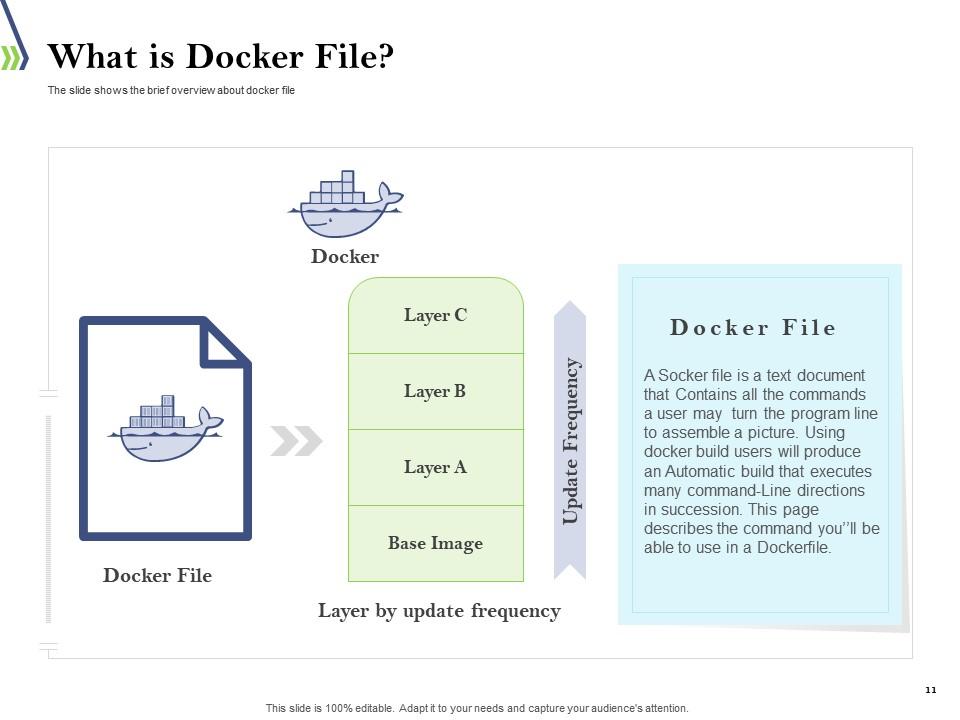
Docker runs with the build instructions found in the Dockerfile. This PPT Layout provides a brief introduction to command-line procedures that help users develop an automated build, which aids in eliminating disparities between settings.

Template 8: What is Docker Image?
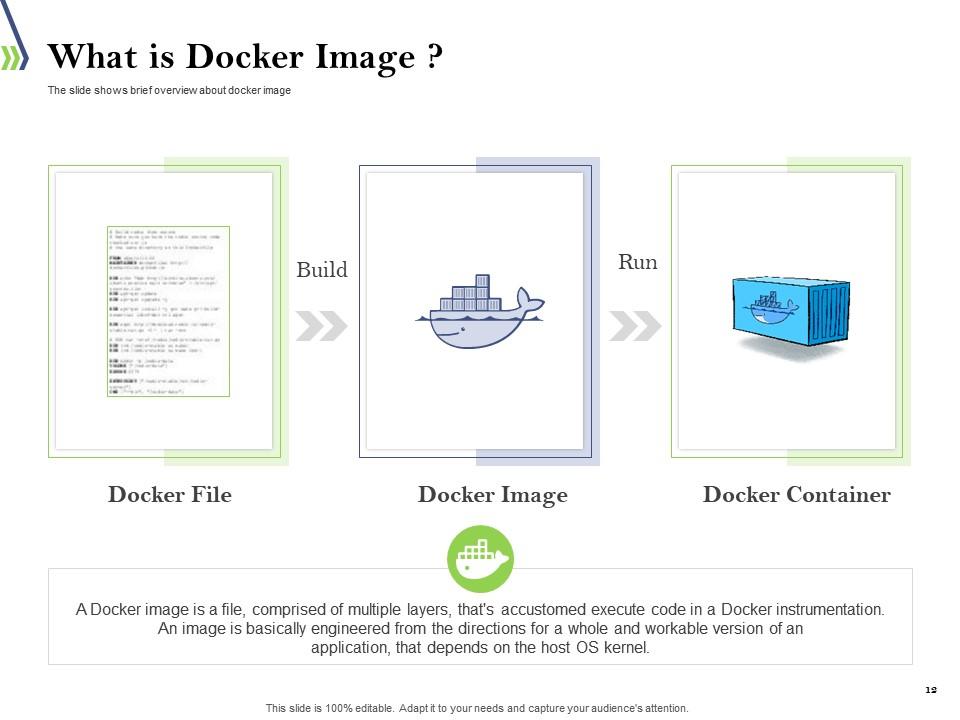
Docker images serve as a blueprint for constructing a container using Docker. This pre-designed PPT Template describes steps for running software and applications. It contains code, a runtime, libraries, environmental variables, and configuration files.

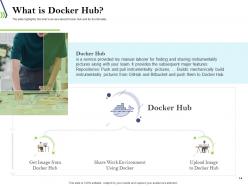
Template 9: What is Docker Hub?

This PPT Template provides an overview of Docker Hub and its functionality. It facilitates the team’s development, management, and delivery of container applications. This open-source application is free for all OS systems and contains capabilities like repositories and builds. It is ideal for developers and open-source contributors to gain access to necessary software.

Template 10: What is Docker Compose?
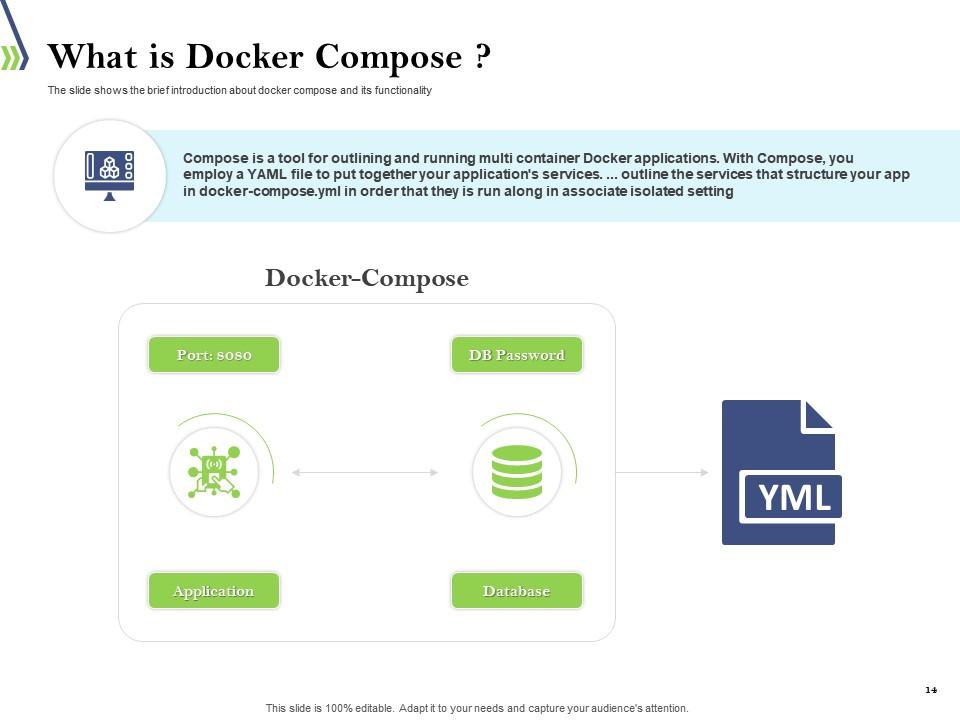
This PPT Preset describes Docker Compose as a solution for executing containers as a single service. This helps to streamline the development and deployment process. Use this layout to control the application’s whole lifecycle.

Run the entire Software

Our PPT Templates will help you streamline the software deployment process. Use SlideTeam’s PowerPoint Presentations to excel in DevOps.

PS SlideTeam’s Software Design Proposal Templates will help you pitch your idea effectively to close a sale.

FAQs for Introduction to dockers and containers

So Docker containers are like shipping boxes for your code - they pack up your app with everything it needs to run. Way lighter than VMs though. VMs copy entire operating systems which is honestly overkill most of the time. Containers just share the host OS instead, so they're crazy fast to start up and use way less resources. The best part? Your app runs exactly the same on your laptop and in production. No more "works on my machine" drama. Just try containerizing something simple first - you'll be surprised how much smoother deployments get.

So Docker basically wraps your app and all its dependencies into this portable container that runs the same everywhere. No more "works on my machine" BS when you deploy to production. They spin up crazy fast compared to VMs - we're talking seconds. When traffic hits, just launch more instances to handle the load. You can even do those fancy zero-downtime deployments where you gradually swap old containers for new ones. Honestly, the auto-scaling stuff is pretty slick once you get it dialed in. I'd start small though - pick one service and containerize that first to learn the ropes.

So a Dockerfile is basically your recipe for building a Docker image. You write step-by-step instructions - what OS to use, which files to copy over, dependencies to install, startup commands. Anyone can follow it to recreate your exact setup. Honestly the syntax feels weird at first but you'll get it pretty quick. Once you've got a good Dockerfile, you can spin up identical containers literally anywhere. Super useful when you're trying to avoid the whole "works on my machine" thing lol. Just start simple and build from there - don't overthink it.

So Docker networking basically sets up virtual networks where your containers can chat with each other. The cool part? Containers on the same network can just use each other's names instead of hunting down IP addresses - way easier. Sure, the default bridge network does the job for simple stuff, but honestly I'd recommend making custom networks once you get the hang of it. Better control that way. You can open up whatever ports you need to the host or between containers. Oh and definitely use `docker network create` for different app stacks. Keeps everything cleaner and more secure.

Honestly, Docker's a game changer for getting rid of "works on my machine" problems. Your code runs the same everywhere - dev, testing, production, whatever. Most people use it for microservices and deployment stuff, but where it really shines is local development. Need a database? Spin one up without installing anything permanently on your laptop. CI/CD pipelines love it too. Oh, and scaling in the cloud becomes way less painful. My buddy at work got me started by just containerizing one tiny service first - that's probably your best bet to see what the hype's about.

Docker volumes are your best bet here. I found this out after losing my database like three times (ugh). Bind mounts work if you need specific host directories mapped, but volumes are way cleaner since Docker handles everything. Create them with `docker volume create` or just throw `-v` in your `docker run` command. Honestly though? Put everything in docker-compose files. Your teammates will thank you instead of playing guessing games about what data actually needs to stick around.

Honestly, running containers as non-root is probably the biggest thing you can do right off the bat. Keep those base images updated too - Alpine's great for this since it's so minimal. Never put secrets directly in Dockerfiles, that's just asking for trouble. Environment variables or proper secrets management instead. Oh, and definitely scan your images regularly for vulnerabilities. I got burned on this during an audit once, not fun. Use --user flags to limit privileges and don't mount sensitive host stuff unless you absolutely have to. Actually, run `docker scan` on your current containers first - you'll probably be surprised what's already exposed.

So Docker Compose is basically a lifesaver when you're running multiple containers. Instead of typing out a million `docker run` commands, you just throw everything into one YAML file - services, networks, volumes, whatever. Then `docker-compose up` and your whole stack fires up at once. Honestly, once I started using it for apps with databases and web servers and all that jazz, I couldn't go back. Your dev environment matches production too, which is nice. Just convert whatever multi-container mess you've got now into a compose file. Trust me on this one.

Honestly, the biggest pain points are gonna be orchestration getting messy fast and data persistence - that stuff trips everyone up. Networking between services breaks in weird ways too. Security gets annoying since you're now protecting like 10 different entry points instead of one. Your containers will fight over resources and kill performance if you're not careful. Debugging is absolutely brutal compared to a monolith - I still hate it tbh. Plus monitoring becomes this whole thing when everything's scattered. My take? Start with maybe 3-4 containers max, get your deployment pipeline solid first, then grab some decent monitoring tools early.

So basically Docker builds images in layers, right? Each line in your Dockerfile creates a new layer that gets cached. When you build similar images, it reuses the same layers instead of rebuilding everything from scratch - saves a bunch of space and time. It's kinda like sharing Lego pieces between different builds. The cool part is when you're tweaking your code, only the stuff that actually changed needs to rebuild. Oh and here's something that'll save you headaches later: put your code changes toward the bottom of your Dockerfile so you're not constantly rebuilding the earlier layers.

For Docker monitoring, I'd definitely go with Prometheus + Grafana first. Prometheus pulls all your container metrics and Grafana makes these really nice dashboards. Free too, which is awesome. Datadog and New Relic are solid if you don't mind paying. Oh, and there's the ELK stack for logs - though honestly that can get complex fast. Docker has `docker stats` built-in for quick peeks at what's happening. But yeah, start with Prometheus/Grafana since it handles both system stuff and your app metrics without breaking the bank.

Honestly, Kubernetes is a beast - super powerful but crazy complex. Docker Swarm? Way easier to wrap your head around. I've literally watched teams spin up Swarm in half an hour, no joke. But here's the deal: everyone's going K8s because that's where the jobs are. The auto-scaling and networking stuff is pretty sweet too. My take? If you're new to this whole orchestration thing, mess around with Swarm first. Get the concepts down, then tackle Kubernetes when you actually need all that extra functionality. Don't torture yourself jumping straight into K8s.

Dude, containerization is a game changer for DevOps. Package your apps with all dependencies so you never deal with "works on my machine" again. CI/CD gets way faster since containers boot up instantly. Testing becomes so much cleaner because your test environment actually matches production. Auto-scaling happens automatically based on demand - honestly blew my mind the first time I saw it work. Rollbacks? Just swap container versions and you're done in seconds. Oh, and start small with one service to learn the ropes first.

First thing - run `docker logs ` because that's usually where you'll find what's actually broken. Won't start at all? Look at the exit code and error messages there. You can also jump inside running containers with `docker exec -it /bin/bash` to dig around (if bash is installed, anyway). Double-check your Dockerfile for the usual suspects: wrong paths, missing dependencies, permission problems. Oh, and resource limits can bite you when you least expect it - `docker stats` shows CPU/memory usage. Honestly, I always keep logging cranked up while building stuff, then turn it down later.

So multi-stage builds are your best friend here - they keep images super thin. Toss a .dockerignore file in there to skip junk files. Alpine base images are tiny compared to Ubuntu (I learned this the hard way). Put your Dockerfile commands in order of how often they change - stable stuff at the top so Docker can cache those layers. Oh and don't install debugging tools in production, that's just asking for bloat. One process per container too. Actually check your resource limits instead of just winging it - most people way overestimate what they need.

Ratings and Reviews

80% of 100
Review Form
Write a review
Most Relevant Reviews
  1. 80%

    by Dewey Stephens

    Nice and innovative design.
  2. 80%

    by Donn Hart

    Appreciate the research and its presentable format.

2 Item(s)

per page: