


Business model canvas powerpoint presentation slides





Try Before you Buy Download Free Sample Product
 Impress Your
 Audience
 100%
100% Editable
 Save Hours
 of Time


Showcase company’s value proposition, infrastructure, customers, finances and more using professionally designed Business Model Canvas PowerPoint Presentation Slides. Incorporate business model canvas PPT templates to outline business strategies for your organization. Present your business model to the investors, clients, stakeholders with the help of business model canvas PowerPoint presentation slideshow. Align activities, focus on each segment of business model, close the gaps, and more by incorporating business model canvas PPT templates. Create different business models showcasing your various ideas to make your audience understand your business concept. This deck comprises of different business models for you to choose from. You can select the business model as per your need. These templates are completely customizable. Change the color, icon, and font size as per your requirement. Add or remove the content, if needed. Outline key activities, key partners, value proposition, customer relationship, customer segment, key resource, distribution channel, cost structure, revenue stream, etc. Grab this awesome business model canvas PowerPoint templates to brainstorm and compare several business models all together. Our Business Model Canvas Powerpoint Presentation Slides generate lucrative ideas. They assist you to earn big.
People who downloaded this PowerPoint presentation also viewed the following :
Content of this Powerpoint Presentation
Slide 1: This slide presents BUSINESS MODEL CANVAS. State your company name and proceed.
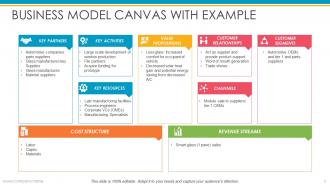
Slide 2: This is Business Model Canvas With Example slide showing- COST STRUCTURE, REVENUE STREAMS, CHANNELS, KEY PARTNERS, VALUE PROPOSITIONS, KEY ACTIVITIES, CUSTOMER RELATIONSHIPS, KEY RESOURCES, CUSTOMER SEGMENTS.
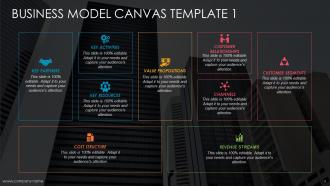
Slide 3: This slide shows Business Model Canvas Template 1.
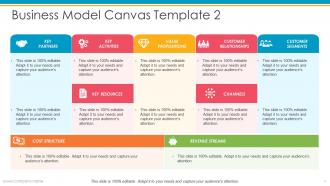
Slide 4: This slide displays Business Model Canvas Template 2. Use as per your requirement.
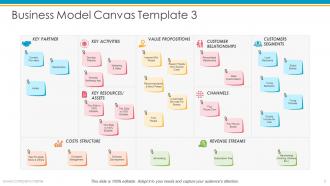
Slide 5: This slide shows Business Model Canvas Template 3. Add relevant data and use it.
Slide 6: This slide presents Business Model Canvas Template 4. We have listed few aspects, use them or add your own.
Slide 7: This is Business Model Canvas Icons Slide. Use/ add icons as per need.
Slide 8: This slide is titled Additional Slides. Alter/ modify content as per need.
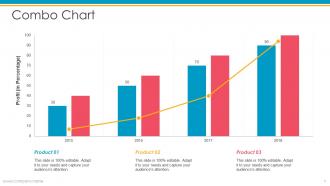
Slide 9: This is a Combo chart slide to show product/ entity growth, comparison etc.
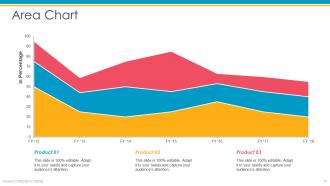
Slide 10: This slide presents an Area Chart for showcasing product/ company growth, comparison etc.
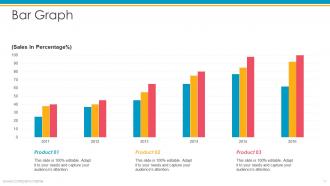
Slide 11: This slide presents a Bar Graph for showcasing product/ company growth, comparison etc.
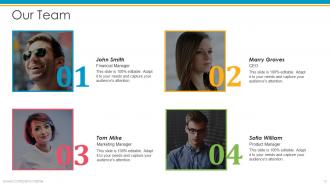
Slide 12: This is an Our Team slide with name, image and text boxes to put the required information.
Slide 13: This is Our Mission slide. Use it to state your goals, vision and mission.
Slide 14: This is an Idea or Bulb image slide to show information, ideas, innovation specific stuff etc.
Slide 15: This is a Thank You slide with Address# street number, city, state, Contact Numbers, Email Address.
Business model canvas powerpoint presentation slides with all 15 slides:
Without design even the best ideas can fall short. Our Business Model Canvas Powerpoint Presentation Slides are here to make sure your presentation makes it to the finish line every time.





FAQs for Business model canvas
So the Business Model Canvas breaks down into nine parts - Customer Segments, Value Propositions, Channels, Customer Relationships, Revenue Streams, Key Resources, Key Activities, Key Partnerships, and Cost Structure. I know, sounds overwhelming at first. But here's the thing: it's way more straightforward than it looks. Left side handles operations and partnerships. Right side covers customers and market stuff. Value propositions go smack in the middle, connecting everything together. Start with your value prop and customer segments though - I learned that the hard way. Those two will basically drive all your other decisions.
Dude, just try the Business Model Canvas - it's like a BS detector for startups. You map out nine sections covering everything from who pays you to how much it costs to get customers. Honestly, most people realize their idea has holes pretty fast. Like you'll be writing down your revenue streams and suddenly think "oh crap, nobody's actually gonna pay for this." The whole thing's visual so you can mess around with different versions and show it to people for feedback. Seriously, fill one out tonight. I bet you'll find at least three things that need work.
Customer segmentation is honestly the backbone of your whole Business Model Canvas. Different groups want different things and they'll pay differently too. College kids aren't gonna buy luxury watches the same way executives do, you know? Once you figure out your segments, everything else clicks into place. Your value props, how you reach people, relationships - it all gets customized for each group. I'd say dig deep into who your actual customers are first, then worry about mapping the other stuff. Makes the whole process way smoother. Trust me on this one.
Honestly, the canvas is great for pivots because you can see exactly what's broken in your current setup. Figure out which pieces aren't working - like maybe your value prop is falling flat or costs are killing you. Then just swap out those problem areas while keeping what's actually good. I've watched so many teams try to rebuild everything from scratch, which is totally unnecessary. You can sketch out 2-3 different versions and compare them right there on paper. Makes those "what if" conversations way easier before you blow money on something that might not work. The visual thing really helps - sounds obvious but it clicks differently when you see it laid out.
Honestly, the biggest mistake is trying to fill every single box perfectly right away. You'll just overthink everything instead of actually testing stuff. Keep it loose - use sticky notes if you can, don't cram tiny text everywhere. Most people create these gorgeous canvases without talking to a single customer first (which is wild when you think about it). Then they wonder why nothing makes sense in the real world. Treat it like a rough draft that keeps changing. Start sloppy, test your biggest assumptions fast, then keep tweaking based on what people actually tell you.
Your value prop is basically the bridge connecting what customers need and what you're selling them. Think of it as your "why should they care?" statement. The canvas puts these blocks side by side for a reason - you want to map each part of your value prop directly to the customer jobs, pains, or gains you've spotted. No clear connection? You're probably tackling the wrong problem. Honestly, I've seen so many startups miss this basic step. Start simple: list your customer's top 3 needs, then build value props that hit each one directly. That's it.
Dude, the Business Model Canvas is honestly a game changer because it gets your whole team looking at the same visual map. No more talking in circles about vague stuff - you can literally point to a box and be like "our revenue model is trash" or "what about this customer segment?" I swear some of our weirdest ideas came from randomly sketching in the partnerships section. It makes you think through all nine pieces so you don't miss obvious connections. Grab some sticky notes next time you're brainstorming - way better than just talking it out.
Yeah, I'd totally do a quarterly review of your Business Model Canvas. Companies get stuck doing the same old thing forever - drives me crazy honestly. Go through each section and ask the hard questions: are you hitting the right customers? Value props still make sense? There might be revenue streams sitting right under your nose that you haven't touched yet. Or partnerships that could actually move the needle. Think of it like a check-up for your strategy. Your team will probably push back at first, but staying flexible beats getting disrupted by some startup later.
So Lean Canvas is basically Business Model Canvas but for startups. BMC has 9 sections covering partnerships, customer relationships, all that stuff. Lean Canvas ditches some of those for startup-specific things - like "problem," "solution," "unfair advantage." Way more about testing your ideas fast instead of mapping out something that already exists. Think of BMC as the comprehensive version and Lean Canvas as... well, the lean version (obviously). If you're just starting out, definitely go with Lean Canvas first. Makes way more sense when you're still figuring everything out.
Yeah, it's totally adaptable! Tech companies go heavy on platform effects in their value prop. Manufacturing focuses more on supply chain partnerships and physical assets. Honestly, if you're in healthcare or education, regulatory stuff becomes make-or-break - I've seen so many good ideas die because they didn't plan for compliance early. Nonprofits switch "revenue streams" to "funding sources" and split customers into beneficiaries vs donors. Just grab the standard canvas first, then tweak the language for whatever weird challenges your industry throws at you.
Track the stuff that actually proves your assumptions right or wrong - customer acquisition cost, lifetime value, conversion rates. Engagement and retention numbers show if people care about what you're building. Don't sleep on burn rate either, that'll bite you faster than you think. Honestly, most founders track way too much and get overwhelmed by data. Pick 3-5 metrics that matter for YOUR specific model. Start measuring from day one, then let the numbers tell you when your canvas needs tweaking. It's supposed to change as you figure things out anyway.
Honestly, turning your Business Model Canvas into an infographic is a game changer. Those text-heavy grids? Total snoozefest for most people. But add some icons, colors, and arrows showing how everything connects - suddenly everyone gets it. I've seen teams spot gaps they completely missed before just because the visual made relationships between the nine blocks super obvious. Revenue streams become actual illustrations, customer journeys have flow. Way better than staring at boring boxes of text. Your next presentation will actually get people talking instead of zoning out.
So partnerships are basically the external relationships that keep your business running. Map out your strategic alliances, key suppliers, joint ventures - whoever you really depend on. Amazon's got their delivery network, Spotify needs those record labels (though I bet those deals are a nightmare to negotiate). These relationships help you grab resources you don't have, reduce risks, or just run things smoother. Don't list every random vendor though. Focus on your top 3-5 critical partners first - the ones where if they disappeared tomorrow, you'd actually be screwed.
So the Canvas literally puts customers right at the top - you map out who you're serving and what problems you're solving before diving into operations. Makes you face the brutal truth about whether people actually want your thing! Then you figure out how you'll reach them and keep them coming back. Honestly, I think most founders skip this reality check and wonder why nobody cares later. Start with those customer sections first, then work backwards. What do you actually need to make this work? Way more logical than building something cool and hoping customers magically appear.
Yeah, definitely! The Business Model Canvas plays nice with other frameworks. I usually start with the canvas as my main visual, then add SWOT analysis to dig into strengths/weaknesses for each block. Porter's Five Forces helps with the competitive stuff too. If you're doing startup things, Lean Canvas is a solid combo. Some teams throw in OKRs which honestly gets pretty interesting to watch unfold. The canvas becomes your home base while other tools handle the deep dives. Just pick whatever analysis actually fits your situation - don't overcomplicate it.
No Reviews