


Business Model Innovation Powerpoint Presentation Slides




Try Before you Buy Download Free Sample Product
 Impress Your
 Audience
 100%
100% Editable
 Save Hours
 of Time


Describe the purpose behind your business model design with our exclusive and expertly crafted PPT design on business model innovation PowerPoint presentation slides which will help your business and its model to support the various business procedures and which further results in bringing a long-term business profits and success. This Business model PowerPoint template empower you to make an incentive out of your innovative business plans. Thus, you can illustrate the effective innovative business structure which results in realizing your business objectives or goals. This business model PowerPoint layout will also help in comparing your existing business model with the new approaches to make the effective changes in your new business model. Further, you can also use this exclusive PPT slide to describe the effects of business model on your customer service function, revenue model, in management control functions and more. Thus, start working over this PPT deign to build a success-oriented business model to achieve long term business developments goals and targets. Be absolutely enthralling with our Business Model Innovation Powerpoint Presentation Slides. Get everyone on the edge.
People who downloaded this PowerPoint presentation also viewed the following :
Content of this Powerpoint Presentation
Slide 1: This slide introduces Business Model Innovation. State your company name and get started.
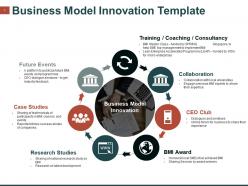
Slide 2: This slide showcases Business Model Innovation with the following sub headings- Training / Coaching / Consultancy, Collaboration, CEO Club, Research Studies, BMI Award, Case Studies, Future Events.
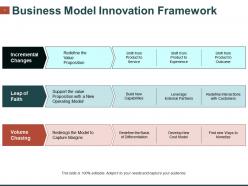
Slide 3: This slide presents Business Model Innovation Framework with the following sub headings- 1: Incremental Changes (Redefine the Value Proposition- Shift from Product to Service, Shift from Product to Experience, Shift from Product to Outcome). 2: Leap of Faith (Support the value Proposition with a New Operating Model- Build New Capabilities, Leverage External Partners, Redefine Interactions with Customers). 3: Volume Chasing (Redesign the Model to Capture Margins- Redefine the Basis of Differentiation, Develop New Cost Model, Find new Ways to Monetize).
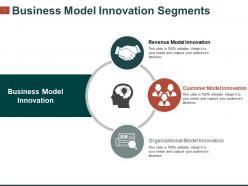
Slide 4: This slide showcases Business Model Innovation Segments categorised as- Revenue Model Innovation, Customer Model Innovation, Organizational Model Innovation.
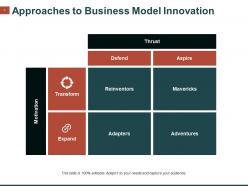
Slide 5: This slide presents Approaches to Business Model Innovation matrix with the following content- Thrust (Defend, Aspire) and Motivation (Transform, Expand) with Reinventors, Mavericks, Adapters, Adventures as the factor content.
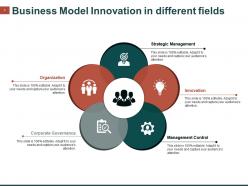
Slide 6: This slide shows Business Model Innovation in different fields such as- Organization, Management Control, Innovation, Strategic Management, Corporate Governance.
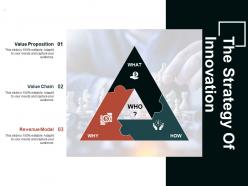
Slide 7: This slide displays The Strategy Of Innovation in terms of WHAT, HOW, WHY, WHO with- Value Proposition, Value Chain, Revenue Model.
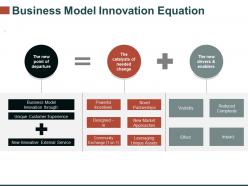
Slide 8: This slide shows Business Model Innovation Equation by The new point of departure equaling to- The catalysts of needed change with new drivers and enablers. The segregated parts above are- 1: The new point of departure (Unique Customer Experience, New Innovative External Service). 2: The new drivers & enablers- (Visibility, Reduced Complexity Effect Impact 3: The catalysts of needed change {(Powerful Incentives Novel Partnerships New Market Approaches Leveraging Unique Assets Community Exchange (1 on 1) Designed – in Experience)}.
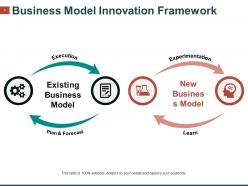
Slide 9: This slide shows Business Model Innovation Framework with the following sub headings- 1: Existing Business Model (Execution Plan & Forecast) 2: New Business Model (Experimentation, Learn)
Slide 10: This is Business Model Innovation Icon Slide. Use them as per requirement.
Slide 11: This is a tea/coffee Break slide to halt.
Slide 12: This slide is titled Charts & Graphs to proceed forwards.
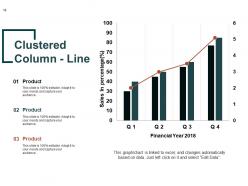
Slide 13: This slide showcases a Clustered Column-Line for different product comparison.
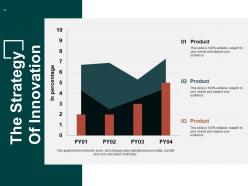
Slide 14: This slide presents The Strategy Of Innovation Area chart for product/entity comparison.
Slide 15: This slide is titled Additional Slides to move forward.
Slide 16: This is Our Mission slide with image and text box.
Slide 17: This is Our Team slide with names, image & text boxes to show responsible/accountable team members.
Slide 18: This is an About Us slide to state particulars about your team/company etc.
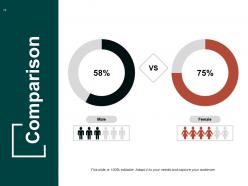
Slide 19: This is a Comparison slide to show comparison between two entities.
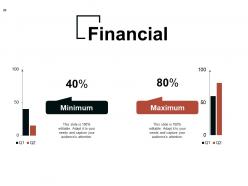
Slide 20: This is a Financial score slide with Minimum and Maximum on display.
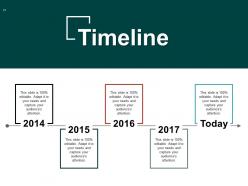
Slide 21: This is a Timeline slide to show milestones, growth etc.
Slide 22: This is a Thank You slide with Address:# Street Number, City, State, Email Address, Contact Number.
Business Model Innovation Powerpoint Presentation Slides with all 22 slides:
Our Business Model Innovation Powerpoint Presentation Slides get you all the clearances. Approvals come in from all around.







FAQs for Business Model Innovation
Okay so there's basically three things you gotta get right. Your value prop needs to solve something in a totally new way - not just "10% better" but actually different, you know? Then obviously you need a revenue model that isn't garbage (shocking how many people forget this exists lol). The operating piece should be hard for competitors to copy. When all three click together and actually support each other, that's when things get interesting. I'd probably map out what you've got now first, then figure out which part has the most room to shake things up.
Look, you gotta set up separate teams that work like mini startups inside your company. Give them their own money and totally different goals. Here's the thing - let them mess with your current products, even if it hurts short-term profits. Amazon nailed this with AWS and look how that turned out for them. Honestly, I'd rather wreck my own stuff than watch a competitor do it later. Figure out which parts of your business are most at risk. Then build something new before anyone else beats you to it. Yeah, it's scary but waiting around is worse.
Dude, you absolutely need customer feedback for innovation - it's like your sanity check. Without it, you're just guessing at what people actually want. I've watched so many businesses build stuff nobody asked for because they never bothered asking. Your customers will tell you what sucks about your current setup and what they'd actually pay money for. The trick is creating real systems to gather that feedback regularly, not just crossing your fingers and hoping they'll speak up. Oh, and they'll also show you how they actually want to buy from you, which is huge. Make it part of your regular process.
Track your usual suspects first - revenue from new products, customer acquisition costs, profit margins. That stuff's obvious but necessary. Customer satisfaction and market share changes matter way more than people think though. Internal metrics are huge too - employee engagement tells you if your team's actually bought in or just going through the motions. Decision-making speed is another good one since innovation tends to mess with how things normally work. I'd say pick 3-5 metrics max and check them monthly. More than that and you'll drown in data instead of actually doing anything useful.
Honestly, the three main things that'll kill you are regulations, people who don't want change, and crazy expensive old systems. Banking and healthcare are nightmares - you can't just experiment without getting destroyed legally. Your current employees will probably fight you if they think their jobs are at risk, which... fair enough I guess? Plus you're going up against companies with way more money who like things how they are. I'd say test small stuff first in areas that aren't heavily regulated. Once you prove it works, then you can think bigger.
Digital transformation makes you question everything about how your business actually works. New tech opens doors to markets you couldn't touch before and automates stuff that used to drain your budget. The data alone shows you what customers really want - which is usually different than what you think lol. Don't just slap digital tools onto old processes though. Map out your current setup first. Then figure out where tech could either fix your worst bottlenecks or create totally new ways to make money. It's overwhelming but worth it.
Dude, partnerships are honestly a game-changer for trying new business stuff. You get to borrow their tech, customers, or whatever you're missing without building it yourself. Those brainstorming sessions where you're like "wait, what if we mixed your thing with mine" - that's where the magic happens. I'd map out what gaps you have first, then find companies that are crushing it in those areas. Oh, and don't go all-in right away. Test small projects first to see if you actually work well together. Some partnerships look great on paper but are total disasters in practice.
Dude, agile is perfect for this stuff because you can test ideas without blowing all your money upfront. Build something basic first - get actual feedback from real people instead of guessing what they want. It's like that dating analogy but for business lol. You wouldn't propose on date one, right? Same deal here. Those quick feedback cycles save you from building something totally wrong. My advice? Pick one part of your model to test. Keep it small. When the data shows you're off track, don't be stubborn about changing direction.
Look at how smartphones created the whole gig economy - that's what emerging tech does. It opens up completely new ways to make money and serve customers. AI can handle stuff that used to need entire teams. Blockchain lets you build marketplaces without middlemen. IoT means selling results instead of just products. Netflix is perfect example - they didn't just make video rental better, they changed how we consume entertainment entirely. Honestly, the best approach is finding which tech could solve your industry's biggest pain point, then building around that. Don't just optimize what you're already doing. These technologies can flip your whole business model if you let them.
Focus on customer acquisition cost, lifetime value, and monthly recurring revenue first - those are your bread and butter. Churn rate is massive too, honestly way more startups die from ignoring churn than you'd think. Revenue per customer matters obviously. Then track your cash conversion cycle and gross margins because growth means nothing if you're bleeding money. Oh, and time to break-even - that one's critical. Get comfortable with these basics before you start adding fancy model-specific stuff. Trust me, nail the fundamentals first.
Honestly, market research is like detective work - you're hunting for gaps between what people actually want and what exists out there. Talk to customers about their biggest headaches with current solutions. Don't just send surveys though, that's kinda lazy. Do real interviews with maybe 10 people and dig into their frustrations. Look for patterns in how they behave, not just what they complain about. You'll find underserved groups and spot trends your competitors are missing. Sometimes the best opportunities are hiding in plain sight. Focus on understanding the deeper "jobs" people are trying to get done.
Honestly, startups just get three things right that bigger companies mess up all the time. First off, they test stuff cheaply instead of betting everything on one idea. When things aren't working? They pivot without getting all precious about it. And here's the kicker - they actually ask customers what they want instead of just guessing. I've watched so many corporate teams spend months planning the "perfect" launch, then nobody cares. It's painful to see. Better to run small experiments, move fast, and yeah... kill projects that don't stick. Give your teams permission to fail small rather than fail big.
Honestly, sustainability stuff makes you totally rethink how you run things - but that's where the magic happens. Companies find crazy new revenue streams they never saw coming. Like turning their waste into actual profit or creating subscription models that use way less resources. I've seen businesses accidentally stumble into their biggest innovations this way. Don't think of environmental constraints as limitations - they're more like puzzles that force creative solutions. When you're trying to cut waste or shrink your carbon footprint, you usually end up with processes that are both cheaper and give you an edge over competitors. Start by figuring out where you're impacting the environment most. That's typically where the best opportunities are hiding.
Netflix went from mailing DVDs to streaming to making their own shows - totally changed how we watch stuff. Uber basically said "forget taxis" and let anyone become a driver through an app. Amazon? Started with books but now they're into everything - cloud storage, shipping, you name it. Airbnb was genius though, turning people's spare rooms into mini hotels. What's cool is none of these companies just made existing things better. They spotted gaps nobody else saw and created something completely different. Each one found resources that weren't being used or needs people didn't even know they had.
Honestly, don't go all-in on some crazy new idea right away. Test stuff first - quick pilots, basic MVPs, even just talking to customers. I've watched way too many companies blow everything on "game-changing" concepts that bombed hard. Build what's basically an innovation mix: like 70% small improvements, 20% adjacent stuff, 10% wild bets. You're still innovating but not torching your main business. Oh, and set clear metrics upfront so you can kill projects fast when they're not working. Sounds boring but it actually works.
-
Awesome use of colors and designs in product templates.
-
Design layout is very impressive.