


Innovative Business Model Powerpoint Presentation Slides




Try Before you Buy Download Free Sample Product
 Impress Your
 Audience
 100%
100% Editable
 Save Hours
 of Time


Develop unique concepts and convey them by employing our content-ready Innovative Business Model PowerPoint Presentation Slides. Deliver lasting competitive advantage by making the executives understand the four lasting approaches to business model innovation. Help them make effective choices by explaining the path to growth with the help of this business model innovation complete deck. Showcase the new and improved ways of increasing revenue. Also, state the changes made to the value proposition and the operating model to satisfy customer needs. Explain the foundational strategic changes made with the help of this strategy innovation PowerPoint complete deck. Also, state the importance of developing a business model framework to make the changes effectively. The three main steps that make up a great business model innovation framework such as incremental changes, a leap of faith and volume chasing can be easily showcased with the help of this innovation framework PPT layout. Hence, grab it to make your innovation process much easier.
People who downloaded this PowerPoint presentation also viewed the following :
Content of this Powerpoint Presentation
Slide 1: This slide introduces Innovative Business Model. State Your Company Name and begin.
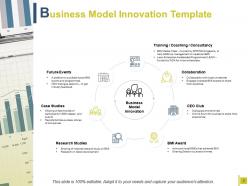
Slide 2: This slide shows Business Model Innovation Template describing- Training / Coaching / Consultancy, Collaboration, CEO Club, BMI Award, Case Studies, and Future Events.
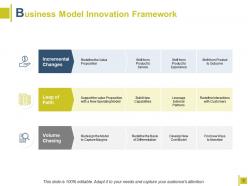
Slide 3: This slide presents Business Model Innovation Framework describing- Incremental Changes, Leap of Faith, and Volume Chasing.
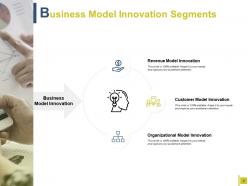
Slide 4: This slide displays Business Model Innovation Segments describing- Customer Model Innovation, Organizational Model Innovation, Revenue Model Innovation.
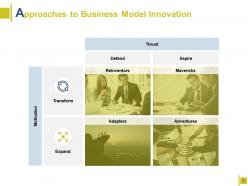
Slide 5: This slide represents Approaches to Business Model Innovation.
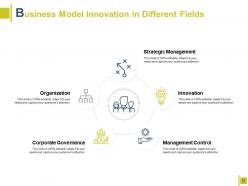
Slide 6: This slide showcases Business Model Innovation in Different Fields such as- Innovation, Strategic Management, Management Control, Organization, Corporate Governance.
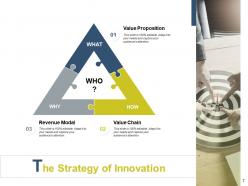
Slide 7: This slide shows The Strategy of Innovation with related imagery.
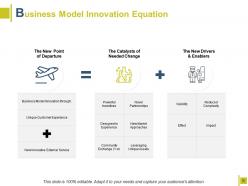
Slide 8: This slide presents Business Model Innovation Equation.
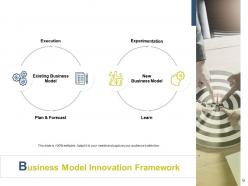
Slide 9: This slide showcases Business Model Innovation Framework.
Slide 10: This slide displays Innovative Business Model Icons.
Slide 11: This slide reminds about a Coffee Break.
Slide 12: This slide is titled as Additional Slides for moving forward.
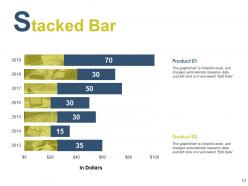
Slide 13: This slide shows Stacked Bar chart with two products comparison.
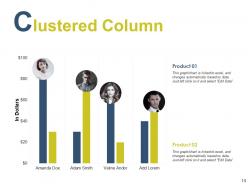
Slide 14: This slide presents Clustered Column chart with two products comparison.
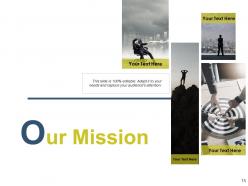
Slide 15: This is Our Mission slide with related imagery and text.
Slide 16: This is Our Team slide with names and designation.
Slide 17: This is About Us slide to show company specifications etc.
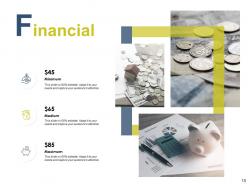
Slide 18: This is a Financial slide. Show your finance related stuff here.
Slide 19: This is a Quotes slide to convey message, beliefs etc.
Slide 20: This is a Thank You slide with address, contact numbers and email address.
Innovative Business Model Powerpoint Presentation Slides with all 20 slides:
Use our Innovative Business Model Powerpoint Presentation Slides to effectively help you save your valuable time. They are readymade to fit into any presentation structure.





FAQs for Innovative Business Model
So basically, innovative business models break away from how everyone else does things in your industry. You're either solving customer problems differently, creating totally new value, or finding weird ways to make money that others haven't thought of. Airbnb's a perfect example - they completely flipped the hotel game. Subscription models are another one that's everywhere now instead of just buying stuff once. The whole point is building advantages your competitors can't easily copy. Honestly, I'd start by figuring out what really pisses off customers in your space and work backwards from there.
So instead of just digitizing what you're already doing, think about completely changing how customers get value. Look for spots where tech can cut out middlemen or create totally new ways to make money. Uber basically turned regular people into drivers - that's the kind of shift I'm talking about. Netflix didn't just improve video rentals, they made stores irrelevant entirely. Find your industry's biggest headaches first. Where are things stupidly expensive, slow, or just annoying? That's usually where someone comes in and flips everything upside down. Make it way cheaper, faster, or more convenient than what exists now.
Honestly, customer needs are what make or break businesses. People want something new? Companies better figure it out fast or they're toast. Netflix dumped DVDs for streaming because we all wanted movies instantly. Uber exists because taxis sucked, plain and simple. The really clever ones predict what we want before we even know it - like Apple did with the iPhone (still blows my mind how they nailed that). My advice? Actually talk to your customers about what annoys them. I know it sounds obvious, but those complaints are pure gold for your next move.
Honestly, subscription models crush traditional sales for sustainability. You get that steady cash flow instead of the whole feast-or-famine thing. Makes planning so much easier. Customer lifetime value goes way up too since people hang around for months or years instead of one-and-done purchases. But here's the catch - you've gotta keep delivering value or they'll bail fast. Oh, and you can actually invest in long-term stuff instead of panicking about hitting quarterly numbers (which is exhausting). I'd probably test it on a smaller product first though. See how it goes before going all-in.
Honestly, data analytics is like having x-ray vision for your business. Netflix suggesting that perfect binge-watch? Uber jacking up prices during rush hour? That's all analytics doing the heavy lifting. Start with one question that actually matters to your wallet - don't try boiling the ocean here. Maybe it's figuring out why certain customers bail, or spotting a goldmine segment you've been ignoring. The cool part is you'll catch patterns your brain would totally miss otherwise. I've seen people discover whole new revenue streams just by digging into their numbers. Pick one metric, go deep, and let the data surprise you.
Look for spots where the big guys totally drop the ball on customer experience - their size makes them clunky. That's your opening. Get scrappy with direct relationships and super personalized service. Pivot fast when customers give feedback. Big corps can't do that. Try subscription models or partner with other small businesses, maybe create something community-focused that feels real. The whole David vs. Goliath thing? Actually works here. Test stuff quickly, iterate like crazy. Oh and don't just compete on price - pick one thing you can genuinely crush them on instead.
Honestly, your biggest headache will be pushback from your team and customers - nobody wants their routine messed with, even if you're making things better. Cash flow gets weird too since you're basically running two operations at once during the switch. Some customers will bail before new ones jump on board, which sucks but it happens. Resource allocation becomes this whole juggling act. My advice? Don't flip everything overnight - that's asking for disaster. Start small with like 10-20% of your business, see what breaks, fix it, then expand from there.
Track your normal stuff like revenue and customer growth, obviously. But you'll also want to watch innovation-specific things - how fast you're shipping new features, whether customers actually engage with your new stuff, how quickly you can pivot when needed. Here's the thing though: some benefits won't show up for months. Monthly check-ins help catch what's working early so you can ditch the failures fast. Focus on leading indicators too - user feedback, pilot success rates, whether your team's actually adopting new processes. It's honestly a bit of a balancing act between patience and being ruthless about what isn't working.
Netflix ditched DVDs for streaming and changed everything. Airbnb basically said "why not rent out your spare room?" - honestly brilliant when you think about it. Spotify figured out how to make pirates actually pay for music with their free tier. Tesla just skipped car dealerships completely. None of these companies just moved existing stuff online. They completely flipped how things worked. Look at whatever's annoying your customers that nobody's fixing yet - that's usually where the good ideas are hiding.
Honestly, collaboration is like the cheat code for building better business models. You get access to skills, connections, and insights you'd never have solo. Netflix nailed this early on by partnering with device makers - smart move. Look at what you're missing first, then find partners who excel in those areas. Maybe it's distribution channels, maybe it's tech expertise. Sometimes even working with competitors makes sense (weird but true). The whole point is combining different strengths to create something neither of you could've built alone. Map out your gaps, then go hunting for the right collaborators.
Honestly, regulations can make or break your innovation game. Sometimes tight rules actually spark the best ideas - you're forced to think outside the box to work within those constraints. But messy, confusing regulations? Total innovation killer. Nobody wants to move forward when they're scared of getting sued or fined. My advice: get cozy with regulators super early in the process. And loop in your legal team from the start - I've seen too many startups wait until launch day to think about compliance. That's just asking for trouble. The companies that nail this stuff treat regulatory strategy like part of product development, not some boring checkbox.
Try mixing revenue streams - like subscriptions plus impact fees, or having paying customers subsidize services for underserved areas. Platform models work great too. You connect different groups, take a small cut, but maximize the social good. Honestly, Grameen Bank and Patagonia nail this approach if you want some real examples. The trick is making profit actually boost your impact instead of fighting against it. Don't overthink it though - pick one model tweak, test it small, and track both your money and social results. Once you find that sweet spot, you're golden.
Start with MVP testing - build the bare minimum and get it to real people fast. Landing page tests, surveys, fake door tests all work great for testing demand without spending tons. Customer interviews are honestly where the magic happens, can't recommend them enough. Try pilot programs with small groups first. A/B test different versions and run the financial models to see if it actually makes sense money-wise. Oh and financial modeling sounds fancy but it's just "will this thing make money lol." Bottom line: fail quick and cheap so each test either proves you're right or shows you need to pivot before you're broke.
Honestly? Don't go all-in right away - that's where most people mess up. Take like 10-20% of whatever you've got and just experiment with it. I've watched so many businesses crash because they threw everything at one "game-changing" idea. Run some small pilots first. Get actual feedback from real customers, not just what you think they want. Set up clear metrics beforehand so you'll know if something's actually working or if you need to bail. Think of it like a stock portfolio - some stuff will tank, but the hits should cover your losses and then some. Scale up the winners gradually.
Dude, everyone's going crazy for AI automation right now. Sustainability isn't just feel-good marketing anymore - companies are actually making bank by going green. Subscription models are everywhere too, which makes sense since recurring revenue beats one-off sales every time. Platform businesses are killing it by becoming the middleman connecting different services. Oh, and remote work opened up this whole global talent thing that's pretty wild. My advice? Don't just sell products once. Build something that solves problems people have every month.
-
Unique and attractive product design.
-
Visually stunning presentation, love the content.