

Business idea proposal powerpoint presentation slides





Try Before you Buy Download Free Sample Product
 Impress Your
 Audience
 100%
100% Editable
 Save Hours
 of Time


When it comes to winning the trust and the loyalty of the prospective client a business proposal is an entrepreneur’s magical wand which never fails to exercise its power. It helps the entrepreneurs pitch his business, product, and service in an invigorating way. Also, vendors, suppliers or any of your clients need a proposal in order to decide whether they want to work with your company or not. Here is a business idea proposal template aesthetically and institutively designed to help you increase the power of this tool manifold. This PPT slideshow can help you in presenting your business idea skillfully so that your prospective client gets impressed and assigns his project to you. Every business is formed to solve a particular problem and this problem solving- endeavor of yours can be presented using this Business Idea Proposal PowerPoint Presentation. Present your product overview here which might consist of product strategy, competitive advantage, technical feasibility, etc. You can also include various other points like investment opportunity, market opportunity, SWOT analysis, etc in this proposal PowerPoint presentation slides. Further elaboration of the future benefits like product development, intellectual property, press mentions, etc. is also very easy with this template. With fully editable content and format, this business idea proposal template is suitable for everybody whoever requires a proposal to present in front of his clients. Therefore empower your team and reduce their workload of creating a business proposal from the very scratch using this professionally designed business idea proposal template presentation slides. It will be an absolute delight for your audience to watch and thus help you expand and grow.
People who downloaded this PowerPoint presentation also viewed the following :
Content of this Powerpoint Presentation
Slide 1: This slide introduces Business Idea Proposal. State Company name and Client name.
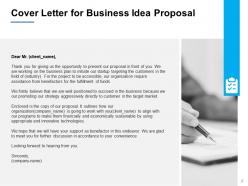
Slide 2: This slide displays Cover Letter for Business Idea Proposal.
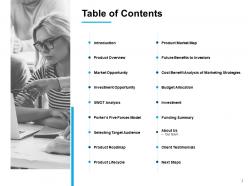
Slide 3: This slide displays Table of Contents of the presentation.
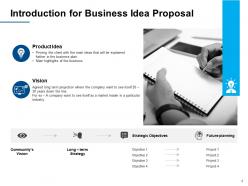
Slide 4: This slide showcases Introduction for Business Idea Proposal.
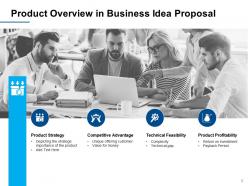
Slide 5: This slide depicts Product Overview with- Return on Investment, Payback Period, Product Profitability, Complexity, Technical gap, Technical Feasibility, Unique offering customer, Value for money, Competitive Advantage, Depicting the strategic importance of the product, Product Strategy.
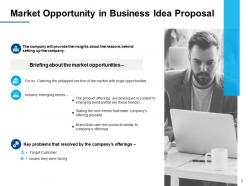
Slide 6: This slide displays Market Opportunity in Business Idea Proposal.
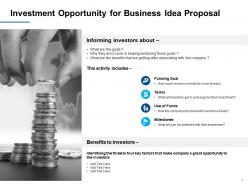
Slide 7: This slide showcases Investment Opportunity.
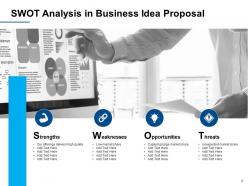
Slide 8: This slide depicts SWOT Analysis to analyze Strengths, Weaknesses, Opportunities and Threats.
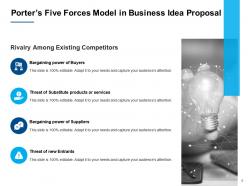
Slide 9: This slide showcases Porter’s Five Forces Model in Business Idea Proposal.
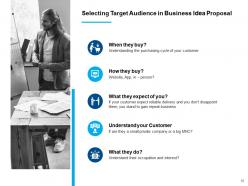
Slide 10: This slide showcases Selecting Target Audience in Business Idea Proposal.
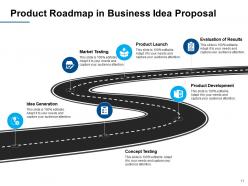
Slide 11: This slide depicts Product Roadmap with- Idea Generation, Concept Testing, Product Development, Market Testing, Product Launch, Evaluation of Results.
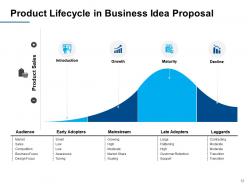
Slide 12: This slide showcases Product Lifecycle in Business Idea Proposal.
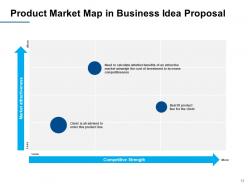
Slide 13: This slide depicts Product Market Map with- Market attractiveness, Competitive Strength.
Slide 14: This slide showcases Future Benefits to Investors.
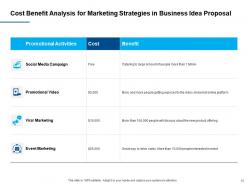
Slide 15: This slide showcases Cost Benefit Analysis.
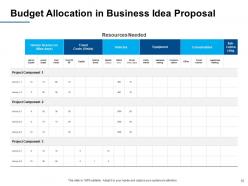
Slide 16: This slide depicts Budget Allocation in Business Idea Proposal with- Resources Needed.
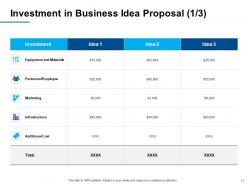
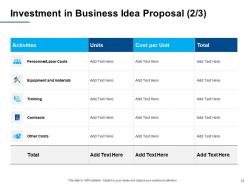
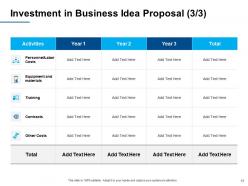
Slide 17: This slide showcases Investment in Business Idea Proposal.
Slide 18: This slide also showcases Investment in Business Idea Proposal.
Slide 19: This slide depicts Investment in Business Idea Proposal.
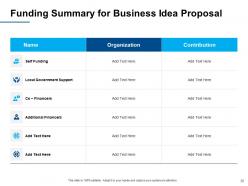
Slide 20: This slide displays Funding Summary for Business Idea Proposal.
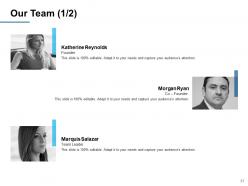
Slide 21: This is Our Team slide with names and designations.
Slide 22: This is Our Team slide with names and designations.
Slide 23: This slide depicts Client Testimonials with names and designations.
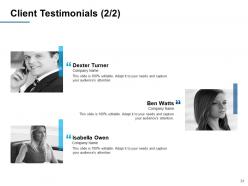
Slide 24: This slide depicts Client Testimonials with names and designations.
Slide 25: This slide showcases Next Steps.
Slide 26: This is Contact Us slide with Address, Email address and Contact number.
Slide 27: This slide is titled as Additional Slides for moving forward.
Slide 28: This is Our Mission slide with Vision, Mission and Goal.
Slide 29: This is About Us slide to showcase company specifications.
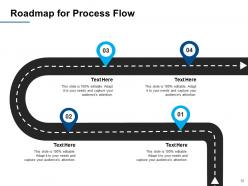
Slide 30: This slide depicts Roadmap for Process Flow.
Slide 31: This slide depicts 30 60 90 Days Plan.
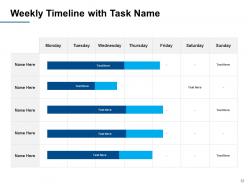
Slide 32: This is Weekly Timeline slide with Task Name.
Business idea proposal powerpoint presentation slides with all 32 slides:
Use our Business Idea Proposal Powerpoint Presentation Slides to effectively help you save your valuable time. They are readymade to fit into any presentation structure.




FAQs for Business idea proposal
Start with the problem you're solving and your solution - that's your foundation. Timeline, budget breakdown, and measurable results come next. Team bios matter more than people think - clients need proof you won't screw this up. Oh, and case studies showing you've handled similar stuff before. The exec summary is honestly make-or-break since half these decision-makers won't read past page one. Address their actual problems, not some cookie-cutter industry nonsense. Always end with clear next steps and your contact info right where they can't miss it. You want them thinking "okay, I know exactly how to hire these people."
Honestly, templates are a game changer for proposals. They stop you from drowning people in walls of text - instead your key points actually get noticed. I used to waste hours fixing those stupid formatting issues (PowerPoint is the worst for this), but now I just focus on the actual content. Clean, consistent design makes you look way more professional too. Which definitely helps when you're asking for money or approval. Just grab a simple template with sections for problem, solution, and next steps. You'll thank me later.
Honestly, I spend way too long on audience research but it pays off. Check out their LinkedIn, company blog - basically stalk them professionally first. Engineers want the technical details, finance people care about ROI numbers. Match how they actually talk. Some executives just want that summary upfront, others need to see your whole methodology. I've learned to use their exact terminology too - makes them feel like you actually understand their problems. Oh and reference specific challenges you found during research. It's kinda obvious but most people skip this step and wonder why their proposals get ignored.
Dude, market research is your best friend here. It turns your pitch from "just trust me bro" into actual proof that investors can't ignore. Real numbers about market size and what customers actually want? That's gold. Plus competitor analysis shows you're not totally blind to what's already out there. Honestly, I've seen too many people skip this step and wonder why they get shot down. Your financial projections suddenly make sense when there's data backing them up. Start with 2-3 killer stats that directly prove your main point - that's usually enough to grab attention without overwhelming them.
Start with a client win story or paint the problem they're facing. Show how your solution changes everything - "Picture your team with 30% more time for real work." Honestly, most proposals put people to sleep, but stories? They actually get people invested. Weave in concrete examples throughout. Here's the thing though - make *them* the hero, not you. Don't just rattle off features. End by showing them winning big. Case studies work great for this stuff. Short answer: stories sell way better than bullet points ever will.
Don't be vague about what you're actually delivering or when - clients hate fluffy nonsense. Focus on their problems, not how amazing you are. Never copy-paste old proposals because honestly, it's super obvious when you do that. Here's the thing though - don't lowball your prices or promise crazy deadlines just to get the gig. You'll regret it later. Also, get someone else to read it first. What makes perfect sense to you might be confusing garbage to them, and you won't catch those gaps yourself.
Look, your value prop is basically your "pick me" moment. Most proposals blur together until clients hit this section - that's where you separate yourself from the pack. Zero in on their specific pain points and show concrete results they'll get with you vs. competitors. Don't just list features; prove why you're different. Honestly, if you can't explain your unique advantage in numbers or specific outcomes, you probably don't have one yet. Make it impossible for them to shrug and move on to the next proposal.
Honestly, proposal design makes or breaks whether people actually read your stuff. I bombed hard once with this dense wall of text - never again! Clean layouts are everything. Throw in headers and bullet points to break things up. White space is your friend here. Your colors should match your brand but keep it professional (nobody wants neon green proposals, trust me). Charts help too when you've got heavy info. The key points need to pop visually - that's what gets noticed first. Even a basic template beats plain text every time. Start simple and build up from there.
Pick metrics that actually move the needle for their business - revenue, cost savings, stuff that matters. Not follower counts or other fluff. Put everything in a clean table or chart because honestly, walls of text with numbers are brutal to read through. Get specific with your targets too - like "boost conversion rates 15% in 6 months" instead of saying you'll "improve performance." Timeframes are huge here. Each metric needs to connect back to their profits somehow. Otherwise you're just throwing around random data that doesn't prove your worth.
Put your total cost right at the top - nobody wants to hunt through 10 pages for the bottom line. Break it down into labor, materials, overhead so they see where everything goes. Always pad it with a contingency buffer because something WILL cost more than you think. Tables and bullet points work way better than walls of text. Be super specific about what's included vs. what costs extra - vague stuff kills deals instantly. Oh, and don't forget the payment schedule. One thing I learned the hard way: round to hundreds, not exact pennies. Makes you look less desperate honestly.
Honestly, feedback is your best friend for fixing weak spots before you submit. Look for patterns in what people keep asking about - that's where you need more clarity or better justification. I've seen so many proposals that clearly weren't shown to anyone first, and it's painful! Ask specific questions instead of just "thoughts?" Try stuff like "Does this timeline make sense?" or "Can you actually see the ROI here?" The value prop and pricing are usually what make or break these things, so definitely focus there. Oh, and don't just ask one person - get a few perspectives if you can.
Your branding is basically the first impression they get, even before reading anything. Good branding makes you look legit and established. Crappy design? Makes people think you're sketchy or unprofessional. I've literally watched solid proposals get rejected because they looked like someone threw them together in 5 minutes. Colors, fonts, logo placement - all that stuff matters way more than you'd think. Honestly, most people judge pretty fast based on visuals. So yeah, definitely worth spending some money on decent proposal templates. Way cheaper than losing deals over bad first impressions.
Dude, get yourself some good tech tools - they'll save you hours on proposals. I started with templates since I was literally rebuilding everything from scratch each time (so dumb). CRM systems pull client info automatically, collaboration platforms cut out those annoying email threads. The formatting alone used to eat up half my day. Canva's great for making things look decent without being a designer. Project management apps track your deadlines, e-signatures eliminate all that printing nonsense. Honestly? Pick whatever fixes your biggest headache first and go from there.
Dude, just be straight up about everything - costs, how long it'll actually take, what you can pull off. Don't oversell yourself or hide problems that might come up. Keep their confidential stuff locked down too (you'd be shocked how often consultants mess this up). Price it fairly, not like you're taking advantage because they're in a bind. Oh, and if you're also working with their competitors or have other conflicts, mention that upfront. Honestly, just think about how you'd want someone pitching your company. That's usually the right call.
Look, following up is what separates the pros from everyone else who just sends proposals and hopes for the best. Space your touchpoints out over 2-3 weeks, but make each one count. Share something useful - industry news, answers to questions from your presentation, whatever adds actual value. Those generic "just checking in!" messages? Nobody has time for that nonsense. You want to stay persistent without being that annoying person blowing up their inbox. Honestly, I always draft my entire follow-up sequence before I even hit send on the proposal. Shows you're serious about the partnership.
-
Best way of representation of the topic.
-
Great quality slides in rapid time.
-
Use of different colors is good. It's simple and attractive.