


Start Up Business Proposal Powerpoint Presentation Slides





Try Before you Buy Download Free Sample Product
 Impress Your
 Audience
 100%
100% Editable
 Save Hours
 of Time


Business proposal for any starts-up has its own importance and significance. One cannot go wrong when it comes down to a professional PPT presentation related to this. Creating a start-up business plan takes a lot of time, thought and energy, thus we have come up with these 80 slides content-ready Start Up Business Proposal Powerpoint Presentation Slides deck. That will provide you all the information for a leading startup proposal. This Startup Business plan presentation sample deck file include slides like executive summary for problem-solution-market-mission, market insights, what we offer, key financials, our strategic positioning, startup summary and expenses, management team, assets and liabilities statement, products and services, market analysis, industry snapshot, pricing strategy, competitor analysis, organizational structure, and much more. There are tons of strategies out there for business proposals but in our designs, we have compiled only the most effective ones for you. There are additional slides like market competition, plan and pricing, price determination factor, market size, our target market, and more slides for which you can utilize this business plan for startup PPT presentation. What are you waiting for? Download our sample business plan for startup company presentation slides and let audience see your proactive approach towards start-up proposal. Hammer away with our Start Up Business Proposal Powerpoint Presentation Slides. All the barriers will begin to crumble.
People who downloaded this PowerPoint presentation also viewed the following :
Content of this Powerpoint Presentation
Slide 1: This is an introductory slide for Start Up Business Proposal. State Your company name and begin.
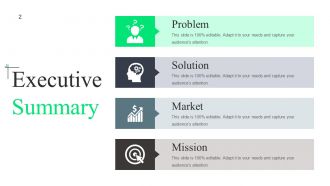
Slide 2: This slide showcases Executive Summary displaying- Solution, Problem, Market, Mission.
Slide 3: This slide showcases Market Insights in graphical form.
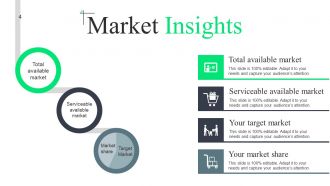
Slide 4: This slide presents Market Insights displaying- Target Market, Market share, Serviceable available market, Total available market.
Slide 5: This slide showcases What We Offer.
Slide 6: This slide also showcases What We Offer accompanied with icon imagery.
Slide 7: This slide presents Our Key To Success.
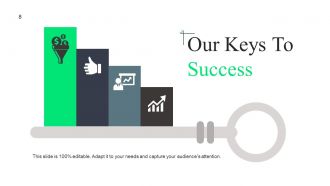
Slide 8: This slide also presents Our Keys To Success in a creative graph form.
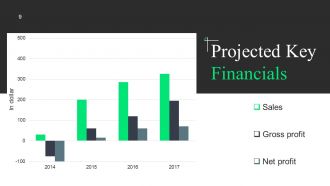
Slide 9: This slide shows Projected Key Financials displaying- Sales, Net profit, Gross profit.
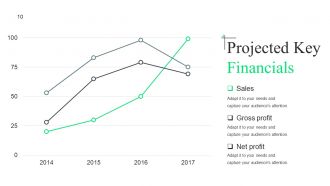
Slide 10: This slide shows Projected Key Financials displaying- Sales, Gross profit, Net profit.
Slide 11: This is Our Objectives slide to showcase targets, objectives etc.
Slide 12: This is Our Strategic Positioning slide to present business positioning facts, stats etc.
Slide 13: This slide also showcases Our Strategic Positioning to be shown.
Slide 14: This is Our Mission slide. State mission aspects here.
Slide 15: This is an About The Company slide. State team/company specifications here.
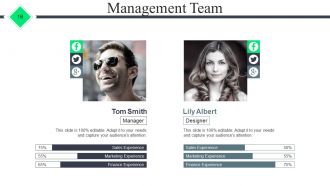
Slide 16: This is Management Team slide with name, designation and image boxes.
Slide 17: This is Management Team slide with name, designation and image boxes.
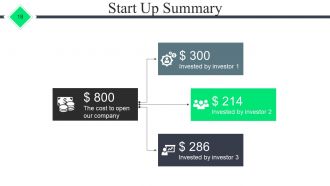
Slide 18: This slide presents Start Up Summary to be shown in terms of stats, info etc.
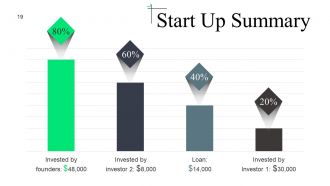
Slide 19: This slide presents Start Up Summary to be shown in terms of stats, info etc.
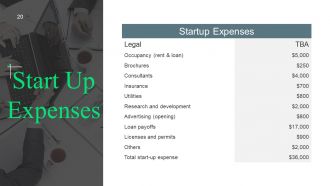
Slide 20: This slide states Start Up Expenses to be displayed.
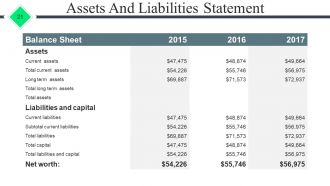
Slide 21: This is Assets And Liabilities Statement slide.
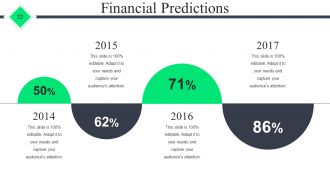
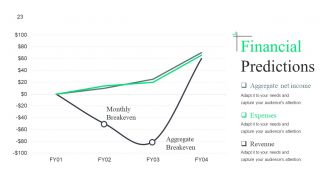
Slide 22: This slide presents Financial Predictions to be displayed.
Slide 23: This slide showcases Financial Predictions displaying- Monthly Breakeven Aggregate Breakeven Aggregate net income Expenses Revenue in graphcial form.
Slide 24: This slide presents Our Product And Services to be shown.
Slide 25: This slide presents Our Product And Services to be displayed.
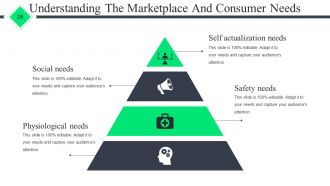
Slide 26: This slide showcases Understanding The Marketplace And Consumer Needs such as- Self actualization needs, Social needs, Safety needs, Physiological needs.
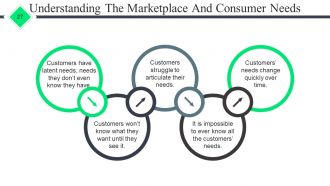
Slide 27: This slide presents Understanding The Marketplace And Consumer Needs displaying- Customers have latent needs; needs they don’t even know they have. Customers won’t know what they want until they see it. Customers struggle to articulate their needs. It is impossible to ever know all the customers’ needs. Customers’ needs change quickly over time.
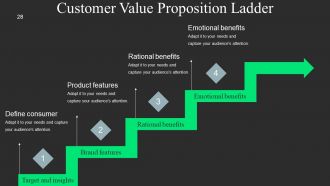
Slide 28: This slide showcases Customer Value Proposition Ladder displaying- Emotional benefits, Product features, Rational benefits, Define consumer, Target and insights, Brand features, Rational benefits, Emotional benefits.
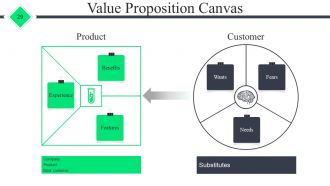
Slide 29: This slide presents Value Proposition Canvas showing Customer: Substitutes, Wants, Fears, Needs. Product: Company, Ideal customer, Features, Experience, Benefits.
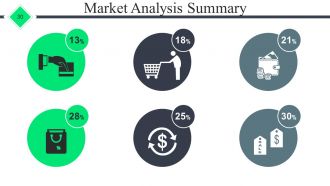
Slide 30: This slide presents Market Analysis Summary with creative icon imagery to state.
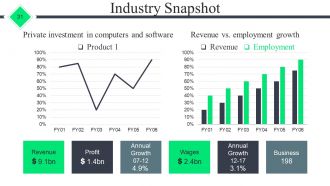
Slide 31: This slide presents Industry Snapshot in graphical form displaying- Employment, Revenue, Revenue vs. employment growth, Product, Annual Growth, Profit, Wages, Business.
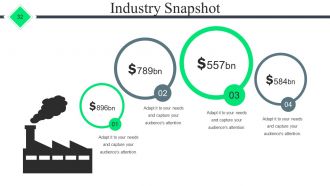
Slide 32: This slide showcases Industry Snapshot. Showcase stats, information etc. here.
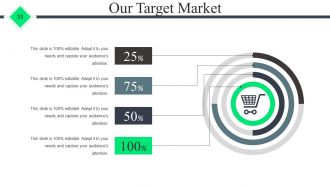
Slide 33: This slide presents Our Target Market to be shown.
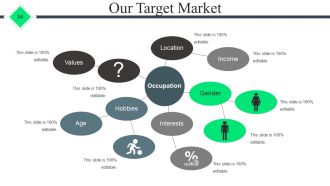
Slide 34: This slide shows Our Target Market displaying- Location, Income, Age, Hobbies, Gender, Interests, Values.
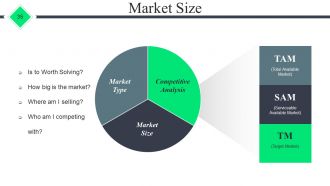
Slide 35: This slide shows Market Size with- Market Type Competitive Analysis TAM (Total Available Market) SAM (Serviceable Available Market) TM (Target Market) Is to Worth Solving? How big is the market? Where am I selling? Who am I competing with?
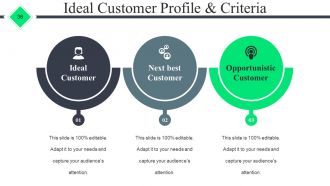
Slide 36: This slide shows Ideal Customer Profile & Criteria such as- Next best Customer, Ideal Customer, Opportunistic Customer.
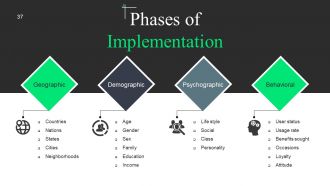
Slide 37: This slide shows Phases of Implementation with the following subheadings- Geographic: Countries, Nations, States, Cities, Neighborhoods. Demographic: Age, Gender, Sex, Family, Education, Income. Psychographic: Life style, Social, Class, Personality. Behavioral: User status Usage rate Benefits sought Occasions Loyalty Attitude
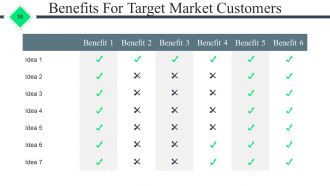
Slide 38: This slide shows Benefits For Target Market Customers in tabular form.
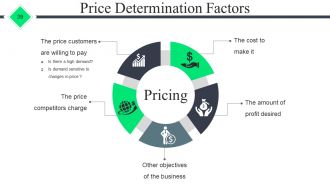
Slide 39: This slide shows Price Determination Factors such as- The cost to make it The amount of profit desired Other objectives of the business The price competitors charge The price customers are willing to pay Is there a high demand? Is demand sensitive to changes in price ?
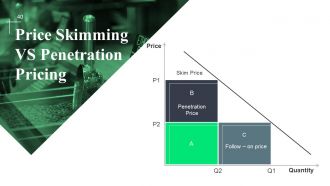
Slide 40: This is Price Skimming VS Penetration Pricing graph slide.
Slide 41: This slide shows Pricing Strategy. Present your Pricing strategy matrix here.
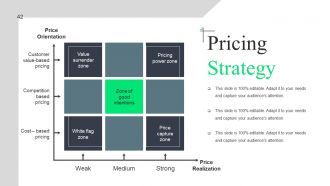
Slide 42: This slide shows Pricing Strategy in another matrix form displaying- Price Orientation, Customer value-based pricing, Competition based pricing, Cost – based pricing, Price Realization, Zone of good intentions, Pricing power zone, Value surrender zone, White flag zone, Price capture zone.
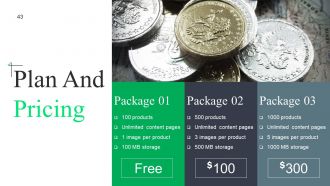
Slide 43: This is Plan And Pricing table.
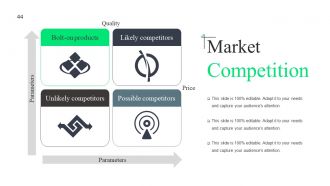
Slide 44: This slide presents Market Competition displaying- Bolt-on products, Possible competitors, Unlikely competitors, Likely competitors, Quality, Price, Parameters.
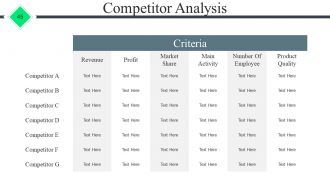
Slide 45: This slide showcases Competitor Analysis in tabular form.
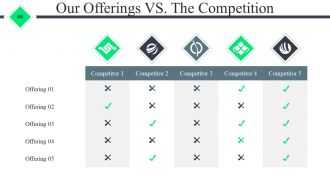
Slide 46: This is Our Offerings VS. The Competition slide in tabular form.
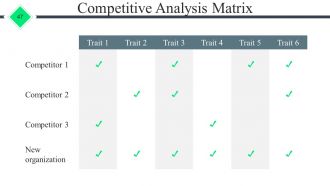
Slide 47: This is Competitive Analysis Matrix slide in tabular form.
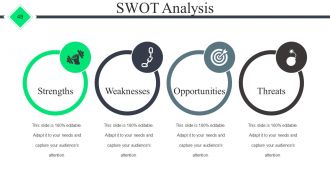
Slide 48: This is a SWOT Analysis slide.
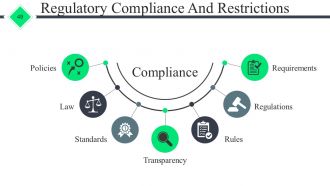
Slide 49: This slide presents Regulatory Compliance And Restrictions displaying- Requirements, Regulations, Rules, Transparency, Standards, Law, Policies.
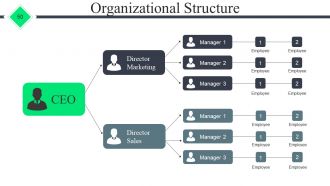
Slide 50: This is an Organizational Structure slide to represent team/organization structure/formation.
Slide 51: This is Ownership And Management slide with image boxes to fill information for.
Slide 52: This slide presents Member Profile with a creative sliding scale to state information.
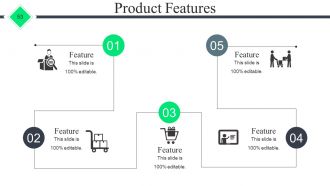
Slide 53: This is a Product Features slide to showcase features.
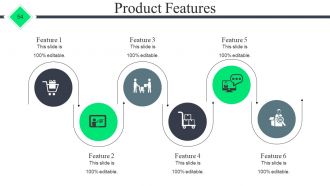
Slide 54: This is also a Product Features slide to showcase features.
Slide 55: This is a Case Study slide.
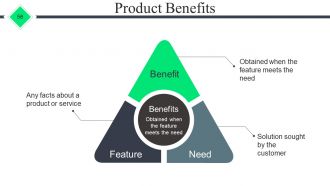
Slide 56: This slide shows Product Benefits displaying Feature, Benefit, Need.
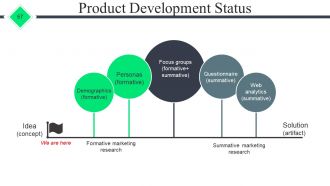
Slide 57: This slide showcases Product Development Status showing- Idea (concept) Solution (artifact) Demographics (formative) Personas (formative) Focus groups (formative+ summative) Questionnaire (summative) Web analytics (summative) Formative marketing research, Summative marketing research.
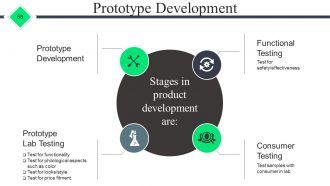
Slide 58: This slide presents Prototype Development with- Stages in product development: Prototype Development, Functional Testing- Test for safety/effectiveness Consumer Testing- Test samples with consumer in lab. Prototype Lab Testing- Test for functionality. Test for looks/style. Test for price fitment. Test for philological aspects such as color.
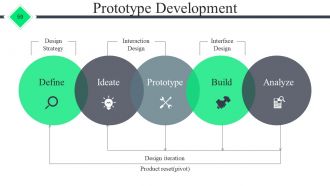
Slide 59: This slide shows Prototype Development showing- Design Strategy, Interaction Design, Interface Design, Design iteration, Product reset(pivot) as Define, Ideate, Prototype, Build, Analyze.
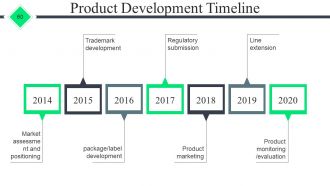
Slide 60: This slide showcases Product Development Timeline displaying- Market assessment and positioning, Trademark development package/label development, Regulatory submission, Product marketing, Line extension, Product monitoring /evaluation.
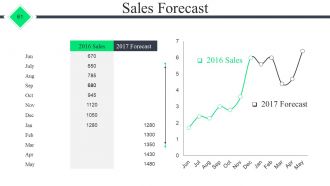
Slide 61: This is a Sales Forecast graph slide.
Slide 62: This slide shows a Break Even Analysis displaying- Sales ($), Units sold, Total revenue, Total costs, Break even point, Break even volume, Fixed costs, Variable cost.
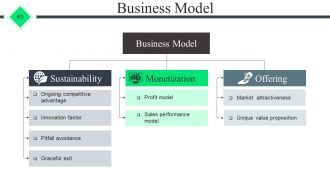
Slide 63: This slide shows a Business Model showcasing- Offering: Market attractiveness, Unique value proposition. Monetization: Profit model, Sales performance model. Sustainability: Ongoing competitive advantage, Innovation factor, Pitfall avoidance, Graceful exit.
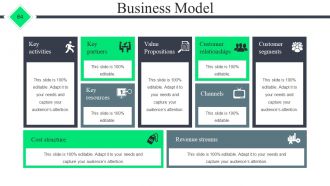
Slide 64: This slide presents a Business Model with Business Model Canvas showcasing- Channels, Key partners, Value Propositions, Key activities, Customer segments, Customer Relationships, Key resources, Cost structure, Revenue streams.
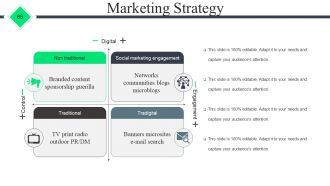
Slide 65: This slide presents Marketing Strategy in matrix form displaying- Digital, Control, Engagement, with Networks communities blogs microblogs, Branded content sponsorship guerilla, Banners microsites e-mail search, TV print radio outdoor PR/DM.
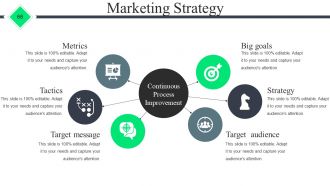
Slide 66: This slide shows Marketing Strategy stating- Big goals, Strategy, Target Audience, Target Message, Tactics, Metrics.
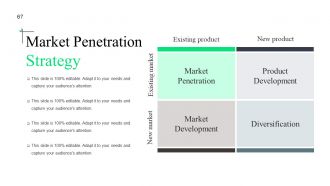
Slide 67: This slide presents Market Penetration Strategy showing- Diversification, Product Development, Market Penetration, Existing market, Market Development.
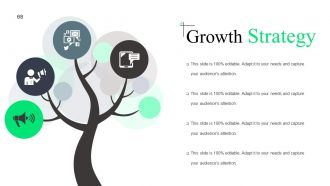
Slide 68: This slide shows Growth Strategy with tree imagery to go with. State growth factors, points, strategies etc. here.
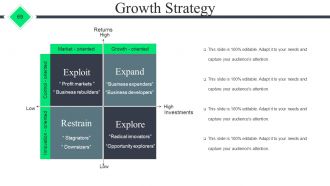
Slide 69: This is a Growth Strategy matrix slide showcasing- Growth - oriented, Market - oriented, Control- oriented, Innovation - oriented entities as Exploit: “ Profit markets ” “ Business rebuilders” Restrain: “ Downsizers” “ Stagnators” Explore: “Opportunity explorers” “Radical innovators” Expand: “Business expenders” “Business developers”.
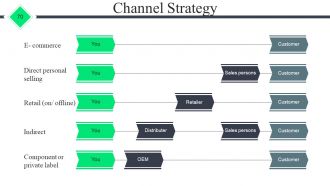
Slide 70: This slide shows a Channel Strategy with- Customer, Sales Person, Retailer, Distributor, OEM, You, E- commerce, Direct personal selling, Retail (on/ offline), Indirect, Component or private label.
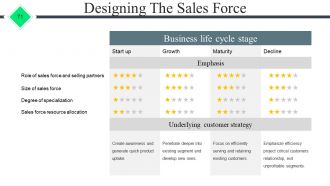
Slide 71: This slide presents Designing The Sales Force in tabular form.
Slide 72: This slide shows Growth /Financing Requirements in graph form showing- Family capital/ Bootstrap, Incubator, Business angels, Start-up funds, Venture capital, Expansion capital MBO/ LBO/ Expansion.
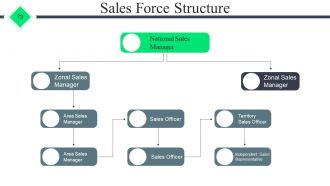
Slide 73: This slide shows Sales Force Structure showing- National sales manager, Zonal sales manager, Area sales manager, Sales officer, Territory sales officer, Independent sales representative, Area sales manager, Sales officer, Zonal sales manager.
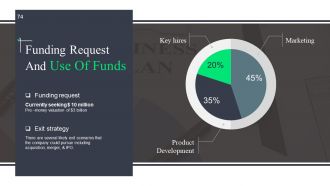
Slide 74: This slide shows Funding Request And Use Of Funds with- Exit strategy, Funding request, Key hires, Product development, Marketing.
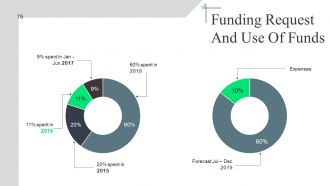
Slide 75: This slide shows Funding Request And Use Of Funds with- Funding Request, Forecast, Expenses.
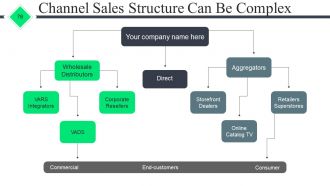
Slide 76: This slide shows Sales Channel Structures Can Be Complex showing- Wholesale Distributors, Retailers superstores Aggregators, Integrators, Storefront dealers, Corporate resellers.
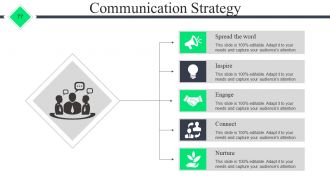
Slide 77: This slide presents the Communication Strategy with the following content- Spread the word, Inspire, Engage, Connect, Nurture.
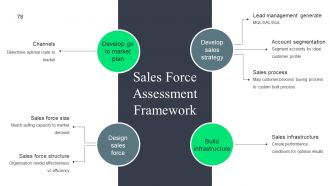
Slide 78: This slide shows Sales Force Assessment Framework displaying- Develop sales strategy, Lead management generate, MQL/SAL/SQL, Design sales force, Build infrastructure, Develop, go to market plan, Account segmentation, Segment accounts by ideal customer profile, Sales process, Map customer/process buying process to custom built sales process, Channels, Determine optimal route to market, Sales infrastructure, Create performance conditions for optimal results, Sales force size, Match selling capacity to market demand, Sales force structure, Organization model effectiveness vs efficiency.
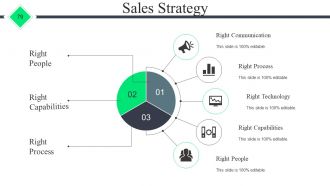
Slide 79: This slide shows Sales Strategy showcasing- Right people, Right communication, Right capabilities, Right process, Right technology, Right capabilities, Right people, Right process.
Slide 80: This is a Thank You slide with Address# street number, city, state, Contact Numbers, Email Address.
Start Up Business Proposal Powerpoint Presentation Slides with all 80 slides:
Fashion every detail with our Start Up Business Proposal Powerpoint Presentation Slides. They allow you to get it customized.














FAQs for Start Up Business Proposal
Okay so definitely hit the basics first - executive summary, market analysis, business model, who you're competing against. Financial projections are huge but don't go crazy with the numbers (investors can smell BS from a mile away). Map out your marketing plan and how much funding you actually need. The exec summary matters most since that's where they decide if they're even gonna keep reading. Oh and make sure you nail why your solution is different and why the timing makes sense right now. Your team section should show you guys know what you're doing. Start strong - first impression is everything.
Honestly, market research is what separates serious entrepreneurs from people just throwing darts at a wall. You're basically swapping out guesswork for real data that shows investors you actually know what you're doing. Customer insights and competitor analysis prove there's demand for your idea - because launching something nobody wants is like... the worst feeling ever. It also helps you catch problems early before they drain your bank account. Understanding your target market means you can price things right and position yourself competitively. My advice? Lead with the strongest data points that back up your concept, and don't forget to cite sources so everything looks credible.
Honestly, you just need three solid projections: revenue forecasts, cash flow, and break-even analysis. Don't go nuts with those ridiculous hockey stick revenue numbers - investors have seen it all before. Cash flow's probably the most critical since it shows exactly when you'll run out of money (fun times). For revenue, stick to realistic 3-5 year projections you can actually defend. Break-even analysis proves when you'll finally stop bleeding cash. Oh, and definitely have backup numbers ready because they'll grill you on every assumption. I learned that one the hard way.
Dude, you gotta map out your competition before doing anything else - it literally drives your entire proposal. VCs will sniff out bullshit immediately if you don't know your market. Show them exactly who you're fighting against and why you'll crush it. Your pricing, positioning, how you stand out - all of that comes from understanding the competitive landscape. I learned this the hard way on my first pitch lol. Look for gaps where competitors are weak and hammer home what makes you different. Trust me, a solid competitor analysis makes everything else way more believable.
Dude, your executive summary is make-or-break time. Investors see tons of these every week, so yours has to grab them instantly. Pack your best stuff into 1-2 pages: what you're selling, why the market needs it, how you'll beat competitors, and your money projections. I always think of it like a movie trailer - give them just enough to want the whole story. Oh, and definitely lead with whatever makes you special. Keep it punchy and don't overthink the language. If they're bored by page one, they won't flip to page two.
Okay so first thing - figure out the exact problem you're fixing that nobody else is tackling properly. Find your customer's biggest headache, then show how you solve it differently. Don't just say "we're better than everyone" because that's BS and investors see right through it. Be super specific about what makes you unique - maybe it's your tech, your approach, whatever. I always tell people to use the "Unlike X, we do Y because Z" formula. Works every time. Back it up with real proof too, like user feedback or pilot data. And honestly? If you can't explain your value prop in one sentence that my mom could understand, you're overthinking it.
Clean layout is everything - lots of white space and clear headers since investors basically speed-read these things. Hit them with executive summary first, then problem/solution/market/business model/financials in that order. Nobody's reading 40 pages anymore so cap it at 20. Bullet points beat walls of text every time. Charts for your key numbers are clutch. Oh and 11pt font minimum - I made that mistake once with tiny text, brutal. Get someone to proofread before you send it out because you'll miss obvious stuff when you've been staring at it for hours.
Dude, skip the boring market data upfront. Open with something like "Sarah's juggling 5 apps just to track her kids' schedules - 3 hours every damn day." Way more grabbing than statistics. Tell your startup's actual story throughout - how you found this problem, tried stuff that didn't work. People eat that up. Drop in customer quotes as little proof points. Oh, and paint the picture of what happens when you actually solve this thing. Just don't oversell it though. Investors have crazy good BS detectors, so keep it real.
Focus on CAC, monthly recurring revenue growth, and retention rates - those are what investors actually look at first. Market size can honestly trump everything else if it's big enough. Show your gross margins improving over time too. Look for any viral growth or organic stuff happening. The real trick? Don't just show growth, show you're growing smart. Like, efficiently without burning crazy cash. I'd probably pick 3-4 killer metrics that tell your story best rather than dumping a spreadsheet on them. Quality over quantity with this stuff.
Honestly, the worst thing you can do is be super vague about your actual solution. Like, saying "we'll revolutionize everything" tells me nothing. Spell out HOW you're gonna do it. Financial projections kill me too - don't claim you'll grab 10% of some huge market right away. Investors hate that stuff. Nobody cares about your long company origin story either. Skip straight to what's next. Oh, and this sounds obvious but... actually SAY what you want from them? I've seen pitches where I'm still guessing what they need by the end.
Dude, this can literally make or break your whole pitch. Research each investor's portfolio first - what they've funded, what gets them excited. Then tweak your deck to match their vibe. Like if you're talking to a SaaS-focused VC, don't spend forever on your retail strategy (they won't care). I've watched incredible startups bomb just because they went in with some cookie-cutter presentation. Oh and check out their recent deals too - you'll get a feel for where they're putting money now. Show them you actually fit what they're hunting for.
Just be straight up about the risks - don't try to hide them because investors can smell BS from a mile away. Figure out what your biggest threats are first (market stuff, money problems, operations - whatever makes you panic at 3am). Then map out actual plans for dealing with each one. Customer acquisition looking sketchy? Have backup marketing ideas ready to go. Build some financial buffer too if you can swing it. Honestly, a simple risk chart ranking likelihood vs how screwed you'd be really helps you focus on the worst ones first. Shows you're not just making it up as you go.
Honestly, visuals are a game-changer for proposals. Charts showing your revenue projections just hit different than saying "we expect 300% growth" - way more convincing. Most people process visual info faster anyway, so you're not making investors dig through walls of text to find the good stuff. A solid infographic can explain your business model in seconds vs. three pages of writing. I learned this the hard way after boring investors to death with text-heavy decks. Just keep the graphics clean though - no crazy animations or anything that screams "I just discovered PowerPoint transitions."
Start with IP stuff - patents, trademarks, copyrights. Business structure next (LLC vs Corp). Don't skip employment law if you're hiring people. Industry regulations are huge too, depending on what you're doing. Liability protection and insurance - boring but necessary. Oh and contracts/partnerships obviously. Honestly the insurance thing bit me once, learned that lesson the hard way lol. Get a startup lawyer to look it over before you present. Even a quick review is worth it.
Dude, get other people to look at your proposal ASAP. You're gonna be way too close to it and miss obvious stuff. Mentors are clutch because they've seen this before - they'll call out your BS projections or tell you when something sounds completely unrealistic. Your peers will ask those "stupid" questions that actually aren't stupid at all. Like, they'll be confused about something you think is crystal clear, which means it's not. Don't polish it to death first either. Show people your messy early drafts - that's when feedback actually helps.
-
Great product with effective design. Helped a lot in our corporate presentations. Easy to edit and stunning visuals.
-
The content is very helpful from business point of view.