


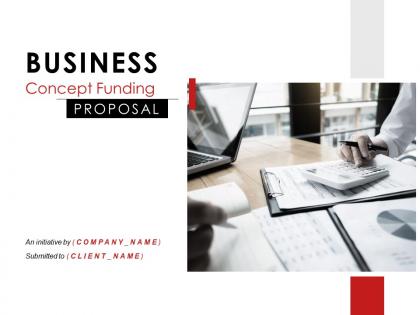
Business Concept Funding Proposal Powerpoint Presentation Slides




Try Before you Buy Download Free Sample Product
 Impress Your
 Audience
 100%
100% Editable
 Save Hours
 of Time


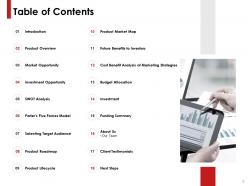
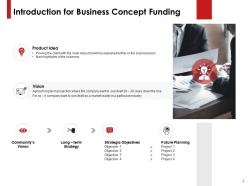
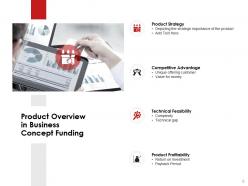
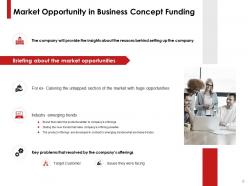
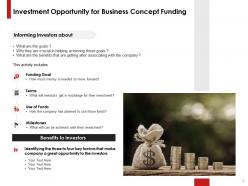
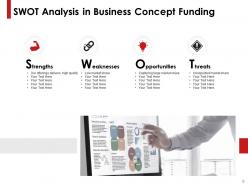
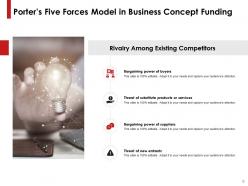
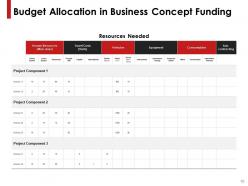
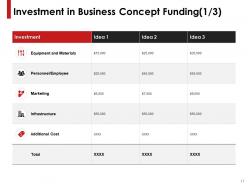
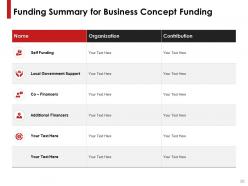
Turn your dreams into reality by acquiring funds with the help of these Business Concept Funding Proposal Powerpoint Presentation Slides. Help your investors know about your business by presenting a brief about it in this business proposal for funding PowerPoint presentation. Take advantage of this funding proposal template to pitch your business, service or product to a potential investor, vendor or supplier depending upon your need and requirement. Gain the trust of your prospective investors by outlining your goals, target, and objectives. Also, mention how you plan to achieve those with the help of this professional-looking investor funding PowerPoint complete deck. With various sections and subsections like the introduction, product overview, funding summary, client testimonials, about us and many others, this PPT can be used by start-ups or budding businesses to acquire the necessary funds. Every organization needs capital investment which you can easily obtain by making use of our innovative b2b business proposal PPT theme. Outline your company’s strengths, weaknesses, threats, and opportunities so that the investor can make the right decision. Present a brief about the various methods your company uses to identify and analyze competitive forces. We have mentioned here Porter’s Five Forces model but you can alter it as per your business demands. Elaborate more on this aspect and explain the strategy using which you tackle your investors. Allocate the budget and mention the various future benefits that the investors will get upon funding you. Hence, click on the download button now to tailor our fundraising proposal ppt visual as per your needs and requirements.
People who downloaded this PowerPoint presentation also viewed the following :
Business Concept Funding Proposal Powerpoint Presentation Slides with all 32 slides:
Use our Business Concept Funding Proposal Powerpoint Presentation Slides to effectively help you save your valuable time. They are readymade to fit into any presentation structure.







FAQs for Business Concept Funding Proposal
Honestly, you need six main things: executive summary, market analysis, financial projections, team credentials, funding request (with specifics on how you'll spend it), and repayment terms. The exec summary is make-or-break - most investors bail after page one if it's not compelling. Be conservative with your numbers but show you actually get the math. Oh, and don't sugarcoat the risks - address them head-on. I'd start with something that grabs attention right away. Each section should naturally lead to the next, building your case step by step.
Dude, your exec summary is literally make-or-break time. Investors decide in those first few pages whether they're gonna bother reading the rest. Hook them fast with your value prop and market opportunity. It's like your elevator pitch but written down – gotta tell the whole story in miniature form. Honestly, I've watched amazing ideas get tossed just because the summary was full of boring jargon or totally missed the point. Be crystal clear about the problem you're solving and your solution. Oh, and always lead with whatever your strongest angle is. Don't bury the good stuff.
Look, investors want to see you actually know your stuff, not just throwing ideas at the wall. Market research is what separates you from all the other dreamers pitching half-baked concepts. You need real numbers - market size, what customers actually want, where your competitors are screwing up. I mean, anyone can say "this will be huge!" but backing it up with data? That's what gets attention. Customer interviews, competitive analysis, concrete market insights - this stuff proves there's genuine demand. Without it, you're basically asking someone to fund your hunch, which honestly never goes well.
Oh definitely - investors will expect to see numbers, no question. I'd do 3-5 years of revenue, expenses, cash flow projections. The usual stuff. Just don't get too wild with scenarios - keep it realistic so you can actually defend it when they start poking holes. Early stage? You can be broader with your estimates. But if you're more established, they'll want monthly breakdowns for year one at minimum. Honestly, the key metrics thing is huge - focus on what actually matters for your industry. And yeah, be ready to explain literally every assumption because they will ask.
Dude, visuals are game-changers for proposals. Numbers on their own are kinda boring, but throw them in a chart? Suddenly investors actually get it. I've literally watched people's faces light up when they see a clean graph instead of dense paragraphs. Your brain processes images way faster than text anyway - like 60,000 times faster or something crazy like that. So you're basically meeting people where their minds naturally want to go. My rule is simple: every big financial point needs a visual. Makes the whole pitch flow better and honestly, I've seen mediocre ideas get funded just because their charts told the story perfectly.
Dude, investors hate vague money talk more than anything. Break down your actual revenue projections and expenses - none of that "we'll figure it out" energy. Oh, and skip the whole "billion dollar industry" thing unless you can explain why that matters for YOUR piece of it. Honestly, half these proposals read like fantasy novels where nothing goes wrong. Talk about real risks you might face. Typos are such an easy way to look sloppy too. The whole thing needs to flow: here's the problem, here's how we fix it, here's how we make money. Simple story, solid numbers.
Lead with your biggest wins right off the bat - concrete numbers like "boosted sales 40%" hit way harder than just job titles. Those generic LinkedIn bios in pitch decks are honestly painful to read! Make sure each person's experience actually connects to what you're building. Previous exits are gold, and drop any big company names or awards you've got. Oh, and don't forget to show you've covered all the key skills between your team members. Each bio should end with exactly what they'll be doing for your startup.
Don't just blast your pitch to every investor you can find - that's a waste of time honestly. Match your business stage to the right funding source first. Early stage? Go after angel investors. Need growth capital? VCs are your best bet. Banks work if you're already established and want a loan. Government grants are incredible when you qualify, but wow the paperwork is insane. Strategic partners can be golden too since they benefit when you succeed. The trick is understanding what each type actually funds before you even think about pitching them.
Yeah, you definitely need one - investors are terrified they'll never see their money again. Show them the exit plan upfront. Could be getting acquired, going public, whatever makes sense for your industry. I'd say be specific about timeline and what kind of returns they can expect. Honestly, even if your strategy changes later (which it probably will), having one proves you actually think ahead instead of just winging it. Back it up with some market comparisons and realistic numbers. Without this, you look like you're planning to hold onto their cash forever, which is investor nightmare fuel.
Definitely create a risks section and be totally honest about what could go wrong. Investors aren't stupid - they'll figure out the problems anyway, so you might as well address them head-on. For each risk you list, immediately explain how you plan to handle it. Also throw in some backup plans if things get messy. I saw one startup get absolutely destroyed in a pitch because they pretended their market had zero competition (spoiler: it didn't). Your team's background should connect to how you'll actually solve these problems. Sounds counterintuitive, but being realistic about risks makes you look way more credible than some overly sunny forecast that nobody believes.
Okay so here's the thing - start with WHY you're doing this. Your origin story matters way more than you think. Paint them a picture of the actual problem using real scenarios, not just data dumps. Sure, numbers are cool but honestly? Stories stick better than spreadsheets ever will. Walk them through before/after scenarios so they can actually see the transformation happening. Here's what most people miss though - make the funder feel like the hero who's gonna unlock everything with their investment. Finish strong with a vision they'll want to be part of creating.
Look, investors really just want to see you're making money and won't burn through their investment too fast. CAC and LTV are big ones - customer acquisition cost vs lifetime value. Monthly recurring revenue if you have it, gross margins, and honestly your burn rate is probably the most important thing they'll look at. Market size matters too, but be realistic about what slice you can actually grab. Growth metrics like month-over-month revenue or users are pure gold. I'd pick maybe 5-7 numbers that tell your best story, but make sure you can back them up when they start asking tough questions - and they will.
Dude, it's all about knowing what they actually want to hear. Angels are usually ex-entrepreneurs themselves, so they're betting on YOU - show them your passion and the problem you're tackling. VCs? Totally different beast. They want hard numbers, massive market size, and clear paths to huge returns. Angels will actually sit through longer pitches too, which is nice. Oh, and definitely stalk their previous investments first - sounds creepy but it works. You'll see exactly what gets them excited. Lead with your story for angels, market opportunity for VCs.
Your conclusion is where you close the deal, honestly. Recap your main points and hammer home that ROI one more time. Create some urgency - what happens if they wait too long? I always think of it like wrapping up a sales pitch (minus the sleazy car dealer vibe). Make it crystal clear what you're asking for and when you need an answer. Don't just fade out with some weak "thank you for your consideration" garbage. Give them a specific next step and timeline. This isn't the place to be shy about what you want.
Dude, get some mentors to tear your pitch deck apart - they'll catch blind spots you'd never see. I'm talking about people who've actually raised money or written checks before. They know what makes investors cringe vs. get excited. Honestly? The feedback that hurts the most usually saves you from way worse rejection later. They'll poke holes in your market size assumptions, call out weak competition analysis, all that fun stuff. Also helps with practice runs so you're not stumbling through questions about your burn rate or whatever. Find 2-3 of these people and give them your draft like two weeks early, not the night before.
-
Easily Editable.
-
Qualitative and comprehensive slides.
-
Innovative and Colorful designs.
-
Nice and innovative design.
-
Attractive design and informative presentation.
-
Great designs, really helpful.