

Analyzing Adidas Marketing Perceptual Positioning Map Analysis Of Adidas Ppt Slides Strategy SS V





Try Before you Buy Download Free Sample Product
 Impress Your
Audience
 100%
Editable
 Save Hours
of Time


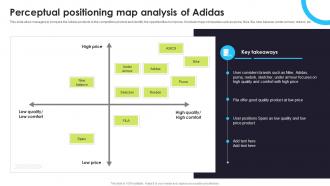
This slide allow managers to compare the Adidas products to the competitors product and identify the opportunities to improve. It include major companies such as puma, Nike, fila, new balance, under armour, reebok, etc.
People who downloaded this PowerPoint presentation also viewed the following :
Analyzing Adidas Marketing Perceptual Positioning Map Analysis Of Adidas Ppt Slides Strategy SS V with all 9 slides:
Use our Analyzing Adidas Marketing Perceptual Positioning Map Analysis Of Adidas Ppt Slides Strategy SS V to effectively help you save your valuable time. They are readymade to fit into any presentation structure.








FAQs for Analyzing Adidas Marketing Perceptual Positioning Map Analysis Of Adidas Ppt Slides
Adidas' marketing perceptual positioning strategy includes performance innovation, athletic authenticity, lifestyle integration, premium brand positioning, and strategic athlete partnerships. These elements work by targeting serious athletes and sports enthusiasts while expanding into streetwear markets, ultimately delivering brand differentiation and market leadership across both performance and lifestyle segments.
Adidas differentiates itself through perceptual positioning by emphasizing athletic performance authenticity, strategic partnerships with major sports leagues and athletes, and its distinctive three-stripes brand identity. While Nike focuses on inspirational lifestyle messaging and Puma targets fashion-forward streetwear, Adidas consistently positions itself as the choice for serious athletes and sports institutions, ultimately delivering credibility that resonates with performance-focused consumers.
Adidas has strategically leveraged influencer partnerships with athletes, celebrities, and content creators across sports, fashion, and lifestyle sectors to amplify brand authenticity and reach diverse audiences. Through collaborations with figures like Kanye West, Beyoncé, and top-tier athletes, the brand enhances credibility, drives engagement, and positions itself as culturally relevant, ultimately delivering increased brand awareness and stronger emotional connections with consumers.
Adidas' product collaborations with high-profile designers, celebrities, and cultural icons significantly enhance brand prestige, expand market reach, and create aspirational value that elevates consumer perceptions beyond traditional sportswear. These strategic partnerships, from Yeezy to Stella McCartney collaborations, enable the brand to penetrate luxury fashion segments, attract diverse demographics, and ultimately deliver premium positioning while maintaining authentic connections to performance and street culture.
Sustainability serves as a cornerstone of Adidas' marketing perceptual positioning, positioning the brand as environmentally responsible through recycled ocean plastic products, carbon-neutral manufacturing processes, and circular design initiatives. This strategic positioning enables Adidas to attract eco-conscious consumers, differentiate from competitors like Nike, and align with growing market demands for sustainable athletic wear, ultimately delivering enhanced brand loyalty and competitive advantage in an increasingly environmentally-aware marketplace.
Consumer preferences for authenticity, sustainability, and lifestyle integration have significantly reshaped Adidas' brand image, transforming it from purely performance-focused to a lifestyle and culture-driven brand. Through strategic partnerships with artists like Kanye West, sustainable initiatives like ocean plastic recycling, and streetwear collaborations, Adidas has enhanced its positioning across diverse demographics, ultimately delivering broader market appeal and competitive differentiation in an increasingly crowded athletic wear landscape.
Adidas leverages psychological factors including social identity theory through community belonging, achievement motivation via performance enhancement messaging, and aspirational positioning connecting consumers to elite athletes. These campaigns tap into self-efficacy beliefs, tribal affiliations, and status signaling, with many consumers finding that the brand's "Impossible is Nothing" and athlete partnerships create emotional connections that drive purchase decisions and brand loyalty.
Adidas leverages social media through influencer partnerships, user-generated content campaigns, interactive storytelling, and real-time trend engagement to connect authentically with younger consumers. The brand collaborates with athletes, musicians, and micro-influencers across platforms like Instagram, TikTok, and Twitter, while encouraging community participation through hashtag challenges and brand advocacy, ultimately delivering enhanced brand loyalty and cultural relevance among digitally-native demographics.
Adidas' perceptual positioning as a performance-driven, lifestyle-forward brand significantly influences its ability to attract diverse demographics, from professional athletes and fitness enthusiasts to fashion-conscious millennials and Gen Z consumers. This strategic positioning enables the brand to command premium pricing across multiple market segments, expand into streetwear and luxury collaborations, and maintain competitive differentiation against Nike and other rivals, ultimately delivering broader market reach and enhanced brand loyalty.
Adidas leverages its 70+ year heritage in athletic innovation and sports partnerships to establish credibility and authenticity in performance wear, differentiating itself from fashion-focused competitors. This deep-rooted history enables strategic positioning across professional sports, grassroots athletics, and lifestyle segments, with many consumers finding that the brand's legacy delivers trusted quality and performance credibility.
Global cultural trends have significantly influenced Adidas' advertising strategies through sustainability messaging, digital-first campaigns, inclusivity initiatives, and collaborations with diverse cultural influencers across sports, music, and fashion. The brand strategically adapts to regional preferences while maintaining global consistency, with campaigns like "Impossible is Nothing" reflecting local cultural values, ultimately enabling stronger emotional connections with consumers and enhanced market penetration across demographics.
Adidas measures consumer perception through brand tracking surveys, social media sentiment analysis, focus groups, market research studies, and digital engagement metrics across multiple touchpoints. These insights enable strategic adjustments in messaging, product positioning, and campaign targeting, with many campaigns pivoting based on real-time feedback to enhance brand relevance, strengthen emotional connections, and maintain competitive advantage in the athletic apparel market.
Successful Adidas campaigns include "Impossible is Nothing" featuring Muhammad Ali, the "Boost" technology launch with elite athletes, "Here to Create" celebrating creativity, and collaborations with Kanye West's Yeezy line. These campaigns strategically position Adidas through authentic athlete partnerships, innovative product storytelling, and cultural relevance, ultimately delivering brand differentiation and market share growth in competitive athletic segments.
Adidas ensures brand consistency through standardized global brand guidelines, unified visual identity systems, consistent messaging frameworks, and centralized marketing oversight across all product lines and regional markets. The company leverages its "Impossible is Nothing" philosophy and three-stripe logo universally, while allowing localized adaptations, with many regional teams finding that this strategic balance between global consistency and local relevance enhances customer recognition and strengthens competitive positioning worldwide.
Adidas faces challenges including intense competition from Nike and emerging brands, shifting consumer preferences toward sustainability and authenticity, and maintaining consistent brand messaging across diverse global markets. While these present obstacles, they also create opportunities for innovation in sustainable products, digital engagement strategies, and targeted marketing approaches, with many athletic brands finding that authentic storytelling and environmental responsibility ultimately enhance customer loyalty and market differentiation.
-
SlideTeam’s pool of 2Million+ PPTs has really benefited my team, everyone from the IT department to HR. We are lucky to have crossed ways with them.
-
I downloaded some of the presentations for work. They were simple to modify and saved me a lot of time and effort.