


Nikes Perceptual Positioning Map How Nike Created And Implemented Successful Strategy SS




Try Before you Buy Download Free Sample Product
 Impress Your
 Audience
 100%
100% Editable
 Save Hours
 of Time


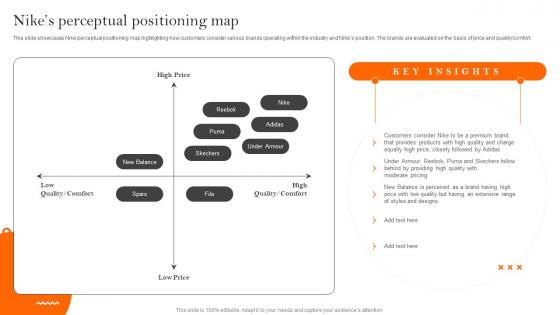
This slide showcases Nike perceptual positioning map highlighting how customers consider various brands operating within the industry and Nikes position. The brands are evaluated on the basis of price and qualitycomfort.
People who downloaded this PowerPoint presentation also viewed the following :
Nikes Perceptual Positioning Map How Nike Created And Implemented Successful Strategy SS with all 6 slides:
Use our Nikes Perceptual Positioning Map How Nike Created And Implemented Successful Strategy SS to effectively help you save your valuable time. They are readymade to fit into any presentation structure.





FAQs for Nikes Perceptual Positioning Map How Nike Created And Implemented
Nike basically owns that sweet spot of high-performance meets premium pricing. They've been crushing it there for years while other brands duke it out over budget customers. The main axes are usually performance vs lifestyle, then premium vs accessible pricing - makes sense since people either want serious athletic gear or just something that looks cool. Honestly think it's genius positioning because they can justify those higher prices. For your brand, just map out where everyone else sits on those same dimensions and hunt for gaps. There's usually some overlooked space if you look hard enough.
So Nike's actually pretty smart about this - they position themselves totally differently in these two spaces. Athletic footwear? They're all about that high-performance, premium tech angle with pro athlete endorsements and the whole "Just Do It" vibe. Casual wear though? Complete shift to lifestyle and fashion-forward stuff, but still keeping it premium. Honestly, it's like they're saying "we're cool for the street, not just workouts." The main difference is performance versus style being their primary selling point. Oh, and for your analysis - plot them as two separate positions, don't just lump Nike into one spot.
Nike's whole thing is innovation - that's how they stay premium while Adidas scrambles to catch up. Air Max, Flyknit, React foam... they're not just selling shoes, they're pushing actual tech. Honestly, their R&D spending is pretty wild when you think about it. But here's the thing - without all that innovation, they'd just be another brand fighting over price with Fila and everyone else. The tech lets them charge more because athletes know it actually works. Take that away and boom, you're in commodity hell where margins suck.
Nike's always checking what people are saying about them on social media and in reviews. When they notice gaps - like people thinking they're overpriced or whatever - they'll pivot fast with new campaigns or product drops. Remember when younger people started calling them boring compared to newer brands? They immediately started doing those limited collabs and signing trendy athletes to get back in the "cool" zone. Pretty genius tbh. You should definitely keep tabs on how people actually see your brand vs. how you want them to see it. The second you spot a disconnect, jump on fixing your messaging before it gets worse.
So Nike's collabs basically let them jump into totally different style spaces. Take Off-White or Travis Scott - suddenly they're not just about athletic performance anymore, they're hitting high fashion and streetwear hard. Honestly, half those drops are pure hype over function, but that's exactly what works. It pulls in people who'd normally think Nike's too basic or sports-focused. Each partnership kinda repositions how people see the brand temporarily. Smart move is picking collaborators that actually match where you're trying to go - though sometimes I think they just go for whatever'll sell out fastest.
For your Nike positioning map, I'd definitely go with Adidas first - they're like the main rival, especially in sneakers. Under Armour's smart to include too since they're all about that tech-performance angle that competes with Nike's premium stuff. Puma works for the third spot, though honestly they're not as big a threat. You could maybe add New Balance or ASICS if you're looking at specific categories, but those three cover the main bases. The thing is, you want brands that actually compete in both the performance side and lifestyle - that's where Nike really dominates.
Yeah, so basically Nike's campaigns can totally change where they land on those perceptual maps. Like when they push the VaporFly stuff, boom - suddenly they're seen as more high-tech. The Kaepernick thing? That shifted them straight into activist territory practically overnight. Pretty crazy how fast it happens. But here's the thing - you can't just run one campaign and call it done. Social justice campaigns move them toward that "socially conscious" spot, but it takes consistency. I always tell people to check their brand perception surveys before and after big campaigns. Otherwise you're just guessing if you actually moved where you wanted to go, you know?
So definitely look at age first - Gen Z wants totally different messaging than millennials or older folks. Income's key too since Nike spans everything from basic stuff to those insane Jordan drops (seriously, some of those prices are nuts). They segment gender pretty heavily - women's fitness gear gets positioned way differently than men's performance stuff. Geography matters more than you'd think because athletic preferences change by region. Oh, and plot demographics against price and performance to see where Nike clusters compared to competitors. That'll show you the patterns.
Nike has to totally switch up their messaging depending on what's going down politically. Like during all that US-China drama, they couldn't push the whole "American brand" thing in China - instead they focused on their global athletes. Smart move, honestly. The core brand stays the same, but they'll emphasize different stuff. Sometimes it's "performance-focused," other times "inclusive" - whatever works without causing drama. I actually think it's kind of genius how they adapt. Their regional campaigns are worth checking out if you want to see this in action.
Nike's sustainability push basically moves them way up the premium scale - it's huge for their brand positioning now. Their Move to Zero thing and all the recycled materials? Makes them look way more responsible than regular athletic brands. Gen Z literally expects this stuff, so it's not optional anymore. Plus it helps them charge more since people think eco = premium quality. Oh and it totally separates them from competitors who just focus on performance - pushes Nike more into that lifestyle brand territory. For your analysis, definitely map how this creates distance from pure sports brands.
Honestly, real customer data beats surveys every time for positioning maps. People say one thing but buy something totally different - it's wild how disconnected we can be from our own habits. Track actual purchases, social media buzz, website clicks to see where Nike really stands. You'll get way better accuracy than asking people what they think they prefer. The cool part? You can slice this data by different customer groups instead of lumping everyone together. Create separate maps for each segment and update them as things change. I'd start by comparing your existing customer purchase patterns against what they claim in surveys - the gaps will surprise you.
So Nike's positioning map shows they're doubling down on premium tech stuff - like gear that connects to apps and justifies crazy price tags. Sustainability is massive now too. Expect way more recycled materials and that whole "circular design" thing. The athleisure trend isn't slowing down either, so more pieces you can wear to CrossFit and then grab coffee after. They're also chasing Gen Z hard with gaming collabs and drops that feel more lifestyle-y. Honestly, sometimes I think they're just throwing everything at the wall to see what sticks, but it's working.
So basically, where Nike sits on the perceptual map depends entirely on how consumers view their quality. High quality ratings push them into that premium territory with the luxury athletic brands - exactly where they want to be. But if people start thinking the quality's slipping? They'll slide right down into "decent value but cheaper quality" territory, which is honestly a nightmare for any premium brand. Manufacturing problems or when competitors come out with better tech can totally tank those quality perceptions. Nike has to stay on top of this through surveys and monitoring what people say online, because that's literally what keeps them from getting lumped in with budget brands.
Nike's basically tapping into people's need to feel athletic and accomplished. "Just Do It" hits that empowerment thing perfectly - like you can overcome anything. The swoosh becomes this badge that says you're part of the high-performance crowd. Honestly, half of it is just status signaling. When you wear Nike, you're telling everyone (including yourself) that you don't settle for cheap stuff. People want that aspirational identity, you know? If you're checking out competitors, see how they're going after these same psychological buttons instead of just talking about shoe features and whatever.
Nike's gonna double down hard on the tech stuff - AI for custom gear, smart fabrics, AR shopping experiences. Pretty wild honestly. They're already experimenting with recycled materials and carbon-neutral production, which could totally shift them toward that eco-performance sweet spot. The sustainability angle is massive right now. Brands that stick to old-school approaches? They'll probably end up forgotten in the "traditional" corner while everyone else moves forward. Though I'm curious how they'll balance all this innovation without losing what makes them... well, Nike. That's the real challenge.
-
I am not the best at presentations but using SlideTeam’s PPT template made it easier for me. Thank you SlideTeam!
-
Loved the collection. Editing the presentation was seamless with their templates.