


Brand Equity Pyramid Model For Nike With Objectives




Try Before you Buy Download Free Sample Product
 Impress Your
 Audience
 100%
100% Editable
 Save Hours
 of Time


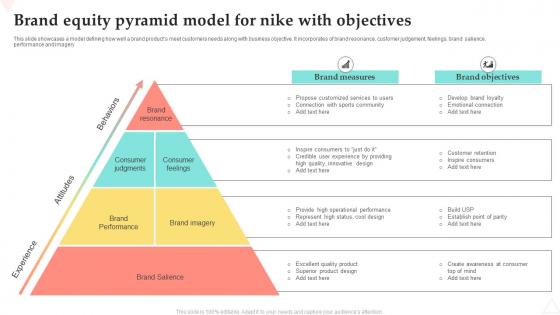
This slide showcases a model defining how well a brand products meet customers needs along with business objective. It incorporates of brand resonance, customer judgement, feelings, brand salience, performance and imagery.
People who downloaded this PowerPoint presentation also viewed the following :
Brand Equity Pyramid Model For Nike With Objectives with all 6 slides:
Use our Brand Equity Pyramid Model For Nike With Objectives to effectively help you save your valuable time. They are readymade to fit into any presentation structure.





FAQs for Brand Equity Pyramid Model For
So the Brand Equity Pyramid has four levels that build on each other. First is brand identity - basically getting people to recognize you exist. Next comes brand meaning, which breaks into two parts: performance (what you actually do) and imagery (how people see you). Third level is brand response - that's where customers form opinions about quality and also get those emotional feelings about your brand. The top is brand resonance, which honestly sounds fancy but just means people are obsessed with you and tell their friends. You can't really jump around though - like you need solid awareness before anything else works. It's pretty straightforward once you think about it.
Ok so basically the Brand Equity Pyramid puts awareness at the bottom and loyalty way up top - they're like opposite ends of the whole thing. Awareness is just getting people to know you exist, pretty basic stuff. But loyalty? That's where customers actually love your brand and pick you over everyone else. There's other layers in between (salience, performance, all that) but here's the thing - and this might sound obvious but whatever - you can't skip steps. People aren't gonna be loyal to a brand they've never heard of. You gotta work your way up the pyramid, no shortcuts.
Honestly, start with awareness metrics - those are way easier to track. You'll want unaided/aided recall surveys plus search volume data for salience. Performance is pretty straightforward: quality ratings, customer satisfaction, feature comparisons with competitors. Imagery is where things get messy though - you need perception studies and brand association mapping, but consistency is rough. For feelings, run emotional connection surveys and sentiment analysis. Resonance comes down to loyalty metrics, advocacy scores, community engagement rates. Build your framework step by step from awareness up - don't try tackling everything at once.
Emotional connection is literally the top of the Brand Equity Pyramid - that's your end goal. Customers need to understand your brand first, then know what it does, form opinions about it... but the final step? Getting them emotionally hooked. You know those Apple people who camp out for new iPhone releases? That's exactly what you want. Short sentences work too. Without that emotional piece, you're just another option they'll dump for a cheaper competitor. Your messaging needs to make customers feel like your brand actually gets who they are - like it's part of their identity, not just something they buy.
Customer experience is what actually moves people up the Brand Equity Pyramid - like, you can get their attention with good brand salience, but the real magic happens when they interact with your product. Those experiences shape how they judge your quality and what feelings they develop toward your brand. Performance and imagery perceptions? They come directly from touchpoints. Short interactions build long-term equity, honestly. You'll never hit that top resonance level where customers become advocates without nailing these moments. My old marketing prof used to say every interaction either builds or breaks your brand - sounds cheesy but it's true.
So there's this thing called the Brand Equity Pyramid that's actually pretty useful for figuring out where you stand. First step is measuring brand awareness - like, do people even know you exist? Then you work on performance and imagery stuff through consistent messaging. The middle part gets more interesting though - judgments and feelings are where you can really stand out from competitors. Honestly, most brands focus way too much on features instead of emotional connections. The whole point is getting to that top "resonance" level where customers become advocates for you. I'd start by auditing your current brand health first, then figure out which pyramid level needs the most attention. Makes the whole process way less overwhelming.
Don't try to skip ahead - that's the biggest mistake I see. Brands jump straight to those emotional campaigns when customers barely understand what they're selling or if it even works. Pretty frustrating to watch, honestly. Each level needs constant work too, not just a one-and-done thing. You can't copy someone else's playbook either since every category has different must-haves. Figure out where your customers actually sit on that pyramid first. Not where you think they should be, but where they really are. Build from there - salience, then performance, then you can worry about the emotional stuff.
Social media hits every part of your brand pyramid differently. At the bottom, it's all about getting noticed - reach and frequency stuff. Then reviews and user posts shape how people see your brand (honestly wild how much we trust random people's opinions over actual ads). Higher up, you're building real emotional connections through stories and communities. That feeds into whether people think you're credible and quality. At the top? Two-way conversations create those superfans who actually advocate for you. Don't treat social like it's the same everywhere though - map different strategies to each level.
Oh totally! The Brand Equity Pyramid actually works better for small businesses than big ones, honestly. You can zip through those levels way faster - salience, performance, all that stuff - because you're right there with your customers. Plus when you're working with a tiny budget, you get scrappy and real, which people actually prefer over polished corporate BS anyway. Here's the thing though - don't try tackling everything at once like the big guys do. Pick one level and crush it first. I'd start with getting known in your specific niche, then build up from there. You'll be surprised how quickly you can move.
So each level of the pyramid needs different metrics, right? Start with brand salience - track aided/unaided awareness and recall rates. Quality perceptions and price tolerance measure brand performance. Brand imagery is trickier (honestly kind of a pain to measure) but focus on personality associations and social approval ratings. Emotional connection surveys work for brand feelings. At the top, you're looking at loyalty metrics, advocacy scores, and how engaged your community actually is. I'd definitely begin with awareness stuff since it's way easier to benchmark than the emotional metrics. Then just work your way up systematically.
So basically, brand equity totally changes what you can charge. Bottom of the pyramid? You're stuck competing on price like everyone else - pretty brutal honestly. Move up to where customers actually see your brand differently, and boom - you can charge more. The crazy part happens at the top though. Once people have that emotional connection, price almost doesn't matter anymore. Nike and Apple fans will literally pay anything because they're not just buying products - they're buying into something bigger. My advice? Focus on climbing up those levels if you want real pricing power.
Getting your stakeholders involved is honestly a game-changer for your brand. Word-of-mouth builds way stronger awareness than any ad campaign. When customers actually experience what you promise, their perception gets real - not just surface level. Apple's probably the best example here - their fans are out there hyping products that don't even exist yet! Instead of just blasting messages at people, you're creating shared experiences. That's where the emotional connection happens. Your employees, customers, partners - they become advocates who genuinely care. Find your most engaged people first and let them help shape your story.
Your Brand Equity Pyramid needs to stay flexible - keep tabs on each level and be ready to shift fast. Social listening tools will save you here for tracking real-time feedback on awareness and performance. Gen Z literally abandons brands overnight, so that resonance level? Super fragile in changing markets. Start with brand salience and imagery since they're your foundation. Oh, and build feedback loops into every pyramid level - you'll catch problems early instead of scrambling later. Honestly, most brands wait too long to pivot and end up playing catch-up.
Apple's the obvious one - people literally camp out for new iPhones, which is wild when you think about it. Nike built from just athletic gear to that whole "Just Do It" emotional thing. Harley's cool because they basically turned their customers into a community. What's smart is how these brands climbed up step by step instead of just spending money everywhere. My advice? Don't try fixing everything at once. Pick one thing you want to improve and actually focus on that first.
Here's what I'd do - start with brand salience and ask if this new product actually makes customers think of you first. Performance and imagery come next: does it nail your core benefits while staying true to your brand vibe? The judgment and feelings stuff is where most teams totally drop the ball, honestly. Will this thing deepen customer loyalty or just create more clutter? I always map new ideas against all four pyramid levels before moving forward. Sounds nerdy but it's saved me from so many disasters. Better to kill a mediocre idea early than launch something that waters down everything you've built.
-
SlideTeam is the way to go when you are in a time crunch. Their templates have saved me many times in the past three months.
-
SlideTeam makes creating presentations easy. Unlimited products, premium quality designs and affordable.