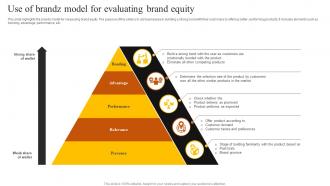
Use Of Brandz Model For Evaluating Brand Equity
Try Before you Buy Download Free Sample Product
Audience
Editable
of Time
This slide highlights the brands model for measuring brand equity. The purpose of this slide is to aid businesses in building a strong bond with their customers by offering better performing products. It includes elements such as bonding, advantage, performance, etc.
People who downloaded this PowerPoint presentation also viewed the following :
Use Of Brandz Model For Evaluating Brand Equity with all 9 slides:
Use our Use Of Brandz Model For Evaluating Brand Equity to effectively help you save your valuable time. They are readymade to fit into any presentation structure.
FAQs for Use Of Brandz Model For
So there's four main parts: brand awareness, perceived quality, brand associations, and brand loyalty. They're all connected which is kinda cool when you think about it. Awareness gets people to notice you first, then quality keeps them around. Brand associations are where you create that emotional stuff - honestly probably the most important part IMO. Loyalty is what you're really after since those customers basically become free marketing. You can't really ignore any of these though because they all depend on each other. When you're measuring it, track all four at once or you won't get the real picture.
Pick a handful of metrics and stick with them - brand awareness surveys, NPS scores, social sentiment stuff. Don't get fancy jumping between different methods every quarter, it's honestly just confusing. Track what price premium you can charge vs competitors too. Customer lifetime value matters, obviously. The boring financial stuff like market share tells you a lot. I'd say grab maybe 4-5 solid metrics max. Keep your audience demographics consistent when you run studies so you can actually see trends. Oh, and start simple - one good measurement approach beats trying to track everything perfectly from day one.
Honestly, consumer perception makes or breaks your brand equity. People's feelings about your brand matter way more than you'd think - I've watched companies with mediocre products totally dominate just because customers loved them. Meanwhile, great products flop if people think the brand sucks. Track stuff like brand awareness and how customers perceive your quality. Customer loyalty's huge too. Just survey your actual customers about this stuff regularly - sounds boring but their answers basically tell you everything about where your brand stands. Brand associations matter too, like what pops into people's heads when they hear your name.
So basically, qualitative data shows you the *why* behind those brand equity numbers. Your surveys might say customers are satisfied, but interviews and focus groups? That's where you hear what people actually *feel* about your brand vs the competition. You'll find weird associations and pain points that never show up in the quantitative stuff. Like, customers might love your product but hate your packaging - who knows! This context tells you if your brand equity is real or just built on some fluke trend. Honestly, I'd throw in some customer interviews next time you do brand tracking. Way more useful than just staring at numbers.
So for tracking loyalty, I'd focus on repeat purchase rate and Net Promoter Score first - they're pretty straightforward to figure out. Customer retention rate matters too, obviously. Brand switching rates show you when people are bailing for competitors (which honestly stings but you need to know). Purchase frequency and lifetime value give you the bigger picture. Oh, and share of wallet is huge - like how much of their total spending in your category actually goes to you versus everyone else. Premium pricing tolerance is another good one. Start with repeat purchases and NPS though. Way easier to wrap your head around initially.
Think of brand awareness like dating - nobody's gonna fall for you if they don't know you exist, right? It's literally the starting point for everything else. People need to recognize your brand before they'll trust it or buy from it. Strong awareness gives you pricing power too (which honestly, most brands underestimate). Your customers will actually pay more when they're familiar with you. The key is staying visible where your audience already spends time. Don't spread yourself too thin though. Consistency beats flashy one-offs every time, and it builds momentum over the long haul.
So basically, when people really love your brand, you can charge way more than competitors. Apple's the perfect example - they charge crazy prices compared to random electronics brands and people still buy it. Customers don't care as much about price when they trust your brand and think it means quality or status. Plus during tough times, your loyal customers won't jump ship as easily. I mean, measuring how strong your brand actually is becomes super important though - you need to know how much extra people will actually pay before they say forget it and go somewhere cheaper.
Honestly, start with the cheap stuff first - surveys to check brand awareness and see how you stack up against competitors on social media. Price premiums are huge though. If people will pay more for your product over generic versions, that's your real proof right there. Brand tracking studies give you solid data but they're expensive as hell. I'd throw in some perception audits too - just ask your customers how they feel about you versus the competition. The emotional stuff matters more than people think. Once you figure out where the gaps are, then spend money on the deeper research.
Honestly, social media analytics are perfect for this. You're getting real-time feedback on what people actually think about your brand - not those polished survey answers where everyone tries to sound nice. Track sentiment around your mentions, see how much people talk about you vs competitors, and watch for unprompted brand mentions. That's pure gold right there. User-generated content and hashtag performance tell you a lot too. I'd start simple - set up brand mention alerts and check sentiment trends each month. Way more honest than focus groups if you ask me.
Honestly, the trickiest part is that brand equity is basically all in people's heads - pure perception and feelings, which makes it super hard to pin down with numbers. Yeah, you can track awareness and loyalty scores, but those don't tell the full story. Like when sales spike, is that because your brand got stronger or you just got better shelf placement? The whole thing shifts constantly too - competitors launch campaigns, trends change, whatever. I'd say track multiple things at once and watch the patterns over months rather than getting hung up on perfect metrics. Way more realistic that way.
Think of brand equity like having a loyal fanbase - customers stick with you even when competitors drop their prices or offer similar stuff. You can charge more, roll out new products easier, and bounce back from bad press way faster. Nike's a perfect example - people drop extra cash on their sneakers over no-name brands that are basically the same quality. Your marketing budget gets stretched further too since people already know and trust you. Honestly, the biggest mistake companies make is not tracking this through customer surveys and sales data. Otherwise you're flying blind when making big strategic moves.
So there's a few ways to tackle this. Aaker's Brand Equity Model is pretty standard - it looks at awareness, loyalty, perceived quality, all that stuff. Keller's pyramid approach is good too. For actually measuring things, brand tracking surveys work well, plus social listening tools and financial methods like royalty relief (though that one gets complicated fast). Most companies I know mix qualitative and quantitative because brand perception is messy. Honestly? Start simple with a tracking survey to get your baseline numbers. Then you can add social sentiment analysis later. Way easier than trying to do everything at once.
Honestly? Rebranding's risky as hell. You could totally boost your brand value if customers vibe with the new direction - better recognition, loyalty, all that good stuff. But screw it up and you'll confuse people or lose the trust you've spent years building. I've seen both happen, tbh. Focus groups are your best friend here - test everything first. Make sure whatever changes you make still connect to what people already love about your brand. Oh, and definitely track your current metrics beforehand so you can actually measure if it worked or if you just lit money on fire.
Honestly, brand equity and customer lifetime value are super connected. Strong brand equity means people stay loyal way longer and don't mind paying more. Like, my mom's been buying the same face cream for literally 15 years - that's brand equity working. When customers trust your brand, they stick around, buy more often, and you don't have to spend as much getting new ones since they'll actually recommend you. It's pretty straightforward math. If you're looking at CLV numbers, you should definitely track brand equity too since they basically move together and show you how healthy your business really is long-term.
Look, brand equity basically tells you what customers actually care about with your brand - that's your north star for product decisions. Say people see you as "reliable" - you'd focus on features that back that up instead of chasing whatever shiny trend is popular. Honestly, I think too many companies ignore this and wonder why their launches flop. You can also check where competitors are beating you and build products to fix those gaps. Bottom line: filter every product idea through your brand strengths first.
-
Good research work and creative work done on every template.
-
I didn’t expect such a good service for the money I am paying. But, they exceed my expectations. Great work SlideTeam.