

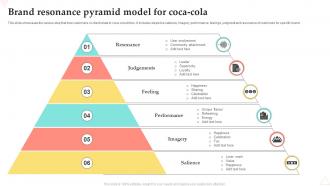
Brand Resonance Pyramid Model For Coca Cola





Try Before you Buy Download Free Sample Product
 Impress Your
 Audience
 100%
100% Editable
 Save Hours
 of Time


This slide showcases the various step that how customers or client relate to coca cola drinks. It includes steps like salience, imagery, performance, feelings, judgment and resonance of customers for specific brand.
People who downloaded this PowerPoint presentation also viewed the following :
Brand Resonance Pyramid Model For Coca Cola with all 6 slides:
Use our Brand Resonance Pyramid Model For Coca Cola to effectively help you save your valuable time. They are readymade to fit into any presentation structure.





FAQs for Brand Resonance Pyramid Model
So brand resonance basically has four parts you gotta hit: getting people to buy from you repeatedly, making them actually *care* about your brand emotionally, building that community vibe where customers feel like they belong, and turning them into people who'll hype you up to others. Keller's pyramid thing is honestly pretty solid here - though I know it sounds nerdy. You can't really jump ahead. First they need to pick you consistently, then develop real feelings about your brand, connect with other customers, and finally become those die-hard fans who'll argue with strangers on Twitter about why you're the best. Just track all four regularly so you'll catch any weak spots before they tank your momentum.
So emotional connection is basically what turns regular customers into ride-or-die fans. When people feel personally connected to your brand, they'll choose you even if competitors have better prices or whatever. It's kinda like the difference between casual dating and being in love, you know? Those positive experiences build real trust that goes way beyond just "this product works well." Honestly, I think most brands totally miss this part. They focus on features instead of making customers feel understood and valued. But once you nail those meaningful touchpoints, loyalty becomes almost automatic - people aren't just buying stuff anymore, they're basically reinforcing who they are.
Honestly, stories just hit different than boring feature lists. Your brain's wired to remember narratives - they trigger emotions and stick around way longer than facts and figures. I'd start with one solid story that captures what your brand's really about. Maybe it's how you started, or a customer moment that made everything click. Then you can spin that across your website, social posts, whatever. The trick is making sure it actually resonates with who you're trying to reach. People connect with stories because they feel human, not corporate. Way more effective than just telling someone why your product rocks.
Track your engagement rates and how people actually talk about your brand online - that's your starting point. NPS scores are clutch because they show if customers would recommend you (which honestly matters more than most metrics). Also look at repeat purchases and customer lifetime value. Social listening tools can catch sentiment you'd totally miss otherwise. But here's the thing - sometimes just picking up the phone and talking to actual customers beats all the fancy analytics. Those conversations reveal stuff surveys never will. I'd start with NPS and social monitoring since they're easy wins, then layer in the behavioral data.
Look, customer experience is literally everything when it comes to brand resonance. Your marketing can be fire, but if the actual experience is trash? Game over. People connect with brands through how they *feel* during every interaction - and honestly, most companies completely miss this. The real magic happens when what you promise actually matches what customers get when they deal with you. Consistency matters across all your touchpoints. Make each interaction feel purposeful, not like an afterthought. That's how you go from being just another option to something people actually care about and stick with.
Dude, engagement is everything for brands right now. Your customers literally form their whole emotional connection through those interactions - comments, shares, all that stuff. They're not just watching anymore, they're actually participating in your brand story. Plus the algorithms love it, so you get better reach (win-win). But here's where most people screw up - it can't feel fake or forced. Nothing kills brand connection faster than obviously trying too hard. Just focus on making content that people naturally want to talk about. Honestly way easier said than done, but when you nail it, the difference is huge.
Nah, it's pretty much impossible without a clear mission. Think about brands you actually love - they all believe in something bigger than just selling stuff, right? Like Nike isn't just about shoes, it's about pushing limits or whatever. That emotional connection is what makes people come back and tell their friends. Otherwise you're stuck competing on price forever, which sucks. Features alone won't cut it these days - there's too much noise out there. You need that deeper reason for existing. What does your brand actually stand for? Start there and work backwards.
So here's the thing - you've gotta tell your story authentically, not some glossy corporate BS. Figure out what your brand actually stands for first. Then make sure that vibe shows up everywhere - your website, social posts, how you answer emails, all of it. The businesses I remember? They feel real, not perfect. Get personal with your customers. Share what's happening behind the scenes, actually respond to comments yourself (not some intern), and do what you say you'll do. Oh, and maybe audit where you are now this week - see where you can add more of your actual personality instead of sounding like every other business out there.
Your visual stuff - colors, fonts, logo, whatever - basically trains people to recognize you instantly. Think McDonald's golden arches, you know? Once people see your design enough times, it becomes this mental shortcut to how they feel about your brand. Pretty cool how that works. The trick is staying consistent across everything - your website, packaging, business cards. All of it should tell the same story and hit the same emotional notes. Otherwise you're just confusing people and they won't build that automatic connection with your brand.
Honestly? Inconsistency kills brands faster than anything else. When your messaging is all over the place across different platforms, people get confused and just... check out. Authenticity matters too - you know those brands that randomly jump on TikTok trends when they clearly don't get it? Yeah, don't be that company. Also, ignoring bad reviews or feedback is basically brand suicide. Over-promising is another classic screwup that destroys trust instantly. My take? Do regular check-ins on how you show up everywhere and make sure it actually feels like the same brand. Keep it real.
Dude, you can't just slap the same brand messaging everywhere and expect it to work. What resonates in one culture might totally bomb in another - I've watched companies crash and burn doing this. Your visuals, values, everything needs to match local expectations. Translation isn't enough either; you're basically rebuilding the whole experience for each market. Like, even colors mean different things culturally (random but true). Do your homework first. Test with actual local people before launching anything. Skip this step and you'll be cleaning up a mess later instead of celebrating sales.
Honestly, working with influencers can be huge for your brand if you do it right. They've already built trust with their followers, so when they mention your product, it doesn't feel like an ad - more like a friend recommendation. But here's the thing: you can't just pick anyone with a big following. Find people whose vibe actually matches yours, otherwise it's super obvious and backfires. I'd go for smaller influencers with really engaged audiences over mega-celebrities any day. Their followers genuinely care what they think, which beats traditional advertising every time.
Listen to what your customers are actually telling you - the words they use, how they feel, what moments hit different for them. Mine their feedback like crazy through surveys, social reviews, even just chatting with them directly. Then tweak your messaging and products to match what actually moves them emotionally. Honestly, most brands are terrible at this part. Pick one solid insight from recent feedback you've gotten. Test how changing your approach based on that feedback affects how people connect with you. It's way more straightforward than companies make it seem.
Dude, brand resonance is like building a fortress around your business. Once customers are emotionally hooked, they'll pay more and ignore your competitors - even when there's cheaper options out there. Word-of-mouth goes crazy, lifetime value shoots up, and launching new stuff becomes so much easier since trust is already there. The wild thing is it snowballs once you get momentum. I'd say focus hard on those emotional connections from day one. Honestly, it's probably the best protection you can have when markets get weird and unpredictable.
Honestly, it's all about knowing your customers and how they buy stuff. B2B tech companies? They've got these crazy long sales cycles, so you need to prove you actually know what you're doing. Nike gets people hyped about being athletes (even if they just wear the shoes to Target). Banks and healthcare are weird - nobody cares if they're "fun" as long as they don't screw up your money or, you know, kill you. Retail's different though. They want you to feel something when you walk in. Figure out if your people buy with their heads or hearts, and how often they think about you.
-
SlideTeam is my one-stop destination for templates. Highly recommended!
-
Illustrative design with editable content. Exceptional value for money. Highly pleased with the product.