


Luxury Brands Products Ranking Pyramid




Try Before you Buy Download Free Sample Product
 Impress Your
 Audience
 100%
100% Editable
 Save Hours
 of Time


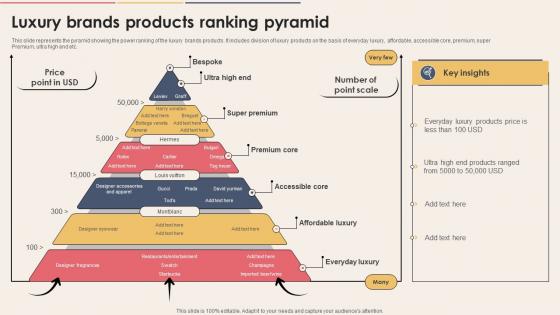
This slide represents the pyramid showing the power ranking of the luxury brands products. It includes division of luxury products on the basis of everyday luxury, affordable, accessible core, premium, super Premium, ultra high end etc.
People who downloaded this PowerPoint presentation also viewed the following :
Content of this Powerpoint Presentation
The revenue of the luxury personal goods market worldwide is 354 billion USD, according to Statista. The US is the leading market for luxury goods all over the world as it has a revenue of around 83 billion USD. If you want to rank the top luxury brands and categorize them according to a price point, the useful Luxury Brands Products Ranking Pyramid created by SlideTeam is your perfect choice, and the best deal you will ever get.
The PPT Template provides you with the option to understand which brand offers what and the luxury they offer is also sought to be understood on the parameters you want. With this kind of detail on offer, the slide makes its mark as the perfect companion to any luxury hunt.
It allows you to rank multiple products and brands as per their price points while valuing the insights that the research provides. On top of it all, the template is 100% editable and customizable. You can change the colors, images, numbers, or data according to your business needs, or you can add a bit of text here and there to make the slide your own. It's your choice, as you remain in control.
If you are into e-commerce luxury and want to explore specific slides and decks, then this Ecommerce Luxury PowerPoint Template Bundle might be attractive.
To present the online luxury fashion platform data attractively to potential investors, you can use the Online Luxury Fashion Platform Investor Funding PPT with two appealing slides.
Template 1: Luxury Products Ranking Pyramid
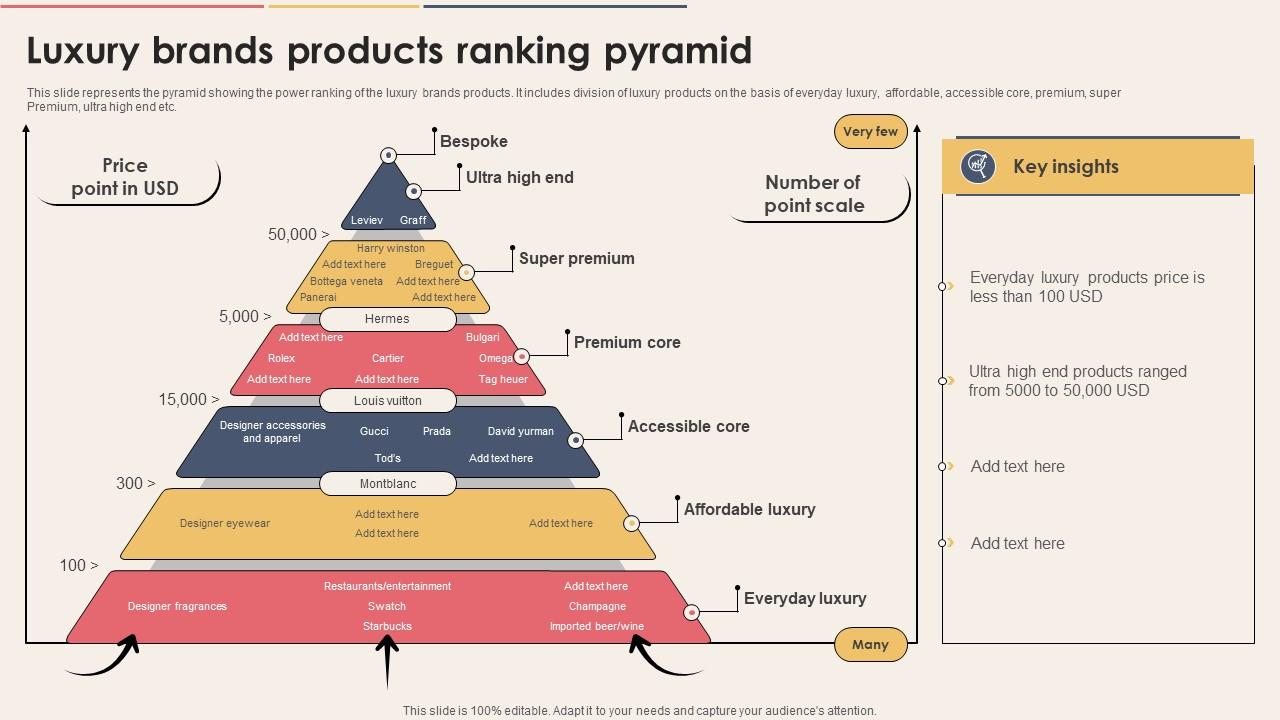
This slide is centered around a pyramid that shows the power ranking of categories of luxury brand products. From the bottom up, it focuses on everyday luxury products like designer fragrances, restaurants, etc. to affordable products like designer eyewear. It then moves to focus on accessible core luxury products like designer accessories and apparel and premium core products such as premium watches. Then comes the super-premium and ultra-high-end categories, which are the top-of-the-pyramid offerings.
The slide also shows the price point in USD, which varies between less than 100 USD and over 50,000 USD. There is a separate section for key insights located on the right segment of the pyramidical design, which can be used to add your notes or opinions.
SEGMENT IT RIGHT
Having the right template when segregating luxury brand products can be quite useful. It helps you to categorize the products better and ensure easy understanding by the audience. The aim is to ensure luxury is easily available, when the audience or the clients wants it. This is essentially luxury-on-demand.
So, using the precisely detailed and thorough template by SlideTeam is a good choice. You can use it as it is or customize it however you want. As each element of the slide can be edited within seconds, the entire slide customization would hardly require more than a few minutes.
PS — Are you looking to create a presentation based on the luxury brand pyramid with marketing strategies? If so, check out the Luxury Brand Pyramid with Marketing Strategies.
Luxury Brands Products Ranking Pyramid with all 6 slides:
Use our Luxury Brands Products Ranking Pyramid to effectively help you save your valuable time. They are readymade to fit into any presentation structure.





FAQs for Luxury Brands
Oh man, luxury brands are masters at this! They'll literally make you jump through hoops just to spend your money. Like Hermès - you can't just walk in and buy a Birkin. You have to "build a relationship" first, which honestly feels a bit ridiculous but it works. They keep production super limited, throw invite-only parties, and price everything sky-high. Plus they avoid places like department stores - can't have their stuff sitting next to regular brands, right? Even their marketing feels secretive, like you're getting inside info. It's all about controlling who gets access, not the actual product quality.
So luxury brands are obsessed with Instagram and TikTok - they drop serious cash on gorgeous visuals and exclusive behind-the-scenes stuff. Their whole thing is making rich people feel even more special, you know? They don't partner with random influencers either. Chanel works with actual A-listers who match their vibe. Instead of being pushy about sales, they focus on storytelling and showing off their craftsmanship. Oh, and they create these private groups where followers get VIP treatment with early previews and stuff. Honestly their budgets are insane - probably more per post than most companies spend in months! Bottom line: quality beats quantity, and make people feel exclusive.
Honestly, luxury brands can't ignore sustainability anymore - customers are way too savvy now. They want the full story on materials, how stuff's made, all that. Stella McCartney's been crushing it with circular fashion, and Kering's going hard on carbon goals. Some of the old-school houses are finally getting their act together (though let's be real, half of them are just good at PR). Your luxury shoppers will still pay those crazy prices, but they need to feel justified about it. Oh, and definitely ask about their sustainability plans early - saves awkward conversations later.
So luxury brands are stuck doing this crazy balancing act, right? They can't mess with their core stuff - the craftsmanship, exclusivity, all that. But then they'll drop some random streetwear collab that makes zero sense on paper but somehow kills it. Digital experiences are huge now too. Most of them are pouring money into sustainability without cutting corners on quality, which honestly must be expensive as hell. The smart ones just change how they market and sell while keeping their brand identity rock solid. It's wild how differently they talk on Instagram vs their main campaigns.
Celebrity endorsements are honestly make-or-break for luxury brands. Get someone who actually fits your vibe and you'll create that aspirational magic everyone wants. But choose wrong? Your brand looks cheap overnight - I've seen it happen too many times. Star power means nothing if there's no real connection to what you're selling. You want someone who naturally embodies your aesthetic, not just whoever's blowing up TikTok this week. One perfect ambassador is way better than throwing money at five random famous people. It's all about that strategic fit.
Okay so first thing - you've gotta get on Instagram and TikTok where they actually hang out. But here's the thing, forget about fancy ads. They want real stories that show what your brand actually stands for, not just pretty products. Work with smaller influencers who genuinely fit your vibe - way better than some random celebrity endorsement. Oh, and don't even think about faking the sustainability thing because Gen Z will literally fact-check your entire supply chain. Make some cheaper entry products so they can actually afford to try you out. Honestly, just stalk where your customers spend their time online first.
Okay so basically it comes down to exclusivity vs making stuff accessible to everyone. Luxury brands? They're all about scarcity - limited drops, waiting lists, crazy high prices. Mass-market brands do the total opposite and try to reach as many people as possible. Your messaging changes completely too. Luxury is all heritage and craftsmanship and selling this whole lifestyle vibe (some of those ads barely even show what they're selling, which is kinda wild). Mass-market focuses on practical stuff - how it'll solve your problems and why it's worth the money. Bottom line: pick a lane. You can't be exclusive AND accessible without totally confusing people about what you actually are.
Okay so luxury brands are basically master storytellers. Hermès doesn't just sell bags - they share these amazing tales about their craftsmen. Rolex does the same thing, like highlighting explorers who climbed Everest wearing their watches. You're not buying a product, you're buying into this whole legacy thing. Pretty smart if you think about it. The whole strategy revolves around heritage and making you feel exclusive, like you're joining some secret club instead of just... shopping. Next time you see their ads, watch how they barely mention actual features. It's all about the "why" behind everything.
So luxury brands are pretty obsessive about this stuff - they do NPS surveys and track how much customers spend over time. They set up exclusive feedback channels through personal shopping sessions too. Repeat purchases and referrals matter huge since word-of-mouth drives everything in that space. VIP event engagement gets monitored constantly (honestly feels a bit much sometimes). Social listening catches sentiment shifts fast. If you're dealing with luxury clients, focus way more on emotional connection metrics than just transaction data. These people want relationships, not just fancy products they can buy anywhere.
Luxury brands are going all-in on digital right now. Chanel and Louis Vuitton are doing AR try-ons, custom apps, private digital events - the works. It's tricky though because they need to keep that exclusive vibe while reaching more people online. Some brands nail it by using customer data to create super personalized experiences that feel special, not mass-market. The key is making digital feel MORE exclusive, not less. Oh and the omnichannel stuff has to be flawless - rich people won't tolerate clunky experiences.
Honestly, luxury brands are in a weird spot right now. They want to go global but can't lose that exclusive feel - it's tricky. Cultural differences mess with how people see "luxury" too. Counterfeiting is still a huge pain, obviously. The digital stuff is where they really struggle though. Traditional luxury marketing feels so awkward online. Plus younger buyers care more about sustainability than just having the "it" bag, you know? For your clients, I'd skip the generic strategies. Each region needs its own approach - what works in Asia won't fly in Europe.
Honestly, luxury brands are obsessed with art because it makes them seem more valuable and exclusive. Think about Louis Vuitton's artist collabs - you're not just getting a purse, you're part of some cultural thing. They sponsor galleries, fund fashion weeks, basically anything that screams "we have taste." It's pretty smart actually. Instead of just selling stuff, they position themselves as these culture curators or whatever. Museums, art fairs, fancy architectural projects - it's all about selling you an identity and lifestyle rather than just products.
Dude, limited drops and collabs are basically hype machines that create fake scarcity. Works like crazy though - look at Louis Vuitton x Supreme or those impossible Hermès releases. The psychology is brilliant honestly. Brands get to reach new audiences without messing up their main vibe, plus working with artists or streetwear keeps them cool with younger people. Oh and the exclusivity factor is huge - people go nuts for stuff they can't easily get. If you're pitching luxury clients, definitely push them toward strategic partnerships instead of boring traditional campaigns. Creates way more genuine buzz.
So luxury brands are getting really smart about this - they're using data to create super targeted content and offering virtual personal shopping sessions. Apps feel more like private clubs now than regular shopping sites. Some are even doing virtual runway shows which is honestly pretty cool. The whole thing isn't just about going digital though. It's about recreating that exclusive, white-glove service feeling online. Like, they want you to feel as special browsing their app as you would walking into their flagship store. Pretty clever if you ask me.
Honestly, three big things are changing luxury right now. Sustainability is huge - people actually give a damn about where their stuff comes from now, so brands are scrambling with eco materials and showing their supply chains. Digital experiences are everywhere too. Virtual showrooms, AR try-ons, all that tech stuff. The weird part? Gen Z doesn't care about flashy logos like we used to. They want the actual story behind things. Craftsmanship matters more than status symbols. If you're dealing with luxury clients, watch how they're handling this shift - it's pretty telling about market direction.
-
I faced no difficulty while searching for the slide I wanted. Honestly, the website’s interface is easy to use and can be navigated easily!
-
Best way of representation of the topic.