


Strategic brand management process powerpoint presentation slides





Try Before you Buy Download Free Sample Product
 Impress Your
 Audience
 100%
100% Editable
 Save Hours
 of Time


Making a brand management presentation up from scratch is indeed a hard task. To help you out we are captivated to present our 80 slides readymade Strategic Brand Management Process Powerpoint Presentation Slides. With help of this PowerPoint show you can put spotlight on concepts of brand management and brand strategy. Further, in this Brand Management Strategy PPT sample file we have integrated PowerPoint templates of difference between a brand and a product, brand equity, branding approach, market segmentation, market profitability, market trends, competitor analysis, SWOT analysis, brand mission statement, brand vision, brand positioning, brand identity/ logo, brand promise, brand character, brand personality, brand emotion, brand experience, brand distribution and many more to describe the process in an engaging style. Business professionals of corporate houses can download this presentation deck to discuss branding process analysis and planning. In short, you have got the best brand development sample PPT model. Now is the time to click and download this professional Strategic Brand Management Process presentation PPT. Engrave your image as a thinking man. Our Strategic Brand Management Process Powerpoint Presentation Slides will help spread the word.
People who downloaded this PowerPoint presentation also viewed the following :
Content of this Powerpoint Presentation
Slide 1: This slide introduces Strategic Brand Management Process. Add company initials here to get started.
Slide 2: This is Our Agenda slide to state company agenda.
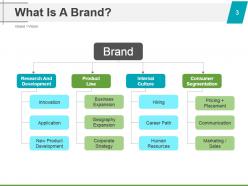
Slide 3: This is What is A Brand? slide. It showcases a flow chart of Brand with the following sub headings- Research And Development, Product Line, Internal Culture, Consumer Segmentation.
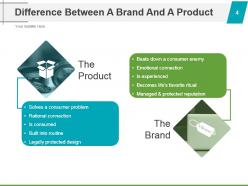
Slide 4: This slide showcases the Difference Between A Brand And A Product.
Slide 5: This is What Is Brand Equity? slide with a flow chart. It consists of the following- Brand Equity, Availability, Loyalty, Association, Awareness, Preference, Image & Personality, Familiarity.
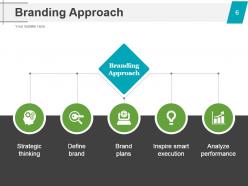
Slide 6: This slide showcases the Branding Approach with icons and following points- Strategic Thinking, Brand Plans, Inspire Smart Execution, Define Brand, Analyze Performance.
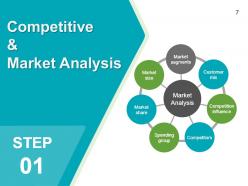
Slide 7: This slide displays Competitive & Market Analysis in a circular image form.
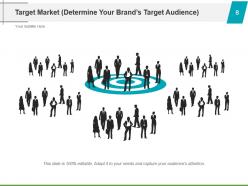
Slide 8: This is Target Market (Determine Your Brand’s Target Audience) slide in people silhouttes and target imagery to go with.
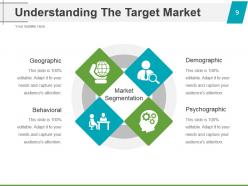
Slide 9: This is Understanding The Target Market slide as per the following- Behavioral, Demographic, Psychographic, Geographical. State market segmentation on the basis of these parameters.
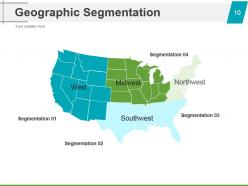
Slide 10: This is Geographic Segmentation slide to show segmentation on a world map image.
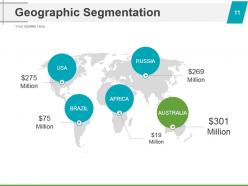
Slide 11: This slide displays Geographic Segmentation on a world map image.
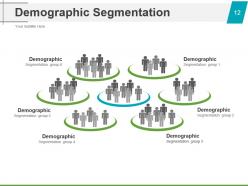
Slide 12: This is Demographic Segmentation slide in people silhouttes.
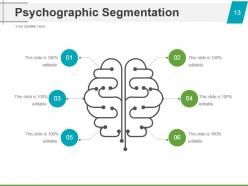
Slide 13: This slide shows Psychographic Segmentation with a mind map imagery and text boxes.
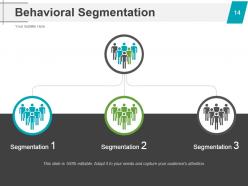
Slide 14: This slide showcases Behavioral Segmentation.
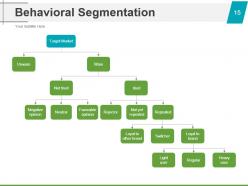
Slide 15: This is another slide showing Behavioral Segmentation in a flow chart.
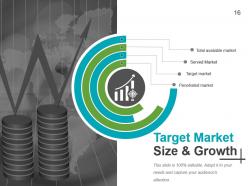
Slide 16: This slide shows Target Market Size & Growth with imagery.
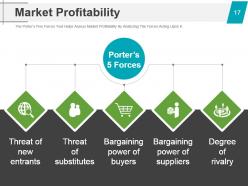
Slide 17: This is Market Profitability slide showing Porter's Five Forces. This includes- Threat of new entrants, Bargaining power of buyers, Bargaining power of suppliers, Threat of substitutes, Degree of rivalry.
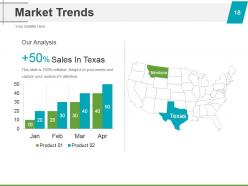
Slide 18: This slide showcases Market Trends in charts and graphs.
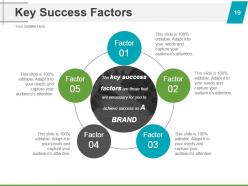
Slide 19: This slide states Key Success Factors in a circular image form.
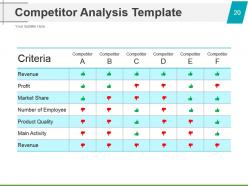
Slide 20: This is a Competitor Analysis Template slide. State criteria and competiotor name in the given table.
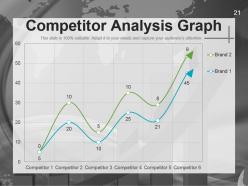
Slide 21: This slide showcases Competitor Analysis Graph with respect to Brands.
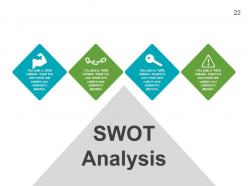
Slide 22: This is SWOT Analysis slide with their respective icons.
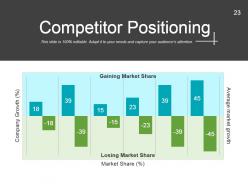
Slide 23: This slide showcases Competitor Positioning with Gaining Market Share and Losing Market Share.
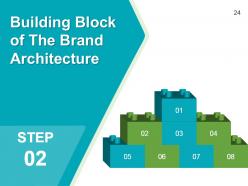
Slide 24: This is Building Block of The Brand Architecture slide in lego box image form.
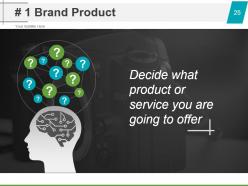
Slide 25: This slide displays Brand Product with creative imagery.
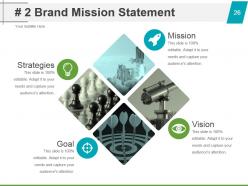
Slide 26: This slide showcases Brand Mission Statement with imagery. State company vision, mission, goals and strategies here.
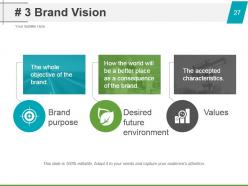
Slide 27: This is Brand Vision slide with- Desired future environment, Values, Brand purpose.
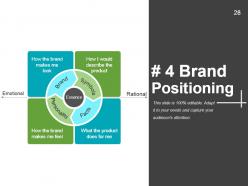
Slide 28: This slide showcases Brand Positioning with a matrix.
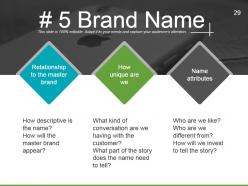
Slide 29: This is Brand Name stating slide with the following information- Relationship to the master brand, How unique are we, Name attributes.
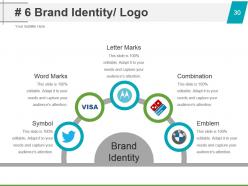
Slide 30: This is Brand Identity/ Logo slide with- Symbol, Emblem, Word Marks, Combination, Letter Marks.
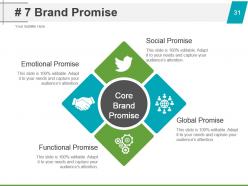
Slide 31: This slide showcases Brand Promise to its shareholders and customers. These promises include- Social Promise, Global Promise, Emotional Promise.
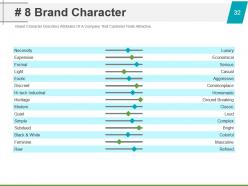
Slide 32: This slide shows Brand Character.
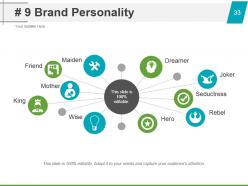
Slide 33: This is slide showcases a framework of attributes of Brand Personality. These are- Dreamer, Joker, Seductress, Rebel, Hero, Maiden, Friend, Mother, King, Wise.
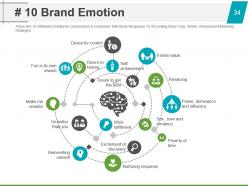
Slide 34: This slide displays Brand Emotion in a circular image form. There are 16 different emotional connections a consumer will show response to according Barry Feig, world –renowned marketing strategist.
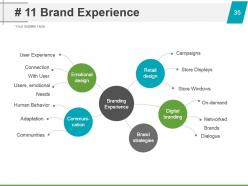
Slide 35: This slide shows Brand Experience in terms of- Emotional design, Retail design, Brand strategies, Digital branding, Communication.
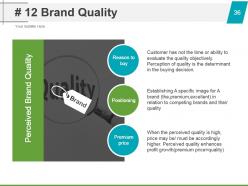
Slide 36: This slide shows Brand Quality It also states other deatils of brand quality like- Positioning, Premium price, Reason to buy.
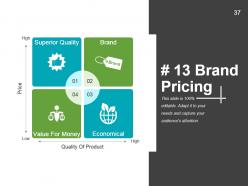
Slide 37: This slide showcases Brand Pricing in a matrix form.
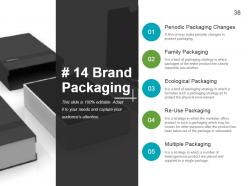
Slide 38: This slide shows Brand Packaging with- Periodic Packaging Changes, Family Packaging, Ecological Packaging, Re-Use Packaging, Multiple Packaging.
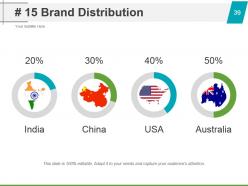
Slide 39: This slide shows global Brand Distribution in a circular form.
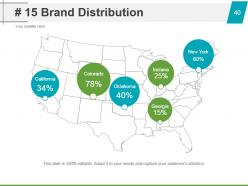
Slide 40: This slide shows global representation of Brand Distribution with map imagery.
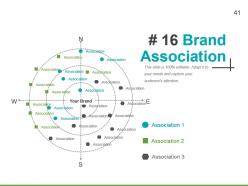
Slide 41: This is Brand Association slide in circular image form.
Slide 42: This slide states The Big Idea with creative imagery.
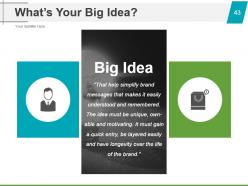
Slide 43: This slide states What’s Your Big Idea? with text boxes.
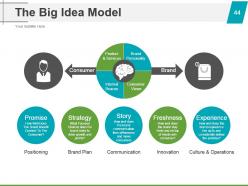
Slide 44: This slide showcases The Big Idea Model in a circular form.
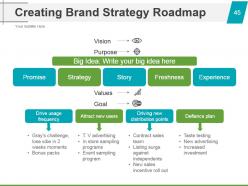
Slide 45: This is Creating Brand Strategy Roadmap slide with text boxes. Write your Big Idea here.
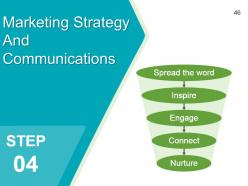
Slide 46: This slide showcases Marketing Strategy And Communications. Its 5 levels include- Spread the word, Inspire, Engage, Connect, Nurture.
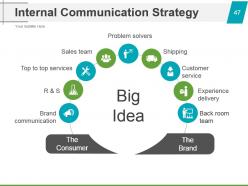
Slide 47: This slide shows a framework of Internal Communication Strategy with respect to The Customer and The Brand.
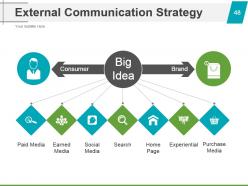
Slide 48: This slide shows External Communication Strategy with respect to Big Idea.
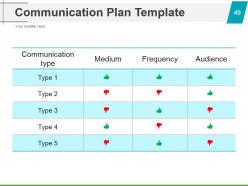
Slide 49: This is a Communication Plan Template slide.
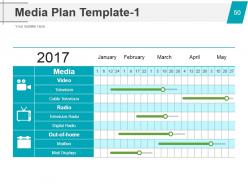
Slide 50: This is Media Plan Template-1 slide.
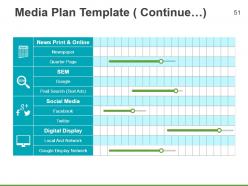
Slide 51: This slide also shows Media Plan Template.
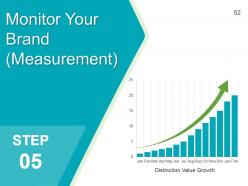
Slide 52: This is Monitor Your Brand (Measurement) slide with a bar graph/ chart image showing Distinction Value Growth.
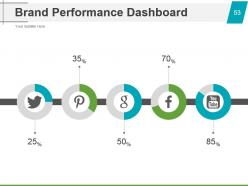
Slide 53: This slide displays Brand Performance Dashboard with icons.
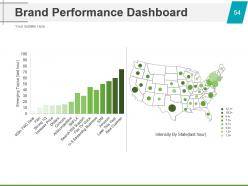
Slide 54: This slide also showcases Brand Performance Dashboard in charts and graphs.
Slide 55: This is Brand Mentions slide in a bar graph/ chart form.
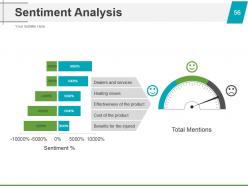
Slide 56: This slide showcases Sentiment Analysis in percentage.
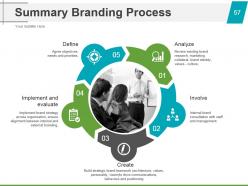
Slide 57: This is a Summary Branding Process slide in a circular image form. Use it to show the following steps- Define, Analyze, Involve, Create, Implement and evaluate.
Slide 58: This slide showcases Strategic Brand Management Process Icons Set. Use the icons as per requirement.
Slide 59: This slide also shows Strategic Brand Management Process Icons Set.
Slide 60: This slide is titled Additional slides. You can change the slide content as per need.
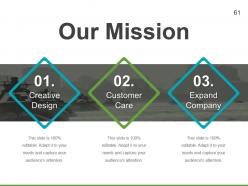
Slide 61: This is Our Mission slide with Creative Design, Customer Care and Expand Company as examples.
Slide 62: This is an About Us slide. State about your company team, company essentials, highlights etc. here.
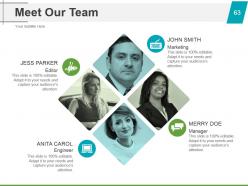
Slide 63: This is Meet Our Team slide with name and designation. Use it to show team related information.
Slide 64: This is an Our Goal slide. State your important goals here.
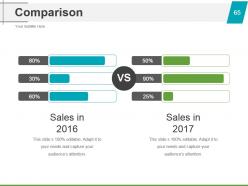
Slide 65: This is a Comparison slide in percentage to state comparison between two products/ entities etc.
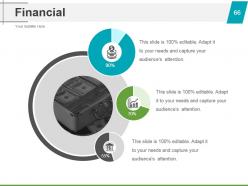
Slide 66: This slide is titled as Financials. Show finance related stuff here.
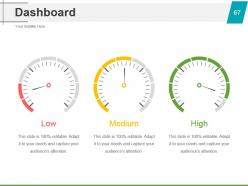
Slide 67: This is a Dashboard slide to state Low, medium and High aspects, kpis, metrics etc.
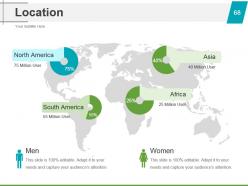
Slide 68: This is a Location slide to show global presence etc. on a world map image.
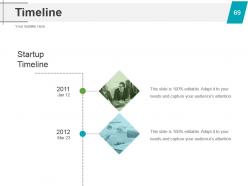
Slide 69: This slide showcases Startup Timeline. You can use it as per your requirements.
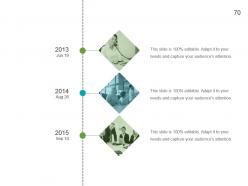
Slide 70: This is also a Timeline slide to show growth, milestones etc.
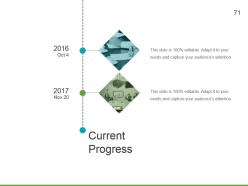
Slide 71: This is also a Timeline slide showing the Current Progress
Slide 72: This is an Important Notes slide to post important information, highlights etc.
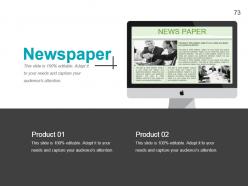
Slide 73: This is a Newspaper slide to showcase or highlight important information, milestones etc.
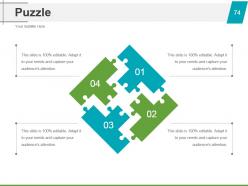
Slide 74: This is a Puzzle image slide to show information, specification etc.
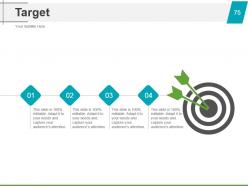
Slide 75: This is a Target image slide. State targets, goals etc. here.
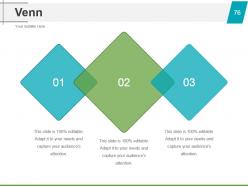
Slide 76: This is a Venn diagram image slide to show information, specifications etc.
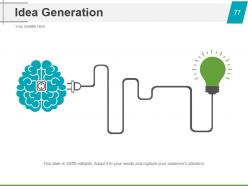
Slide 77: This is Idea Generation slide with Bulb and mind imagery. Present creative or innovative ideas here.
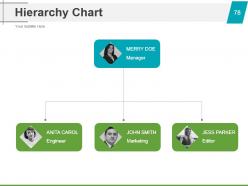
Slide 78: This is a Hierarchy Chart slide in a flowchart form. Use it to present the name and designation of the members etc.
Slide 79: This is a Bar Graph image slide to show product/entity comparison, information etc.
Slide 80: This is a Thank You image slide with Address# street number, city, state, Contact Number, Email Address.
Strategic brand management process powerpoint presentation slides with all 80 slides:
Our Strategic Brand Management Process Powerpoint Presentation Slides create euphoria. Folks get to feel genuine bliss.




FAQs for Strategic brand management process
Okay so first thing - nail your positioning because everything else builds from there. You need target audience definition, brand personality, and your value proposition figured out. Then add messaging guidelines and visual standards. Competitive differentiation is huge too. Brand architecture matters if you've got multiple products (though honestly that one trips up a lot of people). The real challenge isn't creating these pieces - it's making them actually work together instead of living in random docs. I'd say positioning first, then let everything else flow from that foundation.
Honestly, start simple with brand awareness surveys and NPS scores - those'll give you the clearest picture. Social media monitoring is huge too since people say what they really think online (sometimes brutally honest, but whatever). I'd also track if you can charge more than competitors and whether customers actually stick around. Oh, and measure your share of voice in the industry. The key thing though? Get your baseline numbers first, before you change anything. Otherwise you're just guessing if stuff worked. Pick maybe 3-4 metrics that actually matter for your goals instead of drowning in data.
Think of customer feedback as your reality check - it shows you what's actually happening vs what you think is happening with your brand. People are terrible at saying what they really want though (like they'll complain about speed when they actually just want to feel heard). But here's the thing - patterns in feedback are where the magic happens. You start seeing which parts of your brand actually matter to people. Set up some regular ways to collect it - surveys work, or just lurk on social media honestly. Then adjust your messaging based on what you're learning.
Honestly, you've got to find what makes you actually different - not just different for the hell of it. Maybe it's how you treat customers, or you go deep into some specific niche everyone else ignores. I always tell people to look at what competitors are doing, then do the opposite. Your authentic story matters way more than you think because people buy from brands they actually connect with. Sometimes the most obvious thing that sets you apart is staring you right in the face. You just can't see it because you're too close to your own business.
Honestly, the worst part is dealing with confused customers who don't get why you're changing. They picked you for a reason, you know? Your own team will probably fight you on it too - people hate change. Getting everyone to stay on message is a nightmare, especially with different departments doing their own thing. Oh, and timing matters because competitors might just swoop in where you used to be. I'd definitely test it small first though. Don't go crazy with a full rebrand until you know it actually works.
So digital marketing basically flipped everything upside down - instead of just shouting at people, brands can actually have conversations now. The tricky part? You're juggling consistency across like 15 platforms (honestly exhausting). But the targeting is insane compared to old-school advertising. Things move fast too - one tweet can make or break your day. I'd say focus on relationship building over broadcasting. Oh and don't spread yourself too thin - figure out where your people actually are online first, then go all-in there. Way smarter than trying to be everywhere at once.
Track your financial stuff first - brand premium, market share, customer lifetime value. Those tell the real story. Then add perception metrics like brand awareness and Net Promoter Score. Brand tracking surveys are honestly the best tool for this - way better than just looking at sales numbers. Social sentiment matters too, plus your share of voice compared to competitors. Oh, and don't go crazy measuring everything at once. Pick 3-4 metrics that actually matter to your goals. I learned that the hard way when I tried tracking like 15 different things.
Dude, stories are what make people actually *remember* your brand instead of forgetting it five seconds later. Like, you could just say "we sell running shoes" or you could tell Nike-style stories about pushing limits and crushing goals - which one sticks with you? Way different impact. Here's the thing though: your story has to back up whatever market position you're going for, otherwise it's just random fluff. I'd start with figuring out that one main thing you want stuck in people's heads. Then wrap a real, honest story around it. People can smell fake narratives from a mile away, so don't try to be something you're not.
You know how some brands look completely different on Instagram vs their website? Don't be that company. Consistency builds trust - when customers see the same colors, fonts, and vibe everywhere, they remember you way better. Like, studies show it boosts brand recall by 80%. Plus people feel more confident buying from you when everything looks cohesive. I'd start with a basic brand guide covering your visuals and tone (nothing fancy), then maybe check your channels once a month to make sure you're not going off-brand. It's honestly one of those things that separates the pros from the amateurs.
Look, CSR is huge for how people see your brand now. Customers want to know you're not just chasing profits - they want authentic support for real causes. The tricky part? People have amazing BS detectors, especially Gen Z. If your CSR feels fake or performative, you're screwed. I've seen brands get absolutely roasted for shallow activism attempts. But when it's genuine, you'll build crazy loyalty. My advice: figure out what your team genuinely cares about first. Then get involved in ways that actually matter, not just throwing money at random charities. Start small if you need to.
Hey! So partnerships can really amp up your brand value. When you team up with established companies, you basically get to borrow some of their credibility - which is huge when you're still building trust. Their customer base becomes accessible to you too, and that would normally take forever to grow on your own. Co-branding lets you create stuff neither brand could do solo. Honestly, I've seen some partnerships that seemed weird at first but totally worked. The PR attention doesn't hurt either when you announce something big. Just make sure you're picking partners who share your values but fill in where you're weak. That's where the magic happens.
Honestly, brand loyalty is like having a safety net for your business. Loyal customers spend way more over time - we're talking 67% more than new ones. They're also way cheaper to keep around than constantly hunting for fresh faces. Here's the cool part though - they basically become your free marketing team. They'll tell their friends about you and even stick up for you online when stuff hits the fan (and trust me, it will at some point). My advice? Track your retention numbers just as hard as you track new signups. The math just makes sense.
Tech is totally changing the branding game right now. You can use AI to personalize stuff for customers without doing it manually for each person - saves so much time. AR and VR let people actually interact with your brand in crazy immersive ways. There's also these social listening tools that basically tell you what people think about your brand in real time, which honestly feels almost like cheating sometimes. Blockchain makes your supply chain transparent so customers trust you more. Don't just chase every shiny new thing though. Pick the tech that actually fixes problems you're already dealing with.
Honestly, brands that get stuck doing what worked five years ago are basically asking to become irrelevant. Your customers are changing constantly, so you've got to change with them. Refresh your messaging and visuals based on what's actually happening in their world right now. Track where they're spending time online - new platforms pop up faster than we can keep up sometimes. Don't mess with your core values though, those stay put. But everything else? Fair game. Take some risks with partnerships or fresh ideas. Start by looking at what feels outdated about your brand experience today.
Dude, you've gotta move FAST on this. Don't go silent - people will just assume you're hiding something worse. Get out there and own what happened, then explain how you're fixing it. I've watched so many companies try to dodge responsibility and it's honestly painful to watch. Your response can't sound all corporate and lawyered-up either. Talk to your customers like actual humans and address what they're worried about. Oh, and have this plan ready beforehand! Trying to figure out crisis management while everything's on fire? Recipe for disaster.
-
Very well designed and informative templates.
-
Commendable slides with attractive designs. Extremely pleased with the fact that they are easy to modify. Great work!