


Branding Powerpoint Presentation Slides
Are you looking for a way to promote your brand? Then we can help. With our well researched and designed branding PowerPoint presentation slides, you can highlight each aspect of branding easily. Using our brand advertising PowerPoint templates middle-level manager can demonstrate positioning of their brand to a top management. This business marketing presentation comprises slides on business focus, need for the new product, companies competitive landscape, strategic brand positioning, brand development, brand positioning, brand communication. It also covers budgeting, value addition due to branding, promotional strategies and techniques to bring your brand performance under the limelight. If you are planning to give a PPT presentation on company branding, brand awareness, brand loyalty, brand name, brand management, brand valuation, brand positioning, branding strategy and business branding then you can use the same product branding PowerPoint presentation deck. In case you want customized designs, our whole team is ready to help you out. What are you waiting for? Quickly download our branding PowerPoint presentation template.Encourage acts that benefit everyone with our Branding Powerpoint Presentation Slides. Be able to do good for the community.
Are you looking for a way to promote your brand? Then we can help. With our well researched and designed branding PowerPoin..





















-

- Google Slides is a new FREE Presentation software from Google.
- All our content is 100% compatible with Google Slides.
- Just download our designs, and upload them to Google Slides and they will work automatically.
- Amaze your audience with SlideTeam and Google Slides.
-

Want Changes to This PPT Slide? Check out our Presentation Design Services
-

- WideScreen Aspect ratio is becoming a very popular format. When you download this product, the downloaded ZIP will contain this product in both standard and widescreen format.
-
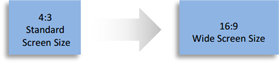
- Some older products that we have may only be in standard format, but they can easily be converted to widescreen.
- To do this, please open the SlideTeam product in Powerpoint, and go to
- Design ( On the top bar) -> Page Setup -> and select "On-screen Show (16:9)” in the drop down for "Slides Sized for".
- The slide or theme will change to widescreen, and all graphics will adjust automatically. You can similarly convert our content to any other desired screen aspect ratio.
Compatible With Google Slides

Get This In WideScreen
You must be logged in to download this presentation.


Do you want to remove this product from your favourites?
PowerPoint presentation slides
Presentation supports both the standard and widescreen. 100% risk-free quick download. This deck can be used by the brand officer, middle-level executive, brand marketer and top management of the company. PPT’s are compatible with google slides. Clients can have prime support. This is complete PPT with 75 slides. 100% editable templates in PowerPoint.This is a one stage process. The stages in this process are branding, online presence, marketing.

People who downloaded this PowerPoint presentation also viewed the following :
Content of this Powerpoint Presentation
Slide 1: This slide introduces Branding. You can state your company name and begin.
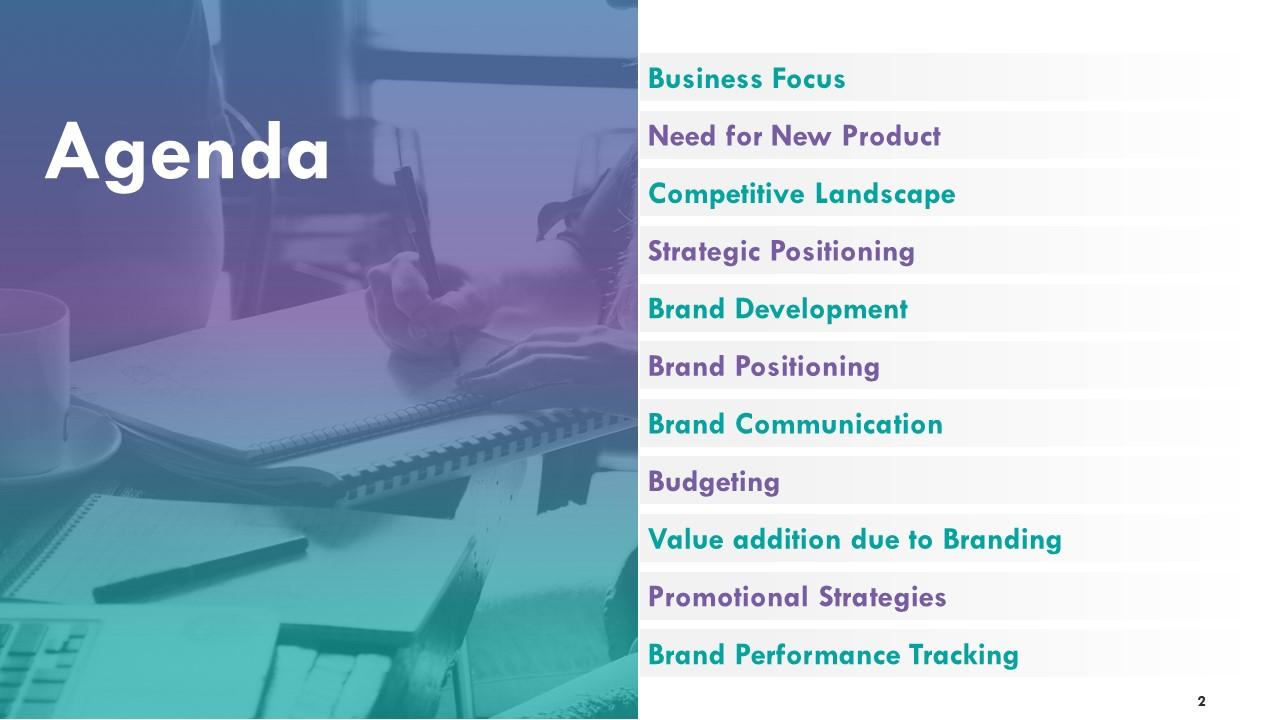
Slide 2: This slide showcases Agenda. You can either choose the agenda from these we have mentioned or use your own in the editable slide. Some of them listed are- Business Focus, Need for New Product, Competitive Landscape, Strategic Positioning, Brand Development, Brand Positioning, Brand Communication, Budgeting, Value addition due to Branding, Promotional Strategies, Brand Performance Tracking.
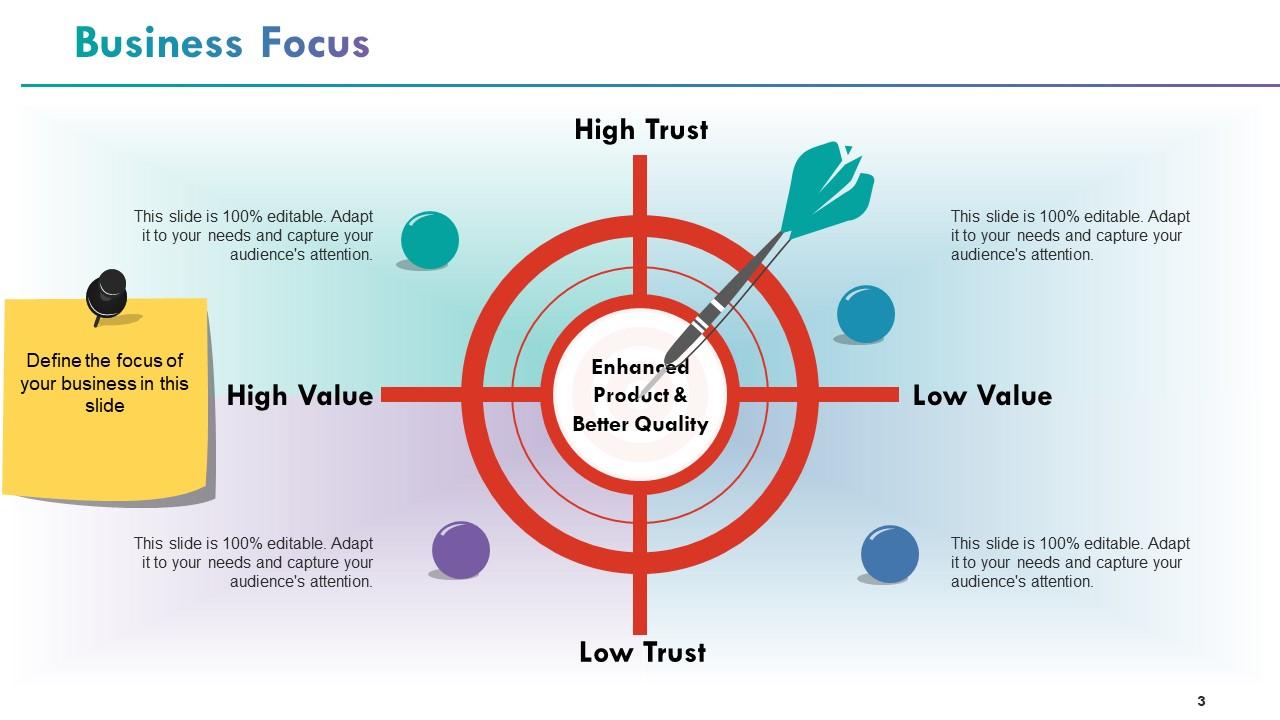
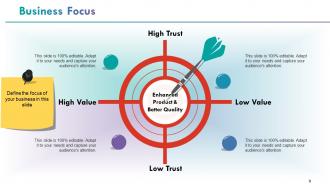
Slide 3: This slide presents Business Focus. You can define the focus of your business with help of our slide. Locate the parameter according to these as mentioned are- High trust, High value, Low value, Low trust.
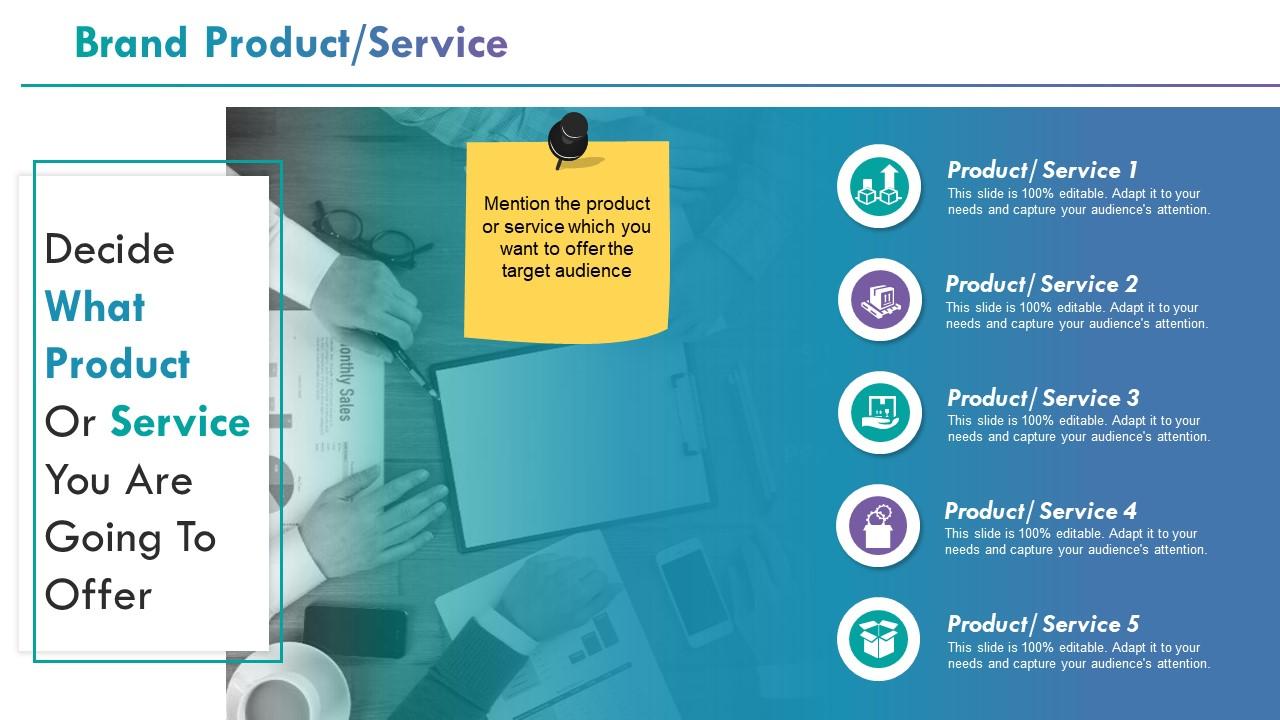
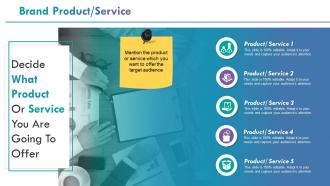
Slide 4: This slide presents Brand Product/Service. Mention the product or service which you want to offer the target audience.
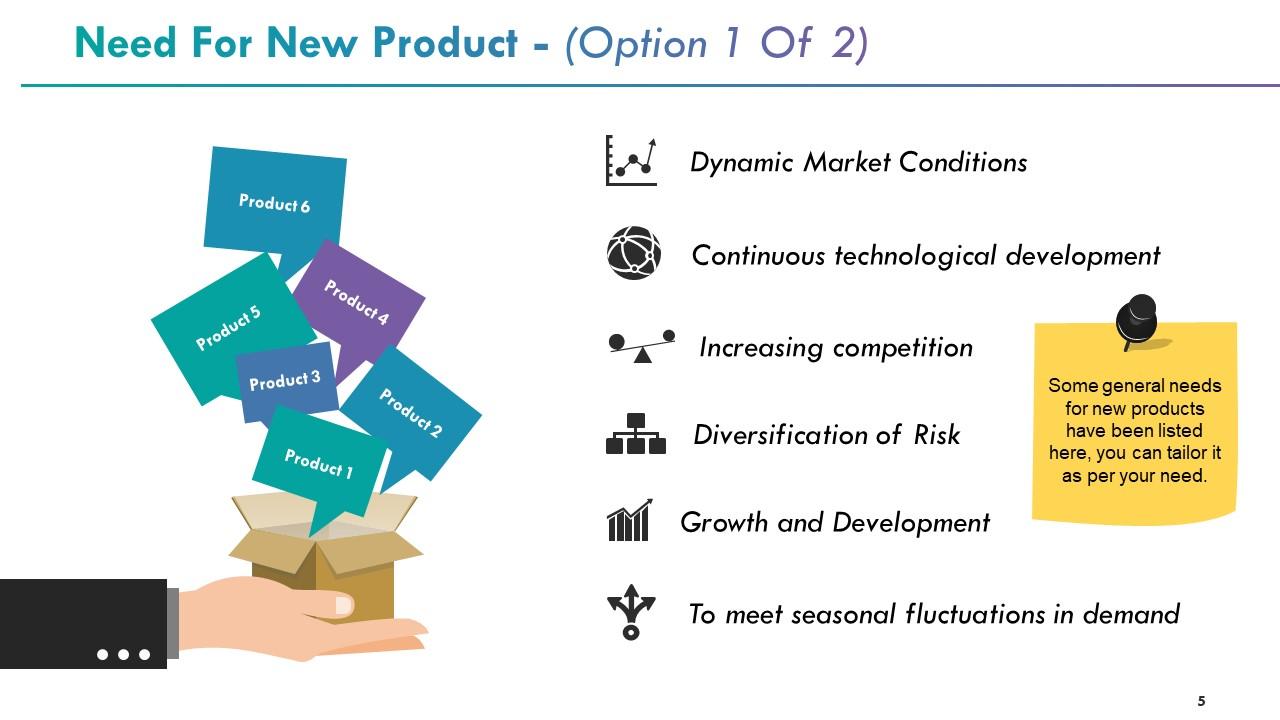
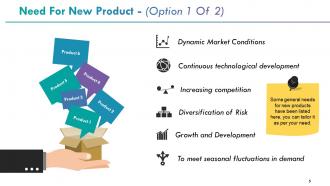
Slide 5: This slide showcase Need For New Product. Some general needs for new products have been listed here are- Growth and Development, Diversification of Risk, Increasing competition, Dynamic Market Conditions, Continuous technological development, To meet seasonal fluctuations in demand, you can tailor it as per your need.
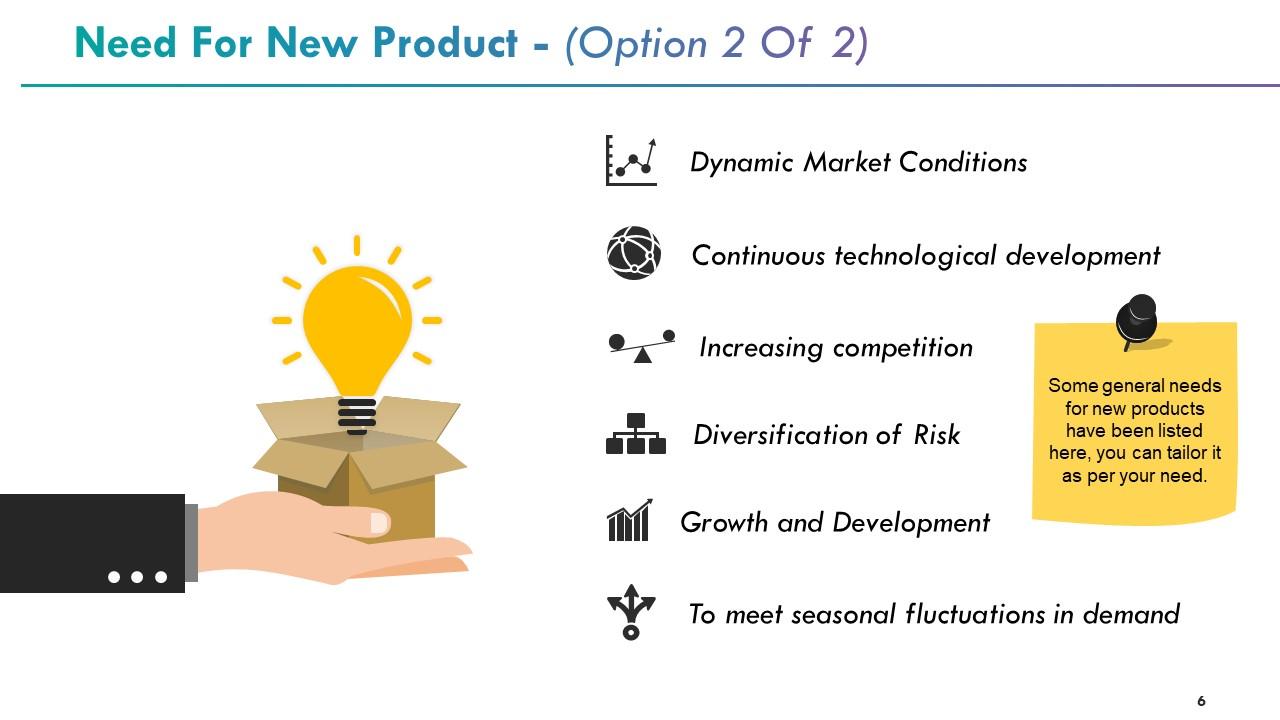
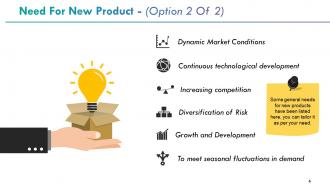
Slide 6: This slide is continuation of Need For New Product.Some general needs for new products have been listed here, you can tailor it as per your requirement.
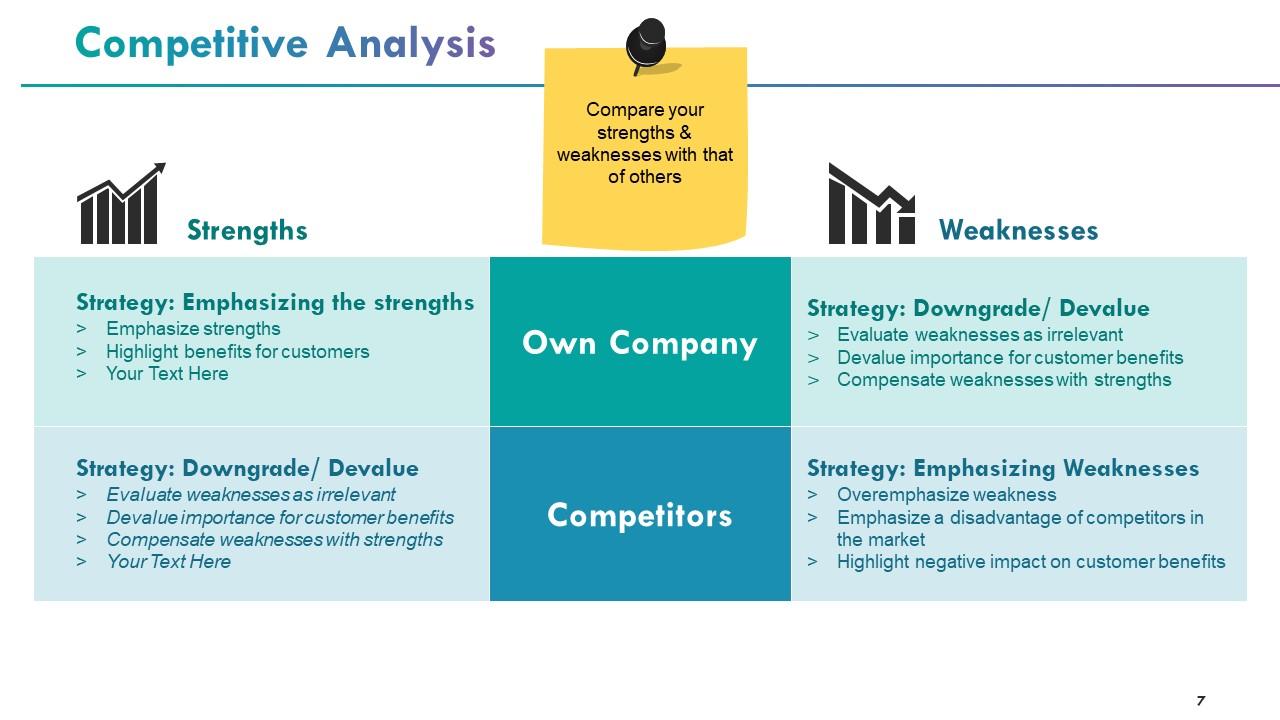
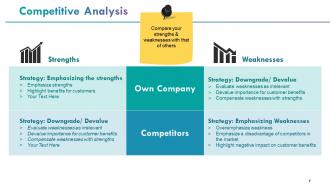
Slide 7: This slide shows Competitive Analysis. Compare your strengths & weaknesses with that of others.
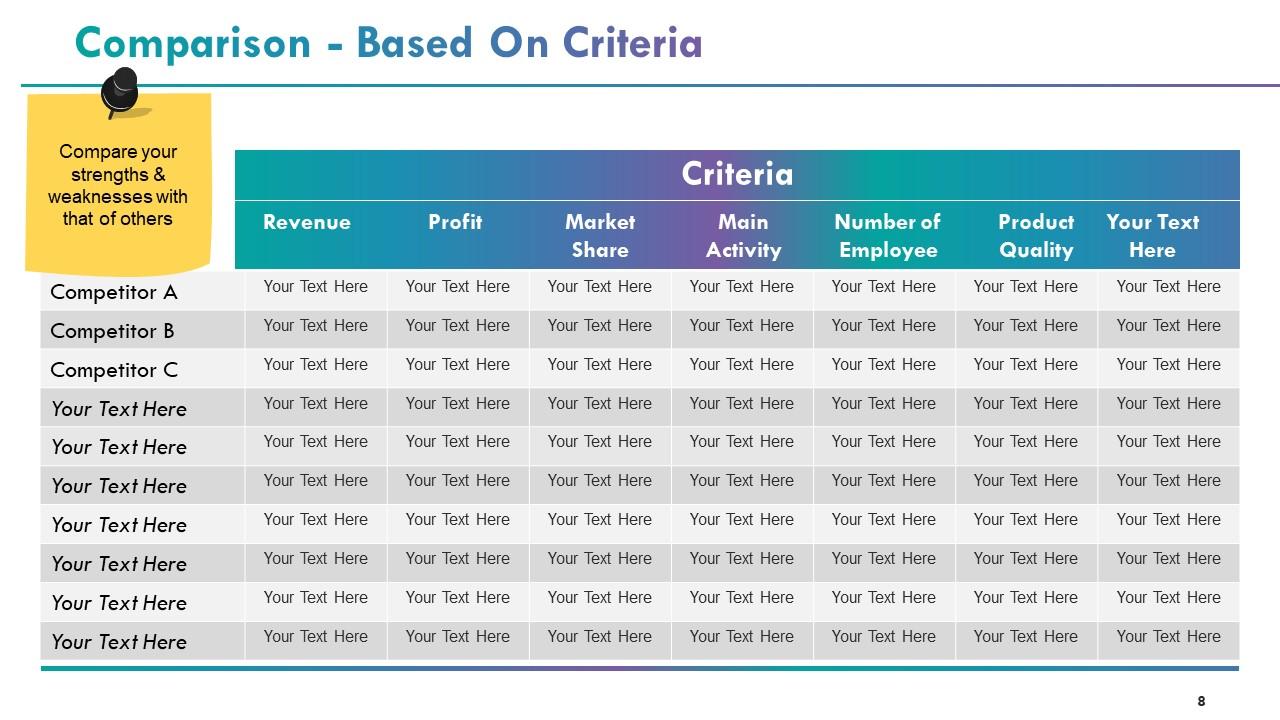
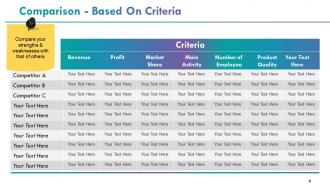
Slide 8: This slide displays Comparison - Based On Criteria and those criteria are- Revenue, Profit, Market Share, Main Activity, Number of Employee, Product Quality, Compare your strengths & weaknesses with that of others.
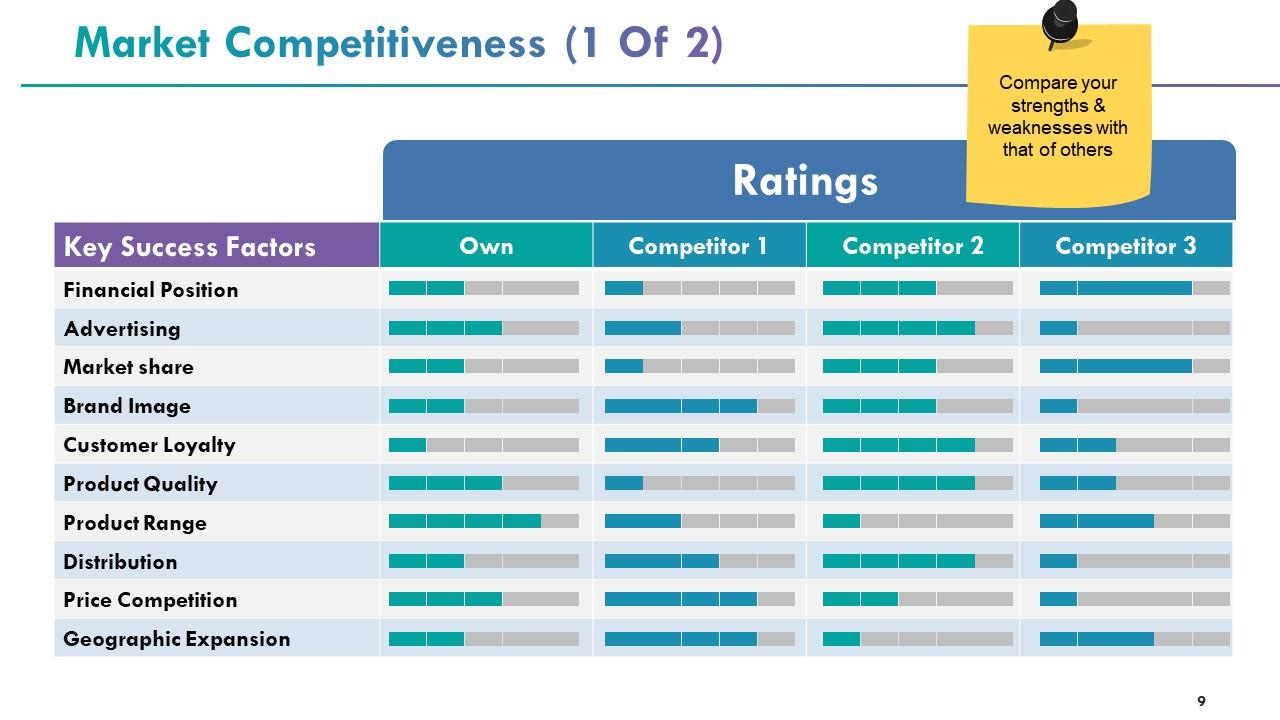
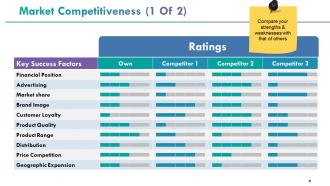
Slide 9: This slide is for Market Competitiveness. Compare your strengths & weaknesses with that of others with respect to ratings.
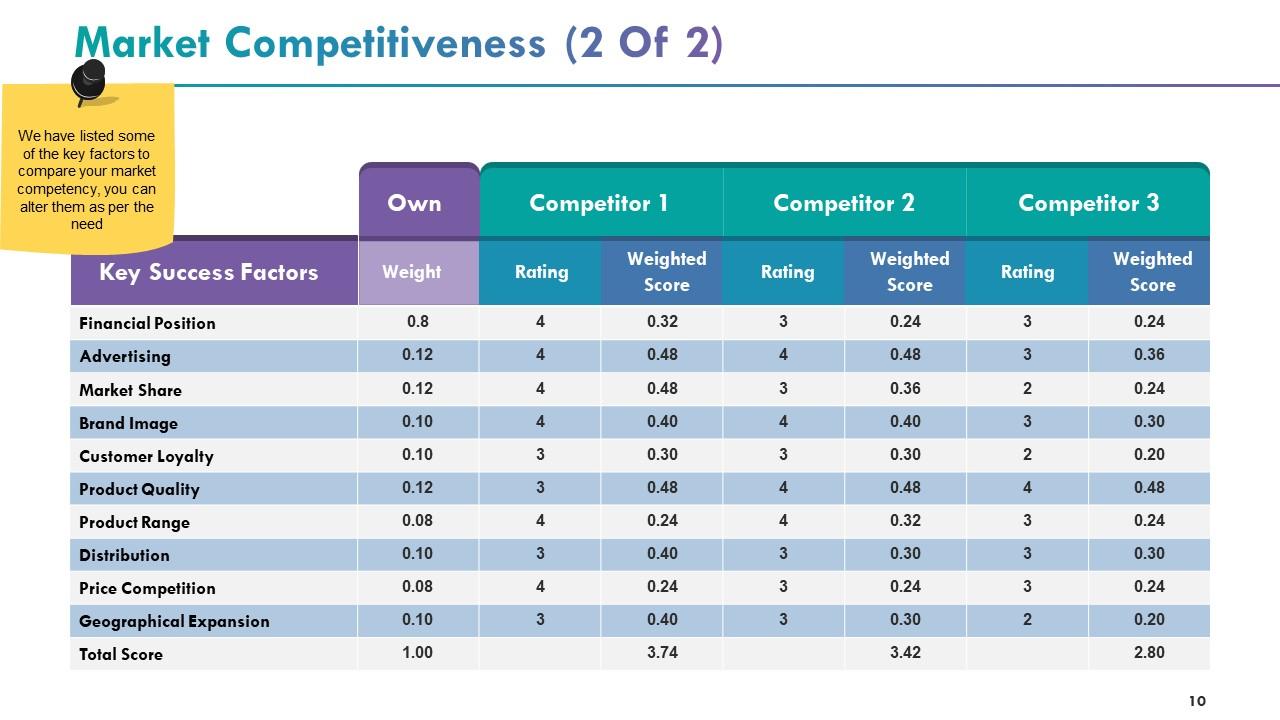
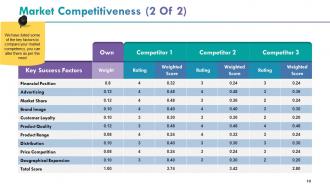
Slide 10: This slide presents Market Competitiveness. We have listed some of the key factors to compare your market competency, Weight, Rating, Weighted Score, Rating, Weighted Score, Rating, Weighted Score, Key Success Factors, you can alter them as per the need.
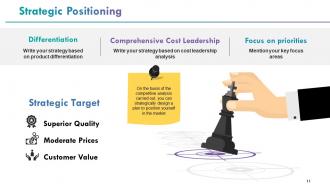
Slide 11: This slide showcases Strategic Positioning and that includes- Differentiation, Comprehensive Cost Leadership, Focus on priorities, On the basis of the competitive analysis carried out, you can strategically design a plan to position yourself in the market.
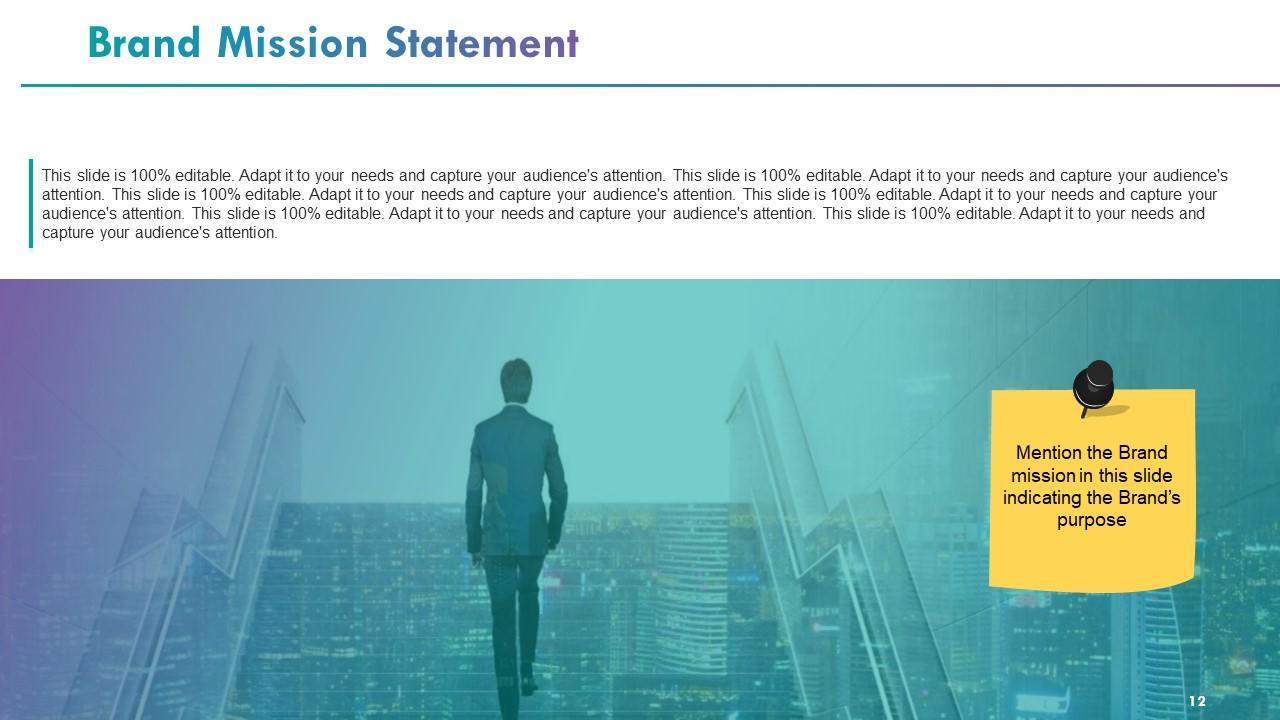
Slide 12: This slide presents Brand Mission Statement. Mention the Brand mission in this slide indicating the Brand’s purpose.
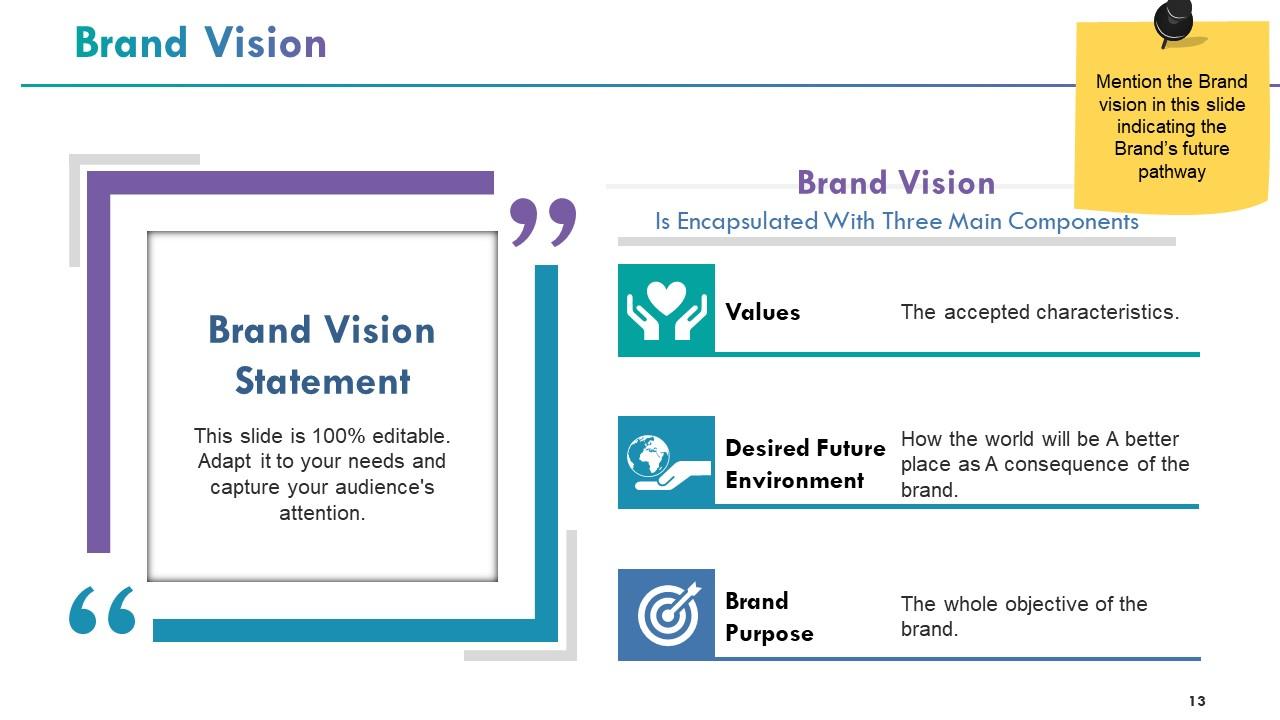
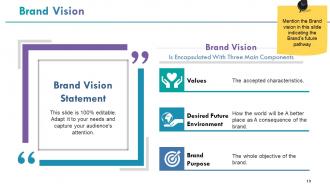
Slide 13: Mention the Brand vision in this slide indicating the Brand’s future pathway. Use these components and those listed below Values, Desired Future Environment, Brand Purpose.
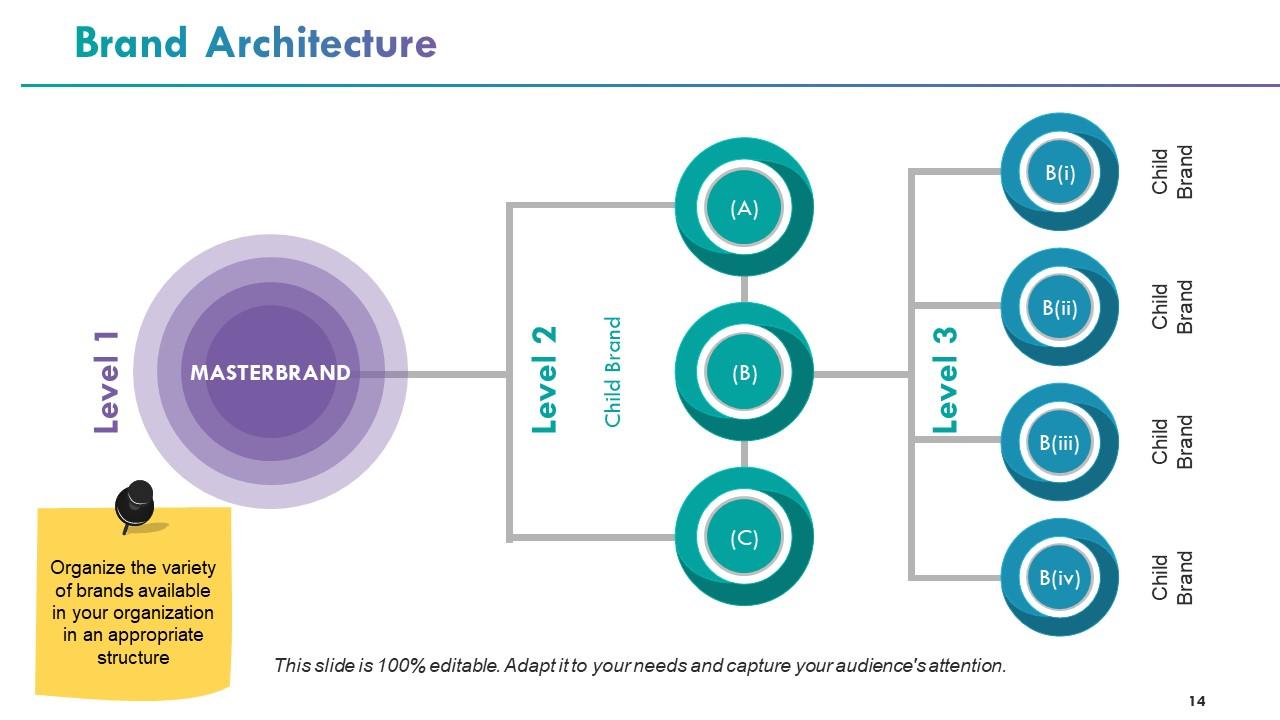
Slide 14: This slide showcases Brand Architecture that includes connection of masterbrand with child brand.Organize the variety of brands available in your organization in an appropriate structure.
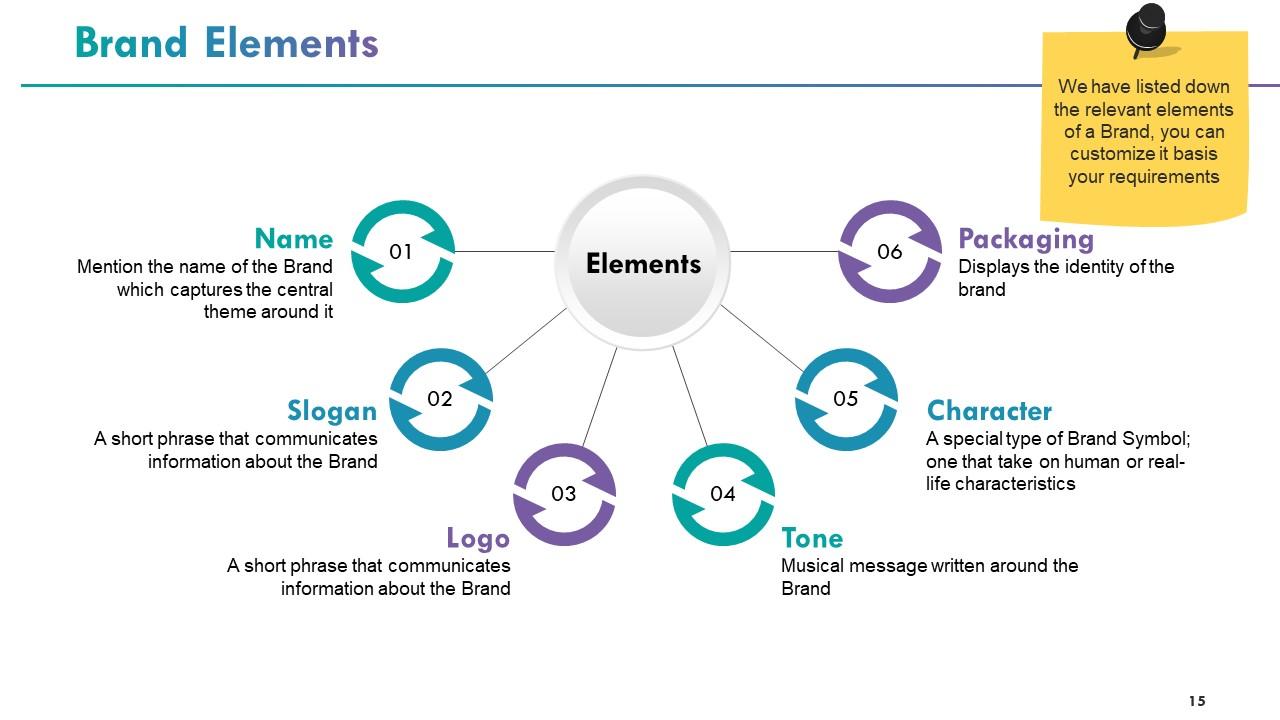
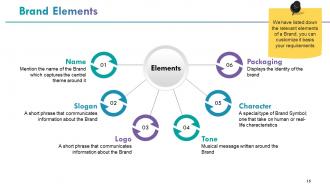
Slide 15: This slide presents Brand Elements that are shown in slide are as follows- Name, Slogan, Packaging, Character, Logo, Tone, We have listed down the relevant elements of a Brand, you can customize it basis your requirements.
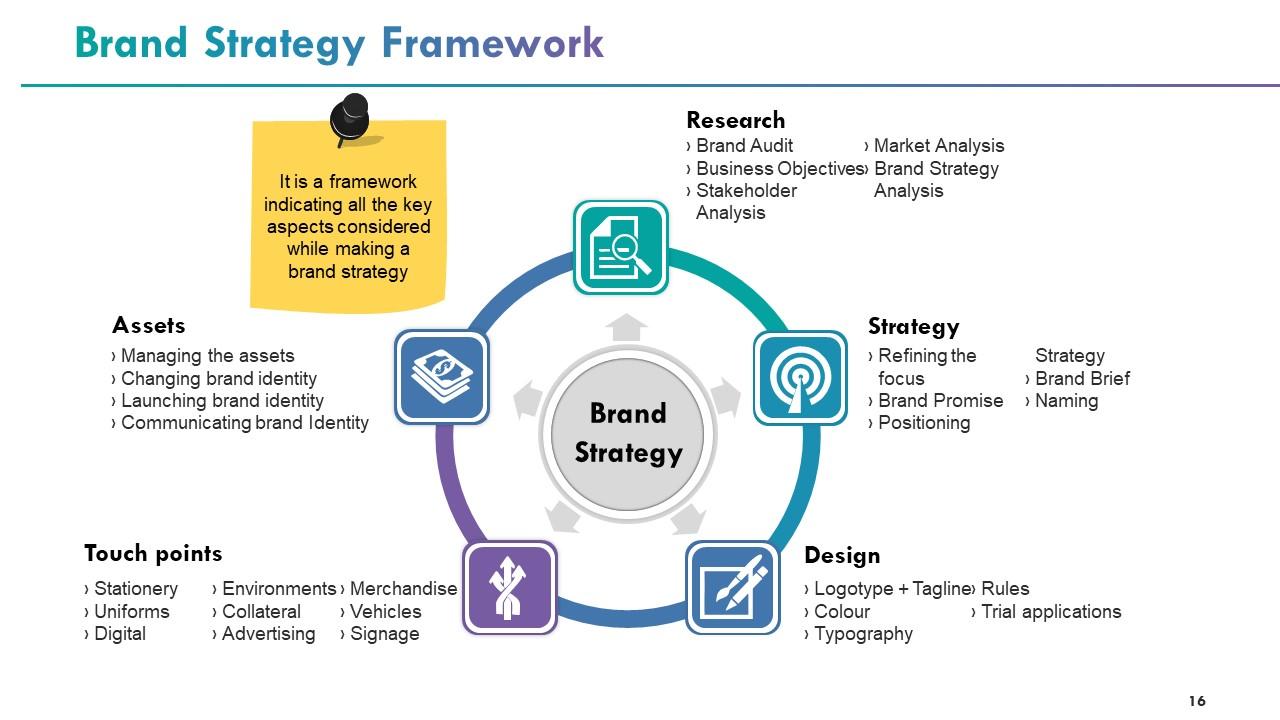
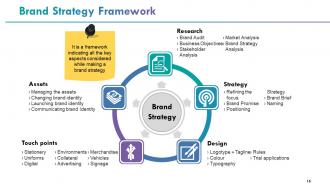
Slide 16: This slide showcases Brand Strategy Framework. It is a framework indicating all the key aspects considered while making a brand strategy and those are- Strategy, Design, Research, Touch points, Assets.
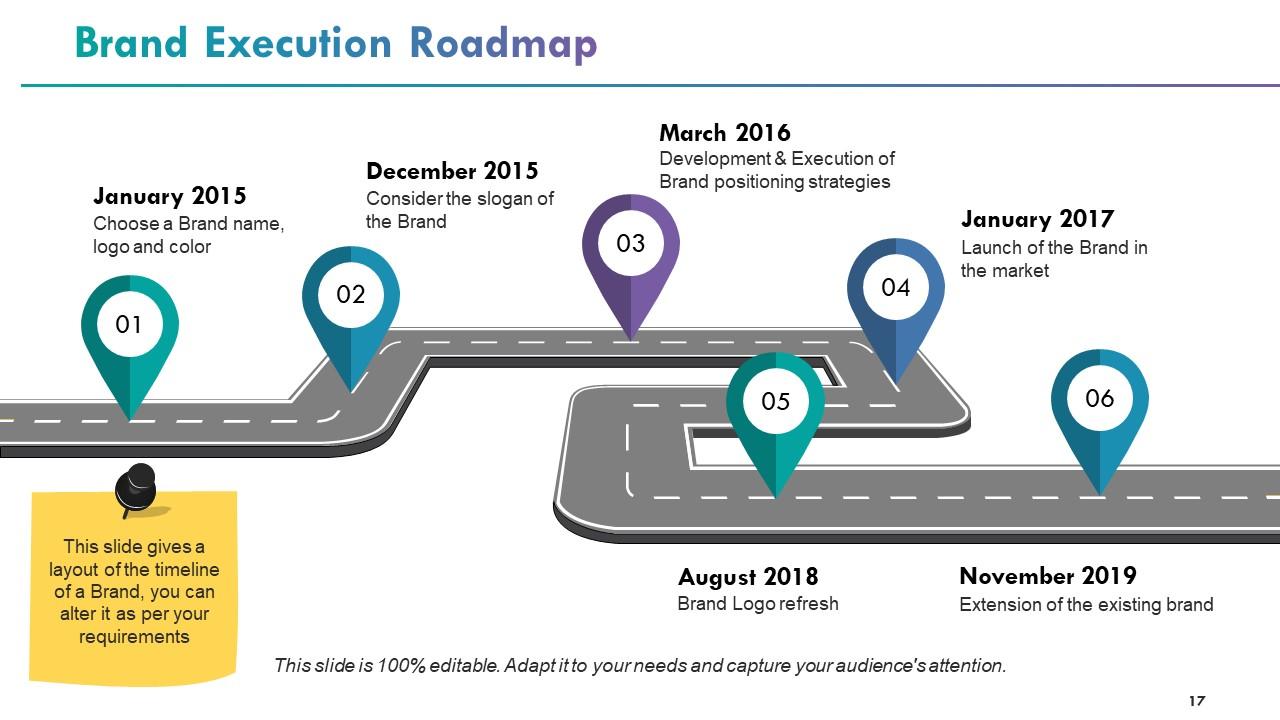
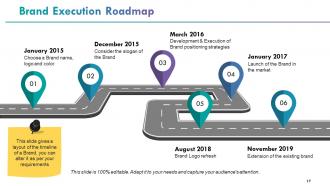
Slide 17: This slide showcases Brand Execution Roadmap and also gives a layout of the timeline of a Brand, you can alter it as per your requirements.
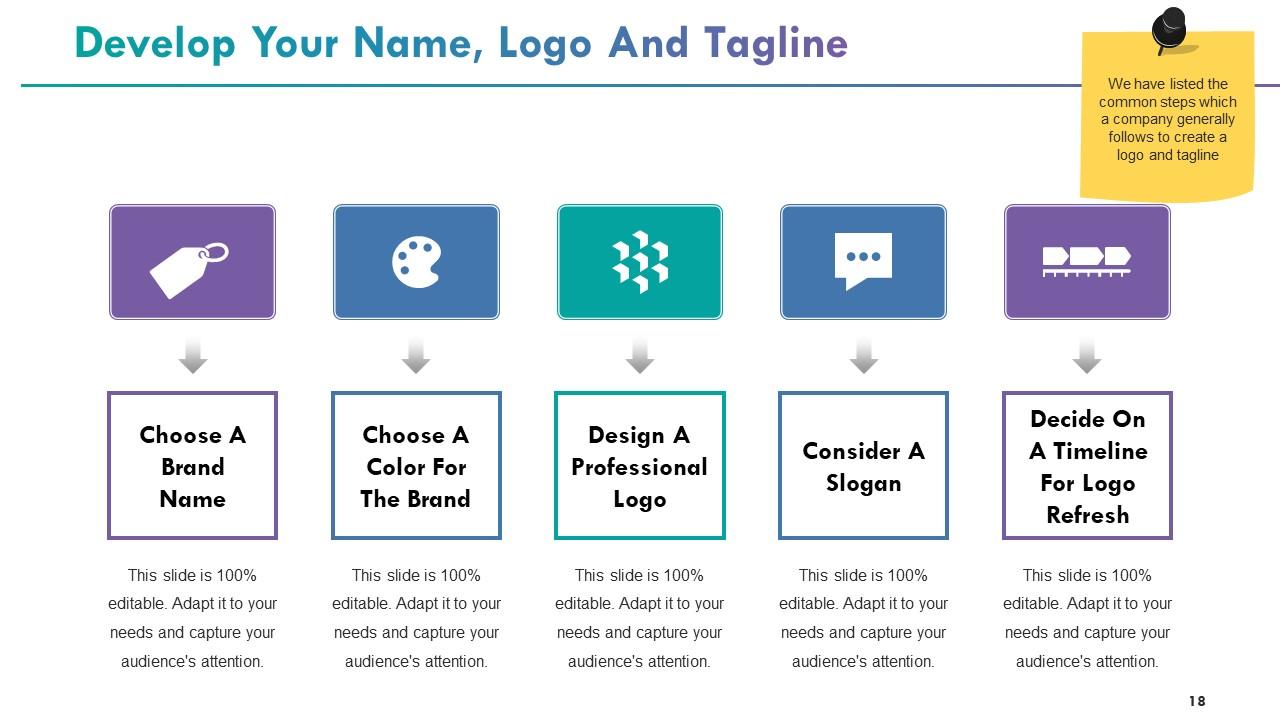
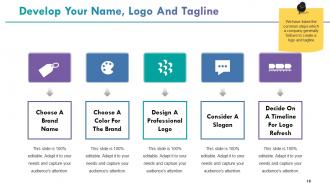
Slide 18: This slide presents Develop Your Name, Logo And Tagline. We have listed the common steps which a company generally follows to create a logo and tagline and that are as follows- Choose A Brand Name, Choose A Color For The Brand, Design A Professional Logo, Consider A Slogan, Decide On A Timeline For Logo Refresh.
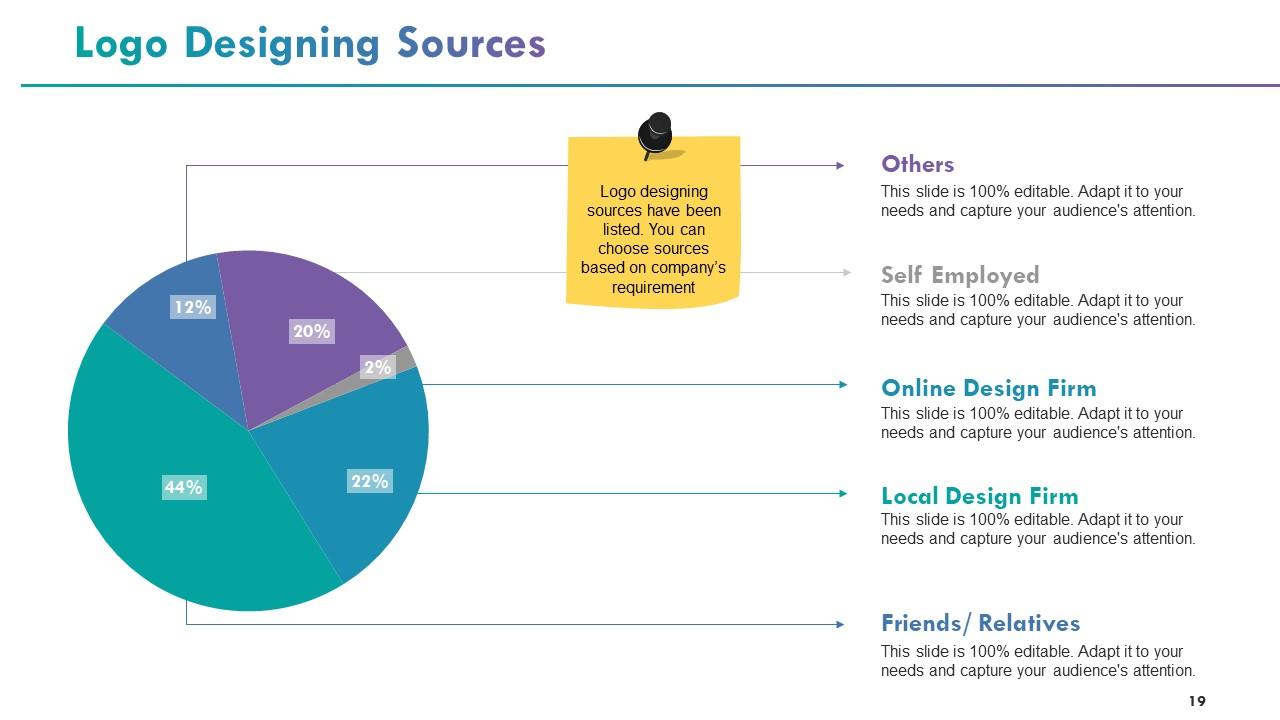
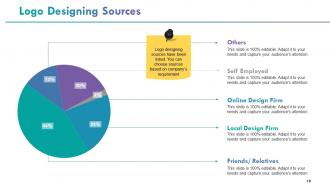
Slide 19: This slide shows Logo Designing Sources . Logo designing sources have been listed. You can choose sources based on company’s requirement- Others, Self Employed, Online Design Firm, Local Design Firm, Friends/ Relatives.
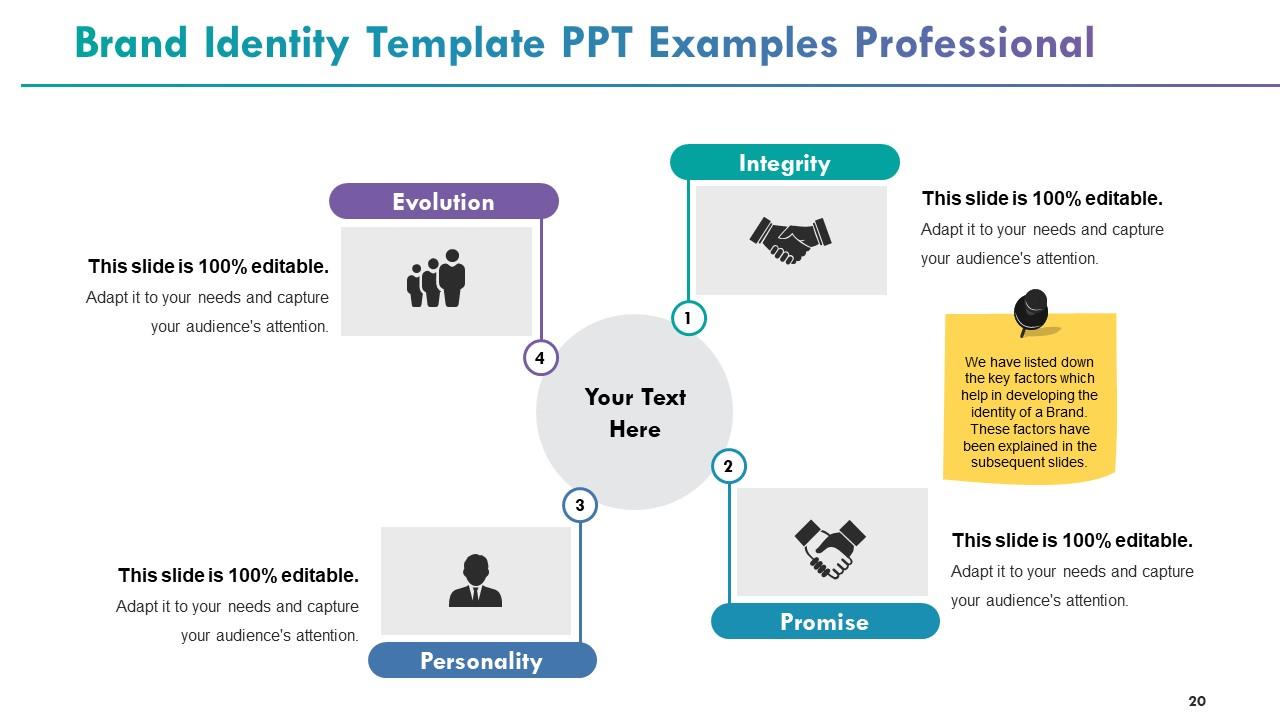
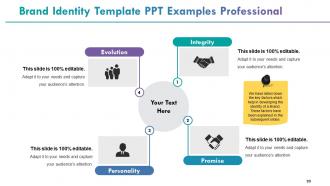
Slide 20: This slide displays Brand Identity Template PPT Examples Professional. We have listed down the key factors which help in developing the identity of a Brand. These factors have been explained in the subsequent slides. Integrity, Promise, Personality, Evolution.
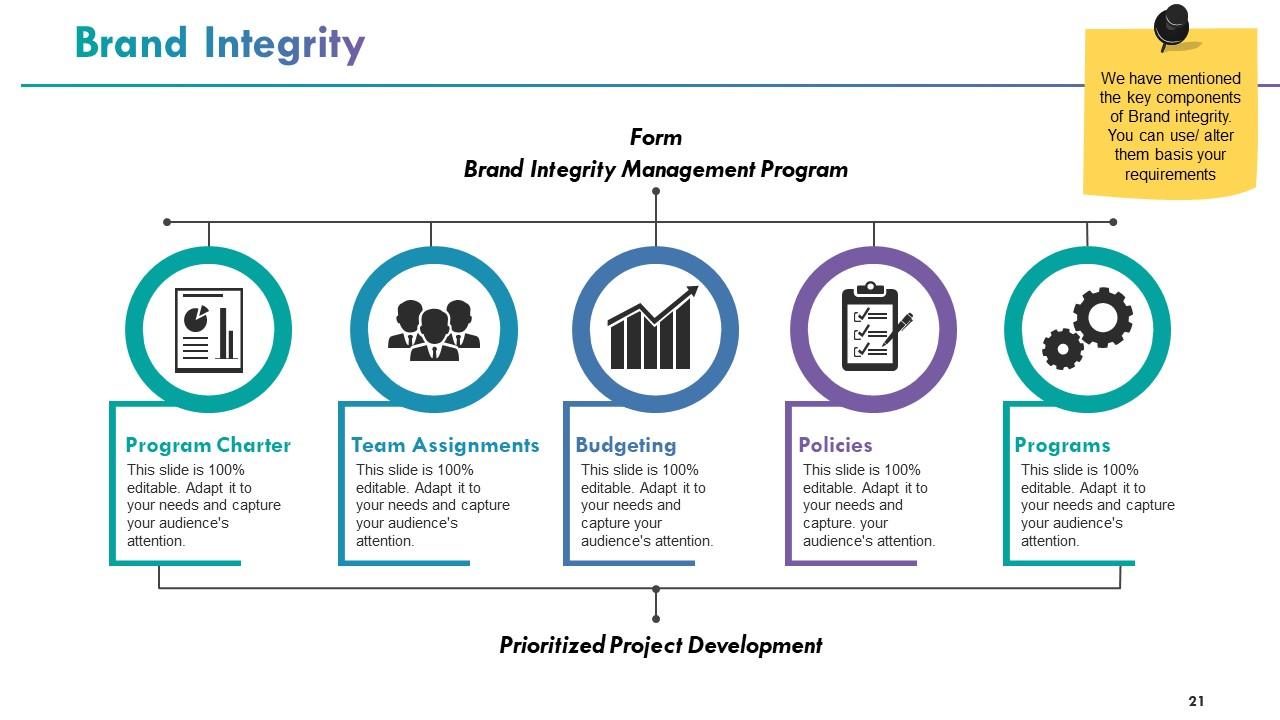
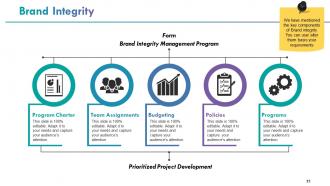
Slide 21: This slide presents Brand Integrity. We have mentioned the key components of Brand integrity. Program Charter, Team Assignments, Budgeting, Policies, Programs, You can use/ alter them basis your requirements.
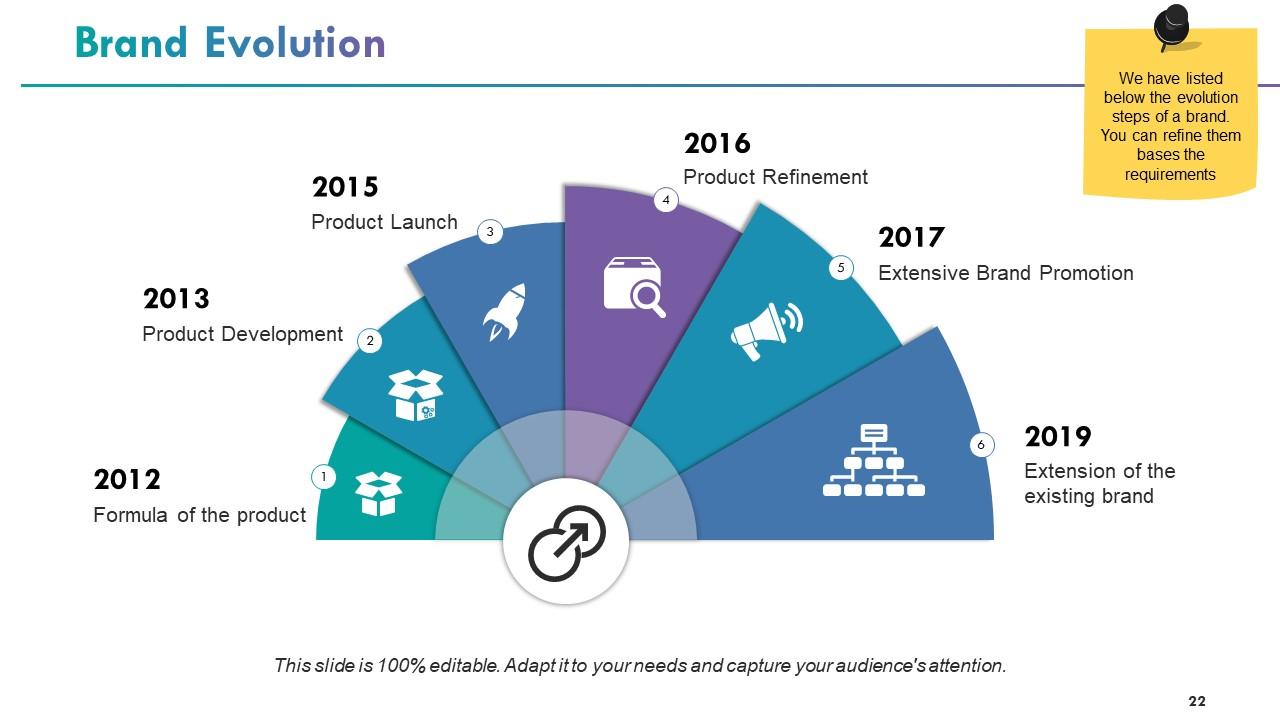
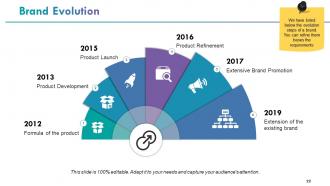
Slide 22: This slide displays Brand Evolution. We have listed below the evolution steps of a brand. Formula of the product, Product Development, Product Launch, Product Refinement, Extensive Brand Promotion, Extension of the existing brand, You can refine them basis the requirements.
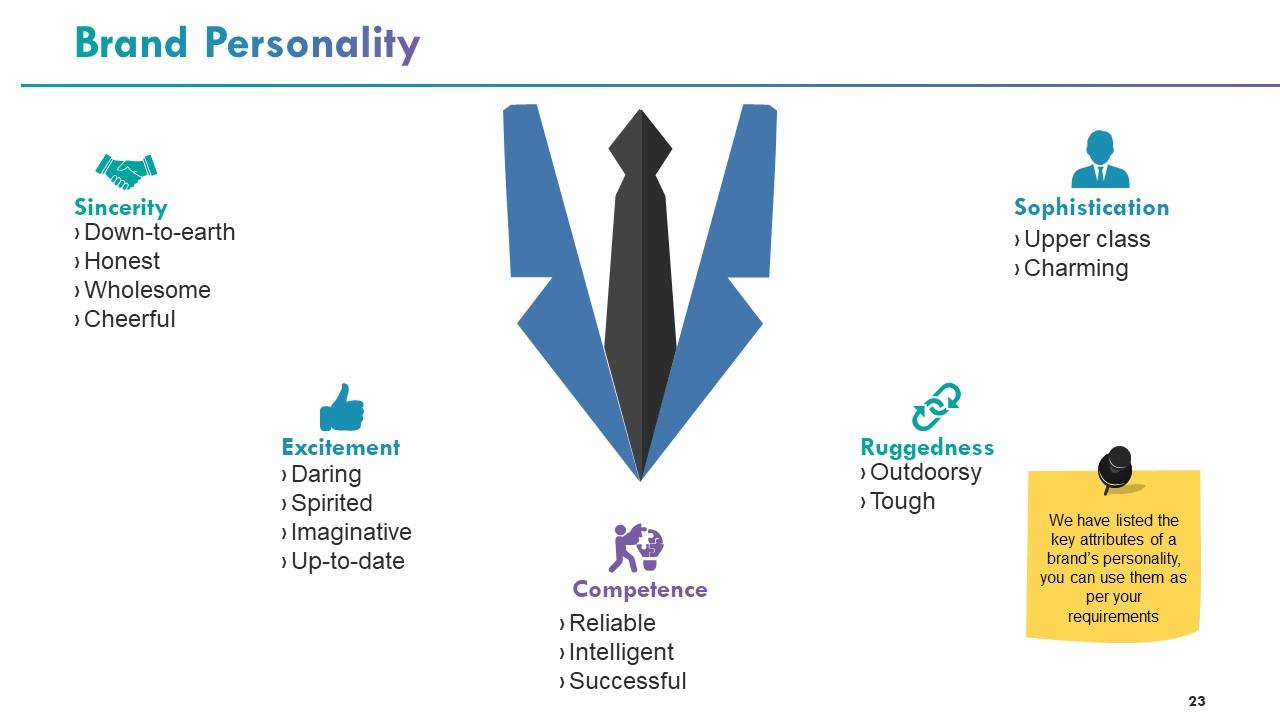
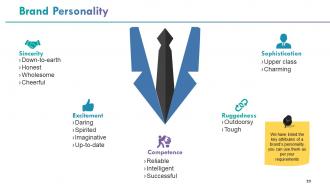
Slide 23: This slide showcases Brand Personality. We have listed the key attributes of a brand’s personality and those are- Competence, Successful, Sincerity, Excitement, Sophistication, Ruggedness. you can use them as per your requirements .
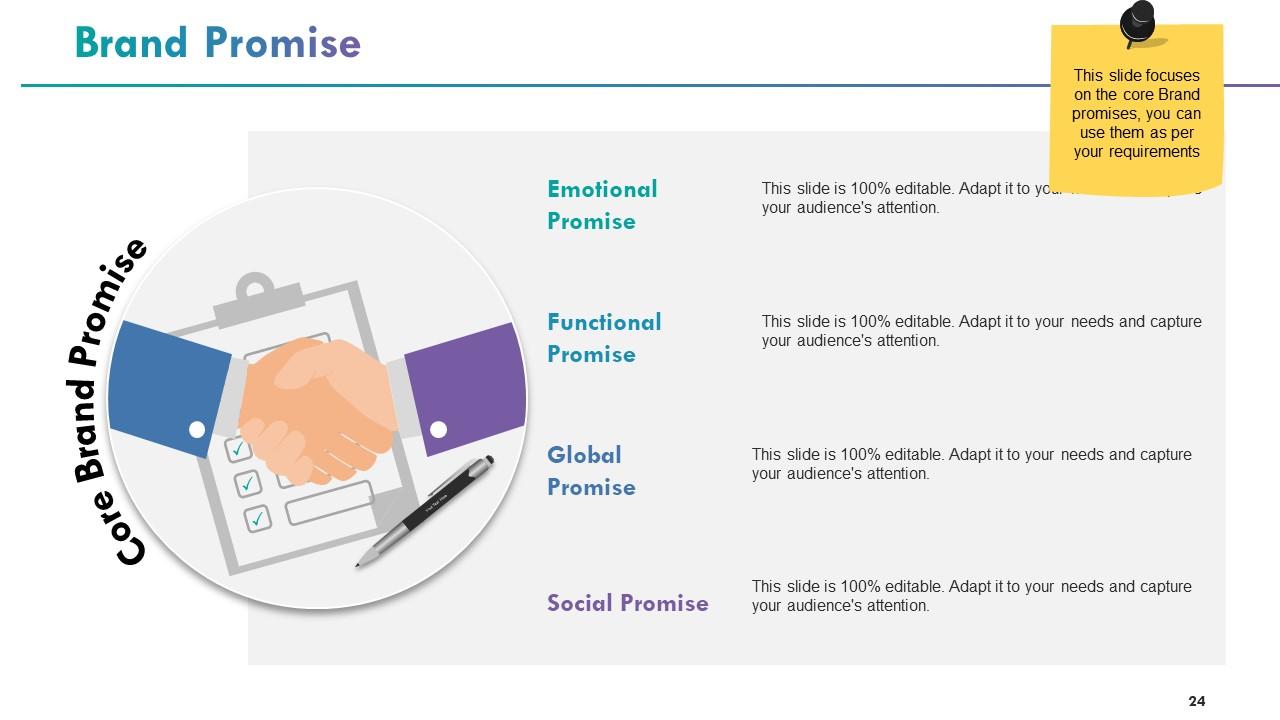
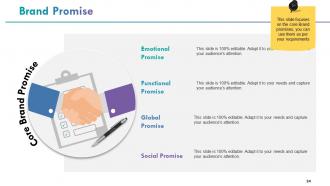
Slide 24: This slide mainly for Brand Promise. These are some promise listed- Global Promise, Functional Promise, Social Promise, Emotional Promise, Core Brand Promise, You can use them as per your requirements.
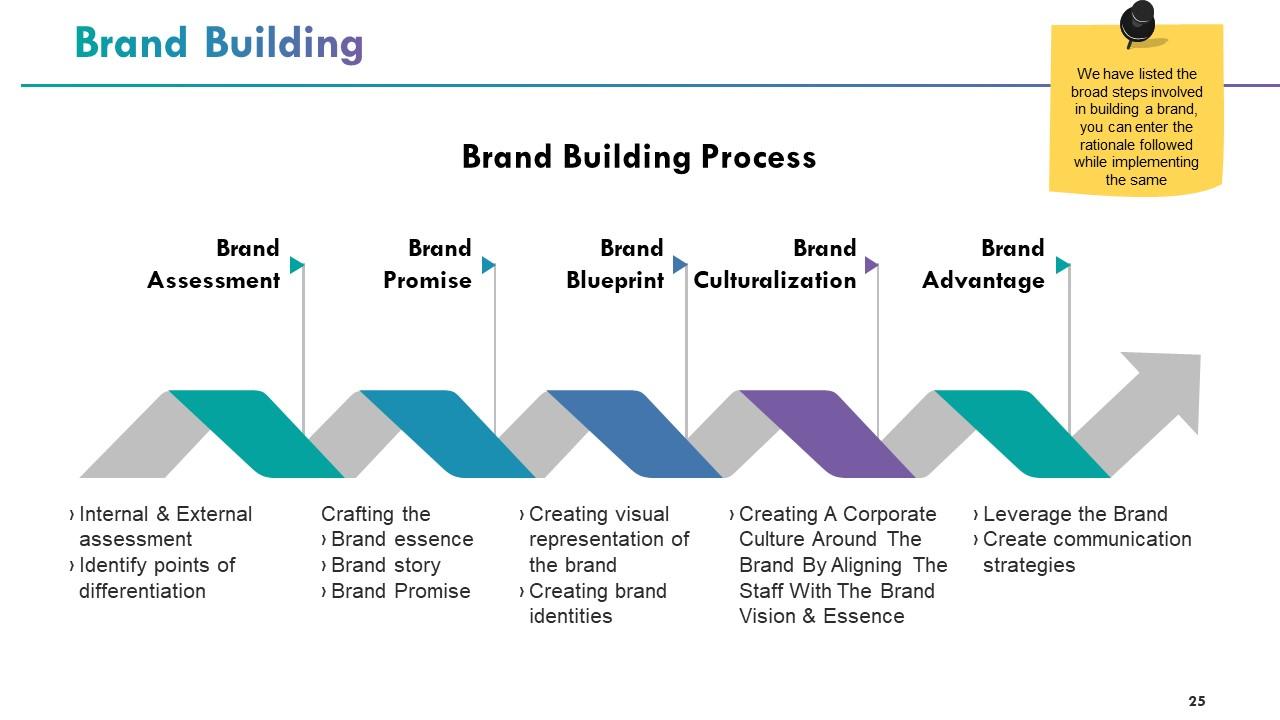
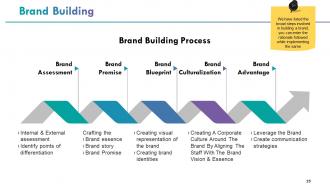
Slide 25: This slide presents Brand Building. We have listed the broad steps involved in building a brand are- Brand Building Process, Brand Advantage, Brand Assessment, Brand Blueprint, Brand Promise, Brand Culturalization, you can enter the rationale followed while implementing the same.
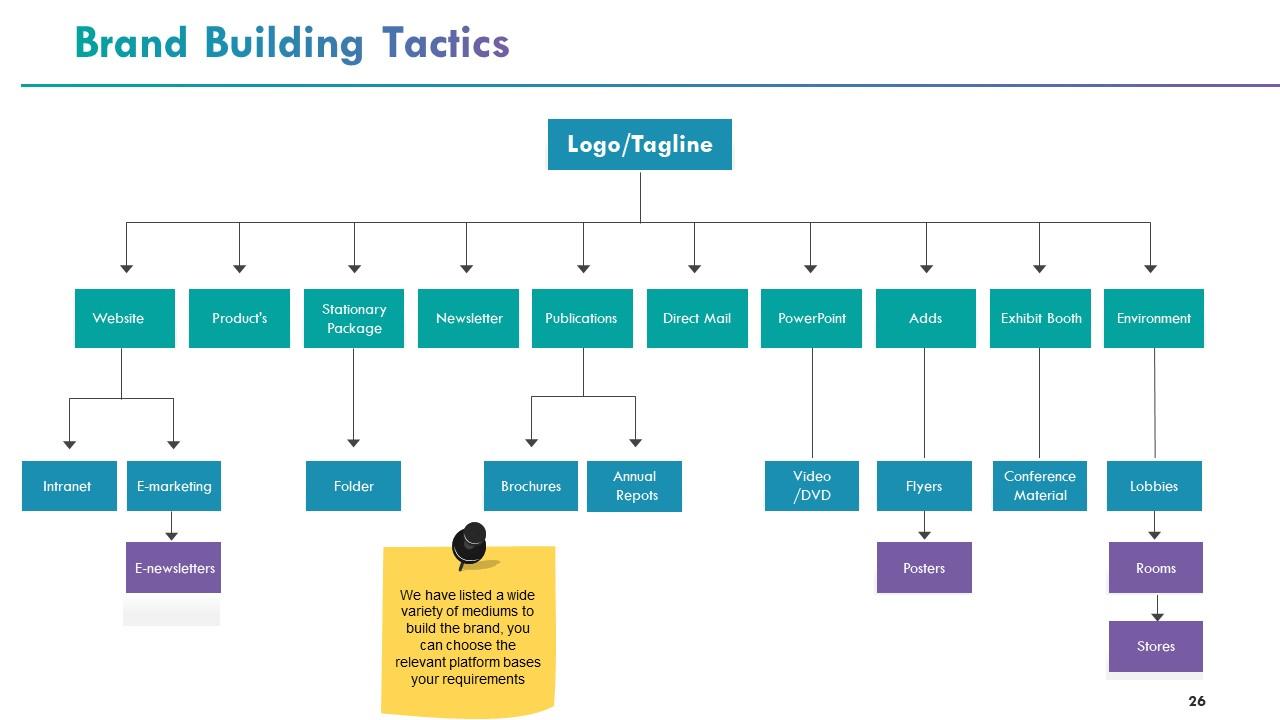
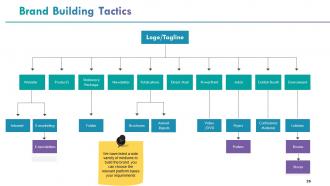
Slide 26: This slide displays Brand Building Tactics. We have listed a wide variety of mediums to build the brand, you can choose the relevant platform bases your requirements.
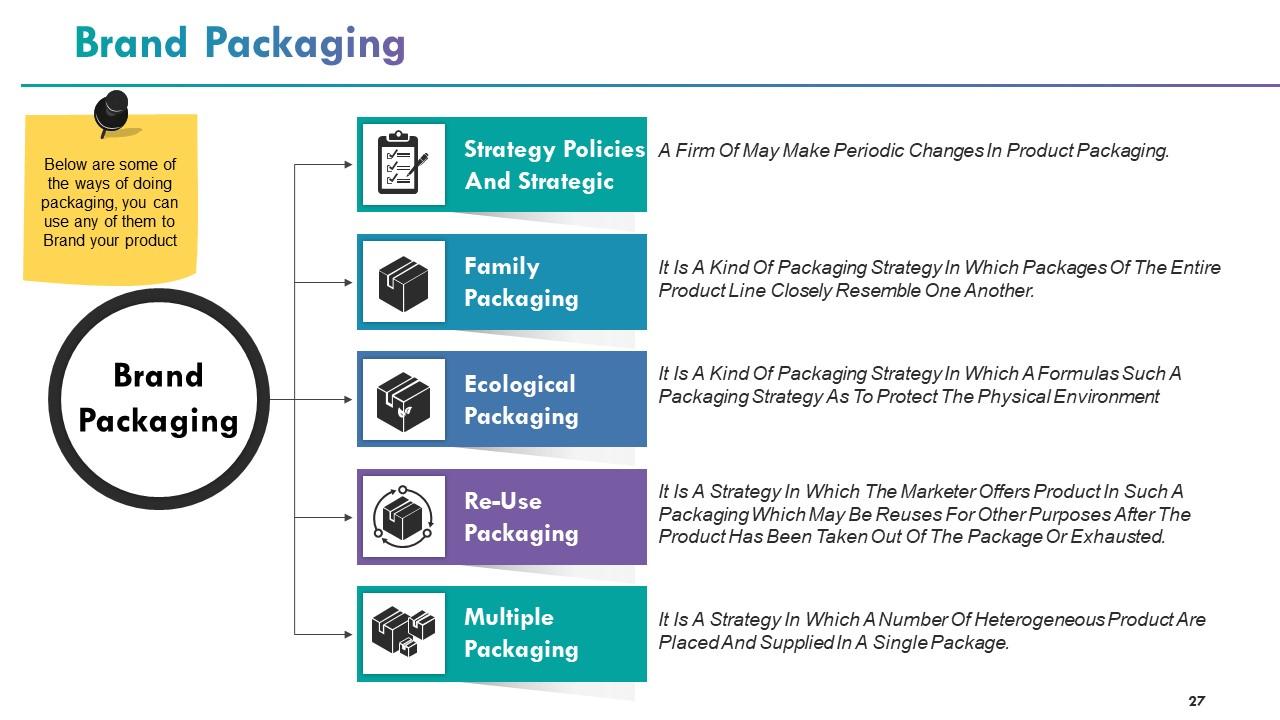
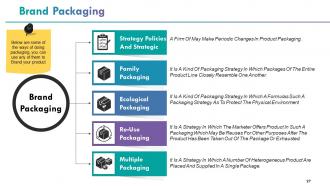
Slide 27: This slide presents Brand Packaging. Below are some of the ways of doing packaging, . Strategy Policies And Strategic, Ecological Packaging, Family Packaging, Re-Use Packaging, Multiple Packaging. you can use any of them to Brand your product.
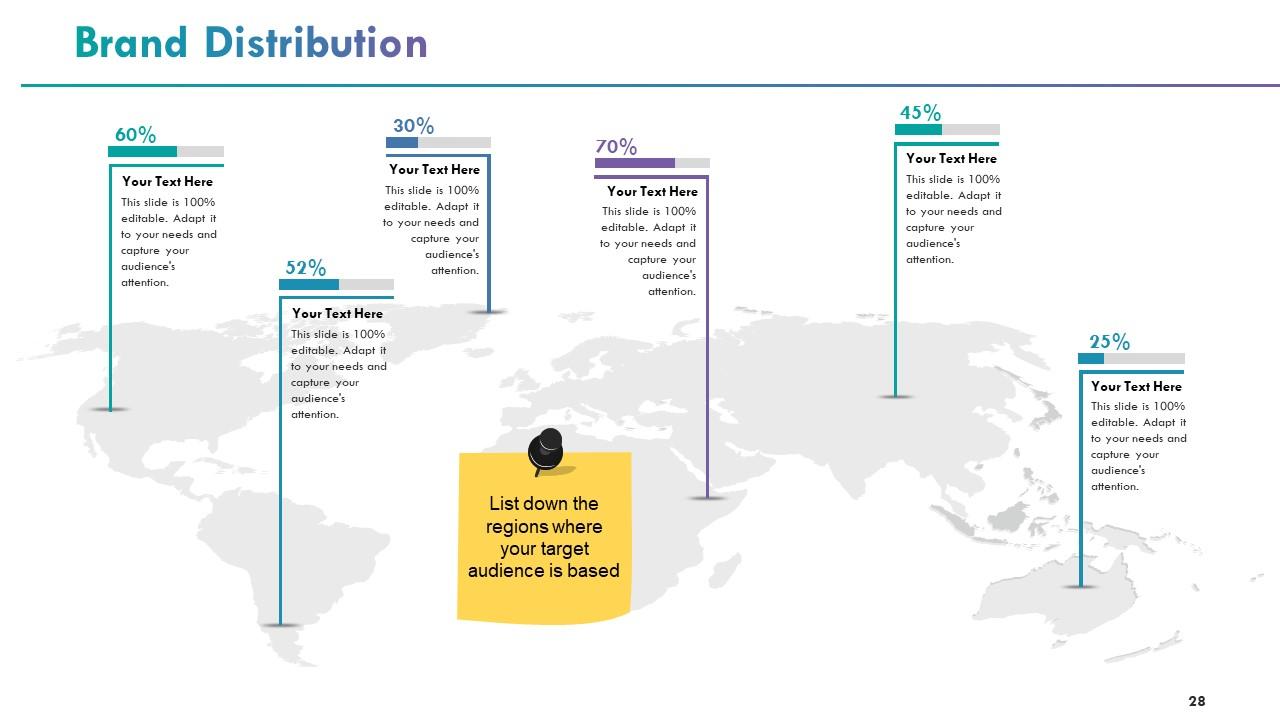
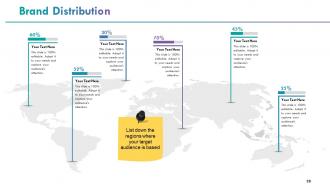
Slide 28: This slide showcases Brand Distribution. List down the regions where your target audience is based.
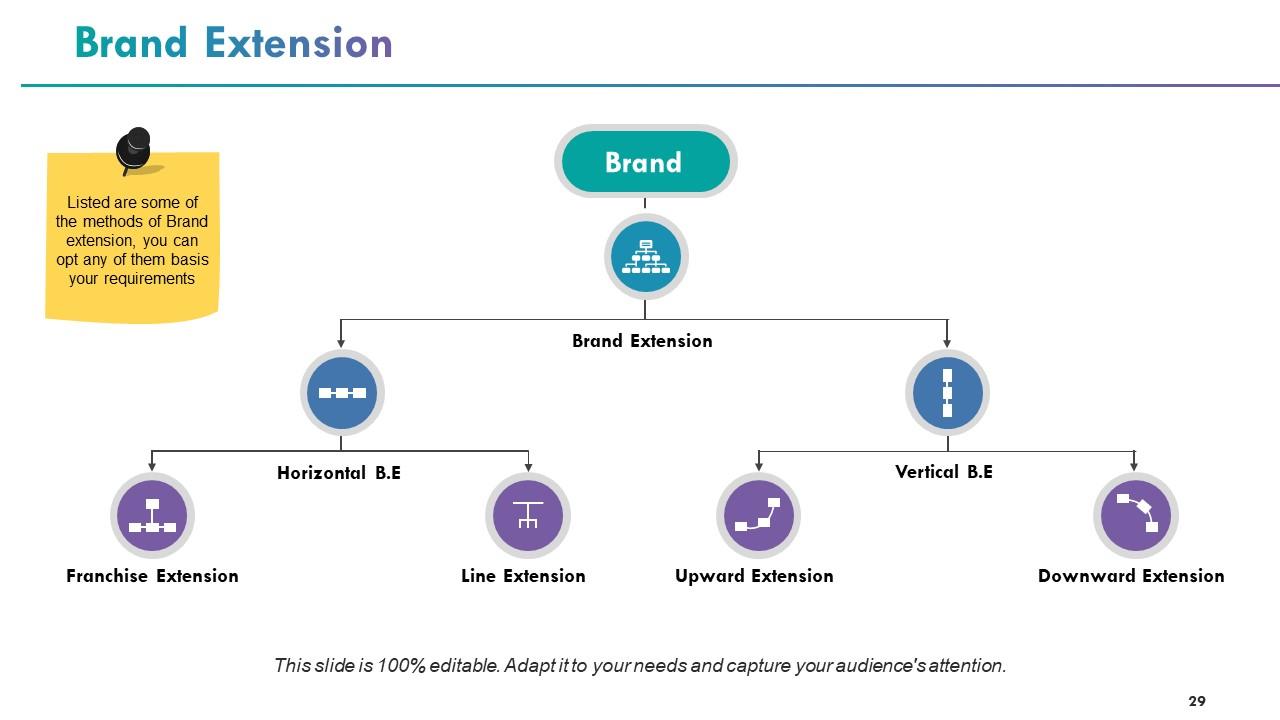
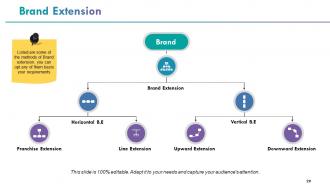
Slide 29: This slide presents Brand Extension. Listed are some of the methods of Brand extension- Brand, Brand Extension, Downward Extension, Upward Extension, Line Extension, Franchise Extension. you can opt any of them basis your requirements.
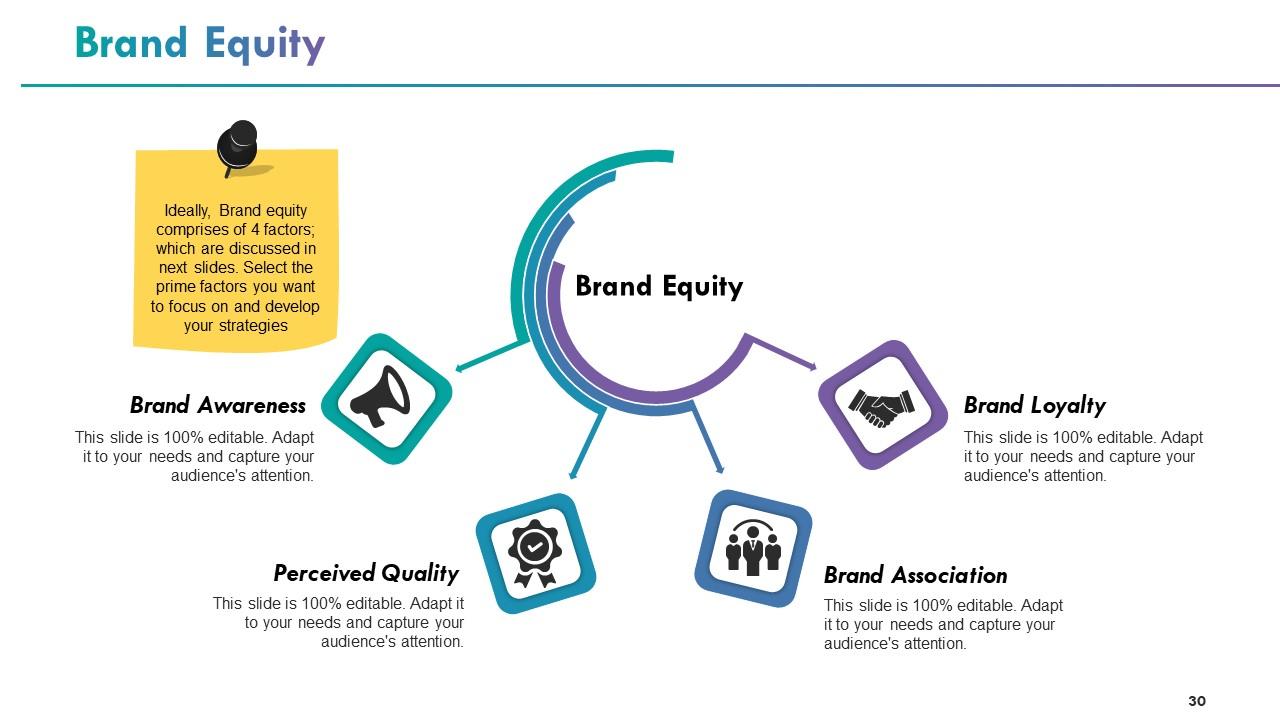
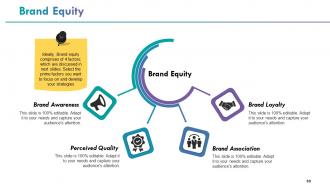
Slide 30: This slide showcases Brand Equity. Ideally, Brand equity comprises of 4 factors; which are discussed in next slides. Select the prime factors you want to focus on and develop your strategies- Perceived Quality, Brand Association, Brand Awareness, Brand Loyalty, Brand Equity.
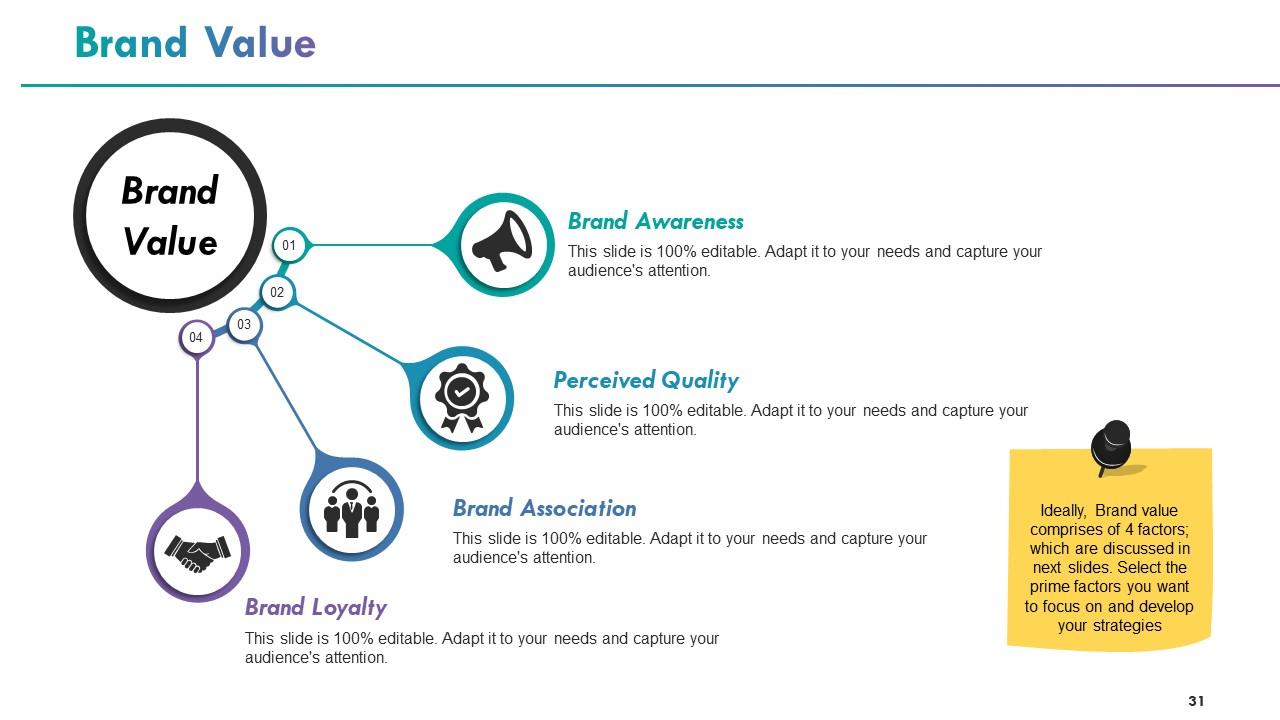
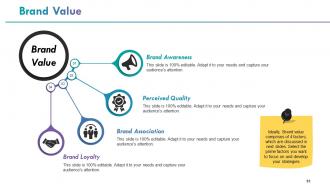
Slide 31: This slide shows Brand Value. Ideally, Brand value comprises of 4 factors. Select the prime factors you want to focus on and develop your strategies- Brand Awareness, Perceived Quality, Brand Association, Brand Loyalty, Brand Value.
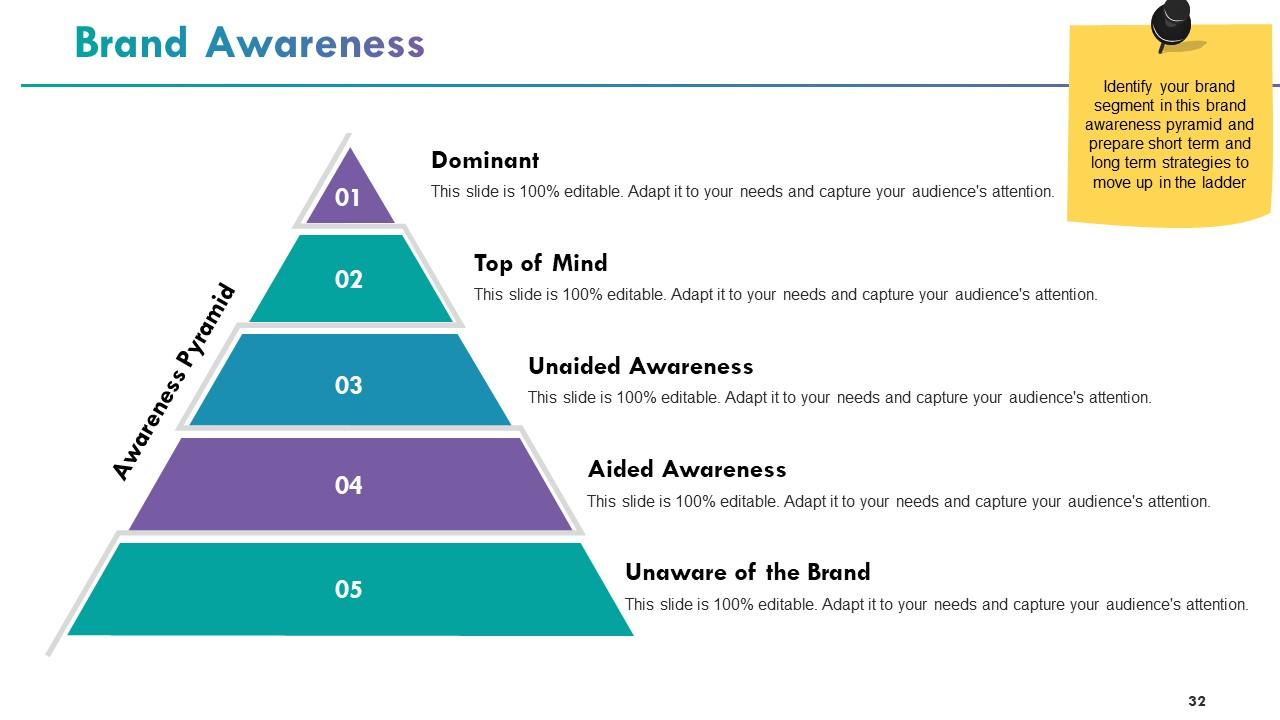
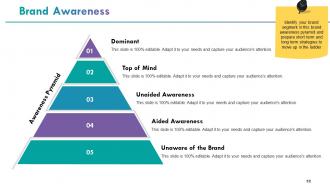
Slide 32: This slide presents Brand Awareness. Identify your brand segment in this brand awareness pyramid and prepare short term and long term strategies to move up in the ladder using these factors- Awareness Pyramid, Dominant, Top of Mind, Unaided Awareness, Aided Awareness, Unaware of the Brand.
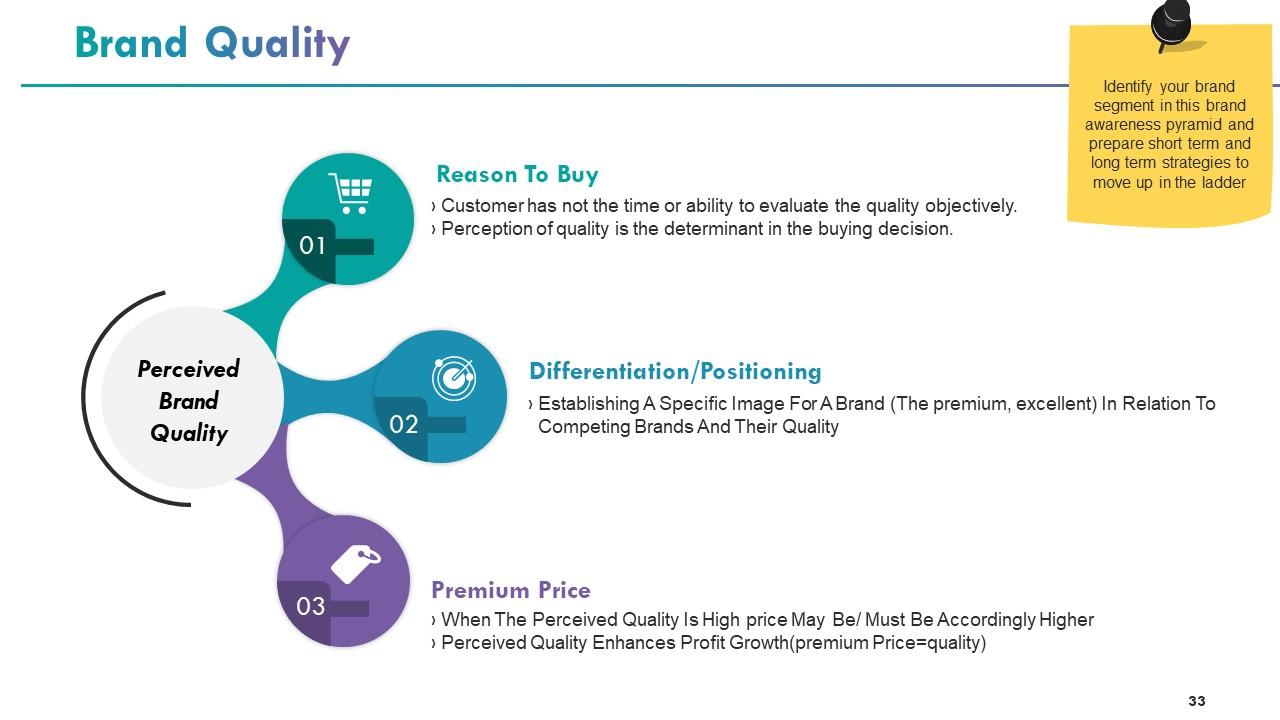
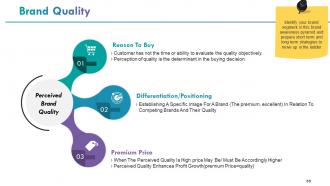
Slide 33: This slide displays Brand Quality. Identify your brand segment in this brand awareness pyramid and prepare short term and long term strategies to move up in the ladder- Reason To Buy, Premium Price, Differentiation/Positioning.
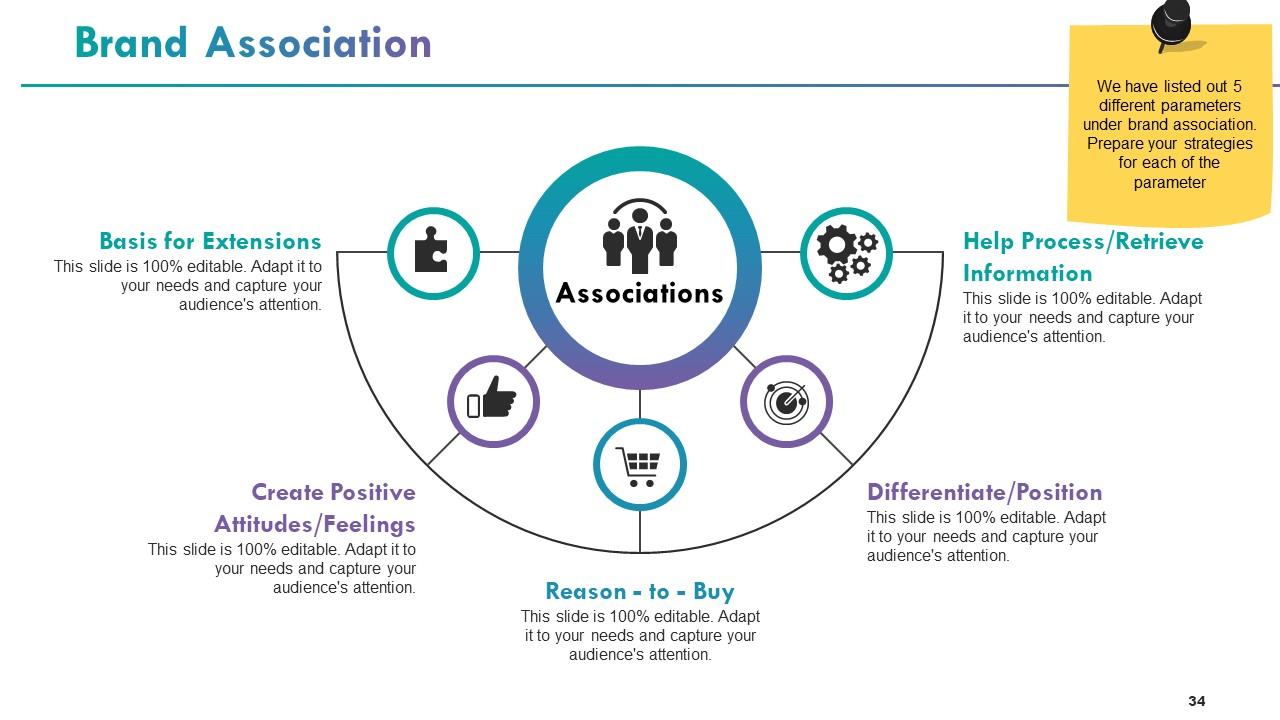
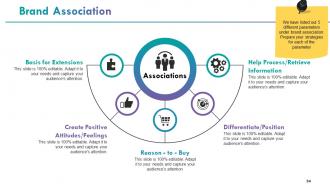
Slide 34: This slide shows Brand Association. We have listed out 5 different parameters under brand association. Prepare your strategies for each of the parameter such as- Associations, Basis for Extensions, Reason - to - Buy, Create Positive Attitudes/Feelings, Differentiate/Position Help Process/Retrieve Information.
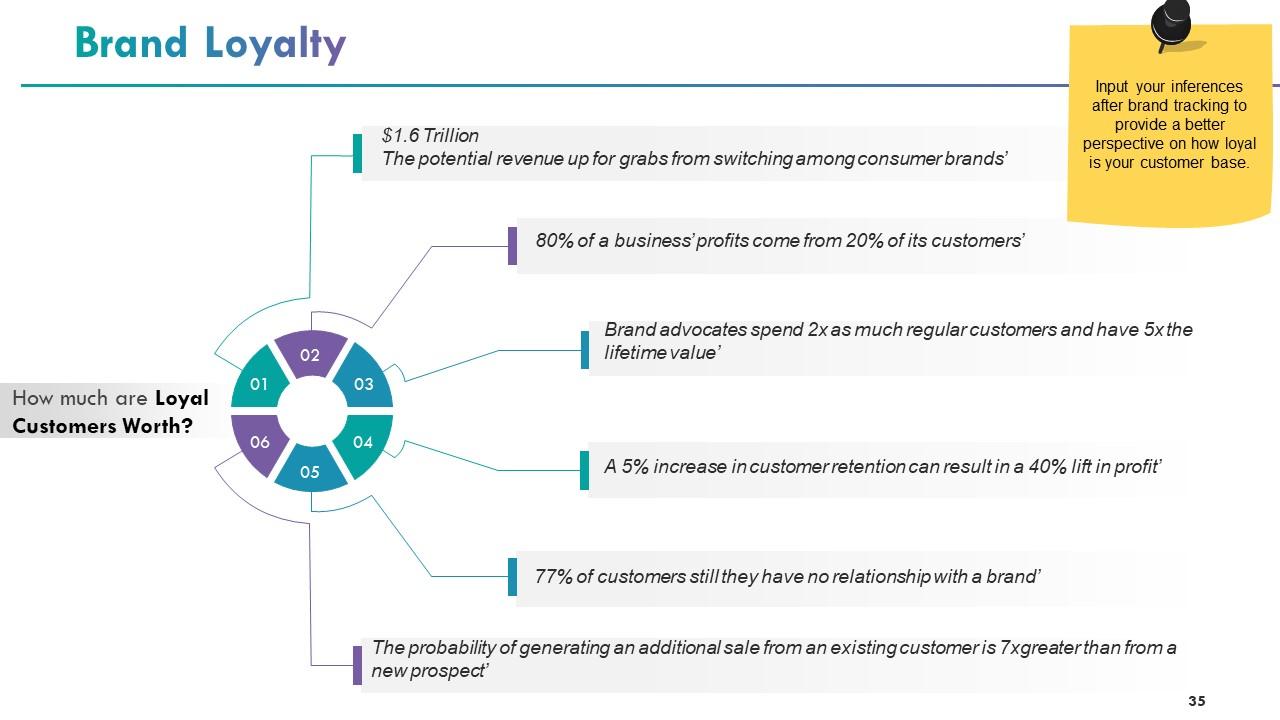
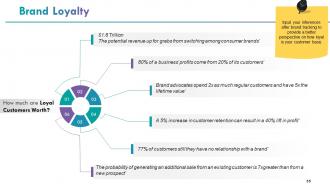
Slide 35: This slide shows Brand Loyalty. Input your inferences after brand tracking to provide a better perspective on how loyal is your customer base.
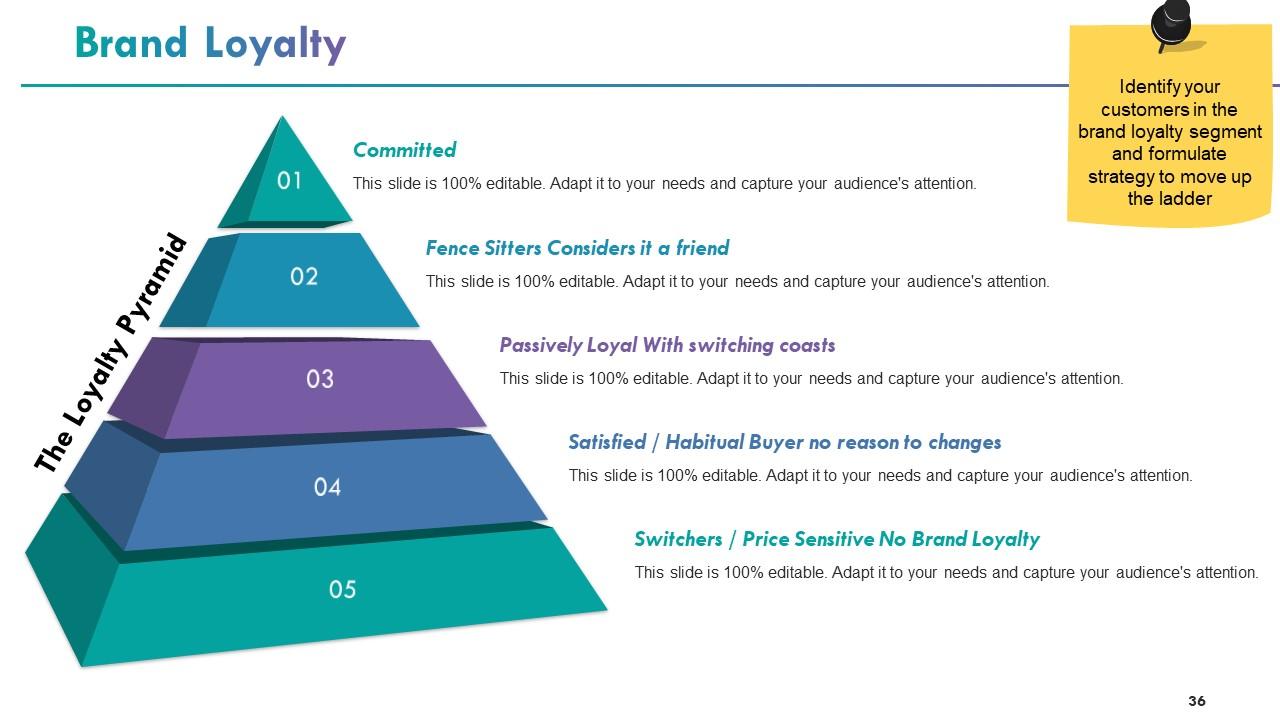
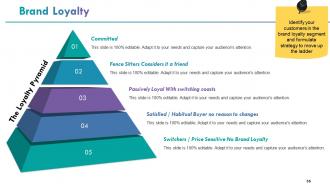
Slide 36: This slide shows Brand Loyalty. Identify your customers in the brand loyalty segment and using these steps- Committed, Fence Sitters Considers it a friend, Passively Loyal With switching coasts Satisfied / Habitual Buyer no reason to changes Switchers / Price Sensitive No Brand Loyalty
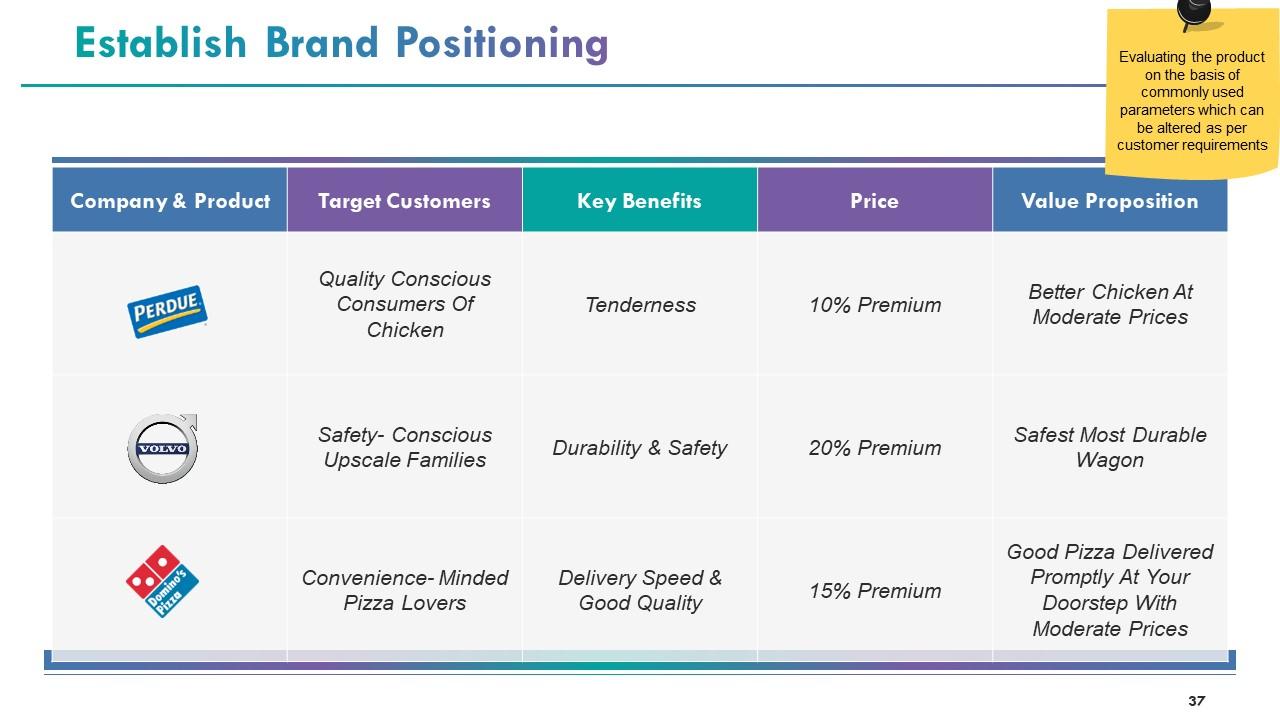
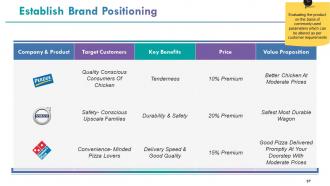
Slide 37: This slide showcases Establish Brand Positioning. Evaluating the product on the basis of commonly used parameters which can be altered as per customer requirements .
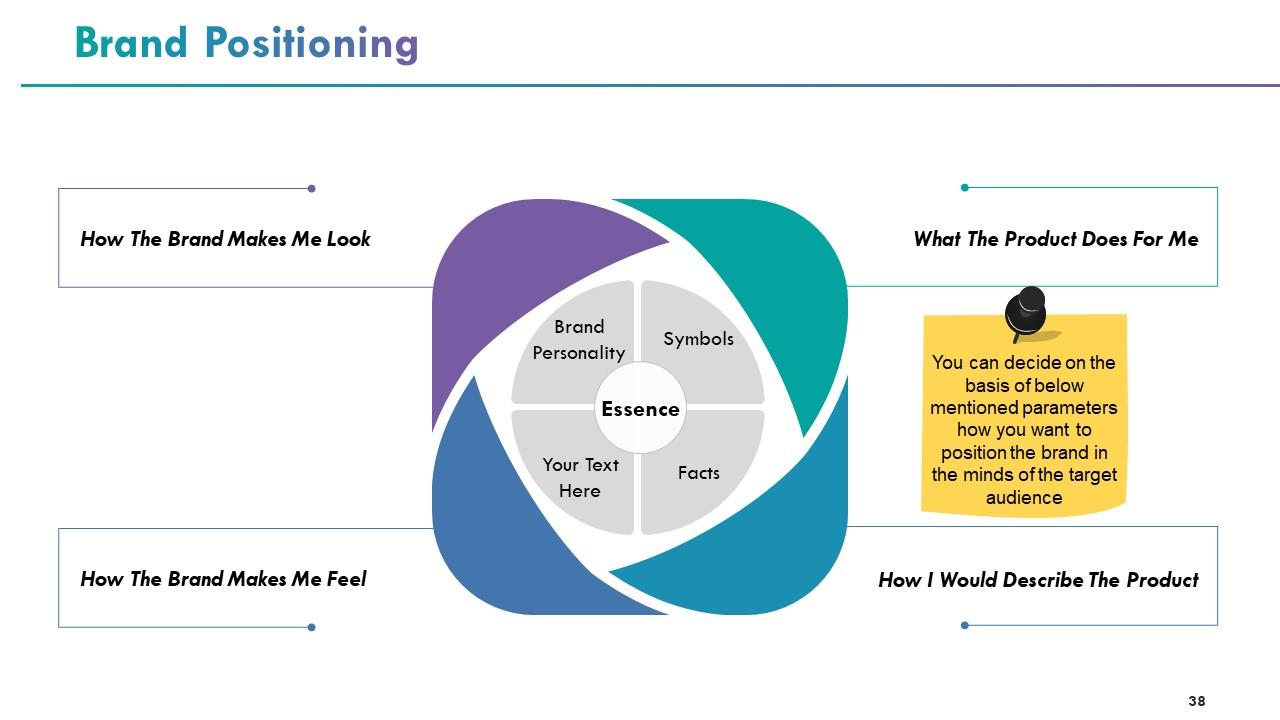
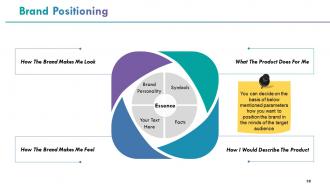
Slide 38: This slide displays Brand Positioning. You can decide on the basis of below mentioned parameters how you want to position the brand in the minds of the target audience. Evaluating the product on the basis of commonly used parameters which can be altered as per customer requirements .
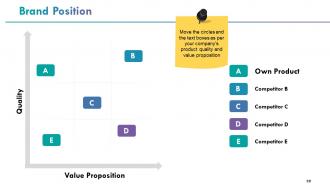
Slide 39: This slide showcases Brand Positioning. You can decide on the basis of mentioned parameters how you want to position the brand in the minds of the target audience .
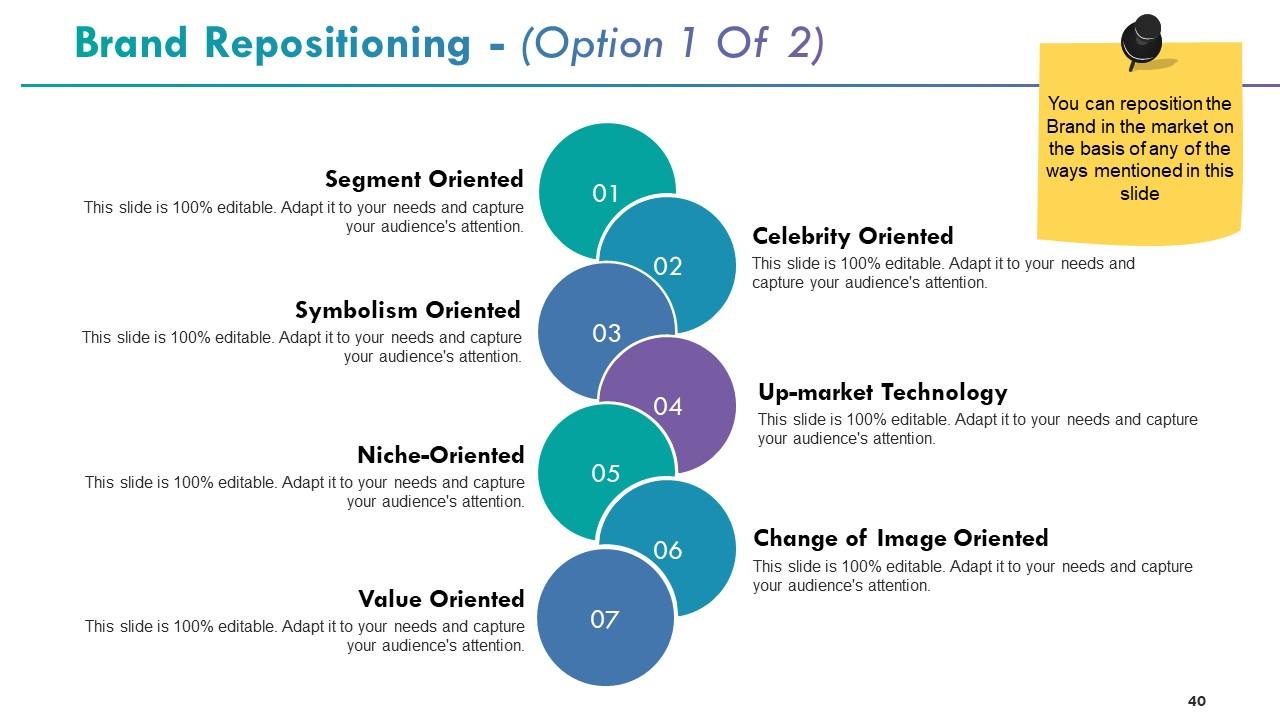
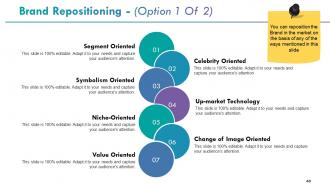
Slide 40: This slide presents Brand Repositioning. You can reposition the Brand in the market on the basis of any of the ways mentioned in this slide. Celebrity Oriented, Up-market Technology, Change of Image Oriented, Segment Oriented, Symbolism Oriented, Niche-Oriented, Value Oriented.
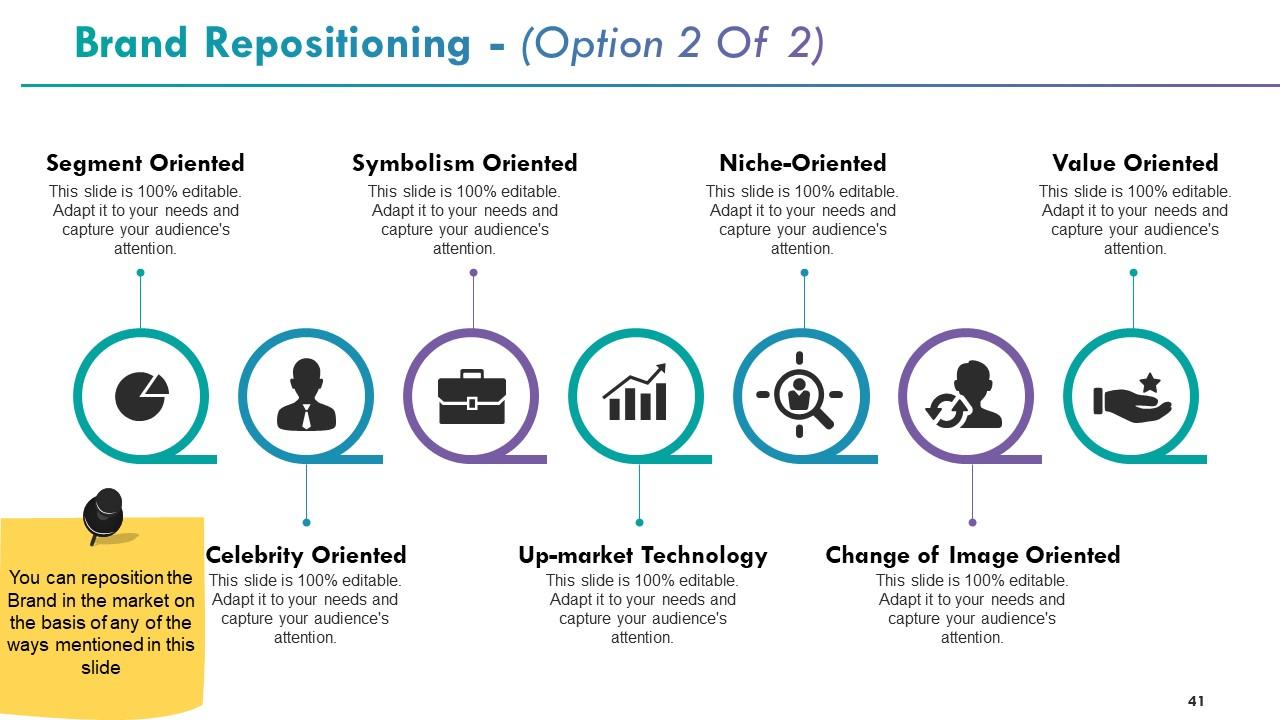
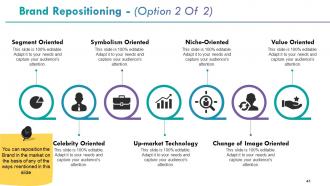
Slide 41: This slide displays Brand Repositioning . You can reposition the Brand in the market on the basis of any of the ways mentioned in this slide are Symbolism Oriented, Segment Oriented, Niche-Oriented, Value Oriented, Up-market Technology, Celebrity Oriented, Change of Image Oriented.
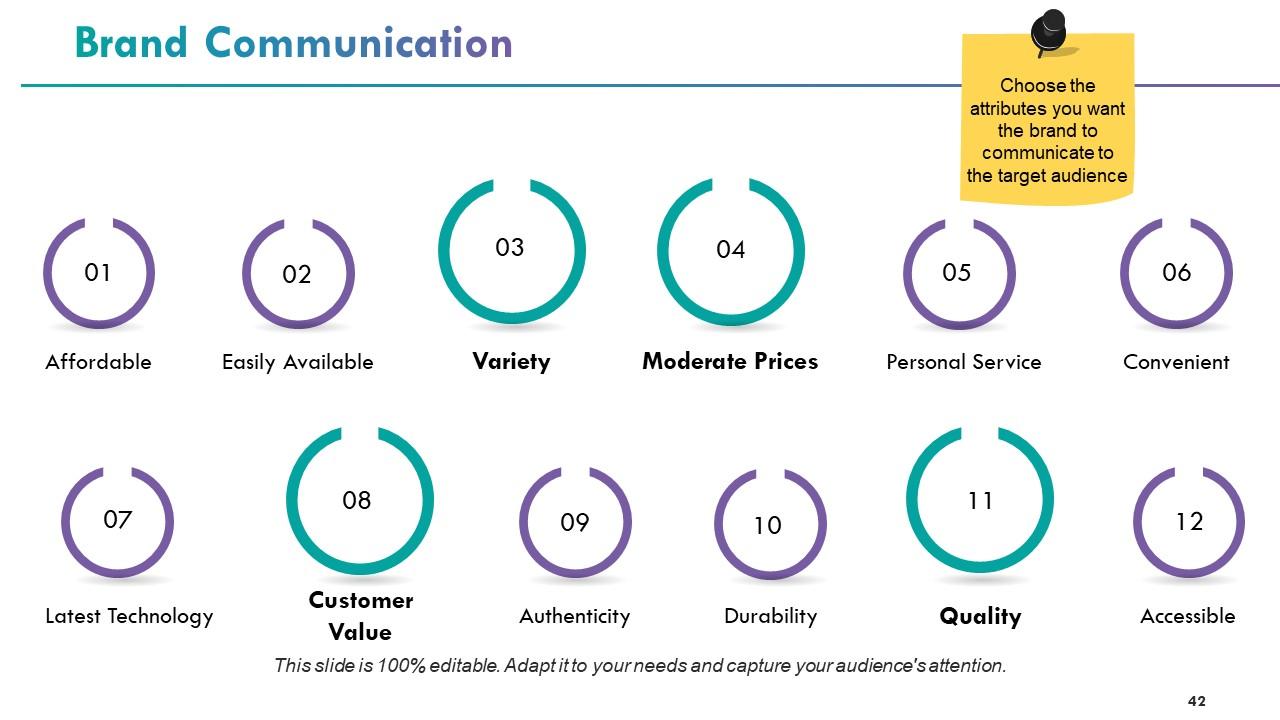
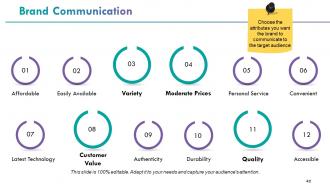
Slide 42: This slide presents Brand Communication. Choose the attributes you want the brand to communicate to the target audience- Convenient, Accessible, Personal Service, Quality, Moderate Prices, Durability, Variety, Authenticity, Easily Available, Customer Value, Affordable, Latest Technology.
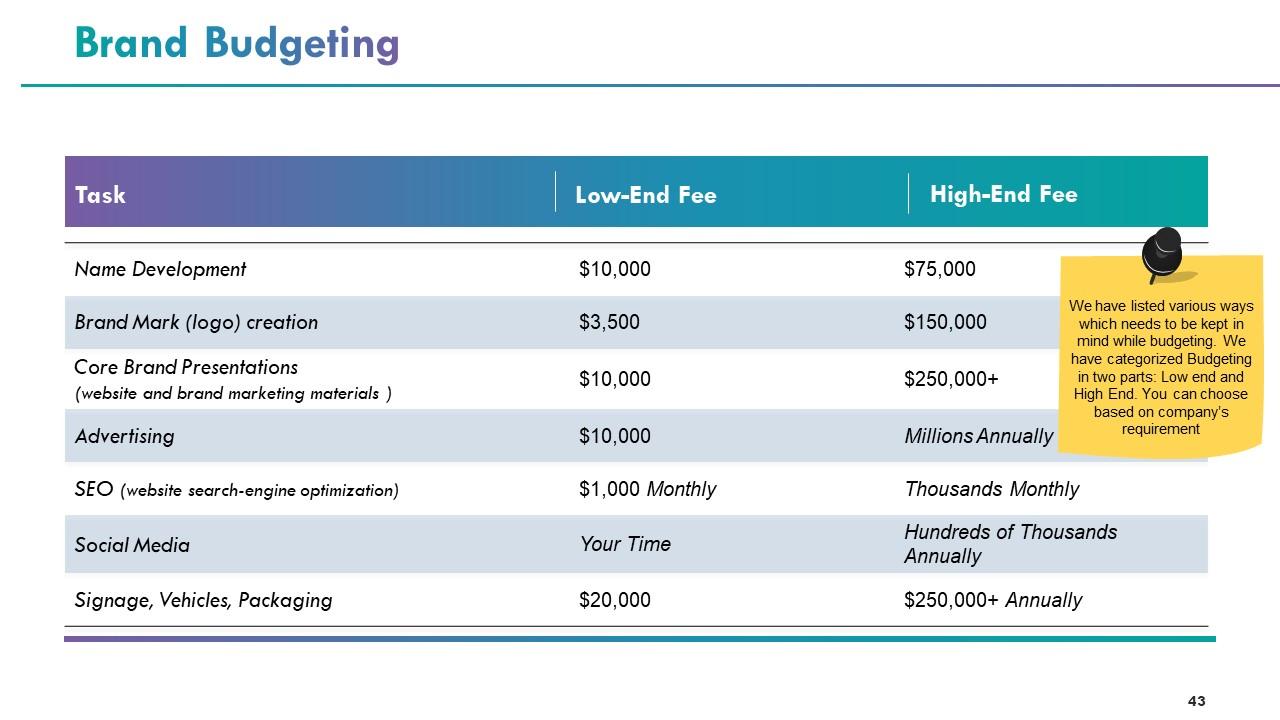
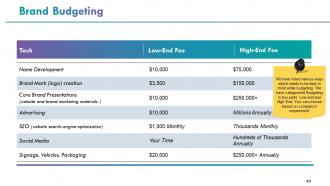
Slide 43: This slide presents Brand Budgeting. We have listed various ways which needs to be kept in mind while budgeting. We have categorized Budgeting in two parts: Low end and High End. You can choose based on company’s requirement.
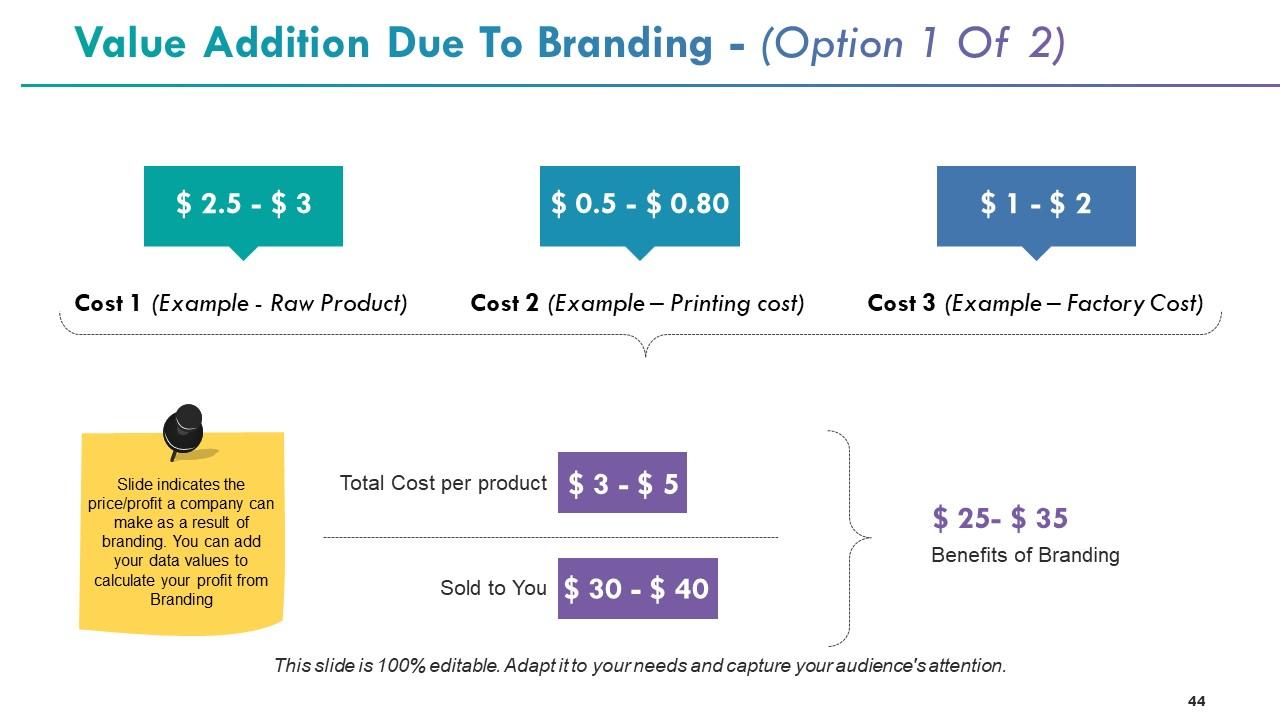
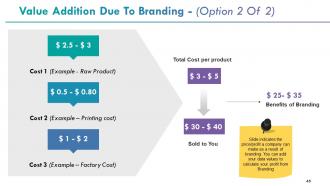
Slide 44: This slide displays Value Addition Due To Branding. Slide also indicates the price/profit a company can make as a result of branding. You can add your data values to calculate your profit from Branding.
Slide 45: This slide is for Value Addition Due To Branding . Slide indicates the price/profit a company can make as a result of branding. You can add your data values to calculate your profit from Branding.
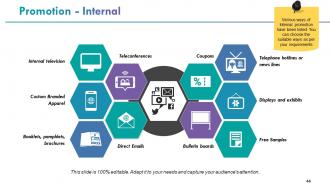
Slide 46: This slide can be used for Promotion - Internal. Various ways of Internal promotion have been listed. You can choose the suitable ways as per your requirements- Teleconferences, Coupons, Direct Emails, Bulletin boards, Internal television, Custom Branded Apparel, Booklets, pamphlets, brochures, Telephone hotlines or news lines, Displays and exhibits.
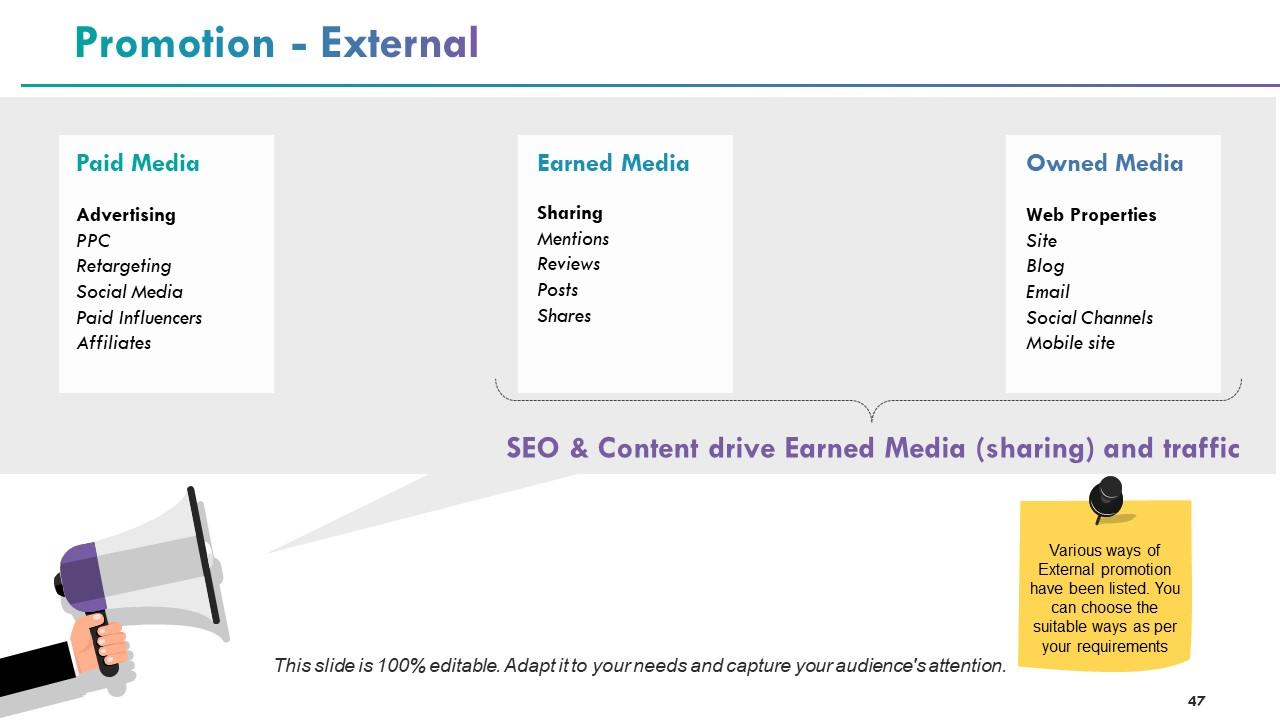
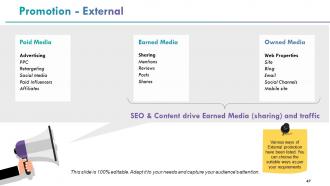
Slide 47: This slide displays Promotion - External. Various ways of External promotion have been listed. You can choose the suitable ways as per your requirements
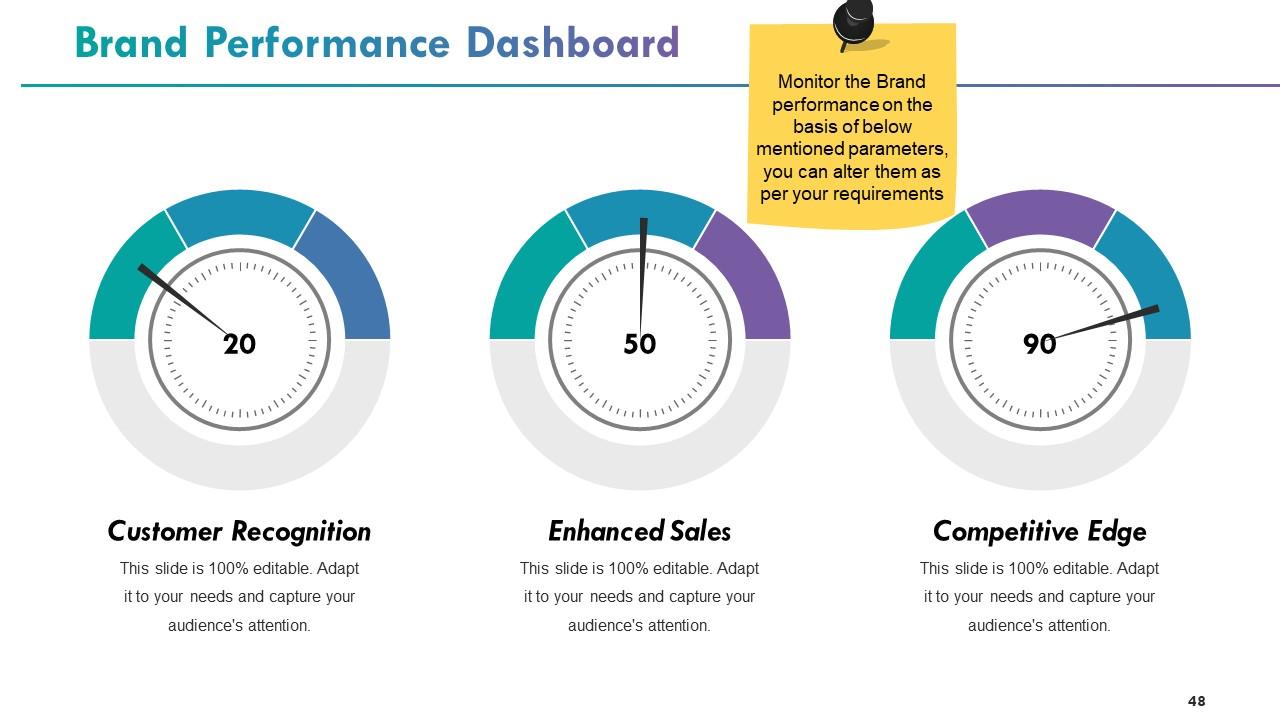
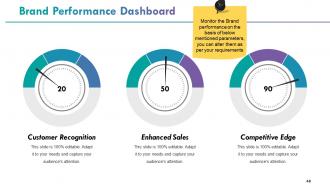
Slide 48: This slide presents Brand Performance Dashboard. Monitor the Brand performance on the basis of below mentioned parameters, you can alter them as per your requirements Customer Recognition, Enhanced Sales, Competitive Edge.
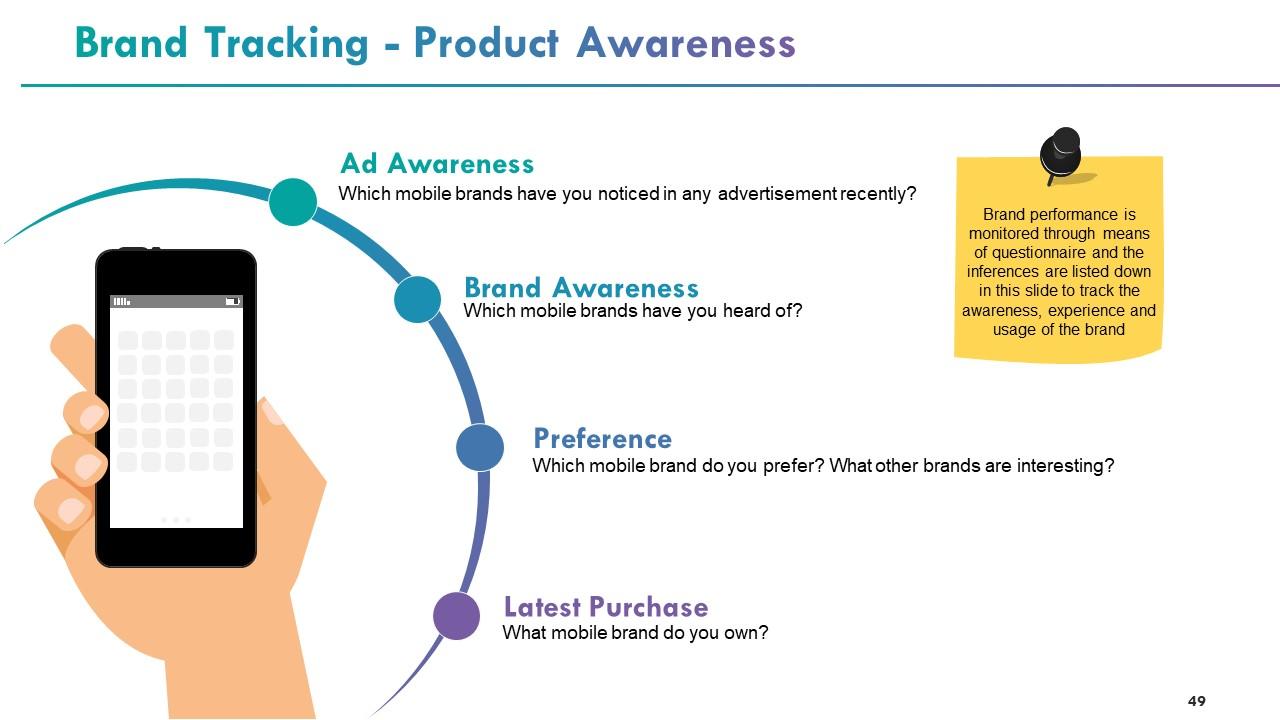
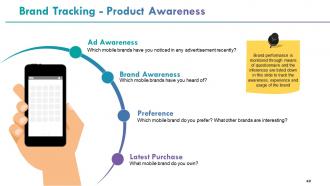
Slide 49: This slide showcases Brand Tracking - Product Awareness. Brand performance is monitored through means of questionnaire and the inferences are listed down in this slide to track the awareness, experience and usage of the brand- Ad Awareness, Brand Awareness, Preference, Latest Purchase.
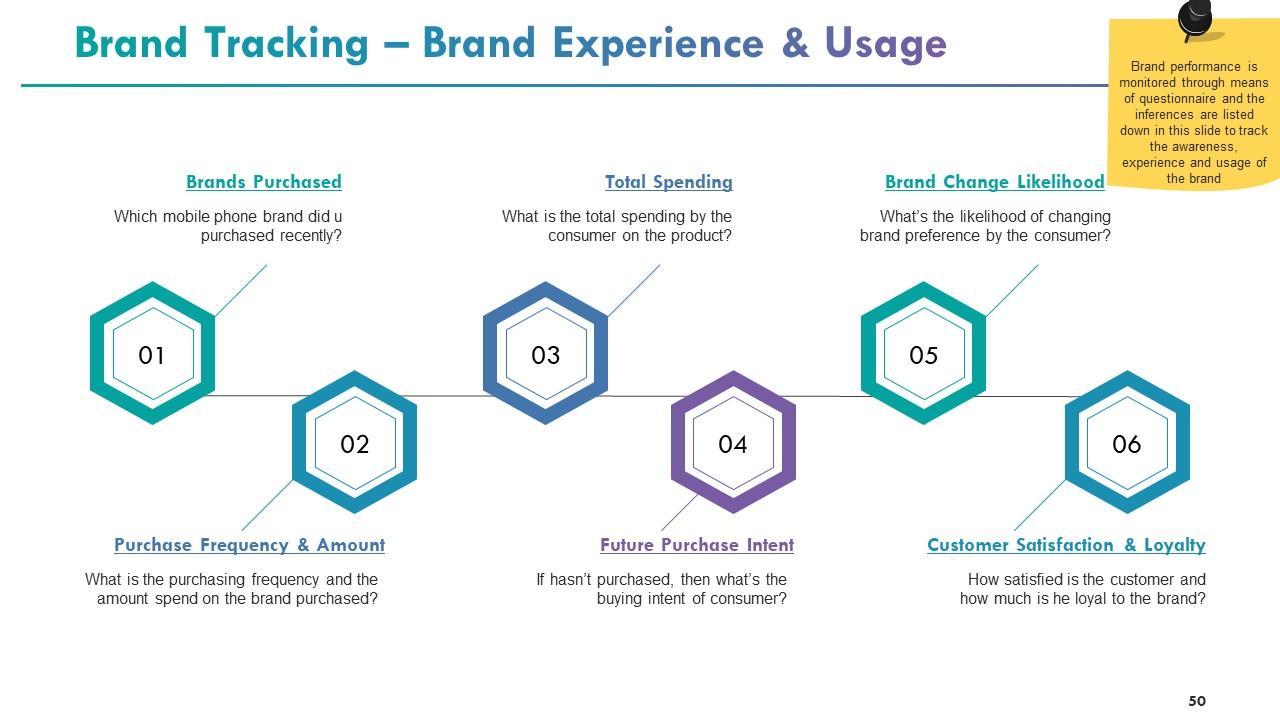
Slide 50: This slide presents Brand Tracking – Brand Experience & Usage. Brand performance is monitored through means of questionnaire and the inferences are listed down in this slide to track the awareness, experience and usage of the brand- Total Spending, Brand Change Likelihood, Brands Purchased, Future Purchase Intent, Customer Satisfaction & Loyalty, Purchase Frequency & Amount.
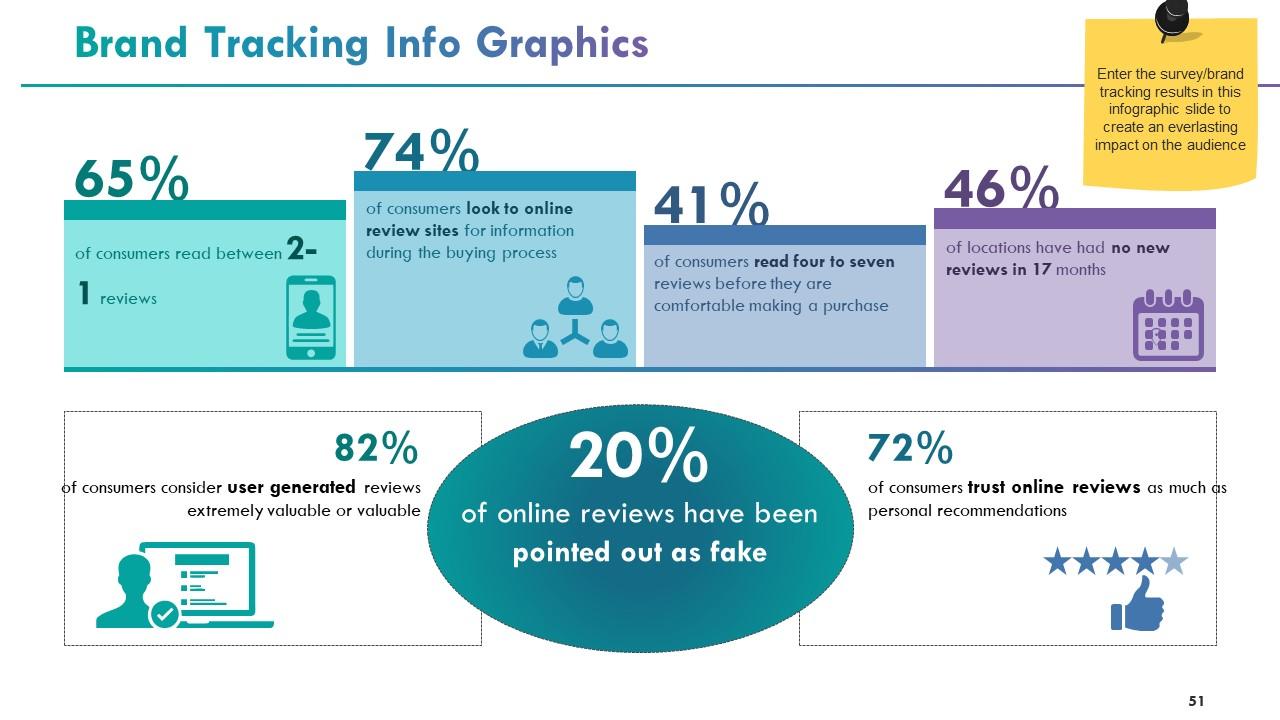
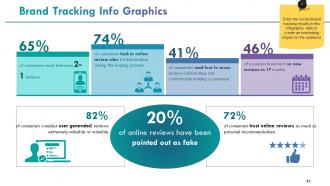
Slide 51: This slide displays Brand Tracking Info Graphics. Enter the survey/brand tracking results in this infographic slide to create an everlasting impact on the audience.
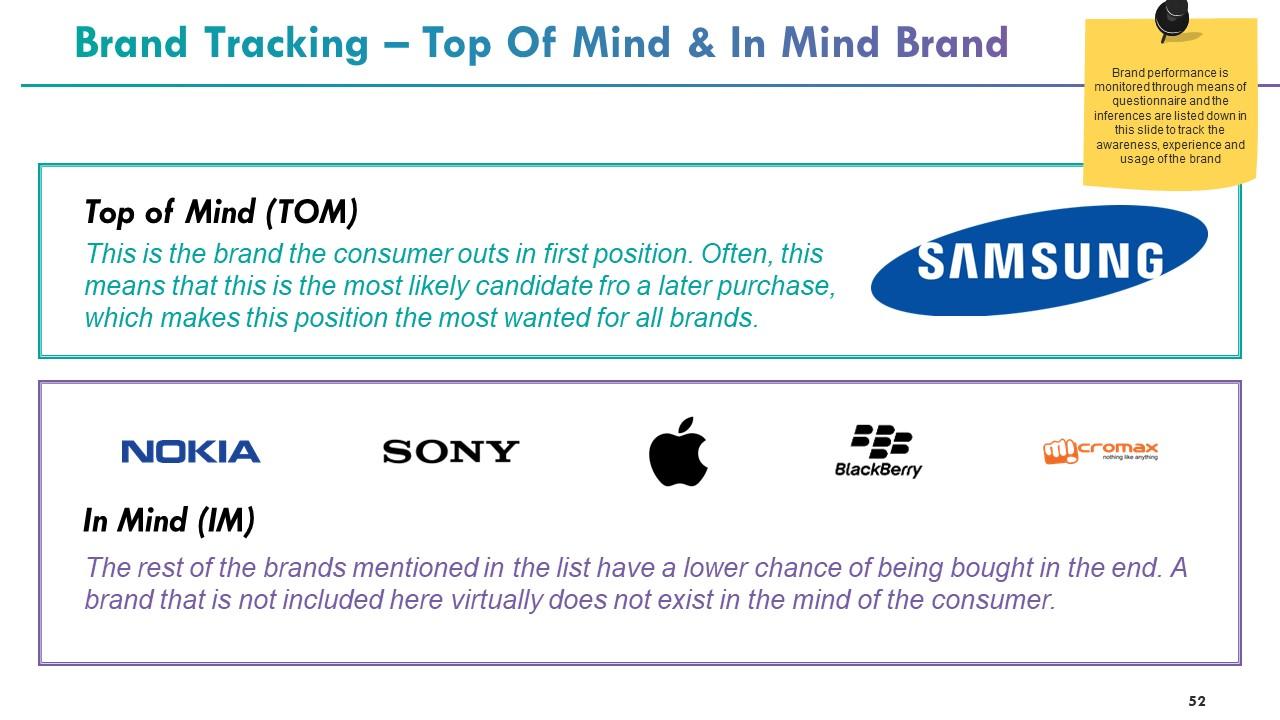
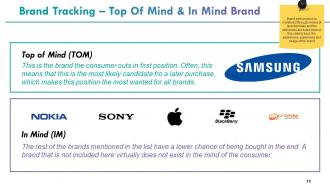
Slide 52: This slide shows Brand Tracking – Top Of Mind & In Mind Brand. Brand performance is monitored through means of questionnaire and the inferences are listed down in this slide to track the awareness, experience and usage of the brand.
Slide 53: This slide presents Branding Icon. You can use it as your need.
Slide 54: This slide showcase Branding Icons.
Slide 55: This slide is a Coffee Break image for a halt.
Slide 56: This slide forwards to Charts & Graphs.
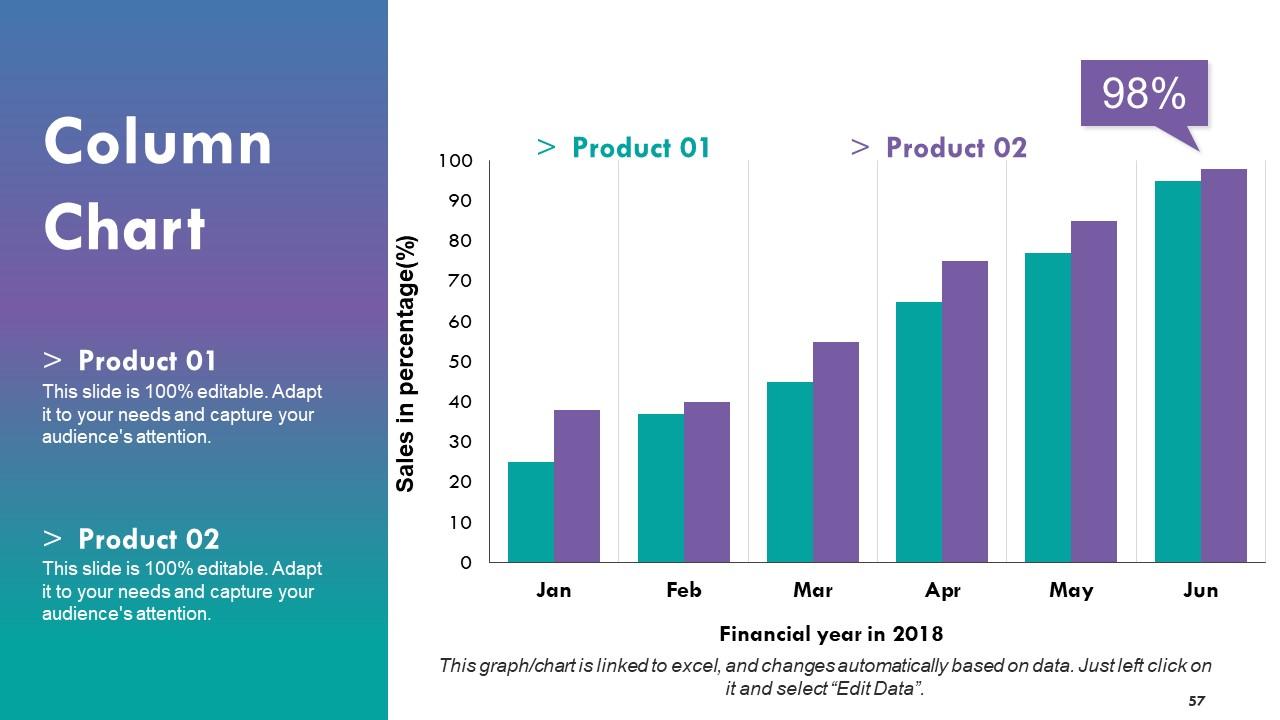
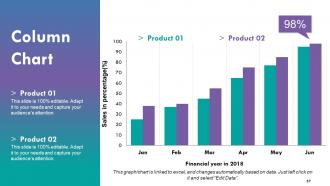
Slide 57: This is a Column Chart slide for product/entity comparison.
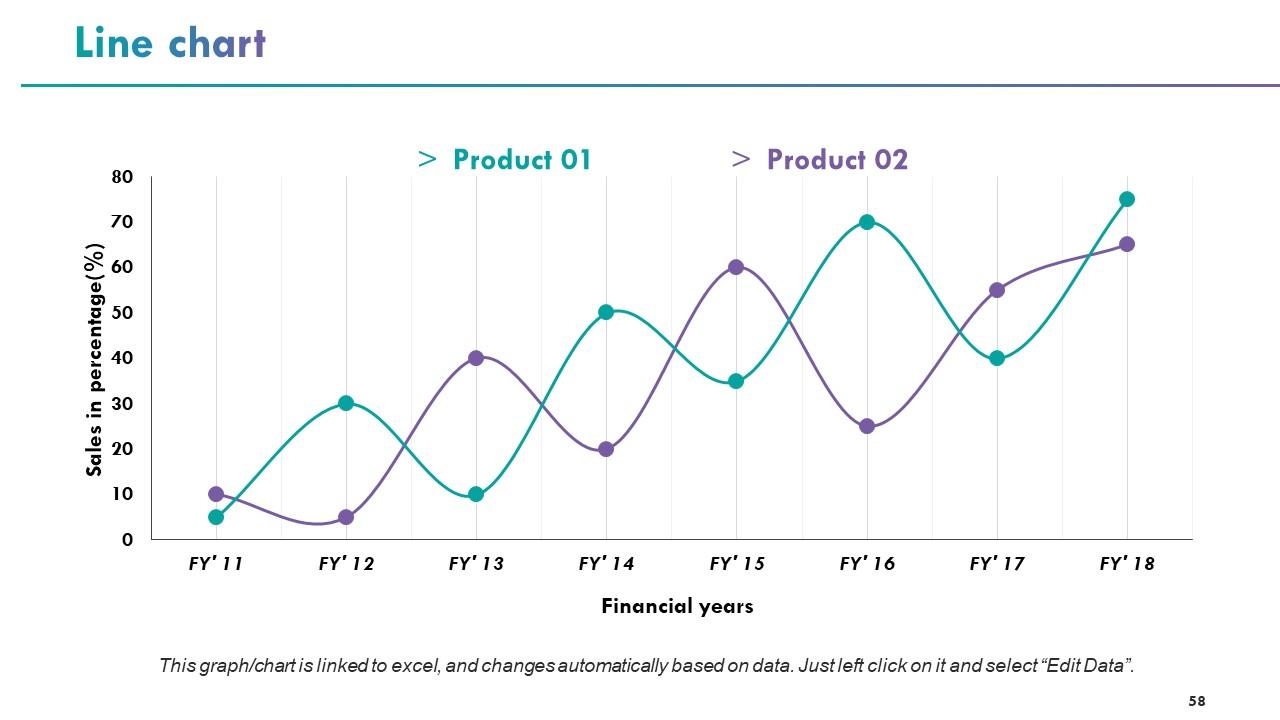
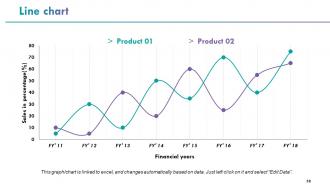
Slide 58: This is a Line Chart slide for product/entity comparison.
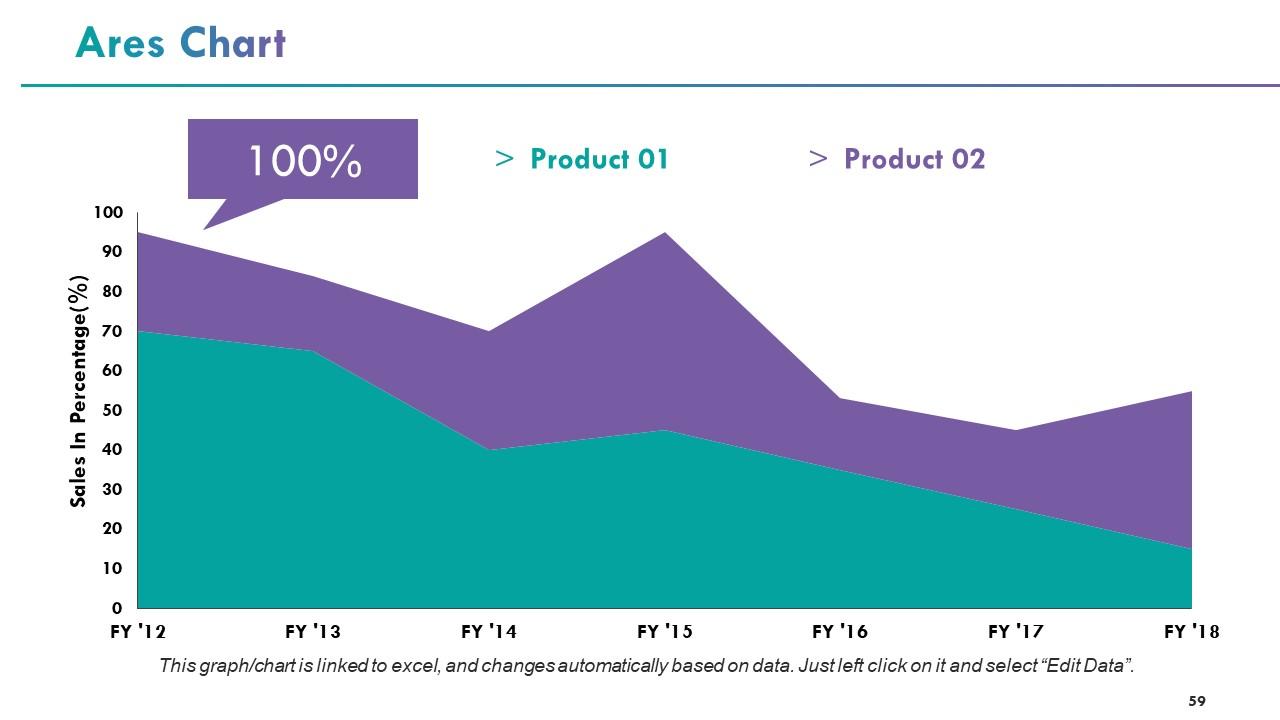
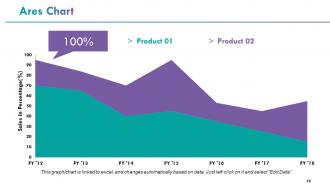
Slide 59: This is an Area Chart slide for product/entity comparison.
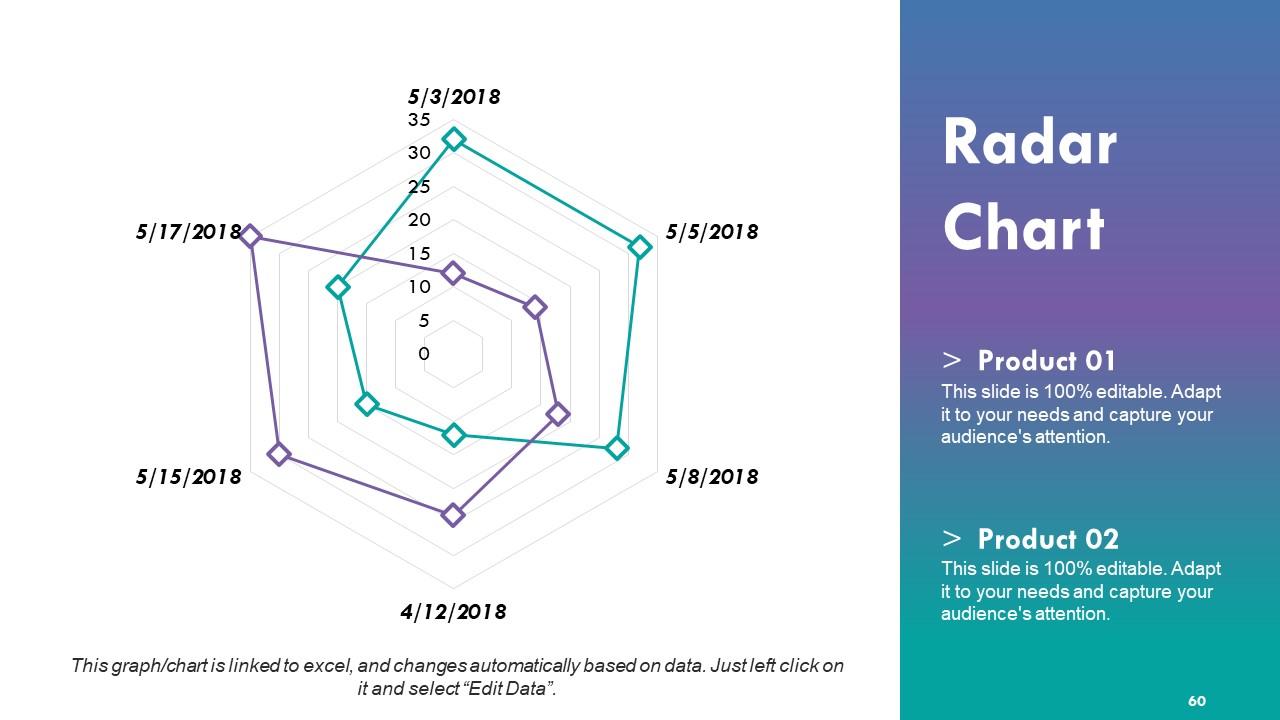
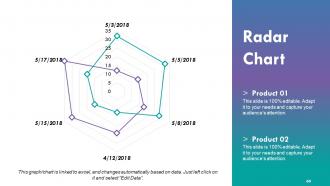
Slide 60: This is a Radar Chart slide for product/entity comparison.
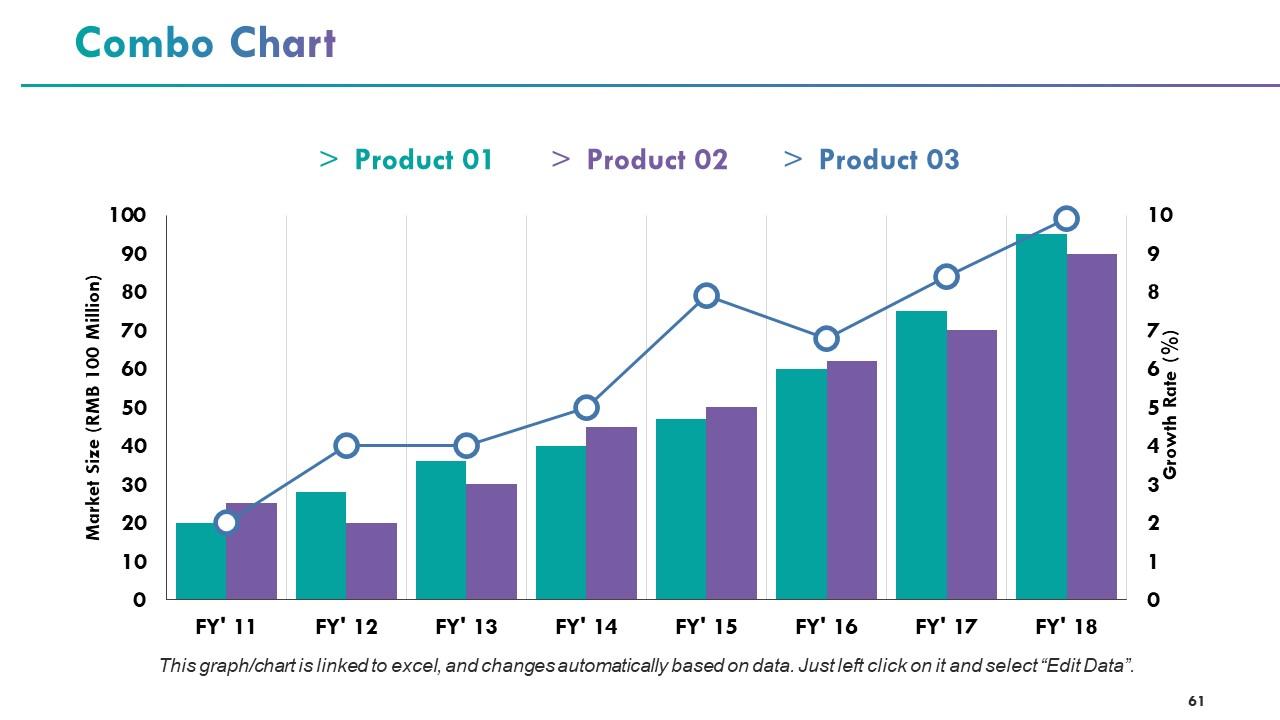
Slide 61: This is a combo chart slide for product comparison
Slide 62: This slide is titled Additional Slides to move forward.
Slide 63: This is an Our Goal slide. State them here.
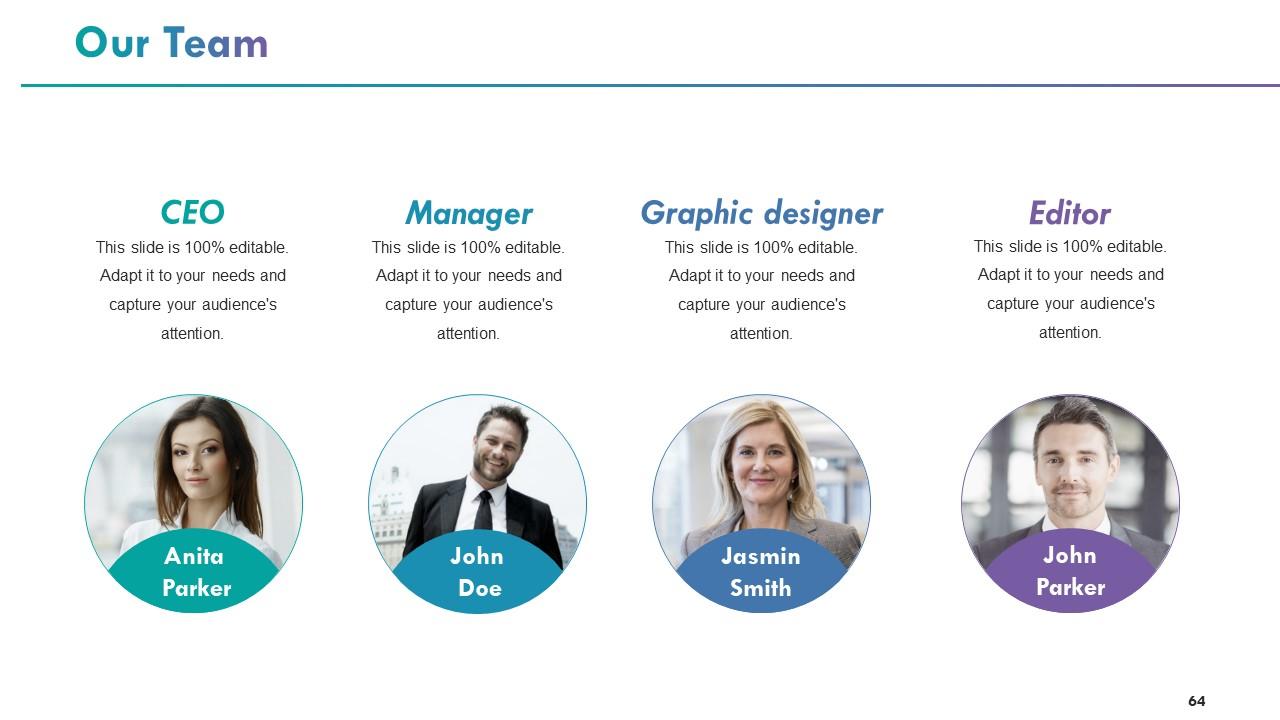
Slide 64: This is an Our Team slide with name, image&text boxes to put the required information.
Slide 65: This slide represents Our Mission. State your mission, goals etc.
Slide 66: This slide shows Our Goals for your company.
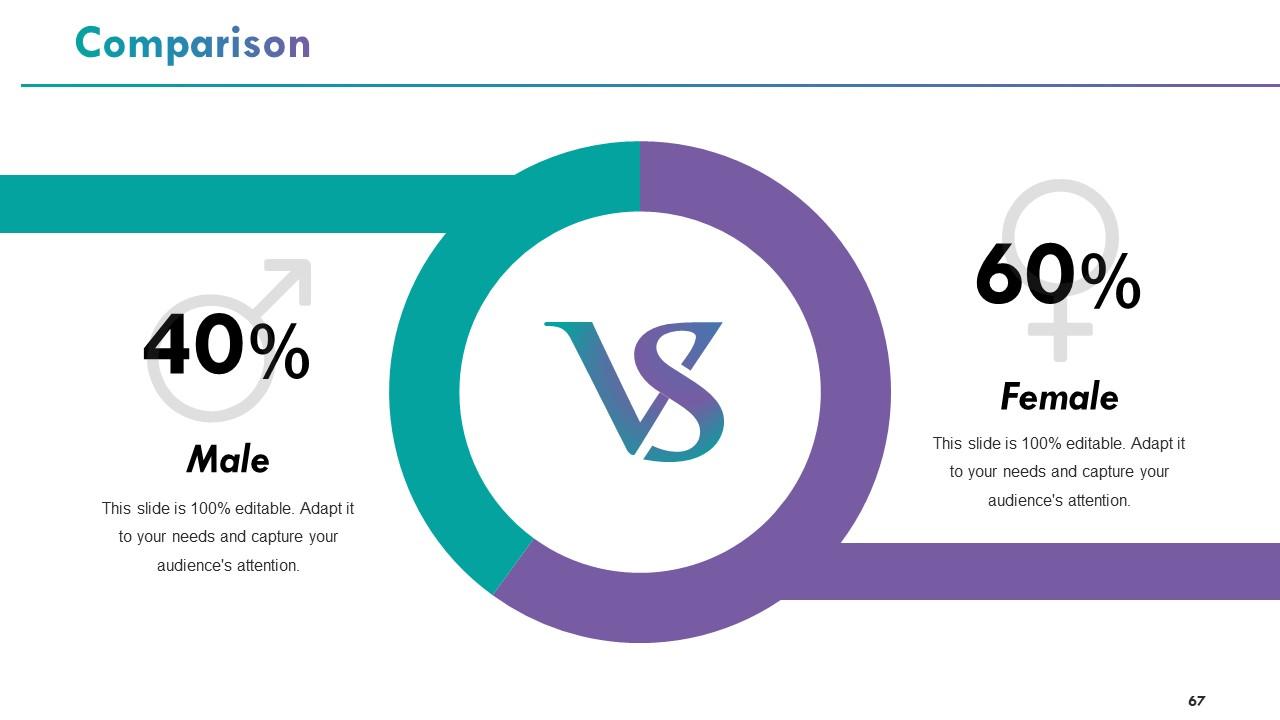
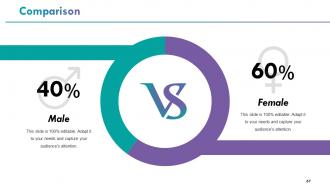
Slide 67: This slide shows Comparison of two entities in butterfly chart form.
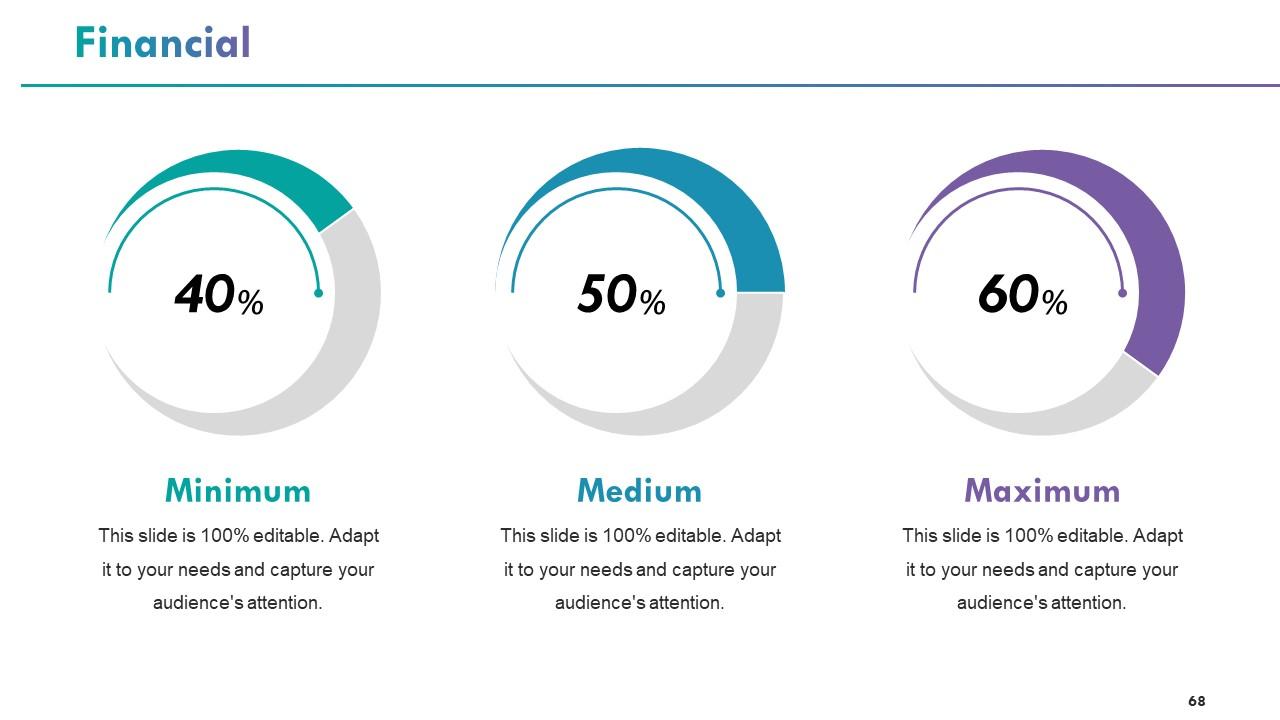
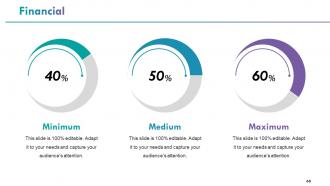
Slide 68: This is a Financial score slide. State financial aspects etc. here.
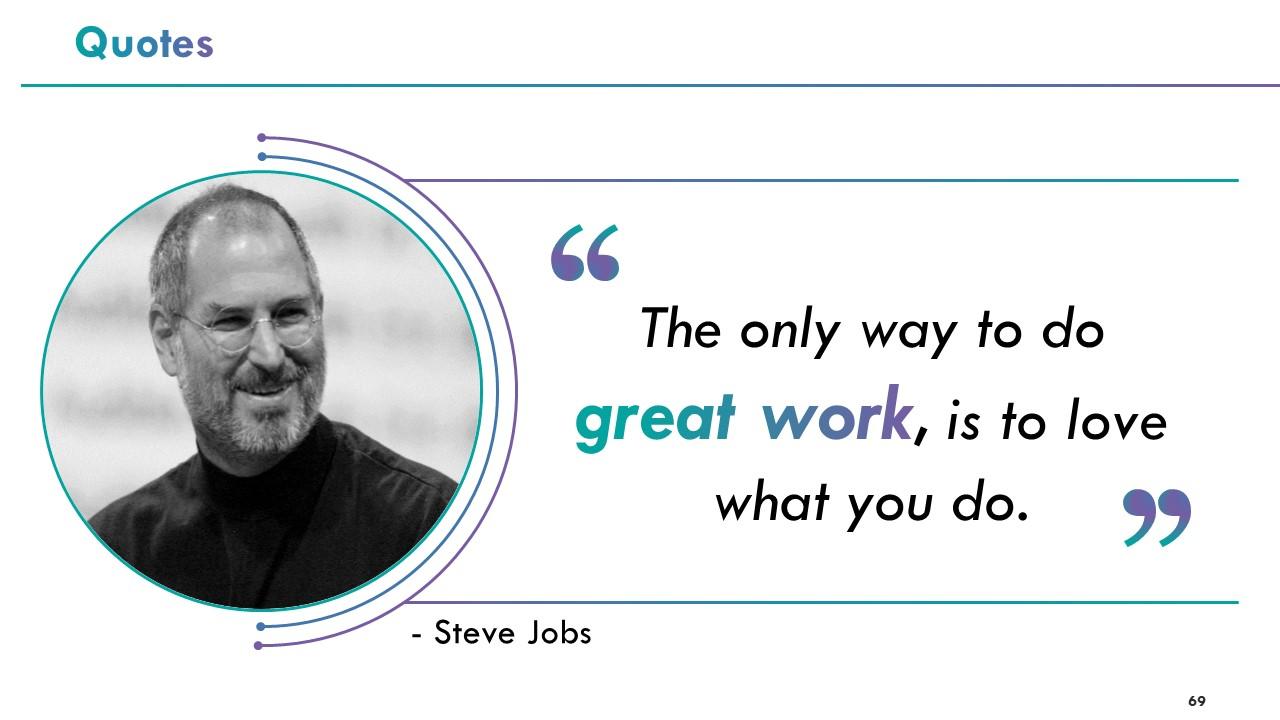
Slide 69: This is a Quotes slide to highlight, or state anything specific.
Slide 70: This slide showcases a Puzzle with imagery.
Slide 71: This slide shows Target image with text boxes.
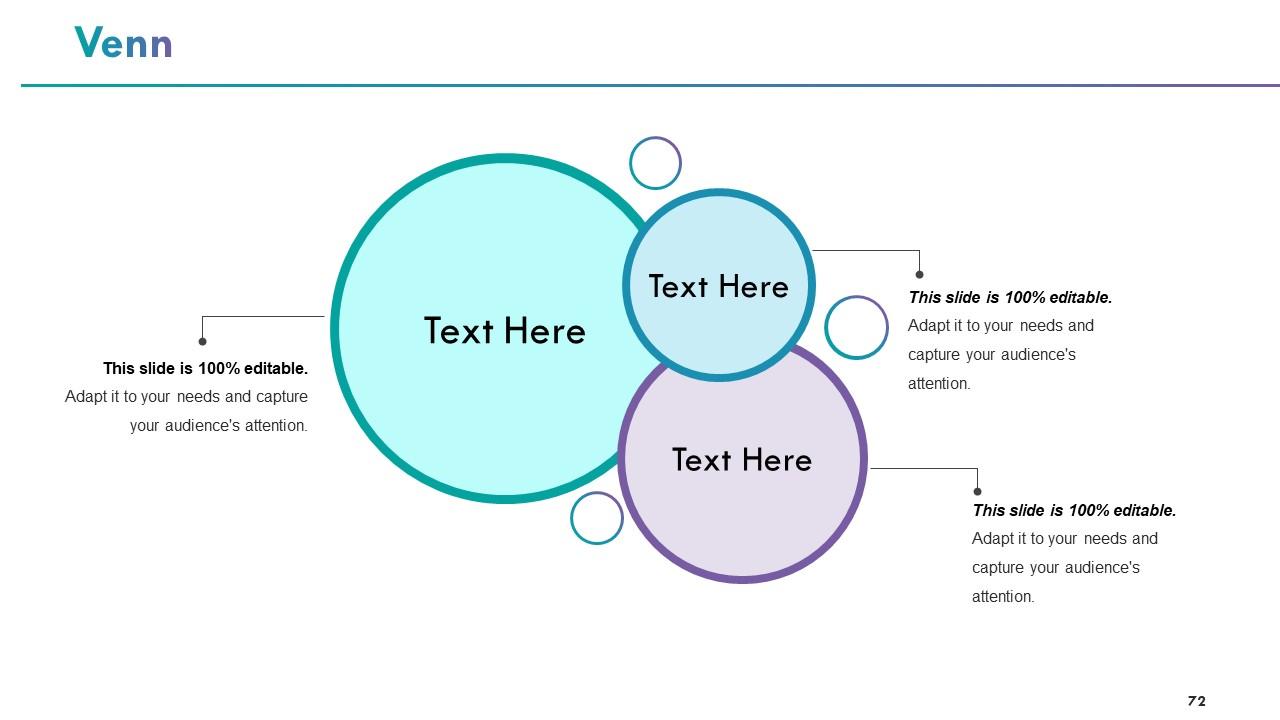
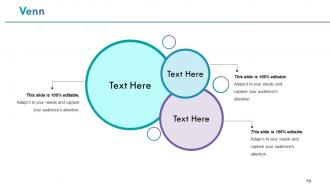
Slide 72: This is a Venn diagram slide to show information etc.
Slide 73: This slide presents a Mind map with text boxes.
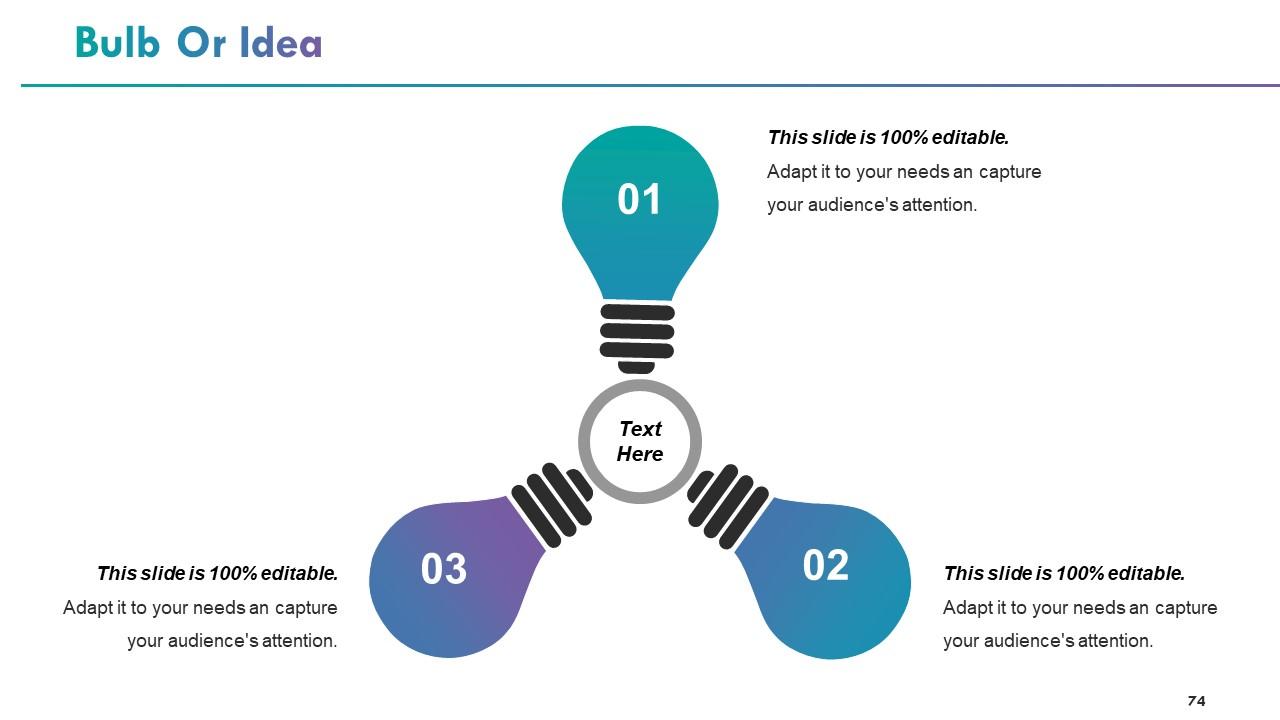
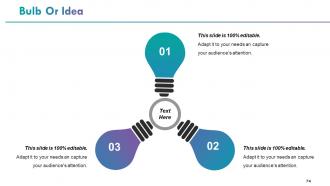
Slide 74: This is a Bulb/idea image slide to show information, ideas, innovation specific stuff etc.
Slide 75: This is a Thank You slide with Address# street number, city, state, Contact Numbers, Email Address.
Branding Powerpoint Presentation Slides with all 75 slides:
Address factors causing conflict with our Branding Powerpoint Presentation Slides. Be able to correct the disorder.
-
Editable templates with innovative design and color combination.
-
Excellent products for quick understanding.
