


Brand Advertisement Powerpoint Presentation Slides




Try Before you Buy Download Free Sample Product
 Impress Your
 Audience
 100%
100% Editable
 Save Hours
 of Time


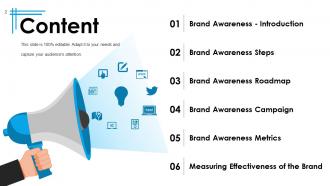
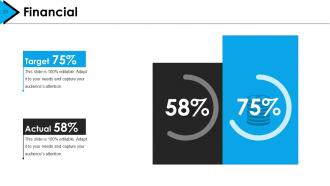
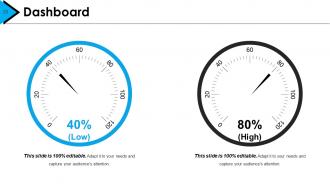
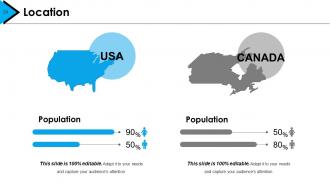
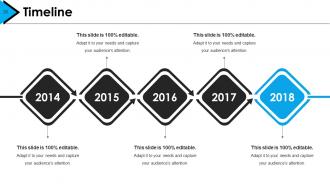
If you need to impress your client with the best brand advertising strategies, then download our predesigned brand advertisement PowerPoint presentation slides and put an impactful impression on the clients. Our editable brand marketing PPT presentation enables companies to reach out and convey a message directly to their clients and accomplish a high level of brand marketing. With the help of our predesigned brand awareness presentation slides, you will be able to differentiate your products and services from the competitors. These product marketing presentation slides will assist you to spot what kind of image you want to create for your clients. Let our business advertising PPT presentation helps you to showcase the overall experience of a client that differentiate your business from the competitors. This brand management PowerPoint presentation covers a slide on brand awareness introduction, brand awareness steps, brand marketing roadmap, brand awareness metrics, and measuring the effectiveness of the brand. To make the customer presentation work easy, our graphics designers provide additional slides such as our vision, meet our team, about us, comparison, financial, quotes, dashboard, location, our target, timelines, mind map and many more. Download this brand advertising presentation PPT. Our Brand Advertisement Powerpoint Presentation Slides are handy for extending good advice. Be considered a champion for growth.
People who downloaded this PowerPoint presentation also viewed the following :
Content of this Powerpoint Presentation
If you have been following the news this month (April 2024 is when we are writing this), this headline from CNN will have caught your attention. Here it goes: Hyundai is the latest brand to pause advertising on X (Twitter) due to anti-Semitism.
As brands advertise themselves and plan to make themselves visible and recallable, there’s a set of protocols and science to follow, plus a bit of art. Just hoping that customers will see you by being present is never the actual truth for businesses. Brand advertising requires businesses to speak up, in a consistent voice, on what they stand for through their products and services.
Access SlideTeam’s brand advertising consulting proposal to ensure you win the deal.
The aim is to amplify their positives and create a mind space in consumers’ minds through brand advertising. In this blog, SlideTeam resolves the pain point of businesses in creating suitable material and platforms to communicate their brand advertising goals and objectives. We also speak about the effectiveness of brand advertising and how to use it to achieve great results.
Running advertising campaigns for multiple brands can be a hard task. Find the best PPT Template to do so, here.
Even better, each of our templates is 100% editable and customizable. You get a starting point, the much-needed structure, and the capability to edit each presentation to fit the needs of the audience profile you address.
Let’s explore!
Template 1 Brand Awareness PPT Template Pyramid
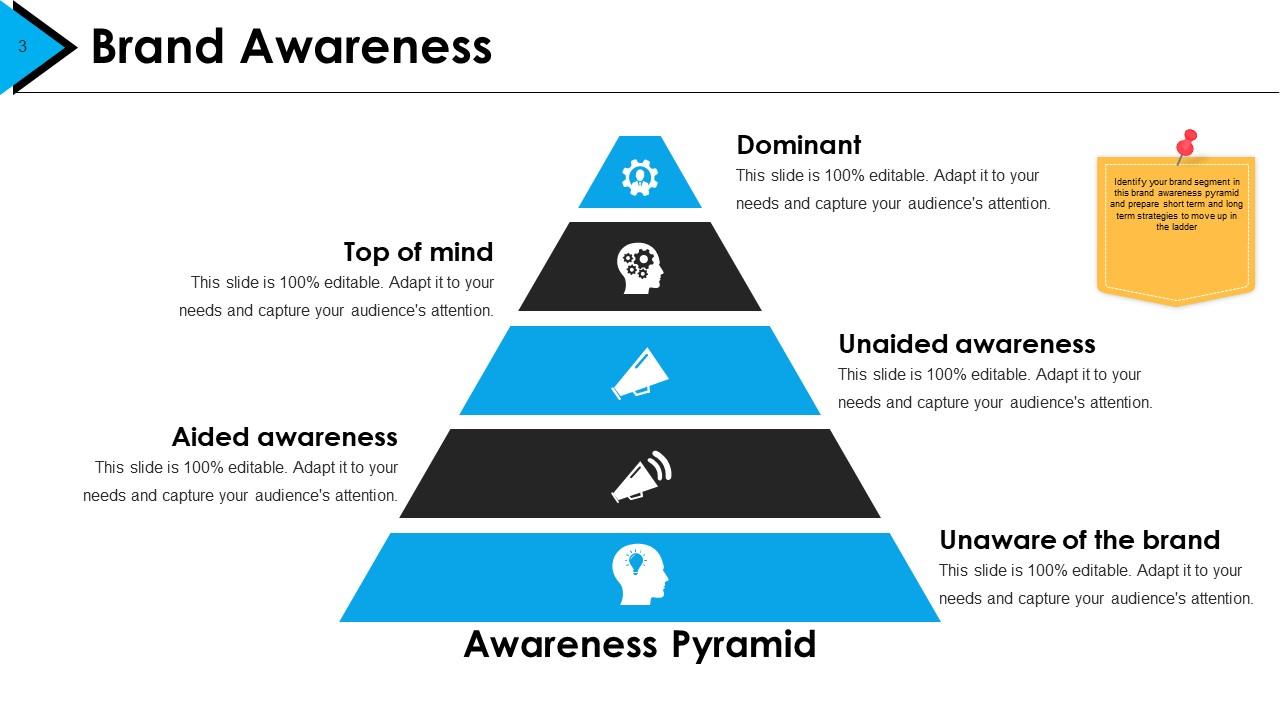
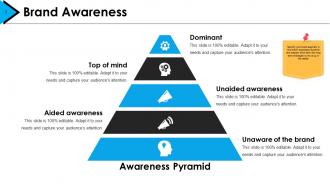
This presentation helps a business understand the stages a consumer or the target market must follow to build a brand that shines. It is a pyramid, with the lowest level being when there is complete unawareness about a brand; aided awareness is next, followed by unaided awareness, top of mind, and dominant states of awareness about a brand. For instance, Coke and Google are dominant brands today and have passed through the pyramid.
Template 2 Steps toward Brand Awareness PPT Template
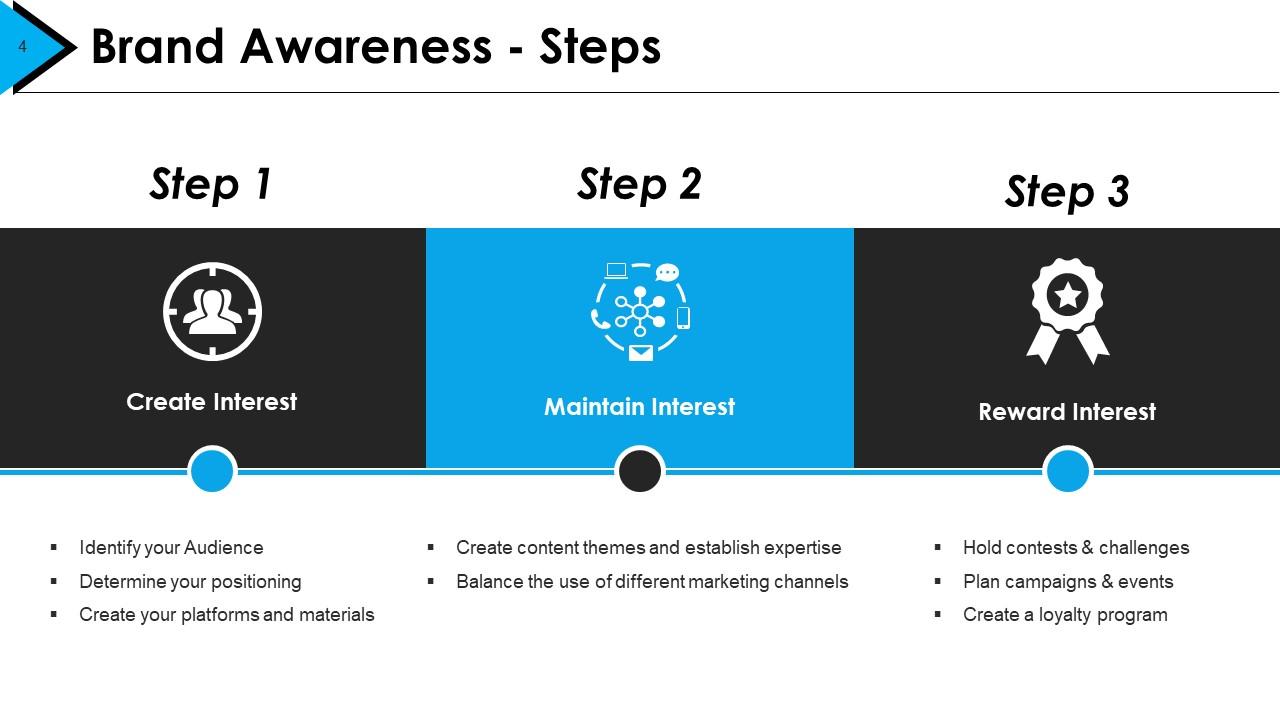
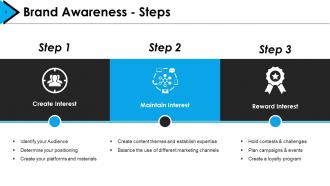
The three steps in brand awareness are illustrated in an engaging, powerful manner with the aim of this PPT Template. These, in order, are to create interest, maintain interest, and reward interest. The slide’s design allows you to list the actionable steps to be taken in each of the three broad-sweep categories. To maintain interest, it is essential to balance the use of marketing channels and to reward interest. Designing a well-thought-out loyalty program is a must.
Template 3 Building Online Brand Awareness Tips & Tricks
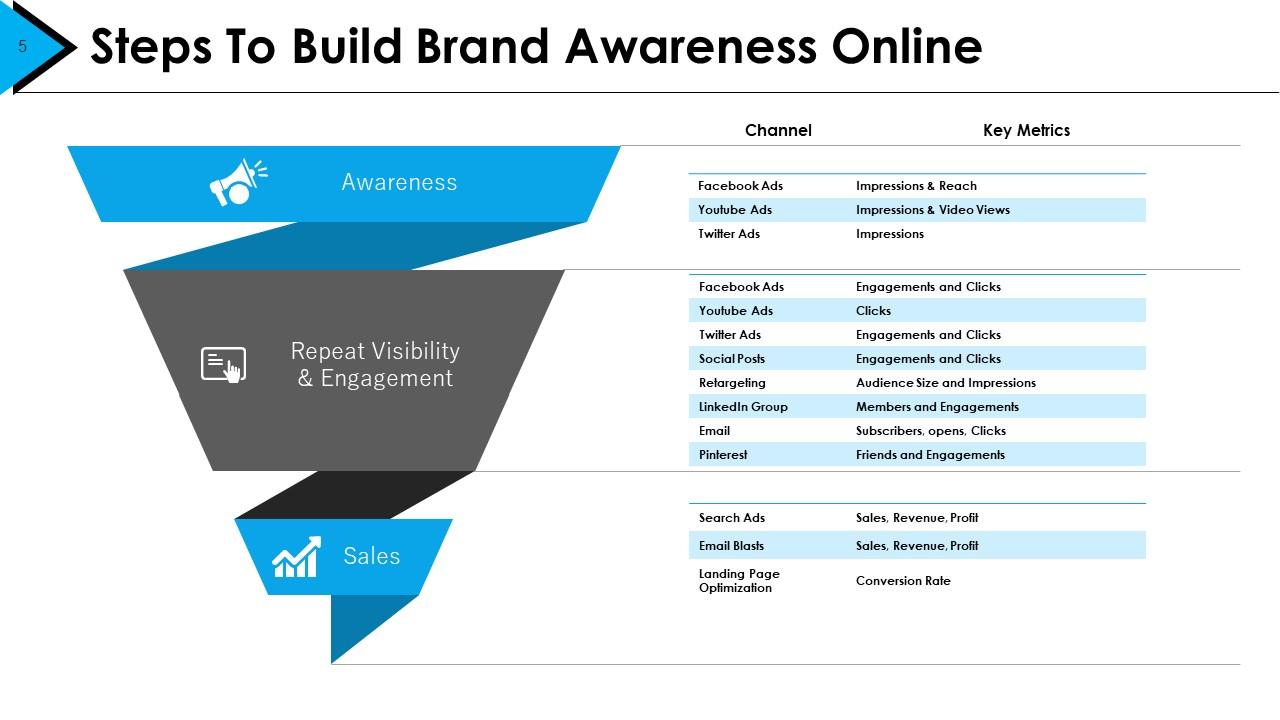
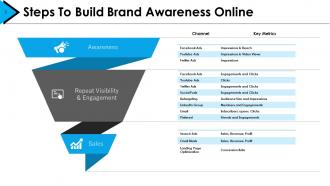
Use this template to depict the channel-wise critical metrics used for online brand building and marketing. The marketing funnel starts from top with awareness, repeat visibility and engagement, and sales. The idea is to ensure that the channels you use take you the closest to the sales result without wasting time or resources. The table in the PPT illustrates how whatever metrics you need to track have a specialized channel that does it best. For instance, YouTube Ads are for clicks, and emails for Subscribers, Open Rate, and Clicks. Get this template now.
Template 4 Brand Awareness Roadmap Layout Template
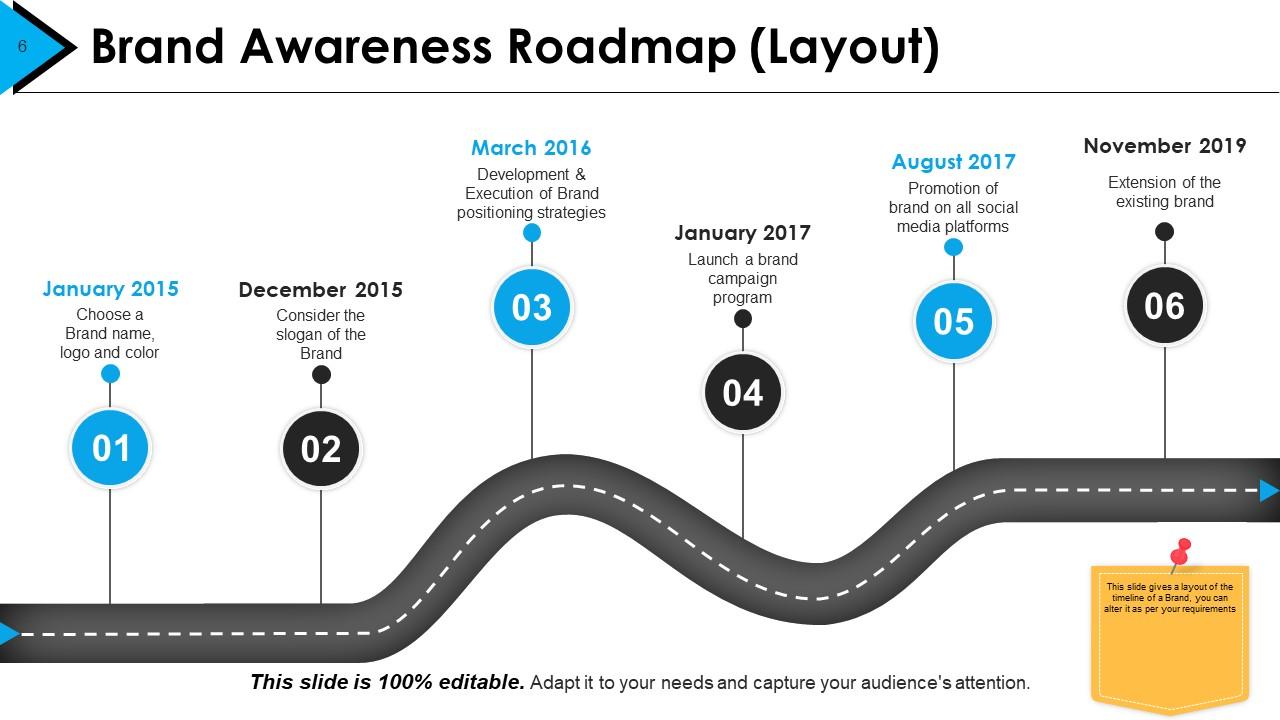
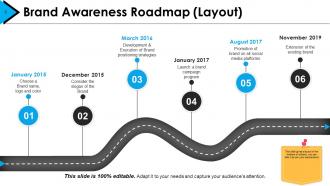
This slide gives the layout of a brand's timeline, which you can alter as per your requirements. The key to reading and using this PPT Template correctly is to understand that there can be a maximum of six significant milestones on the way. It is also crucial that brand awareness be shown as a process involving crests and troughs.
Template 5 Launching and Executing a Brand Awareness Campaign
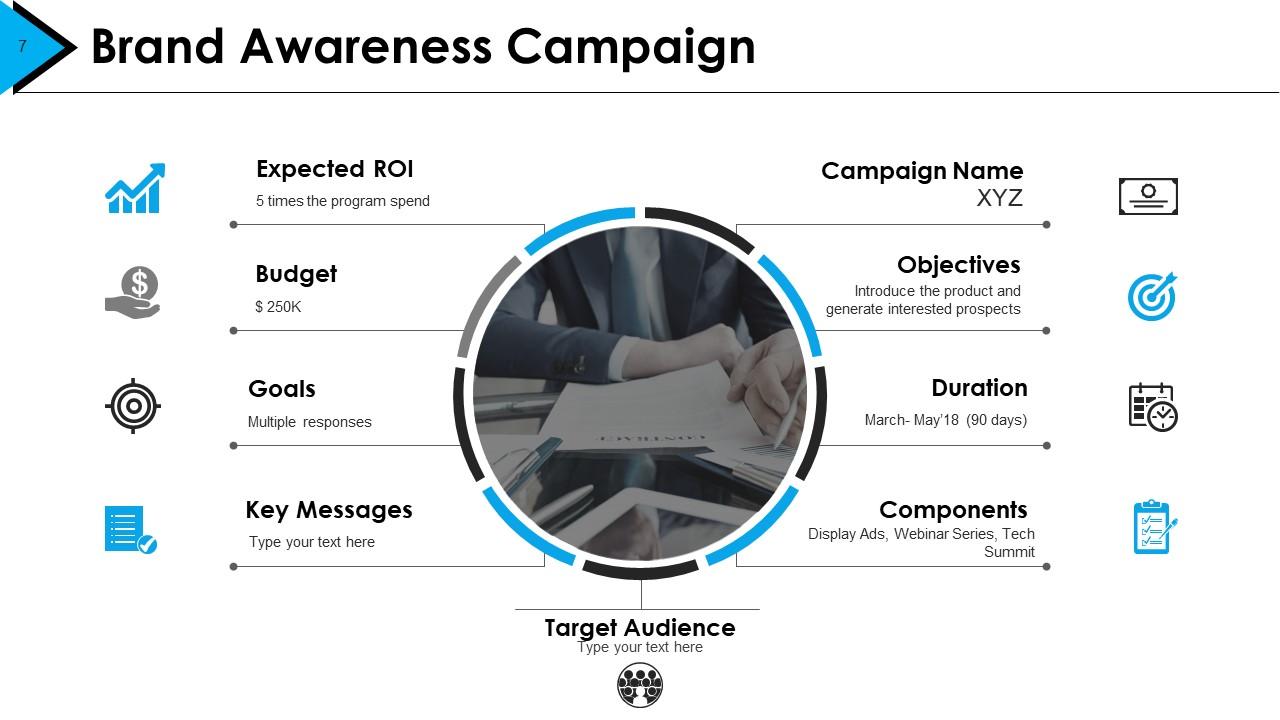
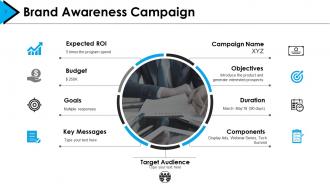
You can master the campaign launch for a brand campaign with a look at his exquisite PPT Template on how to do it. The slide starts with the campaign name, objectives, duration, components, key messages, goals, expected ROI, budget and the target audience. Of course, the fulcrum that drives this campaign is the correct identification of the target audience, as identified in the center of the slide.
Template 6 Brand Awareness Metrics
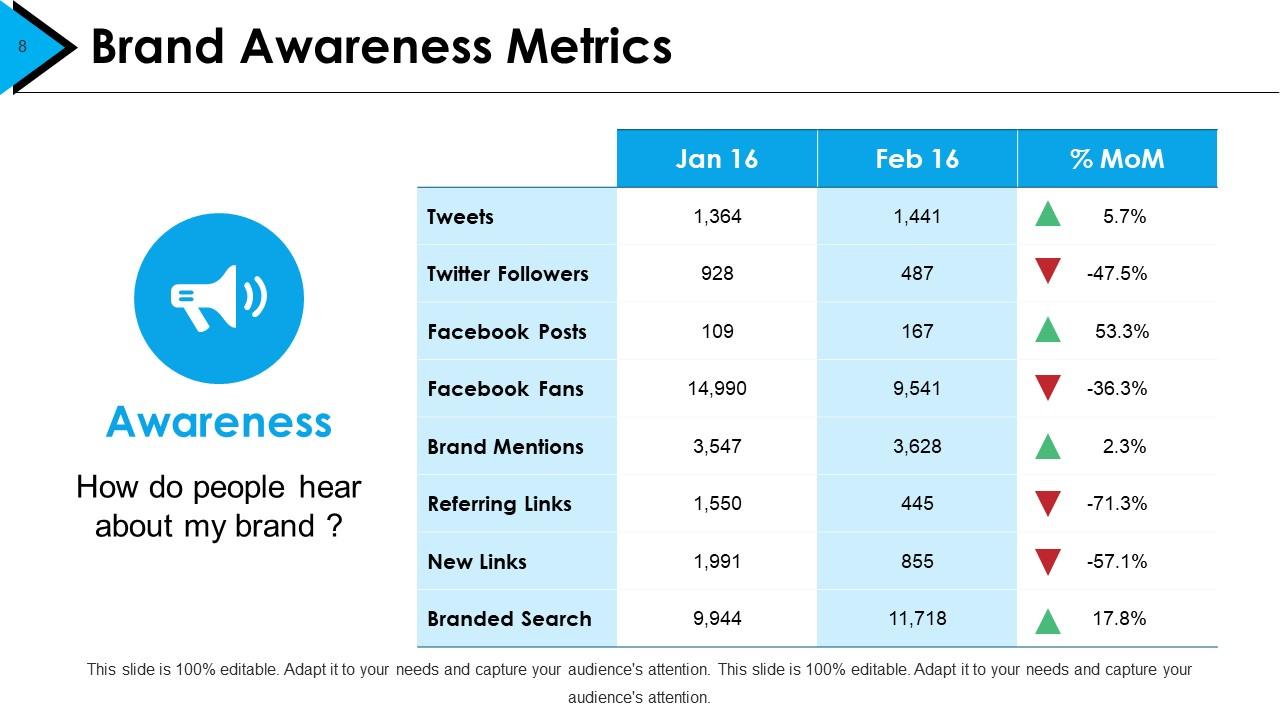
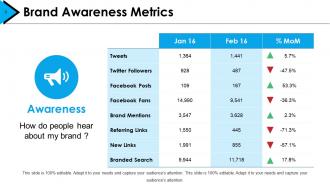
To create brand awareness, use the month-on-month figures provided on this slide, which can be collated and provided to all employees. For good measure, the comprehensive PPT also describes the exact meaning of awareness: How do people hear about my brand? Some of the popular social media platforms are cited in the table, which you may customize. The top three of these are Tweets, Twitter followers, and Facebook fans.
Template 7 Effectiveness Measurement of Brand Awareness Campaigns
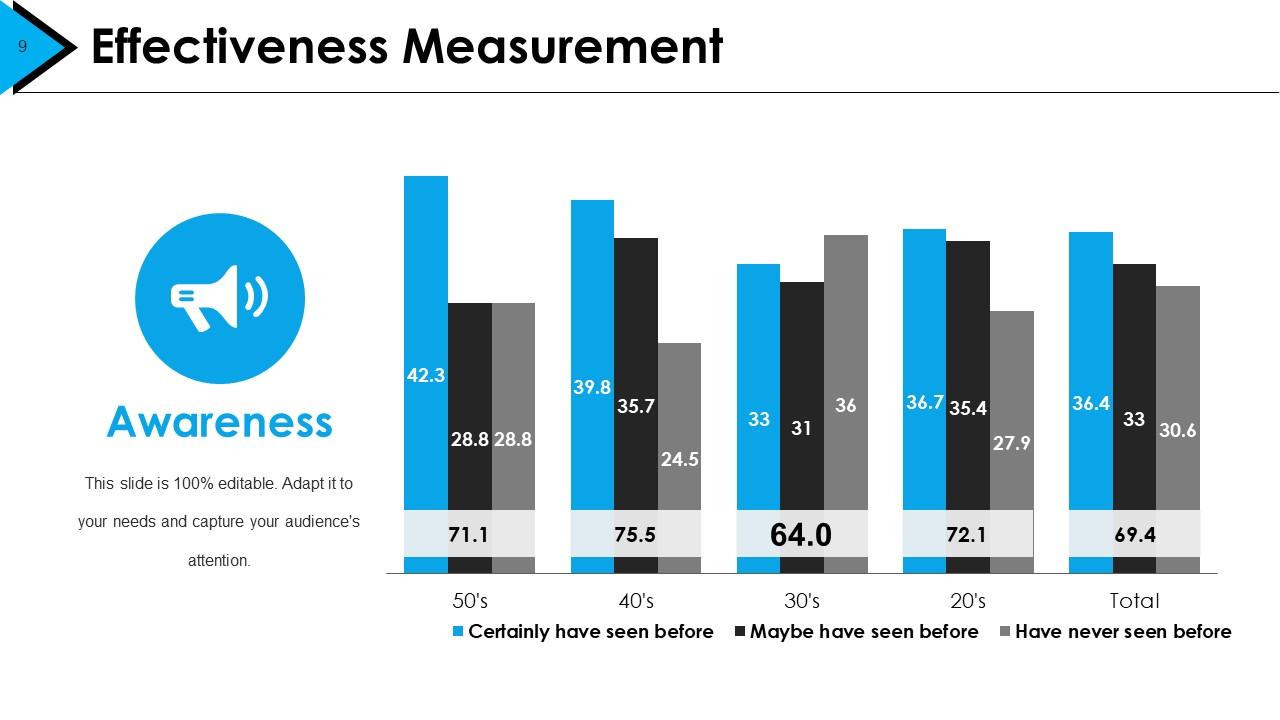
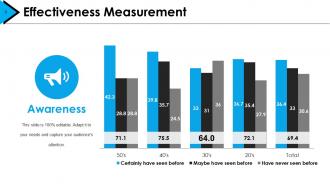
This PPT Template measures the effectiveness of any brand launch campaign using the metrics of certainly have been before, may have seen before, and have never seen before. The attractive vertical bar graphs help us understand that effectiveness is taken as the gold standard for brand awareness, and just putting out some communication material does not automatically translate into brand awareness. Use our well-designed slide to track the effectiveness of your business’s brand awareness efforts.
SHINING THE SPOTLIGHT
Advertising, especially those related to brands, is always fun as budgeting is not a constraint. Businesses are usually aiming for a larger-than-life campaign as brand awareness is the sought-after commodity everyone wants. Yet, without adequate knowledge of the ins and outs of brand advertising, clients may realize their money is being wasted. Avoid this by using brand advertisement PPT templates that signal the way forward and help drive awareness to a significant degree.
PS Understand brand advertising with this specially-designed complete deck template from SlideTeam.
Brand Advertisement Powerpoint Presentation Slides with all 30 slides:
Be different with our Brand Advertisement Powerpoint Presentation Slides. Your thoughts will not seem run of the mill.
FAQs for Brand Advertisement
Honestly, social proof is huge - testimonials, user counts, all that stuff. Scarcity works too, like limited-time offers that make people panic-buy. But here's what really gets me: nostalgia is ridiculously powerful. People go crazy for anything that reminds them of "the good old days." Don't just list features though. Hit them in the feelings instead. Authority helps - get experts to back you up. Or try reciprocity by giving away something valuable first. My advice? Pick one specific emotion you want people to feel, then build everything around that. Way more effective than trying to be everything to everyone.
Visuals are honestly everything when it comes to branding. People process images like 60,000 times faster than text - which sounds made up but it's true. Colors mess with our emotions (Coca-Cola's red makes you feel hyped), fonts show personality, and the right photo can make people remember you forever. I've seen brands with amazing copy totally flop because their visuals looked cheap. Consistency across all your stuff builds trust too. Oh, and definitely test different looks with real customers - not just your team saying "looks good!" You'll be surprised what actually sticks in people's minds versus what you think will work.
Look, people connect with stories way more than boring product specs. Think about it - would you rather hear "our product is reliable" or see an ad where some dad uses it during his daughter's wedding? The second one hits different, right? Stories make people FEEL something, and honestly, emotions drive purchases way more than logic ever will. You're giving customers characters they relate to instead of just another sales pitch. Your brand becomes part of their world, not just noise. Figure out what story your customers are already living - that's your starting point.
Ugh, measuring brand campaigns is such a pain compared to direct response stuff. You'll definitely want your basic metrics - click-through rates, conversions, cost per acquisition. That's the easy part. Brand awareness is where it gets messy though, since people might see your ad but convert weeks later. I always track search volume spikes and use attribution modeling to catch those delayed conversions. Google Analytics and Facebook Pixel are obvious choices, plus brand lift surveys if you can swing it. Oh, and seriously - use UTM codes for everything or you'll hate yourself later. Set your KPIs upfront so you're not scrambling to figure out what success looks like.
Google and Meta are still killing it - Google owns search intent while Meta dominates social across basically every age group. TikTok's been huge for younger crowds, though honestly their algorithm feels like throwing darts blindfolded sometimes. YouTube's actually my favorite combo of both worlds since video content converts really well. I'd probably do like 70% of your budget on the proven stuff (Google/Meta), 20% on TikTok, and 10% testing whatever new platform pops up. Oh, and don't sleep on YouTube if you can handle making video content.
Dude, consistency is HUGE for branding. Like, you can't have your Instagram sounding totally different from your website or people get confused. I've watched companies completely mess this up - their social media feels like one brand and their ads feel like another company entirely. Weird, right? Your core message needs to stay the same everywhere, even if you tweak how you say it for different platforms. Make a brand guide and don't ignore it. Otherwise you're just confusing customers and making your brand weaker.
Honestly, brands are finally getting called out on their BS green claims. People want actual numbers now - like specific carbon percentages, not just "we're eco-friendly!" Purpose-driven stuff still works, but consumers are so much more skeptical after years of fake woke marketing. Companies are showcasing employee activism more and partnering with local communities instead of just writing donation checks. Oh, and the authenticity expectations? Absolutely brutal these days. I'd start by going through your current sustainability messaging with a fine-tooth comb. Make sure you can prove every single claim before putting anything new out there.
Dude, cultural stuff can totally make or break your ads in different countries. Colors alone will trip you up - white means purity here but death in parts of Asia. Then you've got humor, family dynamics, religious stuff... honestly, it's a minefield. We had this campaign that tested amazing domestically and just flopped overseas because we missed some cultural cues. Sometimes you can't just translate - you need completely different messaging and visuals. My advice? Work with local teams from day one. They'll catch things you'd never think of and save you from looking like an idiot.
Okay so basically three big things to think about: be honest, be transparent, and don't be a dick to your audience. Back up your claims with actual data. Always disclose when something's sponsored - people hate feeling tricked. And seriously, don't target vulnerable people like kids or folks struggling financially. That's just gross. Cultural stuff matters too btw - what's funny in one place might be super offensive somewhere else. I always ask myself: would I be cool showing this to my mom? If the answer's no, probably need to rethink it.
User-generated content is honestly your best friend here. Get customers posting photos and reviews with your stuff, then repost it everywhere. Way more trustworthy than whatever your marketing team cooks up - people actually believe other customers, you know? Try hashtag campaigns or contests to get things rolling. Oh, and definitely reach out to your biggest fans first since they're already obsessed with your brand anyway. Just make sure you ask before stealing their content (learned that one the hard way). Make it super simple for people to participate and you'll be golden.
Dude, influencer partnerships are honestly game-changers. You get access to people who actually trust the influencer's opinion - way better than regular ads everyone ignores. Micro-influencers are where it's at though. They often beat celebrities for engagement rates, which sounds backwards but it's true. You're basically piggybacking on their relationship with followers. Don't just chase follower counts - find someone whose vibe matches your brand. Oh, and start small to test what clicks. The ROI can be insane when you get it right.
Honestly, I'd track three main things: reach/impressions for brand awareness, engagement rates to see if people actually give a damn about your content, and conversion tracking for real business impact. Click-through rates? Meh, they're pretty but can fool you if you don't know what happens next. The good stuff is connecting ad spend to actual revenue or leads. Oh, and set up attribution tracking first - without it you're just guessing at what's working. That's probably the most boring part but you'll thank me later when you can actually optimize something.
Timing is everything with seasonal campaigns, honestly. January fitness ads work because people are actually motivated then - same with cozy home stuff before it gets cold. Problem is, everyone's doing the exact same thing so you're competing with like a million other brands. Peak seasons get crazy expensive too. Map out your whole year ahead of time and book that ad space early, especially around holidays when prices go nuts. Or get weird with it - maybe promote fitness stuff in March when the New Year crowd gives up and you've got less competition.
Honestly, AI personalization is where it's at right now - you can target ads based on what people are actually doing in real-time. AR/VR is blowing up too, letting customers try stuff virtually before buying. Voice search optimization matters way more now since literally everyone talks to their devices (my neighbor asks Siri about her grocery list, it's wild). Machine learning handles your ad buying automatically and does it better than we could manually. Just pick one thing to test in your next campaign. Even something simple like a personalized email or basic AR filter will show you what works.
Honestly, the hardest part is staying real while still sounding professional. People can smell fake authenticity a mile away - and trust me, they will call you out on social media. Your stakeholders want everything polished and perfect, but that's exactly what makes audiences cringe. It's like... you're damned if you do, damned if you don't. Here's what actually works though: dig into stories that already happened at your company. Don't try to manufacture moments. Your real values probably have genuine examples behind them already, you just gotta find them.
-
It saves your time and decrease your efforts in half.
-
Use of different colors is good. It's simple and attractive.