

Brand strategy powerpoint presentation slides




Try Before you Buy Download Free Sample Product
 Impress Your
 Audience
 100%
100% Editable
 Save Hours
 of Time


Improve the perception of your brand using our Brand Strategy Powerpoint Presentation Slides. This brand management PowerPoint deck comprises brand strategy framework, brand model, brand repositioning, brand strategy worksheet, strategy chart, strategy statement, etc. Utilize the business strategy PPT templates to showcase the targets for the next business quarter like location expansion, the introduction of new products, etc. Take advantage of the strategic management PPT visuals to reveal the components of the brand strategy model like purpose, values, process, and brand promise. Take the assistance of our brand strategy PowerPoint slideshow to show various product attributes like quality, moderate prices, durability, etc. Demonstrate the types of brand repositioning like celebrity orientation, up-market technology, niche orientation, symbolism, etc. using the product strategy PowerPoint infographics. Unveil the points of differentiation, value proposition, brand message, marketing budget, and other information about your competitors and formulate strategy according to these factors. Download the brand management PowerPoint slides to earn exponential revenue. Our Brand Strategy Powerpoint Presentation Slides excel at their craft. They give you the cutting edge.
People who downloaded this PowerPoint presentation also viewed the following :
Content of this Powerpoint Presentation
Crafting a solid brand identity is essential in today’s world to stand out from the crowd and make a deep connection with your target audience. Formation of a brand identity involves defining the brand purpose and values that show how your brand is different from others and crafting a unique brand voice and visual identity. Communicating your brand values lies at the core of a successful brand strategy.
If you want an easy overview of brand strategies in the cosmetic industry, explore our cosmetic brand strategy templates!
To create a brand identity, a USP—Unique Selling Proposition—plays an essential role in differentiating your product from others. Customer recognition, value proposition, and competitive advantage must also be taken into account. As brand strategy composition is not a single-step process, you need to monitor the different steps. Our ready-to-use PPT slides make supervision of the various steps easy.
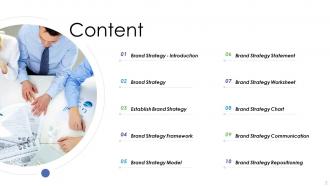
SlideTeam has specially designed the brand strategy PPT templates to create an overview of brand strategy, establishing brand strategy, its framework, model, statement, worksheet, chart, communication, and repositioning. These PowerPoint slides will help you track your organization's brand strategies. These templates will help you illustrate and evaluate the brand strategies effectively.
If you are a marketer and want a toolkit for the brand strategy, click to get it!!
Template 1: Positioning Brand Strategy
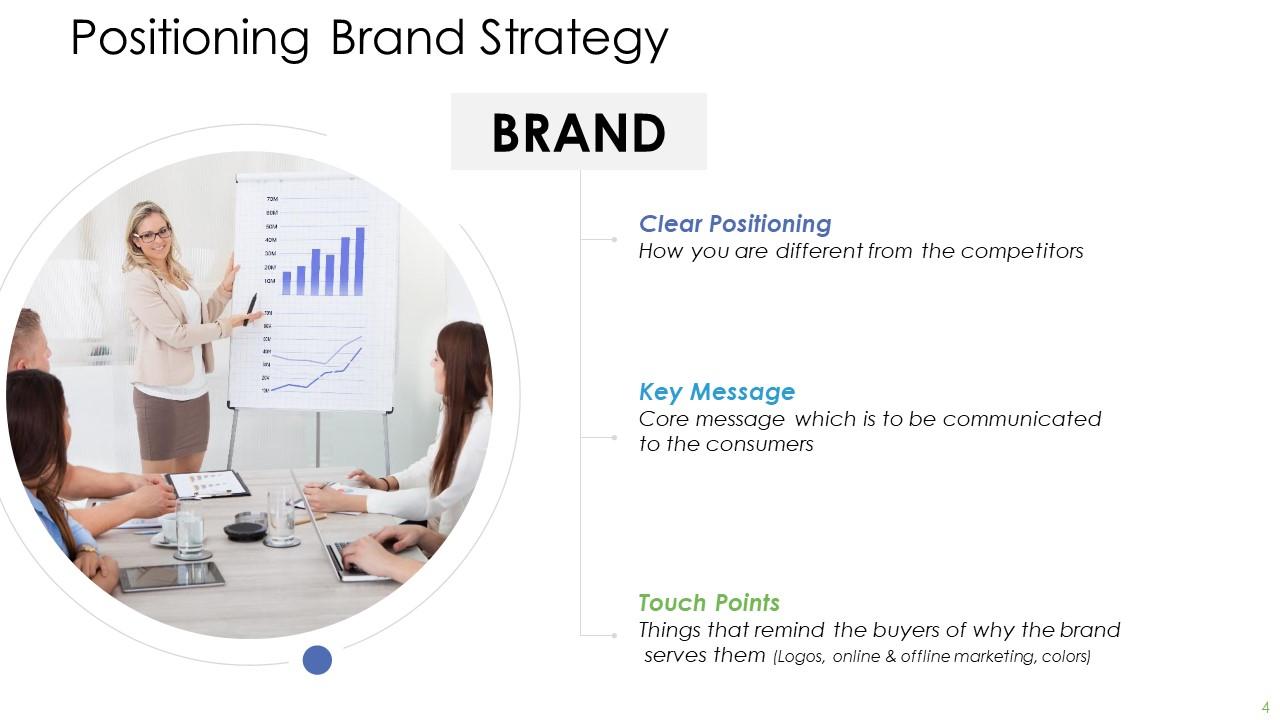
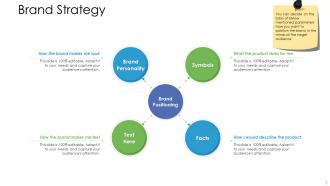
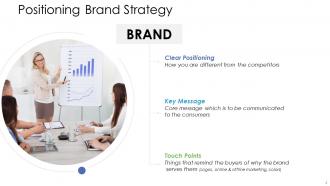
Positioning is fundamental for a successful brand strategy. Various products have been launched in the market, and solid brand positioning is more important than ever. Brand positioning is not about being different; it’s all about positioning yourself in such a way in the market that it matters to your target audience. This template certainly helps you outline how you are different from the competitors and convey the message to your target audience and the touch points about what your brand serves them.
Template 2: Establish Brand Strategy
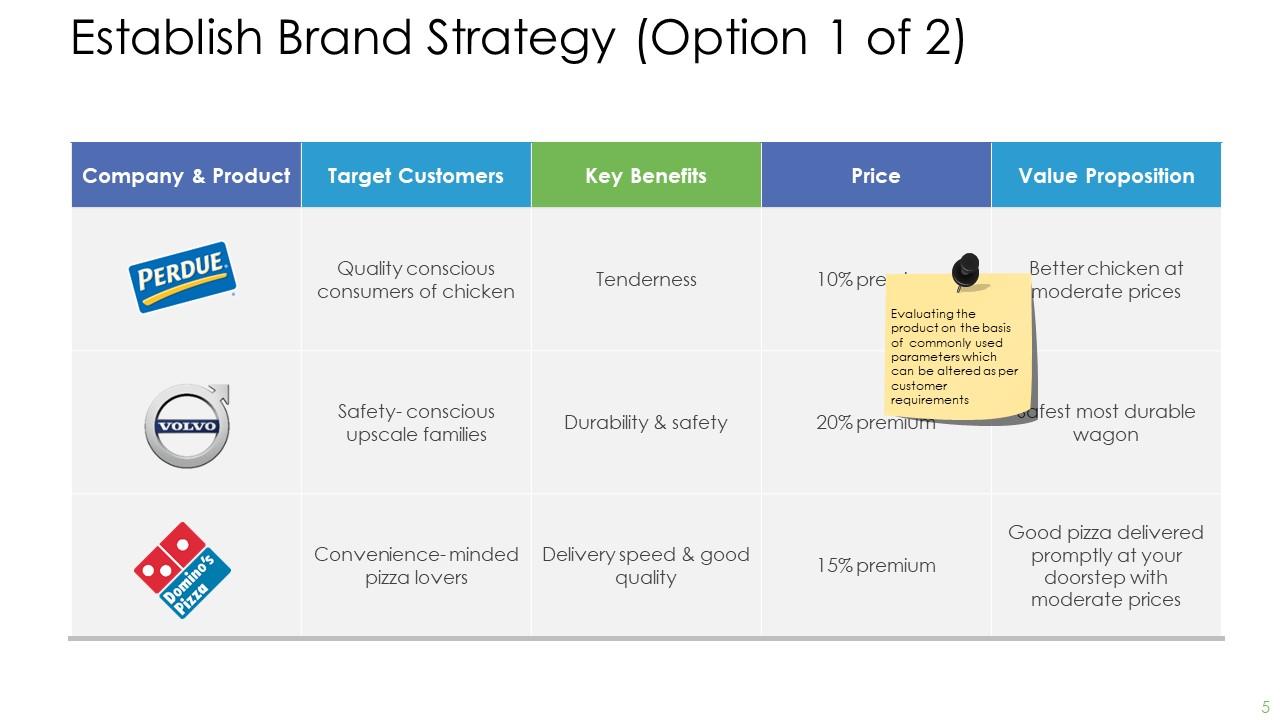
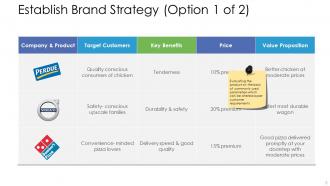
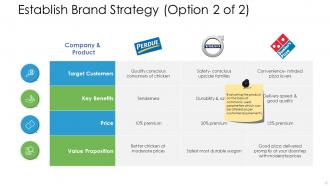
This template is designed to demonstrate the company and products, target customers, their key benefits, price, and value proposition through a table. In the slide, you can state the logos of the products, which makes it quite attractive. Grab this template to illustrate the various products and their target customers effectively.
Template 3: Brand Strategy Framework
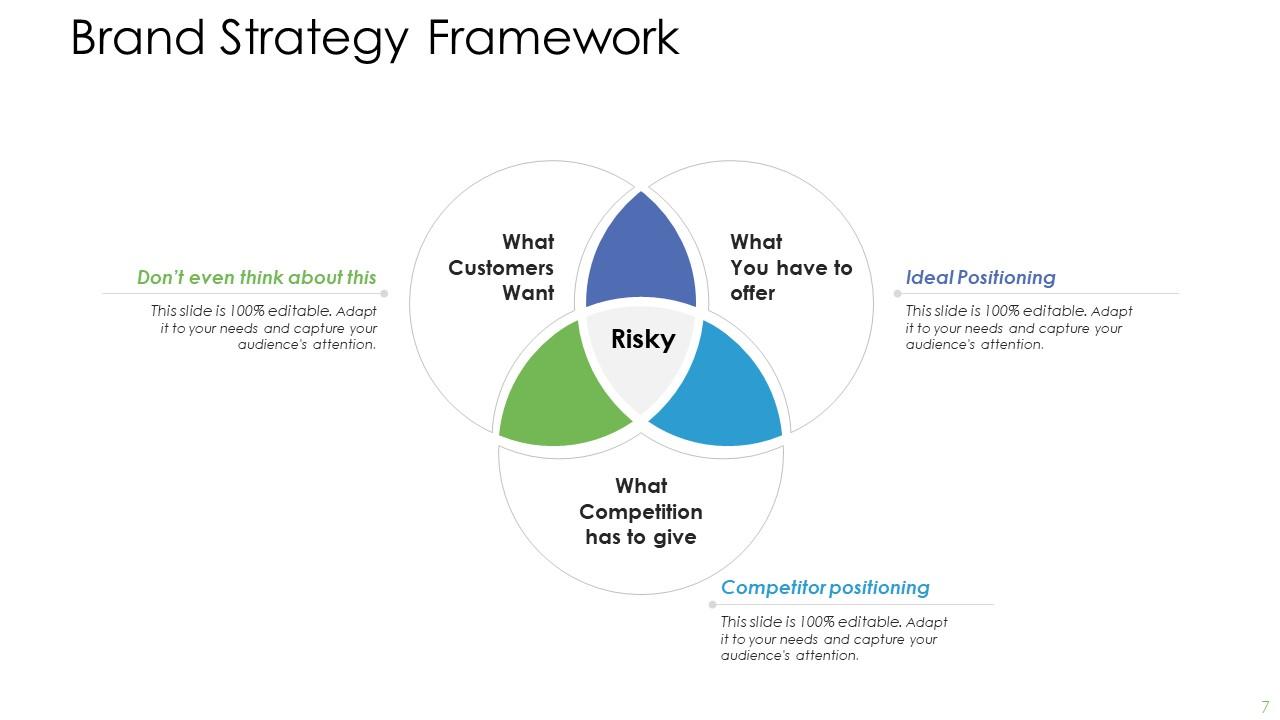
The formulation of the brand strategy is not as simple as it seems. Through this template, you can demonstrate what customers want, what the company has to offer, and what competition has to give to them. This slide will help you create an outline of what to include and what not in your brand strategy. You can easily track the pain points of your competition and make a strategy according to that to have a more profound impact on the target audience.
Template 4: Brand Strategy Model
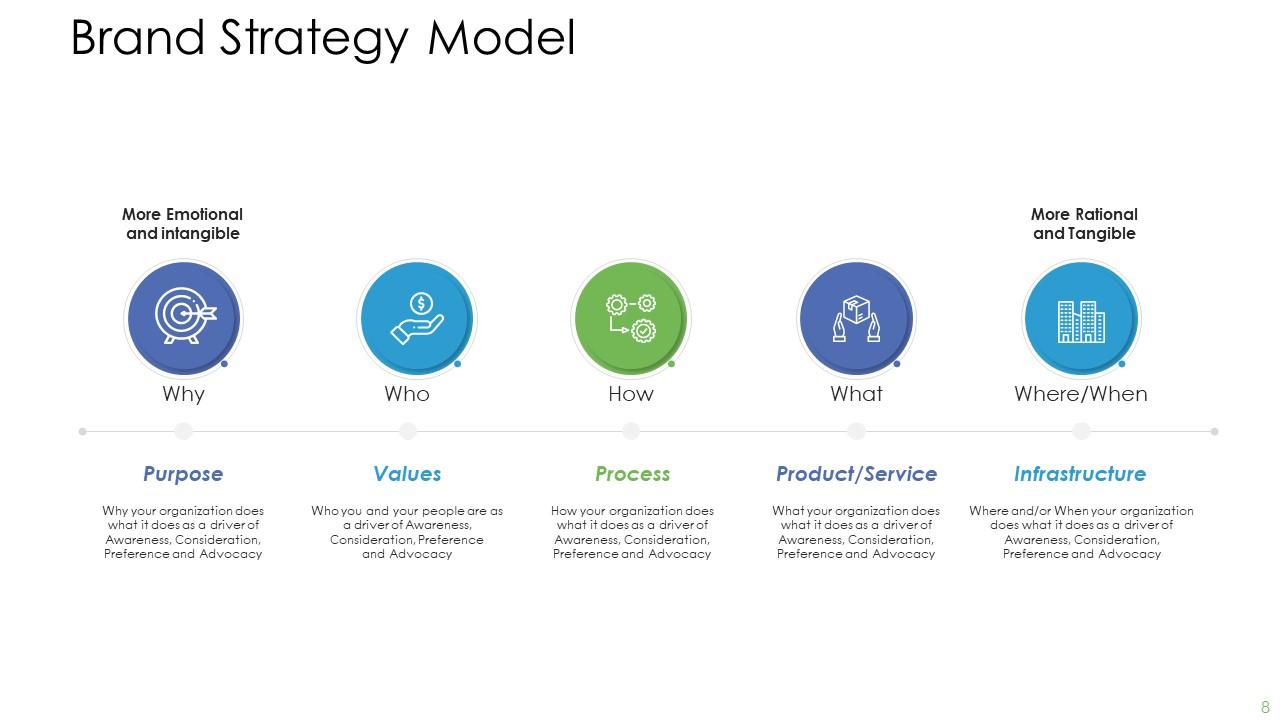
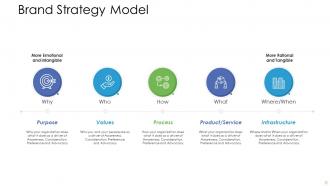
Before forming a brand strategy, some important discussions occur. You must have answers to some questions before formulating a brand strategy. This template is exactly what you need when you are thinking about crafting a brand strategy. You can outline the purpose, values, process, product/service, and infrastructure. The creative and innovative icons for each question make the slide a little more attractive.
Template 5: Create a Brand Strategy Statement
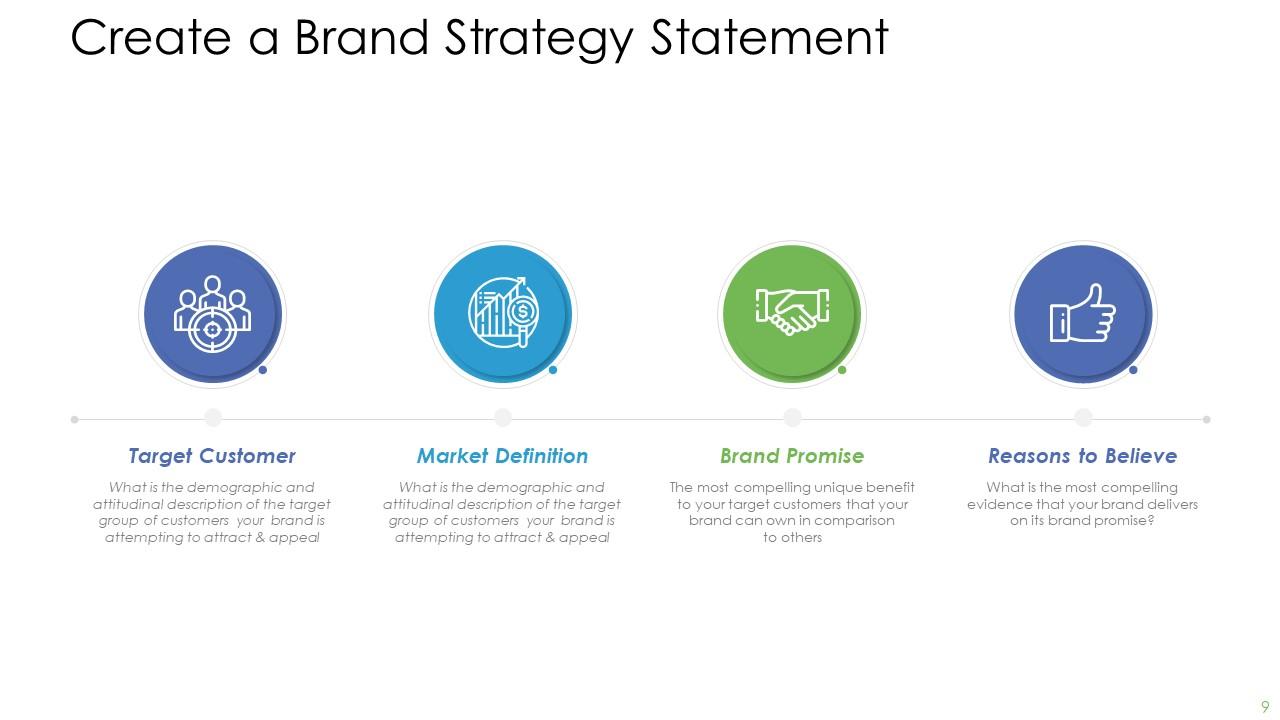
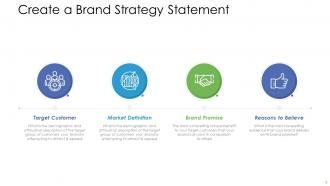
This template makes it easy to create your brand strategy statement. The slide will help you highlight your target customer, market definition, brand promise, and reasons to believe in an effective and creative way. As shown in the image above, the color scheme and creative templates have made the slide more appropriate.
Template 6: Brand Strategy Worksheet
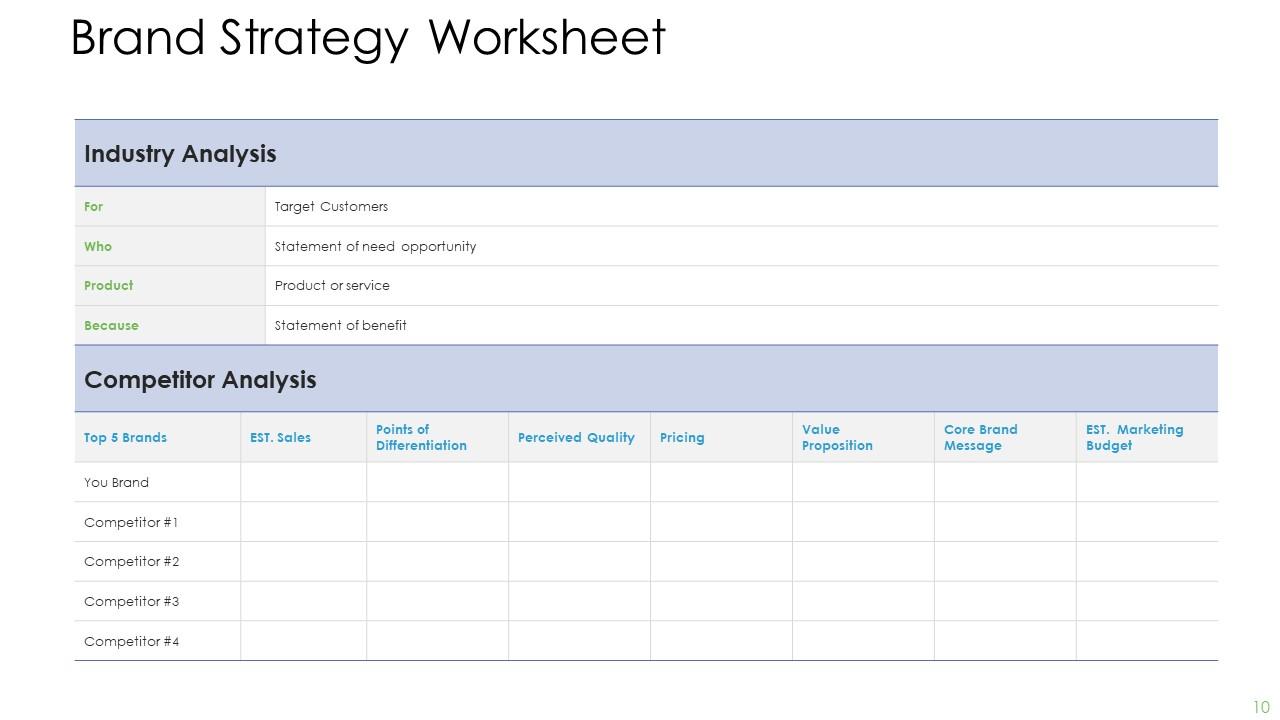
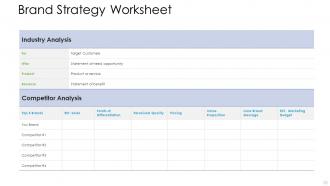
The brand strategy worksheet template will help you perform the industry analysis. Through the several columns, you can easily highlight the target customers, statement of need opportunity, a product or service, and statement of benefit. There is another column in this worksheet slide to mention top brands in your field, their sales, the points of differentiation, pricing, value proposition, core brand message, and estimated marketing budget.
Template 7: Brand Strategy Communication
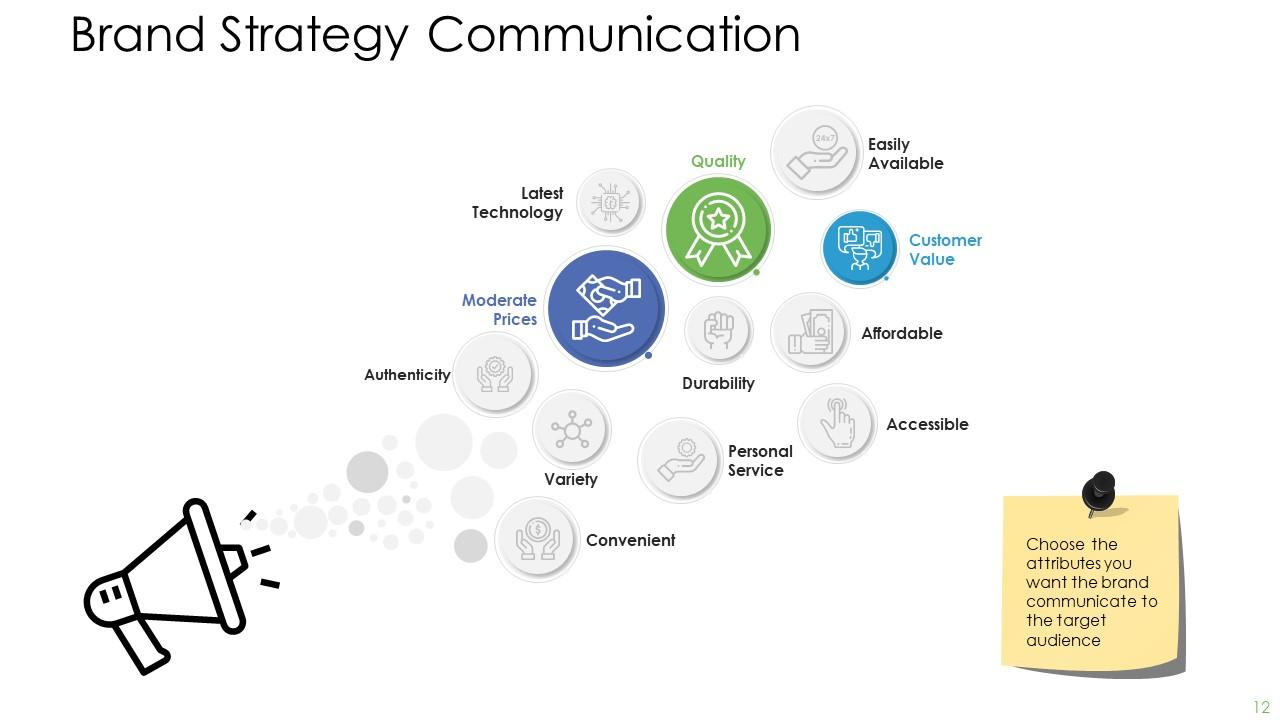
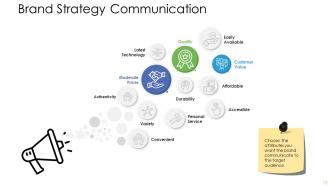
Brand strategy communication is essential so your brand's message reaches the target audience. You will be able to outline various components like variety, convenience, authenticity, prices, durability, personal service, latest technology, quality, availability, customer value, affordability, accessibility, quality, and customer value. This will certainly help you craft a compelling story for your brand.
Template 8: Brand Strategy Repositioning
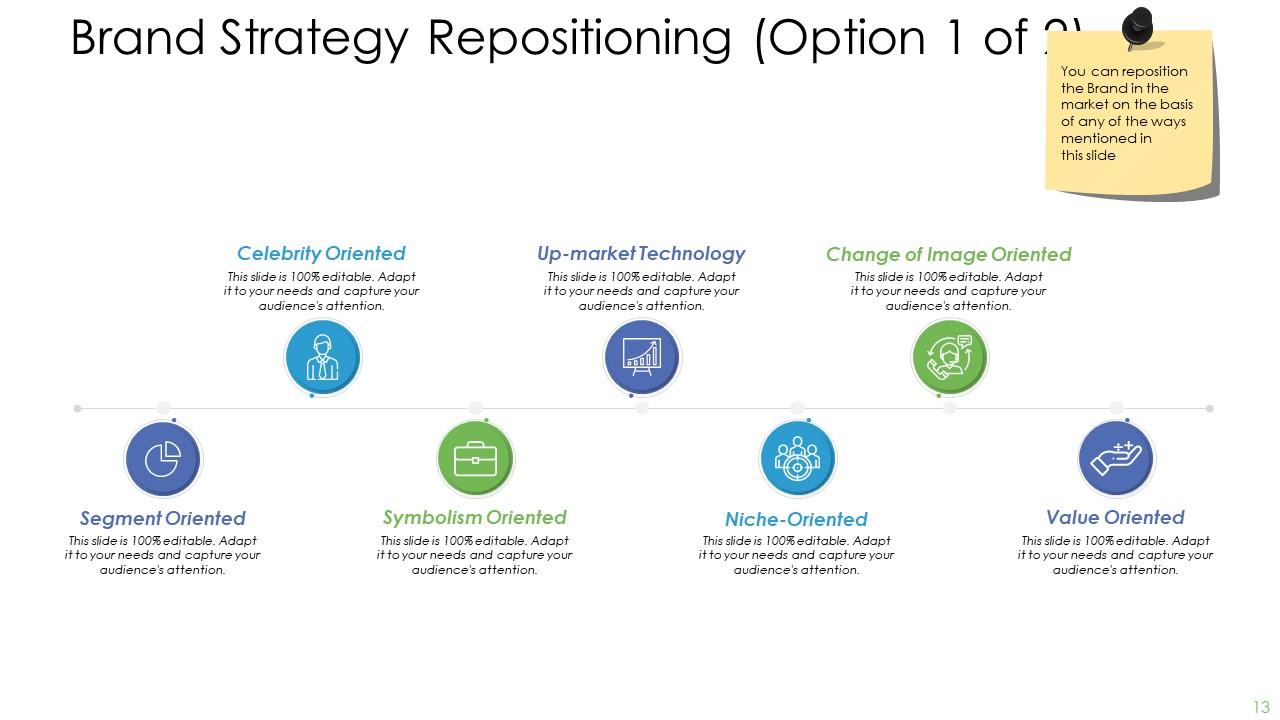
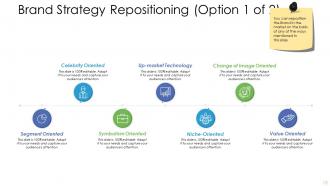
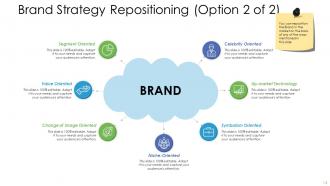
Repositioning brand strategy is helpful in changing how your brand is perceived in a market. You can highlight your various strategies, such as celebrity-oriented, Up-market technology, change-of-image-oriented, segment-oriented, symbolism-oriented, niche-oriented, and value-oriented. This template will help you develop and implement a successful repositioning strategy.
Template 9: Brand Strategy Chart
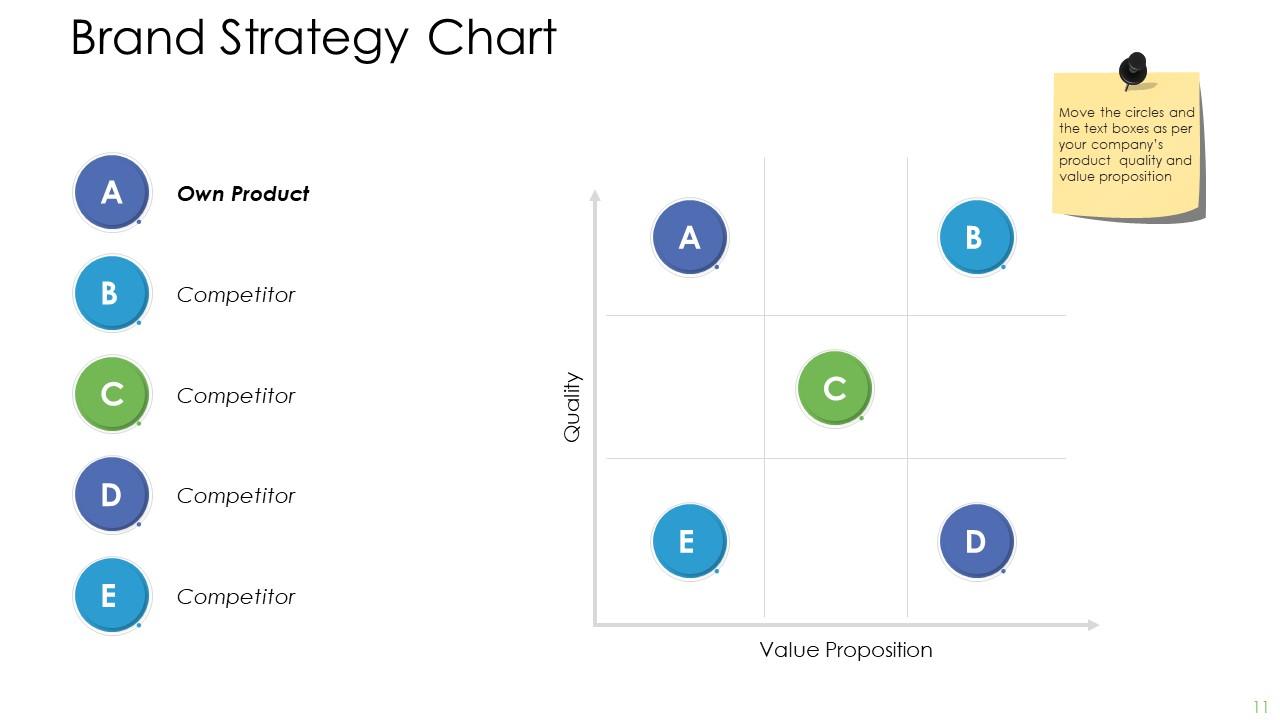
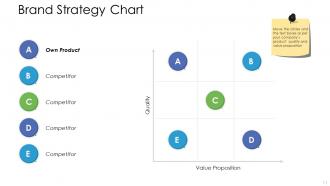
The brand strategy chart will help you track your brand strategy and compare it with those of your competitors. You can demonstrate your brand's position compared with others in terms of quality and value proposition. The chart will act as a roadmap to your brand’s identity.
In conclusion, these templates will help you create an effective brand strategy. Through these templates, you can easily define the purpose of your brand and communicate its values. Closely monitor and quickly adapt to the quickly changing digital landscape. Download our customizable PPT slides so you can build a brand that can stand against the ravages of time.
P.S. Explore our brand strategy framework rebrand launch plan PPT slides!!
Brand strategy powerpoint presentation slides with all 30 slides:
Use our Brand Strategy Powerpoint Presentation Slides to effectively help you save your valuable time. They are readymade to fit into any presentation structure.






FAQs for Brand strategy
Honestly, skip what sounds impressive and figure out what your audience actually gives a damn about. Do some digging - surveys, social media stalking, whatever it takes to understand their real problems and dreams. People have crazy good fake-detector skills, so don't even try with the buzzword BS. Pick 3-4 values you can actually live up to. "Innovation and excellence" makes me want to roll my eyes - go for something like "brutal honesty" or "luxury that doesn't break the bank." Oh, and test these out on real customers before you tattoo them on your website.
Stop trying to beat competitors at their game - find YOUR angle instead. What can only your brand deliver? Maybe it's your founder's backstory, your weird process, or how you tackle problems differently. Most brands just copy whatever's working (lazy, honestly). Look for customer frustrations everyone else ignores. Then go all-in on that positioning across everything you do. I'd start by auditing what actually makes you different - not what you hope makes you different. That's where the magic happens.
Your brand story is what makes people actually give a damn about your business. Look at Nike or Apple - nobody cares about their sneakers or phones as much as the story behind them. Find what's genuinely unique about how your company started or what you stand for. Then tell that story everywhere consistently. People buy from brands they connect with emotionally, not just because you have cool features. Trust me, authenticity beats flashy marketing every time. Don't overthink it though - just focus on what makes your journey different from everyone else's.
Honestly, your mission statement should be like a filter for every big decision you make. If an opportunity doesn't fit your mission, skip it - even when the money looks tempting. I've seen too many brands chase shiny objects and lose their identity. Use it to guide product development, market choices, hiring, everything. The best brands actually reference their mission during strategy meetings, not just slap it on their About page. When your whole team knows what you stand for, you'll build way stronger connections with customers. It's basically your north star, but only if people actually follow it.
So you need to track four main things: brand awareness (both aided and unaided), how people actually feel about your brand through surveys and sentiment tracking, loyalty stuff like NPS and repeat purchases, plus where you stand against competitors. Quarterly surveys work well for this. The perception tracking is honestly a pain to set up but totally worth it - I learned that the hard way. What's really cool though is when you start connecting these numbers to actual sales performance. That's where you'll see which brand investments are actually worth your money.
Honestly, just pick 2-3 platforms where your people actually are and nail those first. Don't try to be everywhere at once - you'll burn out. Post consistently but make it real, not just promotional stuff. Behind-the-scenes content works great. Reply to comments fast, use Stories on Insta, throw up polls on LinkedIn. The algorithms change constantly (so annoying) but engagement never goes out of style. Ask questions in your posts or share hot takes that get people talking. Oh, and customer stories are gold. You're building relationships, not collecting follower counts.
So you need four main things for brand positioning: who you're targeting, what makes you different, who you're competing with, and your brand's vibe. Honestly, the audience thing is where most people mess up - you can't be everything to everyone or you'll just blend into the background. Whatever makes you unique should be hard for competitors to rip off. Your personality has to match what you actually deliver too, not just sound good on paper. Oh, and start with figuring out your audience first. Everything else flows from there way easier.
Honestly, you gotta stay on top of your consumer data and be ready to switch things up fast. Track engagement patterns, how people actually buy stuff, and what they're saying about you - that's how you'll catch trends before everyone else does. The whole "set and forget" thing? Total disaster waiting to happen. I've watched so many brands crash because they refused to budge from their original game plan. Your strategy needs to be flexible, like actually flexible. Monthly audits of where you're connecting with people, then A/B test new stuff based on what the numbers are telling you.
You definitely need a brand guide - logo rules, colors, messaging, tone, all that stuff. Make sure every team has it, especially anyone customer-facing. I've watched companies totally bomb this when their marketing team sounds peppy but support is like... robotic? Super awkward. Templates are your friend for emails and social posts. Oh and actually audit your channels monthly - don't just create the guide and forget it exists. Train people on the *why* behind brand rules, not just the what. Give them enough context so they can make decent decisions without bugging you every time.
Honestly, collabs are just a smart way to borrow someone else's credibility. You get their audience, they get yours - win-win. Their reputation kind of rubs off on you, which is huge when you're trying to build trust. But here's the thing - pick partners whose vibe actually matches yours. I've seen some truly cringey mismatched partnerships that just made everyone look bad. Start with brands you genuinely respect in related spaces. What can you offer them? What do they bring to you? The whole thing falls apart if it feels forced or fake.
Honestly, rebranding is pretty risky but can pay off big time. You might attract new customers and stay relevant - maybe even charge more if you position yourself right. But here's the thing: you could totally confuse your existing customers or waste a ton of money for nothing. I'd only consider it if you're expanding to new markets, your brand feels ancient, or you're actually changing what you do (not just because everyone else is doing it). Oh, and make sure you're fixing a real problem first. Don't just rebrand because you're bored with your logo or whatever.
Dude, emotional branding is everything for customer loyalty. When people actually *feel* something for your brand, they'll stick with you forever and pay more without even thinking about it. Look at Apple fanboys camping out for new phones - that's not rational behavior, that's pure emotion. Or how some people get personally offended if you diss their Starbucks order. Honestly, once customers see your brand as part of their identity instead of just another purchase, you've won. They'll forgive your screwups and won't shop around for cheaper options. Figure out what emotions you want people to feel, then make sure that vibe shows up everywhere - your ads, your website, even how your customer service talks to people.
Start with surveys, social listening, and customer interviews to gather feedback. Look for patterns instead of isolated complaints - that's where you'll find the good stuff. Test any messaging changes with small groups first, then expand what actually works. Here's something people forget: tell your customers how you used their feedback! Map insights to specific brand touchpoints and set up quarterly reviews. The whole feedback loop thing only works if you actually close it. Social listening can be a bit tedious but it's worth the effort for spotting those recurring themes that should shape your brand strategy.
Your visuals are basically your brand's first impression - colors, fonts, logo all hit people before they read anything. Spotify's that bright green? Screams energy and music discovery. Banks go with deep blue because it feels stable and trustworthy. Pick 2-3 visual elements that actually back up what your brand promises, then stick with them everywhere. Consistency is what makes people start connecting the dots automatically. I mean, you see golden arches and immediately think McDonald's, right? That's the goal you're after.
Here's what actually works - don't chase trends, create them. Get your team into weird niche communities where stuff starts brewing, not TikTok where it's already blown up. Yeah, social listening tools are cool, but honestly? Having people on your team who genuinely live in different subcultures beats any algorithm. Partner with emerging platforms super early. Build brand systems that can pivot fast when something hits. Oh, and set aside real budget for wild experimental campaigns - most will bomb but one might change everything. Test the crazy ideas on smaller audiences first. I'd also throw some money at startup collabs and maybe an internal innovation lab if you're feeling fancy.
-
Graphics are very appealing to eyes.
-
Great quality product.
-
Great quality product.
-
Easily Understandable slides.