


Marketing Strategic Management Powerpoint Presentation Slides
Create a cost-efficient marketing strategy with our content ready Marketing Resource Management Powerpoint Presentation Slides. The marketing effectiveness PowerPoint complete deck includes readymade templates like capture market insights, global market potential graphical & tabular format, survey insights, opportunity analysis, connect with customers, creating customer value & loyalty, purchase stage, moderate effect of customer decision making, medium that influence purchase decision, analysing business situation, consumer market segmentation, build strong brands, create brand equity, brand positioning framework, develop strategic positioning, competitive analysis, shape the marketing offerings, setting product strategy, designing & managing services, develop pricing strategies, communicate the value, marketing reach by channels, introducing new market offerings, new product detailed overview, tapping into global markets etc. The biggest advantage of time optimization presentation deck is that it is fully editable in powerpoint, you can change the color text and font style without any hassle to suit your business needs. Download this visually appealing market research presentation deck to create successful long-term growth. Conduct yourself in a charming fashion with our Marketing Strategic Management Powerpoint Presentation Slides. Always avoid appearing arrogant.
Create a cost-efficient marketing strategy with our content ready Marketing Resource Management Powerpoint Presentation Sli..

















-

- Google Slides is a new FREE Presentation software from Google.
- All our content is 100% compatible with Google Slides.
- Just download our designs, and upload them to Google Slides and they will work automatically.
- Amaze your audience with SlideTeam and Google Slides.
-

Want Changes to This PPT Slide? Check out our Presentation Design Services
-

- WideScreen Aspect ratio is becoming a very popular format. When you download this product, the downloaded ZIP will contain this product in both standard and widescreen format.
-

- Some older products that we have may only be in standard format, but they can easily be converted to widescreen.
- To do this, please open the SlideTeam product in Powerpoint, and go to
- Design ( On the top bar) -> Page Setup -> and select "On-screen Show (16:9)” in the drop down for "Slides Sized for".
- The slide or theme will change to widescreen, and all graphics will adjust automatically. You can similarly convert our content to any other desired screen aspect ratio.
Compatible With Google Slides

Get This In WideScreen
You must be logged in to download this presentation.


Do you want to remove this product from your favourites?
PowerPoint presentation slides
Presenting this set of slides with name - Marketing Strategic Management Powerpoint Presentation Slides. We bring to you to the point topic specific slides with apt research and understanding. Putting forth our PPT deck comprises of seventy-three slides. Our tailor-made Marketing Strategic Management Powerpoint Presentation Slides editable presentation deck assists planners to segment and expounds the topic with brevity. The advantageous slides on Marketing Strategic Management Powerpoint Presentation Slides are braced with multiple charts and graphs, etc. It is fully editable so that you can make changes to colors, data, and fonts if you need to. Download PowerPoint templates in both widescreen and standard screen. The presentation is fully supported by Google Slides. It can be easily converted into JPG or PDF format.

People who downloaded this PowerPoint presentation also viewed the following :
Content of this Powerpoint Presentation
Slide 1: This slide introduces Marketing Strategic Management. State Your Company Name and begin.
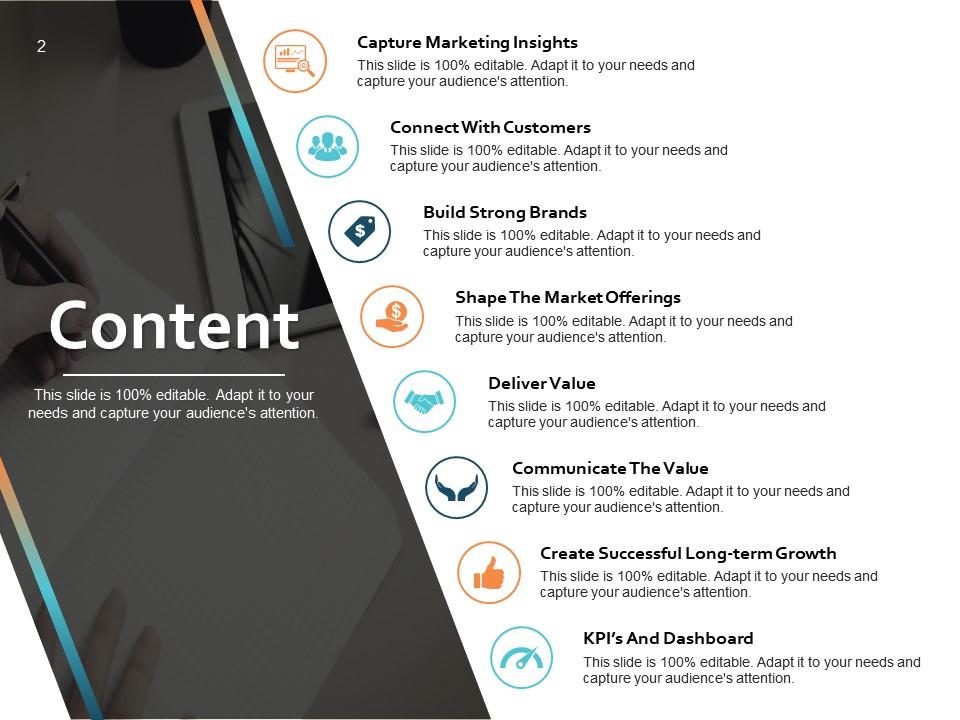
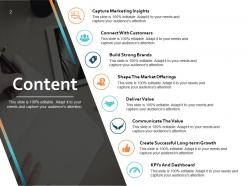
Slide 2: This slide shows Content of the presentation.
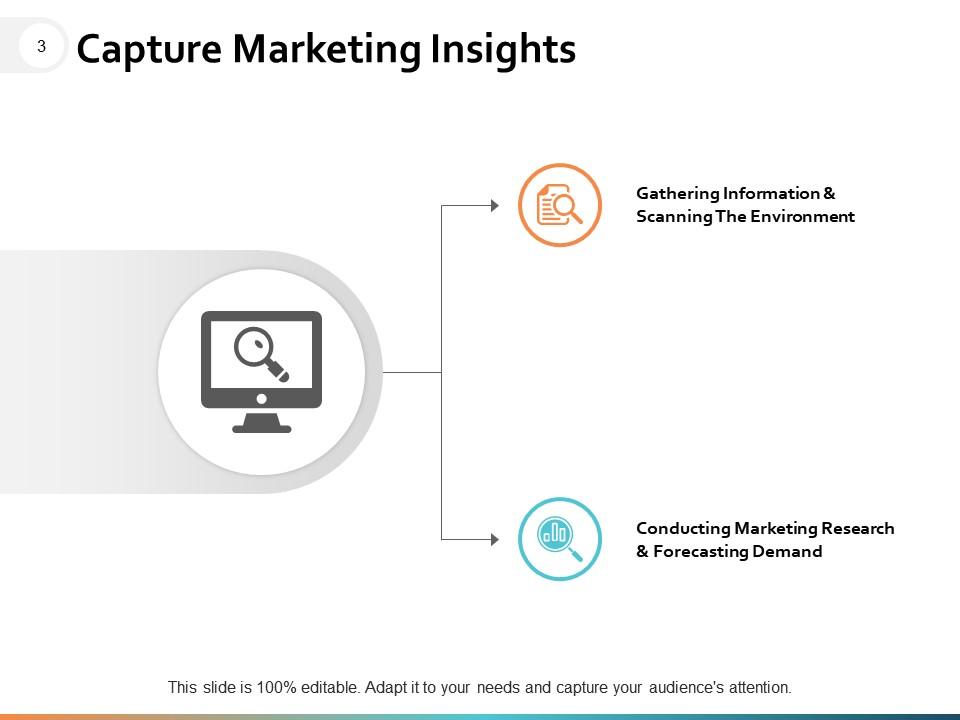
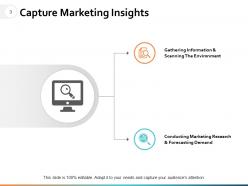
Slide 3: This slide presents Capture Marketing Insights describing- Gathering Information & Scanning the Environment, Conducting Marketing Research & Forecasting Demand.
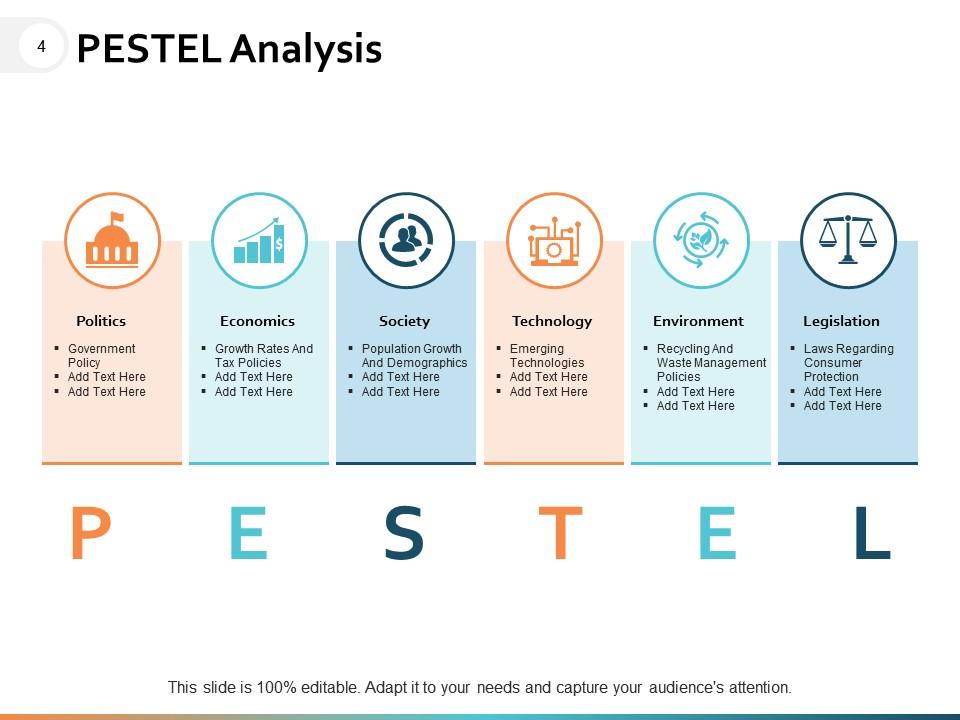
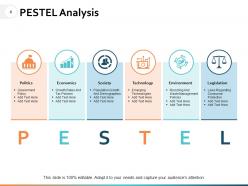
Slide 4: This slide displays PESTEL Analysis describing- Economics, Legislation, Society, Technology, Environment, Politics.
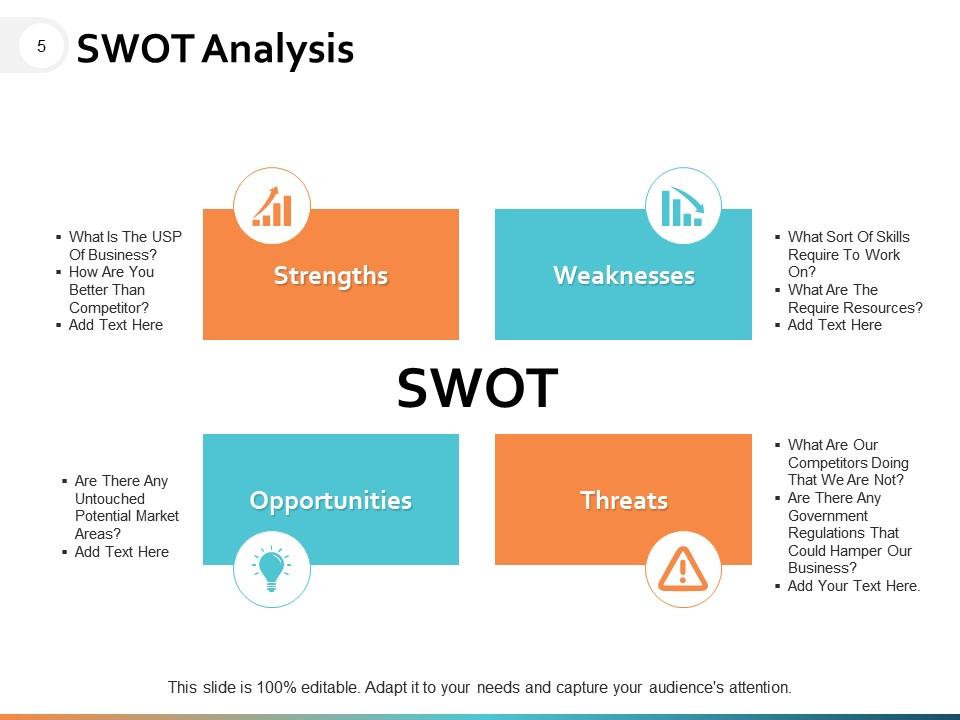
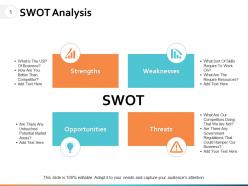
Slide 5: This slide represents SWOT Analysis describing- Strengths, Weaknesses, Opportunities, Threats.
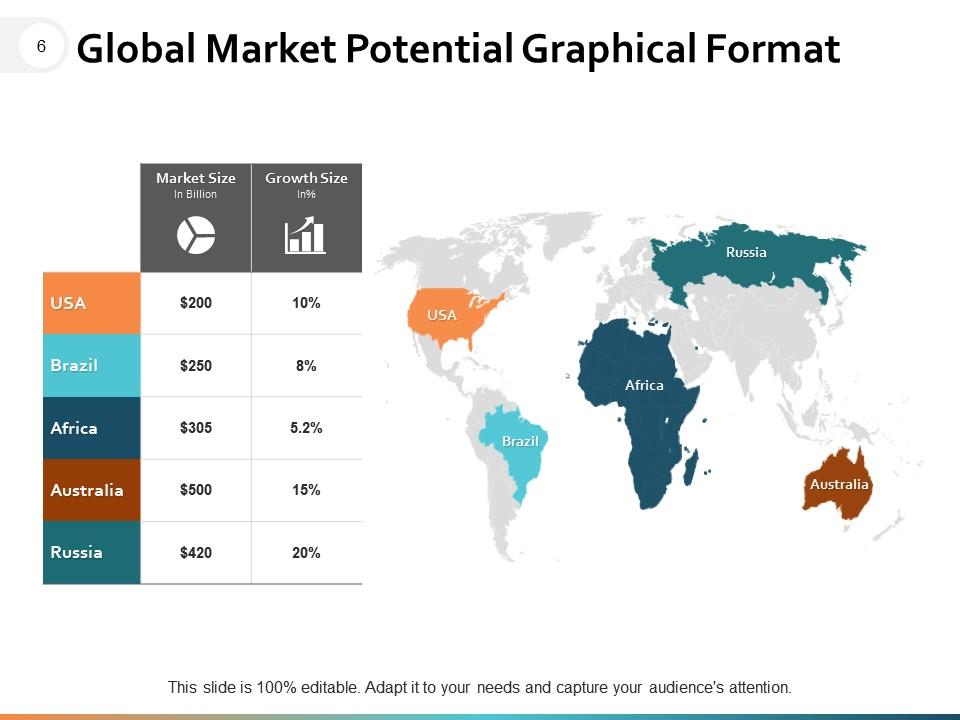
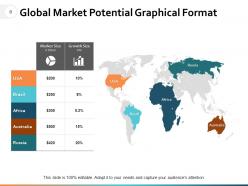
Slide 6: This slide showcases Global Market Potential Graphical Format with maps to describe Market Size and Growth Size of different countries.
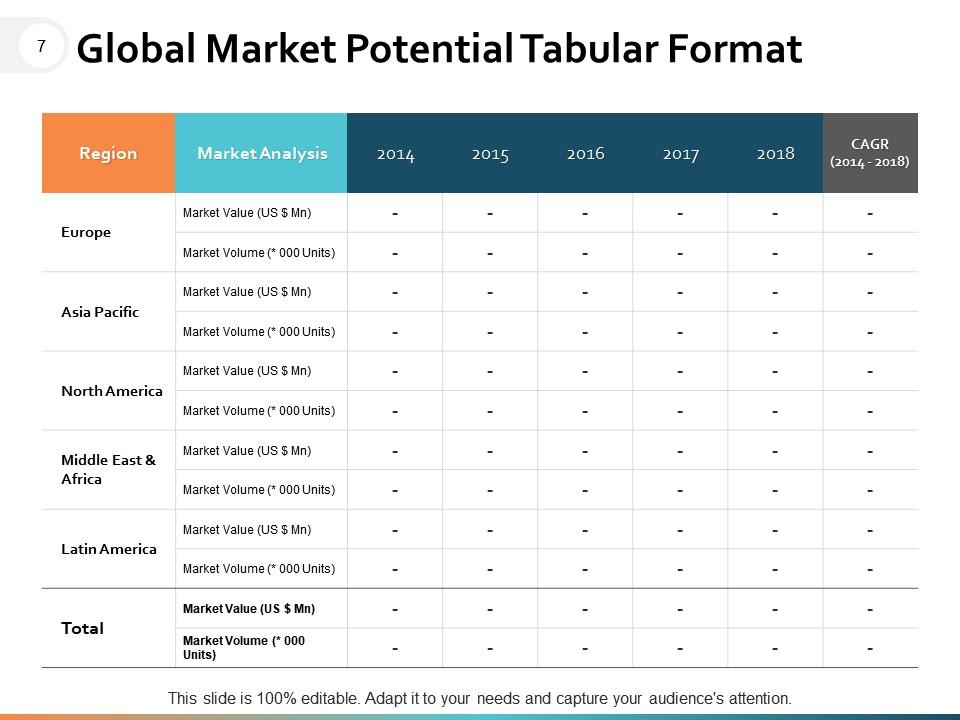
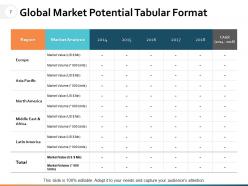
Slide 7: This slide shows Global Market Potential Tabular Format with categories as region, market analysis, years and CAGR.
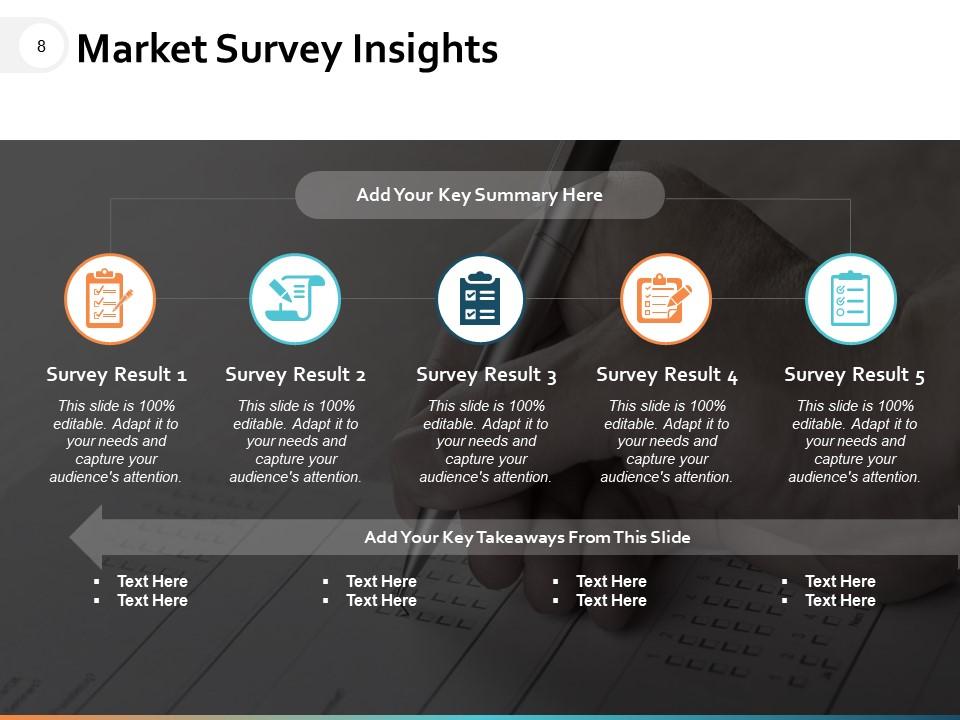
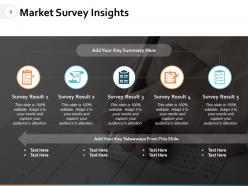
Slide 8: This slide presents Market Survey Insights with related icons and text boxes to show information.
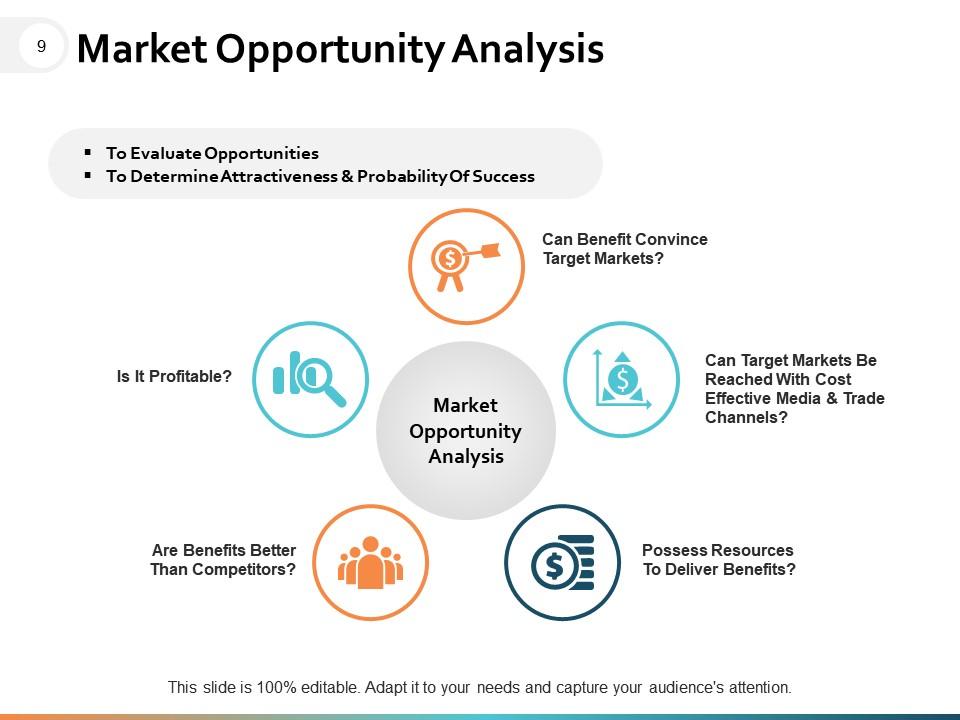
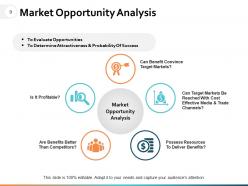
Slide 9: This slide displays Market Opportunity Analysis describing- Is It Profitable? Can Benefit Convince Target Markets? Can Target Markets Be Reached With Cost Effective Media & Trade Channels? Possess Resources To Deliver Benefits? Are Benefits Better Than Competitors?
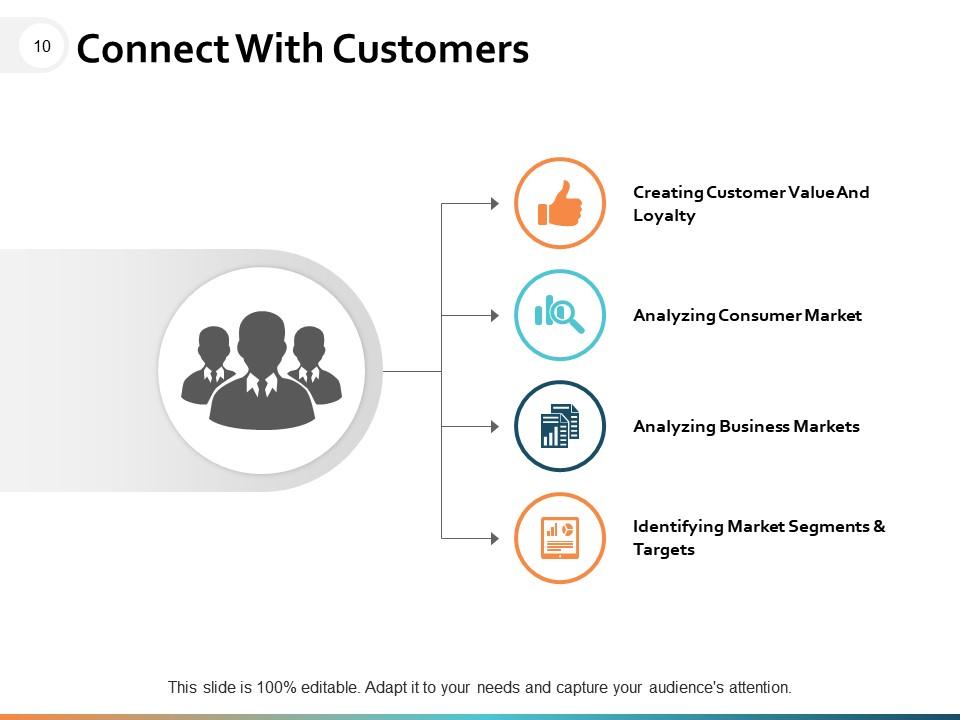
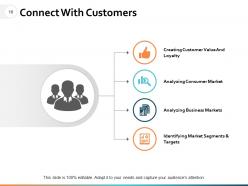
Slide 10: This slide represents Connect with Customers describing- Creating Customer Value and Loyalty, Analyzing Consumer Market, Analysing Business Markets, Identifying Market Segments & Targets.
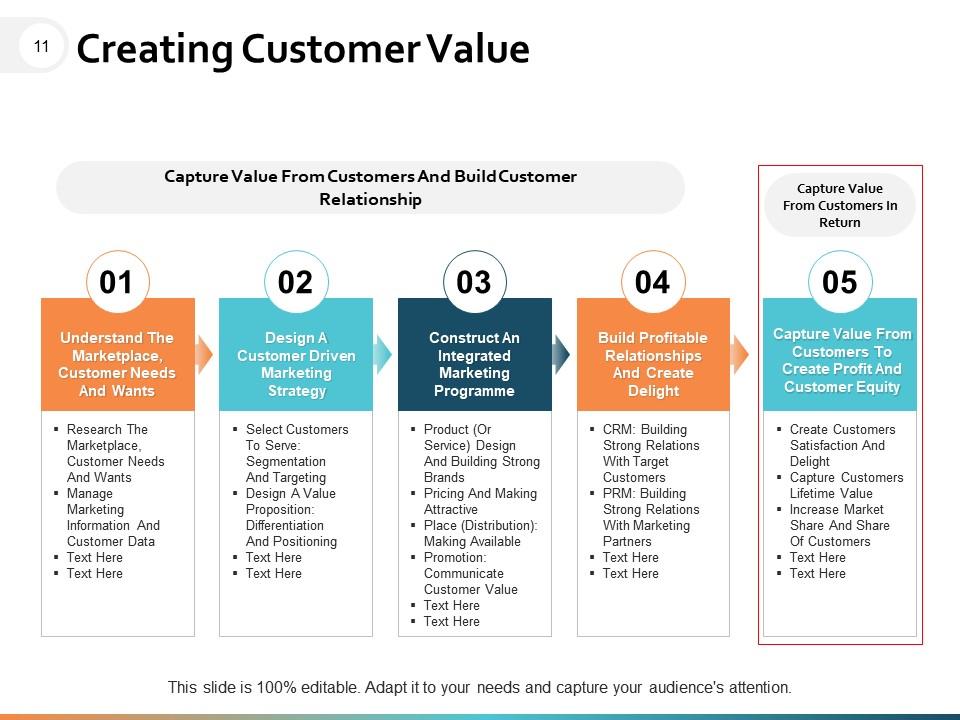
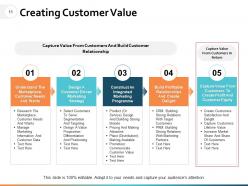
Slide 11: This slide showcases Creating Customer Value describing- Understand the marketplace, customer needs and wants, Design a customer driven marketing strategy, Construct an integrated marketing programme, Build profitable relationships and create delight, Capture Value From Customers And Build Customer Relationship.
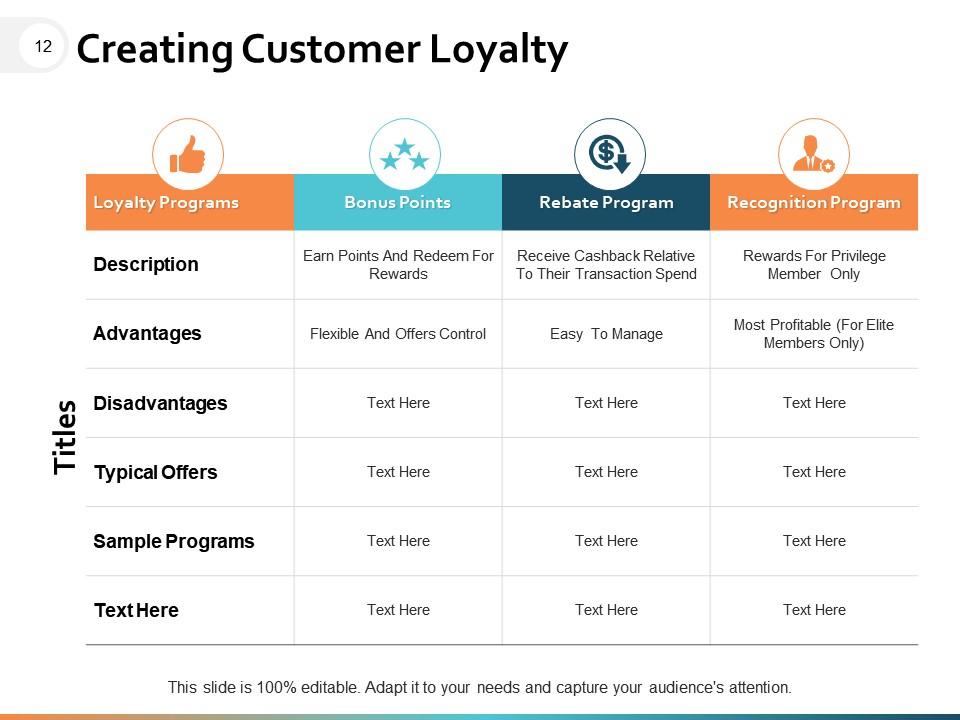
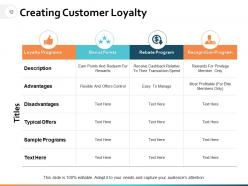
Slide 12: This slide shows Creating Customer Loyalty with- Recognition Program, Rebate Program, Bonus Points, Loyalty Programs.
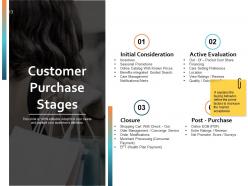
Slide 13: This slide presents Customer Purchase Stages describing- Initial Consideration, Active Evaluation, Closure.
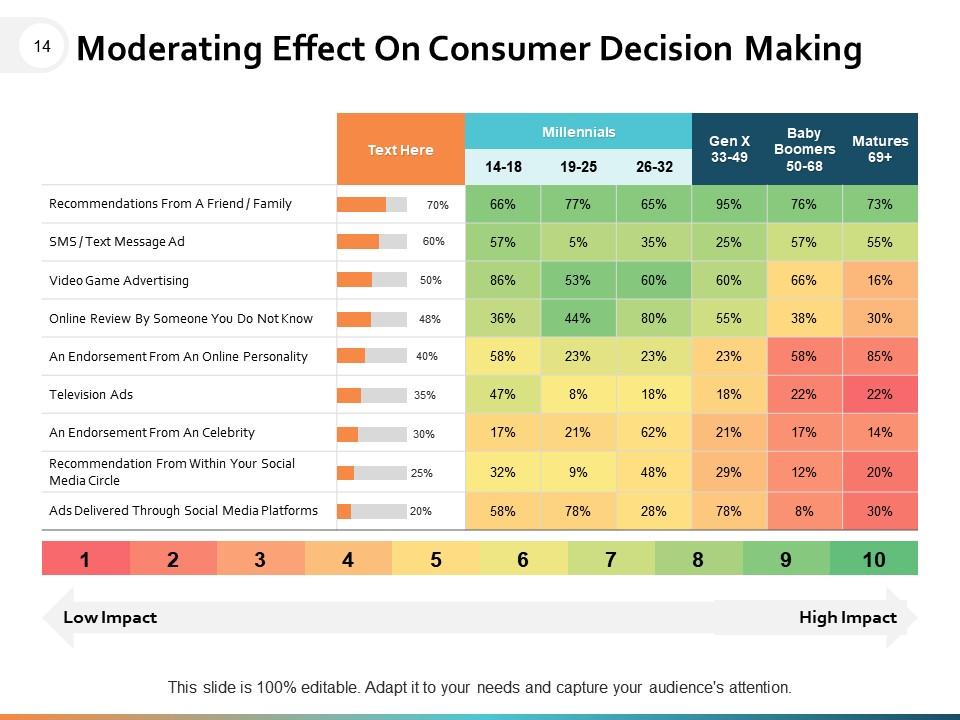
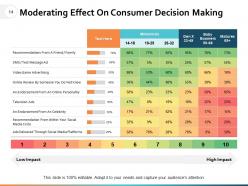
Slide 14: This slide displays Moderating Effect on Consumer Decision Making with SMS / text message ad, Video game advertising, Online review by someone you do not know, An endorsement from an online personality, Recommendation from within your social media circle, Recommendation from within your social media circle. Television ads
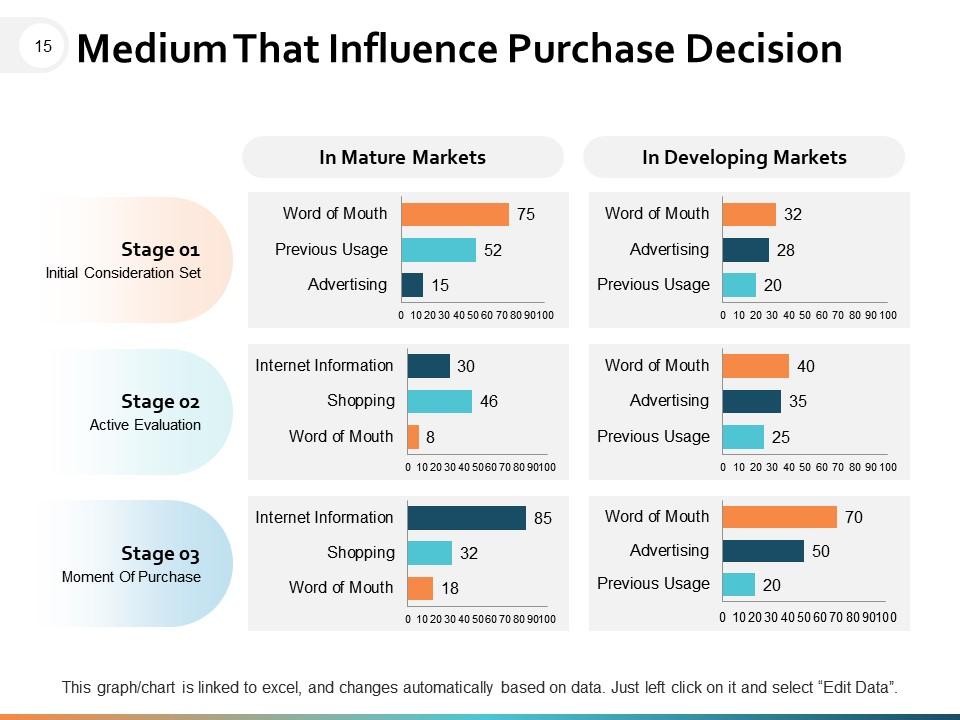
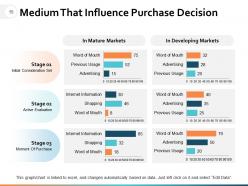
Slide 15: This slide represents Medium that Influence Purchase Decision in mature and developing markets.
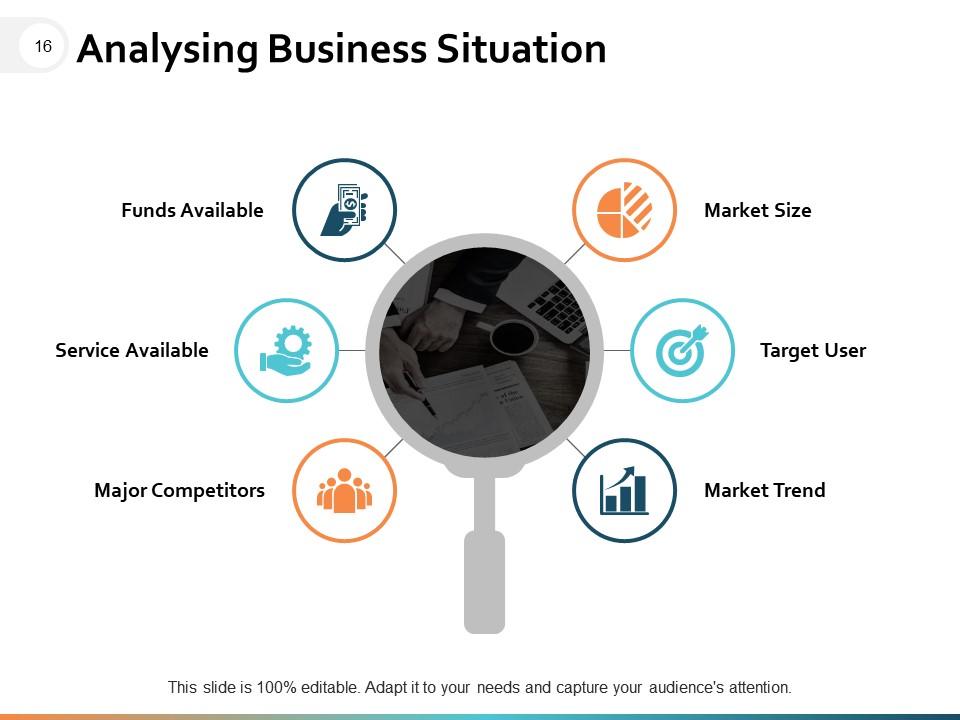
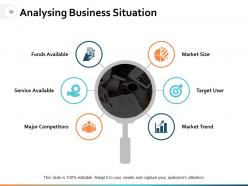
Slide 16: This slide showcases Analysing Business Situation with- Funds Available, Service Available, Major Competitors, Market Trend, Target User, Market Size.
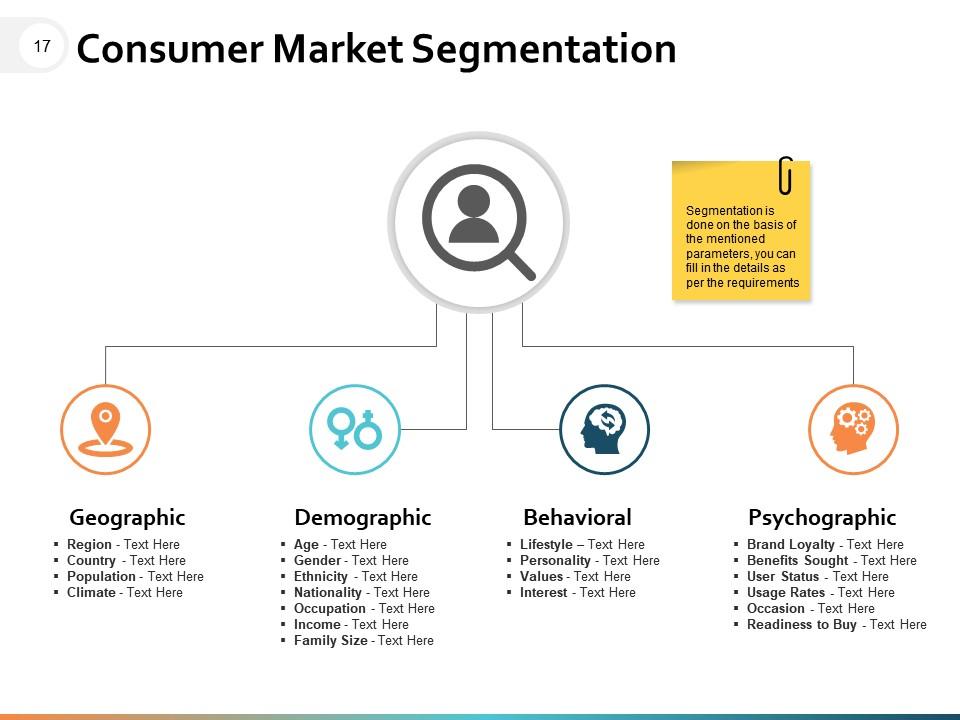
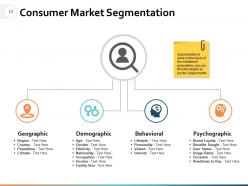
Slide 17: This slide shows Consumer Market Segmentation describing- Geographic, Demographic, Behavioral and Psychographic factors.
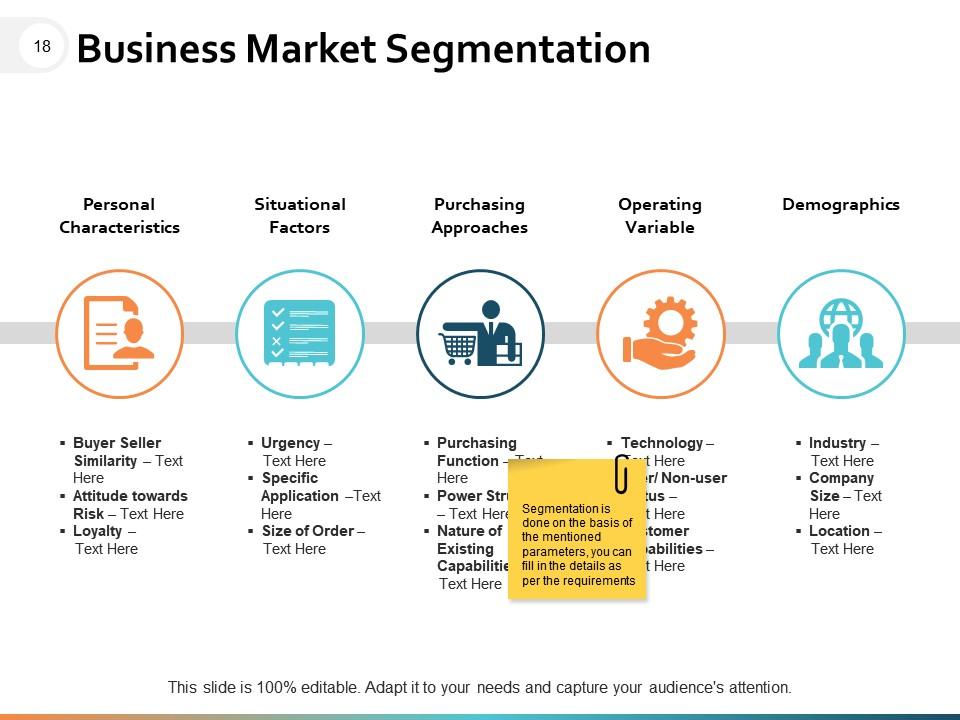
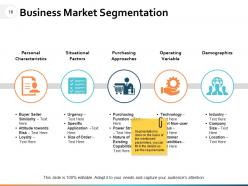
Slide 18: This slide presents Business Market Segmentation describing- Operating Variable, Demographics, Purchasing Approaches, Personal Characteristics, Situational Factors.
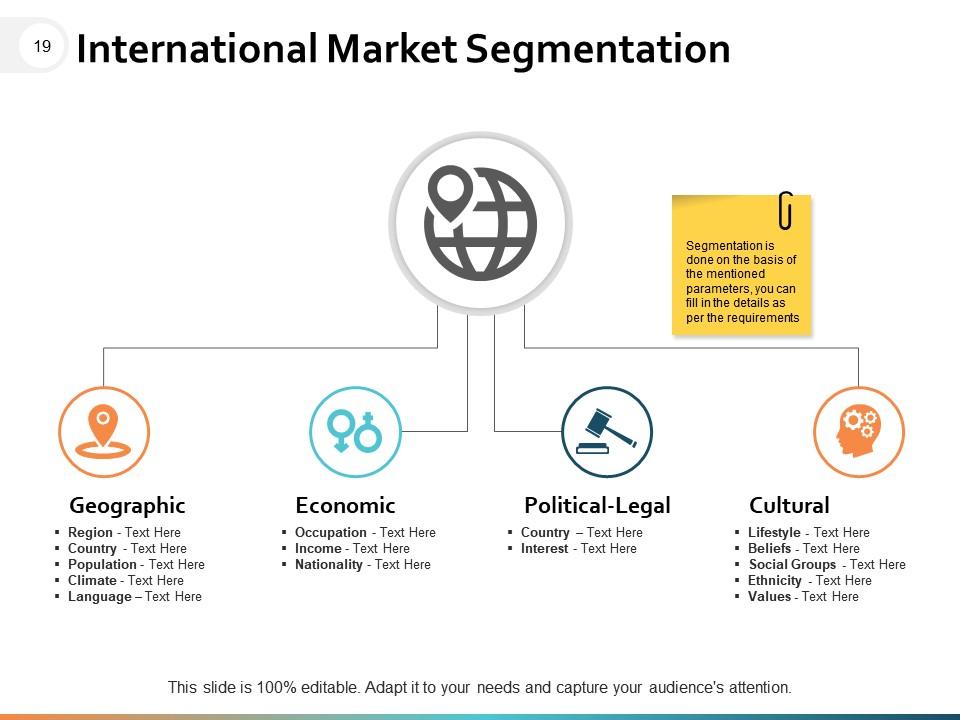
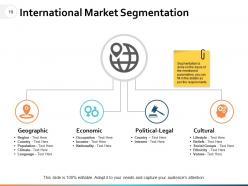
Slide 19: This slide displays International Market Segmentation describing- Segmentation is done on the basis of the mentioned parameters, you can fill in the details as per the requirements Geographic, Cultural, Economic, Political-Legal.
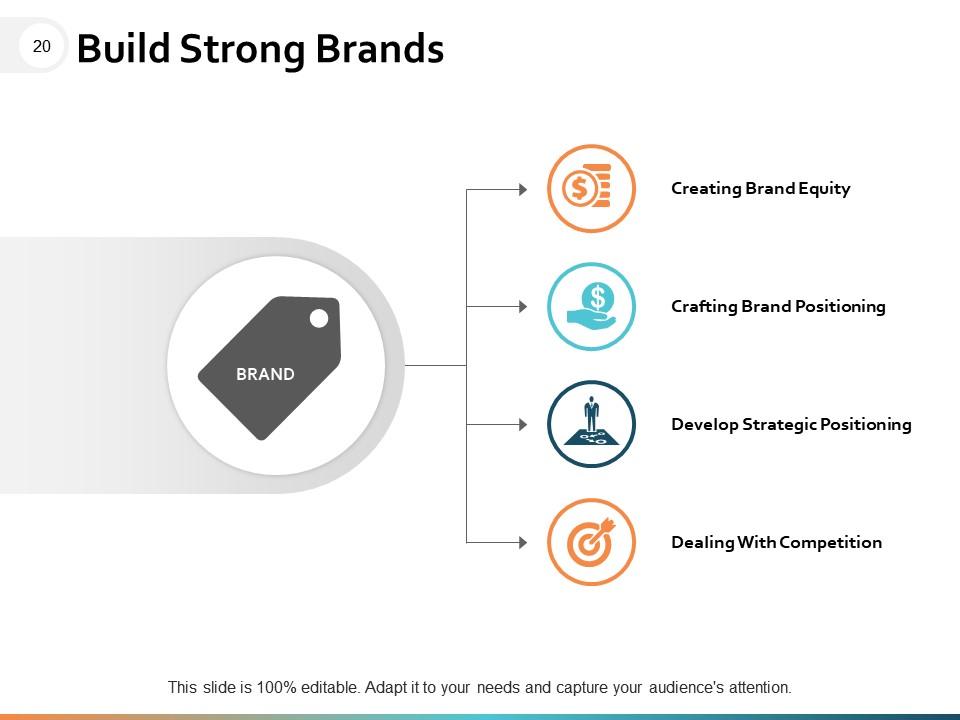
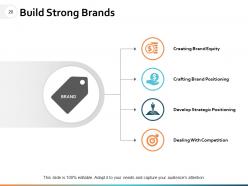
Slide 20: This slide represents Build Strong Brands with- Creating Brand Equity, Crafting Brand Positioning, Develop Strategic Positioning, Dealing with Competition.
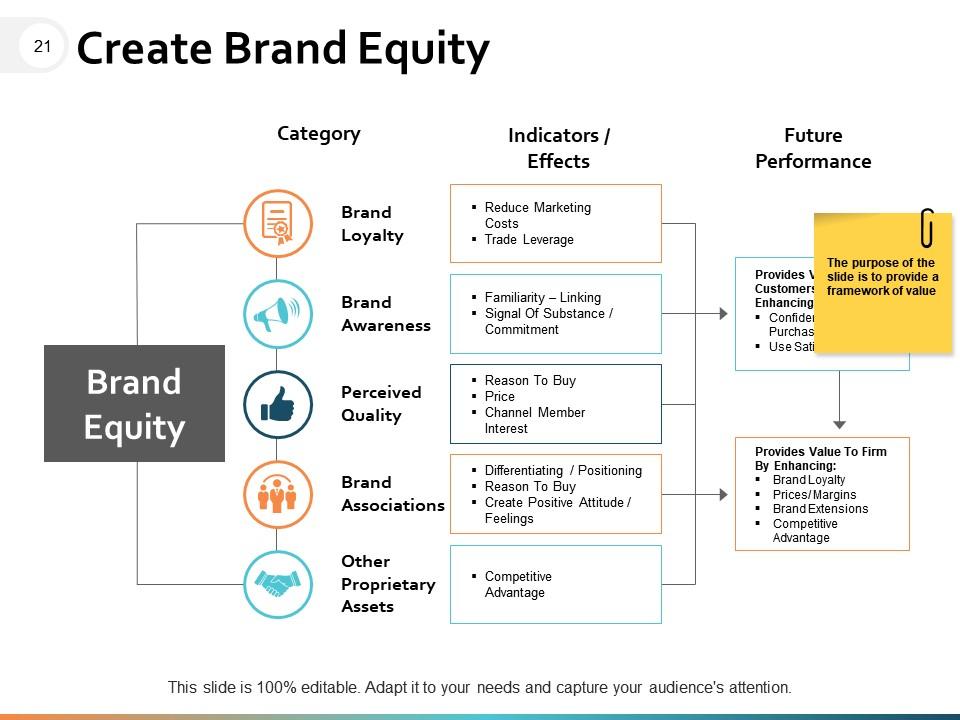
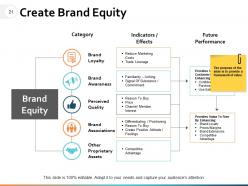
Slide 21: This slide showcases Create Brand Equity with- Brand Loyalty, Brand Awareness, Perceived Quality, Brand Associations, Other Proprietary Assets.
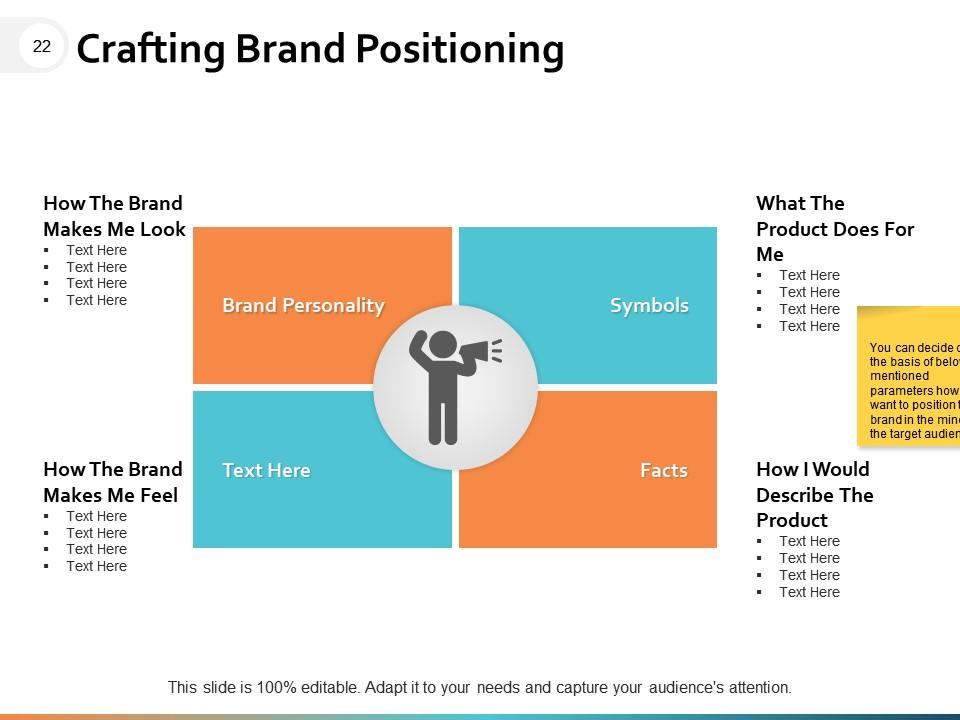
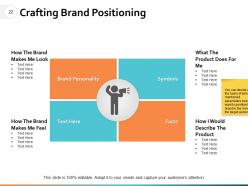
Slide 22: This slide shows Crafting Brand Positioning describing- How The Brand Makes Me Look, What The Product Does For Me, How The Brand Makes Me Feel, How I Would Describe The Product.
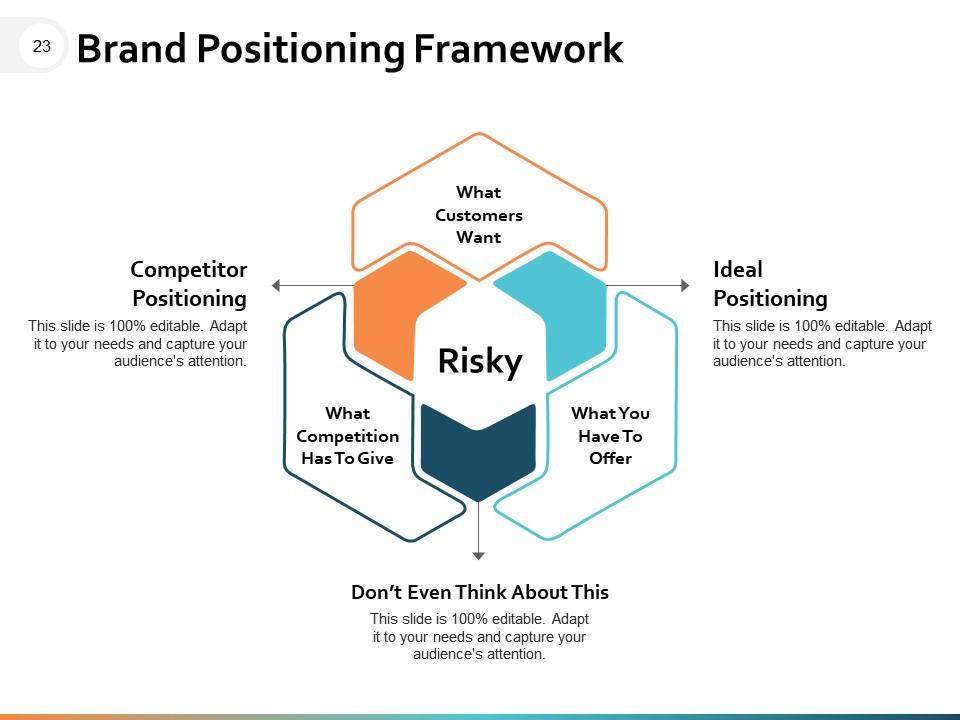
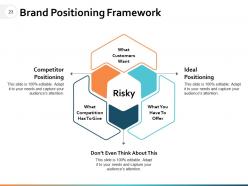
Slide 23: This slide presents Brand Positioning Framework describing- What Customers Want, What You Have To Offer, What Competition Has To Give.
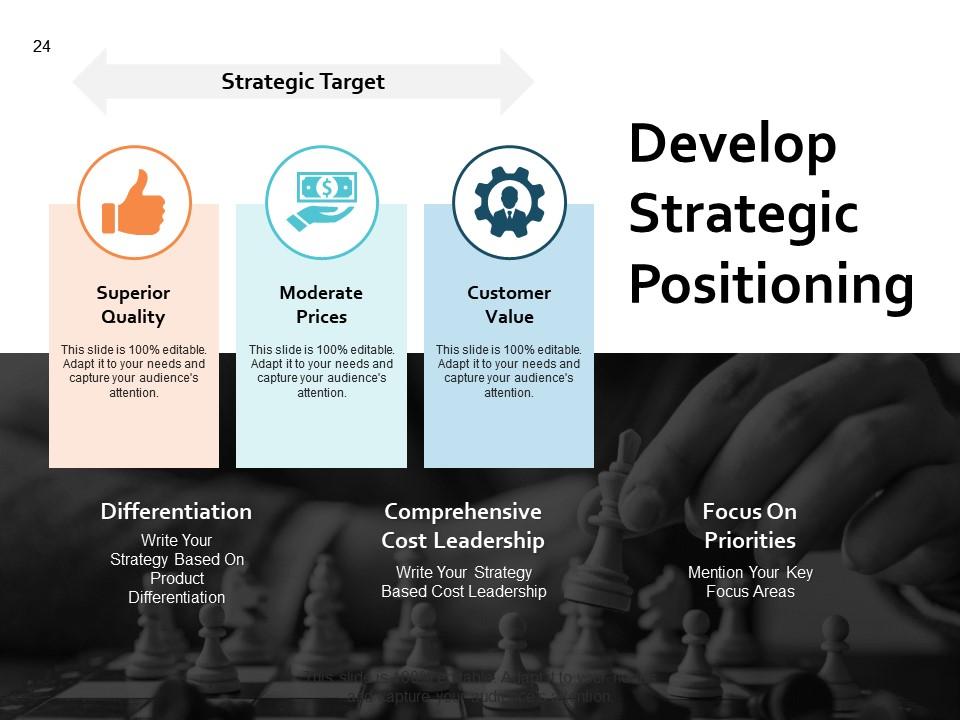
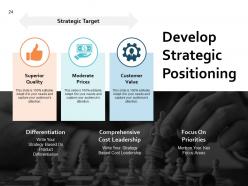
Slide 24: This slide displays Develop Strategic Positioning with- Differentiation, Comprehensive Cost Leadership, Focus on Priorities, Superior Quality, Moderate Prices, Customer Value.
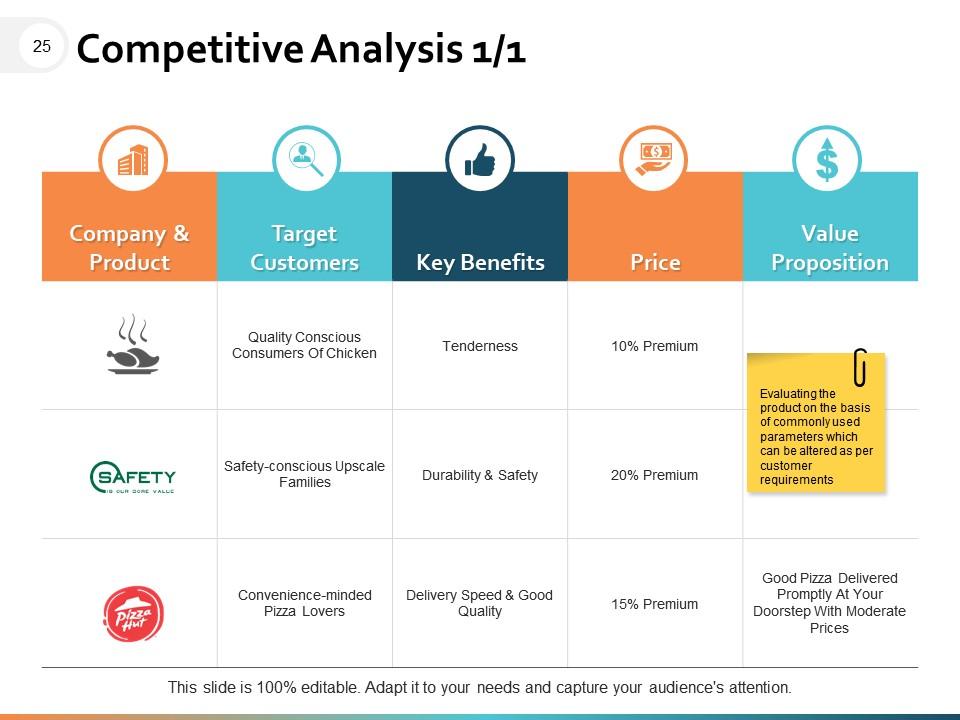
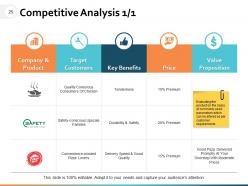
Slide 25: This slide represents Competitive Analysis describing- Company & Product, Target Customers, Price, Value Proposition, Key Benefits.
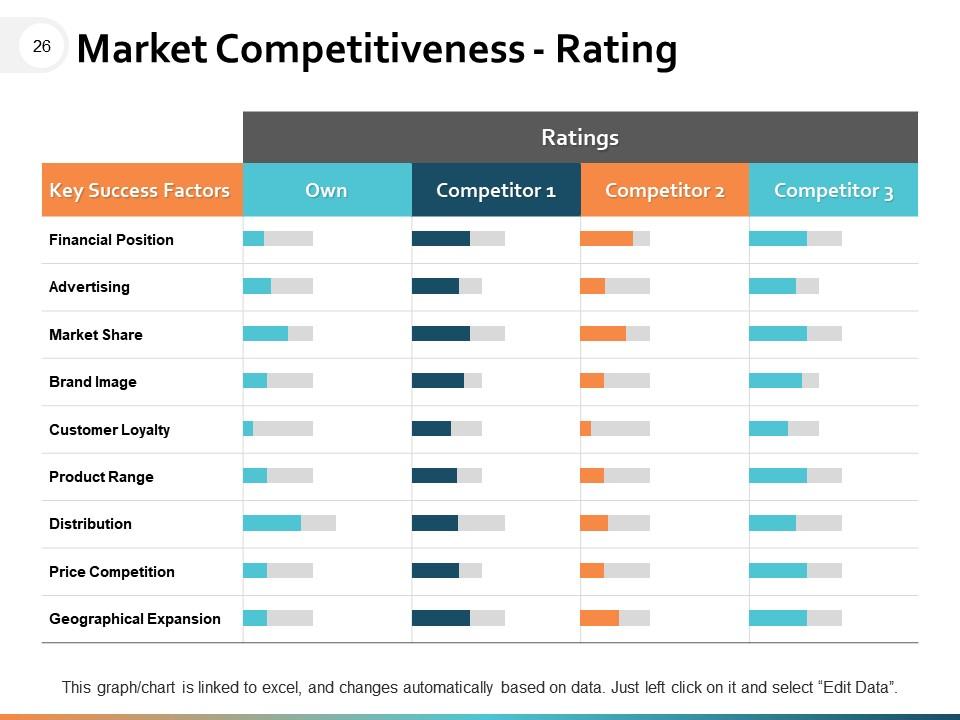
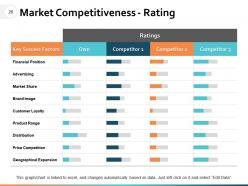
Slide 26: This slide showcases Market Competitiveness- Ratings with Key success factors, competitor ratings etc.
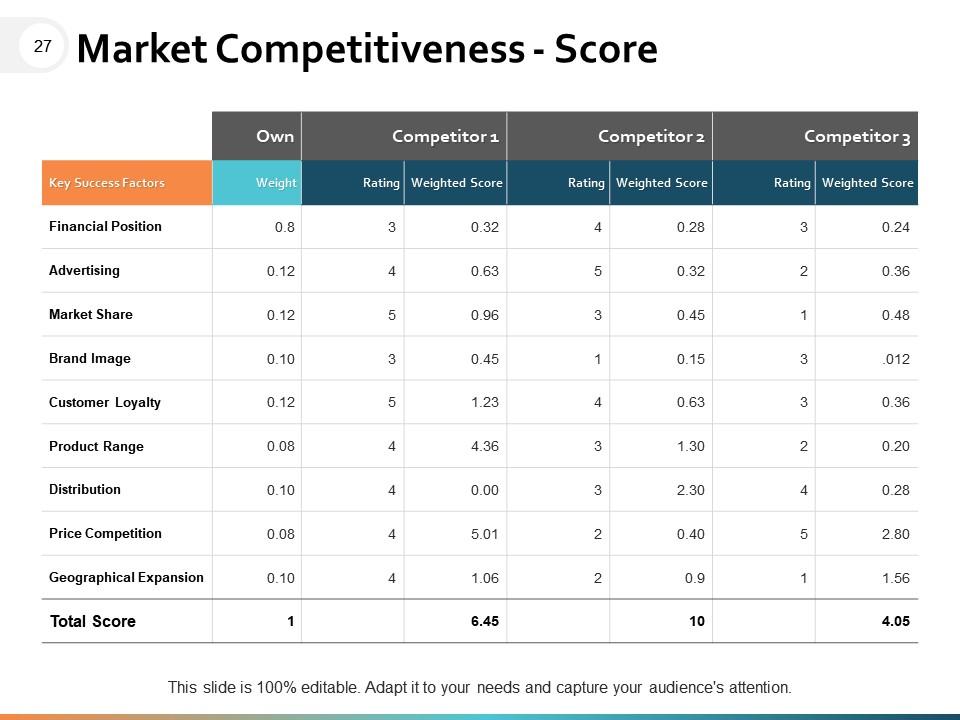
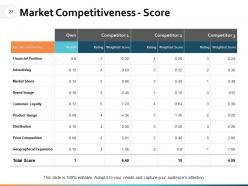
Slide 27: This slide shows Market Competitiveness- Score with Key success factors, weighted score, ratings etc.
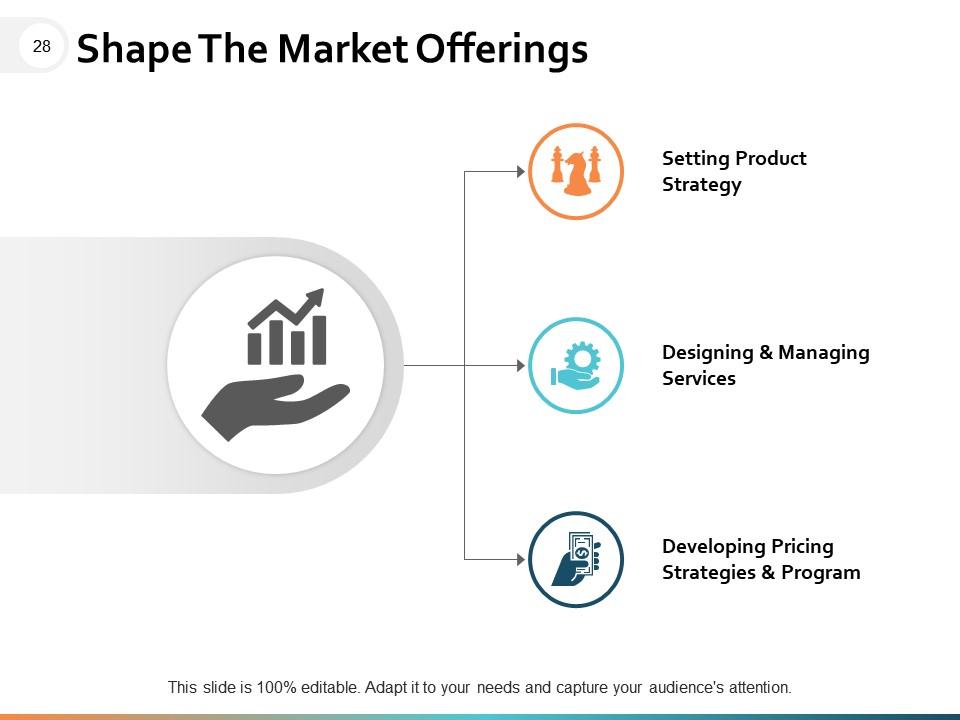
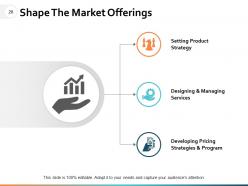
Slide 28: This slide presents Shape the Market Offerings with- Setting Product Strategy, Designing & Managing Services, Developing Pricing Strategies & Program.
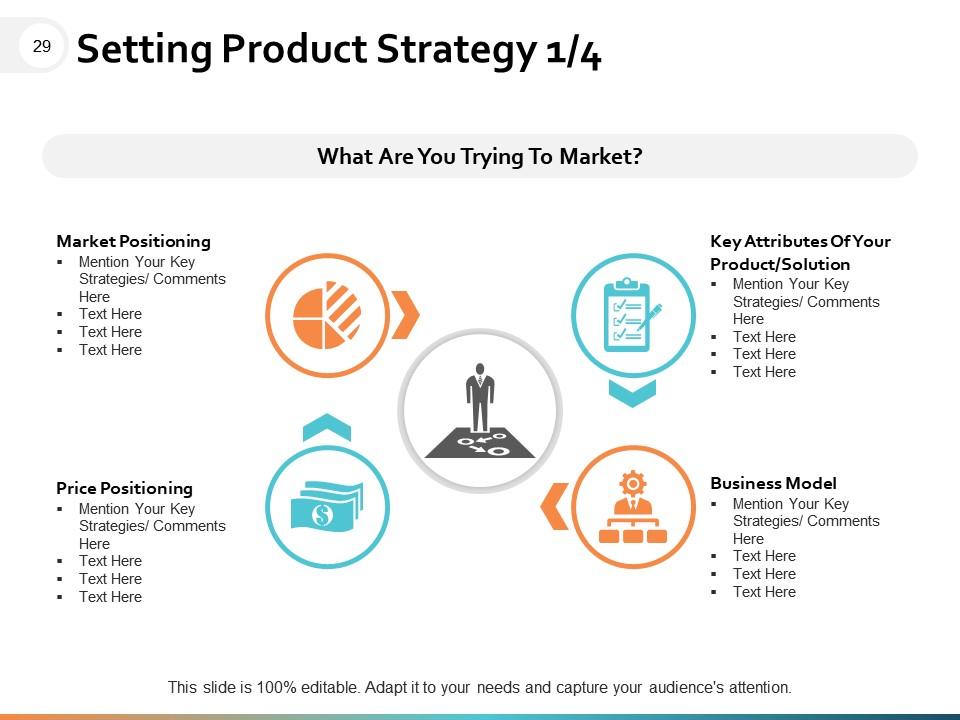
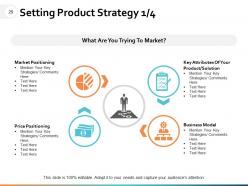
Slide 29: This slide displays Setting Product Strategy describing- Key Attributes Of Your Product / Solution, Price Positioning, Market Position, Business Model.
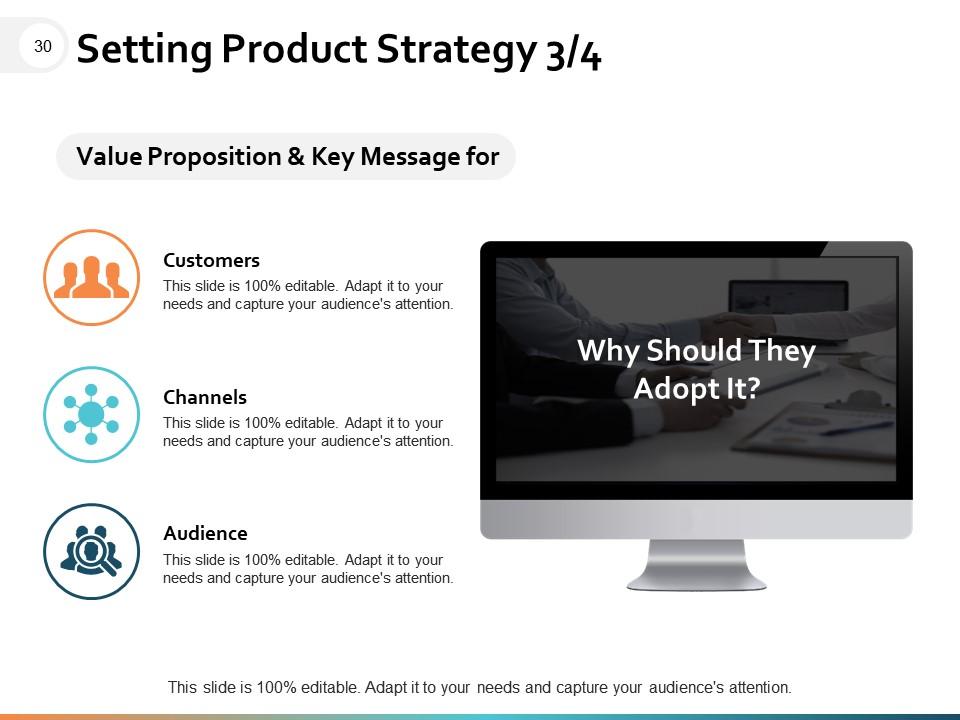
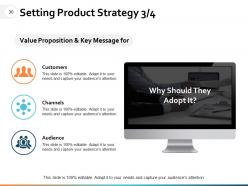
Slide 30: This is another slide on Setting Product Strategy describing- Customers, Channels, Audience.
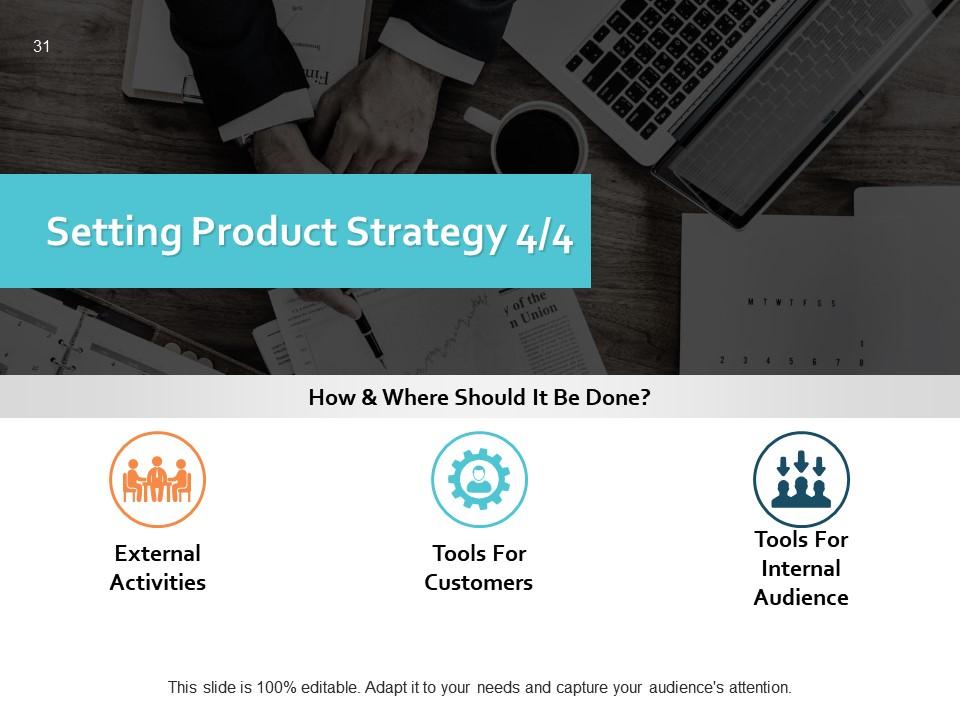
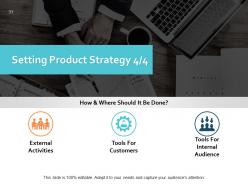
Slide 31: This is another slide on Setting Product Strategy describing- External Activities, Tools For Customers, Tools For Internal Audience.
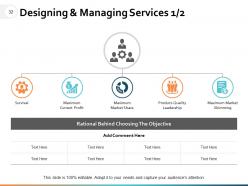
Slide 32: This slide shows Designing & Managing Services describing- Survival, Maximum Current Profit, Maximum Market Share, Product-Quality Leadership, Maximum Market Skimming.
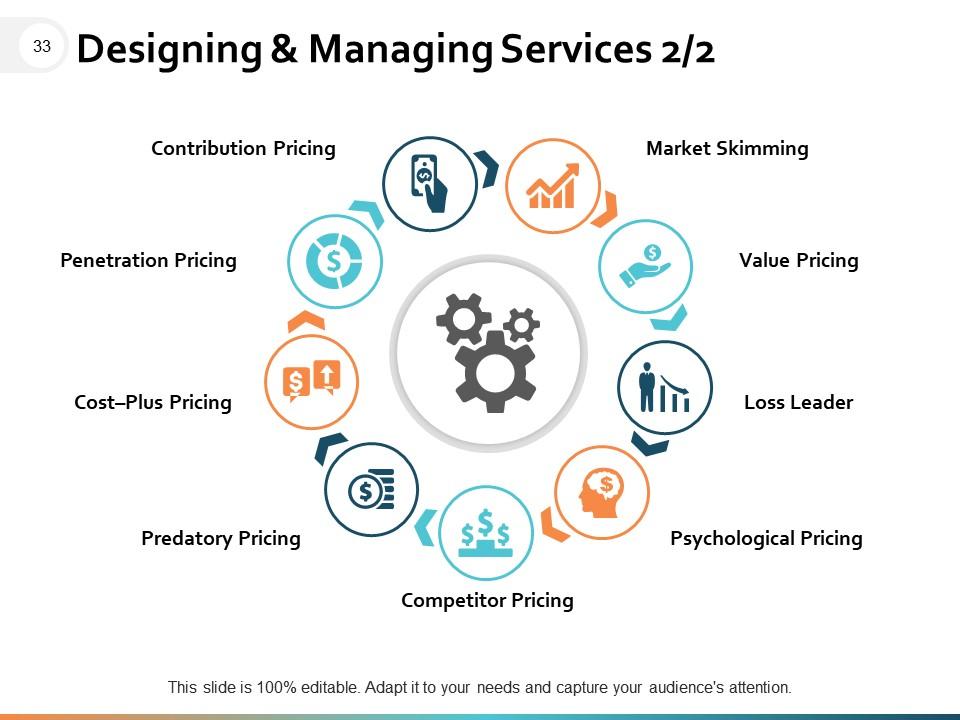
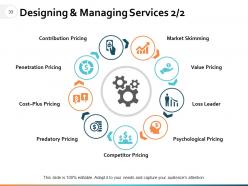
Slide 33: This is another slide on Designing & Managing Services describing- Market Skimming, Value Pricing, Loss Leader, Psychological Pricing, Competitor Pricing, Predatory Pricing, Cost-plus Pricing, Penetration Pricing, Contribution Pricing.
Slide 34: This slide presents Developing Pricing Strategies and Programs with imagery and text boxes to show information.
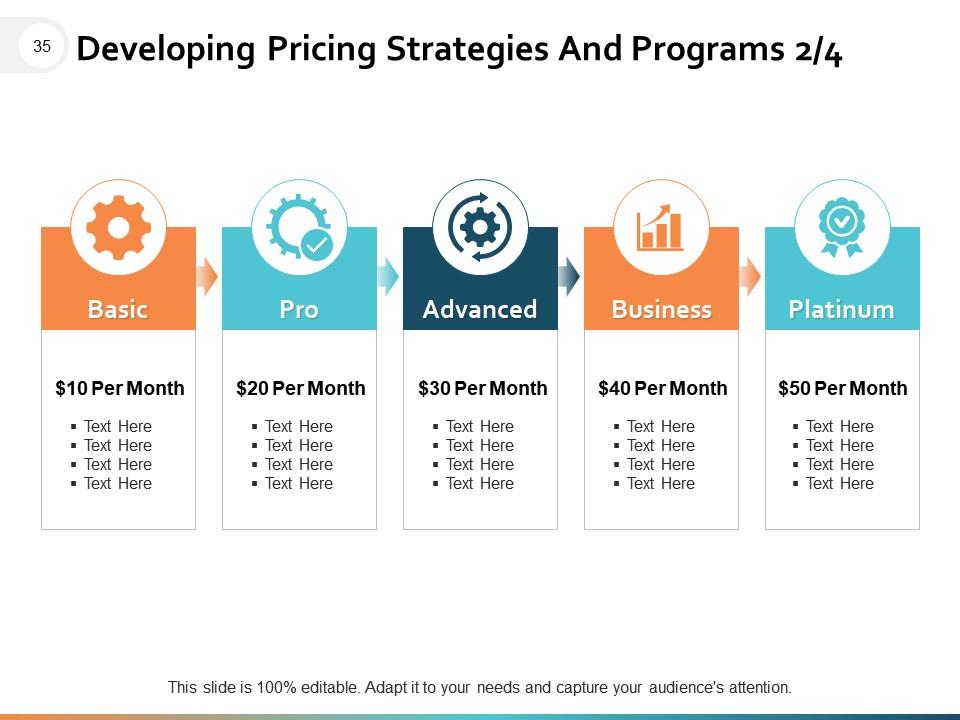
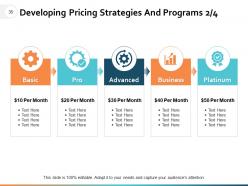
Slide 35: This is another slide on Developing Pricing Strategies and Programs with categories as- Basic, Pro, Advanced, Business, Platinum.
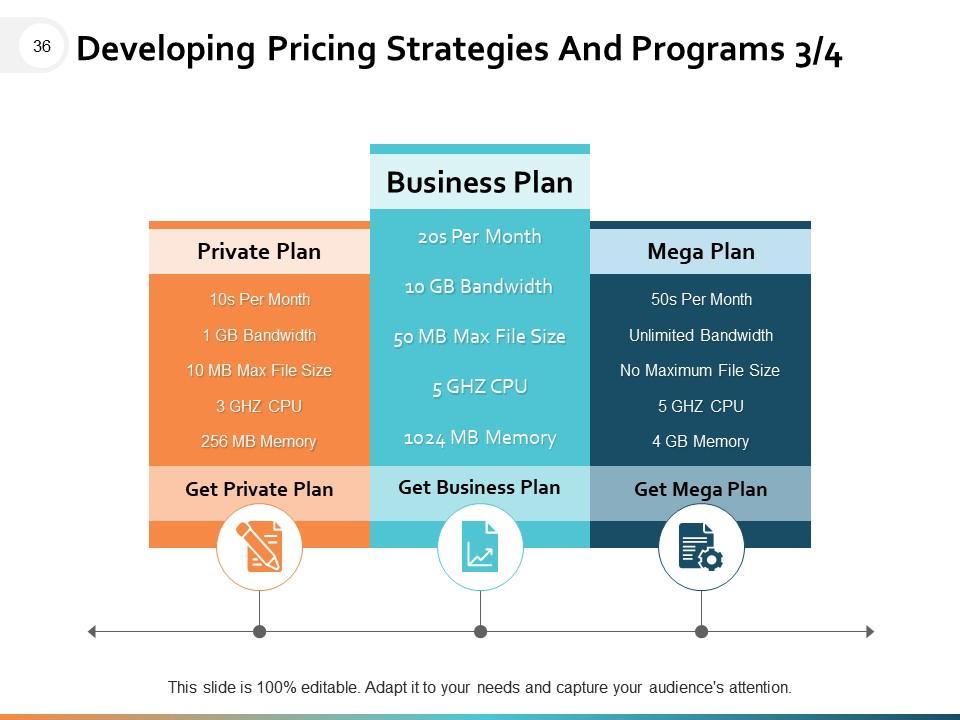
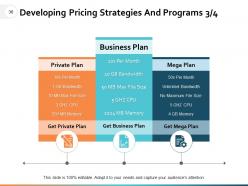
Slide 36: This is another slide on Developing Pricing Strategies and Programs with- Business Plan, Private Plan and Mega Plan.
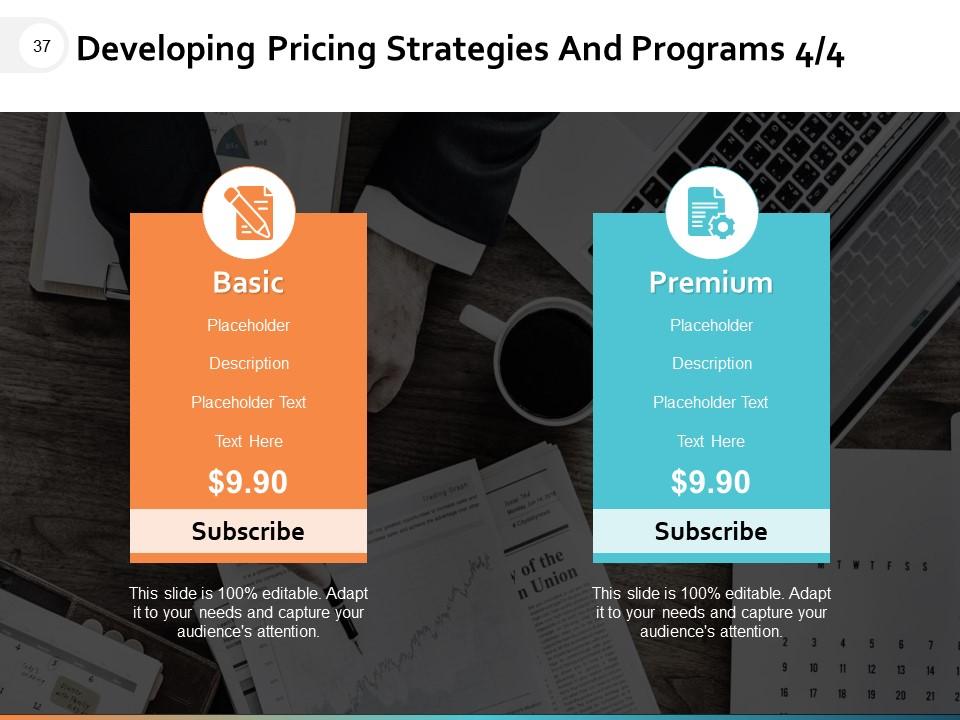
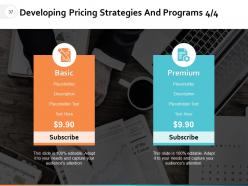
Slide 37: This is one more slide on Developing Pricing Strategies and Programs with basic and premium pricing options.
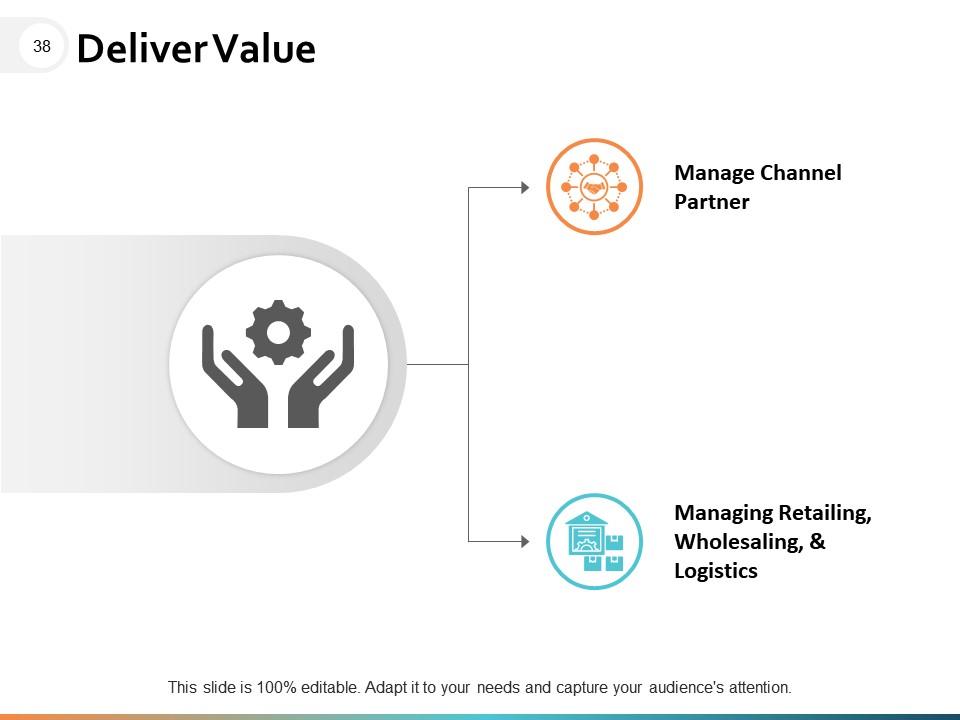
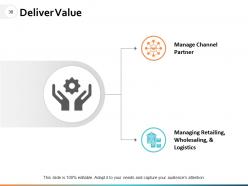
Slide 38: This slide displays Deliver Value describing- Manage Channel Partner, Managing Retailing, Wholesaling, & Logistics.
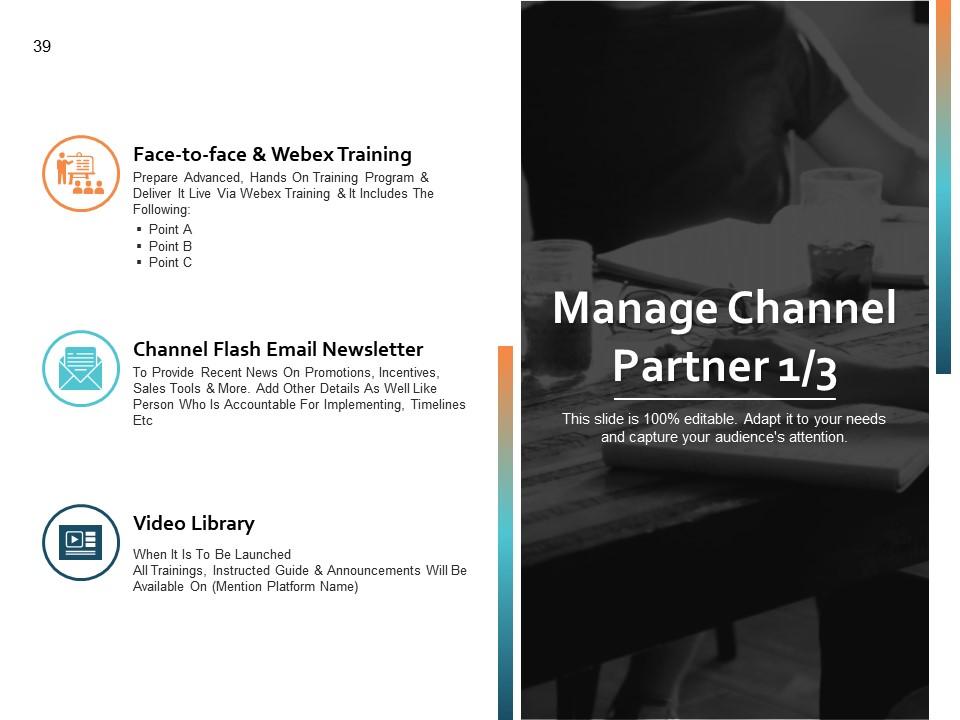
Slide 39: This slide represents Manage Channel Partner with- Face-to-Face & WebEx Training, Channel Flash Email Newsletter, Video Library.
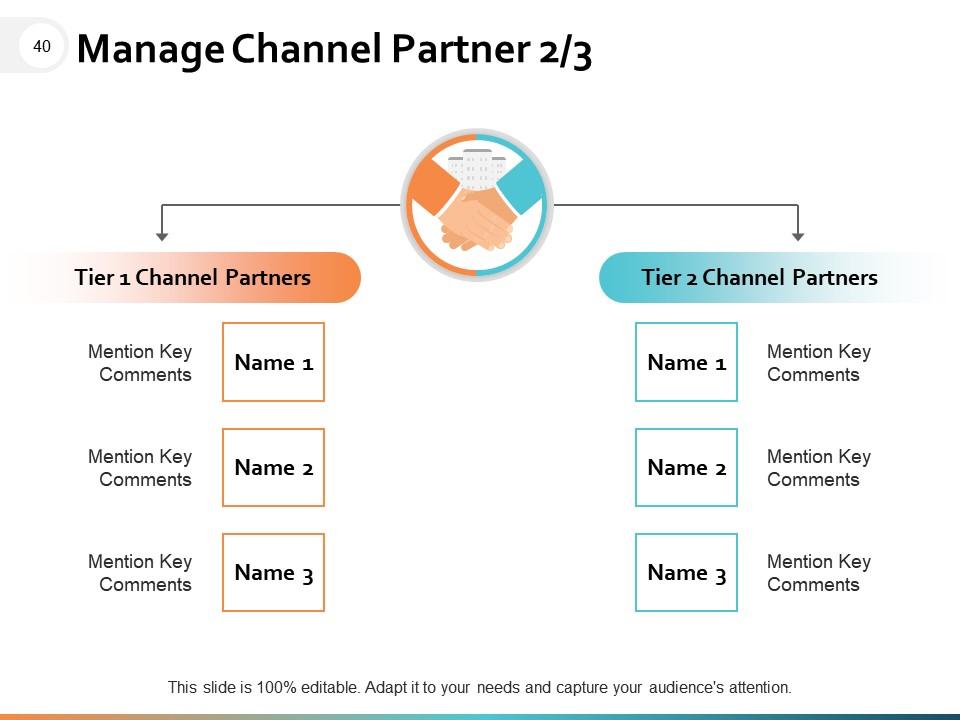
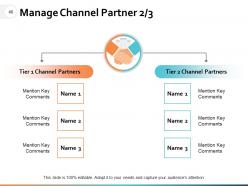
Slide 40: This is another slide to Manage Channel Partner with related imagery and text boxes.
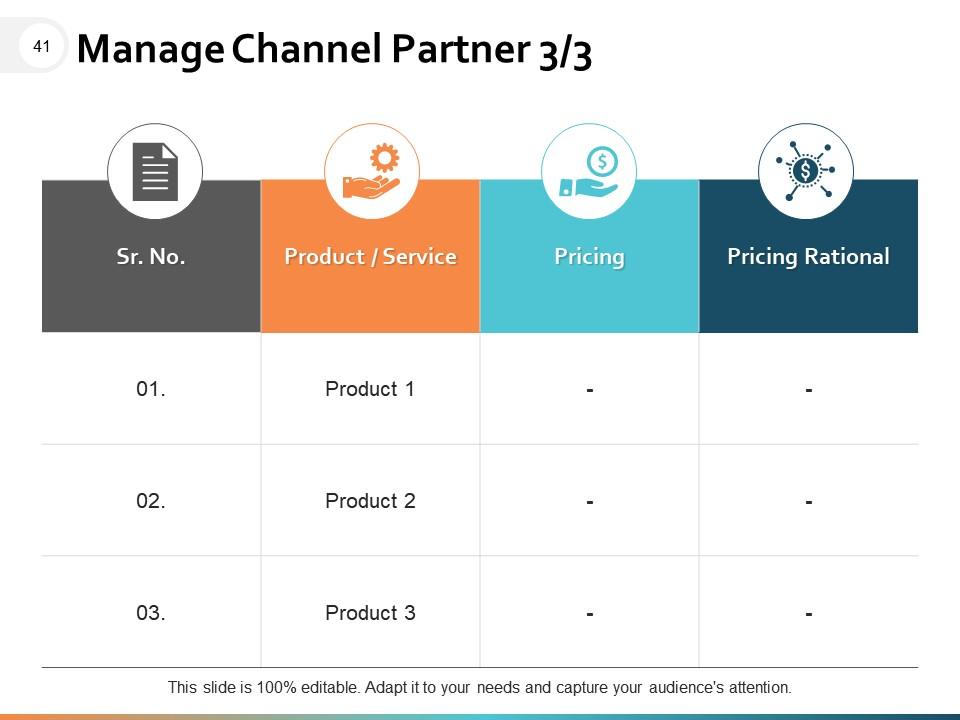
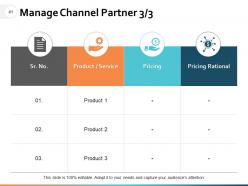
Slide 41: This slide showcases Manage Channel Partner in a tabular form with categories as product/ service, pricing etc.
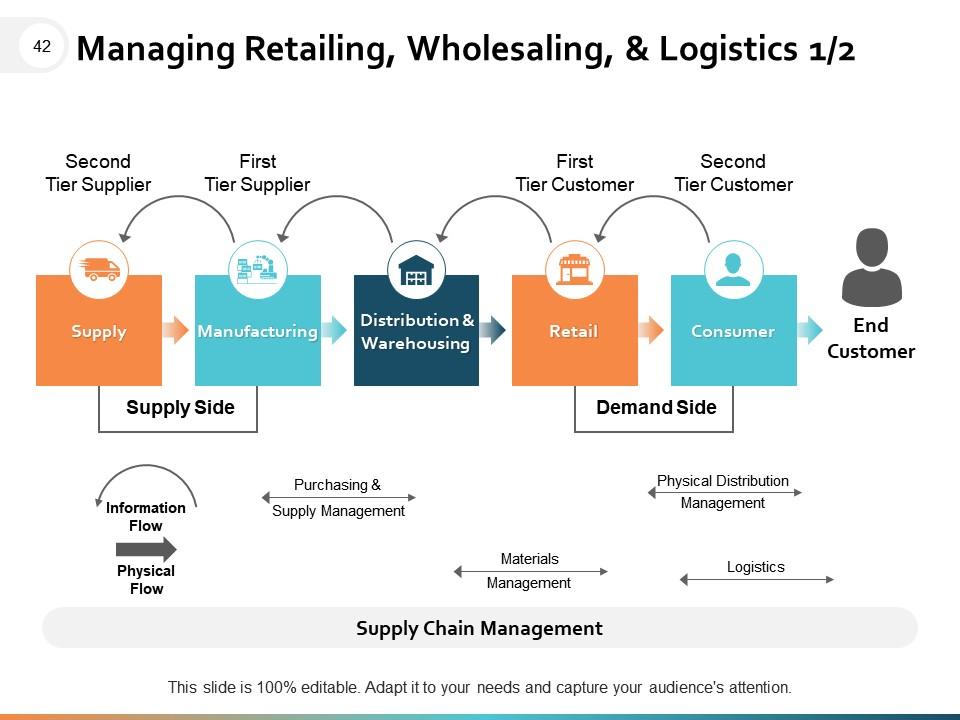
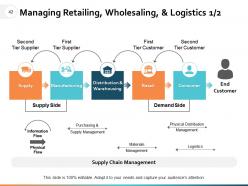
Slide 42: This slide shows Managing Retailing, Wholesaling, & Logistics with- Supply, Distribution & Warehousing, Manufacturing, Retail, Consumer.
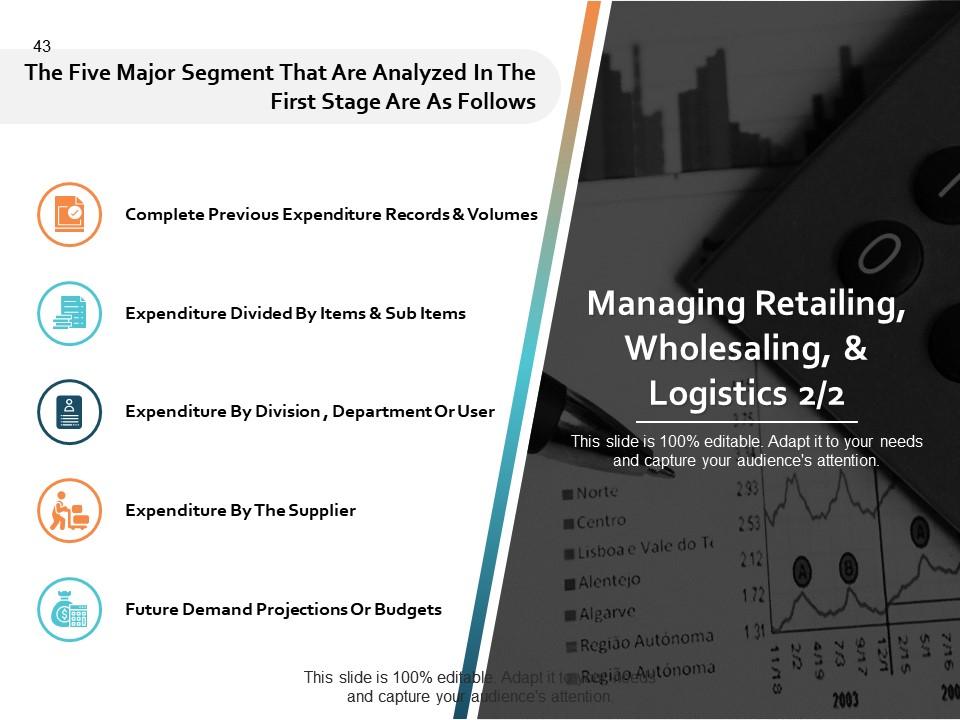
Slide 43: This slide presents Managing Retailing, Wholesaling, & Logistics describing- Complete Previous Expenditure Records & Volumes, Expenditure Divided by Items & Sub Items, Expenditure by the Supplier, Expenditure by Division , Department or User, Future Demand Projections or Budgets.
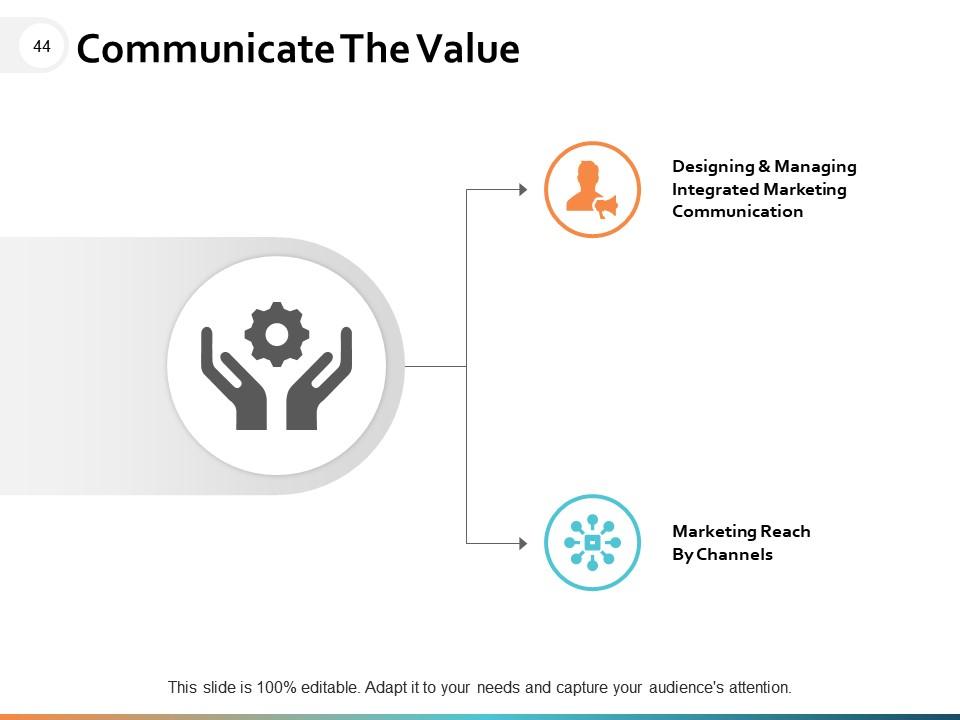
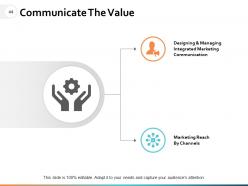
Slide 44: This slide displays Communicate the Value describing- Designing & Managing Integrated Marketing Communications, Marketing Reach by Channels.
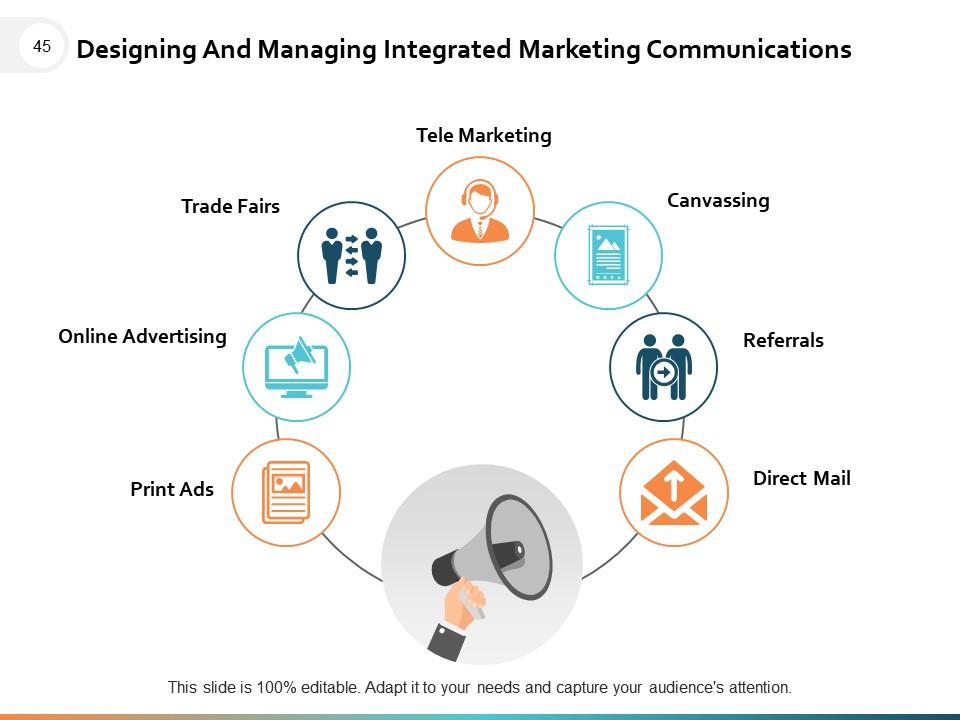
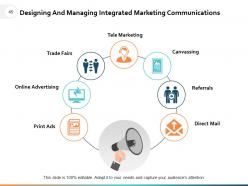
Slide 45: This slide represents Designing and Managing Integrated Marketing describing- Print Ads, Online Advertising, Trade Fairs, Tele Marketing, Referrals, Direct Mail, Canvassing.
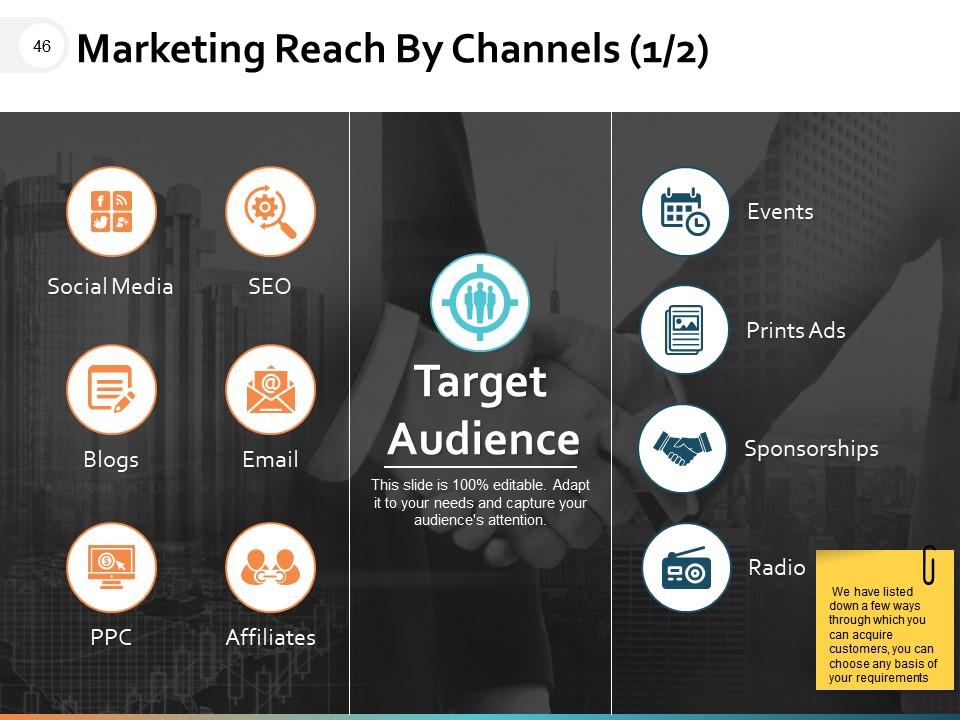
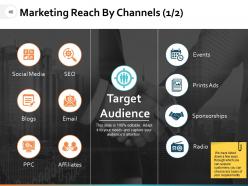
Slide 46: This slide showcases Marketing Reach by Channels with online and offline marketing.
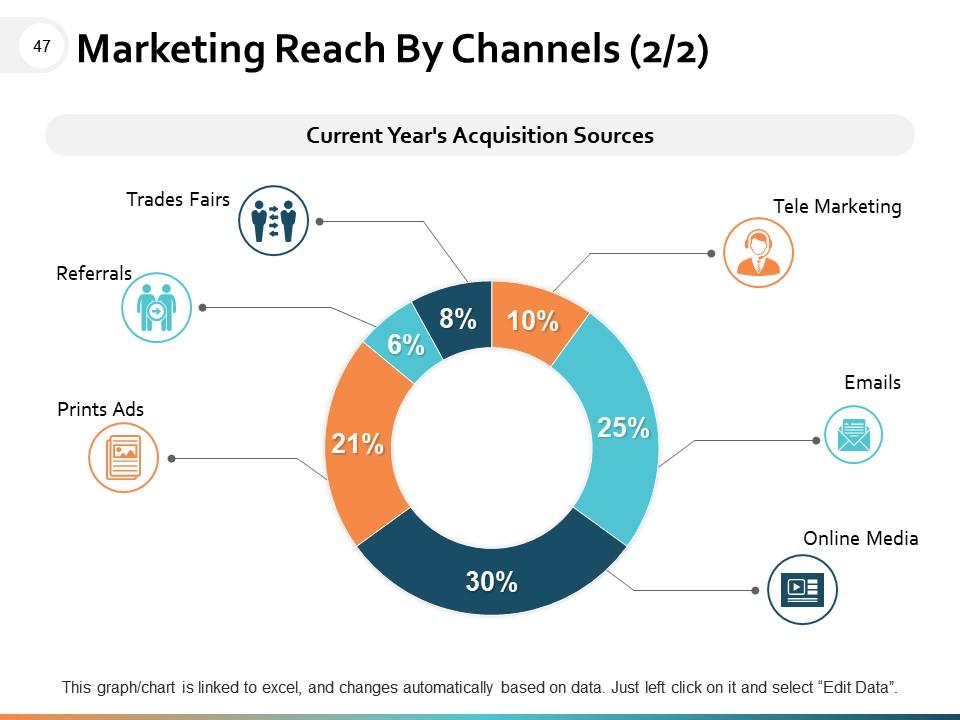
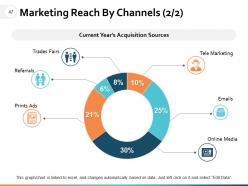
Slide 47: This is another slide on Marketing Reach by Channels describing- Tele Marketing, Emails, Online Media, Print Ads, Referrals, Trade Fairs.
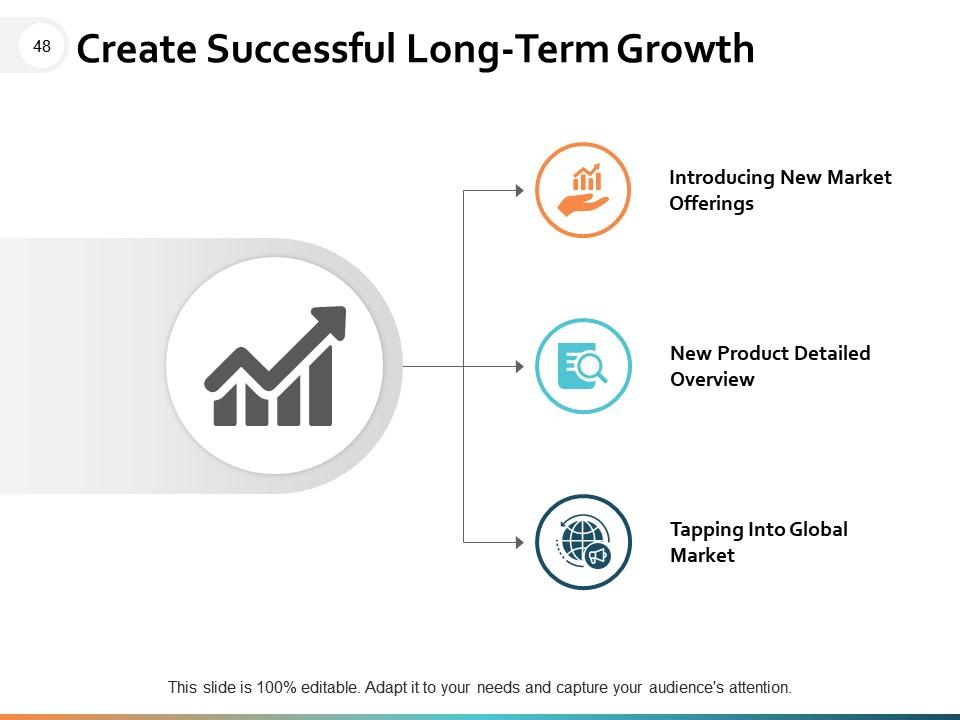
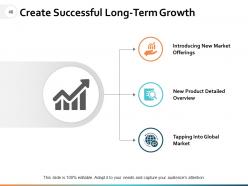
Slide 48: This slide shows Create Successful Long-term Growth with- Introducing New Market Offerings, New Product Detailed Overview, Tapping into Global Markets.
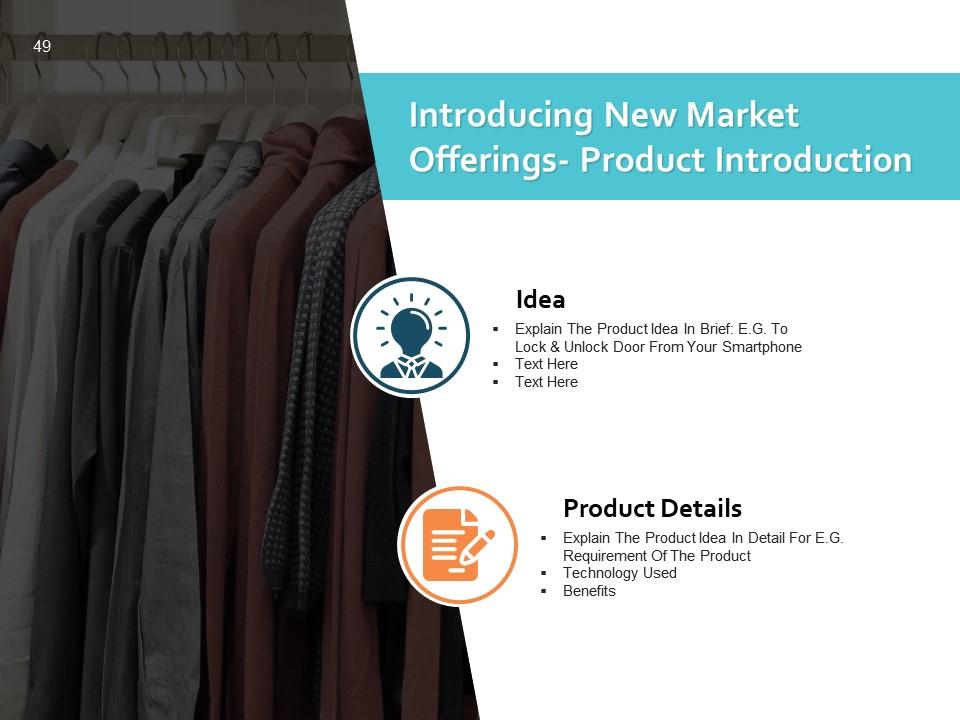
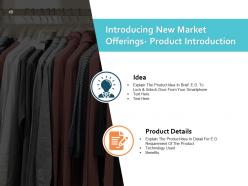
Slide 49: This slide presents Introducing New Market Offerings describing Idea and product details.
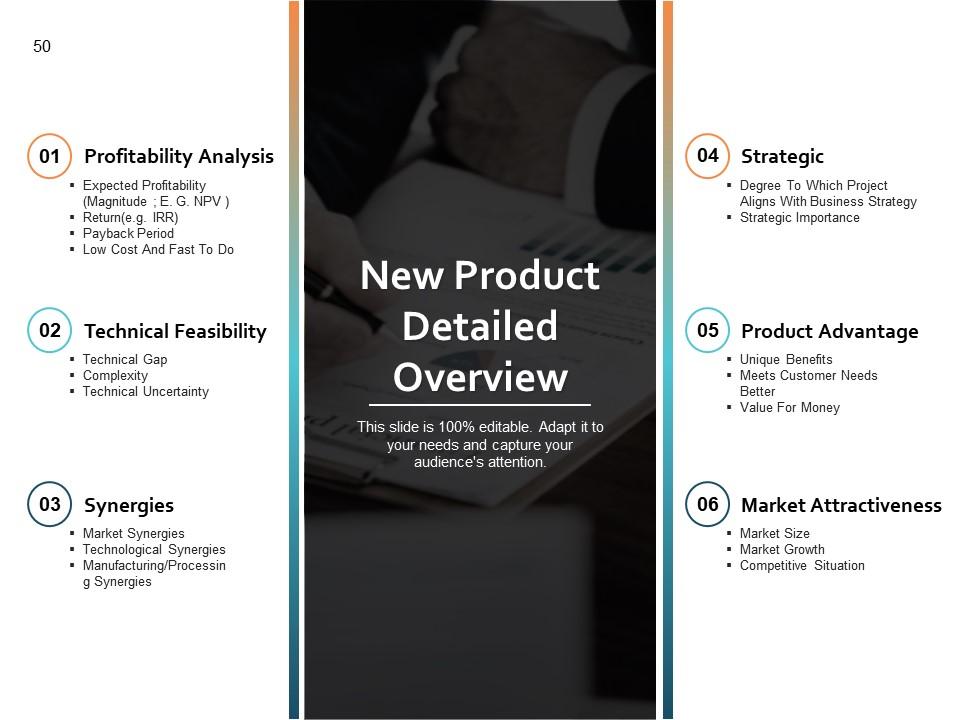
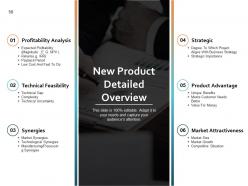
Slide 50: This slide displays New Product Detailed Overview describing- Strategic, Product Advantage, Market Attractiveness, Synergies, Technical Feasibility, Profitability Analysis.
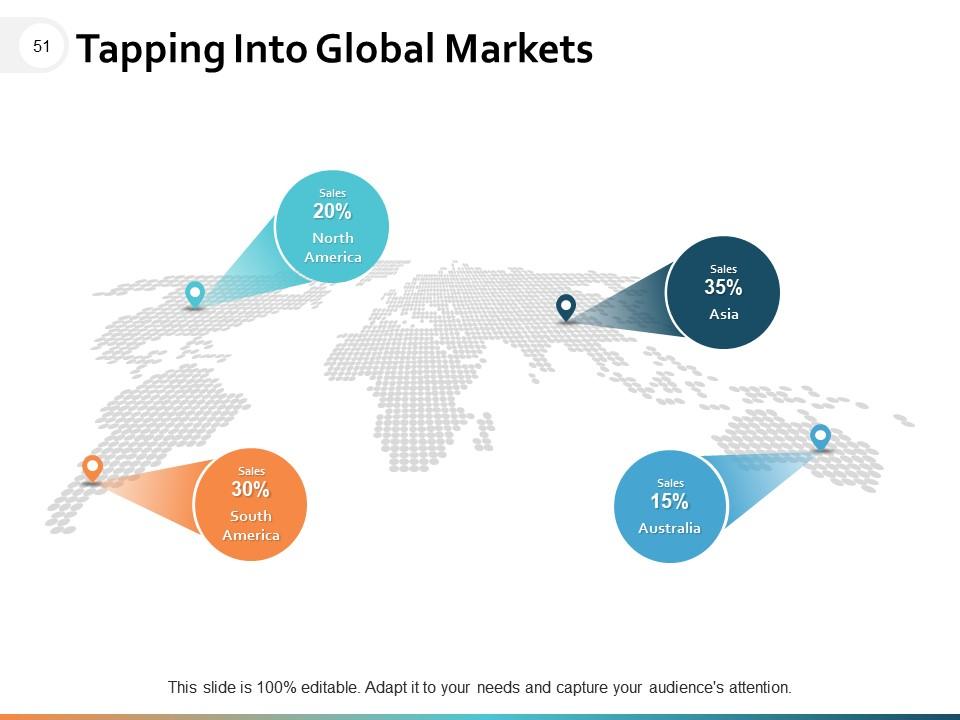
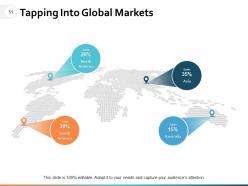
Slide 51: This slide represents Tapping into Global Markets with maps and related text.
Slide 52: This slide is titled as Dashboard and KPIs. You can modify it as per requirements.
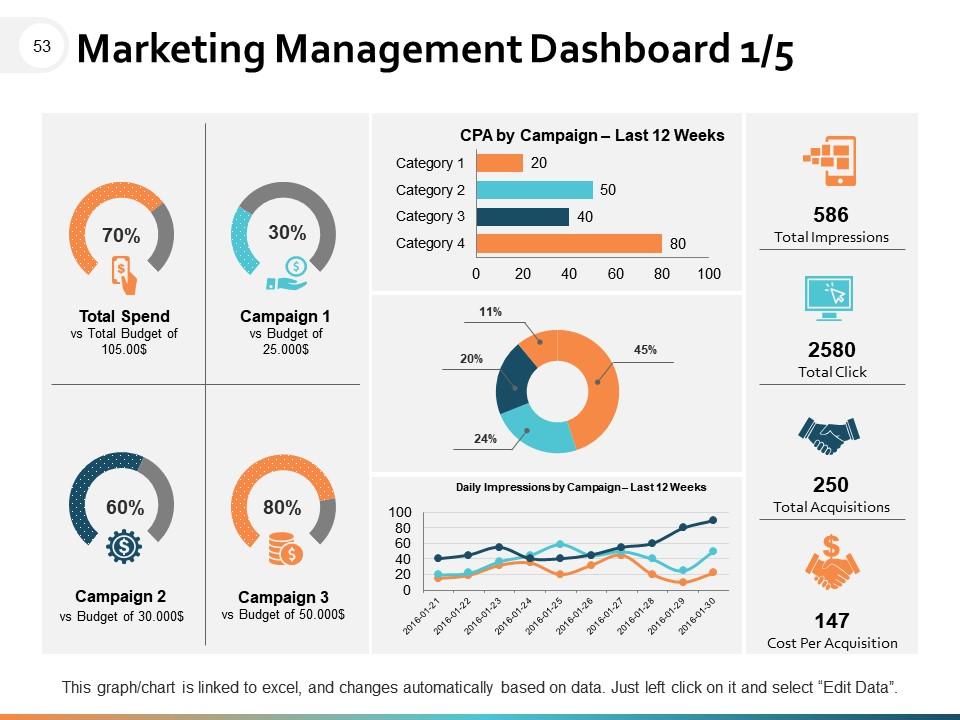
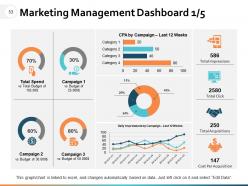
Slide 53: This slide showcases Marketing Management Dashboard with pie charts, line graphs, bar graphs etc to show information and campaign spendings.
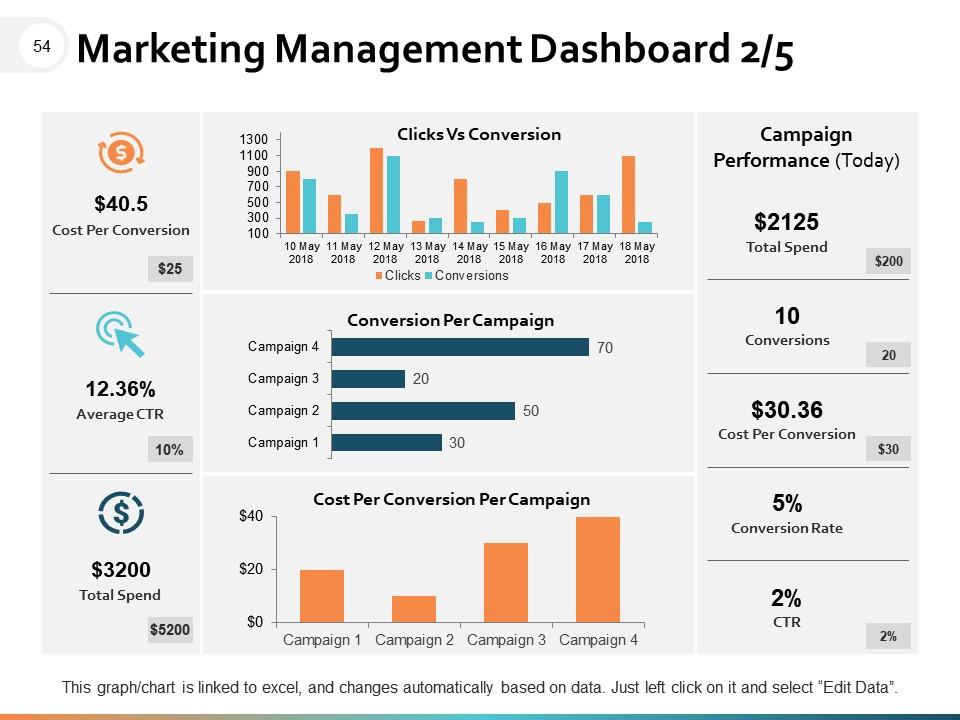
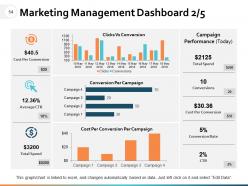
Slide 54: This is another slide presenting Marketing Management Dashboard describing- total spendings, conversions, cost per conversion, conversion rate etc.
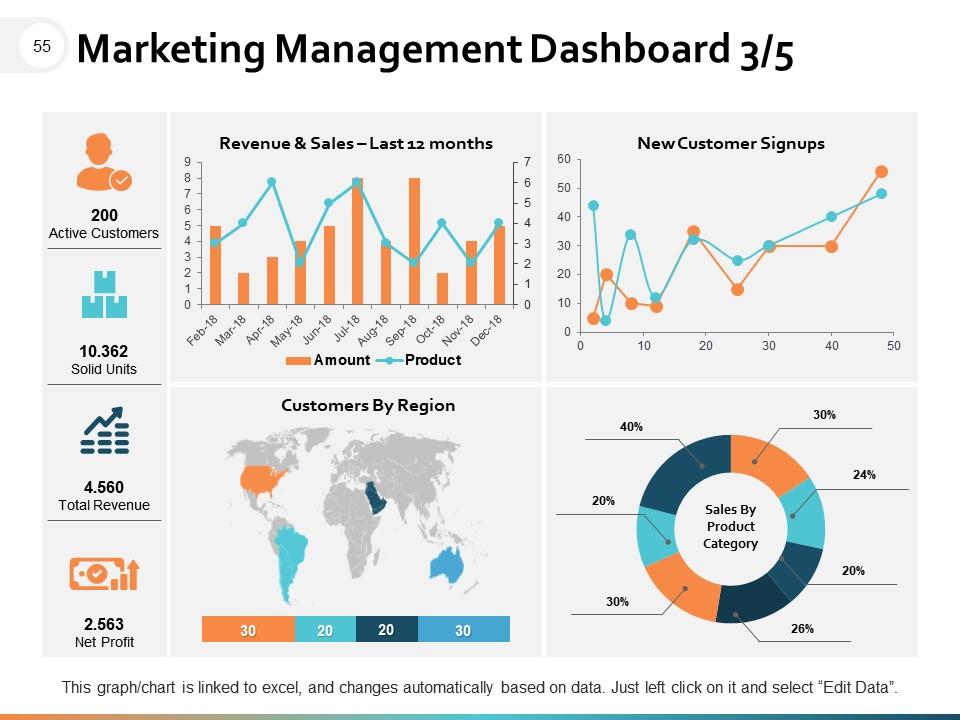
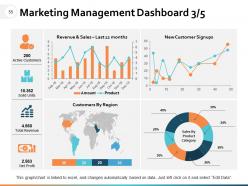
Slide 55: This is another slide representing Marketing Management Dashboard with line, bar and pie charts to show information.
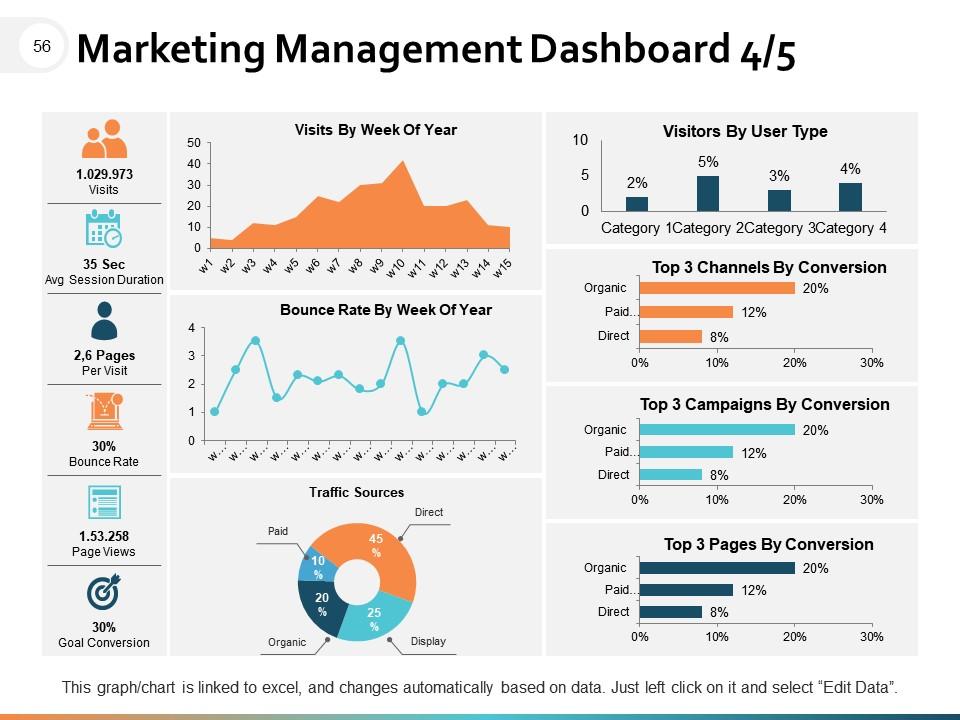
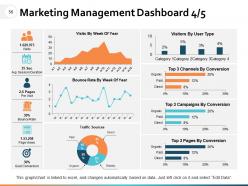
Slide 56: This slide shows Marketing Management Dashboard with visits, average session duration, bounce rate, page views etc.
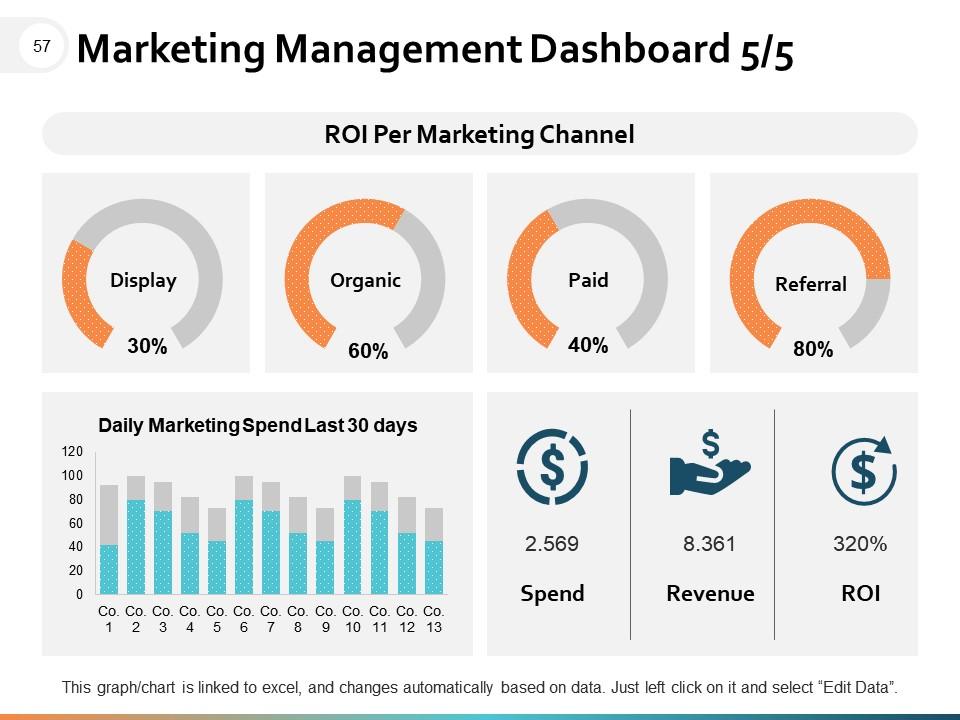
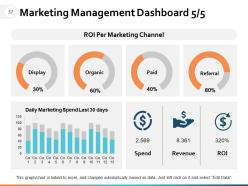
Slide 57: This slide presents Marketing Management Dashboard describing ROI on different marketing channels which includes Display, Organic, Paid and referral.
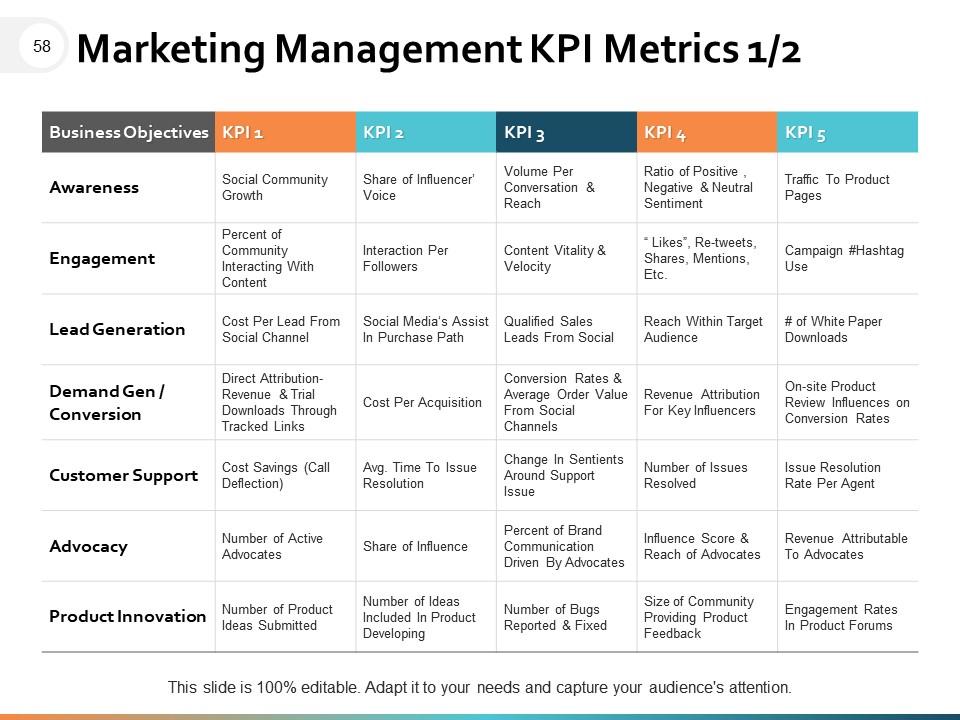
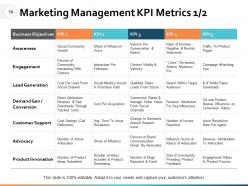
Slide 58: This slide displays Marketing Management KPI Metrics with objectives as- awareness, engagement, lead generation, customer support etc.
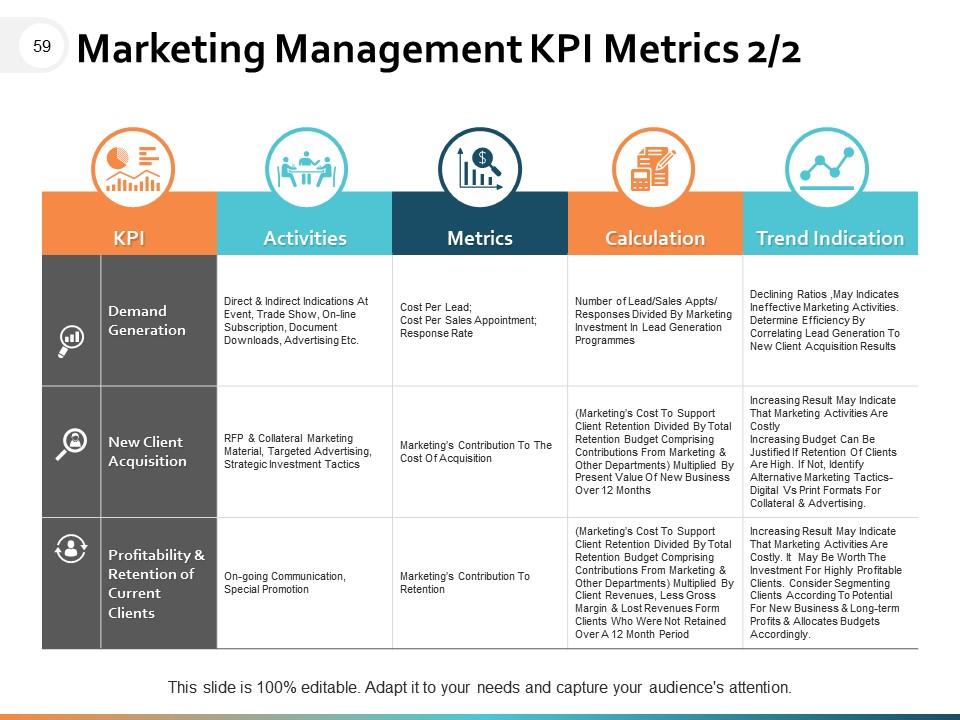
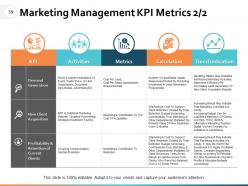
Slide 59: This is another slide with Marketing Management KPI Metrics describing- KPI, activities, metrics etc.
Slide 60: This slide is titled as Additional Slides for moving forward.
Slide 61: This slide reminds about a 30 minutes lunch break.
Slide 62: This slide shows Marketing Strategic Management Icons.
Slide 63: This is another slide continuing Marketing Strategic Management Icons.
Slide 64: This is Our Mission slide with imagery and text boxes.
Slide 65: This is Meet Our Team slide with names and designation.
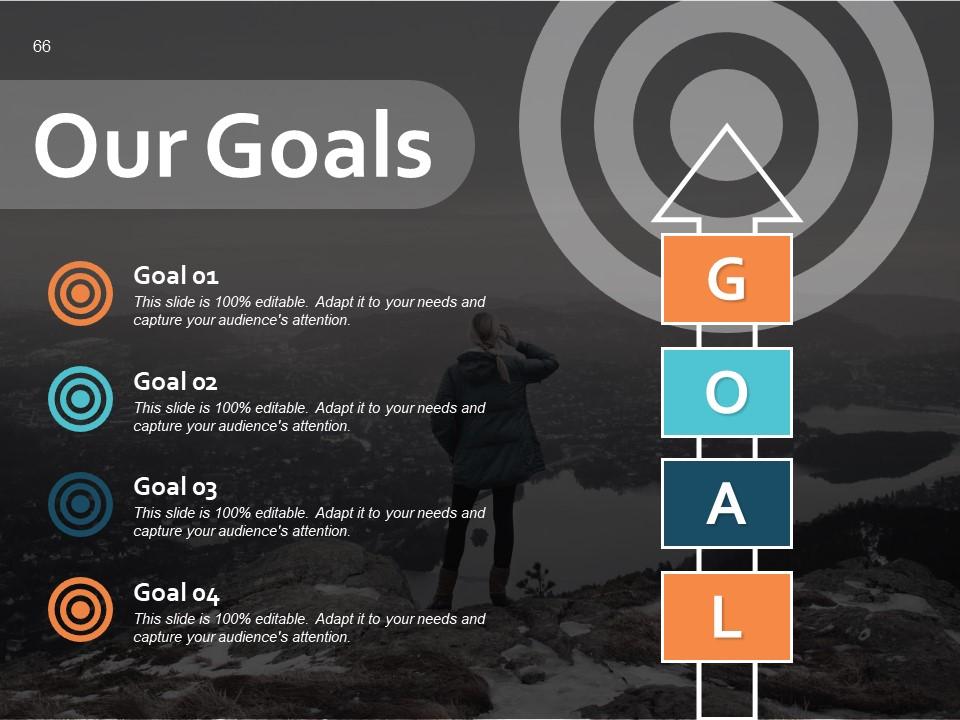
Slide 66: This is Our Goal slide. State your important goals here.
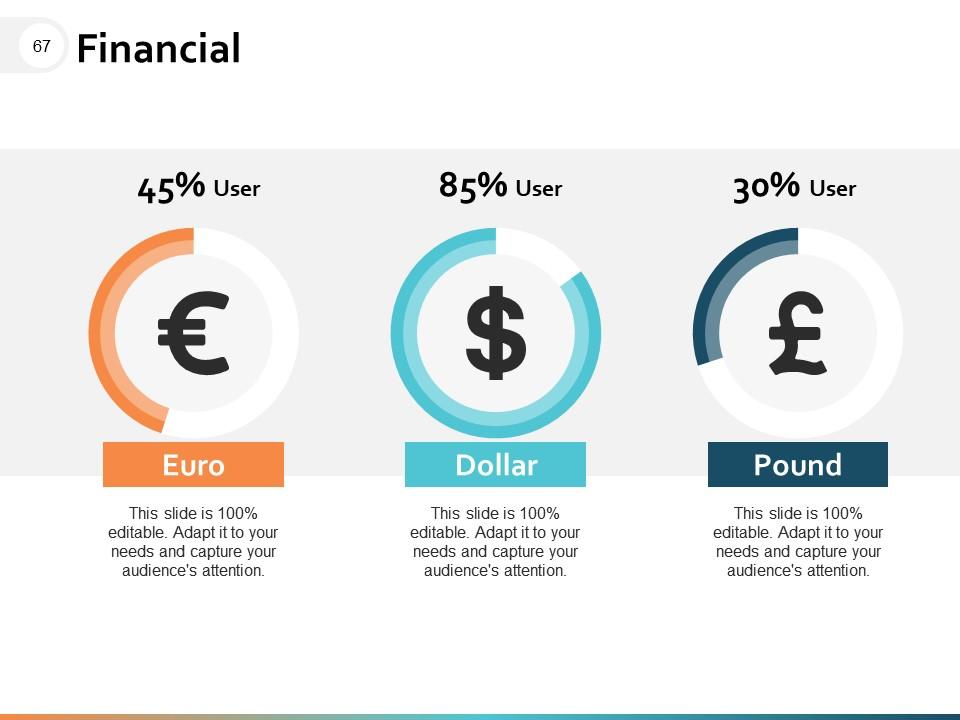
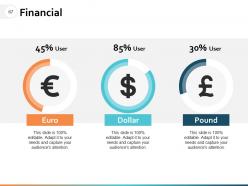
Slide 67: This is a Financial slide. Show your finance related stuff here.
Slide 68: This is Blub Or Idea slide to state a new idea or highlight specifications, information etc.
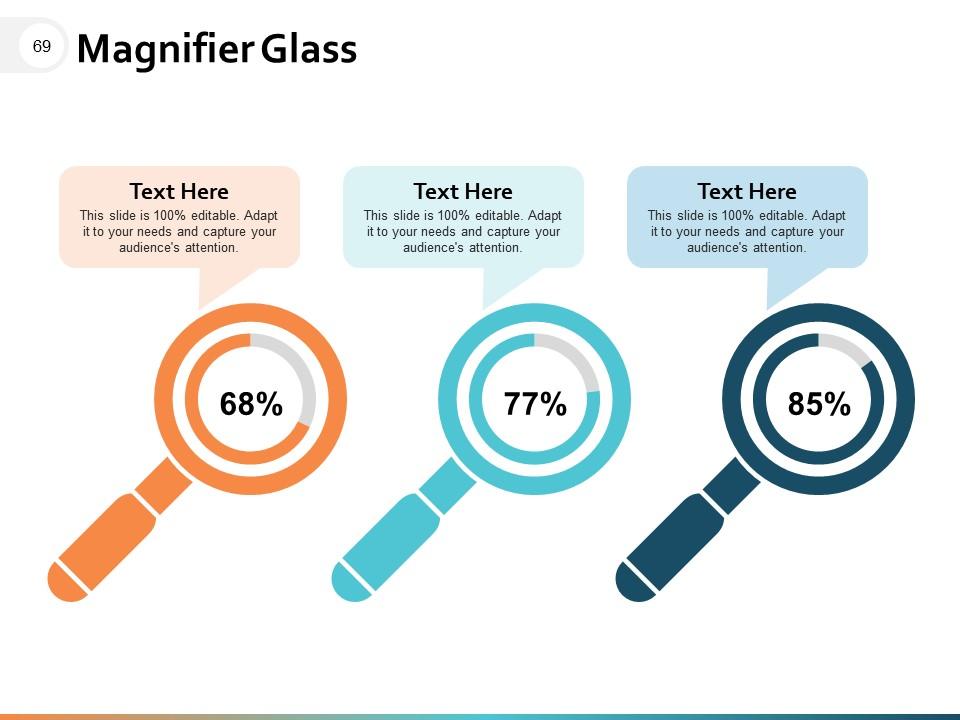
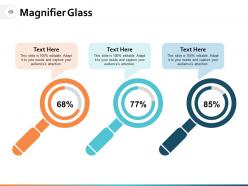
Slide 69: This slide displays Magnifying Glass with text boxes to show information.
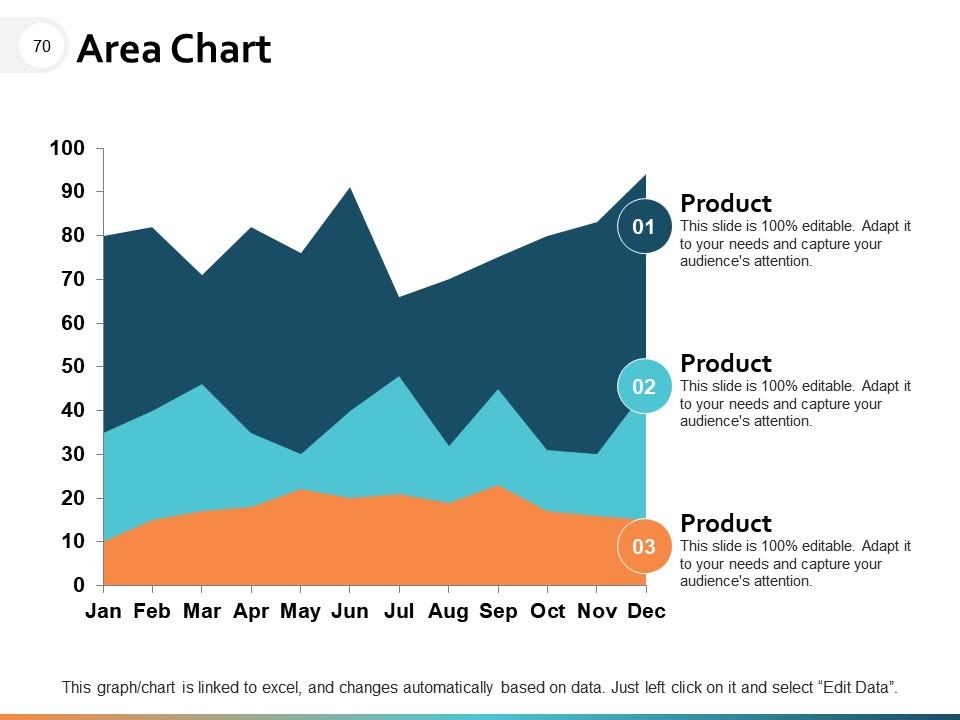
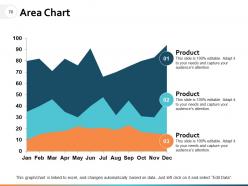
Slide 70: This slide shows Area Chart with three products comparison.
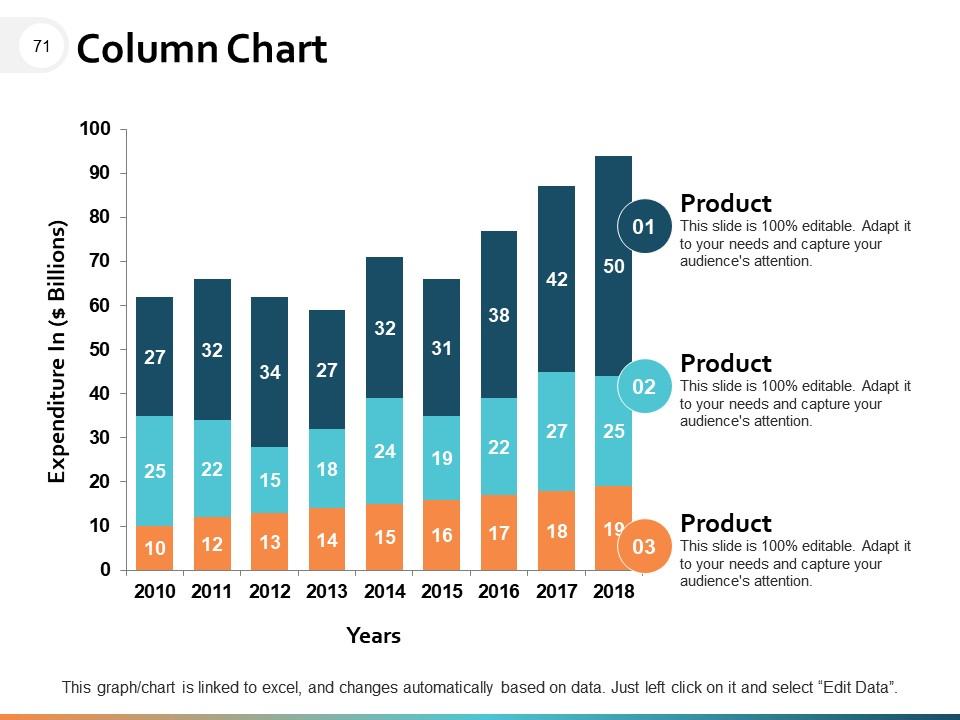
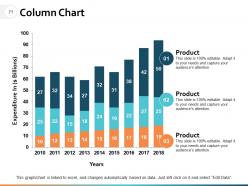
Slide 71: This slide presents Column Chart with three products comparison.
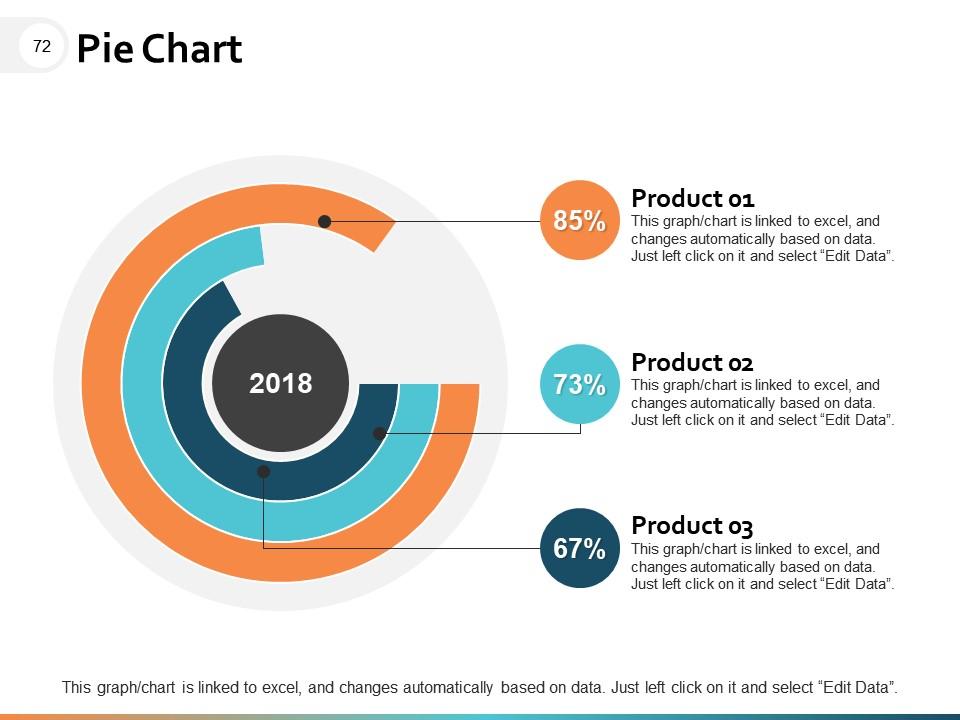
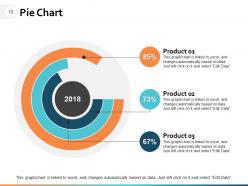
Slide 72: This slide displays Pie Chart with data in percentage.
Slide 73: This is a Thank You slide with address, contact numbers and email address.
Marketing Strategic Management Powerpoint Presentation Slides with all 73 slides:
Use our Marketing Strategic Management Powerpoint Presentation Slides to effectively help you save your valuable time. They are readymade to fit into any presentation structure.
-
Design layout is very impressive.
