


Approach to environmental impact assessment




Try Before you Buy Download Free Sample Product
 Impress Your
 Audience
 100%
100% Editable
 Save Hours
 of Time


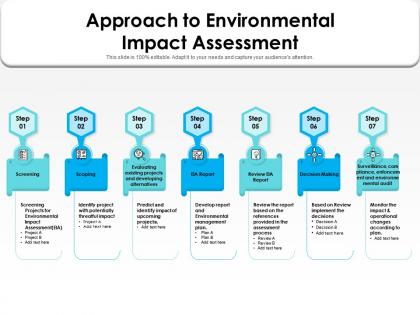
The PPT presentation titled Approach To Environmental Impact Assessment is helpful in the visual understanding of the socio-economic, cultural and environmental impacts of a proposed project. In this PPT slide, there is a 7 step approach including screening, scoping, assessing, reporting, reviewing, decision making, monitoring and environmental auditing. The editable nature of this PowerPoint presentation allows designers to input necessary courses of action concerning the project. Thus, after proper research and assessment, you can decide on the terms using this visually creative PPT template before executing the project. Use this topically designed PPT presentation to analyze the impact of your action and thereby devise alternatives to mitigate them.
People who downloaded this PowerPoint presentation also viewed the following :
Approach to environmental impact assessment with all 2 slides:
Use our Approach To Environmental Impact Assessment to effectively help you save your valuable time. They are readymade to fit into any presentation structure.

FAQs for Approach to
So first you gotta screen whether you even need an EIA - honestly saves you so much hassle if you don't. Then scope out which environmental stuff to study (this part's crucial, trust me). After that, assess the actual impacts - good and bad ones. Next you'll plan how to minimize the damage and set up monitoring for when the project kicks off. Oh, and definitely get stakeholders involved early. They'll spot things you missed. I learned the hard way that rushing the scoping phase just creates problems later.
Honestly, EIA stuff varies like crazy depending on where you're working. Some countries have it figured out with streamlined processes. Others? Total bureaucratic nightmare - looking at certain EU places here. Canada's got this whole Indigenous consultation thing that's pretty unique, while developing countries sometimes barely have environmental review at all. Meanwhile Germany and Australia are super thorough. Your screening thresholds and timelines will be completely different everywhere. Really depends on your jurisdiction. I'd definitely hit up local environmental consultants first - they know all the regulatory weirdness you'll deal with. Trust me, figuring this out early saves major headaches later.
So public consultations are where you gather input from communities and people who'll be impacted by your project. Most places legally require them at certain points - after scoping and when your draft EIA is done. Look, I get that some developers treat it like checking boxes, but that's honestly shortsighted. The feedback you get can catch problems you totally missed and save you from expensive headaches down the road. Just don't rush it with some lame 30-day window. Give people real time to engage meaningfully.
Dude, technology is totally changing how we do EIAs. Drones can map entire sites from above, which beats walking around with clipboards. Real-time sensors track pollution levels constantly - way better than those old monthly samples. AI actually spots patterns in massive datasets that humans would never catch. Satellite images show land changes over time, and machine learning predicts future impacts pretty accurately. The spatial mapping stuff is cool too, helps you visualize everything. Bottom line? You get faster, more detailed assessments that reflect reality instead of just educated guesses.
Ugh, the data gaps are the worst part honestly - you're always missing key baseline info or trying to guess future impacts with basically nothing to work with. Timelines get crushed when communities push back, which happens a lot if they weren't brought in early enough. Oh and don't get me started on regulatory agencies contradicting each other or switching up requirements halfway through. Stakeholder drama is inevitable too. My best tip? Get people talking from day one and don't let those conversations die. Makes everything way less painful later, trust me.
Yeah, so basically every EIA now has to include climate stuff - it's not optional anymore. You've gotta look at two things: how much your project adds to the problem (carbon emissions, energy use, etc.) and how climate change might mess with your project later. The second part is honestly way harder. Think flooding in 20 years, heat waves, crazy storms that could wreck everything. Most agencies want to see specific resilience plans now too, which is kind of a pain but makes sense I guess. My advice? Build all this climate analysis in from the start. Don't try to add it later - trust me on that one.
So you'll want to track both hard numbers and softer stuff. Air quality is big - PM2.5, NOx levels, that kind of thing. Water quality too: pH, oxygen levels, pollutant concentrations. Noise gets measured in decibels, pretty straightforward. Biodiversity is trickier though - species counts, habitat area, but honestly some impacts are just hard to put numbers on. Like how ugly something looks or if it messes with cultural sites. Those usually get rating scales instead. The trick is figuring out what your project might actually affect first, then picking metrics that'll catch those changes over time.
Honestly, the biggest mistake people make is treating EIA findings like some checkbox exercise they deal with later. You've got to bake that stuff right into your project from day one. Whatever environmental risks and mitigation measures came up in the assessment - those become your actual project constraints. If they're saying you need buffer zones or can only build during certain seasons, that's not negotiable anymore, it just becomes part of your timeline and budget. I mean, it's way easier than trying to retrofit everything later. Use those findings to compare your options and show regulators you're taking it seriously. Create a solid mitigation plan with clear deadlines and assign people to own each piece.
So basically you can't just look at your project by itself anymore - regulators hate that. Cumulative impact assessments check how your thing stacks up with all the other projects happening nearby. Sometimes a bunch of small impacts snowball into something major, you know? Or your project becomes the thing that pushes an already struggling ecosystem over the edge. Honestly, it's become pretty standard now. Map out what else is going on in your area first and work those effects into your baseline studies from the start. Trust me, it'll save you headaches later.
Dude, socioeconomic stuff totally runs your whole EIA process. Who you talk to, which impacts matter most, how you balance jobs vs environment - it all comes down to money and social dynamics. Rich neighborhoods obsess over preservation while poorer communities just want work opportunities, you know? Education levels change how people see environmental risks too. Map this out super early or you'll get blindsided later when groups clash over priorities. It's honestly the messiest part of the whole thing, but if you nail the stakeholder engagement upfront you'll save yourself major headaches.
Stakeholders can totally make or break your EIA. They bring local knowledge that technical folks often miss - I've watched entire projects get flipped because residents spotted something experts overlooked. Public consultations and comment periods are where the magic happens. People challenge findings, suggest alternatives, and sometimes get pretty heated in formal hearings. Don't underestimate their legal power either - they can appeal if you ignore their concerns. My advice? Get them involved early. Like, really early. Listen to what they're saying instead of just going through the motions, because their support determines whether your project actually moves forward.
Scoping sets boundaries for your whole EIA - what impacts to study, how deep to dig, what to skip. Too narrow? You'll miss critical stuff and regulators will make you redo it later (such a pain). Too broad and your team wastes months on irrelevant nonsense. Get stakeholders involved early - they catch the controversial issues you might miss. Honestly, I'd rather over-communicate in this phase than deal with surprises later. The upfront time investment in scoping saves you from absolute chaos when deadlines hit. Worth spending extra effort here.
Don't skip the EIA - seriously, it's not worth it. Regulators will slam you with fines when they find violations later. Projects get delayed or shut down completely. The community will hate you, and cleanup costs are insane. I watched one company go under because of the legal mess alone. Your reputation gets trashed too, making future permits way harder to get. Oh, and good luck getting stakeholders on board after that kind of disaster. Just do the assessment properly upfront. Trust me, it's so much cheaper than dealing with the fallout later when everything goes sideways.
Look, when communities actually understand what's happening with environmental assessments, they give way better feedback during consultations. Instead of just freaking out, they can point out real issues that even the experts miss - locals know their own backyard better than anyone. Educated stakeholders are also more likely to support good projects and call out developers who don't follow through. Honestly, I've seen too many projects fail because they skipped the upfront education part. Spend time creating simple materials and hosting community sessions early on. Trust me, it saves you from major drama later when people feel blindsided.
So there's tons of cool stuff happening right now. AI and machine learning are making data analysis way less of a headache - honestly wish we'd had this years ago. Most places are using digital twins and GIS mapping now to see impacts as they happen. Oh, and there's this shift toward looking at cumulative effects instead of reviewing each project separately, which makes so much more sense. Social and health equity factors are finally getting attention too, not just the usual environmental stuff. Everything's becoming more integrated and tech-heavy. You should definitely check out automated monitoring tools if you're still doing manual work - total game changer.
No Reviews