


Business Environment Powerpoint Presentation Slides




Try Before you Buy Download Free Sample Product
 Impress Your
 Audience
 100%
100% Editable
 Save Hours
 of Time


Keep a check on what affects your business environment using Business Environment PowerPoint Presentation Slides. Analyse business environment with the help of content-ready business environment PowerPoint slideshow to pursue effective business strategy. Identify organization’s strengths and weaknesses, determine opportunities and threats, find the areas for growth, and more by utilizing these business environment PPT templates. This ready-to-use professionally designed business environment complete presentation deck covers topics like business environment dimensions, economic environment, political environment, social environment, legal environment, technological environment, and more. Adapt to the changes in the market with the help of business environment PowerPoint slides and take a control of the internal and external factors that affect the overall performance of the business. Get your hands on this ready-made business environment complete PowerPoint presentation and improve image building. Are you bored with all those dull preparations that do nothing except make meeting participants sleep? If this is you then our Business Environment Powerpoint Presentation Slides are exactly what you need to wake them up.
People who downloaded this PowerPoint presentation also viewed the following :
Content of this Powerpoint Presentation
"Success in management requires learning as fast as the world is changing." – Warren Bennis.
Have you ever attempted juggling burning logs while riding a unicycle? To put it briefly, that is business in a nutshell today. You require a really rare combination of talents, a hard-to-come-by strategy, and a touch of dance choreography or balancing skills, and that's necessary for any business to flourish and survive in the highly competitive current business environment.
It is vital to grasp the multifaceted varieties of the business environment to achieve strategic decision-making, risk mitigation, and long-term growth. This is why an all-inclusive and holistic approach is the most beneficial for organizations until the business environment takes center stage. This way, they can be ahead of the challenges, be aware of opportunities, and form road maps that will eventually lead to the success of their business.
Check out our templates: "Deploying Techniques for Analyzing Business Environment" and "Comprehensive Guide to Effective Business Environment" to go far into the complex nature of business worlds and generate endless options for achievement.
This presentation examines different business environments and explains why businesses must adopt a holistic perspective to explore the depths of market dynamics, technology, regulation, and more. This will ensure you thrive in this rapidly changing business world.
Template 1: Business Environment Dimensions
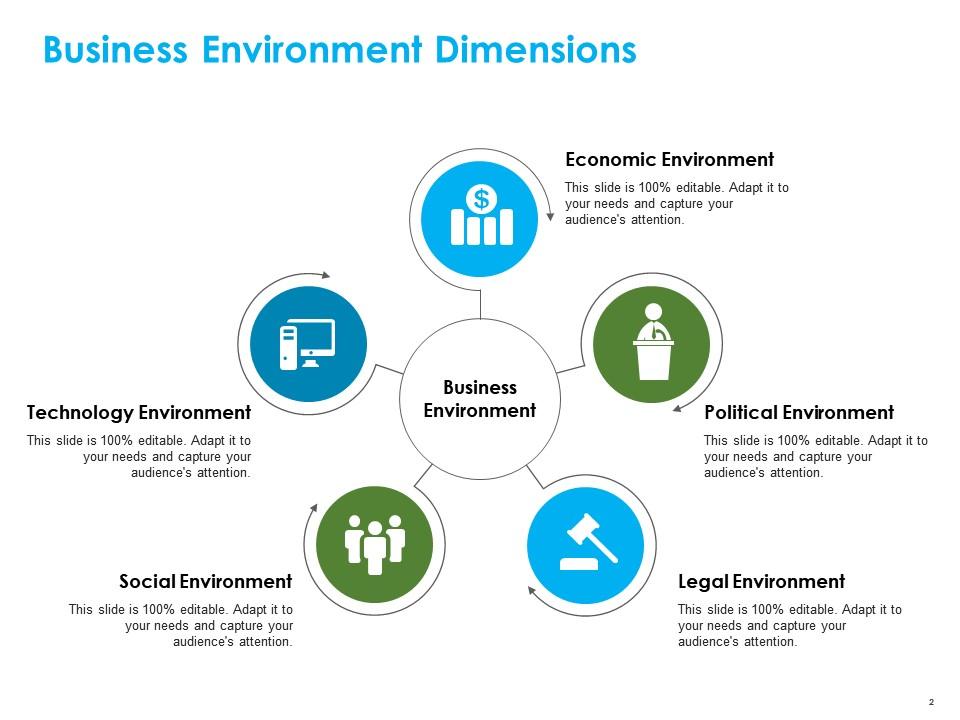
This PPT Template is a middle ground for a nation's legal, technical, political, economic, and social facets. Achieving such a goal will entail a clear grasp of the underlying echelons to serve as a blueprint for strategy formulation and risk assessment. This empowers businesses to compile, explore, and measure all the axis components in times of change, seize market potentials, and manage difficulties, thus steering the enterprise to growth and leading position.
Template 2: Economic Environment
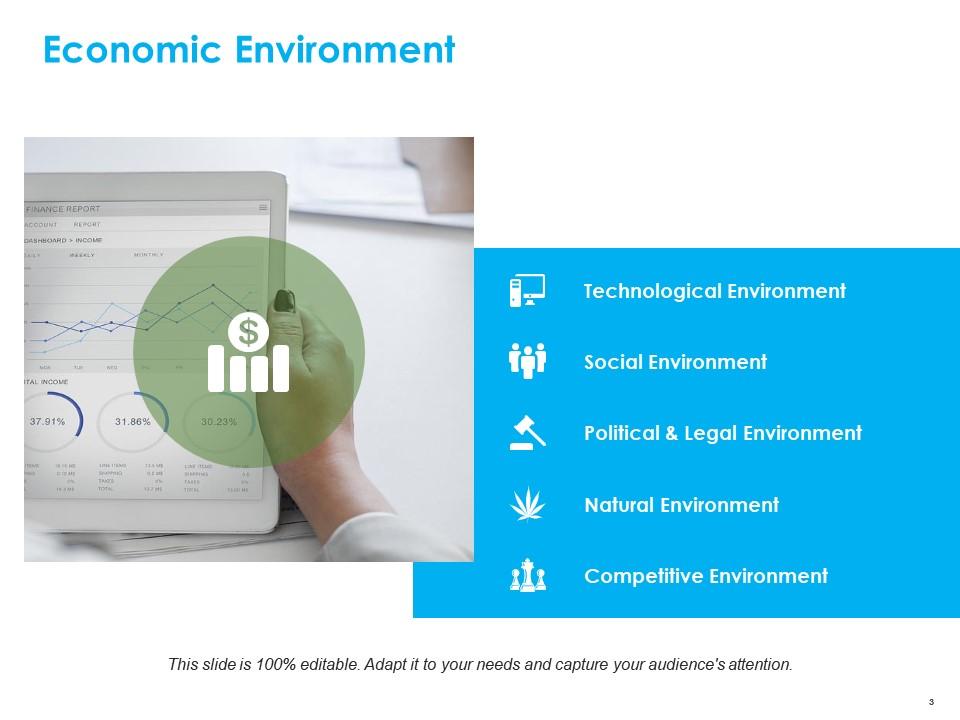
Use this PowerPoint Presentation to link various factors that create the financial market where businesses survive. This explains the economic environment as the prevailing state of the economy, comprising monetary policies, inflation rates, GDP growth, and exchange rate volatility. The picture shown against a breathtaking background of evolving currency fluctuations is an excellent depiction of economic character.
Template 3: Political Environment
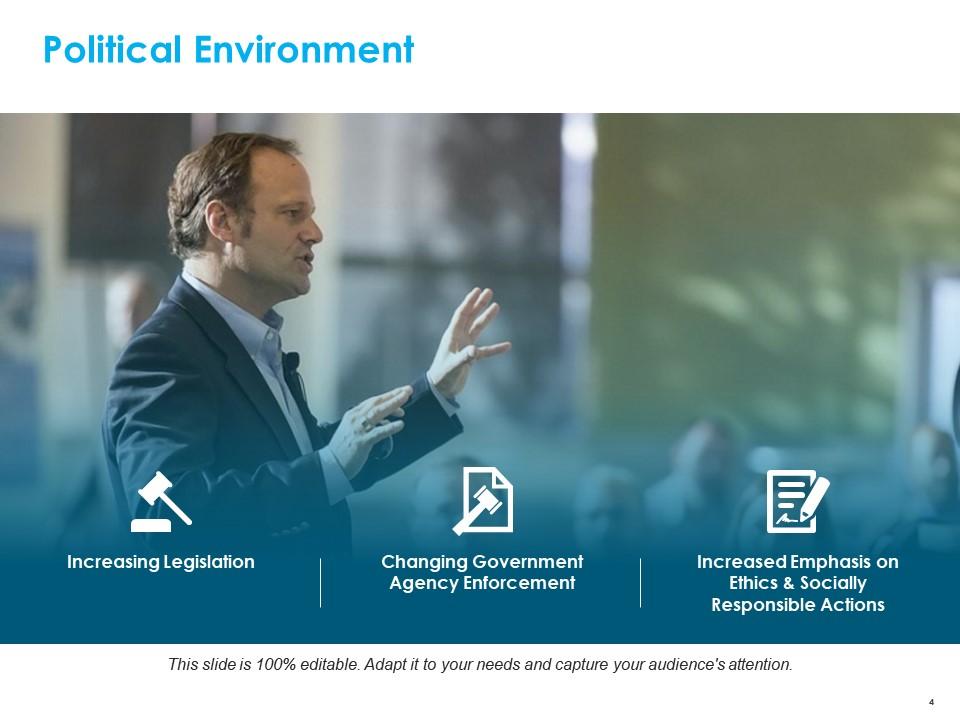
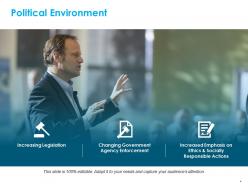
The Political Environment PPT Slide takes an important next step by illuminating how political factors such as governmental policies and regulations shape business operations. It depicts a political situation that distinguishes one from the rest. Maintaining compliance, enhancing transparency, and leading the way in tackling societal impact are the keys to keeping a reputation and long-term goodwill among the changing political landmarks.
Template 4: Social Environment
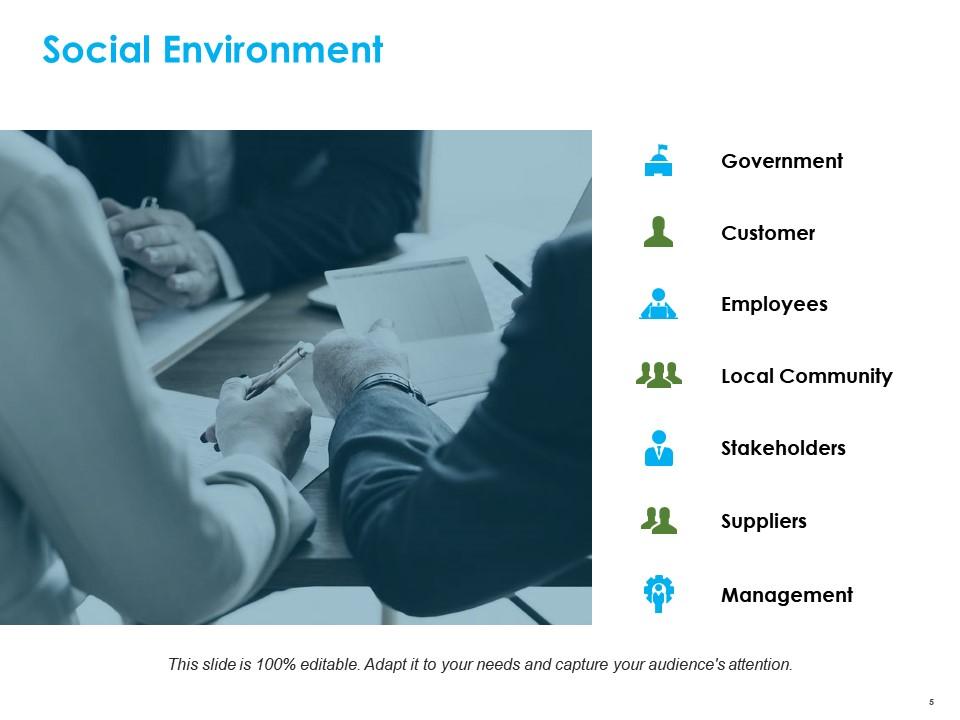
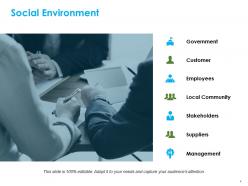
This PPT Framework emphasizes how social factors play a vital role in business dynamics and can be the driving force for the profit or loss of a business. On the left, there's an evocative illustration that reintroduces the circular relationship that exists between companies and the communities they support. On the right of the equation, influential figures like the government, the community, and vendors are shown, reflecting the composite character of social impact. The power of social purpose becomes evident as understanding societal dynamics like trends, values, and expectations becomes the primary driving force for businesses to forge goodwill, trust, and long-term relationships. As the social dynamics are constantly evolving in the socially responsible landscape we observe currently, companies must adapt to fit the current social norms to succeed.
Template 5: Legal Environment
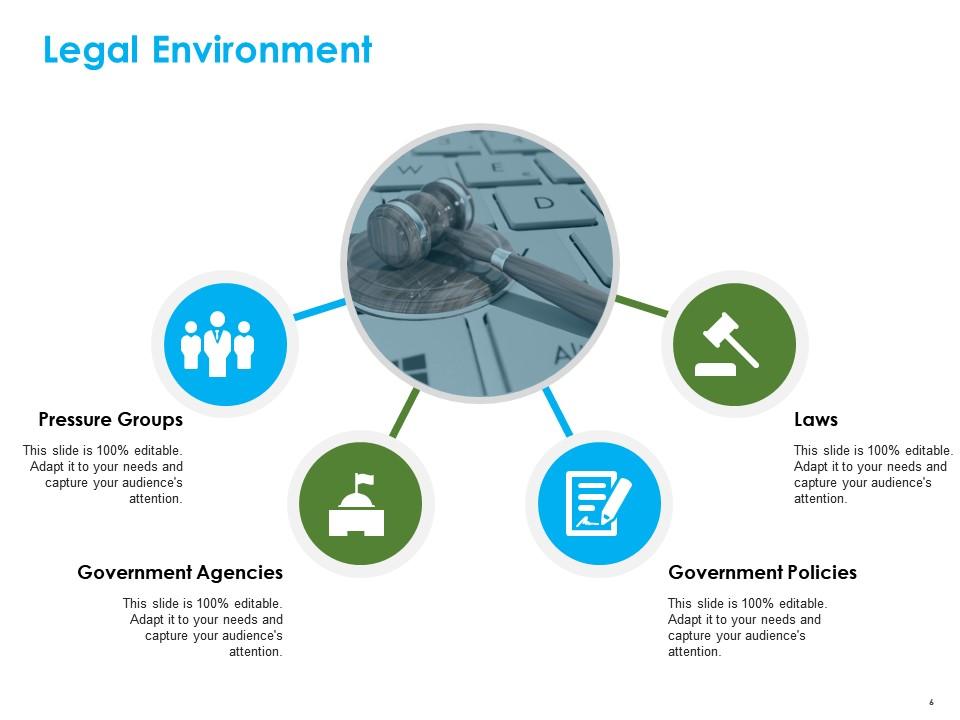
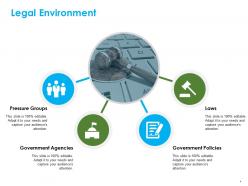
Use this PPT Slide to explain the legal structure made by laws, requirements, and judicial systems. It shows the effective authority of legal powers upon enterprise management. There are surrounding facts: pressure groups, government agencies, policies, and laws. In today's world, companies have to understand and bring through this intricate legal field as this is a key factor in governance risks, ensuring compliance, and protecting ethical standards, all of which safeguard reputation and facilitate sustainable growth.
Template 6: Technical Environment

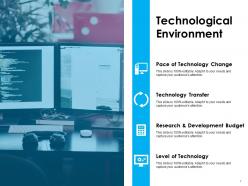
This PPT Slide on technical environment redresses the disruptive power of technology at today's global business stage. It highlights a highly dynamic atmosphere, continuously setting the stage for adopting innovations and keeping up with fast-track technology development. Strategic deployment of resources will be necessary to boost innovation, harmonize different technology platforms, and smooth the transfer of technology capabilities into business operations for those who want to maintain their competitive edge in the market and uncover the benefits of technological advancements.
Conclusion
Get to know the business environments in all dimensions using our full set of PowerPoint Templates. We provide an exhaustive guide to facing complex business scenarios and getting an understanding of economic, political, social, legal, and technical environments. Regardless of whether you need to monitor trends in the market, consider regulations, or oversee technological innovations, our rules will help you develop effective strategies and succeed in the long term.
Check out our pre-designed PPT on the Approach to Micro and Macro Analysis of the environment.
Business Environment Powerpoint Presentation Slides with all 19 slides:
Establish the factors that caused injury with our Business Environment Powerpoint Presentation Slides. It helps analyze the incident.


FAQs for Business Environment
Okay so there's internal stuff you can actually control - your team, company culture, how things are structured, what resources you have. Then there's all the external chaos you can't really do much about. Economic ups and downs, competitors being annoying, customer demands changing, supplier drama, government throwing new rules at you. Oh and tech changes that make your head spin - honestly that one's brutal these days. Social and environmental stuff matters way more now too. You'll want to check on all this regularly so you're not caught off guard when things inevitably shift.
Honestly, regulations are such a pain but they basically control how you can run things day-to-day. Compliance costs, licensing, operational restrictions - all that stuff hits your budget and decisions hard. Healthcare gets slammed way worse than tech startups obviously, but even "lighter" industries deal with hiring rules, data policies, marketing restrictions, financial reporting. Oh and the constant changes are the worst part. I'd set up Google alerts for your industry's regulatory news (saves so much headache) and maybe join a trade association since they usually track this stuff better than trying to do it yourself.
Tech changes everything about running a business, honestly. Customers now expect instant everything - faster service, seamless digital experiences, the works. Whole industries get flipped upside down (just look what Netflix did to cable). Plus you get these crazy new possibilities like everyone working from home, AI handling boring tasks, and actually making decisions based on real data instead of gut feelings. My advice? Stay plugged into what's happening in your industry, but don't chase every shiny new trend. Being ready to adapt your processes is way smarter than jumping on whatever's trending on LinkedIn this week.
Dude, culture totally changes how people shop. Different countries have completely different values about family, status, tradition - even colors mean different things. Red's lucky in China but screams danger here, which is wild when you think about it. Payment methods, packaging, whether brands matter - it all shifts based on where you are. Honestly, you can't just copy-paste your marketing strategy everywhere. Each market needs its homework done first. What kills it at home might totally flop somewhere else if you don't get the local vibe right.
So think of economic indicators as your heads-up for what's coming down the pipeline. GDP growth, unemployment rates, consumer confidence - these tell you if people will actually buy your stuff or tighten their belts. I always compare it to checking traffic before you leave the house, you know? Pick maybe 3 or 4 that actually matter for your industry (don't go overboard here). Then just work them into your quarterly reviews. Way better than scrambling when everything shifts. You can tweak pricing, staffing, expansion plans - whatever - before you're playing catch-up with everyone else.
Start by mapping out who you're actually competing against - both obvious ones and sneaky indirect competitors. Then dig into their pricing, what they're selling, and how they market stuff. SEMrush and Ahrefs are gold for peeking at their digital strategy (totally legal snooping lol). Don't forget social media and even job posts - you'd be surprised what you can learn. Make a simple spreadsheet to track everything or you'll forget half of it. Focus on your top 3-5 competitors instead of going crazy trying to research everyone. Update it every few months since things change fast.
Honestly, globalization is kind of a double-edged sword for local businesses. Sure, you can suddenly sell to customers halfway across the world and find cheaper suppliers - that part's amazing. But now you're also going head-to-head with companies from everywhere, including places where labor costs way less. Your customers have endless options too, which wasn't the case like 20 years ago. The trick is nailing down what makes you special in your local market. Maybe it's personal service or knowing exactly what your community wants. Then you can think about expanding from there if it makes sense.
Look, being socially responsible isn't just feel-good stuff - it actually makes you money. Customers trust companies that care about more than just their bottom line, and honestly? That trust is everything these days. You'll see better customer loyalty, employees stick around longer, and investors who care about ESG stuff will notice you. Your reputation becomes something competitors can't just copy overnight. Environmental stuff, community work, ethical practices - whatever clicks with your values. Just pick one thing and actually stick with it instead of jumping around.
Honestly, you've gotta stay on top of what your customers actually want - like, really listen to them. I'm always scrolling social media and industry stuff (probably too much LinkedIn if I'm being real). Set up your business so you can pivot fast when things shift. Don't put all your eggs in one basket either - spread out your products or services. Talk to your customers directly, not just through surveys. The businesses that make it are the ones that can change direction quickly. Pick one trend happening in your space right now and think about how it'll hit you in the next few months.
Dude, political mess = investors running for the hills. When governments are shaky, nobody wants to dump money into long-term stuff because who knows if policies will flip overnight or if they'll just seize your assets? Honestly, I've seen this play out so many times. Stable countries give you predictable rules, which makes planning way easier. Think of it like this - would you lend your car to someone going through a messy divorce? Same logic. Always check the political vibe before investing anywhere and have a backup plan ready.
Look, market research is basically your reality check - it tells you what's actually going on instead of what you think is happening. Customers, competitors, trends... all that stuff becomes way clearer when you have real data backing you up. Otherwise you're just shooting in the dark, which honestly never ends well. It helps you catch opportunities early and figure out what's actually bugging your customers. Plus you'll know if your gut instincts are spot-on or totally wrong (happens more than you'd think). Don't just do it once when launching something - make it a regular thing.
Oh totally! Start with something that actually cuts costs - like energy efficiency or reducing waste. Two birds, one stone. Customers are way more into eco-friendly stuff now, so it opens up new markets too. And honestly? It's a huge draw for hiring, especially younger people who actually give a shit about this stuff. Just don't fake it though - people see right through greenwashing. Pick one area where you can make a real difference AND save money. Build from there once you've got that down. I've watched companies nail this approach and it really works.
Basically, people's buying habits change as demographics shift around. Older populations drive up demand for healthcare and easy-access stuff, but youth markets tank. Migration patterns? They literally move your customer base to different locations. Income changes hit purchasing power hard - kinda obvious but still crucial for pricing. Cultural shifts matter too. Millennials blow money on experiences while older generations bought things. I'd say track what's happening in your specific area first, then tweak your product mix and marketing before competitors catch on. Geographic data's usually pretty telling if you know where to look.
PESTLE analysis is probably your best starting point - covers political, economic, social, tech, legal, and environmental stuff that affects your industry. Porter's Five Forces works too for competitive analysis, though it can get pretty theoretical. SWOT gives you a quick internal/external overview. Oh, and scenario planning's useful if you want to map out different futures. For actual data, IBISWorld and Statista are solid, plus government databases have tons of free info. Start with PESTLE since it's comprehensive but not overwhelming. You'll get a good foundation without drowning in frameworks.
Honestly, cash is everything - build up those reserves before you need them. Don't put all your eggs in one basket with customers either (COVID taught me that lesson the expensive way). Contractors over full-time employees when you can swing it. Keep fixed costs low and buddy up to your suppliers for better payment terms. Focus on stuff people actually need during recessions, not luxury items. Oh, and start watching economic indicators now instead of waiting until things get messy. Sounds boring but it's way better than scrambling later when your revenue tanks.
-
Excellent products for quick understanding.
-
Really like the color and design of the presentation.