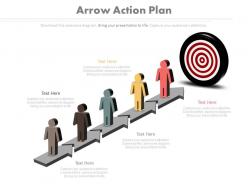
Arrow action plan ppt slides

Rating:
100%
Arrow action plan ppt slides
Slide 1 of 4
Favourites Favourites

Try Before you Buy Download Free Sample Product

Audience Impress Your
Audience
Editable 100%
Editable
Time Save Hours
of Time
The Biggest Sale is ending soon in
0
0
:
0
0
:
0
0
Rating:
100%
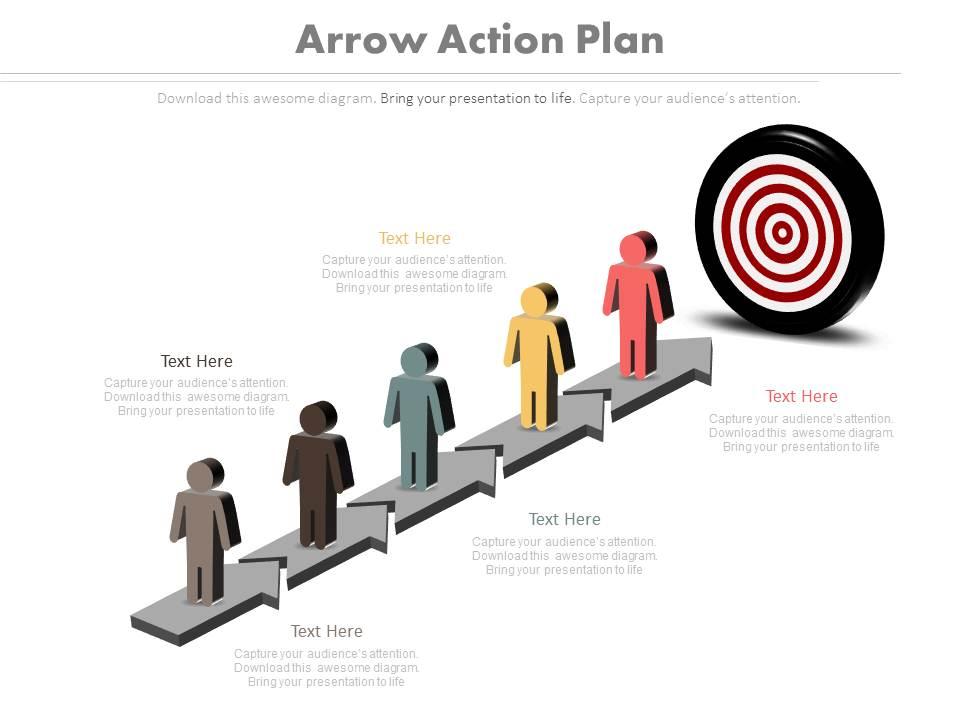
Provides a team focus by identifying the basic initiatives, activities and aspects of your enterprise. Convertible into different formats. Improves the understanding and engagement of the viewers. Breeds confidence. Extremely adaptable and flexible PPT presentation backgrounds. Offers ample number of icons and shapes to choose from. Powerful impactors. The stages in this process are arrows, strategy, business, planning.

FAQs for Arrow action

You need three things: clear actions with deadlines, someone responsible for each task, and a way to measure if it's working. Think of it like an arrow - where you are now, where you want to be, steps to get there. Most people make this way too complicated tbh. Each task should answer "who's doing what by when" plus how you'll know it worked. Regular check-ins are where the real magic happens - you can pivot when stuff isn't working. Oh, and don't go crazy with a million action items. Pick 3-5 big ones that'll actually move you toward your goal.

So basically you map out all the tasks in order and assign people to each one. Everyone can see the whole timeline - who's doing what and when stuff's due. The cool part is people actually understand how their work affects everyone else's. No more "oh shit, sorry I didn't know you needed that from me" situations. Dependencies become super obvious when it's all laid out visually. I'd say start your next meeting by just walking through it together. Gets the whole team on the same page pretty quick, and honestly it's way less painful than those endless status update calls.

Track your completion rates and timeline stuff first - those are your bread and butter metrics. Resource utilization matters too, plus quality measures like stakeholder satisfaction or error rates depending on what you're doing. Honestly, most people get way too obsessed with metrics that look impressive but don't actually show if you're winning. Keep it simple - 3-5 key things on a dashboard, check weekly with the team. The only thing that really counts is whether you're actually moving toward your main goal. Don't overcomplicate it.

Honestly, Arrow Action Plan is pretty cool - it basically throws out all that exhausting upfront planning stuff. You just pick your end goal and start moving toward it right away. Most project management makes you map out every single detail first (which takes forever, let's be real). This is more like using GPS - you know where you're going but figure out the route as you drive. Just grab your target and pick one solid next step. You'll course-correct based on what actually happens instead of guessing everything ahead of time. Way faster than traditional methods.

Honestly, you can't pull off an Arrow Action Plan without getting stakeholders involved from the start. These are the people who'll actually have to live with your changes, so if you don't get their input early on, you're setting yourself up for failure. When people help create the plan, they're obviously more invested in making it work. Get them involved in setting priorities and realistic timelines - they know what'll actually fly in your organization better than anyone. Also, don't just pretend to listen. I've seen too many managers ask for feedback then completely ignore it. Actually use their insights to adjust your approach, or you'll end up with something that sounds good in meetings but falls apart when rubber meets road.

Honestly, visuals are a game-changer for action plans. People zone out when you're just talking through steps, but throw in a simple flowchart or timeline? Suddenly they get it. I always use basic charts to show milestones and decision points - even those cheesy before/after comparisons work great. Don't overthink it though. Clean, simple graphics beat cluttered slides every time. Your audience should focus on the plan, not wonder what your diagram means. Oh, and start with one visual per main point. You can always add more later if needed.

Okay so the biggest mistake is being way too vague with your action steps. Like don't just write "improve communication" - actually say "send weekly project updates every Friday." Also, resist the urge to pile on a million different actions because you'll just overwhelm yourself. Oh and definitely assign someone to each step! Otherwise you get that awkward finger-pointing later when nothing gets done. I've seen this happen so many times. Track your progress too instead of making the plan and then shoving it in a drawer somewhere. Keep things specific and simple.

So basically you just swap out the focus areas and metrics for whatever matters in your industry. Retail? Customer experience and inventory stuff. Manufacturing focuses on efficiency and safety instead. Healthcare's all about patient outcomes and staying compliant - honestly makes sense when you think about it. The framework itself doesn't change though, which is pretty nice. Just figure out what "winning" looks like in your field first, then plug those priorities into the plan's structure. Way easier than starting from scratch every time.

For tracking your Arrow Action Plan, I'd start with Trello or Asana - they're pretty intuitive for setting up task sequences and dependencies. Monday.com is solid too if you want something with more visual appeal. Honestly though? A good Excel sheet can work wonders if you're not feeling the whole software thing yet. My old manager swore by it for years. Microsoft Project and Smartsheet are worth considering once things get complex and you need serious resource management. But here's the thing - pick whatever your team will actually stick with. I've seen fancy tools sit unused while teams crushed it with basic setups.

So the Arrow Action Plan is basically about not making decisions on autopilot. First you map where you are now, then figure out your actual goal, and identify what's in your way. Sounds obvious but it actually works really well for cutting through mental clutter. What I like about it is how it forces you to look at multiple options instead of going with your gut reaction right away. It also helps separate real priorities from stuff that just *feels* urgent - which honestly trips me up all the time. Even just 15 minutes with this framework will clear up your thinking way more than you'd think.

Honestly, just bake the feedback right into your Arrow plan from the start. Block out 30 minutes every Friday for a quick self-review - sounds boring but it's a game changer. Most plans totally crash without this step. Ask yourself: are my actions actually getting me closer to my goal? If not, pivot. Don't wait until you're completely off track to check in. Make it automatic, not something you'll "remember to do later" (we both know how that goes). Weekly or bi-weekly works best. The whole point is catching what's working and what isn't before things spiral.

So for keeping your Arrow Action Plan actually sustainable, here's what's worked for me. Set up regular check-ins to see how things are going - like quarterly reviews instead of just hoping for the best. Resource planning is huge too, and honestly, always budget more than you think you'll need because stuff always costs extra. Make sure someone owns each piece so nothing gets forgotten when everyone's swamped. Oh, and don't be afraid to pivot if something isn't working - I've wasted way too much time being stubborn about plans that clearly weren't going anywhere.

Honestly, Arrow Action Plans work great with agile - they break stuff down into clear steps that map perfectly to sprints. Each arrow becomes a user story or task, which makes your backlog way less messy. My team actually gets excited seeing the visual progression during standups (weird but true). Dependencies become super obvious early on, and that's clutch for sprint planning. Blockers are easier to spot too. The whole thing keeps everyone on the same page about what's coming next. Definitely try mapping your next sprint this way - you'll probably be surprised how much clearer everything feels.

Honestly, monthly reviews are the bare minimum but weekly works way better. I usually block out like 30 minutes on Fridays to see what actually got done vs what I planned. Are my deadlines even realistic? Do my priorities still make sense? Don't wait for your next review if something major changes - just update it right away when new stuff comes up or you hit roadblocks. The whole thing only works if you treat it like it's flexible, not some rigid schedule you can't touch. Oh and definitely check if your current goals still align with what you're actually trying to accomplish.

First thing - figure out which company goals each arrow action actually supports. Revenue, efficiency, customer stuff, whatever. Then document those connections super clearly so your leadership can see how everything ties together. I've watched so many plans crash and burn because nobody connected the dots! Oh and definitely build in time to review and tweak things as priorities change throughout the year (which they always do). A simple matrix showing action → business outcome works great. Makes everything way more obvious when you need to defend your budget later.

Ratings and Reviews

100% of 100
Review Form
Write a review
Most Relevant Reviews
  1. 100%

    by Dana Owens

    Unique design & color.
  2. 100%

    by Cory Reynolds

    Best Representation of topics, really appreciable.

2 Item(s)

per page: