

Automation Of HR Workflow Comparison Between Manual And Automation Process





Try Before you Buy Download Free Sample Product
 Impress Your
Audience
 100%
Editable
 Save Hours
of Time


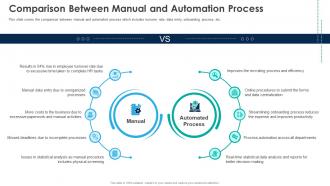
This slide covers the comparison between manual and automated process which includes turnover rate, data entry, onboarding process, etc.
People who downloaded this PowerPoint presentation also viewed the following :
Automation Of HR Workflow Comparison Between Manual And Automation Process with all 6 slides:
Use our Automation Of HR Workflow Comparison Between Manual And Automation Process to effectively help you save your valuable time. They are readymade to fit into any presentation structure.





FAQs for Automation Of HR Workflow Comparison Between Manual
Dude, it's a game changer for cutting out all that tedious stuff. Onboarding, leave requests, performance reviews - they just happen automatically instead of sitting around waiting for someone to remember to deal with them. Honestly, the error reduction alone makes it worth it since there's no more manual data entry mishaps. Your team will actually love you for it too because they can see where their requests stand instead of wondering if you forgot about them. Oh, and start with whatever process makes you want to pull your hair out most - probably onboarding.
Honestly, HR automation is a lifesaver for onboarding and offboarding stuff. It handles all the boring tasks automatically - like collecting documents, setting up system access, assigning training when someone starts. When people leave, it revokes their access and sends exit surveys without you having to bug anyone (seriously, nobody wants to be the person constantly following up). Everything stays consistent and nothing gets forgotten. I'd start by looking at your current process - whatever you're doing over and over again is probably worth automating first. Trust me, it's way better than manually tracking everything.
Honestly, the worst part is dealing with people who hate change - even when their current system is total garbage. Your data's gonna be a nightmare too, scattered everywhere across random spreadsheets that Steve from accounting made in 2019. Integration with whatever tech you're already using? Yeah, that's another headache waiting to happen. Everyone slows down while learning the new stuff, which sucks for productivity short-term. But here's what worked for us - pick one simple thing first, show people it actually makes their life easier, then slowly add more. Don't try to fix everything at once.
Honestly, automation is a game-changer for compliance stuff. You'll cut out so much human error - like forgetting to track certifications or missing pay equity deadlines. The documentation trails are automatic too, which auditors eat up. What I love most is how it catches problems early. Someone's training about to expire? The system flags it. FMLA limits getting close? You'll know before it's an issue. Everything runs the exact same way every time, which is huge for staying compliant. I'd start with your messiest compliance processes first - that's where you'll see the biggest difference right away.
Start with a good HRIS - that's your backbone for everything. Then grab something like Zapier to automate all the tedious stuff between your different systems. DocuSign is a lifesaver for paperwork (seriously, the amount of forms in HR is insane). Make sure whatever you pick can actually integrate with your payroll and benefits platforms. I'd map out what you're doing manually first though - like, write it all down. That way you can target the stuff that's eating up most of your time. Don't try to fix everything at once.
Honestly, just use what you already have first. Google Workspace and Microsoft 365 come with workflow stuff that most people ignore completely. Set up automated checklists for new hires, time-off requests, basic approvals. Don't overthink it - I see businesses spend way too much trying to get fancy when simple works. Zapier's free version can connect your current apps pretty easily. Here's what I'd do: pick your biggest headache (probably new hire paperwork, right?), automate that whole thing, then tackle the next annoying process. One at a time.
Honestly, data analytics is a game-changer for HR stuff. Instead of just guessing who's a good hire, you can actually see which resume keywords predict success. Pretty cool how it spots patterns you'd miss otherwise. You'll be able to predict which employees might bail before they even know it themselves - saves so much headache with retention planning. Pay equity issues? The system flags those automatically across departments. Oh, and recruitment spending becomes way smarter when you see which job boards bring quality candidates vs just a ton of random applications. Start small though - maybe pick screening first and build your automation from there.
So employee self-service is huge for automating HR stuff. Instead of your team getting bombarded with emails about address changes and PTO requests, people just log into a portal and handle it themselves. Way faster for everyone. You'll probably cut your admin work by like 60-70% - honestly it's kind of crazy how much time HR wastes on basic requests. The tricky part? Your portal actually has to be user-friendly. I've seen companies roll out these clunky systems and people just ignore them completely, then you're back to square one with endless emails.
Honestly, HR automation can actually make employees happier if you do it smart. Nobody wants to chase their manager around for PTO approval or wonder where their expense report went to die. When you automate the boring stuff, people get answers faster and can actually see what's happening with their requests. Your HR team stops drowning in paperwork too - they can focus on helping people instead of shuffling forms around all day. The trick is picking the right things to automate. Don't remove the human element where people actually need it, you know?
Honestly, I'd start with just 2-3 things you actually care about - don't go crazy trying to track everything. Time savings are huge, so measure how much faster your onboarding or leave requests move vs the old manual way. Error rates matter too since automation should slash those data entry screw-ups. The people side is where it gets interesting though - survey your team about their experience because happy employees = better results. Oh, and definitely watch your cost per hire and time-to-fill numbers. Those usually see solid improvements pretty quickly. Just pick what matters most to your situation first.
Look, start with encryption - both when data's moving around and when it's stored. Non-negotiable. Then set up role-based access so random people can't peek at salary info (seriously, this happens more than you'd think). Multi-factor authentication is a must too. Check those user permissions every few months because Bob from accounting might still have admin access from 2019. Oh, and definitely run security audits regularly. Have an incident response plan ready because something will eventually go wrong. Trust me on that one.
So first thing - map out what you're actually doing now. You'll find tons of "must-have" steps that are totally pointless. Go after the repetitive stuff that happens constantly, like onboarding new people or vacation requests. That's where you get real results. Just don't go crazy with it. Pick one thing, get it right, then move to the next. I learned this the hard way - trying to automate everything at once is a nightmare. Keep some human oversight for the tricky situations though. And honestly? Test with real people first before pushing it company-wide. Your workflows should be dead simple or nobody will use them.
Honestly, integrating your HR systems is a total game changer. All that tedious copying of employee info between payroll, IT, badge systems? Gone. New hire gets entered once and boom - it populates everywhere automatically. Your team stops wasting hours on data entry and can actually do meaningful work instead. Plus approvals speed up like crazy when everything talks to each other. I'd say start with whatever manual process makes you want to bang your head against the wall - that's usually where you'll see the biggest impact. You'll wonder why you didn't do this sooner.
Predictive analytics is getting wild - it can spot who's about to quit before they even know it themselves. Chatbots handle way more than basic questions now too. They're dealing with complex HR stuff that used to need actual humans. Integration platforms are where it's at though - one system connecting your hiring tools, payroll, performance reviews, all of it. Employee self-service is expanding into career planning and skills analysis, which honestly makes sense since people want more control over their development. I'd start by looking at what you're already using and see where these actually fix real problems instead of just adding more tech for tech's sake.
First figure out how your team actually works - like who approves what and how people prefer getting updates. Some teams are all about Slack notifications while others hate them, you know? Most platforms let you tweak approval chains and notification styles pretty easily. I've seen companies add weird little steps that totally match their vibe, like "culture checks" during onboarding that would be cringe elsewhere but work for them. Pick one workflow you use a lot and map it out. Then spot where you can inject your company's personality and customize those specific parts.
-
Attractive design and informative presentation.
-
Designs have enough space to add content.