

B2b online marketing powerpoint presentation slides




Try Before you Buy Download Free Sample Product
 Impress Your
 Audience
 100%
100% Editable
 Save Hours
 of Time


Introducing B2B Online Marketing Powerpoint Presentation Slides. These readily available PowerPoint visuals display trends related to b2b marketing, its effectiveness, paid advertising methods, most effective channels, challenges, and solutions related to marketing. Showcase various trends of b2b marketing such as Email newsletters, storytelling, and remarketing. Discuss channels that are used to acquire customers by taking advantage of b2b sales PPT slideshow. Highlight various steps in the lead generation funnel and the marketing activities through this content-ready PPT slide deck. Mention lead generation, content, SEO strategy, promotion, conversion, and analytics strategy with these content-ready b2b digital marketing PPT themes. The presentation also discusses lead generation and marketing automation strategies. Present lead scoring, conversion process, and grading parameters by using this ready-to-use b2b marketing PPT presentation. Thus, help in building a good relationship with the buyers at every stage of the sales funnel by incorporating our professionally designed PPT presentation.
People who downloaded this PowerPoint presentation also viewed the following :
Content of this Powerpoint Presentation
Slide 1: This slide introduces B2B Online Marketing. State Your Company Name and begin.
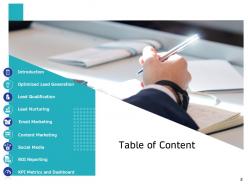
Slide 2: This slide shows Table of Content for the presentation.
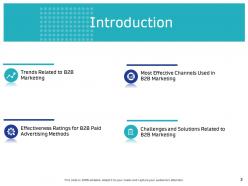
Slide 3: This slide shows Introduction describing- Trends Related to B2B Marketing, Most Effective Channels Used in B2B Marketing, etc.
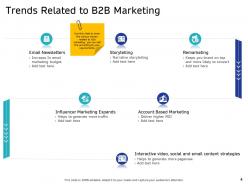
Slide 4: This slide presents Trends Related to B2B Marketing describing- Account Based Marketing, Email Newsletters, Remarketing, Influencer Marketing Expands, etc.
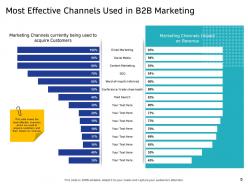
Slide 5: This slide displays Marketing Channels currently being used to acquire Customers.
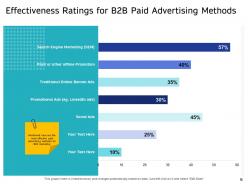
Slide 6: This slide represents Effectiveness Ratings for B2B Paid Advertising Methods.
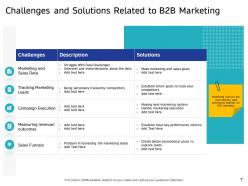
Slide 7: This slide showcases Challenges and Solutions Related to B2B Marketing describing the most effective paid advertising methods for B2b marketing.
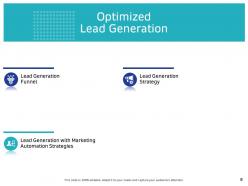
Slide 8: This slide shows Optimized Lead Generation describing- Lead Generation Strategy, Lead Generation with Marketing Automation Strategies, Lead Generation Funnel.
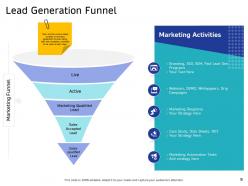
Slide 9: This slide presents Lead Generation Funnel with various marketing activities.
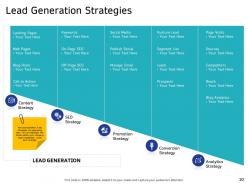
Slide 10: This slide displays Lead Generation Strategies describing- Conversion Strategy, Content Strategy, Analytics Strategy, etc.
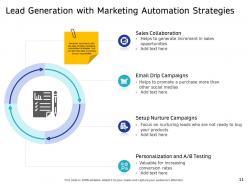
Slide 11: This slide represents Lead Generation with Marketing Automation Strategies.
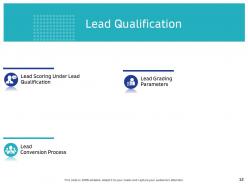
Slide 12: This slide showcases Lead Qualification describing- Lead Scoring Under Lead Qualification, Lead Grading Parameters, and Lead Conversion Process.
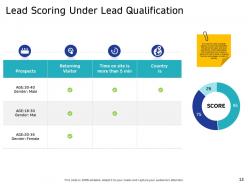
Slide 13: This slide shows Lead Scoring Under Lead Qualification.
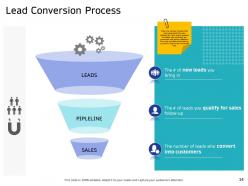
Slide 14: This slide presents Lead Conversion Process describing- Leads, Pipelines and Sales.
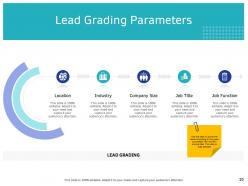
Slide 15: This slide displays Lead Grading Parameters like- Location, Industry, Company Size, etc.
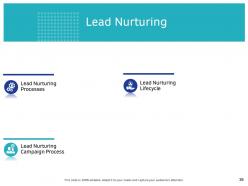
Slide 16: This slide represents Lead Nurturing describing- Lead Nurturing Processes, Lead Nurturing Lifecycle, and Lead Nurturing Campaign Process.
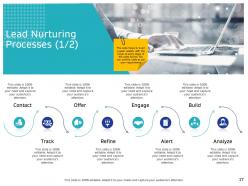
Slide 17: This slide showcases Lead Nurturing Processes describing process to build a good relation with the buyer at every stage of the sales funnel.
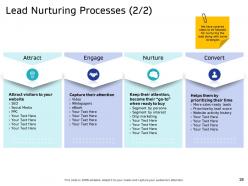
Slide 18: This is another slide showing Lead Nurturing Processes.
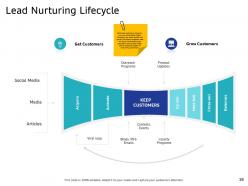
Slide 19: This slide presents Lead Nurturing Lifecycle describing- Social Media, Media, Articles, etc.
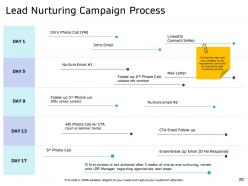
Slide 20: This slide displays Lead Nurturing Campaign Process comparing various days data.
Slide 21: This slide represents Email Marketing describing- Email Marketing Mediums, Email Marketing Effectiveness Under B2b Marketing, Email Marketing Plan, etc.
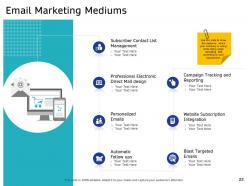
Slide 22: This slide showcases Email Marketing Mediums describing- Subscriber Contact List Management, Professional Electronic Direct Mail design, Personalized Emails, etc.
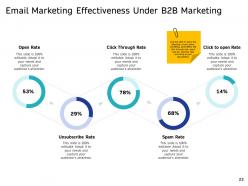
Slide 23: This slide shows Email Marketing Effectiveness Under B2B Marketing describing- Open Rate, Click Through Rate, Spam Rate, etc.
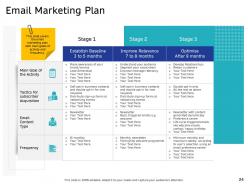
Slide 24: This slide presents Email Marketing Plan with main goals of activity and frequency.
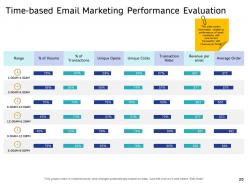
Slide 25: This slide displays Time-based Email Marketing Performance Evaluation.
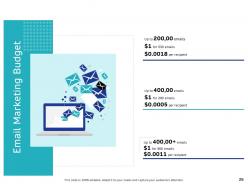
Slide 26: This slide represents Email Marketing Budget with related imagery.
Slide 27: This slide showcases Content Marketing describing- Platforms Used Under Content Marketing, Content Marketing Effectiveness, and Budget For Content Marketing.
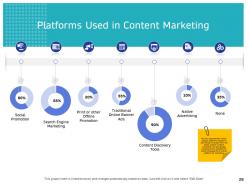
Slide 28: This slide shows Platforms Used in Content Marketing like- Social Promotion, Search Engine Marketing, Traditional Online Banner Ads, etc.
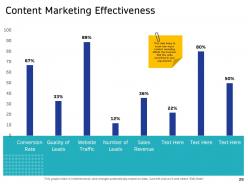
Slide 29: This slide presents Content Marketing Effectiveness showing data in bar graph to know how much content marketing effects the business.
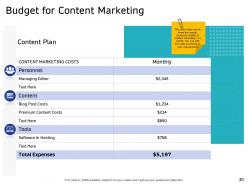
Slide 30: This slide displays Budget for Content Marketing to know the overall expenses related to content marketing in a month.
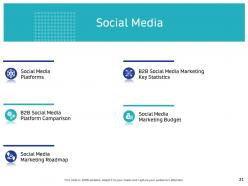
Slide 31: This slide represents Social Media describing- Social Media Platforms, B2B Social Media Marketing Key Statistics, B2B Social Media Platform Comparison, etc.
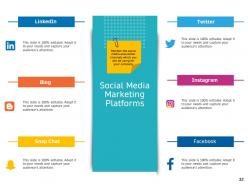
Slide 32: This slide showcases Social Media Marketing Platforms like- LinkedIn, Blog, Snapchat, etc.
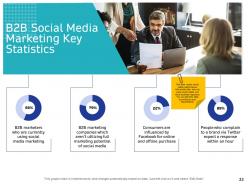
Slide 33: This slide shows B2B Social Media Marketing Key Statistics with data in percentage.
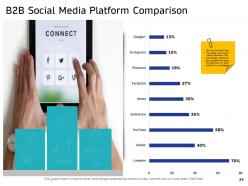
Slide 34: This slide presents B2B Social Media Platform Comparison with the help of bar graph.
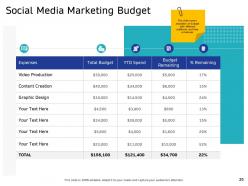
Slide 35: This slide displays Social Media Marketing Budget with different platforms and time schedules.
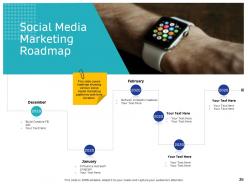
Slide 36: This slide represents Social Media Marketing Roadmap showing various social media marketing platforms with time duration.
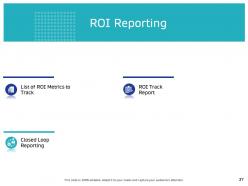
Slide 37: This slide showcases ROI Reporting describing- Closed Loop Reporting, ROI Track Report, List of ROI Metrics to Track, etc.
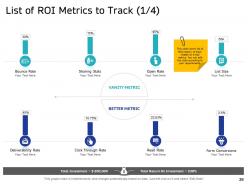
Slide 38: This slide shows List of ROI Metrics to Track like- Bounce Rate, Sharing Stats, Open Rate, etc.
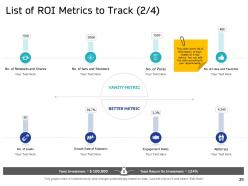
Slide 39: This slide presents List of ROI Metrics to Track describing- No. of Retweets and Shares, No. of fans and followers, No. of Posts, etc.
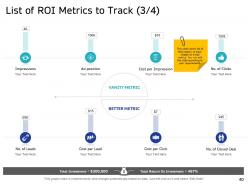
Slide 40: This is another slide displaying List of ROI Metrics to Track describing- Impressions, Ad position, Cost per Impression, etc.
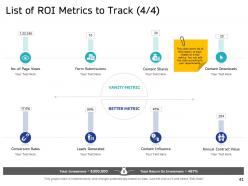
Slide 41: This is another slide representing List of ROI Metrics to Track describing- Conversion Rates, Leads Generated, Content Influence, etc.
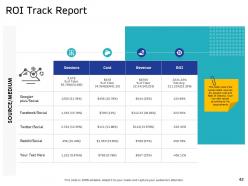
Slide 42: This slide showcases ROI Track Report showing data in tabular form.
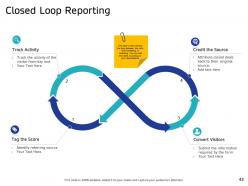
Slide 43: This slide shows Closed Loop Reporting describing- Track Activity, Credit the Source, Convert Visitors, etc.
Slide 44: This slide presents KPI Metrics and Dashboard with related icons.
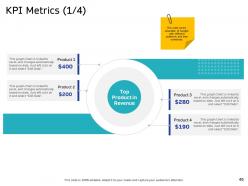
Slide 45: This slide displays KPI Metrics showing allocation of budget with different platforms and time schedules.
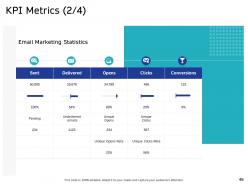
Slide 46: This slide represents KPI Metrics showing Email Marketing Statistics.
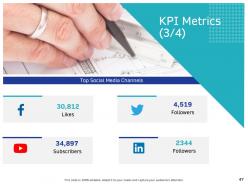
Slide 47: This slide showcases KPI Metrics showing Top Social Media Channels.
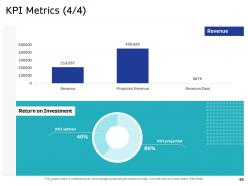
Slide 48: This slide presents KPI Metrics showing Return on Investment.
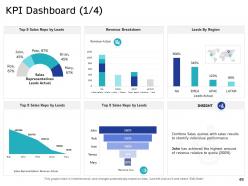
Slide 49: This slide displays KPI Dashboard describing- Top 5 Sales Reps by Leads, Sales Representatives Leads Actual, Sales Representatives Revenue Actual, etc.
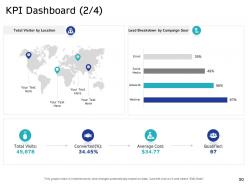
Slide 50: This slide represents KPI Dashboard describing- Total Visitor by Location, Total Visits, Average Cost, etc.
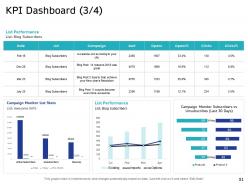
Slide 51: This is another slide showing KPI Dashboard describing- List Performance, Campaign Monitor List Stats, etc.
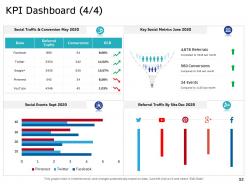
Slide 52: This is another slide displaying KPI Dashboard showing- Social Traffic & Conversion, Key Social Metrics, Social Events, etc.
Slide 53: This slide shows B2B Online Marketing Icons.
Slide 54: This slide is titled as Additional Slides for moving forward.
Slide 55: This slide reminds about a 15 minutes Coffee Break.
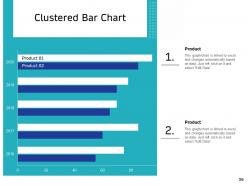
Slide 56: This slide shows Clustered Bar Chart with two products comparison.
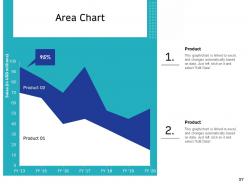
Slide 57: This slide presents Area Chart with two products comparison.
Slide 58: This slide displays Puzzle with additional text boxes.
Slide 59: This slide shows Venn diagram with related icons and text boxes.
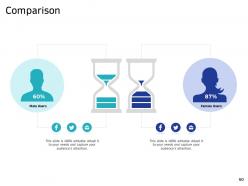
Slide 60: This is a Comparison slide to state comparison between products, commodities etc.
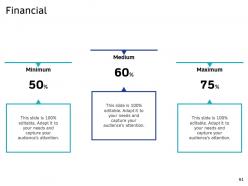
Slide 61: This is a Financial slide. Show your finance related stuff here.
Slide 62: This slide displays Mind Map with additional text boxes.
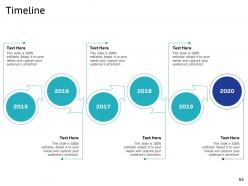
Slide 63: This is a Timeline slide. Show data related to time intervals here.
Slide 64: This is a Thank you slide with address, contact numbers and email address.
B2b online marketing powerpoint presentation slides with all 64 slides:
Use our B2B Online Marketing Powerpoint Presentation Slides to effectively help you save your valuable time. They are readymade to fit into any presentation structure.

FAQs for B2b online marketing
So B2B is totally different - you're dealing with committees who take forever to decide anything, while B2C buyers just want that instant gratification. With B2B, you've got to educate the hell out of them because there's always some procurement guy, a few executives, and actual users who all need different info. The crazy part? Most B2B buyers have already done 70% of their research before they even reach out. B2C is way more about hitting those emotional buttons and lifestyle stuff. LinkedIn's gonna be your best friend for B2B, plus you'll need solid case studies and nurture sequences that drag on for months.
Okay so first thing - ditch the generic "awesome products" stuff and use keywords your actual buyers search for, like "enterprise software solutions." Target those longer, specific B2B phrases since they convert way better anyway. Blog posts and case studies work great for showing you actually know what you're talking about. Oh, and if you serve specific areas, don't sleep on local SEO. Honestly, the whole process takes forever compared to B2C, but it's so worth it because the leads you'll get are actually qualified prospects, not just random tire-kickers.
Look, content marketing is honestly what makes or breaks your B2B strategy. You're building trust way before anyone's ready to buy from you. Think whitepapers, case studies, blog posts - stuff that actually solves problems your customers deal with daily. Don't be salesy (major turnoff). Instead, show you know your shit through helpful content. Map everything to where buyers are in their journey. Oh, and here's what I'd do first - pick one specific pain point your ideal customers have and create something genuinely useful around it. Start there.
LinkedIn's your best bet - that's where the actual decision makers are scrolling, not just randos posting memes. Share stuff that shows you know your shit: industry insights, case studies, maybe some behind-the-scenes content. Don't just push your products though. Twitter's solid too for jumping into real-time conversations and establishing yourself as someone worth listening to. The whole game is about being genuinely helpful first. I spend like 15 minutes each morning just engaging with my target audience's posts. Sounds basic, but building those relationships before you need them? That's where the magic happens.
Honestly, segmentation is where you'll see the biggest wins. Break your lists down by industry or company size, then actually write different messages for each group. Your subject lines need to be clear and show real benefits - none of that "touching base" garbage that everyone ignores. Send Tuesday through Thursday around 10-11am when people are actually checking email. Oh, and stick to one call-to-action per email - don't confuse them with five different asks. The content should provide real value, not just pitch your stuff. Start A/B testing subject lines this week to figure out what your audience responds to. Trust me, your open rates will improve fast.
Track everything from first contact to actual sale - that's where the real insights are. Most people get obsessed with clicks and downloads, but honestly? Those numbers don't pay the bills. Set up UTM codes and make sure your CRM shows which campaigns actually close deals. The calculation's simple: marketing revenue minus marketing spend, divided by spend. Lead scoring helps too, though it can be a pain to set up initially. Don't fall into the vanity metrics trap. Connect those dots straight to revenue or you're basically flying blind.
Think of ABM like flipping your whole lead gen approach. Instead of going wide, you're picking specific high-value accounts and hitting them with super personalized campaigns. Yeah, your lead volume might drop at first (honestly that part freaks everyone out), but the quality goes through the roof. Each target account gets treated like its own little market. You end up with shorter sales cycles and way bigger deals. Plus marketing and sales actually start working together since they're both focused on the same accounts. The conversion rates are just so much better when you're talking directly to their specific problems.
Dude, skip the feature lists - B2B people only care about ROI and whether you'll actually solve their problems. Show them real numbers and concrete outcomes from other customers. "Innovative solutions" is basically corporate speak for "I have nothing interesting to say." Start with whatever keeps them up at 3am, then explain how you fix it. Like, if they're bleeding money on manual processes, lead with that pain point. Different industries worry about different stuff, so you'll need to test various messages with A/B campaigns. Honestly, the whole thing comes down to proving you can save time, cut costs, or boost revenue for their specific situation.
Honestly, the worst mistake is casting too wide a net - you'll blow through your budget targeting generic "decision makers" instead of finding who actually has influence. Another thing that kills campaigns? Content that screams "buy our stuff!" B2B people see right through that garbage and click away instantly. Oh, and don't get obsessed with vanity metrics like impressions. I learned this the hard way. Track engagement quality instead. Pipeline contribution matters way more than how many eyeballs you got.
Dude, segmentation is a game changer - you stop wasting time on generic stuff that nobody connects with. Break your audience into groups by industry, company size, whatever makes sense. A scrappy startup has completely different headaches than some massive corporation, you know? So why would you send them the same pitch? Honestly, once you start tailoring your messaging and timing to each group, everything improves. Better open rates, more conversions, faster deals. People actually feel like you get their situation instead of just blasting everyone with the same boring content. I'd pick maybe 3 or 4 main customer types to start with - don't overcomplicate it right away.
Start with a good CRM - HubSpot's pretty user-friendly, Salesforce if you want more power. For marketing automation, Marketo or Pardot will save you tons of time with those endless B2B sales cycles. Google Analytics is obvious, but pair it with SEMrush so you can spy on competitors (which honestly everyone should be doing). LinkedIn Sales Navigator is basically mandatory now for finding prospects. Email-wise, Mailchimp works but feels kinda basic for serious B2B stuff. My advice? Pick your CRM first, add one automation tool, then see what gaps you actually have before going crazy with more tools.
Okay so first thing - get both teams tracking the same metrics and actually talking to each other regularly. Weekly check-ins where you're both looking at lead quality, conversion rates, all that stuff. Marketing needs to understand sales wants *good* leads, not just a ton of random ones. And sales? Stop just saying "these leads suck" and give actual feedback on why. Most of this drama happens because they literally define things differently - like what even counts as a "qualified lead," you know? Pick one shared goal to start with, maybe demo-to-close rates. That way you're not trying to fix everything at once.
Yeah, B2B marketing is getting wild right now. AI stuff is everywhere - chatbots, predictive analytics, all that. Account-based marketing is way more precise now too. You can actually target specific companies instead of hoping for the best. Video content is blowing up (which honestly caught me off guard - who knew prospects would watch so many explainer videos?). Personalization at scale isn't some fancy future thing anymore. Better data tools make it pretty doable. My advice? Don't try doing everything at once. Pick one thing that fits what you're already working on and test it out.
Definitely go heavy on testimonials and case studies - they're absolute gold for B2B trust building. Case studies are my favorite because they tell the whole story: problem, your fix, actual results with real numbers. It's basically like your clients become your sales team, which is honestly the best kind of selling. Put testimonials everywhere - landing pages, email headers, proposal covers. Quick credibility wins. Oh and when you ask for them (start with your happiest clients obviously), push for specific metrics if you can get them. Numbers make everything more believable. Feature this stuff prominently on your site and in presentations too.
Honestly, forget about vanity metrics and track stuff that actually makes money. Lead quality beats quantity every time - MQLs converting to SQLs is way more valuable than random website hits. CAC and lifetime value are non-negotiable too. I used to obsess over traffic numbers but learned the hard way that visitors mean nothing if they're not buying. Pipeline velocity matters since B2B cycles drag on forever. Attribution tracking across touchpoints is messy but worth it. Start simple with these basics, then add the fancy dashboard stuff later when you're not drowning in data.
-
Designs have enough space to add content.
-
Helpful product design for delivering presentation.
-
Awesomely designed templates, Easy to understand.
-
Presentation Design is very nice, good work with the content as well.
-
Easy to edit slides with easy to understand instructions.
-
Unique and attractive product design.