


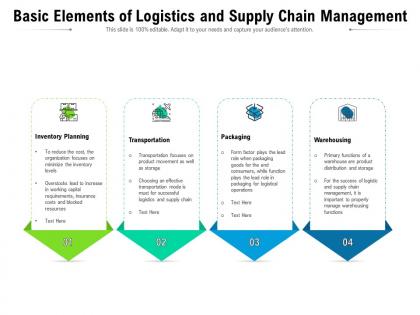
Basic elements of logistics and supply chain management




Try Before you Buy Download Free Sample Product
 Impress Your
 Audience
 100%
100% Editable
 Save Hours
 of Time


Our Basic Elements Of Logistics And Supply Chain Management are topically designed to provide an attractive backdrop to any subject. Use them to look like a presentation pro.
People who downloaded this PowerPoint presentation also viewed the following :
Basic elements of logistics and supply chain management with all 2 slides:
Use our Basic Elements Of Logistics And Supply Chain Management to effectively help you save your valuable time. They are readymade to fit into any presentation structure.
FAQs for Basic elements of logistics and
So logistics is like the actual moving and storing of stuff - warehouses, trucks, inventory tracking, all that. Supply chain management? Way bigger picture. You're dealing with suppliers, manufacturers, customers, the whole network from start to finish. Logistics = the "how do we get this done" part. More hands-on, tactical stuff. Supply chain is strategic - you're planning relationships and optimizing the entire flow. Honestly, supply chain folks tend to make more money if that matters to you. Really depends what you like better: executing the day-to-day operations or being the person who maps out the big strategy.
Dude, tech can totally transform your logistics - like GPS tracking alone cuts delivery times by 20%, which is insane when you think about how we used to just wing it. Start with warehouse management systems for better picking routes, then add IoT sensors to track shipments. AI demand forecasting is huge too. Route optimization software will slash your fuel costs and tighten delivery windows. Honestly, I'd pick one area first - maybe inventory tracking? - see the results, then expand from there. The trick is finding tech that actually fixes your specific pain points, not just shiny new toys.
Honestly, inventory management can make or break your whole operation. It hits everything - your costs, whether customers can actually get what they want, cash flow, all of it. My old company learned this lesson the expensive way when we got stuck with tons of seasonal inventory we couldn't move. What a mess that was! Good systems let you dodge stockouts without tying up crazy amounts of money in stuff just sitting there. You'll react quicker when demand shifts too. Look at your turnover rates first - that's usually where the low-hanging fruit is hiding.
Dude, global crises are like stress tests for supply chains - they show you exactly where everything breaks. When COVID hit, companies were frantically calling backup suppliers because their main ones just... disappeared. Trade wars? Same deal, except now you're dodging tariffs left and right. That whole "just-in-time" thing became a joke real quick. Now everyone's hoarding extra inventory and spreading suppliers across different countries. Honestly, the companies that survived best already had backup plans sitting in a drawer somewhere. You can't wait until you're screwed to start thinking about alternatives.
Honestly, picking logistics partners is all about three main things. Track record first - dig into their references, delivery stats, and how often stuff gets damaged. Also check if they're financially solid because having your partner go bankrupt mid-contract is a nightmare (trust me on this one). Tech integration is huge too. You need their systems to actually talk to yours for tracking and updates. Geographic coverage matters depending on where you're shipping, and whether they can grow with you. My advice? Make a simple scorecard, weight what matters most to you, then get 3-4 quotes before deciding.
Honestly, data analytics is a total game-changer for supply chain stuff. Instead of just guessing what'll happen next, you get real visibility into demand patterns and can actually predict when things might go sideways. Like, it'll flag supplier delays weeks before they hit you. The inventory optimization alone is worth it - no more panic ordering or sitting on tons of dead stock. Oh, and you'll find cost savings you never knew existed, like better shipping routes or switching to more reliable suppliers. I'd start with demand forecasting first since that's where you'll see results fastest.
Dude, sustainability is flipping logistics upside down. Companies are going electric with their fleets, mapping smarter routes to slash emissions. They're even picking suppliers based on how green they are now. The whole reverse logistics thing for returns and recycling is blowing up too - circular economy stuff, you know? Your customers want it, regulations keep tightening, and weirdly it usually cuts costs through better efficiency. Investors are obsessed with ESG scores these days. I'd honestly just start with a carbon audit of what you're doing now, then grab the easy wins like route tweaks or less packaging.
Ugh, logistics are brutal for small businesses. You're basically fighting with one hand tied behind your back - no buying power, higher shipping costs, and suppliers who don't really care about your tiny orders. Cash flow gets messy fast when you're juggling inventory (honestly, it's like a constant guessing game). Most small business owners I know are doing supply chain stuff on top of everything else, which is why things fall through the cracks. My advice? Find 2-3 suppliers you actually trust and stick with them. If you're moving decent volume, outsourcing fulfillment might save your sanity.
Dude, automation is a game changer for logistics stuff. RFID systems handle your inventory tracking automatically - no more endless stock counts that make you want to pull your hair out. Warehouse robots can do the picking and packing, plus you can set up automated routing for deliveries. Order processing gets way faster with fewer screwups when humans aren't manually entering everything. Your customers get their orders quicker, and honestly, your team can actually work on important stuff instead of mind-numbing repetitive tasks. Just don't try to automate everything at once - pick whatever's currently driving you crazy and start there.
Drones and delivery robots are everywhere now - plus those micro-fulfillment centers they're building closer to neighborhoods. Amazon's basically forcing everyone to offer same-day delivery, which is honestly getting a bit crazy. People want flexible options too, like pickup lockers and specific time windows. Crowdsourced delivery is huge - basically anyone with a car can deliver packages these days. Oh, and there's this push for green delivery with electric vans and bike couriers, especially downtown. For your logistics stuff, I'd definitely partner with local delivery companies and get better tracking systems. Customers really want control over when and where their packages show up.
So basically you want to spot problems before they wreck your supply chain. Map out where things could go wrong - supplier issues, weather disasters, crazy demand swings. Then build in backups everywhere. I always tell people to avoid putting all your eggs in one basket with suppliers. Having multiple relationships saves your butt when something breaks down. Oh, and start with your biggest weak spots first - like if losing one supplier would totally screw you over. It's honestly just common sense planning, but most companies skip this step until it's too late.
Dude, regulatory changes will mess with your whole logistics setup. Documentation gets more complicated. Route planning changes. You'll need different carriers sometimes. Trade policy shifts? Now you're hunting for new suppliers or shipping routes. Safety regs mean retraining drivers and updating warehouse stuff - honestly such a pain but whatever. Environmental rules are the worst though, getting stricter every year and forcing everyone into greener transport options. My advice? Don't wait around for changes to hit you. Get alerts set up for your industry updates. Find some compliance people who actually know what they're talking about.
So here's what I've seen work really well - get everyone on the same page with shared data systems where you can all see demand forecasts, inventory levels, that kind of stuff. Regular check-ins are huge too, honestly way more important than people think. This way you're not flying blind when coordinating deliveries, and you'll spot problems before they blow up. Fewer stockouts, less random inventory sitting around forever. The whole thing just runs smoother when you're actually talking to each other instead of working in separate bubbles and crossing your fingers.
Honestly, cloud logistics is pretty amazing for seeing what's happening across your whole supply chain. Real-time tracking, automatic inventory updates - it just works better than the old clunky systems. Your team can jump in from anywhere, which is clutch for global stuff. The money you save on not running your own servers adds up fast too. My buddy's company saw results pretty quickly once they switched. I'd start by figuring out where you're most blind right now - like are shipments disappearing into black holes? Then find a platform that tackles those specific headaches first.
Oh man, cultural stuff can totally derail your supply chain if you're not paying attention. Some places won't even talk business until you've built a relationship first - slows things down initially but honestly creates way better partnerships. Communication styles vary like crazy too. Direct vs indirect approaches lead to so many misunderstandings about deadlines and quality standards. I made this mistake early on and it was painful! Time zones are another headache I forgot to mention. Bottom line: spend time learning how your suppliers actually operate culturally and adjust how you communicate with them.
-
Great designs, Easily Editable.
-
Awesomely designed templates, Easy to understand.
-
Awesomely designed templates, Easy to understand.
-
Nice and innovative design.
-
Qualitative and comprehensive slides.
-
Much better than the original! Thanks for the quick turnaround.
-
Best way of representation of the topic.
-
Informative design.
-
Great product with effective design. Helped a lot in our corporate presentations. Easy to edit and stunning visuals.
-
Nice and innovative design.
-
Page:
- You're currently reading page 1
- Page 2
-
