


Best Practices For Food Quality And Safety Management Powerpoint Presentation Slides
Check out our professionally designed Best Practices for Food Quality and Safety Management PPT, our comprehensive toolkit for ensuring top-tier food safety and quality control in the culinary industry. This Food Safety Management System Template covers all aspects of implementing a robust Food Safety Management System FSMS. Furthermore, our Food Hygiene and Hazard Analysis presentation delves into crucial topics such as Food Hygiene and Hazard Analysis, which are vital for identifying and mitigating potential risks. Also, the Food Quality Control Template explores practical strategies for Food Quality Control, ensuring consistent adherence to the highest standards. Additionally, the System of Food Quality and Safety Assurance PPT aids in maintaining operational integrity, enhancing knowledge, and streamlining processes. Ultimately, our FSMS deck facilitates informed decision-making, safeguards reputations, and prioritizes consumer well-being. Access this invaluable resource now.






















































You must be logged in to download this presentation.


Do you want to remove this product from your favourites?
 Impress your
 audience
 100%
100% Editable
 Save Hours
 of Time
PowerPoint presentation slides
Deliver this complete deck to your team members and other collaborators. Encompassed with stylized slides presenting various concepts, this Best Practices For Food Quality And Safety Management Powerpoint Presentation Slides is the best tool you can utilize. Personalize its content and graphics to make it unique and thought-provoking. All the seventy eight slides are editable and modifiable, so feel free to adjust them to your business setting. The font, color, and other components also come in an editable format making this PPT design the best choice for your next presentation. So, download now.

People who downloaded this PowerPoint presentation also viewed the following :
Content of this Powerpoint Presentation
Slide 1: This slide introduces Best Practices for Food Quality and Safety Management. State Your Company Name and begin.
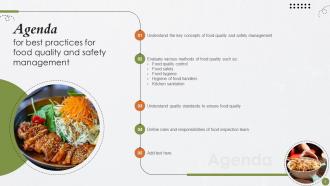
Slide 2: This slide is an Agenda slide. State your agendas here.
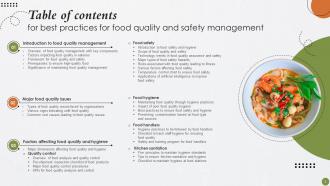
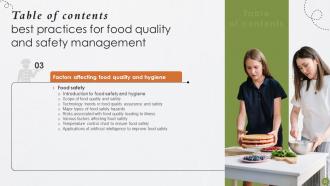
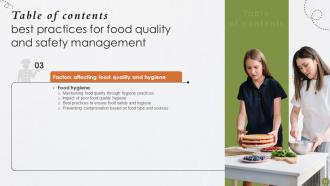
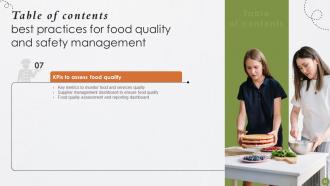
Slide 3: This slide shows a Table of Contents for the presentation.
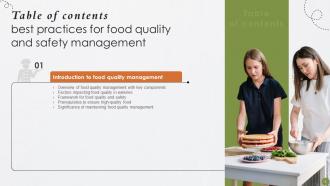
Slide 4: This slide is in continuation with the previous slide.
Slide 5: This slide is an introductory slide.
Slide 6: This slide brings forth an overview of food quality management.
Slide 7: This slide highlights forth major factors which impact the food quality in eateries.
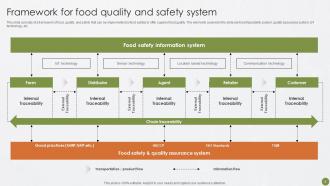
Slide 8: This slide consists of a framework of food, quality, and safety that can be implemented by food outlets to offer superior food quality.
Slide 9: This slide mentions forth prerequisites that are to be followed by eateries to ensure high-quality food for their customers.
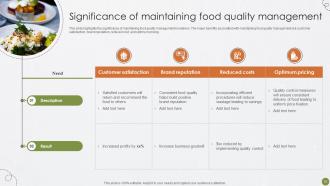
Slide 10: This slide highlights the significance of maintaining food quality management in eateries.
Slide 11: This slide is an introductory slide.
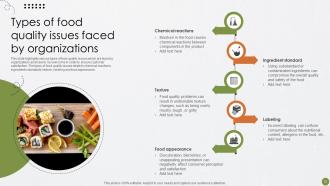
Slide 12: This slide illustrates various types of food quality issues which are faced by organizations.
Slide 13: This slide consist of various signs indicating poor food, quality and potential hazards which are to be monitored by managers.
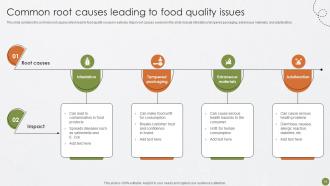
Slide 14: This slide contains the common root causes which lead to food quality issues in eateries.
Slide 15: This slide is an introductory slide.
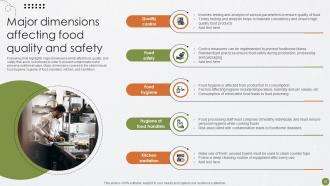
Slide 16: This slide caters to the major dimensions which affect food, quality, and safety that are to be followed in order to prevent contamination and preserve nutritional value.
Slide 17: This slide is an introductory slide.
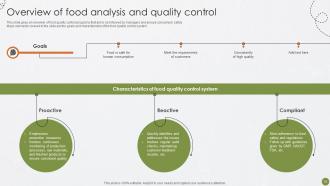
Slide 18: This slide gives an overview of food quality control programs that are to be followed by managers and ensure consumers’ safety.
Slide 19: This slide encompasses a food inspection checklist that can be useful for restaurants to ensure high-quality standards of food.
Slide 20: This slide illustrates forth major food quality control procedures that can be followed to create a program for food quality management.
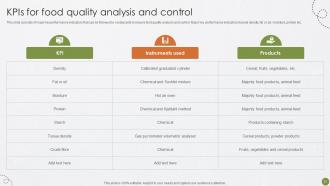
Slide 21: This slide consists of major key performance indicators that can be followed by restaurants to ensure food quality analysis and control.
Slide 22: This slide is an introductory slide.
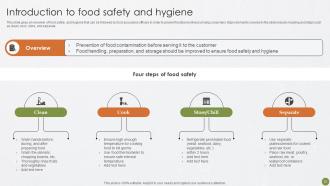
Slide 23: This slide gives an overview of food safety, and hygiene that can be followed by food assurance officers.
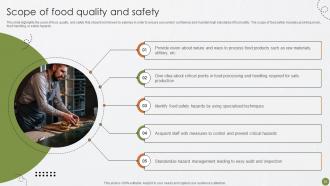
Slide 24: This slide highlights the score of food, quality, and safety that should be followed by eateries.
Slide 25: This slide presents global trends which are to be followed by managers to ensure food quality assurance and the safety of both staff and consumers.
Slide 26: This slide brings forth major types of food safety hazards that the staff comes across while preparing food for the customers and should be overcome to ensure food quality.
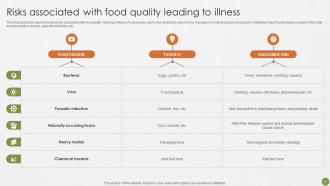
Slide 27: This slide represents major risks which are associated with food quality, leading to illness of consumers.
Slide 28: This slide depicts various factors which affect food safety and hygiene that should be followed by managers to contribute to overall public health.
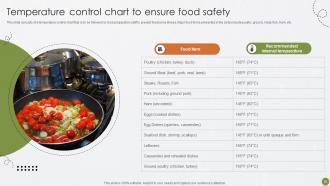
Slide 29: This slide consists of a temperature control chart that is to be followed by food preparation staff to prevent foodborne illness.
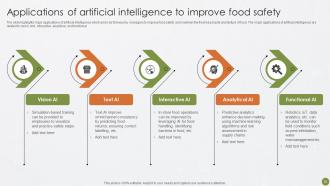
Slide 30: The slide enhances major applications of artificial intelligence.
Slide 31: This slide is an introductory slide.
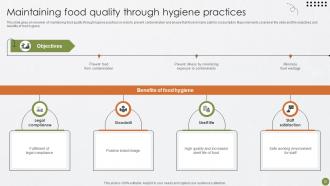
Slide 32: This slide gives an overview of maintaining food quality through hygiene practices.
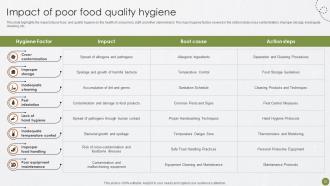
Slide 33: This slide entails the impact of poor food, and quality hygiene on the health of consumers, staff, and other stakeholders.
Slide 34: This slide describes major strategies to ensure food safety and hygiene which are to be followed by managers to ensure staff and consumers safety.
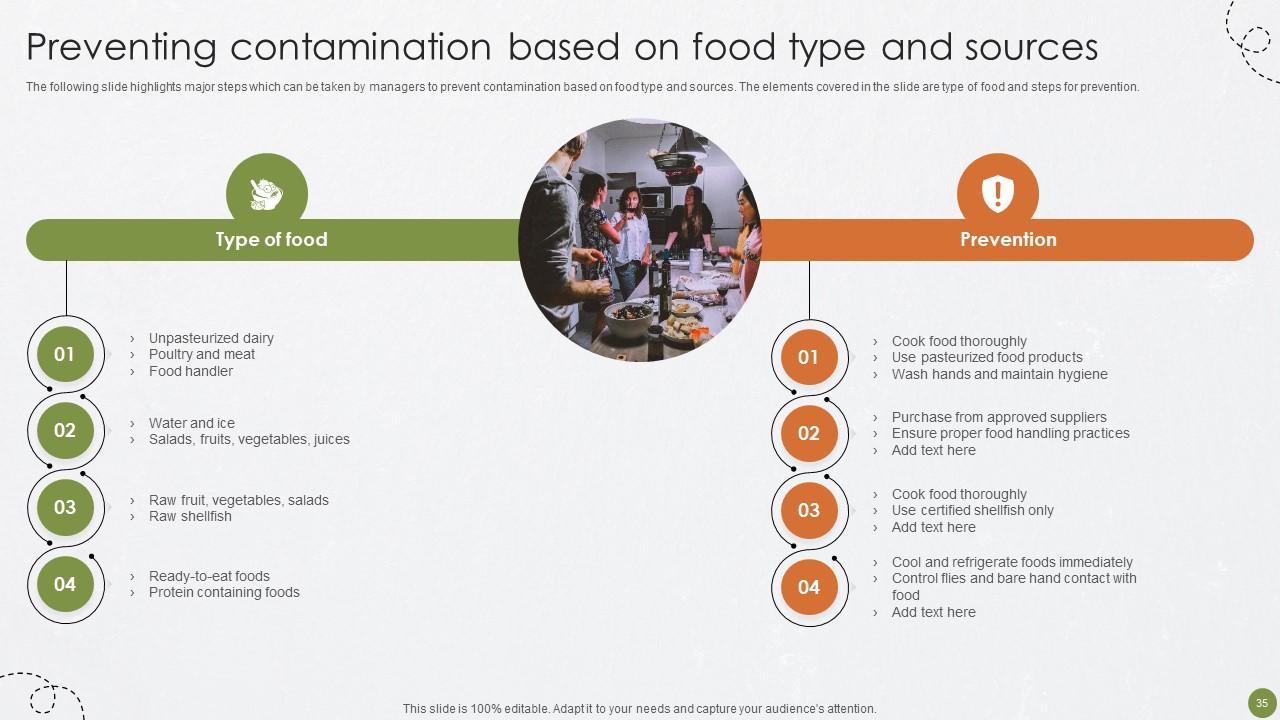
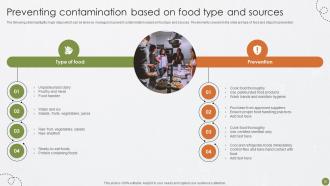
Slide 35: This slide highlights major steps which can be taken by managers to prevent contamination based on food type and sources.
Slide 36: This slide is an introductory slide.
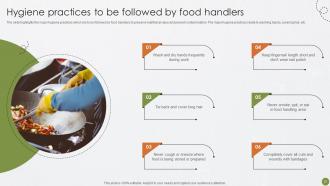
Slide 37: The slide portrays the major hygiene practices which are to be followed by food handlers to preserve nutritional value and prevent contamination.
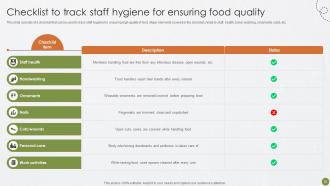
Slide 38: This slide consists of a checklist that can be used to track staff hygiene for ensuring high-quality of food.
Slide 39: This slide presents a food safety and training program that can be used by managers to train staff and ensure compliance with regulations.
Slide 40: This slide is an introductory slide.
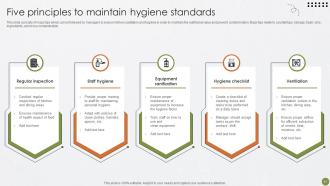
Slide 41: This slide consists of major tips which can be followed by managers to ensure kitchen sanitation and hygiene.
Slide 42: This slide overviews the major tips which are to be followed by managers to ensure kitchen sanitation and hygiene.
Slide 43: This slide presents a checklist that can be used by managers to maintain hygiene at food stations.
Slide 44: This slide is an introductory slide.
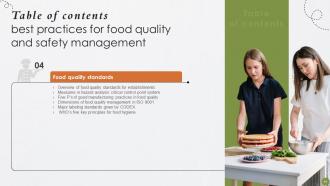
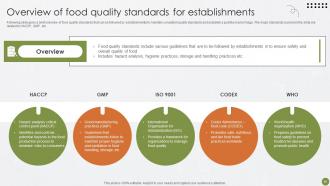
Slide 45: This slide gives a brief overview of food quality standards that can be followed by establishments to maintain consistent quality standards.
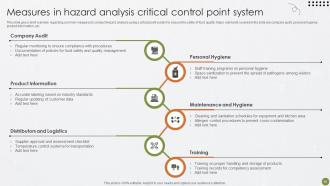
Slide 46: This slide entails brief overview regarding common measures to conduct Hazard analysis using a critical point system to ensure the safety of food quality.
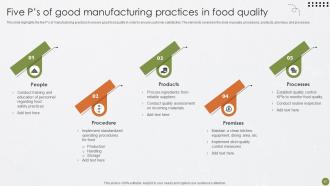
Slide 47: This slide highlights the five P’s of manufacturing practices to ensure good food quality in order to ensure customer satisfaction.
Slide 48: This slide consists of various dimensions of food quality management given by ISO 9001, which should be followed to avoid legal complications.
Slide 49: This slide presents the major labeling standards given by CODEX, which can be followed by managers to ensure adherence to laws and safeguard operations.
Slide 50: This slide represents the principles for food hygiene which are given by the world health organization and are to be followed by managers to ensure compliance with regulations.
Slide 51: This slide is an introductory slide.
Slide 52: This slide mentions quality assessment techniques that can be implemented by restaurants to ensure consistent standards of food quality.
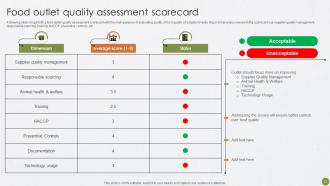
Slide 53: This slide brings forth a food outlet quality assessment scorecard with the main purpose of evaluating quality of food quality of establishments.
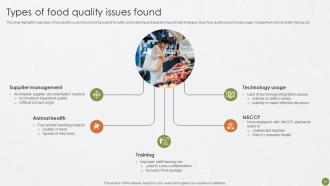
Slide 54: This slide puts major types of food quality issues found in food products for better understanding and targeted improvement strategies.
Slide 55: This slide caters to the best practices which can be followed by managers.
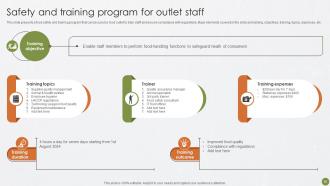
Slide 56: This slide presents a food safety and training program that can be used by food outlet to train staff and ensure compliance with regulations.
Slide 57: This slide represents an annual budget for quality control assurance that can be implemented by restaurants.
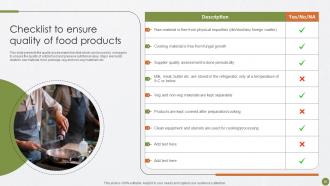
Slide 58: This slide mentions the quality assessment checklist which can be used by managers to ensure the quality of edible food and preserve nutritional value.
Slide 59: This slide is an introductory slide.
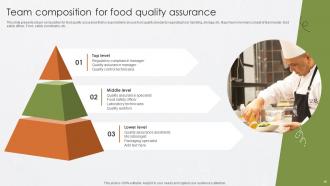
Slide 60: This slide illustrates a team composition for food quality assurance that is responsible to ensure food quality standards.
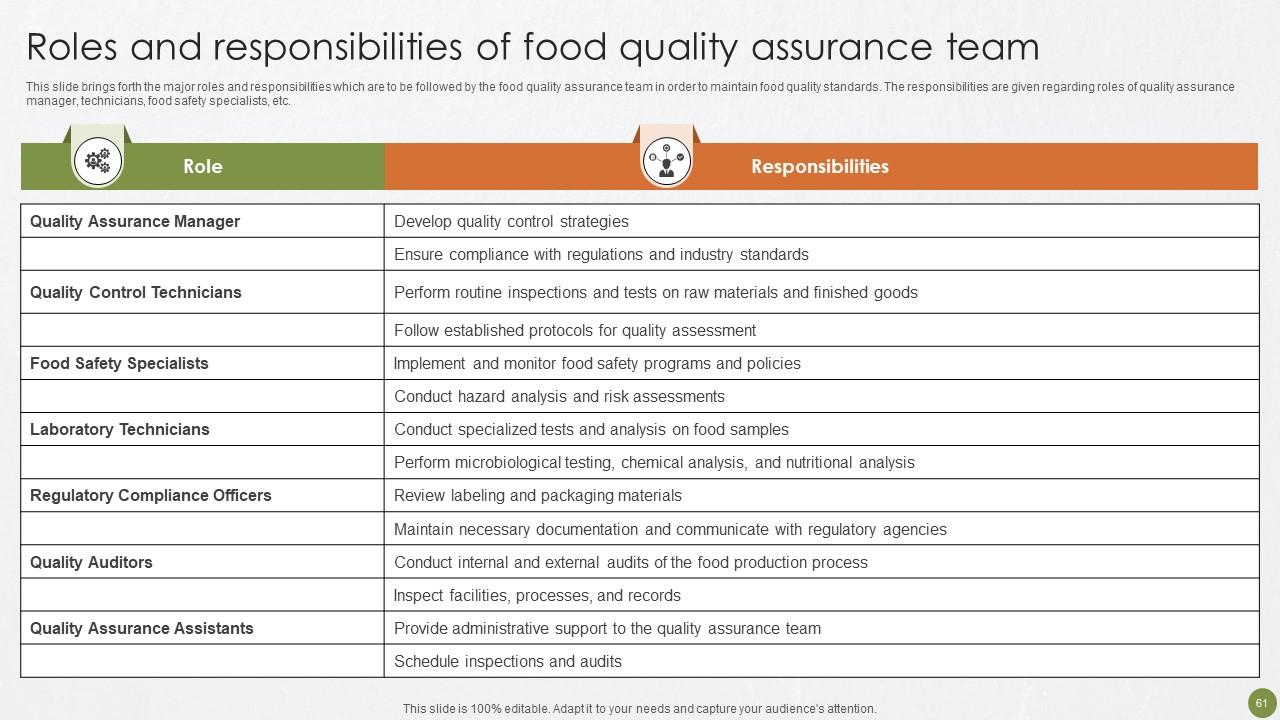
Slide 61: This slide brings forth the major roles and responsibilities which are to be followed by the food quality assurance team.
Slide 62: This slide is an introductory slide.
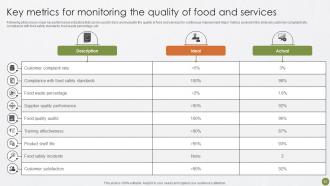
Slide 63: This slide covers major key performance indicators that can be used to track and evaluate the quality of food and services for continuous improvement.
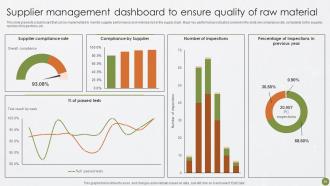
Slide 64: This slide presents a dashboard that can be implemented to monitor supplier performance and minimize risk in the supply chain.
Slide 65: This slide represents a food quality assessment and reporting dashboard to present real-time data for evaluating and monitoring food quality.
Slide 66: This slide is an introductory slide.
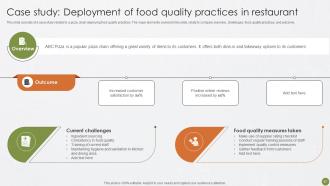
Slide 67: This slide caters to the case study related to a pizza chain deploying food quality practices.
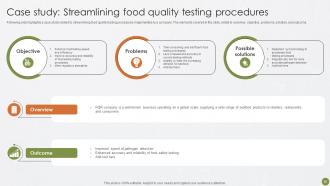
Slide 68: This slide highlights a case study related to streamlining food quality testing procedures implemented by a company.
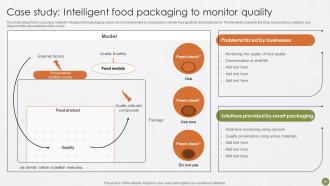
Slide 69: This slide depicts forth a case study related to intelligent food packaging, which can be implemented by companies to monitor food quality for perishable items.
Slide 70: This slide shows all the icons included in the presentation.
Slide 71: This slide is titled Additional Slides for moving forward.
Slide 72: This slide provides a 30-60-90-day plan with text boxes.
Slide 73: This slide depicts a Venn diagram with text boxes.
Slide 74: This slide contains a Puzzle with related icons and text.
Slide 75: This slide shows Post-It Notes. Post your important notes here.
Slide 76: This slide presents a Roadmap with additional text boxes.
Slide 77: This slide is a thank-you slide with address, contact numbers, and email address.
Best Practices For Food Quality And Safety Management Powerpoint Presentation Slides with all 87 slides:
Use our Best Practices For Food Quality And Safety Management Powerpoint Presentation Slides to effectively help you save your valuable time. They are readymade to fit into any presentation structure.
-
Requested a complete pitch deck. Delivered immediately and with high quality well researched content.
-
Definitely recommend SlideTeam to all who need help with PowerPoint presentations. Their design team can create anything you need.
