

Big Data Analysis Process Powerpoint PPT Template Bundles





Try Before you Buy Download Free Sample Product
 Impress Your
Audience
 100%
Editable
 Save Hours
of Time


Introducing our comprehensive Big Data Analysis Process PowerPoint PPT presentation, designed to guide businesses through the intricacies of analyzing and deriving insights from large datasets. This informative slide deck covers essential keywords such as Master Data, Analytics, Data Processing, Bulk Dataset, and Data Analytics. With visually appealing slides and concise content, our PPT offers a deep dive into the methodologies and tools required for effective big data analysis. Whether you are a data scientist, analyst, or business professional, this resource will enhance your understanding of data processing, analytics techniques, and leveraging big data for actionable insights. From data collection and cleaning to advanced analytics and visualization, our PPT equips you with the knowledge and techniques to harness the power of big data. Make informed decisions and uncover valuable insights with our user-friendly big data ppt.
People who downloaded this PowerPoint presentation also viewed the following :
Big Data Analysis Process Powerpoint PPT Template Bundles with all 25 slides:
Use our Big Data Analysis Process Powerpoint PPT Template Bundles to effectively help you save your valuable time. They are readymade to fit into any presentation structure.







FAQs for Big Data Analysis Process Powerpoint
A successful big data analysis strategy includes robust data collection frameworks, advanced analytics tools, skilled data science teams, scalable storage infrastructure, and clear governance protocols. These components work together by streamlining data processing, ensuring quality insights, and enabling real-time decision-making, with many organizations finding that strategic integration ultimately delivers competitive advantage and measurable business outcomes.
Organizations utilize big data to enhance decision-making by analyzing customer behavior patterns, predicting market trends, and identifying operational inefficiencies through advanced analytics tools. These insights enable businesses across sectors like retail, healthcare, and finance to make data-driven strategic choices, reduce risks, and optimize resource allocation, ultimately delivering competitive advantages and improved business outcomes.
Common big data analysis tools include Apache Hadoop, Apache Spark, SQL databases, Python libraries like Pandas, R programming, Tableau, and cloud platforms like AWS and Azure. These technologies streamline data processing by enabling faster computation, seamless visualization, and scalable storage, with many organizations finding that strategic combinations ultimately deliver enhanced decision-making capabilities and competitive advantage.
Data quality and governance significantly impact big data analysis by ensuring accuracy, consistency, and reliability across datasets, while establishing clear policies for data access, usage, and compliance. Poor data quality leads to flawed insights and misguided business decisions, whereas strong governance frameworks enable organizations to maintain data integrity, reduce analytical errors, and deliver trustworthy results that drive strategic advantage.
Machine learning automates pattern recognition, predictive modeling, anomaly detection, and data classification within massive datasets that would be impossible for humans to analyze manually. These algorithms enable organizations to streamline fraud detection, enhance customer recommendations, and accelerate decision-making processes, with many financial institutions and retailers finding significant competitive advantages through faster, data-driven insights.
Businesses align big data strategy with overall goals by establishing clear KPIs, mapping data initiatives to specific business objectives, and ensuring cross-departmental collaboration between analytics teams and decision-makers. This strategic alignment enables organizations to prioritize high-impact use cases, allocate resources effectively, and measure ROI accurately, ultimately delivering actionable insights that drive competitive advantage.
Ethical considerations include informed consent, data privacy protection, algorithmic bias prevention, transparency in data usage, and secure storage protocols. These frameworks help organizations balance analytical insights with user rights by establishing clear governance policies, implementing bias detection systems, and ensuring regulatory compliance, ultimately delivering competitive intelligence while maintaining customer trust and avoiding reputational risks.
Predictive analytics leverages big data through machine learning algorithms, statistical modeling, and pattern recognition to forecast future trends, behaviors, and outcomes across vast datasets. Financial services use it for fraud detection and risk assessment, while retailers predict customer purchasing patterns and healthcare organizations anticipate patient needs, ultimately enabling proactive decision-making and competitive advantage.
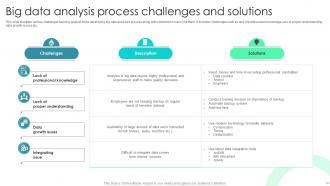
Organizations face challenges including data format inconsistencies, varying quality standards, storage infrastructure limitations, real-time processing requirements, and security compliance complexities. While these integration hurdles present significant technical obstacles, many enterprises find that strategic data platforms and automated tools ultimately streamline consolidation processes, delivering enhanced analytics capabilities and competitive advantage across operations.
Visualization techniques enhance big data interpretation by transforming complex datasets into intuitive charts, interactive dashboards, heat maps, and real-time monitoring displays that reveal patterns and trends instantly. These visual tools enable stakeholders across healthcare, finance, and retail to identify correlations, detect anomalies, and make data-driven decisions faster, ultimately streamlining strategic planning and competitive positioning.
Healthcare leverages big data analytics through predictive patient modeling, treatment optimization, and real-time monitoring systems, while finance uses fraud detection algorithms, risk assessment models, and automated trading platforms. These industries enhance operational efficiency by reducing diagnostic errors, accelerating loan approvals, and minimizing financial losses, ultimately delivering improved patient outcomes and competitive advantages in increasingly data-driven markets.
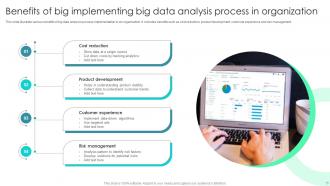
Businesses ignoring big data face competitive disadvantages, missed customer insights, inefficient operations, poor decision-making, and reduced market responsiveness. These risks manifest through lost revenue opportunities, higher operational costs, and decreased customer satisfaction, with many organizations finding that competitors leveraging analytics increasingly outperform them in strategic positioning and profitability.
Real-time data processing significantly enhances big data analysis outcomes by enabling immediate insights, faster decision-making, and dynamic response capabilities. Through streaming analytics and continuous data ingestion, organizations in retail, finance, and healthcare can detect fraud instantly, optimize inventory levels, and monitor patient vitals, ultimately delivering competitive advantages and improved operational efficiency.
Essential skills for big data professionals include statistical analysis, programming languages like Python and R, database management, data visualization, and machine learning techniques. These competencies enable analysts to extract meaningful insights from complex datasets, create predictive models, and communicate findings effectively to stakeholders, with many organizations finding that professionals combining technical expertise with business acumen deliver the most strategic value.
Small and medium-sized enterprises can leverage cloud-based analytics platforms, automated tools, and scalable software solutions to access big data capabilities without major infrastructure investments. These cost-effective approaches enable SMEs to enhance customer insights, optimize operations, and improve decision-making through data-driven strategies, ultimately delivering competitive advantages previously available only to larger organizations.
-
Easily Understandable slides.
-
I joined SlideTeam last month and there’s no doubt that I tend to find our bond only strengthening over time. Best place to find world-class themes, templates, and icons.