


Biohazard powerpoint show




Try Before you Buy Download Free Sample Product
 Impress Your
 Audience
 100%
100% Editable
 Save Hours
 of Time


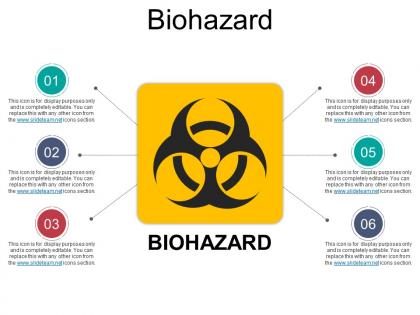
Get this Biohazard PowerPoint template and warn your audience to take precautions in order to prevent exposure to hazardous substances. It is a 6 step biohazard template that can be used to guide your audience about the types of hazardous waste that can harm mankind. You can easily demonstrate the chain of infection with the symbol of biohazard that has 4 circles representing the agent, host, source, and transmission. This warning symbol can be used to indicate the presence of biological hazards. Use this PPT template to guide your audience about the classification, categories, and types of harmful hazards. Using this PPT slide, you can inform your audience about those substances that pose a threat to human life. Use this template to guide your audience to take preventive measures to safeguard their health. Click on the download button now and spread awareness to eliminate the risks.
People who downloaded this PowerPoint presentation also viewed the following :
Biohazard powerpoint show with all 5 slides:
Complete assignments with increased efficiency due to our Biohazard Powerpoint Show. It will heighten effectiveness.



FAQs for
So there's basically four types of biohazards you'll deal with - infectious stuff like bacteria and viruses, biological toxins, blood and other body fluids, plus contaminated sharps and lab cultures. Risk levels go from BSL-1 to BSL-4, though honestly most of us are just dealing with BSL-1 and 2 on a regular basis. Each type has its own handling rules and PPE requirements. My advice? Treat everything like it could be infectious until you know otherwise. Oh, and definitely figure out where your facility keeps the spill kits - you'll thank me later when something inevitably goes wrong.
So biohazards are basically living threats - bacteria, viruses, that nasty stuff. The scary part? They can actually multiply and spread, unlike chemicals which just sit there being toxic. You need special gear and cleaning protocols because regular disinfectant won't do jack against some of these bugs. They're unpredictable too - can mutate or spread in ways you don't expect. My old lab supervisor always said treat anything biological like it's trying to kill you, which honestly isn't far from the truth. Don't ever use standard hazmat procedures for bio stuff.
First thing - figure out exactly what biohazardous stuff you're dealing with, then build your protocols around that. Your team absolutely has to know red bags vs sharps containers because people screw this up constantly and it's genuinely terrifying. Set up training sessions (visual guides help tons), pick specific people for waste pickup and sterilization. Don't skip the spill response and post-exposure procedures either. Oh, and having clear PPE rules and containment steps is obviously crucial. Honestly, just start with an audit of your materials first - makes everything else way easier to plan out.
Look, PPE isn't optional when you're dealing with biohazards - it's what keeps you from getting seriously sick. Gloves, lab coats, eye protection, respirators, whatever the situation calls for. Different biosafety levels need different combinations, so check your protocols first. Honestly, I've watched people get way too casual about this stuff and it always makes me nervous. The whole idea is having multiple layers so if your gloves tear or something, you're still covered. Trust me, buying the right gear upfront beats dealing with an exposure incident any day of the week.
Okay so sterilization is basically how you stop biohazards from escaping the lab - kills everything on equipment, surfaces, and waste before it goes anywhere. You'll need it constantly: sterilizing tools beforehand, cleaning work areas between procedures, treating biological waste. Autoclaving works for most things, though some materials need chemical disinfection instead. Honestly, the protocols can feel excessive but they have to cover literally everything that might be contaminated. One thing people forget - you've got to validate those autoclave cycles regularly. Failed cycle means your "sterile" waste is actually still dangerous.
So basically the CDC sets up all the biosafety rules and tells us what risk level different stuff is. OSHA's the one that actually enforces everything and can slap companies with fines if they screw up. They control pretty much everything - what PPE you need, how to dump waste, training requirements, all of it. Honestly they're kind of like strict parents but for workplace safety lol. You'll see their fingerprints all over our safety manuals and those boring annual training sessions we have to sit through. When in doubt about any biohazard thing, just check their latest guidelines first.
Hey! So there's some crazy stuff happening in biotech right now. Gene drives might accidentally mess with wild animal populations. Synthetic biology is letting people basically build organisms from scratch - which honestly sounds like sci-fi but here we are. Lab-grown viruses and AI-designed pathogens are obvious red flags. Plus you've got all these smaller labs popping up without proper oversight, which is kinda sketchy. The regulations just can't keep up with how fast this tech is moving. I'd definitely stay on top of your biosafety updates and flag anything weird for extra review.
Start by finding all the gross stuff - blood, bodily fluids, contaminated materials, anything with pathogens lurking around. Figure out who's getting exposed and how (splashes, needle pricks, stuff floating in the air). Look at what safety measures you already have - PPE, ventilation, how you toss hazardous waste. Rate each risk on likelihood and how bad it could get. Simple scale works fine, honestly. Different scenarios matter too since things change constantly. Write it all down and grab your safety team - they'll catch things you missed. Trust me, fresh eyes help tons.
Start with basic biosafety training - universal precautions, PPE, waste disposal, the usual stuff. OSHA's Bloodborne Pathogen Standard is mandatory if you're working with human materials. Honestly kind of boring but you gotta do it. Higher-risk work means specialized training based on your biosafety level (BSL-1 through 4). Most places have in-house programs, though the American Biological Safety Association has solid online modules too. Don't skip the emergency response and incident reporting parts - trust me, you'll want to know what to do if things go wrong. Oh, and they make you do annual refreshers for most of this.
So basically you sort everything right when you're using it - red bags for infectious stuff, yellow for pathological materials, sharps containers for needles and scalpels. The color system's pretty straightforward once you've done it a few times. Different types get treated differently too - some get autoclaved, others incinerated or chemically treated based on how risky they are. Your disposal company better be licensed and they'll track everything from pickup to final destruction. That paperwork trail is huge for staying compliant and not screwing up the environment. Oh, and double-check your facility's rules since states can be weirdly different about requirements.
Ugh, yeah this stuff really messes with your head. Constant exposure to biohazards puts you in this weird hypervigilant state that's mentally draining as hell. A lot of healthcare workers end up with chronic stress, anxiety, sometimes even PTSD symptoms. Sleep gets screwed up too. What's really wild is how the obsessive hand washing and contamination fears follow you home - like your brain can't turn off that "danger mode." Honestly, it's a completely normal response to working in those conditions. Don't feel weak about it. Your facility should have mental health resources, and talking to someone can help way more than you'd expect.
Honestly, biohazard detection has gotten insane lately. AI sensors can spot pathogens instantly now, and you can get lab-quality results with portable devices right in the field. Machine learning catches patterns in environmental data that we'd never notice – I still can't believe how accurate it's become. Remote systems monitor contamination across massive areas without any human input. Modern biosensors detect threats at crazy low concentrations too. If I were you, I'd look into those integrated platforms that combine everything. Way more reliable than single-tech solutions.
Okay so the big issues are consent and containment - basically, do we have the right to make organisms that could mess up ecosystems if they escape? Plus there's the whole justice thing where rich people get benefits but poor communities deal with the risks (tale as old as time, honestly). You've gotta think about preventing contamination and having solid safety protocols. Transparency with affected communities is huge too. Don't move forward without doing serious risk assessments first. Oh, and make sure your containment measures aren't garbage - mutations happen when you least expect them.
Honestly, COVID changed everything about how we handle biohazards. Before 2020, most places were just winging it with a "we'll deal with it later" approach. Now? There's actual planning happening. Real-time monitoring systems, better PPE supplies, early warning networks - the works. Your workplace probably has protocols now that didn't even exist a few years ago. Public health finally learned to coordinate between departments instead of everyone doing their own thing. The catch is you've got to actually practice these new procedures regularly. Having a fancy plan on paper means nothing if nobody remembers how to use it when things go sideways.
Honestly, just be straight with people from the start. Skip the fancy words - say "harmful germs" not whatever scientific term you're tempted to use. Lead with what they need to DO, not a bunch of background info. I can't tell you how annoying it is when agencies make you hunt for the actual action steps. Tell people exactly who's affected and where. Keep updating even if nothing's changed - otherwise people start making stuff up. Oh, and if you don't know something yet? Just say so. Nobody expects you to have all the answers immediately, but they'll lose trust if you pretend you do.
-
Appreciate the research and its presentable format.
-
Perfect template with attractive color combination.