

 0 Comment
 Customer Reviews

The brief says "tourism market segmentation." The slide deck's blank. Someone's got to fill it.
Not the easy part—everyone knows tourists exist. The hard part is explaining, in a room full of stakeholders, why a 28-year-old solo backpacker and a 55-year-old luxury cruiser aren't just "different customers." They're different decisions, different channels, different messages, different budgets. Treating them the same is how campaigns get ignored.
Marketing teams know this. They've known it for years. But knowing it and presenting it are two different things. There's this particular kind of meeting—the destination strategy review, the quarterly tourism board brief—where someone's supposed to stand up and make the segmentation case. Show why the family travel segment needs different messaging than the business travel category. Explain why demographic travel trends don't tell the whole story, and psychographic travel profiles fill the gap.
And the deck's still empty.
It's not that the data's missing. Most teams have too much of it. The problem is turning tourist behavior patterns, age breakdowns, expenditure clusters, and geographic tourism segments into slides that actually hold a room's attention. Into something a regional director can follow without a research background. Into something that makes the strategy feel obvious in hindsight.
That's why these templates exist. Not because segmentation is new—it's not—but because presenting it well is genuinely difficult. Because the gap between knowing your audience groups and showing your audience groups is wider than most people expect.
SlideTeam's tourism market segmentation templates were built for exactly this situation. Pre-designed frameworks that handle the structure—so the team can focus on the argument, not the formatting. Content-ready slides covering everything from online booking segments to age-and-expenditure breakdowns.
Here's what's in the collection.
Template 1: Characteristics of Market Segmentations in Tourism Sector
Segmenting a tourism market means knowing not just who travels, but how and why they plan. This PPT template is built for destination marketers and tourism analysts who need to present segment profiles clearly. It covers age and family composition, holiday timing, communication preferences, and average monthly revenue — the variables that actually shape campaign decisions. Useful in travel audience targeting reviews or regional planning sessions. The template is 100% editable and customizable.

Download this PowerPoint Template
Template 2: Market Segmentation Strategies to Boost Your Marketing Success Today PPT Example
Winning audiences requires more than good data — it demands a presentation that commands the room. This deck elevates your tourism market analysis by combining visual impact with strategic clarity. Dynamic layouts translate complex travel consumer segmentation into compelling, digestible narratives. Every slide is built to work equally well in boardroom meetings and client pitches. Use pre-designed structures to save time without sacrificing the polish your stakeholders expect. Transform your segmentation presentations today. Download this dynamic template now and unlock your marketing success.
[product_image id=1712907]
Template 3: Tourism Market Segmentation PowerPoint PPT Bundles
Seventeen slides is enough room to tell a complete segmentation story. Explore more tourism market segmentation PPTs with samples and examples to see how a full deck shapes audience understanding. This PPT bundle gives practitioners — tourism boards, travel brand teams, hospitality consultants — a thematically consistent package for presenting niche tourism markets and broader segment groups. Each slide follows solid design logic, so the story stays structured even as content changes. The template is 100% editable and customizable.
[product_image id=695563]
Template 4: Travel Trends and Destination Marketing PPT Outline
Travel trends shift faster than most destination marketing plans. This complete deck gives marketers a structured canvas for presenting evolving leisure travel segments alongside forward-looking destination strategy. Striking visual layouts capture audience attention from the opening slide. Flexible design elements adapt to any brand's tone, keeping presentations fresh across quarterly reviews and annual strategy sessions. Pair data on travel audience targeting with narrative flow that moves stakeholders to action. Transform your destination marketing presentations today. Download this dynamic template now and lead with confidence.
[product_image id=1513119]
Template 5: Tourist Destination Marketing Strategies PPT Guidelines
Destination marketing lives or dies on knowing which region your visitor is traveling from. This PPT deck is a practical tool for tourism managers presenting geographic tourism segments and localized outreach plans. It handles the balance between creative appeal and structural clarity without either suffering. Campaign planners working across domestic and international markets will find the layout immediately useful. The template is 100% editable and customizable.
[product_image id=1480987]
Template 6: Geographic Segmentation for Localized Marketing PPT Example
Geographic segmentation shapes everything — from media channel selection to the language of a headline. This deck gives marketers a clean, structured way to present localized marketing approaches across distinct geographic tourism segments. Color-theme flexibility means the slides adapt to regional brand guidelines without rebuilding from scratch. A ready-made design saves hours on formatting. Deliver region-specific campaign plans with the clarity and confidence your audience needs to act. Transform your localized marketing presentations today. Download this dynamic template now and reach every market with precision.
[product_image id=1630571]
Template 7: Marketing Strategies for Travel Markets PPT Sample
Travel marketing teams often struggle to present a coherent strategy across multiple audience groups. This deck brings visual energy and structural logic to presentations covering business travel categories, leisure travel segments, and everything in between. A bold, functional design keeps complex audience data readable without oversimplifying. Pre-built layouts mean the team spends time refining the argument, not wrestling with formatting. From agency pitches to internal planning reviews, this deck performs. Transform your travel market presentations today. Download this dynamic template now and make every campaign brief count.
[product_image id=1492501]
Template 8: Tourism Market Segmentation Strategies and Approaches PPT Demonstration
Presenting a segmentation approach to a mixed audience — some analytical, some not — requires a deck that earns attention fast. This PPT is built for tourism consultants and travel brand teams who need to walk stakeholders through segment-level thinking without losing the room. It suits discussions around adventure tourism niches, eco-tourism market groups, and broader tourism market analysis equally well. The design keeps complexity visible without making it overwhelming. The template is 100% editable and customizable.
[product_image id=1566835]
Template 9: Top Tourist Destinations and Cultural Heritage PPT Designs
Cultural tourism segments demand presentations that honor the depth of the subject. This deck delivers both the visual appeal and the structural clarity that top-destination briefings require. Custom color schemes let you match regional or brand identity instantly, so every presentation feels purpose-built. Pre-designed layouts eliminate the formatting bottleneck before major reviews. Whether presenting to cultural boards or travel media, this deck positions your content as credible and considered. Transform your cultural heritage presentations today. Download this dynamic template now and make your destinations unforgettable.
[product_image id=1821301]
Template 10: Market Segmentation in Tourism Industry by Classes
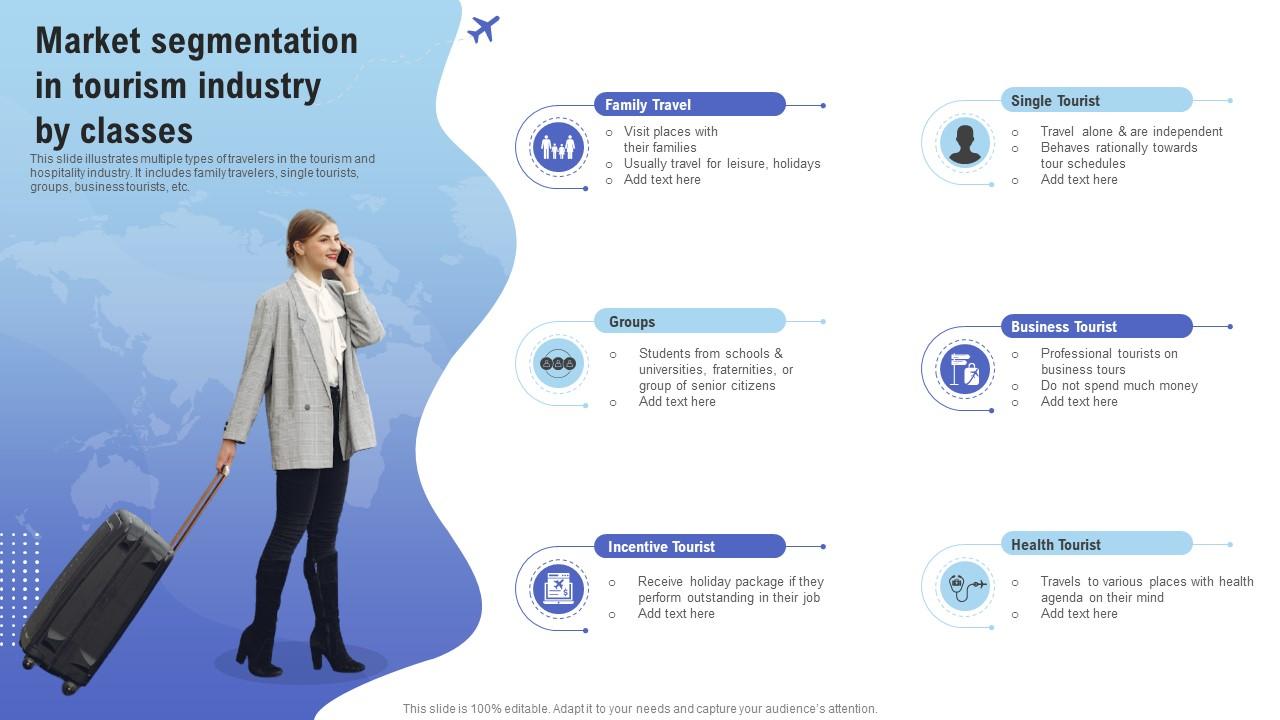
Not all travelers move through the world the same way — and presenting that reality clearly matters. This PPT slide is built for hospitality analysts and tourism planners who need to show how traveler classes — family groups, solo tourists, business tourists, health tourists — differ in behavior and need. It covers six distinct traveler types with room to connect each to service design decisions. Useful in product planning meetings and hospitality sector reviews. The template is 100% editable and customizable.
Download this PowerPoint Template
Template 11: Market Segmentation in Tourism Industry Icon
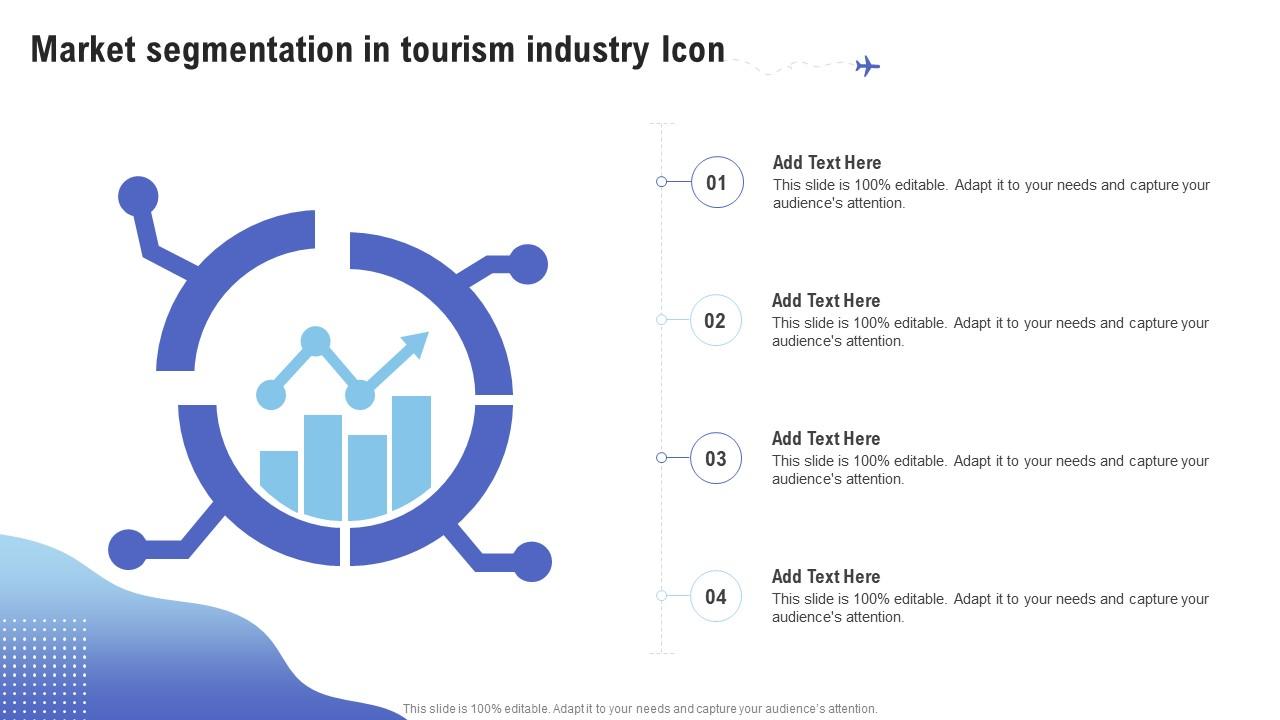
A clean, icon-driven layout cuts through clutter and keeps segmentation concepts accessible. This deck delivers four-stage visual clarity across tourism market segmentation categories. Bold iconography translates abstract audience groupings into immediately recognizable concepts. Polished aesthetics build instant credibility for internal teams and external stakeholders alike. Structured stages ensure your segmentation story flows from definition to actionable insight without losing momentum. Transform your tourism segmentation presentations today. Download this dynamic template now and make your market intelligence unmissable.
Download this PowerPoint Template
Template 12: Market Segmentation for Tourism and Hospitality Sector
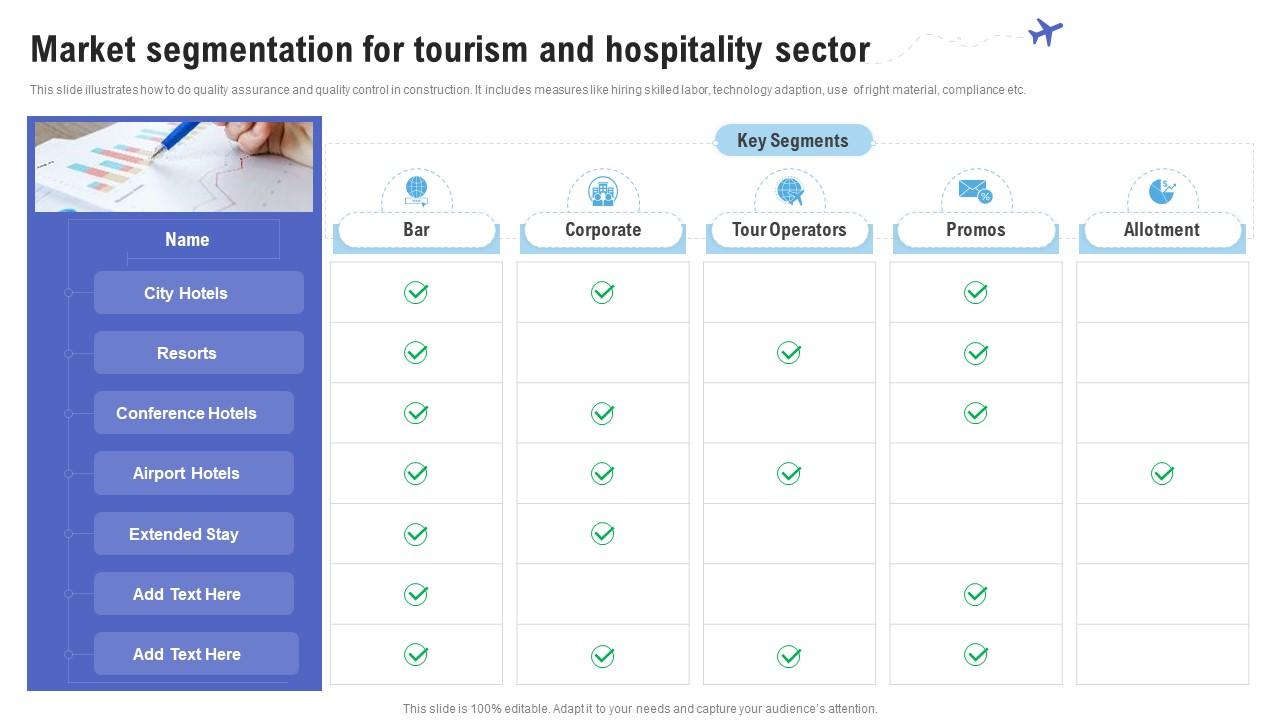
Hospitality sector segmentation is specific — conference hotels, airport hotels, and urban properties serve different traveler types entirely. See how tourism marketing strategy templates frame these distinctions to sharpen your positioning work. This PPT slide gives hospitality marketers and sector analysts a single, structured view of how to break down property categories alongside their core traveler segments. It fits neatly into investor briefings and sector planning sessions. The template is 100% editable and customizable.
Download this PowerPoint Template
Template 13: Tourism Market Segmentation Bases and Customers
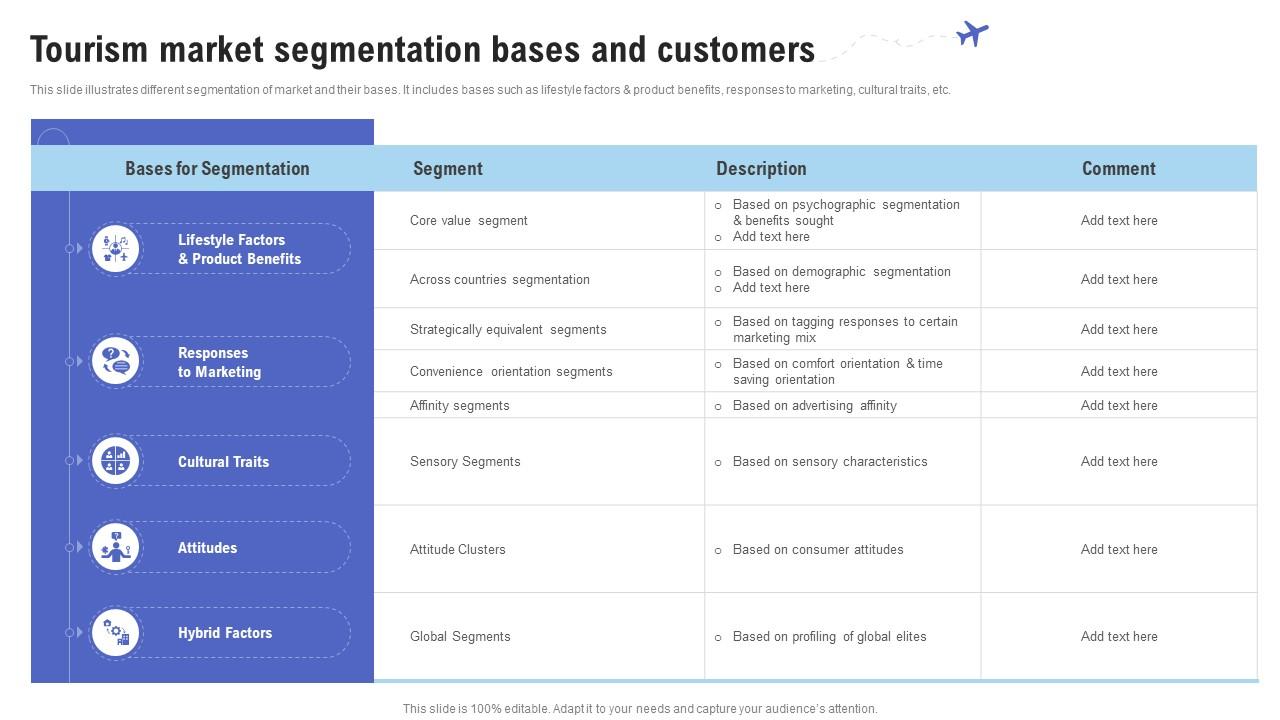
Understanding why a segment responds to a campaign starts with understanding what drives that segment. This PPT slide is built for tourism marketers who need to present segmentation bases — lifestyle factors, cultural traits, responses to marketing — alongside the segments they define. It connects the logic of segmentation to the practical choices that follow. Strategy teams working on travel consumer segmentation projects will reach for this slide when structure matters most. The template is 100% editable and customizable.
Download this PowerPoint Template
Template 14: Tourism Market Segmentation by Age and Expenditure
Age and expenditure are two of the most actionable variables in any tourism segmentation model. This PPT slide gives tourism analysts and destination planners a clear table-format view of segments by age range, travel group composition, daily expenditure, and key motivations. It turns raw demographic travel trends into a structured reference that drives real planning decisions. Useful in budget allocation meetings and campaign targeting reviews alike. The template is 100% editable and customizable.

Download this PowerPoint Template
Template 15: Online Travel Market Segmentation in Tourism Industry
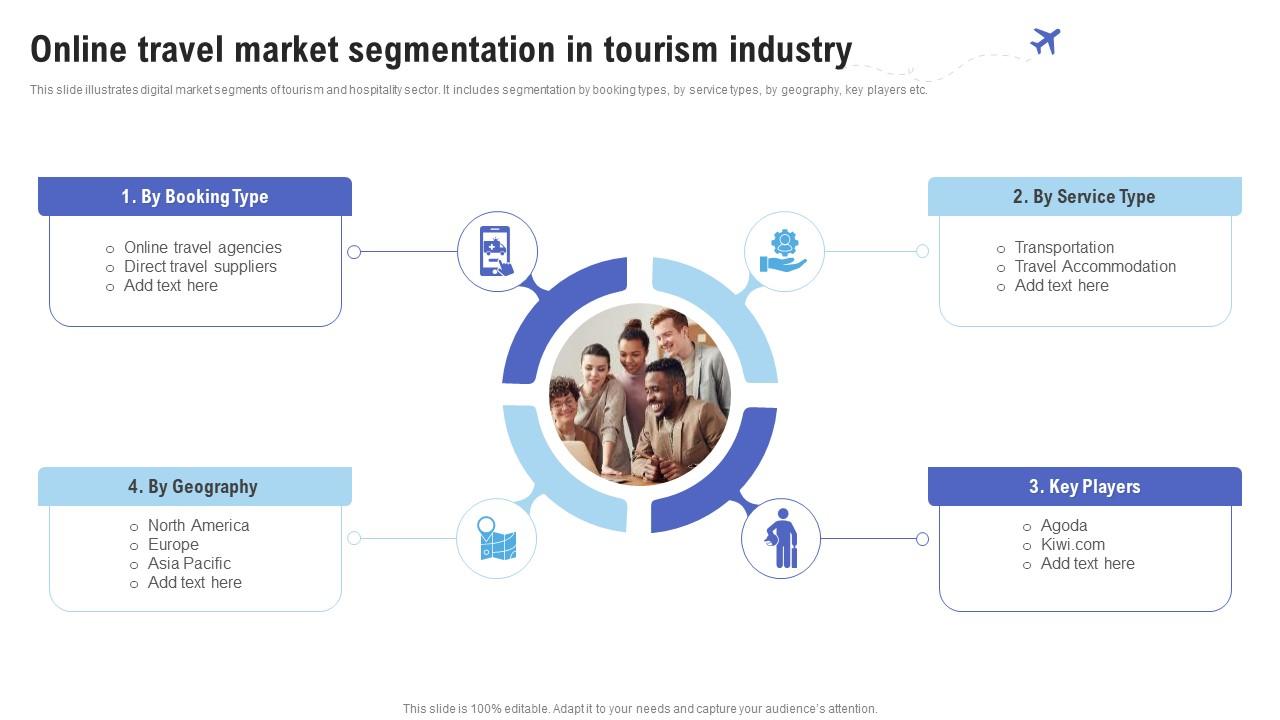
Online booking behavior has created entirely new ways to segment the digital traveler. This PPT slide is built for digital tourism analysts and travel platform teams who need to present online travel market segmentation clearly — by booking type, service category, geography, and key players. It covers four distinct segmentation dimensions in a single, readable layout. Useful in digital nomad travel market discussions, platform strategy reviews, and regional growth planning sessions. The template is 100% editable and customizable.
Download this PowerPoint Template
Win Every Tourism Pitch with SlideTeam
SlideTeam's PowerPoint templates are the best in the industry for tourism market segmentation presentations. These content-ready slides help you present traveler profiles, geographic segments, and expenditure data with professional clarity. Use these PowerPoint slides to turn complex segmentation data into strategies your stakeholders can act on. Grab these ready-made templates and deliver tourism insights that drive real decisions.
FAQs on Tourism Market Segmentations
How does psychographic segmentation differ from demographic segmentation in targeting modern tourists?
Demographic segmentation groups travelers by age, income, or family size — measurable facts. Psychographic segmentation groups them by values, interests, and lifestyle — how they see themselves. A 40-year-old could be a budget backpacker or a luxury spa traveler. Demographics won't tell you which. Psychographic profiles target the mindset behind the booking decision, making campaigns more precise and far less wasteful.
What role does travel motivation play in defining distinct tourism market segments?
Travel motivation defines what a traveler actually wants — rest, adventure, culture, health, or status. Segments built around motivation behave consistently: adventure seekers book differently than wellness travelers, even within the same age group. Destination marketers use motivation as the primary filter before layering on demographics. It explains not just who travels, but what they're willing to pay for and why.
How can tourism businesses leverage behavioral segmentation to improve customer retention?
Behavioral segmentation tracks what customers actually do — booking frequency, channel preference, loyalty program use, and spend per trip. Tourism businesses use this data to identify high-value repeat travelers and trigger retention offers at the right moment. Segment frequent independent travelers separately from package-tour buyers. Each group responds to different incentives. Targeting based on past behavior outperforms targeting based on assumed preferences.
What are the key differences between leisure and business travel segments in terms of spending patterns?
Business travelers spend more per trip but have shorter stays and stricter logistical needs — proximity to venues, fast check-in, reliable Wi-Fi. Leisure travelers prioritize experience and value, often spending more on food and activities but less on accommodation per night. Business travel categories show predictable weekday booking patterns. Leisure travel segments cluster around holidays and are far more price-sensitive during off-peak periods.
How does generational segmentation influence destination marketing strategies?
Each generation carries distinct travel expectations. Younger travelers prioritize experience, social sharing, and authenticity. Older travelers value comfort, service reliability, and guided options. Destination marketers match channel, tone, and offer to the dominant generation in each target segment. Senior travel demographics, for example, respond to direct mail and curated itineraries. Youth travel segments respond to social platforms and peer recommendations.
In what ways does geographic segmentation impact the promotional strategies of international tourism brands?
Geographic segmentation tells tourism brands which markets to activate, in what language, and through which channels. An international brand promoting the same destination in South Korea and Germany needs entirely different messaging, imagery, and booking pathways. Proximity also shapes offer design — nearby markets respond to short-break packages, distant markets need longer itinerary structures. Regional promotional budgets follow geographic segment size and conversion potential.
How do luxury tourism segments differ from budget tourism segments in terms of service expectations?
Luxury travelers expect personalization, exclusivity, and frictionless service at every touchpoint — before, during, and after the trip. Budget travelers prioritize price transparency and flexibility. The gap isn't just about spend: luxury segments want fewer options presented with more depth, while budget travelers compare many options and decide on value. Service recovery expectations also differ sharply — luxury segments exit permanently after a single poor experience.
What emerging micro-segments have appeared in the tourism industry post-pandemic?
Post-pandemic, several clear micro-segments have solidified: digital nomads blending work and travel, wellness tourists prioritizing health-focused itineraries, and sustainable tourism segments selecting destinations on environmental criteria. Solo travel also accelerated across all age groups. These segments share a preference for flexibility, longer stays, and independent booking — making them distinct from traditional leisure or business travel categories in both behavior and messaging response.