

 0 Comment
 Customer Reviews

The org chart's been updated. Again.
Someone from leadership sent a new version at 11:47 PM on a Tuesday. No context. Just the file. And now there's a meeting Thursday where you're supposed to "walk the team through the changes" like you were part of making them.
That's the actual situation. Not a change management crisis—just a deck due in 36 hours that's supposed to explain something you're still figuring out yourself.
Organizational analysis sounds formal. Clinical, even. Like something consultants charge $400 an hour to produce. But most of the time, it's just the uncomfortable work of making sense of how a company actually operates—versus how it's supposed to operate. The gap between the two is where most problems live.
And there's a specific kind of dread that comes with presenting that gap. Because you're not just showing data. You're showing people something about themselves. Their team. Their reporting lines. Why decisions take three weeks instead of three days. Why the SWOT analysis keeps surfacing the same blind spots. Why workforce analysis numbers don't match what managers say in 1:1s.
The wrong framing makes it feel like blame. The right framing makes it feel like clarity.
That's a hard needle to thread, especially when you're starting with a blank slide. You know what you want to say. You don't always know how to structure it so it lands without making someone defensive.
So templates exist for this. Not because organizational analysis is complicated—it is, but that's not why. They exist because the communication problem is universal. Because every analyst, HR lead, and operations manager eventually has to translate internal data into something a room full of people will actually engage with.
SlideTeam's organizational analysis templates handle exactly that gap—pre-designed frameworks built around the structures people already recognize. Stakeholder analysis, PESTLE, Ishikawa, change impact mapping—the scaffolding's already there. You bring the insight; the slide handles the shape of it.
Here's what's available.
Template 1: Strategic Triangle Model of Organizational Analysis
Mapping where an organization's value actually comes from is harder than it looks. This PPT template is built for public sector strategists and business analysts who need to frame three interdependent pillars: public value, operational capabilities, and support and legitimacy. It works well in strategic planning sessions where stakeholders need to see organizational goals tied to real capacity. The slide keeps the model clean without oversimplifying it. The template is 100% editable and customizable.
[product_image id=1121345]
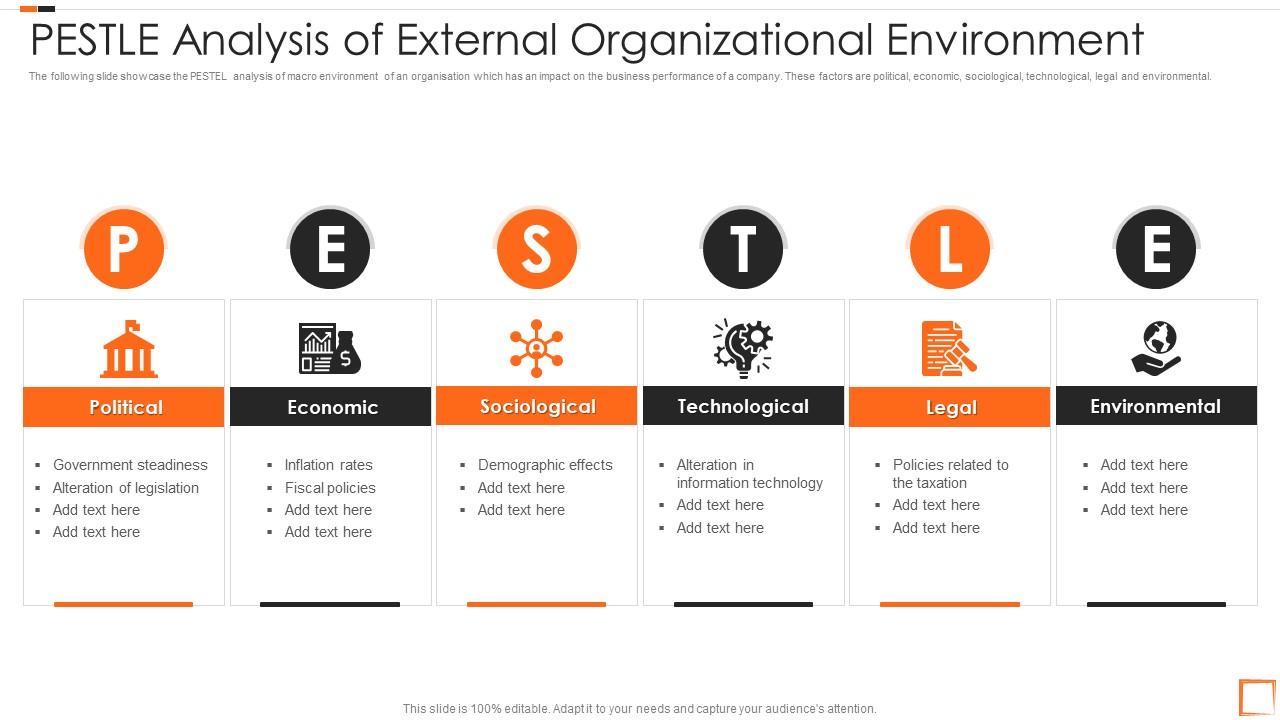
Template 2: PESTLE Analysis of External Organizational Environment
External forces shape business performance in ways internal data can't explain on its own. This PowerPoint slide gives analysts a structured view of all six PESTLE factors — political, economic, sociological, technological, legal, and environmental — in one clear frame. It's the right tool for business environment analysis or pre-strategy briefings where leadership needs macro context fast. Strategy teams and corporate planners reach for this when building the case for why conditions outside the firm matter. The template is 100% editable and customizable.
Download this PowerPoint Template
Template 3: Ishikawa Analysis to Solve Organizational Issues PowerPoint Presentation Slides
Root cause analysis cuts through symptoms to find what's actually breaking down. This complete 33-slide deck drives structured Ishikawa (fishbone) analysis across every major organizational issue your team faces. Each slide translates complex cause-and-effect relationships into visual clarity your audience can follow. The deck's professionally designed layouts make operational efficiency analysis and business process improvement reviews far more persuasive. Deliver compelling root cause findings with confidence today. Download this dynamic deck now and unlock sharper organizational diagnostics.
[product_image id=324312]
Template 4: Organizational Analysis PowerPoint Bundles
Credibility in the boardroom starts with how your data is structured, not just what it says. This 20-slide organizational analysis bundle delivers a comprehensive framework for presenting stats, figures, and data charts with professional impact. The deck's versatile layouts support everything from internal analysis frameworks to competitive analysis reviews. Transform your organizational analysis presentations with this content-ready bundle today. Download it now and drive the clarity your leadership team needs.
[product_image id=1120955]
Template 5: Analysis Impact of Organizational Change on Staff
Change hits people before it hits processes — and most analysis misses that. This PPT preset is built for HR leads and change managers who need to show exactly which staff groups are affected by technology shifts, policy changes, or operational restructuring. It makes change management analysis visible and specific, not vague. Use it when walking leadership through workforce analysis findings tied to a live transformation program. The template is 100% editable and customizable.

Download this PowerPoint Template
Template 6: Business Analysis Fundamentals for Organizations PPT Summary
Business analysis fundamentals are often taught in theory but rarely shown clearly in practice. This deck gives analysts and business leads a structured way to present core concepts — from requirements gathering to stakeholder mapping — without the noise. It suits teams onboarding new analysts or presenting business process analysis methods to cross-functional groups. The slide keeps ideas grounded and easy to follow for mixed audiences. The template is 100% editable and customizable.
[product_image id=1844633]
Template 7: Bureaucratic Organizational Inspiration PPT Demonstration
Bureaucratic structures are often misread as slow by default — the real issue is how they're communicated. This deck captures the logic and layers of bureaucratic organizational design in a visually engaging format. Every slide is built to hold audience attention while presenting corporate structure evaluation findings clearly. The deck's design flexibility lets you align visuals with brand identity without starting from scratch. Deploy this presentation to elevate your organizational behavior assessment today. Download it now and make structure look like strength.
[product_image id=1842089]
Template 8: Problem Solving Approach Business Organizational Analysis Assessment Systems
Problem-solving without a clear framework tends to circle back to the same conclusions. This 10-slide deck gives analysts and operations teams a structured approach to organizational analysis assessment — grounded in high-quality visuals that communicate complex ideas without losing the room. Each slide supports a specific stage of the diagnostic process, from issue framing to systems evaluation. The deck's unique design builds credibility while keeping presentations accessible. Transform your organizational effectiveness reviews with this focused toolkit today. Download now and bring sharper thinking to every assessment.
[product_image id=383330]
Template 9: Three Stages of Conducting Organizational Analysis
Most organizational assessments lose clarity because there's no agreed starting point. This slide breaks the process into three clean stages: understanding organizational goals, identifying the right tools, and evaluating strengths and weaknesses. It's the right entry point for consultants and internal analysts running a structured organizational development process. The visual flow keeps audiences oriented at every step of the review. Deliver your three-stage analysis with confidence and precision today. Download this template now and build a clearer foundation for every organizational audit.
[product_image id=1121346]
Template 10: Business Analysis for Modern Analysts PPT Guidelines
Modern analysts need frameworks that reflect how organizations actually work, not textbook models from a decade ago. This PPT deck is designed for practicing analysts who present business analysis findings to leadership, operations, or product teams regularly. It covers the thinking behind modern analytical methods without overstating complexity. For context, it works well alongside HR analytics reviews or internal capability assessments. The template is 100% editable and customizable.
[product_image id=1799820]
Template 11: Business Analysis for Organizational Success PPT Sample
Connecting business analysis outputs to measurable organizational success is where most decks fall short. This PPT sample is built for analysts and team leads who need to show the link between analytical work and real performance outcomes. It suits boardroom presentations where business performance metrics and organizational effectiveness must be made tangible. The visual design keeps the argument clear without sacrificing depth. The template is 100% editable and customizable.
[product_image id=1799821]
Template 12: Business Analysis Process from Requirements to Solutions PPT Graphics
Taking a requirement from a stakeholder conversation all the way to a working solution is rarely linear. This deck maps the full business analysis process — from early requirements to delivered solutions — in a visual format that cross-functional teams can actually follow. It's useful for business process improvement reviews or project kick-offs where alignment on method matters. Analysts who present to non-technical audiences will find it especially practical. The template is 100% editable and customizable.
[product_image id=1729686]
Template 13: Business Analysis Techniques for Change PPT Demonstration
Change is easier to accept when the analytical reasoning behind it is visible. This deck gives change practitioners and business analysts the right visual tools to present analysis techniques that directly inform transformation decisions. Each slide captures a different analytical method — making it ideal for change management analysis briefings where leadership wants to see the thinking, not just the output. The deck's flexible design adapts cleanly to any organizational context. Transform your change analysis presentations and win stakeholder buy-in today. Download now and make every technique land with clarity.
[product_image id=1658709]
Template 14: Why Analysis Is Important for Success PPT Slides
The case for analysis often has to be made before the analysis begins. This PPT deck helps analysts and team leads explain why structured analysis matters — without sounding like they're defending the obvious. It's grounded enough for skeptical audiences and clear enough for leadership reviews where time is short. Use it to open a business process analysis engagement or frame a strategic planning session. The template is 100% editable and customizable.
[product_image id=1717880]
Template 15: How Business Analysis Drives Organizational Change PPT Structure
Business analysis only earns its seat at the table when it visibly shapes decisions. This complete deck shows exactly how structured analysis connects to organizational change — making it the right tool for analysts presenting to senior leadership or change sponsors. Each slide maps a stage of the analytical process to a concrete organizational outcome. The deck supports functional area analysis reviews and business intelligence briefings equally well. Elevate your next change presentation with this structured, results-focused deck today. Download now and demonstrate the direct link between analysis and impact.
[product_image id=1761884]
Template 16: Business Analysis Techniques for Organizational Improvement PPT Outline
Improvement efforts stall when the analytical methods behind them aren't communicated clearly. This deck gives organizational improvement practitioners a clean way to present multiple business analysis techniques in a single, coherent narrative. It suits operational efficiency analysis reviews and internal capability workshops where diverse stakeholders need a shared frame. The visual design keeps complex methods readable without losing rigor. The template is 100% editable and customizable.
[product_image id=1658710]
Template 17: Business Analysis for Improving Organizational Efficiency and Value PPT Designs
Efficiency gains and value creation rarely happen without a disciplined analytical foundation. This deck is built for analysts and operations leaders presenting business process improvement findings where both efficiency and value must be demonstrated. Each slide combines visual impact with analytical structure — keeping boardroom audiences engaged through the detail. The design adapts cleanly from client pitches to internal strategy sessions. Deliver compelling organizational efficiency analysis presentations with confidence today. Download this deck now and make the value of your analysis impossible to ignore.
[product_image id=1702840]
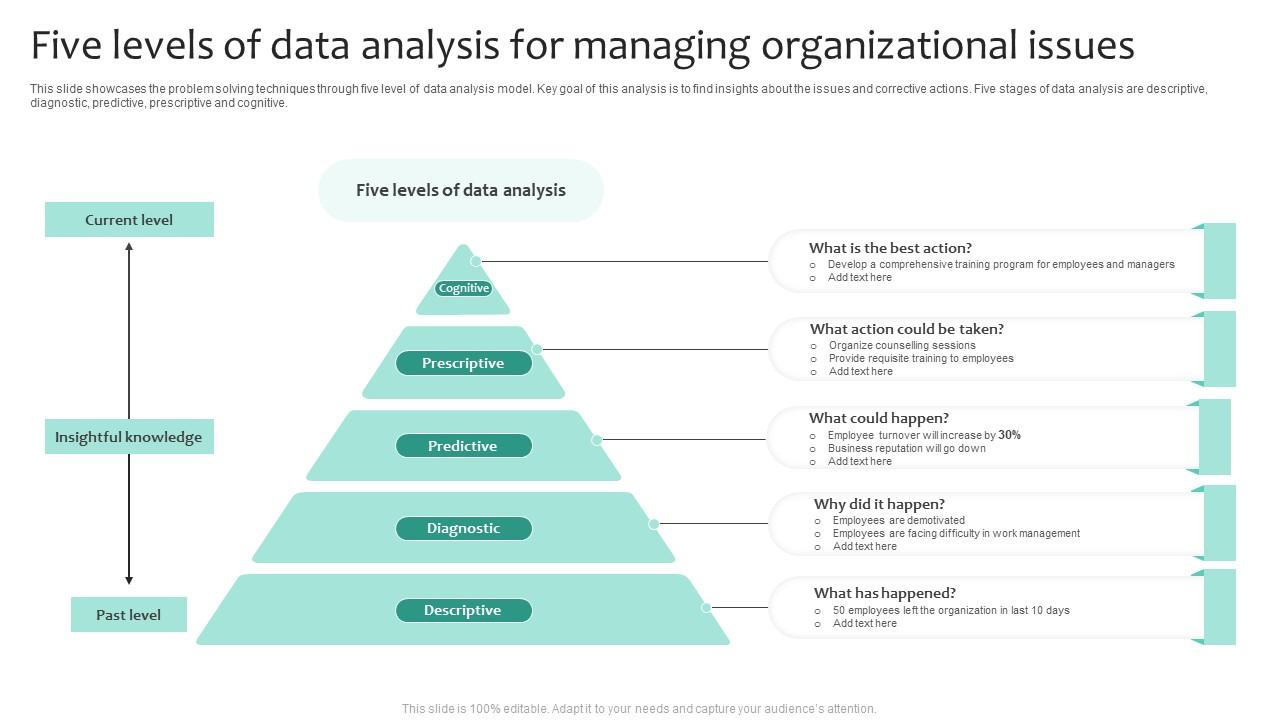
Template 18: Five Levels of Data Analysis for Managing Organizational Issues
Five levels of data analysis — descriptive, diagnostic, predictive, prescriptive, and cognitive — cover very different questions. This slide maps all five clearly, giving data teams and organizational analysts a structured way to show where their current work sits and where it needs to go. It's particularly useful for business intelligence analysis presentations where leadership needs to understand the maturity of their analytical capability. The visual model makes abstract data concepts concrete and actionable. Deliver your data maturity findings with precision today. Download and give every stakeholder a clear view of the analytical path forward.
Download this PowerPoint Template
Template 19: Professional Job Analysis Form Template for Organizational Success
Job analysis is foundational to workforce planning — but most job analysis documentation never gets presented in a way that supports decisions. This deck gives HR teams and organizational development leads a professional format for presenting job analysis findings clearly. It suits workforce analysis reviews and role redesign discussions where structured data needs to drive action, not just inform records. The slide makes HR Analytics outputs look as credible as they are. The template is 100% editable and customizable.
[product_image id=1463475]
Template 20: Business Analysis Techniques for Effective Organizational Change PPT Guidelines
Effective organizational change depends on how well analysts can translate their findings into direction. This PPT deck is built for business analysis practitioners who lead or support change programs and need to present their methods convincingly. It covers the analytical techniques that sit behind change decisions — making it practical for change management analysis briefings and strategic organizational assessment reviews. So yeah, it's a solid deck for anyone who needs the 'how we got here' part to land as clearly as the 'where we're going' part. The template is 100% editable and customizable.
[product_image id=1777104]
Elevate Every Organizational Analysis with SlideTeam
SlideTeam's PowerPoint templates are the best in the industry for organizational analysis presentations. Their content-ready designs save hours of structuring time while delivering professional clarity that leadership teams trust. Use these ready-made slides to present SWOT findings, change impact assessments, workforce analysis, and operational efficiency reviews with confidence. Deploy these pre-designed frameworks to transform raw organizational data into decisions that stick.
FAQs on Organizational Analysis
How does organizational culture influence the effectiveness of structural change initiatives?
Culture determines how people respond to change before any new structure is announced. If existing norms reward stability over adaptation, structural changes will face resistance regardless of their logic. Leaders must assess cultural readiness first — using tools like organizational culture assessments — before redesigning reporting lines or processes. Ignoring this gap is the most common reason change initiatives produce org charts that nobody actually follows.
What are the key differences between mechanistic and organic organizational structures, and when should each be applied?
Mechanistic structures — fixed roles, clear hierarchy, formal rules — work best in stable, predictable environments. Organic structures — flexible roles, distributed decision-making, lateral communication — suit fast-changing or innovation-heavy contexts. Most organizations need elements of both. The choice depends on how frequently the external environment changes and how quickly the organization must respond. Neither is universally better; fit matters more than form.
How can leaders use SWOT analysis to identify gaps in organizational capabilities?
SWOT analysis maps internal strengths and weaknesses against external opportunities and threats. Leaders use it to spot where current capabilities fall short of what the strategy actually requires. A gap between a stated opportunity and a corresponding weakness signals a capability deficit worth prioritizing. The key is moving from the SWOT grid to specific actions — not leaving it as a slide in a deck.
What role does power distribution play in shaping decision-making processes within flat versus hierarchical organizations?
Flat organizations distribute decision-making broadly, which speeds up responses but can create ambiguity about who owns what. Hierarchical organizations concentrate authority, which brings consistency but slows adaptation. Power concentration shapes which voices get heard in decisions and how conflicts get resolved. Neither model is inherently superior — the right choice depends on how much coordination and standardization the work actually requires.
How do informal networks within an organization impact formal communication channels?
Informal networks carry information faster than formal channels — and often more accurately. They shape who gets heard, which decisions get made before meetings happen, and how policy changes are actually received. Leaders who ignore informal networks find their formal communications arrive after the informal version already has. Mapping these networks — even roughly — helps identify where official communication is being reinforced or quietly overridden.
What metrics should be used to evaluate organizational efficiency beyond financial performance?
Key non-financial metrics include employee productivity per role, decision cycle time, process error rates, and cross-functional collaboration frequency. Customer satisfaction scores and internal NPS also reflect organizational health. For workforce analysis, look at voluntary attrition and internal mobility rates. Financial metrics tell you what happened; these operational metrics tell you why and what's likely to happen next.
How does organizational alignment between strategy and structure affect overall performance outcomes?
When strategy and structure are misaligned, execution suffers — teams optimize for the wrong things. A growth strategy paired with a cost-control structure, for example, creates constant friction. Alignment means the reporting lines, resource allocation, and decision rights actively support what the strategy requires. Regular strategic organizational assessments catch drift before it becomes a performance problem.
In what ways does organizational life cycle stage influence the choice of analytical frameworks used by consultants?
Early-stage organizations benefit most from simple, flexible frameworks like SWOT or stakeholder mapping — they don't have enough complexity to warrant heavier tools. Growth-stage firms often need process analysis and organizational structure reviews. Mature organizations typically require deeper diagnostic frameworks, including change management analysis and business intelligence analysis. Consultants match the analytical tool to the level of organizational complexity, not the other way around.