

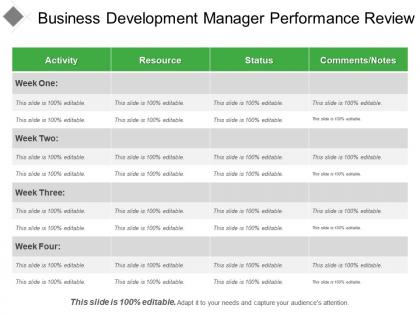
Business development manager performance review




Try Before you Buy Download Free Sample Product
 Impress Your
 Audience
 100%
100% Editable
 Save Hours
 of Time


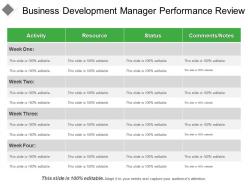
Analyze the performance of your senior sales executive with the help of this Business Development Manager Performance Review PowerPoint presentation. This BDM assessment layout comprises activity, resource, status, and comments. Take advantage of this performance appraisal PPT to reveal the criteria for evaluating the performance of a sales manager like teamwork, knowledge, administration, etc. Take the assistance of this performance measurement slideshow to elucidate the evaluation process which includes developing a plan, performing, assessing and reviewing. Showcase the methods with which you can analyze performance such as management by objectives, critical incident technique, etc. Utilize this sales manager performance visual to unveil the merits and demerits of all methods for the selection of the right technique. Download this business development officer infographic to motivate your sales managers and increase their morale for making them achieve the highest level of productivity.
People who downloaded this PowerPoint presentation also viewed the following :
Business development manager performance review with all 5 slides:
Handle headwinds with our Business Development Manager Performance Review. Get the better of factors against you.


FAQs for Business development
Track three main areas for your BDM: pipeline numbers, conversion rates, and relationship stuff. Pipeline means qualified leads, deal values, time-to-close - basic but crucial. Conversion rates from first contact to real opportunity? That's where you separate the wheat from the chaff, honestly. Also watch strategic partnerships and client retention. I'd probably focus more on quality over quantity though - anyone can make 100 calls a day. Set quarterly targets for each bucket. Monthly reviews keep things on track so you're not scrambling at year-end.
Focus on the money stuff, not just how many calls you made. Track new clients you brought in, deal sizes, pipeline value - that's what actually matters. Most BDMs get stuck counting activities instead of results, which honestly just looks amateur. Show your actual revenue impact by following deals from first contact to close. Quarter-over-quarter growth in your accounts is huge too. Pipeline velocity matters - how fast are you moving people through? I'd make a simple dashboard with before/after numbers for your territory. Way more impressive than "I made 100 calls this week."
Track retention rates and repeat business first - that's your bread and butter data. But the real gold is in how clients actually *feel* about working with your BDM. Survey them regularly about satisfaction levels. Notice if they're calling you with opportunities or just picking up when you call? Big difference there. Referrals are huge too since happy clients love making introductions. I'd probably do quarterly check-ins where you straight up ask your key accounts how the partnership's going. Revenue growth from existing accounts tells the story numbers-wise, but honestly gut instinct matters just as much.
Yeah, definitely track collaboration - it's huge for BDMs. Most of their success comes from working well with marketing and sales teams, not going solo. I've watched too many "lone wolf" types mess things up honestly. Look at joint campaign results and how leads convert after handoff. Also get feedback from both teams about working with your BDM. The good ones naturally build those relationships. Make it part of their actual performance goals too - like, formal reviews where you're checking in on cross-team stuff. Business development just doesn't work when people work in silos.
Dude, client feedback is huge for judging BDMs. Numbers don't tell the whole story - you need to know if they're actually building relationships or just burning through prospects. Set up quarterly surveys with both new and existing clients. Ask about communication, trust, whether the BDM gets their business needs. I've worked with guys who crushed their quotas but left clients feeling steamrolled. That's not sustainable. Quick informal check-ins work too if surveys feel too formal. The goal is figuring out who's just good at closing versus who can nurture partnerships long-term.
Track what they actually control - qualified leads, closed partnerships, revenue from channels they built. Set those KPIs upfront so you're not guessing later. Timeline matters too; good market entries usually line up with their relationship work and strategic moves. I mean, correlation isn't causation but you know what I mean. Build a simple dashboard showing lead sources and conversion rates. That way you can see what's actually working instead of just looking at overall numbers. Honestly, most people skip this step and then wonder why they can't prove ROI.
Look at their sales numbers first - consistent quota hits and actual deal closures. Relationship-building is massive since BDMs basically live off their network. Can they actually connect with people? Strategic thinking matters too - do they spot market opportunities and create value props that don't suck? Communication skills are pretty obvious in the first chat, but resilience is trickier to assess. BD means getting rejected constantly. Honestly, throw them a mock scenario during interviews. You'll see how they handle business problems in real-time. Way better than just asking hypotheticals.
Look at how they tackle new market opportunities and handle roadblocks creatively. Are they pitching fresh partnership ideas or trying different outreach methods? I've noticed the best BDMs don't just follow the standard playbook - they'll propose weird solutions that actually work. Track whether their creative approaches convert though, not just brainstorming for show. Set up regular sessions to see their innovative thinking firsthand. Also check if they're finding unique ways to position your product when deals get stuck. The ones who think differently usually become your top performers anyway.
Look at how they've dealt with major market changes before - did they pivot smart or just panic? I'd ask for concrete examples, like surviving a recession or jumping on new tech early. Watch if they bounce back fast from failures and actually suggest fresh opportunities instead of just reacting to whatever happens. The good ones are always tracking industry shifts and tweaking their approach when customers' needs change. Oh, and definitely have them walk you through a time they had to scrap their whole plan mid-quarter. That'll tell you everything about how they handle curveballs.
For CRM stuff, Salesforce and HubSpot are solid - they'll track your pipeline metrics and conversion rates pretty well. BambooHR or 15Five work great for performance management and feedback collection. Honestly though, don't sleep on Google Sheets if you're just starting out. I've seen teams get way too caught up in fancy dashboards when a simple spreadsheet would've done the job. If you need heavy analytics later, Tableau and Power BI are worth checking out. Just make sure whatever you pick is something your team will actually want to use regularly.
Honestly, teamwork can make or break your BDM review. You can't close deals solo - working with sales, marketing, product, finance affects everything. I've watched solid performers bomb reviews just because they were terrible team players. Reviews look at communication across departments, how you share leads, whether you support team goals (not just your quota), and your pipeline contributions. Oh and document everything! Make sure people actually see your cross-team wins when review time rolls around.
Check your conversion rates first - leads to qualified prospects should hit 13-20% if you're doing things right. Deal closure rates and average deal size matter too, obviously depends on your industry though. Most BDMs I know aim for 15-25% revenue growth yearly, but honestly that's tough in some markets right now. Pipeline velocity is key - how fast are deals actually moving compared to competitors? Don't forget the relationship stuff since BD is all about connections. Client retention and referral rates tell you a lot. Just pull your CRM reports and compare against industry data or ask around your network.
Look at their process AND results when you're evaluating strategic planning skills. Can they spot market opportunities? Do they set realistic timelines and break big goals into actual steps? I've seen way too many BDMs who are total visionaries but can't execute for shit. Check out their past initiatives - did they see roadblocks coming? How'd they pivot when things went sideways? You'll also want to assess their research game and whether they loop in the right people during planning. Oh, and definitely give them a hypothetical scenario. Make them walk through their approach step-by-step.
Honestly, the easiest way is watching how they handle junior people - do their mentees actually hit goals and get promoted? Also pay attention to cross-functional stuff. If other departments keep asking to work with them again, that's your answer right there. 360 feedback helps too, but I'd really focus on whether they can build processes that stick around after they leave. Oh, and here's what I always do - give them someone who's struggling for like 3 months and see what happens. You'll know pretty quick if they've got it or not.
Honestly, I'd say professional development is huge when you're looking at BDM growth. Sales moves so damn fast - if they're not learning new stuff, someone hungrier will eat their lunch. I've watched solid reps get lazy and lose deals because they stopped staying current. Track what training they're doing, conferences, certs, whatever. But here's the thing - also see if they actually use that knowledge in real deals. Otherwise it's just expensive resume padding. Make it part of how you evaluate them and set aside budget for it.
-
Amazing product with appealing content and design.
-
Great product with highly impressive and engaging designs.