


Business Development And Operational Plan Powerpoint Presentation Slides





Try Before you Buy Download Free Sample Product
 Impress Your
 Audience
 100%
100% Editable
 Save Hours
 of Time


If you are looking to grow your network and expanding your business, a perfect business strategy is all you need. Our business development and operational plan PowerPoint presentation slides help you defining the financial goals and methods that affect the business proposal. With the help of our pre-designed organizational improvement and operating strategy presentation, you can briefly explain your organizational day-to-day procedures and growth. Our professionally designed organizational development PPT includes templates like operations summary, operating challenges, company setup, strategic alliances, risk mitigation, current sources of revenue, company strategy, sales & marketing challenges, competitive roadmap and many more. But that’s not all. You can also work on related topics like corporate strategy, industry development, annual operating proposal, company’s task, development management, strategic controlling, innovation management, customer relationship administration etc. using this company growth PPT templates. Download this business development and operational plan PowerPoint presentation slides now and implement growth opportunities. Develop honourable individuals with our Business Development And Operational Plan Powerpoint Presentation Slides. It helps groom future citizens,
People who downloaded this PowerPoint presentation also viewed the following :
Content of this Powerpoint Presentation
Slide 1: This slide introduces Business Development & Operational Plan. State your company name here.
Slide 2: This slide presents Table of Contents with its title.
Slide 3: This is Our Agenda slide to state your agenda, purpose etc.
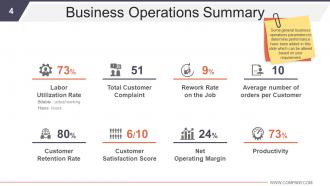
Slide 4: This slide states Business Operations Summary. Some general business operations parameters to determine performance have been added in this slide which can be altered based on your requirement.
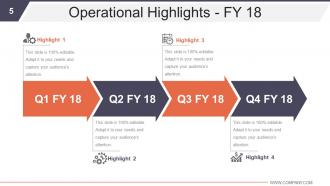
Slide 5: This slide presents Operational Highlights with arrow imagery. State your highlights here.
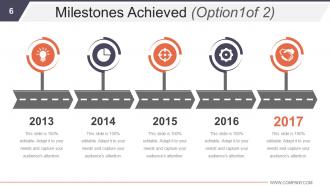
Slide 6: This is Milestones Achieved slide presented with a timeline. You can edit/ modify the contents as per need.
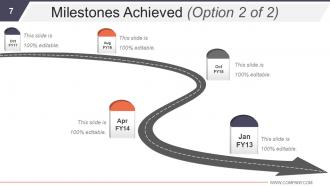
Slide 7: This is another Milestones Achieved slide presented with a roadmap.
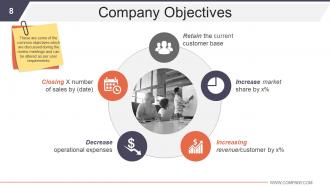
Slide 8: This slide states Company Objectives with circular image. They are- Retain the current customer base, Increase market share, Increasing revenue/customer, Decrease operational expenses, Closing number of sales. these are some of the common objectives which are discussed during the review meetings and can be altered as per user requirements
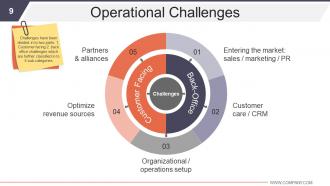
Slide 9: This slide showcases Operational Challenges. Challenges have been divided in to two parts: 1. Customer facing 2. back office challenges which are further classified in to 5 sub-categories. You can alter/ edit as per need.
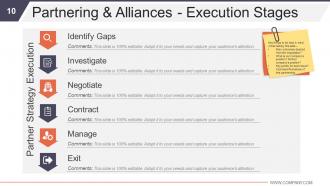
Slide 10: This is Partnering & Alliances slide. The various Execution Stages showcased are- Identify Gaps, Investigate, Negotiate, Contract, Manage, Exit.
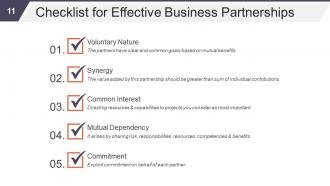
Slide 11: This slide presents a Checklist for Effective Business Partnerships.
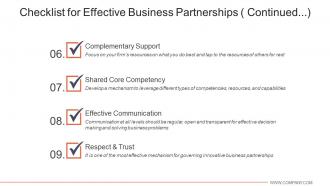
Slide 12: This is another Checklist for Effective Business Partnerships slide.
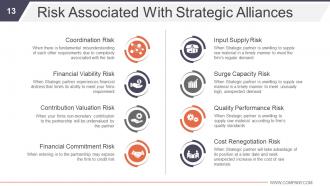
Slide 13: This slide states Risk Associated With Strategic Alliances with their names and respective icons.
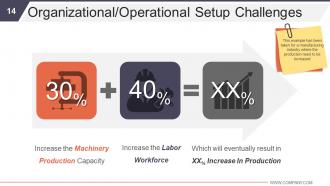
Slide 14: This slide showcases Organizational/Operational Setup Challenges. You can add your own example here.
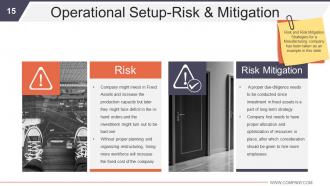
Slide 15: This slide showcases Operational Setup-Risk & Mitigation. Risk and Risk Mitigation Strategies for a Manufacturing company has been taken as an example in this slide. You can add your own example instead.
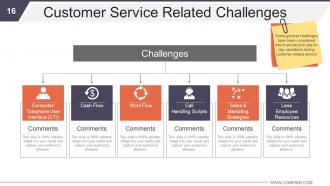
Slide 16: This slide states Customer Service Related Challenges. Some general challenges have been considered which are faced in day-to-day operations during customer related service in this slide.
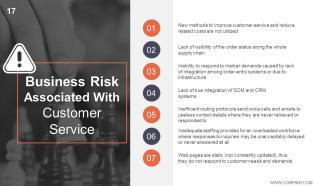
Slide 17: This slide showcases Business Risk Associated With Customer Service.
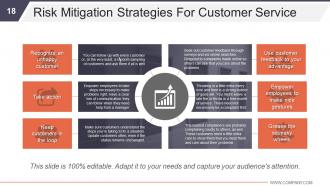
Slide 18: This slide presents Risk Mitigation Strategies For Customer Service.
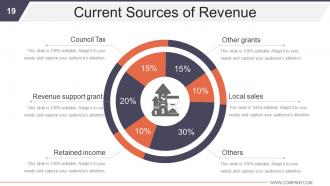
Slide 19: This slide presents Current Sources of Revenue in pie chart form. These include- Revenue support grant, Council Tax, Retained income, Other grants, Local sales, Others.
Slide 20: This is Coffee Break image slide for a halt. You may change the slide content as per need.
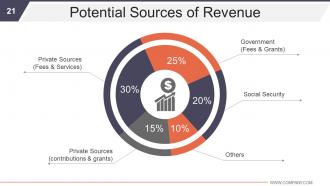
Slide 21: This slide showcases Potential Sources of Revenue with a pie chart/ graph. These include- Social Security, Government (Fees & Grants), Others, Private Sources (contributions & grants), Private Sources (Fees & Services).
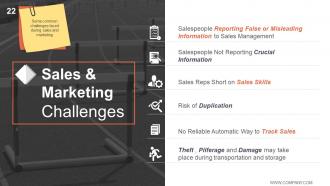
Slide 22: This slide displays Sales & Marketing Challenges.
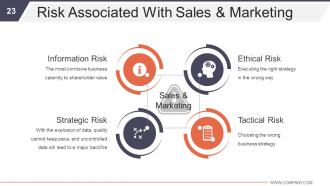
Slide 23: This slide states Risk Associated With Sales & Marketing with a circular diagram image showing- Tactical Risk, Ethical Risk, Strategic Risk, Information Risk.
Slide 24: This slide presents Company Strategy with their respective icons.
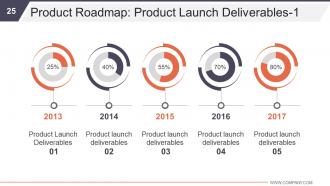
Slide 25: This is Product Roadmap: Product Launch Deliverables slide with circular images.
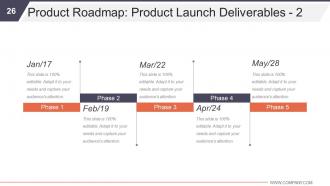
Slide 26: This is yet another Product Roadmap: Product Launch Deliverables slide presented with a timeline.
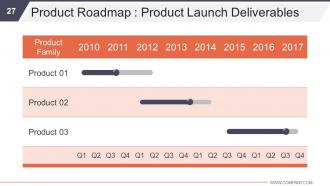
Slide 27: This too is a Product Roadmap : Product Launch Deliverables slide.
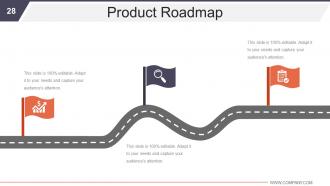
Slide 28: This slide showcases Product Roadmap with flags and icon imagery.
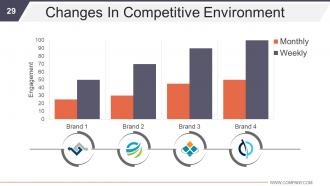
Slide 29: This slide presents Changes In Competitive Environment in a bar graph/ chart form.
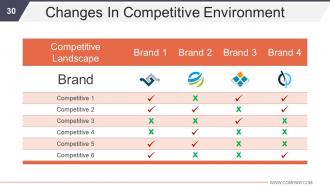
Slide 30: This is yet another Changes In Competitive Environment slide showcased in a tabular form.
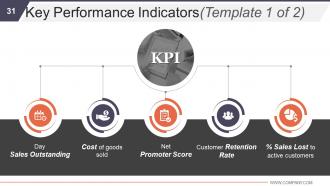
Slide 31: This slide showcases Key Performance Indicators consisting of- Sales Outstanding, Net Promoter Score, Customer Retention Rate, Cost of goods sold, % Sales Lost to active customers.
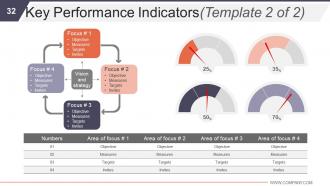
Slide 32: This is another Key Performance Indicators slide.
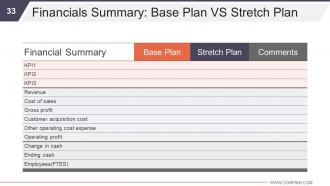
Slide 33: This slide states Financials Summary: Base Plan VS Stretch Plan.
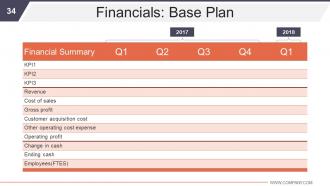
Slide 34: This slide showcases Financials: Base Plan in tabular form.
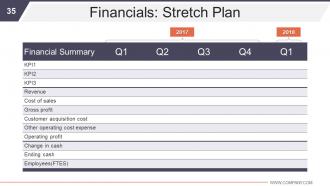
Slide 35: This slide states Financials: Stretch Plan.
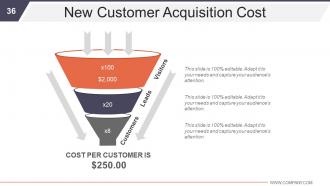
Slide 36: This is New Customer Acquisition Cost slide presented in a funnel form.
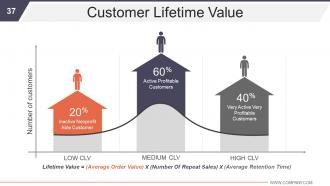
Slide 37: This slide displays Customer Lifetime Value with creative imagery and arrow imagery.
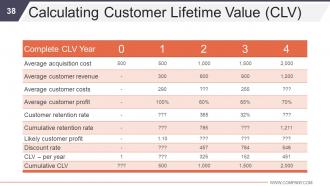
Slide 38: This is Calculating Customer Lifetime Value (CLV) slide in tabular form.
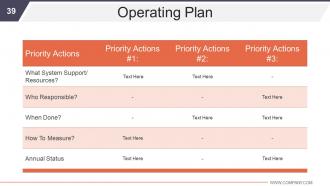
Slide 39: This slide states Operating Plan with priority actions.
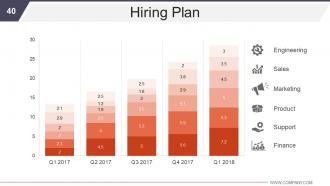
Slide 40: This slide showcases Hiring Plan with a bar graph image.
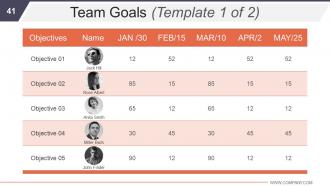
Slide 41: This slide presents Team Goals with name, objective etc. in a tabular form.
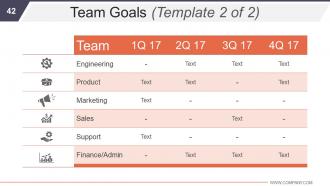
Slide 42: This is another slide showcasing Team Goals.
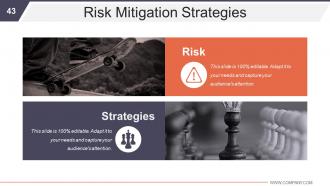
Slide 43: This slide states various Risk Mitigation Strategies. This slide which can be altered based on your requirement.
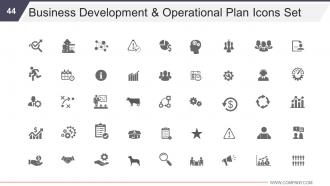
Slide 44: This slide presents Business Development & Operational Plan Icons Set. Use or alter icons as per need.
Slide 45: This slide forwards to Additional Slides. You can change/ alter content as per need.
Slide 46: This is Our Mission & Vision slide with image and text boxes. Add your mission, vision etc. here
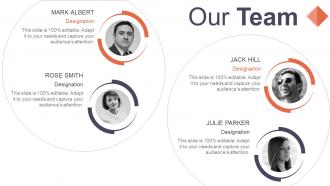
Slide 47: This slide introduces Our Team with name, designation, images and text boxes to be filled as desired.
Slide 48: This is About Our Company slide showcasing- We are Professional, We are Talented, We are Creative.
Slide 49: This is Our Goals slide to state your goals, aspirations etc.
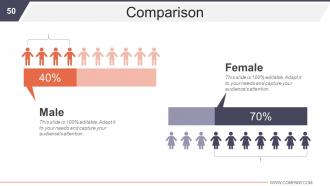
Slide 50: This slide displays Comparison on the basis of gender. It shows male and female image compared in terms of percentages.
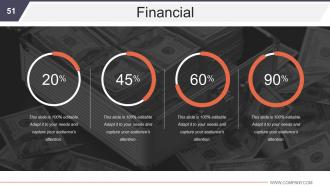
Slide 51: This is Financials slide to state your financial score with relevant imagery and text.
Slide 52: This is a Quotes slide. Insert your desired quote etc. here.
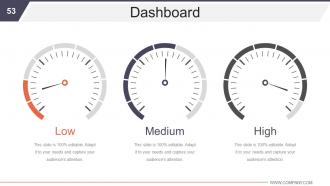
Slide 53: This slide presents a Dashboard with High, Medium and Low parameters.
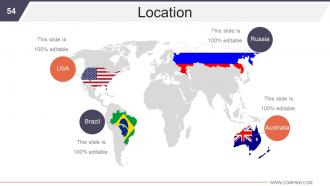
Slide 54: This slide showcases Locations with a World map and text boxes to make it explicit.
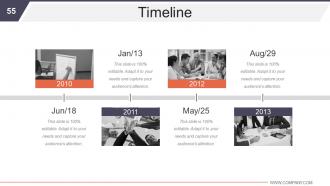
Slide 55: This is a Timeline slide. You can present yearly growth etc. with it.
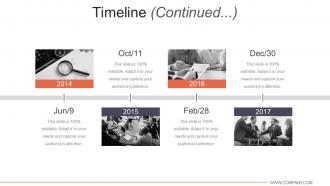
Slide 56: This is another Timeline slide.
Slide 57: This slide displays Post It for pinning important facts, notices etc. for the company.
Slide 58: This is a Newspaper slide to highlight important information or add memorabilia.
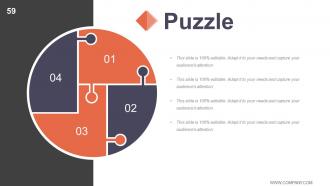
Slide 59: This is a Puzzle image slide to show information, specification etc.
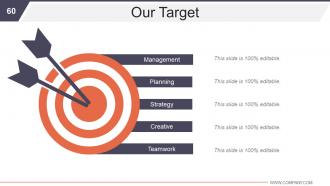
Slide 60: This is Our Target slide which consists of- Management, Planning, Strategy, Creative, Teamwork.
Slide 61: This slide represents a Circular image with icon imagery to fill texts.
Slide 62: This is a Venn diagram slide. Showcase relations, information, specifications etc. here.
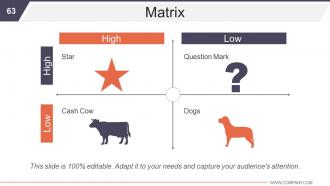
Slide 63: This is a Matrix image slide to be used as desired.
Slide 64: This is a Mind Map slide to showcase behavioural segmentation etc.
Slide 65: This is a Lego Blocks slide with text boxes to showcase specific information, sepcifications etc.
Slide 66: This is a people Silhouettes slide with text boxes to showcase people specific information etc.
Slide 67: This slide presents a Hierarchy Chart to be filled as desired.
Slide 68: This is a Magnifying Glass slide with relevant imagery and text boxes.
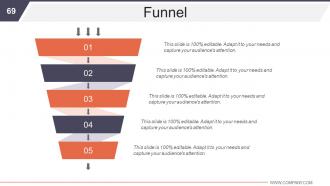
Slide 69: This is a Funnel diagram slide. Put information in funnel form here.
Slide 70: This is Our Charts slide to proceed. Change/ edit image as per need.
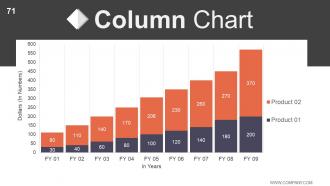
Slide 71: This is a Column Chart for showing product/entity comparison, information etc.
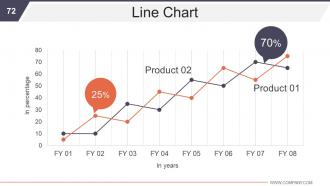
Slide 72: This slide contains a Line Chart. Product 01Product 02 can be shown in comparison.
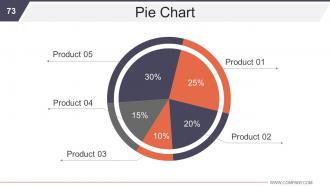
Slide 73: This is a Pie Chart slide to show product comparison etc.
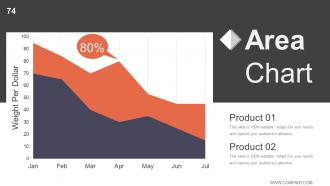
Slide 74: This is an Area Chart slide to show product comparison etc.
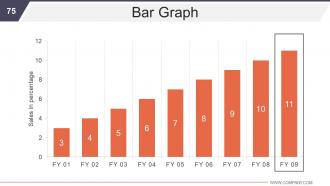
Slide 75: This is a Bar Graph image slide to show product comparison, growth etc.
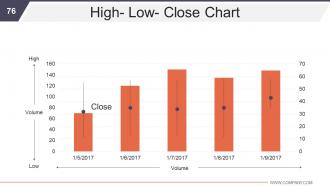
Slide 76: This is a High- Low- Close Chart slide presenting volume in High and Low terms.
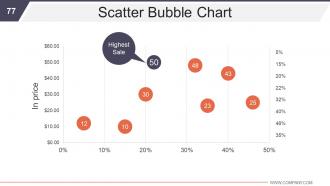
Slide 77: This is Scatter Bubble Chart slide show product comparison, growth etc.
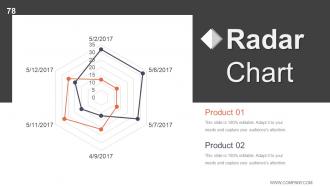
Slide 78: This is a Radar Chart slide to show product comparison etc.
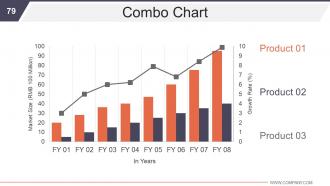
Slide 79: This is a Combo Chart for showing product/entity comparison, information etc.
Slide 80: This is a Thank You slide with Address# street number, city, state, Contact Numbers, Email Address.
Business Development And Operational Plan Powerpoint Presentation Slides with all 80 slides:
God is in the details for our Business Development And Operational Plan Powerpoint Presentation Slides. Ensure each one gets appropriate coverage.







FAQs for Business Development And Operational Plan
Okay so for your biz dev plan you'll need market analysis first - gotta know what you're working with. Then nail down who your actual customers are, not just "everyone." Competitive stuff matters too, obviously. Growth strategies with real timelines are key. Everyone's gonna ask about money projections right off the bat, so have those ready. Partnership opportunities, your sales process, and metrics to track how you're doing. Oh and don't skip the resource section - team and budget breakdown. Honestly? Just grab a basic template and start filling it out. Way better than staring at a blank page forever trying to make it perfect.
Look, market analysis just saves you from throwing money at the wall and hoping something sticks. You get actual data on who's buying what and why - then you can build strategies that don't suck. I've seen too many people skip this step and wonder why their launch flopped. Finding opportunities before competitors catch on is honestly the best part. Your revenue goals become way more realistic when you know market size and buying patterns. Oh, and you won't waste time chasing the wrong audience. Start with your ideal customer first. What do they actually want? Then check out industry trends and see what competitors are doing wrong.
Look, customer segmentation is basically how you stop wasting time on the wrong people. Break your market into groups - demographics, behavior, whatever makes sense. Then you can actually talk to each group in a way that hits different. Honestly, I've seen too many companies try selling enterprise stuff to startups using the exact same pitch. Terrible idea. Each segment has totally different budgets and pain points, you know? Pick your top 3-4 segments first. Don't go crazy with like 20 different groups or you'll burn out. Build specific value props for each one and you'll see way better results.
Okay so that SMART goal thing everyone talks about? It's actually legit. Instead of "make more money," try something like "boost monthly revenue by 25% in 6 months." Pick stuff you can actually measure - conversion rates, new leads, whatever makes sense for your business. Don't go crazy with like 10 different goals though. Three to five max or you'll burn out trying to juggle everything. I always start with the end number I want, then figure out what steps'll get me there. Works way better than just winging it.
Look for gaps where customers keep complaining about the same stuff - they're basically handing you ideas on a silver platter. Check what your competitors aren't doing well too. I set up Google alerts for industry buzzwords, helps me catch trends early. Monthly competitor stalking sessions are weirdly fun and super useful. Your SWOT analysis will show you which strengths could work in totally different markets. Oh, and don't ignore adjacent industries where you already know the ropes. Stay curious, ask "what if" constantly. Customer feedback is honestly the best goldmine - they'll straight up tell you what needs fixing.
Honestly, partnerships can be a game-changer for your business development. Look for companies that complement what you do instead of competing directly - like if you're in software, maybe team up with a hardware company. Joint ventures let you reach customers you'd never touch otherwise. Distribution deals are probably the best bang for your buck since you don't have to build out massive infrastructure. Tech partnerships can speed up product development too. Start by figuring out who's already serving your target customers but with different products. It's way easier than trying to do everything solo.
Okay so first thing - figure out what could actually kill your business. Competition stealing customers, losing key employees, running out of cash, whatever keeps you up at night. Rate each one: how likely is it and how badly would it mess you up? Most founders I know just ignore this stuff until it's too late, which is honestly pretty dumb. Pick your worst-case scenarios and make actual plans for dealing with them. Someone needs to keep an eye on these things regularly. Trust me, having backup plans ready beats panicking when everything goes sideways.
Monthly check-ins work great, though quarterly's fine if you're not in a rush. I'd track the obvious stuff like revenue and closed deals, but also the early signals - meetings booked, proposals out the door, that kind of thing. Honestly, skip the fancy dashboards that look cool but confuse everyone. Simple wins every time. Set deadlines for everything and make sure someone owns each piece. The real trick is actually sticking to your review schedule and being brutally honest about what's flopping. If something's clearly not working, just pivot. Way better than beating a dead horse because you're attached to the original plan.
Honestly, just make a simple chart showing who does what in your BD process. Map out the main stuff - lead gen, relationship building, closing deals, managing accounts. Then assign specific people to each area with clear metrics so you know who's accountable. RACI charts work great for this (Responsible/Accountable/Consulted/Informed) - sounds fancy but they're actually pretty straightforward. Don't forget to spell out who can make big decisions like approving partnerships or changing pricing. The whole point is avoiding those awkward moments where everyone thinks someone else is handling something important. Write it all down and share it so nobody's confused about their lane.
Look, competitive analysis is basically your roadmap to not screwing up. You get to see where competitors are killing it and where they're totally missing the mark. That intel helps you price better, build smarter features, and avoid their dumb mistakes. Honestly, it's like getting answers before the test. Plus you can predict what they'll do next, which is pretty clutch. I'd start with your top 3-5 competitors - dig into their strengths, weaknesses, and what customers actually think about them. Do this regularly though, not just once.
Honestly, a good CRM will change your life - no more messy spreadsheets tracking who you called when. LinkedIn Sales Navigator is clutch for finding prospects and doing research on them. For emails, something like HubSpot automates the follow-ups so you don't forget people. Video calls obviously help build relationships when you can't meet face-to-face. Oh, and don't sleep on analytics tools - they'll show you which outreach methods actually work versus the ones you think work. Social media schedulers are nice too. But seriously, pick like 2-3 tools max that work together. I made the mistake of trying every shiny new platform and it was chaos.
Oh man, don't be vague about who you're actually selling to - that's huge. Also, your timeline is probably way too ambitious (mine always are lol). Everyone thinks they don't have real competition, but trust me, you do. Dig deeper on that research. Your financial projections? Yeah, tone those down. I know it's tempting to be super optimistic, but you'll hate yourself later when reality hits. Make your goals specific so you can actually measure them. Most importantly - find someone who'll be brutally honest about your plan before you lock it in.
Quarterly reviews are your best bet, then do a bigger overhaul once a year. I swear everything moves so stupidly fast now that waiting longer just puts you way behind. Those quarterly check-ins help you catch trends before they smack you in the face. Save the annual review for the heavy stuff - updating revenue numbers, maybe switching focus to what's actually making money (not what you hoped would work). Oh, and jot down notes throughout the year about wins and failures. Makes those reviews way more useful than just going through the motions.
Okay so BD budgets are tricky because there's way more than just the obvious stuff. You've got BD team salaries, travel, conferences, marketing materials, CRM subscriptions - honestly the small things pile up quick. The real kicker though? Opportunity costs when your team's chasing deals instead of other work. Sales cycles are usually 6-12 months so don't expect immediate returns. I'd say start around 10-15% of revenue if you're in growth mode, but definitely keep some buffer money for random opportunities. Then just see what actually works for your business and adjust from there.
Honestly, just start checking in with your team and customers regularly - like actually regularly, not when stuff hits the fan. Monthly reviews work well for tracking your key numbers against what you're aiming for. Customer surveys are solid, or just hop on calls with partners. Don't overthink the system though, fancy tracking tools usually end up collecting dust. Focus on conversion rates, how fast deals close, and whether customers are happy. Then adjust your game plan every quarter based on what the data's telling you. Pick one thing to start tracking this month.
-
Innovative and Colorful designs.
-
Great designs, really helpful.