

Cascading Communication Plan PowerPoint PPT Template Bundles





Try Before you Buy Download Free Sample Product
 Impress Your
Audience
 100%
Editable
 Save Hours
of Time


Our Cascading Communication Plan PowerPoint PPT Template Bundles are topically designed to provide an attractive backdrop to any subject. Use them to look like a presentation pro.
People who downloaded this PowerPoint presentation also viewed the following :
Cascading Communication Plan PowerPoint PPT Template Bundles with all 18 slides:
Use our Cascading Communication Plan PowerPoint PPT Template Bundles to effectively help you save your valuable time. They are readymade to fit into any presentation structure.
-

Cascading Communication Plan
-

Cascading communication plan three step procedure
-
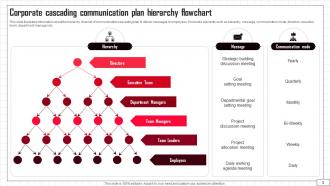
Corporate cascading communication plan hierarchy flowchart
-

Creating plan for cascading communication of information flow
-

Ways to improve cascading communication plan effectively
-

Cascading communication plan implementation challenges with solutions
-

Leadership cascading communication plan to deliver message
-

Three levels of cascading communication plan
-

Benefits of developing cascading communication plan
-

Cascading communication action plan for organization development
-

Cascading communication plan for information sharing icon
-

Cascading communication plan for message delivery icon
-

Thank for watching
-

-

-

-

-

FAQs for Cascading Communication Plan PowerPoint
You need four main things: clear messaging levels, knowing your audience, good timing, and ways for people to respond. Break your message down - execs want the big picture, managers need the how-to stuff, frontline workers just want to know what changes for them. Don't just grab whoever's around to communicate either (I've seen that disaster happen). Pick specific people for each level. Use email, meetings, whatever works. Timing's huge though - give each group time to actually process before moving down the chain. And honestly? Build in question time because people staying quiet doesn't mean they get it.
Honestly, you've gotta tailor your message to who you're talking to. Executives want the big picture stuff - strategic overview, key decisions, bottom line impact. Middle management needs the tactical details they can actually use with their teams. But front-line employees? They just want to know how it affects their actual day-to-day work. I've seen companies blast the same dense memo to everyone from C-suite to interns and it's painful. Also think about how you're delivering it - some executives love quick video updates while warehouse workers probably need something simple they can read on their phones. Map out what each group actually cares about first, then build from there.
Your leaders are literally everything here. They can't just forward an email and walk away - I've watched that blow up so many times it's not even funny. Each manager needs to actually get it, believe it, and have real conversations with their people. They're modeling the behavior and fielding questions on the spot. When leaders just phone it in, the message gets completely mangled by the time it reaches the bottom. You need them prepped and genuinely bought in, not just going through the motions.
Honestly, tech is a lifesaver for this stuff. Slack or Teams work great - you can set up channels that match your org structure so messages actually flow down right. Digital dashboards are clutch too because you can see who got what info and when. Most companies totally underuse these tools though, which is frustrating. Oh, and you can automate reminders for managers who forget to pass things along (happens way more than it should). Best part? Everything's documented so messages don't get twisted as they go down the chain. I'd start by mapping your current flow first, then figure out where tech fits.
Honestly, I'd start with the basics - are people actually getting the message at each level? Quick surveys work great for checking if they understood what you meant vs what they heard (that telephone game thing is wild). Track how fast info moves between layers too. Watch for engagement stuff like questions coming back up or people actually doing what you asked. The big one though? Making sure your frontline folks heard the same thing as leadership - that's where most companies totally blow it. I just throw everything into a simple dashboard and peek at it weekly. Response time tells you everything about where your communication breaks down.
Don't just wait for feedback to bubble up - that takes forever. Create feedback loops at every single level. Yeah, do the formal stuff like surveys and town halls, but honestly the informal conversations matter way more. People need to feel safe actually speaking up, you know? Here's the thing though - if someone gives feedback and you go radio silent, they'll never trust you again. Train your managers to ask good questions and actually listen. Oh, and make sure each level knows how to collect feedback AND what to do with it once they get it.
Honestly, visuals are a lifesaver when you're trying to get info down through the whole company. People actually remember stuff when there's a chart or infographic involved - way better than some boring email chain. Flowcharts work great for showing how messages move through different levels. Dashboards help you see who got what. My boss loves giving us those one-page summaries because they're super easy to pass along to our teams without things getting lost in translation. Oh, and don't go overboard at first - just pick one visual for each main point you're trying to make.
Don't treat it like telephone where the message gets watered down at every level. Your managers are already swamped, so don't dump everything on them at once. Actually teach them HOW to share the message - not just what to share. Build in feedback loops or things will go sideways fast. Oh, and here's the big one - never assume people will automatically pass stuff down. You need accountability checkpoints. I've seen too many companies think the message magically reaches everyone when it dies at middle management. Set up systems to track whether frontline employees actually heard anything.
Honestly, remote cascading is way trickier than people think. You can't just rely on those quick hallway conversations anymore. Mix up your approach - video calls for the big stuff, but async updates work great too. Each manager needs hard deadlines for passing info down, otherwise it just dies somewhere in the chain. People are terrible at checking all their platforms consistently when working from home (myself included lol). So hit them multiple ways - maybe a video announcement followed by an email recap. Build in extra time because everything takes longer remotely. Create those digital paper trails so nothing falls through the cracks.
Honestly, you gotta nail down your core message first - like 3-4 bullet points with the exact wording that nobody can mess with. Then let your managers figure out how to actually deliver it to their teams. I've watched this blow up so many times when people just improvise. Total disaster. Give them talking points and FAQs for the obvious questions they'll get. Maybe do a quick training thing too? The trick is being super rigid about WHAT they say but flexible about HOW they say it. Trust me on this one.
Honestly, just make it actually two-way instead of corporate broadcasting. Build in feedback loops at every level so people can ask questions and push back. Your managers need to adapt the message for their teams - not just read some script like a robot (nobody wants that). Give yourself enough time for real conversations instead of rushing through everything. Training managers on how to facilitate discussions is way more important than just teaching them to deliver messages. Oh, and create multiple chances for people to engage with the content. They'll feel more heard that way.
Honestly, figure out who your biggest skeptics are right away and get them involved in planning - way less headache than battling them later. Give people different ways to share feedback without feeling like they're being attacked. Most plans I've seen crash because leadership just doubles down instead of actually listening (classic mistake). Be upfront about why stuff's changing and what they personally get out of it. Start with your early adopters to build some wins, then use those success stories on the holdouts. Oh, and always have a backup way to communicate when things get messy.
Oh man, cultural stuff will totally derail your cascading comms if you're not paying attention. Some cultures are super hierarchical and want everything filtered through managers. Others expect straight talk from leadership directly. Language barriers are obvious, but honestly? The trickier part is figuring out communication styles - like whether your team wants all the context or just the headline. I've seen this go sideways when companies blast the same message globally. Better to let local leaders tweak the core message for their teams, or at least think through how different regions might receive it.
Dude, stories are a game-changer for getting messages to stick. People actually remember them instead of zoning out like they do with boring bullet points. Your team won't mess up the details either when they pass it along - stories just flow better. Think about it: we're wired to connect with narratives, not corporate speak. The real magic happens when your audience gets why something matters to *them* personally. Oh, and context is huge too. Next time you're cascading info, try starting with a quick customer example or scenario. Way more effective than just dumping facts on people.
Your messaging needs to connect directly to company values at every level. If innovation matters, don't just call changes "operational shifts" - frame them as chances to innovate instead. Train your managers to actually translate these connections, not just repeat corporate speak. Honestly, most managers are terrible at this without specific talking points tied to your mission. Make sure each level reinforces the "why" using language that fits your culture. The connection should feel natural when they're explaining decisions to their teams, not like they're reading from a script.
-
SlideTeam is the way to go when you are in a time crunch. Their templates have saved me many times in the past three months.
-
I was mind-blown by the services that SlideTeam provided me. Thanks a ton!