

Change Management Approaches To Achieve Desired Outcome Powerpoint Presentation Slides




Try Before you Buy Download Free Sample Product
 Impress Your
 Audience
 100%
100% Editable
 Save Hours
 of Time


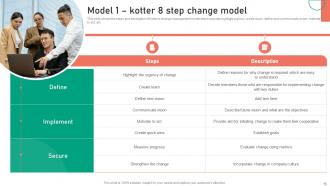
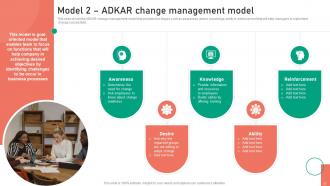
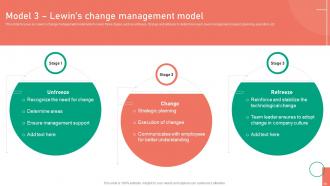
A change management plan helps to implement complex organizational changes that require a strategic plan to engage new processes through a Business transition approach. Our professionally designed Change Management Approaches to Achieve Desired Outcome deck aims to understand technology transformation models to implement change management strategies successfully. This Business transformation deck covers the present revenues, costs, and issues faced by the company due to outdated technologies and includes the solutions for a successful digital transformation plan. Additionally, this Business transition approach presentation showcases the technology change management models such as Kotters 8 Step Change Model, ADKAR model, and Lewins model and comparison among them for better technology transformation. Further, it captures change management phases, budget allocation, and tools comparison to implementing technology transformation and the impact of this on business revenues and costs. At last, it exhibits the dashboard and KPIs to track sales performance and measure the effectiveness of digital transformation. Get access to our powerful change management ppt now.
People who downloaded this PowerPoint presentation also viewed the following :
Content of this Powerpoint Presentation
Slide 1: This slide displays the title Change Management Approaches to Achieve Desired Outcome.
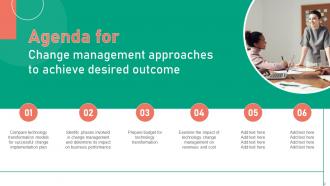
Slide 2: This slide displays the title Agenda for Change management approaches to achieve desired outcome.
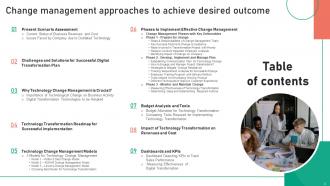
Slide 3: This slide exhibit table of content.
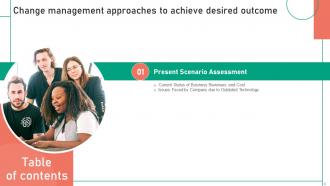
Slide 4: This slide exhibit table of content- Present Scenario Assessment.
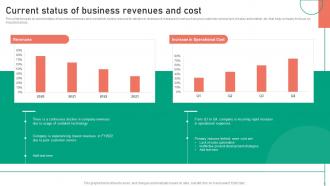
Slide 5: This slide focuses on current status of business revenues and cost which covers reasons for decline in revenues & increase in cost.
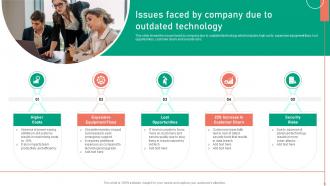
Slide 6: This slide shows the issues faced by company due to outdated technology.
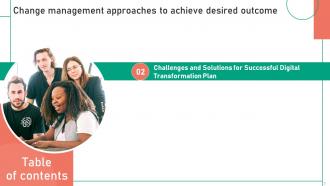
Slide 7: This slide exhibit table of content- Challenges and Solutions for Successful Digital Transformation Plan.
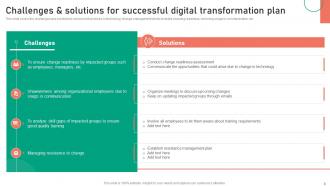
Slide 8: This slide covers the challenges and solutions to overcome that arises in technology change management.
Slide 9: This slide exhibit table of content- Why Technology Change Management is Crucial?
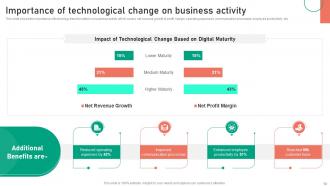
Slide 10: This slide shows the importance of technology transformation on business activity.
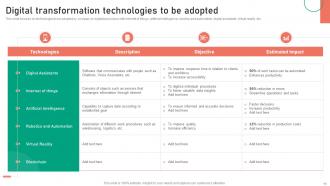
Slide 11: This slide focuses on technologies to be adopted by company to digitalize process.
Slide 12: This slide exhibit table of content- Technology Transformation Roadmap for Successful Implementation.
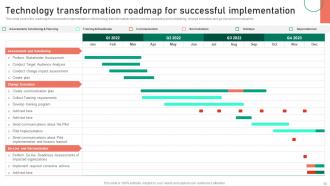
Slide 13: This slide covers the roadmap for successful implementation of technology transformation.
Slide 14: This slide exhibit table of content- Technology Change Management Models.
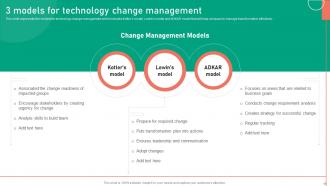
Slide 15: This slide represents the models for technology change management which includes Kotter’s model, Lewin’s model and ADKAR model.
Slide 16: . This slide shows the steps and description of Kotter’s change management model.
Slide 17: This slide shows the ADKAR change management model that includes five stages.
Slide 18: This slide focuses on Lewin’s change management model which covers three stages.
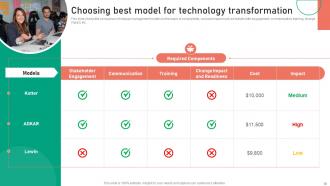
Slide 19: This slide shows the comparison of change management models on the basis of components, cost and impact.
Slide 20: This slide exhibit table of content- Phases to Implement Effective Change Management.
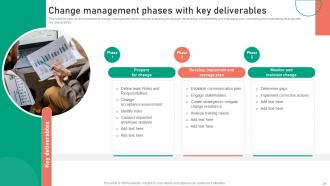
Slide 21: This slide focuses on three phases of change management which includes preparing for change, developing, implementing and managing plan, monitoring.
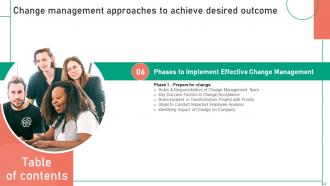
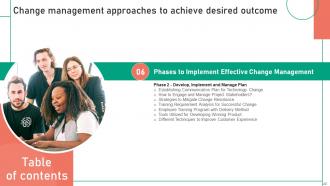
Slide 22: This slide discuss table of content that are to be discussed further.
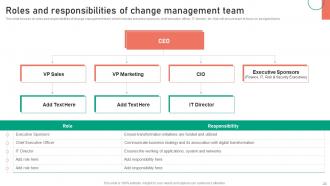
Slide 23: This slide focuses on roles and responsibilities of change management team.
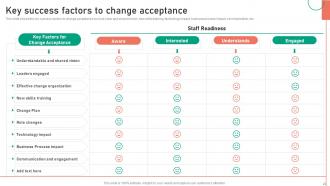
Slide 24: This slide shows the key success factors to change acceptance.
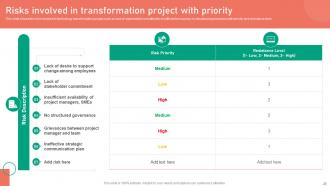
Slide 25: This slide shows the risks involved in technology transformation project.
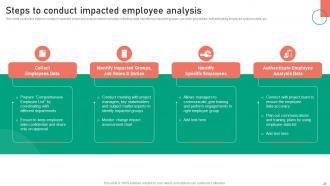
Slide 26: This slide covers the steps to conduct impacted employee analysis.
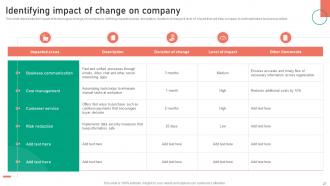
Slide 27: This slide represents the impact of technological change on company.
Slide 28: This slide showcase table of content that is to be discussed further.
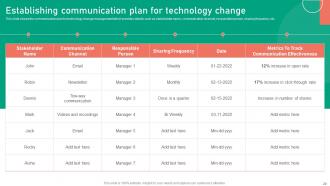
Slide 29: This slide shows the communication plan for technology change management which provides details.
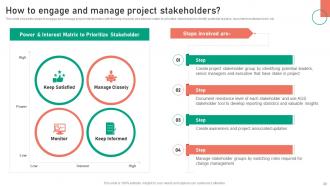
Slide 30: This slide shows the steps to engage and manage project stakeholders with the help of power and interest matrix to prioritize stakeholder.
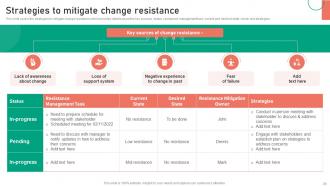
Slide 31: This slide covers the strategies to mitigate change resistance.
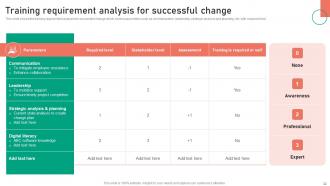
Slide 32: This slide shows the training requirement analysis for successful change which covers parameters such as communication, leadership, strategic analysis.
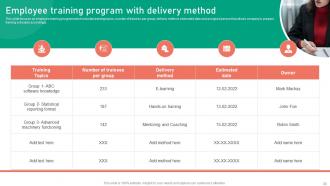
Slide 33: This slide focuses on employee training program which includes training topics, number of trainees per group, delivery method, estimated date.
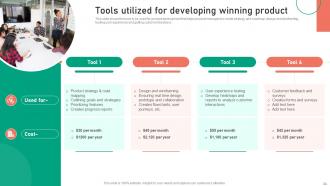
Slide 34: This slide shows the tools to be used for product development that helps product managers to create strategy and roadmap, design and wireframing.
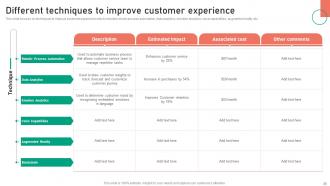
Slide 35: This slide focuses on techniques to improve customer experience.
Slide 36: This slide showcase table of content that is to be discussed further.
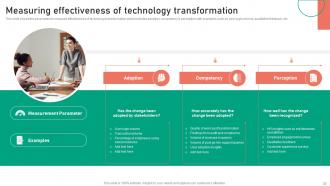
Slide 37: This slide shows the parameters to measure effectiveness of technology transformation.
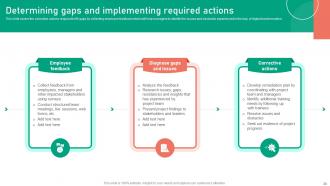
Slide 38: This slide covers the corrective actions required to fill gaps by collecting employee feedback.
Slide 39: This slide exhibit table of content- Budget Analysis and Tools.
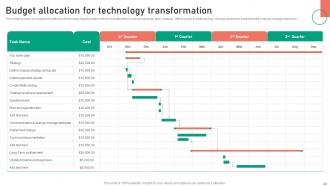
Slide 40: This slide focuses on budget allocation for technology transformation.
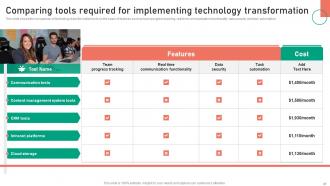
Slide 41: This slide shows the comparison of technology transformation tools on the basis of features.
Slide 42: This slide exhibit table of content- Impact of Technology Transformation on Revenues and Cost.
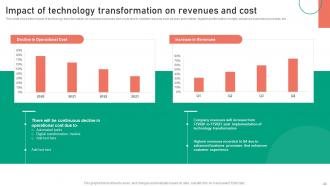
Slide 43: This slide shows the impact of technology transformation on business revenues and costs due to multiple reasons.
Slide 44: This slide exhibit table of content- Change management approaches to achieve desired outcome.
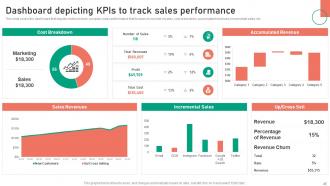
Slide 45: This slide covers the dashboard that depicts metrics to track company sales performance.
Slide 46: This slide focuses on dashboard that will help company to measure effectiveness of digital transformation.
Slide 47: This slide presents title for additional slides.
Slide 48: This is the icons slide.
Slide 49: This slide shows puzzle for displaying elements of company.
Slide 50: This slide depicts posts for past experiences of clients.
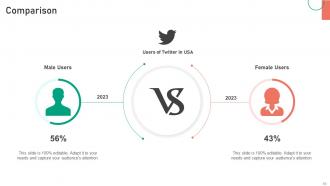
Slide 51: This slide showcase Comparison.
Slide 52: This slide showcase the title Our goal.
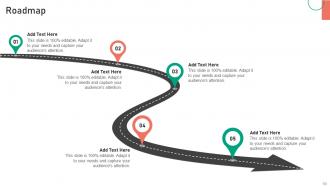
Slide 53: This slide shows roadmap of company.
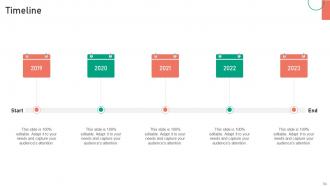
Slide 54: This slide exhibits yearly timeline of company.
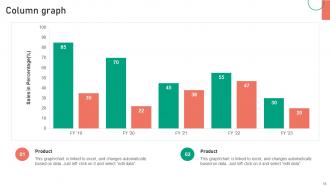
Slide 55: This slide presents Column graph for different products.
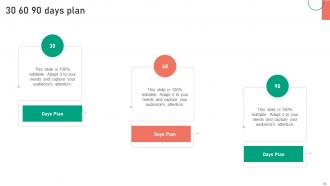
Slide 56: This slide depicts 30-60-90 days plan for projects.
Slide 57: This is thank you slide & contains contact details of company like office address, phone no., etc.
Change Management Approaches To Achieve Desired Outcome Powerpoint Presentation Slides with all 62 slides:
Use our Change Management Approaches To Achieve Desired Outcome Powerpoint Presentation Slides to effectively help you save your valuable time. They are readymade to fit into any presentation structure.








FAQs for Change Management Approaches To Achieve Desired Outcome
Key components of an effective change management strategy include stakeholder engagement, communication planning, training programs, leadership alignment, and resistance management protocols. These elements work together by building organizational buy-in, ensuring clear messaging throughout transitions, and equipping teams with necessary skills, with many companies finding that strategic combination of these components accelerates adoption while minimizing disruption.
Organizations measure change management success through key performance indicators like adoption rates, productivity metrics, employee engagement scores, customer satisfaction levels, and financial outcomes. These measurement frameworks enable leaders to track progress across departments, identify implementation gaps, and demonstrate ROI, with many companies finding that regular assessment ultimately delivers faster adaptation and sustained competitive advantage.
Communication serves as the foundation for successful organizational change by ensuring transparency, reducing resistance, building trust, and aligning stakeholders around shared objectives. Through strategic messaging, regular updates, and two-way dialogue, organizations streamline transitions, address employee concerns proactively, and maintain momentum, with many companies finding that comprehensive communication strategies significantly enhance adoption rates and minimize disruption during transformation initiatives.
Leaders can effectively address resistance by communicating transparently about change rationale, involving employees in planning processes, providing comprehensive training, and demonstrating quick wins early. Through active listening sessions and feedback mechanisms, organizations like healthcare systems and financial institutions successfully reduce anxiety while building buy-in, ultimately transforming resistance into collaborative engagement and sustainable adoption.
Common change management pitfalls include insufficient communication, lack of leadership commitment, inadequate stakeholder engagement, resistance underestimation, and poor training programs. These challenges often derail transformation initiatives by creating confusion, reducing buy-in, and limiting adoption rates, with many organizations finding that addressing these proactively through structured frameworks delivers smoother transitions and sustainable outcomes.
Technology supports change management through digital communication platforms, project management tools, training systems, analytics dashboards, and collaboration software. These solutions streamline stakeholder engagement, track implementation progress, and deliver real-time insights, with organizations in manufacturing and financial services finding that automated workflows and data-driven monitoring significantly enhance adoption rates while reducing resistance to organizational transformation.
Organizational culture significantly impacts change management through employee receptiveness, leadership support, communication patterns, and established workflows that either facilitate or resist transformation. While adaptive cultures with open communication and collaborative leadership typically embrace change more readily, rigid hierarchical environments often struggle with implementation, requiring targeted cultural interventions alongside change initiatives to ensure successful organizational transformation.
Stakeholder engagement strategies include regular communication workshops, collaborative planning sessions, feedback loops, role-specific training programs, and incentive alignment mechanisms. These approaches streamline buy-in by addressing concerns proactively, empowering participation in decision-making, and demonstrating clear value propositions, with many organizations finding that early stakeholder involvement significantly reduces resistance while accelerating implementation timelines.
The change curve model maps employee emotional journeys through transitions, progressing from initial shock and denial to gradual acceptance and commitment. During organizational restructuring, mergers, or technology implementations, employees typically experience predictable stages including resistance, exploration, and ultimately integration, with effective change management strategies helping accelerate movement through these phases while minimizing productivity disruptions.
Best practices for training and development during change include conducting skills gap assessments, creating flexible learning pathways, implementing mentorship programs, providing just-in-time training, and establishing continuous feedback loops. These approaches enhance employee adaptability by building confidence, reducing resistance, and accelerating skill acquisition, with many organizations finding that strategic training investments ultimately deliver smoother transitions and improved performance outcomes.
Effective implementation requires strong leadership commitment, clear communication strategies, comprehensive training programs, and systematic progress monitoring throughout each framework stage. Organizations like healthcare systems and manufacturing companies find success by tailoring these frameworks to their specific culture, engaging employees early in the process, and celebrating incremental wins, ultimately delivering smoother transitions and higher adoption rates.
Organizations should track employee adoption rates, productivity metrics, customer satisfaction scores, timeline adherence, and cost variance to assess change management impact. These measurements enable leaders to identify resistance patterns, optimize resource allocation, and demonstrate ROI, with many companies finding that tracking both quantitative outcomes and qualitative feedback ultimately delivers comprehensive insights into transformation effectiveness.
Feedback loops enhance change management by enabling continuous monitoring, identifying resistance early, and facilitating real-time adjustments to strategies. These mechanisms streamline communication between leadership and employees, accelerate problem resolution, and ultimately deliver higher adoption rates, with many organizations finding that systematic feedback collection reduces implementation timelines while improving overall change success rates.
Storytelling enhances change acceptance by creating emotional connections, making abstract concepts relatable, and demonstrating real-world success scenarios that employees can envision themselves experiencing. Through compelling narratives about transformation journeys, organizations help teams understand the "why" behind changes, reduce resistance through shared experiences, and build confidence by showcasing how similar companies successfully navigated comparable transitions, ultimately accelerating adoption and engagement.
Emotional intelligence enables change leaders to navigate resistance, build trust, and communicate vision effectively by recognizing team emotions, managing their own reactions, and adapting their approach accordingly. Leaders with high emotional intelligence streamline transitions through empathetic communication, proactive conflict resolution, and strategic relationship building, ultimately delivering higher adoption rates and sustained organizational transformation.
-
Very well designed and informative templates.
-
Nice and innovative design.