

CSAT Improvement Process To Generate Customer Loyalty




Try Before you Buy Download Free Sample Product
 Impress Your
 Audience
 100%
100% Editable
 Save Hours
 of Time


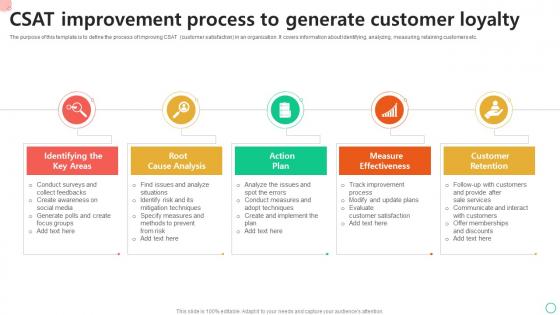
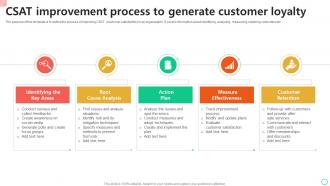
The purpose of this template is to define the process of improving CSAT customer satisfaction in an organization. It covers information about identifying, analyzing, measuring, retaining customers etc.
People who downloaded this PowerPoint presentation also viewed the following :
CSAT Improvement Process To Generate Customer Loyalty with all 6 slides:
Use our CSAT Improvement Process To Generate Customer Loyalty to effectively help you save your valuable time. They are readymade to fit into any presentation structure.





FAQs for CSAT Improvement Process To
Response time is huge for CSAT - nobody wants to wait around forever. How well you actually solve their problem matters just as much though. Make the whole thing easy and don't sound robotic when you talk to them (I swear some support reps read straight from scripts and it shows). Your product needs to work as advertised too, obviously. Here's what I'd do: track your scores at each step of the customer journey and spot where things get messy. Focus on fixing your worst areas first since that's where you'll see results fastest.
Track your CSAT scores over time but break them down by touchpoints - support tickets, product features, different customer segments. The overall number alone won't tell you much. Segment by team or customer type to find patterns. Honestly, the open-ended responses are where the real insights hide - they explain the *why* behind your scores. Set up monthly reviews (or whatever cadence works) to dig into both numbers and comments together. Then you can actually connect improvements back to score changes. Oh, and don't ignore the qualitative stuff - I've seen too many teams just obsess over the metrics.
Dude, this is such a big deal for CSAT. When your employees actually give a shit about their job, customers can totally tell. They'll be more patient, think outside the box for solutions - the whole nine yards. People who feel valued at work don't just go through the motions, you know? They stick around longer too, which means customers aren't constantly dealing with newbies who have no clue what's going on. Honestly, I'd start by just asking your team what pisses them off most about their day-to-day. Fix those headaches and you'll see both happier employees and better customer scores.
Okay so here's what I'd do - set up those quick surveys right after support calls or chats. Keep them crazy short though, like 1-2 questions tops or nobody will bother. Hook the data straight into your dashboards so you're seeing problems as they happen, not finding out about them three weeks later when you can't do anything about it. My old team actually caught some training issues this way before they got out of hand. Oh and start with whatever channel gets the most traffic first - makes sense right? Just make sure someone's actually checking those alerts every day or what's the point.
Honestly, product quality is probably your biggest CSAT lever. When stuff works the same way every time, customers actually trust you. But here's the thing - even being good 80% of the time isn't enough. That one bad experience? It'll wreck everything else you've built. I've seen it happen so many times. You need rock-solid processes so customers know what they're getting. Consistency beats perfection, but you really can't afford to be inconsistent. Makes sense why companies obsess over quality control.
Chatbots are a game-changer for 24/7 support - customers love getting instant answers. Your CRM system can track all those interactions and help you personalize responses better. In-app surveys are great for catching satisfaction issues right when they happen. Oh, and analytics platforms? They'll show you problem patterns before customers start complaining en masse, which honestly saves so much headache later. Self-service portals work well too since some people just prefer figuring things out themselves. I'd say pick whatever fixes your biggest complaint first, then add more tools gradually.
Honestly, the worst thing you can do is obsess over the numbers without understanding what's actually happening. I've watched teams completely freak out over like 3 bad reviews - don't be those people. Survey fatigue is real too, so don't blast customers constantly or your scores will tank. Ask specific questions instead of generic "how was your experience" garbage. What touchpoint sucked? What would've made it better? Target your worst-performing areas first - that's where you'll see the biggest wins. Oh, and sample size matters way more than most people think.
Honestly, people just want to feel like you actually know them, you know? When your support team can pull up someone's history and say "oh hey, I see this happened to you last month" - customers eat that up. It's way better than making them repeat their whole life story again. Your responses end up being way more on-point too since you're not shooting in the dark. I've seen it make a huge difference in satisfaction scores. Just make sure your agents can actually access that customer info easily before they jump on calls - otherwise it's all pointless.
Honestly, you gotta go beyond just staring at those bad numbers. Break down your data first - maybe it's one product that's tanking everything, or phone support sucks while chat is fine. Then actually talk to the angry customers. I know, I know, it's painful, but surveys or quick calls will tell you way more than spreadsheets ever will. Start grouping their complaints into themes and tackle the big ones first. Oh, and here's something most people forget - circle back with customers when you fix their issues. They'll remember that you listened.
Oh man, CSAT gets tricky when you're dealing with different cultures. Japanese customers want super polite, detailed responses - like, they expect you to explain everything. Germans? Total opposite. They just want you to fix it fast and skip the small talk. We Americans love that friendly chitchat, but try that in some European markets and they'll think you're being fake. I remember when we rolled out our bubbly US support style globally... yikes, our European scores dropped hard. Now we actually train teams differently for each region. Also, don't trust the numbers at face value - a 4.5 in one country might be terrible in another.
Oh man, onboarding is such a game-changer for customer satisfaction. Seriously, it's probably the best early signal you'll get about how happy people will be later on. The numbers are wild too - customers who love their onboarding experience typically score like 30-40% higher on satisfaction surveys months later. Makes total sense though, right? Nobody wants to start off confused and frustrated. I learned this the hard way at my last job actually. But yeah, definitely worth tracking those first few interactions and smoothing out whatever's making people annoyed early on.
Basically, check out what your competitors are doing right (and wrong). Pick 2-3 companies in your space and really dig into their customer experience. Look at their response times, how they talk to customers, their help sections - all that stuff. You can compare your CSAT scores to theirs and see where you're falling behind. Honestly? Half the time you'll find super obvious fixes just sitting there on their support pages. I always think it's wild how companies miss this. Map out their whole customer journey and steal the good ideas. It's like having a cheat sheet for what actually works.
Hey! So beyond CSAT, definitely track NPS and CES too. NPS tells you if people would actually recommend you to friends. CES measures how much effort customers had to put in - and honestly, I've seen this predict churn way better than CSAT sometimes. First contact resolution rates matter a ton. Average resolution time too. Oh, and don't sleep on the behavioral stuff - like how people are actually using your product and whether support tickets are trending up or down. The magic happens when all these numbers start moving in the right direction together, not just one.
Honestly, you've gotta make customer focus everyone's problem, not just a motivational poster thing. Share real customer complaints with your whole team - engineers code totally differently when they see actual users struggling. Train people to ask "how's this gonna affect customers?" before deciding anything. Sounds weird, but I've watched CEOs read customer emails in meetings and it actually moves the needle. Post those satisfaction scores where everyone can see them. Oh, and celebrate when they go up - people need to feel good about wins. The biggest thing though? Let your team actually fix problems instead of bouncing customers around departments forever.
Honestly? Focus on communication skills first - that's where you'll see the biggest impact. Active listening and de-escalation training help customers feel actually heard, which is half the battle. Product knowledge comes next because nobody wants to get bounced around to three different people (ugh). Emotional intelligence stuff helps your team read the room better too. Oh, and cross-training on different systems cuts down those awkward hold times that make people lose their minds. Start with the communication basics since they apply everywhere, then fill in technical gaps as you spot them. You'll probably notice CSAT scores improve pretty quickly.
-
“Love it! I was able to grab an exciting proposal because of SlideTeam.”
-
Definitely a time saver! Predesigned and easy-to-use templates just helped me put together an amazing presentation.