


Demographic market segmentation with customer profile




Try Before you Buy Download Free Sample Product
 Impress Your
 Audience
 100%
100% Editable
 Save Hours
 of Time


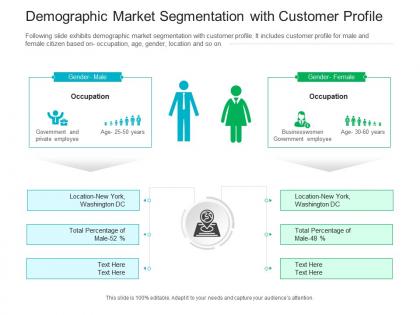
Following slide exhibits demographic market segmentation with customer profile. It includes customer profile for male and female citizen based on occupation, age, gender, location and so on.
People who downloaded this PowerPoint presentation also viewed the following :
Demographic market segmentation with customer profile with all 2 slides:
Use our Demographic Market Segmentation With Customer Profile to effectively help you save your valuable time. They are readymade to fit into any presentation structure.
FAQs for Demographic market segmentation
You'll mainly look at age, gender, income, education, job type, family size, and where people live. Basic stuff but it works. Marital status, ethnicity, religion too if it makes sense for your product. Here's the thing though - don't just collect everything. Pick what actually affects buying decisions. Like skincare brands obsess over age for obvious reasons, but if you're selling project management software to companies? Age is pretty much irrelevant. I'd start by figuring out which demographic stuff directly impacts whether someone buys from you, then build your customer groups around those factors.
Start with what you've already got - check your CRM for customer data from signups. Google Analytics and Facebook Insights are free and show age/gender/location stuff (honestly Facebook's data is pretty scary good). Surveys work great too, either through email or even phone calls if you want deeper info. Your website analytics probably have more than you think. Just be upfront about collecting data and follow privacy rules - people get weird about that stuff now. Oh and registration forms are super easy wins for basic demographics.
Age matters a ton for segmentation because it shapes how people buy stuff and what they care about. Different generations have totally different shopping habits and media preferences - like, obviously Gen Z and Boomers aren't browsing the same way. But don't just throw everyone into basic age groups. Life stage matters too. A 25-year-old with a new baby? Way different needs than a 25-year-old who's single and climbing the career ladder. I'd start by pulling your customer data into age ranges, then dig into what each group's actually buying. That's where the real patterns show up.
Dude, you can't just look at age and income and think you're done. Cultural stuff totally changes how people actually behave - like, a 30-year-old in a collectivist culture might hate the same ad that works perfectly for individualistic groups. Religious background, language, even how their generation grew up compared to their parents... all that matters way more than basic demographics. I learned this the hard way on a project last year. Map out the cultural context first, then figure out your segments. Otherwise you're basically guessing.
Dude, demographic segmentation is seriously worth doing. You can actually speak to different groups instead of blasting everyone with the same boring stuff. Like, send millennials mobile-friendly content while targeting high earners with your premium products. Makes total sense, right? Your open rates and click-throughs will actually improve because people feel like you get their situation. I'd start small though - pick maybe 2 or 3 key groups and test different messages with each. Way better than the spray-and-pray approach most people do.
So you'll want to focus on age, gender, income, education, occupation, family size, and where people live. Most analytics tools already have these built in, which is super helpful. Marital status and life stage work too - like are they new parents or empty nesters? Here's the thing though: only pick variables that actually matter for your product. If age doesn't change how people buy your stuff, don't bother segmenting by it. I'd start with maybe 2-3 variables and see what comes up. Way easier than going crazy with tons of data points right off the bat.
Once you figure out who's actually buying your stuff, everything gets easier. Messaging, where you advertise, how you position things - it all clicks into place. Say your data shows millennials are your main customers. You'd probably dump print ads and go heavy on Instagram with content that actually means something to them. Pricing, features, even where you put your stores can shift based on age and income patterns. Oh, and don't just check this data once and forget about it - customer bases change constantly. Honestly, I'd just pick your two biggest demographic insights and test one small campaign tweak this month.
Honestly, the biggest pain with demographics is they only show you *who* buys stuff, not *why*. Like, you might have a 25-year-old and 45-year-old buying for the exact same reasons, but you'd never know just looking at age groups. People are way more complicated than their basic stats anyway - everyone's all over the place these days. Oh, and make sure your demographic data isn't trash. Old or incomplete info will totally mess you up. Start with demographics but then add in the behavioral stuff and what actually motivates people. That's where the real insights are.
So basically, tech can crunch way more data than you'd ever handle manually - like purchase history, browsing habits, social media stuff. Machine learning spots patterns you'd completely miss. The cool part is it pulls from different sources simultaneously to double-check your segments. Way less human error than old-school surveys too. Honestly, the hardest part is just picking which analytics platform to start with (there's like a million options). Once you connect it to your CRM, it'll keep updating segments automatically as new data comes in. Just start simple and add more tools later.
Honestly, social media analytics are a game changer for figuring out your audience. Instagram Insights and Facebook Audience Insights will show you everything - age, location, interests, behaviors. It's crazy how much people share without realizing it. You get real-time data that would've taken forever to collect through surveys or whatever. The way people engage with posts, what hashtags they use, their content preferences - it paints this super detailed picture that's way better than basic demographic stuff. I spent way too much time on this last week, but the insights you get are actually worth it. Just dive into your platform analytics first.
So demographic data is basically your cheat sheet for figuring out what different groups actually want. Check where you're missing entire age groups or income levels - that's where the money is. Millennials and boomers want completely different things from the same product, which honestly makes total sense when you think about it. Map out your current stuff against different segments first. You'll spot gaps pretty quick. Then use that to decide what features to build next, how to price things, and where to position new products. It's like having a crystal ball but with actual data behind it.
Oh man, retail and healthcare are crushing it with this stuff. Banks do it constantly - different products for different income brackets. Beauty companies? They're basically built on demographic targeting, which honestly makes total sense. You've got clothing brands going after specific age groups, healthcare focusing on life stages, that whole thing. Automotive and real estate use it heavily too. Really, any industry where your age, income, or family situation changes what you actually want to buy. If demographics naturally drive your customers' decisions, you're gonna see huge benefits from segmenting that way.
Dude, geography totally changes everything about your demographics. That 25-year-old making $50k? In Manhattan they're broke, but in rural Ohio they're doing pretty well. Same person, completely different reality. Regional stuff acts like this weird filter that makes age matter more in some places while income drives everything elsewhere. Honestly, it's kinda fascinating how location warps behavior like that. You've gotta map your demographic data against where people actually live to catch these patterns. Then adjust your strategy for each region instead of assuming everyone's the same everywhere.
Honestly, just don't be an asshole about it. Get consent before collecting demographic stuff and be upfront about how you'll use it. I've watched brands get absolutely destroyed online for targeting that felt gross or exploitative. Also think about whether you're accidentally shutting out certain communities - that can backfire hard. Don't reinforce shitty stereotypes either. My rule of thumb? If you'd be embarrassed seeing your targeting strategy as a headline, probably don't do it. Privacy matters too obviously.
Dude, start with what you've already got - Google Analytics shows visitor age/gender/location for free. Social media insights are crazy useful too. I was scrolling through our Facebook data last week and honestly found some weird patterns I never expected. Just survey your current customers with Google Forms or something. Basic stuff like age and income ranges will show you trends pretty quick. Make 2-3 simple customer profiles, then test different email subject lines or ad copy for each group. You'll see what clicks with who. It's actually kinda fun once you get into it.
-
Great quality product.
-
Use of different colors is good. It's simple and attractive.