


Employee promotion approval process chart




Try Before you Buy Download Free Sample Product
 Impress Your
 Audience
 100%
100% Editable
 Save Hours
 of Time


Our Employee Promotion Approval Process Chart are pretty amiable. You will feel in good form.
People who downloaded this PowerPoint presentation also viewed the following :
Content of this Powerpoint Presentation
Description:
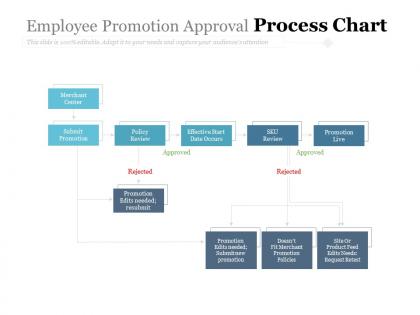
The image depicts an Employee Promotion Approval Process Chart which outlines the steps involved in reviewing and approving an employee promotion within an organization. The process chart consists of several key steps:
1. Merchant Center:
It seems to be the starting point where the process initiates.
2. Submit Promotion:
A phase where a promotion proposal is submitted for review.
3. Policy Review:
The next step where the submitted proposal is reviewed against company policies.
4. Effective Start Date Occurs:
A condition indicating that once approved, a start date for the promotion is established.
5. SKU Review:
Stands for Stock Keeping Unit review, which might be a review of the products or services related to the promotion.
6. Promotion Live:
The final approval step where the promotion goes live.
7. Rejected and Promotion Edits needed; resubmit:
If the promotion is rejected at the policy review or after the SKU review, it requires edits and resubmission.
8. Doesn't Fit Merchant Promotion Policies and Site Or Product Feed Edits Needed; Request Retest:
Specific reasons for rejection which warrant edits to comply with promotion policies or site/product specifications.
Use Cases:
Potential industries for application:
1. Retail:
Use: Streamlining promotion approval processes for retail sales.
Presenter: Marketing Manager.
Audience: Sales and Marketing Team.
2. Human Resources:
Use: For structuring the employee promotion workflow.
Presenter: HR Manager.
Audience: HR Department.
3. Technology:
Use: Implementing software development promotions and updates.
Presenter: Product Manager.
Audience: Development Team.
4. Education:
Use: Managing approval for educational programs or faculty promotions.
Presenter: Academic Dean.
Audience: Administrative Staff.
5. Healthcare:
Use: Overseeing the approval process for healthcare services promotions.
Presenter: Hospital Administrator.
Audience: Medical and Administrative Staff.
6. Manufacturing:
Use: Approval process for new product promotions or special manufacturing campaigns.
Presenter: Production Manager.
Audience: Production and Marketing Departments.
7. Hospitality:
Use: Procedure for rolling out promotions for hotel services or special events.
Presenter: Hospitality Manager.
Audience: Hotel Management and Marketing Team.
Employee promotion approval process chart with all 5 slides:
Our Employee Promotion Approval Process Chart are designed to deliver. They bring achievements to your doorstep.
FAQs for Employee promotion
Focus on performance ratings from the last year or two first. Then look at leadership potential - are they mentoring anyone or stepping up when needed? Skills for the new role matter obviously, plus how long they've been around. Cultural fit is huge though - I've seen companies promote brilliant jerks and it backfires every time. Check if they collaborate well and actually want more responsibility. Any extra training they've done shows initiative too. Document everything in a simple rubric so people can't complain about favoritism later. Makes the whole process way less stressful for you.
Honestly, just put everything out in the open from the start. Like, post what each role actually needs, explain who makes the calls and how. I've worked places where promotions were this weird mystery box - drives people nuts. Give them timelines so they're not just sitting there wondering. And definitely explain the "why" behind decisions, whether someone got it or not. Document stuff as you go obviously, but the real thing is just talking to people regularly. Oh and audit whatever mess you've got now first - you'll probably spot some quick wins right away.
Your performance review is basically your promotion audition. Managers dig through these to compare people and sell their picks to the higher-ups. I've watched solid employees get skipped over because their reviews sucked at showing their real impact - even though everyone knew they killed it. So annoying but that's corporate life. You gotta sell yourself hard in there. List your wins with numbers if you can. Then directly tie those accomplishments to whatever role you're gunning for. Don't assume they'll connect the dots themselves.
Okay so first thing - get multiple people involved and use the same criteria for everyone. Don't go with your gut because honestly? That's usually just bias talking. I've watched so many "culture fit" rejections that were really just people picking whoever reminded them of themselves. Try reviewing resumes without names if you can. Write down why you made each choice too. Mixed promotion panels catch stuff you'd totally miss otherwise. Bottom line: if you can't explain with real examples why Jane beat out Mike for the role, something's probably off there.
Honestly, I'd start with regular 1:1s where you actually document their goal progress - sounds boring but it's clutch when promo time rolls around. Mix in some peer feedback surveys and whatever KPIs make sense for their role. Performance reviews are obvious, but 360-degree feedback is where you get the real tea on how other teams see them. Track project completion rates and client satisfaction too. Oh, and note any leadership stuff they jump on - that always looks good. Just throw it all in a simple spreadsheet quarterly so you're not scrambling later trying to remember what they accomplished.
Honestly, just put all the promotion info out there where people can actually find it. Your intranet should have clear career ladders - like what skills you need, timelines, all that stuff. Too many places hide this in HR somewhere and wonder why people get frustrated. Have managers do regular sessions explaining how to move up, and definitely cover growth plans in those one-on-ones. Oh, and create some simple guide that basically says "want this job? Here's your roadmap" - then actually share it with everyone. People can't hit targets they can't see, you know?
Dude, you should totally jump on those programs if your company has them. The stats are pretty wild - people who do development stuff get promoted 40-60% more than those who don't. Makes sense though, right? You're literally showing bosses you want to grow. Skills training, leadership workshops, mentorship - all that actually builds up your internal reputation. Oh and here's the thing nobody talks about enough: you get face time with senior people who decide promotions. That networking aspect is huge. I've seen it happen so many times where program participants move up way faster. Don't sleep on it!
Honestly, peer feedback matters way more than people think. Your boss sees you in meetings looking polished, but your coworkers? They know if you actually help out or just talk a good game. Companies do formal 360 reviews or just casually ask around during promotion talks. For leadership roles especially, this stuff is huge - I mean, who wants to promote someone everyone secretly hates working with, right? Focus on being genuinely decent to work with. Build real relationships. Those voices carry serious weight when decisions get made, and you don't want them working against you.
Just be super transparent about everything - when decisions happen, what they're looking for, all that stuff. Nobody wants to sit around for weeks wondering if they're getting promoted or not (honestly the waiting is torture). Tell people upfront what the timeline looks like and what criteria you're using. After decisions are made, give real feedback to everyone who applied. Not just "great job, maybe next time" but actual specifics about what they need to work on. Even if someone gets passed over, they should know exactly how to improve for the next round. Speed matters too - don't drag it out forever.
Honestly, once a year works for most places. Some companies do it twice if they're really organized, but annual is pretty standard. You'll want to time it with performance reviews since you're collecting similar info anyway - why make extra work? The main thing is staying consistent so people know what to expect and can prep accordingly. I mean, some startups do quarterly ones but that seems like a lot unless you're growing crazy fast. Stick with yearly but maybe throw in some casual mid-year chats to keep things moving. That's what I'd do anyway.
Look, every company rewards different stuff when promotion time comes around. Your workplace obsessed with teamwork? Better nail those collaboration skills. Numbers-focused environment? Your results need to be killer. Honestly, I've noticed some places care more about leadership potential while others want you to be a technical wizard. Each company's got their own weird formula for who deserves to move up. Watch who actually gets promoted around you - that's the real tell. What did they do? Then start doing those same things consistently. It's kinda like cracking a code, but once you figure out what your culture values, you're golden.
Honestly, you've gotta have real career talks with your team - not those awkward annual reviews that everyone dreads. Ask them where they want to be in 2-3 years, then figure out what steps will actually get them there. Map out clear paths showing how they can move up, and don't sugarcoat what skills they'll need to develop. Here's the thing though - this only works if you can match open roles to what they've told you they want. I mean, why promote someone into a job they'll hate, right? Work backwards from their goals to create those stepping stones.
Okay so three main things to cover with your managers. Start with fair evaluation techniques - teach them to use actual criteria instead of just going with their gut. Communication skills are huge too since delivering bad news is awkward as hell. Also can't skip the legal compliance stuff because discrimination lawsuits are no joke. Make sure they know your company's promotion rules and how to document everything properly. Role-playing helps a lot with the weird conversations. Half-day workshop should cover the basics pretty well.
Honestly, going digital with promotions is a game changer. HR platforms can automate all the boring tracking stuff and set up review cycles that actually run themselves. Managers hate filling out paperwork (who doesn't?), so standardized digital forms make their lives easier too. Plus you get consistent criteria across teams instead of each department doing their own random thing. The reporting features are clutch for making decisions transparent. Just make sure whatever system you pick plays nice with your existing HR tools - nobody wants to deal with five different platforms that don't talk to each other.
Ugh, the worst thing is when companies don't set clear criteria upfront - I've watched so many talented people quit over sketchy promotion processes. Document everything and give feedback to all candidates, not just whoever gets picked. Also, don't just reward past performance; think about what the new role actually needs. Playing favorites is obvious and kills morale fast. If you claim leadership matters, then use the same framework for everyone. Consistency is everything here. Oh, and definitely ask recent candidates what felt off about your process - they'll tell you exactly where it's broken.
No Reviews