

Employer Branding Action Plan To Gain Competitive Advantage Powerpoint Presentation Slides




Try Before you Buy Download Free Sample Product
 Impress Your
 Audience
 100%
100% Editable
 Save Hours
 of Time


Employee Value Proposition is an ecosystem of support, recognition, and values that an employer provides to employees to achieve their highest potential at work. It is a distinctive set of advantages an employee receives in return for the skills and capabilities they bring to the business. With our professionally designed template on Employer Branding Action Plan to Gain Competitive Advantage, any company can attract highly skilled job candidates and improve employee retention. The Employee Retention Strategy deck evaluates the current scenario by analyzing the effectiveness of organizational culture and industry assessment to determine the business position among competitors and then identifies critical factors that lead to employee dissatisfaction. It then showcases the process of building employee value propositions along with showing a questionnaire to measure the overall employee experience and analyzing the survey results by further providing an overview of various channels and platforms to promote employee value propositions throughout the recruitment journey. Furthermore, Our Employer Branding presentation highlights the impact of implementing employee value proposition at business, measures the business position against relative participants in the market, and surveys existing employees. Lastly, this PPT outlines various dashboards for human resource key personnel to track and monitor employee performance. Get access now.
People who downloaded this PowerPoint presentation also viewed the following :
Content of this Powerpoint Presentation
Slide 1: This slide displays the title Employer Branding Action Plan to Gain Competitive Advantage.
Slide 2: This slide displays the title AGENDA.
Slide 3: This slide exhibit table of content.
Slide 4: This slide exhibit table of content.
Slide 5: This slide showcase table of content that are to be discuss further.
Slide 6: The following slide exhibits current situation analysis of business to evaluate and identify improvement areas.
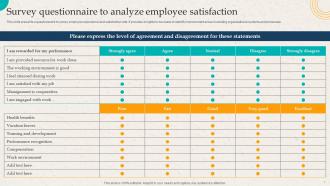
Slide 7: This slide presents a questionnaire to survey employee experience and satisfaction rate.
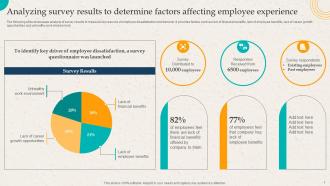
Slide 8: The following slide showcases analysis of survey results to measure key reasons of employee dissatisfaction and turnover.
Slide 9: This slide showcase table of content that are to be discuss further.
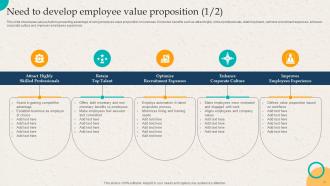
Slide 10: This slide showcases various factors presenting advantage of using employee value proposition on business.
Slide 11: This slide showcases various factors presenting advantage of using employee value proposition on business.
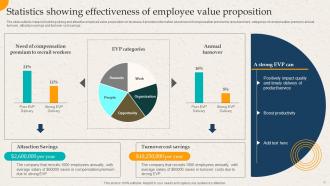
Slide 12: The slide outlines impact of building strong and attractive employee value proposition on business.
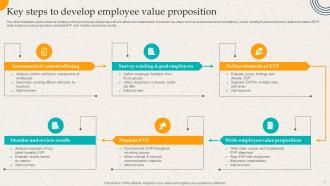
Slide 13: The slide illustrates various steps of creating a strong employee value proposition to attract and retain talent.
Slide 14: This slide showcase table of content that are to be discuss further.
Slide 15: The following slide highlighting five key areas to focus while creating an employee value proposition.
Slide 16: This slide showcase table of content that are to be discuss further.
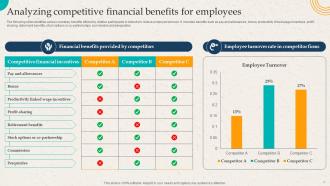
Slide 17: The following slide identifies various monetary benefits offered by relative participants in industry to reduce employee turnover.
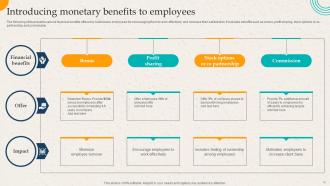
Slide 18: The following slide presents various financial benefits offered by business to employees for encouraging them to work effectively and increase their satisfaction.
Slide 19: This slide showcase table of content that are to be discuss further.
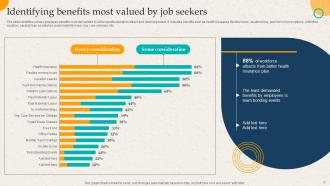
Slide 20: The slide identifies various employee benefits most demanded by skilled professionals to attract and retain top talent.
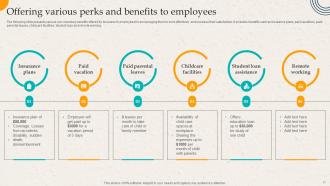
Slide 21: The following slide presents various non monetary benefits offered by business to employees for encouraging them to work effectively and increase their satisfaction.
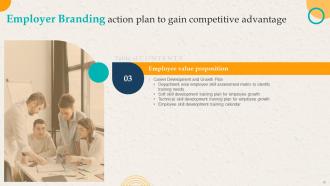
Slide 22: This slide showcase table of content that are to be discuss further.
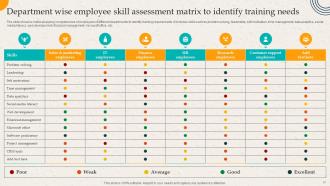
Slide 23: The slide shows a matrix analyzing competencies of employees of different departments to identify training requirements.
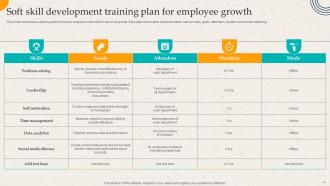
Slide 24: This slide showcases a training plan to improve employee soft skills for personal growth.
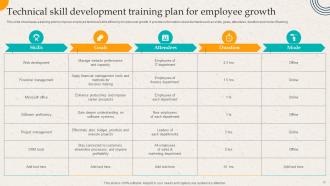
Slide 25: This slide showcases a training plan to improve employee technical skills efficiency for personal growth.
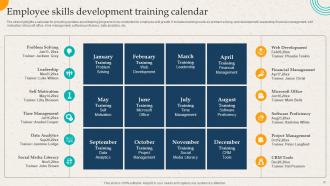
Slide 26: The slide highlights a calendar for providing updates about training programs to be conducted for employee skill growth.
Slide 27: This slide showcase table of content that are to be discuss further.
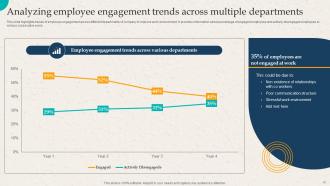
Slide 28: This slide highlights trends of employee engagement across different departments of company to improve work environment.
Slide 29: This slide highlights various issues or challenges faced by employees at workplace.
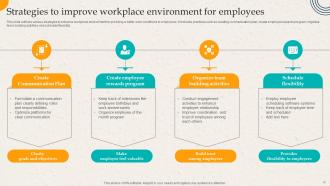
Slide 30: This slide outlines various strategies to enhance workplace environment for providing a better work conditions to employees.
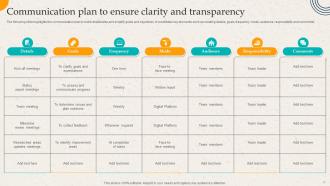
Slide 31: The following slide highlights the communication plan to build relationship and simplify goals and objectives.
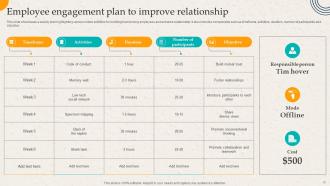
Slide 32: This slide showcases a weekly plan highlighting various indoor activities for building trust among employees and enhance relationship.
Slide 33: This slide showcase table of content that are to be discuss further.
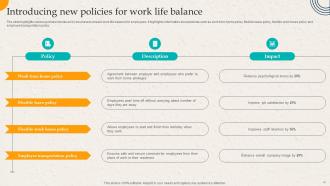
Slide 34: The slide highlights various policies introduced by business to ensure work life balance for employees.
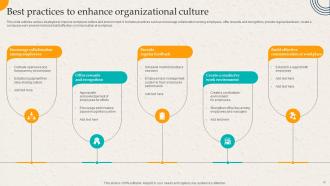
Slide 35: This slide outlines various strategies to improve workplace culture and environment.
Slide 36: This slide showcase table of content that are to be discuss further.
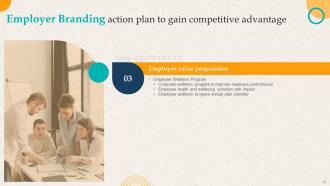
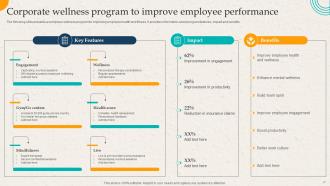
Slide 37: The following slide presents a workplace wellness program for improving employee health and fitness.
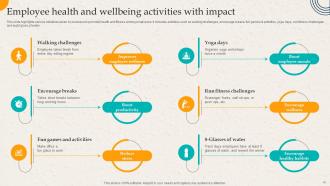
Slide 38: This slide highlights various initiatives taken by business to promote health and fitness among employees.
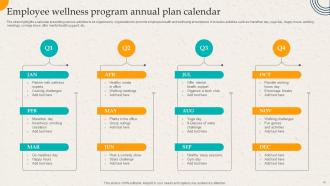
Slide 39: The slide highlights a calendar presenting various activities to be organized by organization to promote employee health and wellbeing at workplace.
Slide 40: This slide showcase table of content that are to be discuss further.
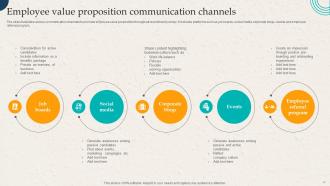
Slide 41: The slide illustrates various communication channels to promote employee value proposition throughout recruitment journey.
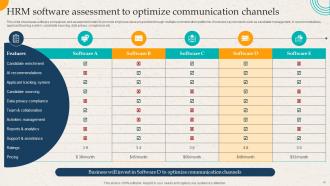
Slide 42: This slide showcases software comparison and assessment matrix to promote employee value proposition through multiple communication platforms.
Slide 43: This slide showcase table of content that are to be discuss further.
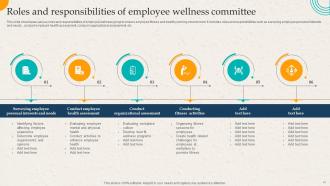
Slide 44: This slide showcases various roles and responsibilities of employee wellness group to ensure employee fitness and healthy working environment.
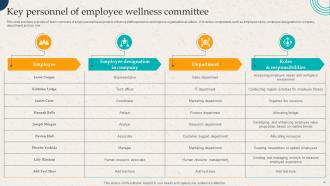
Slide 45: This slide provides overview of team members of employee wellness group to enhance staff experience and improve organizational culture.
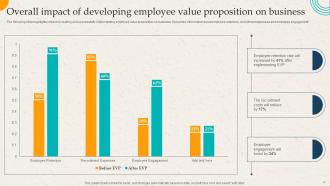
Slide 47: The following slide highlights impact of creating and successfully implementing employee value proposition on business.
Slide 48: The following slide highlights effects of promotion employee value proposition through various communication platforms.
Slide 49: This slide showcase table of content that are to be discuss further.
Slide 50: This slide showcases a dashboard presenting various metrics to measure and analyze employee overall satisfaction rate.
Slide 51: This slide showcases a dashboard to supervise and monitor employee retention and turnover score.
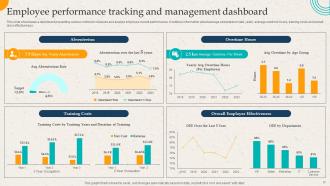
Slide 52: This slide showcases a dashboard presenting various metrics to measure and analyze employee overall performance.
Slide 53: This is the icons slide.
Slide 54: This slide presents title for additional slides.
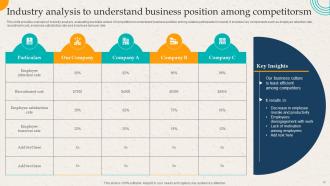
Slide 55: This slide provides overview of industry analysis, evaluating business culture of competitors to understand business position among relative participants in market.
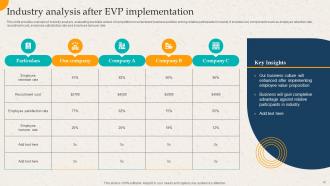
Slide 56: This slide provides overview of industry analysis, evaluating business culture of competitors to understand business position among relative participants in market.
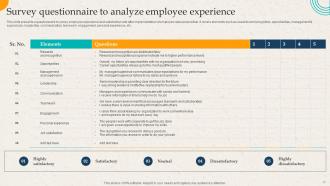
Slide 57: This slide presents a questionnaire to survey employee experience and satisfaction rate after implementation of employee value proposition.
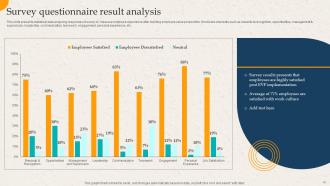
Slide 58: This slide presents statistical data analyzing responses of survey to measure employee experience after building employee value proposition.
Slide 59: This slide displays Venn.
Slide 60: This slide exhibits yearly timeline of company.
Slide 61: This slide showcase title Quotes.
Slide 62: This slide depicts 30-60-90 days plan for projects.
Slide 63: This slide depicts posts for past experiences of clients.
Slide 64: This slide exhibit Idea generation.
Slide 65: This slide showcase Target.
Slide 66: This showcase display SWOT analysis.
Slide 67: This is thank you slide & contains contact details of company like office address, phone no., etc.
Employer Branding Action Plan To Gain Competitive Advantage Powerpoint Presentation Slides with all 72 slides:
Use our Employer Branding Action Plan To Gain Competitive Advantage Powerpoint Presentation Slides to effectively help you save your valuable time. They are readymade to fit into any presentation structure.






















FAQs for Employer Branding Action Plan To Gain Competitive Advantage
A strong employer branding strategy includes authentic company culture representation, compelling employee value propositions, consistent messaging across all touchpoints, strategic social media presence, and meaningful employee advocacy programs. These elements work together by attracting top talent, reducing recruitment costs, and enhancing retention rates, with many organizations finding that strategic employer branding ultimately delivers competitive hiring advantages.
Companies measure employer branding effectiveness through candidate quality metrics, application rates, employee retention data, glassdoor ratings, and social media engagement analytics. These measurement approaches enable organizations to track recruitment efficiency, assess brand perception across platforms, and evaluate talent acquisition costs, with many finding that strong employer brands reduce hiring time by 50% while significantly improving candidate experience.
Social media plays a crucial role in employer branding by providing platforms for showcasing company culture, employee experiences, and workplace values through authentic content and testimonials. These channels enable organizations to reach potential talent directly, demonstrate their commitment to diversity and innovation, and build trust through transparent communication, ultimately enhancing their reputation as desirable employers.
Employee testimonials enhance employer brand by providing authentic, credible insights into company culture, career growth opportunities, and workplace experiences that resonate with potential candidates. These genuine narratives showcase real employee satisfaction, highlight specific benefits like professional development programs or inclusive environments, and build trust through peer validation, ultimately attracting top talent while differentiating the organization in competitive hiring markets.
Organizations can align corporate culture with employer brand through authentic leadership communication, consistent employee experience delivery, transparent value demonstration, regular culture assessment surveys, and strategic internal storytelling initiatives. These approaches streamline brand authenticity by ensuring cultural practices match external messaging, enhancing employee advocacy, and ultimately delivering stronger talent attraction with many companies finding that genuine alignment significantly reduces recruitment costs while improving retention rates.
Employer branding significantly impacts talent acquisition by attracting quality candidates, reducing recruitment costs, and accelerating hiring timelines, while enhancing retention through improved employee engagement and cultural alignment. Organizations with strong employer brands, particularly in competitive sectors like technology and healthcare, experience 50% more qualified applicants and notably lower turnover rates, ultimately delivering sustained competitive advantage.
Common employer branding pitfalls include misaligned messaging between marketing promises and actual workplace culture, inconsistent communication across recruitment channels, neglecting employee feedback during brand development, and focusing solely on external perception while ignoring internal engagement. These missteps ultimately undermine credibility with potential talent, with many organizations finding that authentic, employee-driven branding delivers stronger recruitment outcomes and sustainable competitive advantage.
Organizations can leverage their values to strengthen employer branding by authentically integrating them into recruitment messaging, employee testimonials, workplace culture initiatives, and leadership communications. When values are consistently demonstrated through decision-making, career development programs, and community involvement, companies create compelling narratives that attract top talent, with many organizations finding that authentic value alignment significantly enhances employee retention and competitive positioning.
Data analytics enhances employer branding strategies by tracking recruitment metrics, analyzing employee satisfaction surveys, monitoring social media sentiment, measuring retention rates, and identifying top-performing recruitment channels. Through predictive analytics and performance dashboards, organizations streamline hiring processes, improve candidate experiences, and reduce recruitment costs, with many companies finding that data-driven approaches ultimately deliver stronger talent acquisition outcomes and competitive advantage.
Employer branding and employee engagement create a reinforcing cycle, where strong employer brands attract engaged talent while highly engaged employees become authentic brand ambassadors. Companies with compelling employer brands experience higher engagement rates, lower turnover, and stronger recruitment outcomes, with organizations like Google and Microsoft finding that engaged employees actively promote their workplace culture, ultimately delivering competitive talent advantages.
Companies can recover their employer brand after a crisis by implementing transparent communication, demonstrating genuine accountability, rebuilding trust through consistent actions, and showcasing positive workplace changes. Through strategic reputation management, organizations like financial services firms and healthcare institutions enhance their recovery by engaging directly with employees, highlighting improved policies and benefits, ultimately strengthening their competitive position in talent acquisition.
Diversity and inclusion serve as fundamental pillars of modern employer branding, enhancing company reputation, attracting top talent from varied backgrounds, and demonstrating authentic organizational values. Companies with strong D&I initiatives, particularly in tech and financial services, build more compelling employer brands that resonate with diverse talent pools, ultimately delivering competitive hiring advantages and improved employee retention.
Companies ensure authentic employer branding by aligning internal culture with external messaging, conducting regular employee surveys, showcasing real employee stories, and maintaining transparent communication about workplace challenges alongside successes. This approach builds credibility through genuine employee testimonials, consistent leadership behaviors, and honest representation of company values, with many organizations finding that authentic branding significantly improves retention and attracts quality candidates.
Small businesses can build their employer brand through authentic storytelling on social media, showcasing employee testimonials, highlighting flexible work arrangements, emphasizing growth opportunities, and actively engaging with local community initiatives. These approaches enable smaller organizations to compete with larger companies by demonstrating personalized attention, close-knit culture, and direct access to leadership, ultimately attracting talent who value meaningful connections and career development.
Organizations effectively communicate their employer brand through authentic storytelling across multiple touchpoints, including social media showcases of company culture, employee testimonial videos, transparent career websites, and consistent messaging during recruitment interactions. By leveraging platforms like LinkedIn, Glassdoor, and industry events, companies can highlight their values, growth opportunities, and workplace environment, ultimately attracting top talent while building credibility and competitive advantage in today's talent market.
-
The ease of modifying templates is just superb! Also, the vast collection offers plenty of options to choose from.
-
Appreciate the research and its presentable format.