

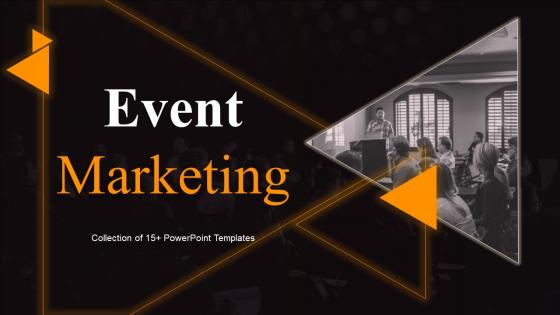
Event Marketing Powerpoint Ppt Template Bundles




Try Before you Buy Download Free Sample Product
 Impress Your
 Audience
 100%
100% Editable
 Save Hours
 of Time


Our Event Marketing Powerpoint Ppt Template Bundles are topically designed to provide an attractive backdrop to any subject. Use them to look like a presentation pro.
People who downloaded this PowerPoint presentation also viewed the following :
Event Marketing Powerpoint Ppt Template Bundles with all 25 slides:
Use our Event Marketing Powerpoint Ppt Template Bundles to effectively help you save your valuable time. They are readymade to fit into any presentation structure.
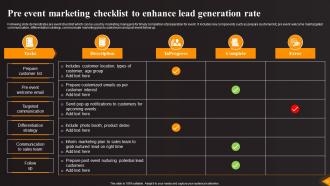





FAQs for Event Marketing Powerpoint
**INPUT**: What are the key elements of a successful event marketing strategy? **OUTPUT**: Key elements include clear objectives, target audience identification, strategic venue selection, compelling content programming, and comprehensive promotional campaigns. These components work together by aligning messaging with audience needs, maximizing attendance through multi-channel marketing, and delivering measurable ROI, with many organizations finding that integrated approaches ultimately enhance brand visibility and generate qualified leads.
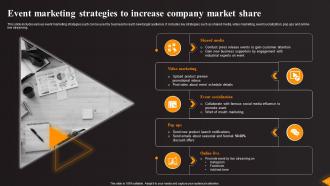
Brands can leverage social media through pre-event teasers and countdown campaigns, live streaming and real-time engagement during events, and post-event content amplification with user-generated materials. This strategic approach enables enhanced audience reach, improved brand visibility, and sustained engagement momentum, with many organizations finding that integrated social campaigns ultimately deliver higher event ROI and stronger community building.
Presentation templates enhance event marketing visual appeal by providing consistent branding, professional layouts, compelling graphics, strategic color schemes, and cohesive typography across all materials. These design frameworks streamline content creation while ensuring promotional materials, sponsorship decks, and event presentations maintain visual consistency, with many event organizers finding that well-designed templates significantly increase attendee engagement and brand recognition.
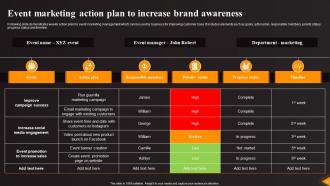
Event marketing objectives align with business goals through strategic planning that connects event outcomes to revenue targets, brand awareness metrics, lead generation quotas, and customer retention rates. Successful alignment involves mapping specific event activities to broader business priorities, establishing measurable KPIs that track both immediate engagement and long-term conversion, ultimately delivering enhanced market positioning and accelerated sales pipeline growth.
Event marketing success metrics include attendance rates, lead generation numbers, engagement levels, brand awareness lift, and return on investment calculations. These measurements enable organizations to evaluate campaign effectiveness by tracking registration conversions, social media interactions, and post-event sales attribution, with many companies finding that combining quantitative data with qualitative feedback ultimately delivers comprehensive insights for optimizing future event strategies.
Storytelling in event marketing presentations creates emotional connections, enhances audience engagement, improves message retention, builds brand authenticity, and transforms abstract concepts into memorable experiences. Through compelling narratives, companies in sectors like healthcare, technology, and retail find that audiences remember key messages 65% longer while building deeper trust, ultimately driving higher conversion rates and stronger brand loyalty.
Event marketers can leverage data analytics to personalize content, optimize session scheduling, target relevant sponsors, and predict attendee preferences through registration patterns, behavioral tracking, and feedback analysis. By analyzing real-time engagement metrics, demographic insights, and historical attendance data, organizations create more targeted networking opportunities, customized agendas, and interactive experiences, ultimately delivering higher satisfaction rates and stronger ROI for both attendees and sponsors.
Innovative technology integration includes AR/VR experiences, AI-powered personalization, interactive digital displays, drone photography, and real-time social media walls. These technologies enhance attendee engagement by creating immersive brand experiences, delivering personalized content recommendations, and facilitating seamless networking opportunities, with many event organizers finding that strategic technology adoption significantly increases participant satisfaction and brand recall.
Collaboration with influencers enhances event marketing by expanding audience reach, building credibility through trusted voices, and creating authentic content that resonates with target demographics. These partnerships enable brands to tap into established communities, generate pre-event buzz through social media amplification, and deliver measurable engagement metrics, with many organizations finding that influencer collaborations significantly boost attendance and brand awareness.
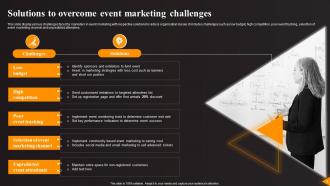
Hybrid event challenges include audience engagement disparities, technology integration complexities, content delivery optimization, sponsorship value balancing, and networking facilitation across formats. These obstacles can be addressed through dedicated virtual engagement strategies, robust platform testing, tailored content for each audience segment, and transparent ROI metrics, with many organizations finding that strategic planning and audience-specific approaches ultimately deliver broader reach and enhanced participant experiences.
Event marketing achieves inclusivity through diverse speaker representation, multilingual content, accessible venue selection, varied engagement formats, and culturally sensitive messaging. By incorporating universal design principles, offering flexible participation options, and gathering demographic insights, organizations create welcoming experiences that resonate across different backgrounds, ultimately expanding their reach and strengthening brand reputation in increasingly diverse markets.
Best practices for event marketing landing pages include clear value propositions, streamlined registration processes, compelling visuals, social proof elements, and mobile optimization. These components work together by capturing visitor attention immediately, minimizing friction during signup, and building credibility through testimonials, ultimately delivering higher conversion rates and enhanced attendee acquisition for organizations across industries.
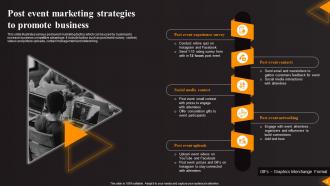
Post-event follow-up is crucial in event marketing, directly impacting lead conversion, relationship building, and ROI measurement. Strategic follow-up approaches include personalized thank-you communications, targeted content sharing based on attendee interests, survey deployment for feedback collection, and scheduled one-on-one meetings, with many organizations finding that systematic follow-up within 48 hours significantly enhances conversion rates and long-term customer relationships.
Current event marketing trends include hybrid event formats, personalized attendee experiences, sustainability initiatives, AI-powered networking, and immersive technologies like AR and VR. These approaches enhance engagement by delivering targeted content, reducing environmental impact, and creating memorable interactions, with many brands finding that strategic combination of digital and physical elements ultimately drives stronger ROI and broader audience reach.
Pre-event surveys enhance attendee experience by gathering preferences on session topics, speaker interests, networking goals, dietary requirements, and accessibility needs. Through targeted data collection, event organizers can customize agendas, improve logistics, facilitate meaningful connections, and address potential issues proactively, ultimately delivering more personalized experiences and higher satisfaction rates across diverse attendee segments.
-
SlideTeam is my go-to resource for professional PPT templates. They have an exhaustive library, giving you the option to download the best slide!
-
Their professional templates are very impressive, even my manager was curious about the source. I am very grateful.