

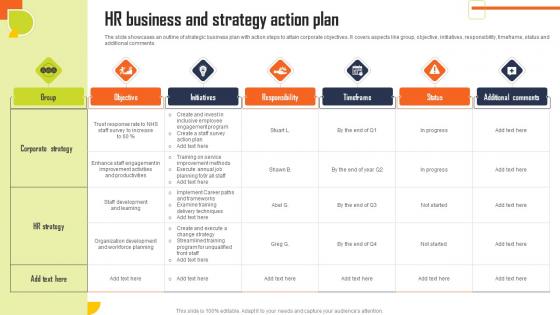
HR Business And Strategy Action Plan




Try Before you Buy Download Free Sample Product
 Impress Your
 Audience
 100%
100% Editable
 Save Hours
 of Time


Our HR Business And Strategy Action Plan are topically designed to provide an attractive backdrop to any subject. Use them to look like a presentation pro.
People who downloaded this PowerPoint presentation also viewed the following :
HR Business And Strategy Action Plan with all 6 slides:
Use our HR Business And Strategy Action Plan to effectively help you save your valuable time. They are readymade to fit into any presentation structure.





FAQs for HR Business And
So there's basically five things you gotta nail: hiring and keeping good people, performance reviews that don't suck, training programs, pay/benefits, and company culture. Most places totally bomb the culture part - like they think a foosball table fixes everything lol. Start by looking at what you already have, figure out the worst gaps, then tackle whatever's gonna move the needle most for your business. Don't go crazy trying to overhaul everything at once though. Oh and make sure it all actually connects to where you're trying to go as a company.
Pick 2-3 metrics that actually matter for what you're trying to fix. Retention program? Track turnover before vs after. Employee engagement stuff? Survey scores, participation rates, maybe productivity numbers. Don't get lost in a million data points - honestly, that's where most people mess up. Give it 3-6 months to see real changes, and focus on outcomes, not just activities. Like, who cares if you ran 10 training sessions if nothing improved? Start with what success looks like, then figure out how to measure it. Way easier than doing it backwards.
Honestly, employer branding is huge for HR - it's like the foundation everything else builds on. Good branding makes recruiting so much smoother because candidates come to you instead of the other way around. Plus your retention gets better since people feel good about where they work. You'll want to make sure it matches your actual company values and what employees experience day-to-day. Then weave it through job posts, onboarding, reviews - basically everywhere. Oh, and definitely start by checking what people are actually saying about working there online. That's where you'll find the real truth, not just what leadership thinks.
Look, first thing - actually figure out what your company's trying to do. I know it sounds basic, but so many HR people just exist in their own little bubble. Connect those business goals to what you're doing in HR. Growth mode? Pour your energy into hiring and training. And honestly, don't get obsessed with metrics that don't matter. Yeah retention's nice to track, but who cares if the turnover isn't even hurting anything? Talk to leadership regularly so you're not working on random stuff while they're focused elsewhere. Be ready to change direction when priorities shift.
Honestly, I'd start with whatever's easiest to fix first - maybe flexible work options since that's pretty straightforward. Recognition programs work wonders too, both from managers and peer-to-peer stuff. Career development is huge though - people really do quit bad managers more than bad jobs. Regular feedback and mentorship make people feel valued. Oh, and definitely do those quick pulse surveys to catch problems early before someone's already mentally checked out. Work-life balance matters more than ever now. Pick one thing, nail it, then expand from there. Don't try to overhaul everything at once.
Dude, the tech stuff happening in HR right now is insane. AI recruitment tools can screen candidates way faster than humans. Plus you've got predictive analytics that'll tell you who's about to quit before they even know it themselves. Chatbots handle the boring onboarding paperwork nobody wants to do anyway. My advice? Don't go crazy trying to implement everything at once - that's a recipe for disaster. Just pick whatever's driving you nuts the most and tackle that first. Maybe start with automated scheduling or something simple. The data insights alone will blow your mind once you get going.
Honestly, leadership buy-in is everything here - I've seen so many D&I programs die because execs just paid lip service to it. First thing is auditing where you actually stand through data and employee feedback. Don't just say "we want more diversity" because that's meaningless. Set real numbers you can track. Focus on hiring practices, inclusive policies, and maybe employee resource groups. Here's the key though - tie D&I metrics directly to manager performance reviews and pay. Once it affects their bonus, suddenly everyone cares way more. Otherwise it's just another initiative that disappears when things get tight.
Dude, forget hoarding talent like it's 2015. Check your skills gaps every few months instead of waiting a whole year - that way you're not scrambling to catch up later. Here's the thing though: don't get hung up on finding the "perfect" candidate with every single skill checked off. Go for people who can adapt and learn fast. Build programs where your current team can actually move around internally and pick up new stuff. Oh, and use your data to see what's coming instead of just reacting when you're already screwed. Cross-training is huge right now.
Oh man, cultural differences will hit you hard - and labor laws are a nightmare since every country does things differently. Time zones make communication brutal too. We totally bombed when we tried copying our performance reviews everywhere without thinking it through first. Work-life balance expectations vary like crazy between countries. Honestly, compliance stuff gave me so many headaches. Don't go in with rigid policies - you need flexibility from day one. Partner with local HR people who actually get the culture, trust me on this one.
Honestly, I'd mix internal training with some strategic hiring. Figure out your most critical gaps first - what's gonna hurt if you don't fix it soon? Your current people might surprise you if you invest in upskilling them, plus it's usually way cheaper than hiring. But for urgent stuff, yeah, hire externally while you're building up your internal bench. Your L&D team is probably sitting on tons of ideas you haven't thought of yet (mine always comes up with weird creative solutions). The trick is getting some quick wins while also thinking long-term about building capabilities.
Honestly, try mixing things up with microlearning stuff and VR training - sounds fancy but it actually works. Gamification is weirdly effective too. People get competitive over the dumbest badges, I swear. Job rotations between departments are solid, and reverse mentoring is cool - like having younger folks teach the older employees about new tech. Oh, and AI can personalize learning paths now, which is pretty neat. Keep everything bite-sized and connected to real work problems. Survey your team first about how they like to learn, then test one or two things before going all-in.
You're basically the middleman between leadership and everyone else - translate what's really going down into language people actually understand. Start by figuring out all the people stuff that'll change first. Then build your communication around those specific headaches. Get some champions on different teams who can help sell the idea naturally (way better than top-down mandates). Oh, and don't skip the boring administrative stuff - job descriptions, performance reviews, pay structures all need updating. Create spaces where people can actually complain without getting in trouble. They're gonna have opinions anyway, might as well hear them out.
Honestly, data analytics just turns all that HR guesswork into stuff you can actually use. You know how you might think people quit over money? Well, the data could show it's really because their managers suck. Pretty eye-opening. You can track hiring patterns, see engagement trends, even spot who might leave next. I'd say start with whatever's bugging you most right now - like if retention is killing you, dig into that data first. Don't try to boil the ocean on day one. Your existing data probably has some interesting stories hiding in there.
So regular one-on-ones are huge - way better than waiting for those dreaded annual reviews. Train your managers how to actually give good feedback (and take it too, honestly). I'd start with just one team first, see what works. Build it into stuff you're already doing - like retrospectives after projects wrap up. Oh and make sure people can give feedback upward too, not just down the chain. The "open door" thing is usually BS unless you really create those safe spaces. People need to know they won't get thrown under the bus for being honest. Two-way feedback is where the magic happens.
Honestly, start with getting people to actually talk to each other - regular check-ins and cross-team meetings work wonders. Your managers need conflict resolution training ASAP since they basically set the vibe for everyone. Sure, grab a collaboration tool like Slack, but don't go crazy with apps (I've seen teams drowning in notifications from like 10 different platforms). The information flow thing is huge too. Pick one change first, see what sticks, then build from there. Oh, and trust-building exercises aren't as cheesy as they sound - they actually help break down those annoying silos.
-
Amazing slides! Unique, attractive, and easy to understand.
-
Editable, diversified, compatible with MS PPT and Google Slides, and on top of that finest graphics!! I mean in the words of the famous Ross Geller, “What more do you want!”