

Human Resource Strategic Action Plan




Try Before you Buy Download Free Sample Product
 Impress Your
 Audience
 100%
100% Editable
 Save Hours
 of Time


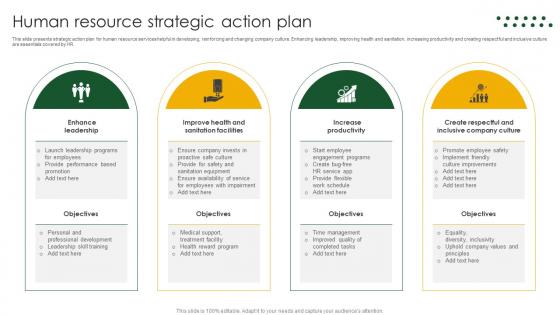
This slide presents strategic action plan for human resource services helpful in developing, reinforcing and changing company culture. Enhancing leadership, improving health and sanitation, increasing productivity and creating respectful and inclusive culture are essentials covered by HR.
People who downloaded this PowerPoint presentation also viewed the following :
Human Resource Strategic Action Plan with all 6 slides:
Use our Human Resource Strategic Action Plan to effectively help you save your valuable time. They are readymade to fit into any presentation structure.





FAQs for Human Resource
Honestly, remote work isn't going anywhere - that's probably the biggest shift. Companies are throwing money at employee wellbeing programs now too, which is nice I guess. Skills-based hiring is huge - they care less about your degree and more about what you can actually do. AI recruiting tools are everywhere, plus this whole "employee experience" thing where they treat workers like customers (kinda weird but whatever). DEI stuff is still a big focus, and there's tons of emphasis on continuous learning platforms. Data drives everything now - hiring, performance reviews, you name it. My take? Don't try to tackle it all. Pick one thing that makes sense for your situation first.
Honestly, start simple - maybe an employee app for quick surveys or Slack/Teams for better communication flow. Recognition software where people can shout out coworkers in real-time works great too. The trick is choosing stuff your team will actually want to use (not just the latest shiny thing). Analytics platforms are clutch for catching engagement issues early. Don't go overboard though - roll out one or two tools max so you don't overwhelm people. Focus on measuring participation rates and feedback quality instead of just how many people downloaded the app. Oh, and Teams integrates with basically everything if you're already using it.
DEI isn't just some HR buzzword anymore - it's literally how you build better teams. Your hiring and promotion processes need to actually work for everyone, not just people who remind leadership of themselves. Diverse teams straight up make more money, which is why smart companies treat this as business strategy now. Job descriptions are where bias sneaks in first, so start there. Then audit your whole pipeline for blind spots. Track the data too - you can't fix what you don't measure. Honestly, once you see the performance difference diverse teams make, it becomes obvious why this matters so much.
Look, HR metrics are your secret weapon for getting taken seriously. Numbers talk louder than feelings - always. Show leadership that engineering turnover is burning 40% more budget than planned? Now they'll actually listen to your retention ideas. Track stuff like how long it takes to hire people, engagement scores, training ROI. Honestly, it's wild how fast executives flip when you've got data instead of just saying "trust me." I'd start with maybe 3-4 metrics that match what your company actually cares about. Game changer for getting budget approvals and headcount.
Honestly? Start with candidate experience - it's what sets you apart from everyone else posting the same generic job descriptions. Make your application process simple, respond fast, and actually give people feedback (crazy idea, right?). Get your current employees to share real stories about working there instead of corporate fluff. Track which sourcing channels work so you're not throwing money at LinkedIn ads that go nowhere. Don't wait until you're desperate - build relationships with good people before you need them. Oh, and please train your hiring managers how to interview properly. I've seen amazing candidates walk away because someone asked them "what's your biggest weakness" for the millionth time.
Honestly, regular pulse surveys work best - just keep them short or people get survey fatigue. I'd do quarterly ones with maybe 3-5 questions max. Annual engagement surveys are good too, plus one-on-ones with managers. Track your turnover and absenteeism rates since those tell you a lot. Exit interviews are clutch though - people will actually tell you what's wrong when they're already leaving! For wellbeing stuff, ask about stress levels and work-life balance. Oh, and see if people are using mental health benefits. The biggest thing? You've gotta act on what you learn, otherwise it's pointless and nobody will bother responding next time.
Honestly, the biggest pain points are gonna be people feeling cut off from each other and communication just falling apart. You lose that random hallway chat vibe, which sounds dumb but actually matters a lot for team bonding. HR should probably start with asking remote workers what's bugging them most - don't just guess. Then set up regular one-on-ones and maybe some virtual hangouts that aren't terrible. Clear remote policies help too. Oh, and invest in decent tech tools because nothing kills morale like a laggy video call. Just be really deliberate about creating connection points since it won't happen organically anymore.
Send them the welcome stuff and tech setup info before they even show up - saves so much time day one. Pair them with someone who's not their boss, like a buddy who can show them around and answer the random questions (seriously, where IS the good coffee?). Spread out all the training over a few weeks instead of cramming everything into one overwhelming dump. Cover the basics: what they're supposed to do, how things work around here, who's who. Oh, and definitely check in with them regularly those first 90 days. Catches problems early before they become actual issues.
Dude, good employer branding is a total game-changer for getting quality people. Instead of desperately posting job ads everywhere, candidates will literally come to you. Your current team stays put too because they're genuinely proud to work there. Think about it - nobody wants to work somewhere embarrassing. Without solid branding, you're basically just throwing money at people to stay, which gets pricey real quick. Best move? Ask your employees what they actually love about the job. Then share those stories everywhere. Way more authentic than some corporate fluff nobody believes anyway.
Jump on it fast - don't wait for things to get worse. Talk to each person individually first to hear their side, then get them in a room together. I swear, half the drama could be avoided if people just intervened sooner! Keep it focused on solutions, not who did what to whom. Stay neutral even if one person's clearly being ridiculous. Document everything and make sure they agree on next steps before wrapping up. The whole point is getting them back to actually working together instead of whatever petty nonsense is happening.
Honestly, personalized learning paths are where it's at - tailor everything to what people actually need for their roles and where they want to go. Regular skill checks help you stay on top of things. Mentorship programs work great, and platforms like LinkedIn Learning or Coursera give people options. Cross-training is brilliant because it keeps everyone interested while you're building talent internally. Oh, and track what's actually working! I've watched companies blow tons of cash on generic training that just sits there unused. The whole point is making development feel like you're investing in their future, not some box they have to tick.
Honestly, start with just one thing or you'll burn out trying to fix everything. Communication is huge - check in with people regularly, not just during those awkward annual reviews. Do quick pulse surveys or just grab coffee with folks. Recognition makes such a difference too, and it doesn't need to be fancy. Sometimes a simple "hey, great job on that project" hits harder than some corporate gift card. Professional development paths are clutch, but only if you actually deliver on them. Nobody likes empty promises about growth opportunities. Oh, and make sure your managers aren't being hypocrites - they need to walk the walk too.
Oh man, employment law is such a pain but you gotta know the basics - discrimination stuff, harassment policies, wage laws, how to fire people properly. FMLA and ADA accommodations will bite you if you mess them up. Document literally everything! Like, I can't stress this enough. Apply policies the same way for everyone or you're screwed. The laws change constantly too, which is super fun. Definitely get a lawyer involved before any major decisions. Oh and join an HR group - way better than googling "can I fire this person" at 2am.
Cross-training your teams is huge - it gives you way more flexibility when things get crazy. Build some internal mobility programs too, and get your hiring process fast enough to actually matter when priorities shift. Honestly? The companies that didn't completely fall apart recently were the ones with adaptable HR practices. Focus on employee wellbeing and succession planning - boring stuff, but it works. Oh, and culture matters more than people think. If your team fights every change, you're screwed. Start by figuring out which processes slow you down during pivots, then redesign from there.
Think of performance management as your GPS for work - it connects what people do daily to what actually matters for the company. You'll want to set clear expectations and give regular feedback so everyone's moving toward the same goals. Otherwise people just wing it, which is honestly a disaster waiting to happen. Regular check-ins help you spot your star players (develop them!) and anyone who's struggling. The cool part? When people see how their work impacts real results, they actually get motivated. Oh, and definitely make sure your team's goals link back to what your department needs to accomplish.
-
Out of the box and creative design.
-
“One of the best experiences with SlideTeam for my presentation.Everything on time, communication is efficient and price is reasonable. All good in one place.”