Strategic Workforce Planning Tools For Hr Department

Rating:
90%
Strategic Workforce Planning Tools For Hr Department
Slide 1 of 6
Favourites Favourites

Try Before you Buy Download Free Sample Product

Audience Impress Your
Audience
Editable 100%
Editable
Time Save Hours
of Time
The Biggest Sale is ending soon in
0
0
:
0
0
:
0
0
Rating:
90%
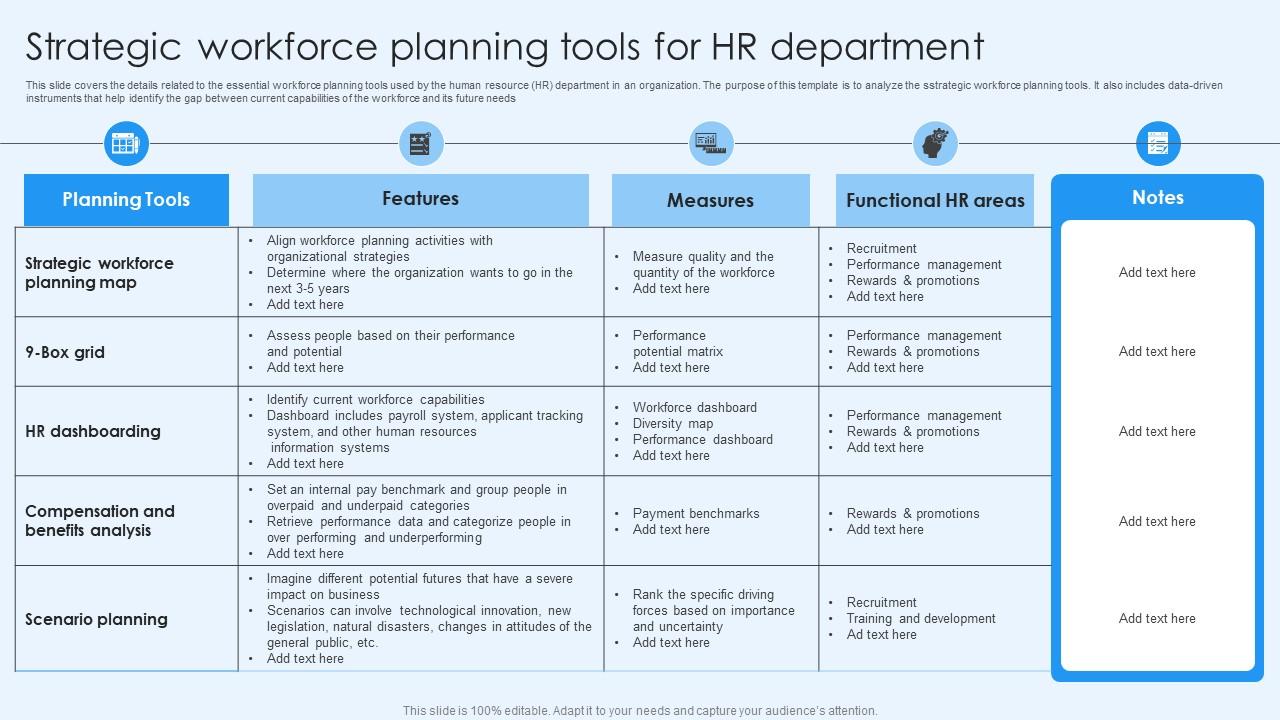
This slide covers the details related to the essential workforce planning tools used by the human resource HR department in an organization. The purpose of this template is to analyze the sstrategic workforce planning tools. It also includes data driven instruments that help identify the gap between current capabilities of the workforce and its future needs. Introducing our Strategic Workforce Planning Tools For Hr Department set of slides. The topics discussed in these slides are Planning Tools, Strategic Workforce, Scenario Planning. This is an immediately available PowerPoint presentation that can be conveniently customized. Download it and convince your audience.

FAQs for Strategic Workforce Planning Tools

So you'll want to start with workforce analysis - basically map out what talent you have right now, their skills, roles, all that stuff. Next step is forecasting future demand based on where the business is heading. Gap identification comes after (honestly the trickiest part for most people). Once you know what's missing, build action plans around recruiting, training, or reshuffling people. Oh and definitely track metrics as you go - you don't want to be flying blind here. The whole process is pretty iterative, so expect to tweak things along the way.

So basically you want to think backwards from where you're headed. Figure out your 3-5 year goals first - new markets, products, whatever growth you're chasing. Then ask what skills you'll actually need to get there. Yeah, it's a bit of guesswork but that's just how planning works. I'd create a few different scenarios depending on how things might play out business-wise. The trick is making this an ongoing thing with your leadership team, not some once-a-year spreadsheet nightmare. Oh and definitely build in wiggle room because priorities always shift. Trust me on that one.

Honestly, data analytics is what separates real workforce planning from just winging it. You can spot turnover patterns before they hit, catch skill gaps early, and actually know where to spend your training budget. The predictive stuff is nice but even basic headcount trends will tell you a lot. I mean, anything beats making decisions on hunches, right? Plus when you need to sell leadership on new hires or development programs, having actual numbers makes your case way stronger. It's like having receipts for all your workforce arguments.

Honestly, demographics are huge for workforce planning but most people sleep on it. Aging populations mean tons of retirements coming - and all that knowledge walks out the door with them. Birth rates are shifting too, so your future talent pool looks way different. Each generation wants totally different stuff from work, which makes things messy. What you really need to do is map your current team's age breakdown against what's happening in your area population-wise. Then you can spot the skills gaps before they become a crisis and actually do something about hiring or training. Way better than scrambling later.

Honestly, I'd start with figuring out exactly what skills you're missing first. Then you've got a few routes - either train up your current people or hire from outside. Contractors work great if you need something right now while your team learns. Partnering with schools is solid for the long game, but yeah, that takes forever. Cross-training is clutch too since it means you're not screwed if someone leaves. I'd probably mix and match approaches depending on the gap. Map it out with some deadlines so you can actually see if it's working.

Honestly, the tech makes a huge difference with forecasting because it can crunch way more data than we ever could. Machine learning looks at your historical trends, economic stuff, seasonal patterns - even market shifts - to predict what your workforce will look like. Pretty neat how these systems actually get smarter from their past predictions too. You can run "what if" scenarios, like expanding to new regions, and see how staffing changes. My advice? Start simple with basic analytics if you're just getting into this. Then you can level up to the fancier predictive models once you get comfortable.

Don't plan this stuff alone - you need input from the managers and people actually doing the work. Also, past data isn't as reliable anymore (seriously, these last few years broke all the rules). Most people get stuck focusing just on headcount when skills matter way more. Internal moves are huge but often ignored. Oh, and don't build some crazy complex model that'll just collect dust. Keep it simple. You'll need to update your assumptions regularly too - things change fast. Leadership needs to stay involved the whole time, not just see the final presentation.

Honestly, start with the basics - how fast are you filling roles and are people actually sticking around? Those retention rates will tell you everything, especially for your key positions. Time-to-productivity matters too (nobody talks about this enough but it's huge). Skills gap assessments are where most companies totally drop the ball. Check if you're hitting headcount goals without blowing your budget. Employee engagement scores show whether people feel valued or just... there. Pick maybe 3 metrics that match your biggest headaches and review quarterly. Don't overthink it initially.

Oh man, it's like planning a road trip when the GPS keeps rerouting you. Economic crashes hit and suddenly you're freezing hires or completely reshuffling roles. Then boom - growth spurt creates talent shortages you never saw coming. Don't even get me started on how AI is making whole skill sets irrelevant practically overnight. Currency swings, new regulations, political drama - honestly, everything affects your people strategy somehow. The trick is baking flexibility into your workforce planning upfront. That way you can actually pivot fast instead of panicking when everything inevitably shifts again.

Dude, engagement data is seriously clutch for workforce planning. High engagement = people stay longer and work better, so your headcount projections won't be total garbage. Disengaged teams? They'll bail on you fast and wreck your forecasts. Also, engaged folks actually want to learn new skills and take promotions. I'm still traumatized from when our "rock solid" marketing team had like 6 people quit in two months - completely blindsided us. Now I always bake engagement scores into retention models and succession plans. Trust me, it'll save you from some nasty surprises.

Honestly, you can't just tack D&I onto your hiring process later and expect miracles. Build specific diversity targets into each role from the start. Track where you're losing people in your pipeline - are certain groups dropping out at interviews? Promotions? Diversify your recruitment sources, scrub job descriptions for biased language, get diverse interview panels. The boring part (but crucial) is measuring everything: hiring rates, who gets promoted, retention across demographics. I learned this the hard way at my last job - without actual data, you're basically crossing your fingers and hoping for the best. Spoiler alert: it doesn't work.

Honestly, most companies totally mess this up - they only loop in recruiting during budget meetings then act shocked when they can't fill roles fast enough. Share your workforce forecasts directly with your recruiting team so they're building pipelines 6-12 months ahead. Set up dashboards that show both current gaps AND what's coming down the pipeline. I know it sounds obvious but you'd be surprised how many skip this step. Get recruiting into your workforce planning meetings from the start, not as an afterthought. Clear handoff processes matter too - when forecasted needs turn into actual job openings, everyone should know exactly what happens next.

Honestly, start by figuring out which jobs are gonna get automated in the next decade - that's your roadmap right there. Then work backwards from what people will actually need instead. Critical thinking, creativity, emotional intelligence... basically the messy human stuff that robots still suck at. Remote work means you'll need solid digital tools and managers who can actually lead teams they never see in person (harder than it sounds). The whole trick is getting ahead of this instead of playing catch-up later. Launch reskilling programs now, make your work policies flexible, and actually ask your people what they're worried about. Trust me, scrambling when it's already happening is way worse.

Dude, you HAVE to get leadership on board first - seriously, this is make-or-break stuff. Without them backing you, good luck getting the resources or data access you need. Plus departments will just ignore you if there's no executive pressure behind it. The thing is, leaders are also the only ones who actually know where the company's headed strategically, so your workforce plans need to match that direction anyway. I've seen this work really well when the C-suite actually champions it from the start and doesn't just disappear after the kickoff meeting. Get them involved early and keep sending updates - trust me on this one.

Honestly, you gotta tell people WHY you're making these workforce moves, not just what's happening. Hit them through different ways - town halls, team meetings, whatever. Most companies just blast one email and think they're done (spoiler: they're not). Connect it to what people actually care about - their career growth and opportunities. That's the stuff that matters to them personally. Keep giving updates since things change constantly anyway. Oh, and start with your managers first. They're gonna be your best weapon for this since they can handle the tough questions during those weekly check-ins.

Ratings and Reviews

90% of 100
Review Form
Write a review
Most Relevant Reviews
  1. 100%

    by Denny Salazar

    Requested a complete pitch deck. Delivered immediately and with high quality well researched content.
  2. 80%

    by Ed Lawrence

    It’s really cool, and you can find pretty much everything you could need for your work or school.

2 Item(s)

per page: